
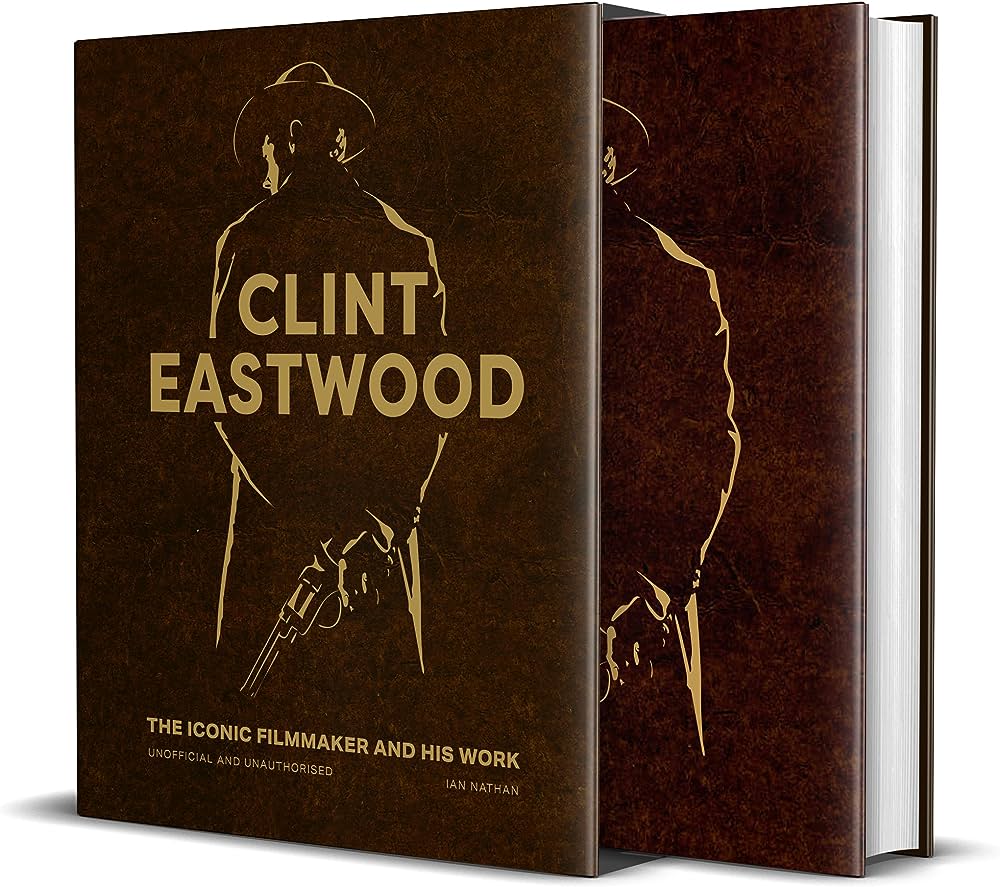

Somebody on your movie-buff birthday or holiday shopping list is a Clint Eastwood fan. This luxe new pictorial with essays on the man and his films comes in its own box, a beautifully presented book that matches its author’s thesis — that what Clint gave us is “not a career, it is a landscape.”
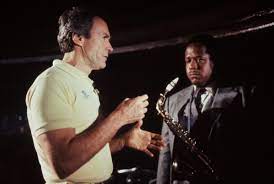
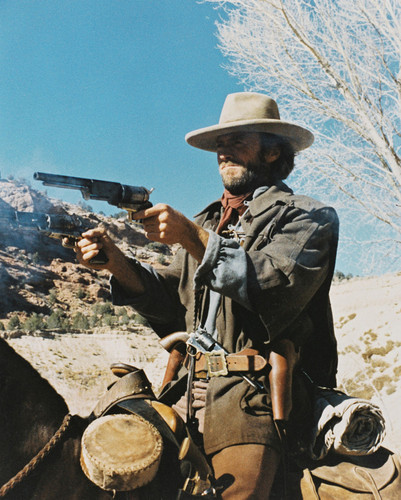
British writer Ian Nathan has turned out picture-centric appreciations of the works of Ridley Scott, Tarantino, The Coen Brothers, Peter Jackson and Tim Burton. “Clint Eastwood: The Iconic Filmmaker and His Work” is a handsome remembrance of the Hollywood icon’s career with some solid observations, a bit of The Man Himself (interviewed for this) and a lot of folding in the research of other biographers, all of it built around gorgeous still shots from Eastwood’s films, on-set directing photos and moments of Clint playing jazz.
It’s not meant to be deep or personal, and as such, it can read a tad glib and fanboyish. But it makes for a glorious gloss of the filmmaker’s career that celebrates the “simplicity” which Eastwood’s films are touted for, which Nathan describes as his “purity.”
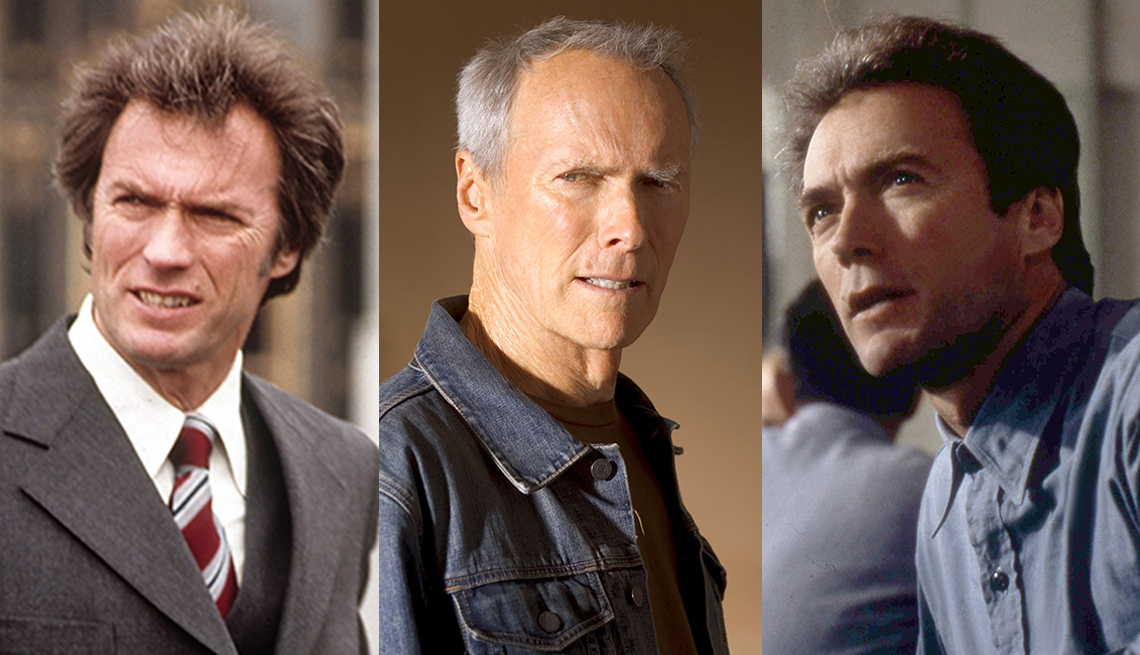
Chronologically going through Eastwood’s life and career, Nathan separates “Clint” the film star with his legendary squint and understated acting style from “Eastwood” the artiste, and rightly parks him in the company not of the New Hollywood tyros like Coppola, Lucas, Scorsese and Spielberg, but with Redford and Beatty, great leading men who stepped behind the camera to ensure their vision of cinema is what we saw in their movies.
Eastwood’s quiet simple directing style is traced to his upbringing, and his first experiences on the “Rawhide” set, without much dwelling on actors or critics who find the impatient “One Take Clint” work ethic an increasingly serious drawback, the older and more dogmatic he became.
“The shadow (‘Dirty Harry’) cast over Eastwood’s career,” Nathan writes, “is hugely significant…Throughout his career, Eastood had sought to explore, satirize, oppose, and repeat the cultural event” that character and that first film to feature him created.
The writing here is often choppy, sometimes unnecessarily so, and had me parsing the pages to see if two had stuck together and I’d missed a transition that Nathan doesn’t provide as he skips back and forth. Some of that is the nature of the form, some of it a sort of Britishness in the sentence structure and punctuation (and many many sentence fragments). Every now and then a sentence turns into a paragraph that one simply must puzzle out what this chap is on about.
One must.
The don’t-offend-the-subject ethos in this “unauthorized” biography turns up in groaners like “Tied in with this were Eastwood’s memories of women who struggled to let go of him.” Translation — he’s dated and summarily dumped more than his share of wives, partners and female companions for younger models.
But the insights are solid, the sourcing the book relies on uniformly good and the book, like Eastwood’s movies, plays to his strengths. You don’t have to read it cover-to-cover in one sitting (although it’s that brief). A mere page or even an image brings back memories of a movie, a trademark Eastwood character, wardrobe choice or grimace.
The “Unforgiven” chapter, as a stand alone essay, is superb, if a tad breathless.
Gift it to someone with a coffee table so that one and all can slide it out of its jacket, flip it open and quickly recall the forgotten early Eastwood directing gig, “Breezy” (with William Holden), the glories of “Bronco Billy,” “Pale Rider” or “The Gauntlet.”
Here in 180 or so pages is the “landscape” of this iconoclast, a libertarian leaning towards the crotchety end of the political spectrum and a filmmaker celebrating the individual — flawed, tested, challenged and generally triumphant, even if he’s guilt-ridden about his methods and the personal cost, even if he starts to regret just what he’s come to represent.
Clint Eastwood: The Iconic Filmmaker and His Work. By Ian Nathan. White Lion publishing, 182 pages with notes. $36.



