
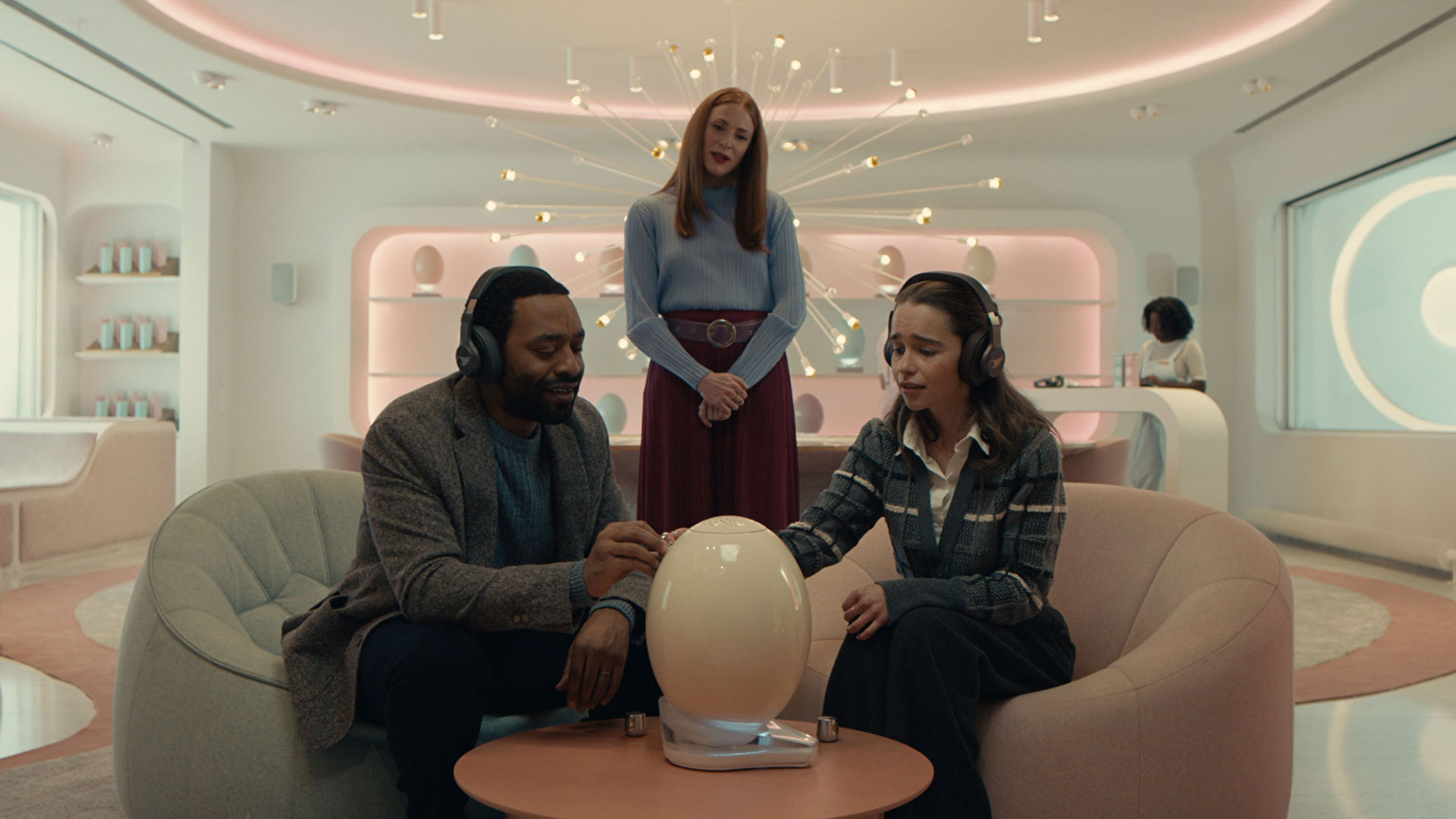
“The Pod Generation” is an aridly-dry sci-fi satire about childbirth in a more technologically convenient future.
It’s a dark comedy that’s more cautionary than amusing, and downright triggering at times. Writer-director Sophia Barthes extrapolates our app-obsessed/mega-corp-controlled present world into that day, not far down the road, when “the singularity is near” and the “natural” way of doing everything is out of fashion, so “naturally” few people think twice about passing the life-changing disruption of having a baby on to a”Womb Center,” where nothing is left to chance.
“Why would any of us want to feel nauseus and gain 35 pounds?”
The endgame Barthes — “Cold Souls,” and the Mia Wasikowska “Madame Bovary” were hers — is poking at here is a feminist future when full female participation in the workforce, value in the workplace and professional and personal “fulfillment” can be truly realized by giving women the option of having their babies incubated in portable, egg-shaped “pods.”
That’s a choice facing Rachel (Emilia Clarke), a rising star exec with a marketing/”influencing” division of the hydra-headed tech/digital/cloud/services Pegazus Corp,, and Alvy (Chiwetel Ejiofor), her boat-against-the-current college botany professor husband.
They’re living in the city, like everyone else, constantly assisted and monitored by “cognitive assistants” provided by Rachel’s company, “influenced” by paid influencers in the media and in their daily lives.
The chirpy “Siri” like voice of Elena lets Rachel know if she’s in sync with the “national bliss index.” Elena is a lot testier with plant-and-“nature” obsessed Luddite Alvy, hiding his coffee, deliberately burning his toast.
The whole “baby” thing comes up when Rachel is summoned in to be queried about a promotion. All the data Pegazus and its subsidiaries collect on her suggests she’s killing it at work. Her boss wants to know if there are “any plans on extending the family?”
In the near future, this sort of invasive data-collecting and nakedly sexist questioning (her boss is a woman) is legal and an accepted part of life. I guess.
Rachel finds herself having to “decide” on parenthood in the middle of an impromptu sit-down with her boss, urged to check by with the corporation’s “Womb Center” affiliate, “take a tour,” with none of it involving her “He wants a ‘natural child” husband.
The couple finds themselves down the rabbit hole of trying to have a moment to “process all this” in an everything-tech world in which not just human peers, but Rachel’s AI psychotherapist (a giant eyeball surrounded by a frame of grass and flowers) are pressuring/brainwashing them into avoiding all things “old fashioned” and going with the flow.
Alvy side-eyes Rachel’s parrotted talking points, and argues with her AI therapist.
“You don’t have a consciousness. So you are not QUALIFIED to take a look at mine!”
The couple fights over semantics — “the baby” vs. “the pod,” as in “I can’t do it (sex) with the pod in here — over outdated parenting manuals and selling their beach house because “we never go there” and “no one goes ‘into the country'” any more.
“That’s so…20th century!”
Fake treehouses with hologram-equipped meditation pods are how city slickers get their taste of “nature,” here.
But even though Barthes imagines this future in deep detail — the Steve Jobs-era Apple design of the pob, citizens surrendering control and personal information without thinking of the consequences, a government which is “no longer funding education” or much of anything else, because corporations will take care of that — and the satiric points seem clear enough, the “comedy” part of this dark comedy just dies.
We can tell it’s supposed to be funny when our dismayed then amused couple watching as his donated sperm fertilizes her ovum in real-time on a video monitor while their Womb Center counselor (Rosalie Craig, as creepy as she needs to be) cheer-leads this most unnatural version of a “natural” process.
Ejiofor’s side-eying makes a comical contrast to Clarke’s eyebrow hokie pokey looks annoyance with Alvy, then puzzlement, disapproval and perhaps a complete change of heart.
But the tone is “2001” icy, impersonal and bloodless. It’s as if Barthes has taken tale’s implicit warning about “detachment” being all important in an even more digitized future and made a film that we’re not allowed to engage with.
A couple of third act sequences generate empathy and suspense, but only barely. The flat tone Barthes goes for undercuts the poignant wince we should feel when we learn how machine-assisted-and-dominated life discounts dreams, “which do no serve any evolutionary purpose,” the AI therapist snaps, but which Rachel keeps having. She imagines a natural pregnancy and birth, a “connection” with a baby growing in her womb.
Pod babies aren’t dreaming, they’re told. Which should be alarming to the prospective parents, but isn’t. They, like the viewer, are propogandized and narcotized out of thinking dreams are necessary.
Modern life has stripped bits and pieces of their humanity and their human rights, but “convience” supposedly makes it all worth it.
Barthes has given us an immaculate, vividly-believable future to be dreaded and avoided. But she’s put it in a movie so unemotional that we can’t invest ourselves in taking a stand to prevent it, even if the script ordains that the under-motivated Rachel and Alvy do.

Rating: PG-13, for brief strong language, suggestive material and partial nudity
Cast: Emilia Clarke, Chiwetel Ejiofor, Rosalie Craig, Jean-Marc Barr and Vinette Robinson
Credits: Scripted and directed by Sophia Barthes. A Roadside Attractions/Vertical release.
Running time: 1:43



