
A French best seller about “making the invisible visible” among that country’s under-employed and over-worked “gig economy” cleaning crews becomes a sentimental, occasionally-moving melodrama built around Juliette Binoche, playing a well-known writer/researcher undercover among those crews, trapped “Between Two Worlds.”
At its best, Emmanuel Carrèr’s film based on the Florence Aubenas non-fiction book “Le Quai de Ouistreham” gives us an up-close look at people trapped at the bottom of the employment ladder, sprinting through the staterooms and gangways of a French ferry that hauls tourists back and forth on overnight trips to Britain, scrambling to clean and replace the bedding in every stateroom before the next departure.
“Four minutes” per room, her fellow cleaners tell posh, 50something Marianne (Binoche) on her first night, in Frenchg with English subtitles. That’s all the instruction she gets.
“You either cut it or you don’t.”
We’ve barely had time to ponder why any filmmaker — French or otherwise — would think the luminous Binoche could pass for “invisible” or even “working poor,” when her voice-over narration, Marianne taking notes in various cleaning jobs in and around Caen and the way she befriends and questions co-workers give away the game.
She’s researching her new book, an expose of the employment crisis created by the gig economy and how it’s impacting those stuck on that bottom rung. But early on, when an employment counselor discovers her secret, we’re asked to ponder, as she must, the morality, ethics and authenticity of dipping her toes in a world the real people have to struggle through for days and years on end.
We think it even if no one says it out loud. She’s a wealthy, coddled dilettante lying to young Marilou (Léa Carne), struggling Cedric (Didier Pupin), who hits on her in the most chivalrous ways and on testy, single mother-of-three Chrystèle, given a wary, guarded resignation by Hélène Lambert.
We hear Marianne invent her new past, brag about how she goes “off grid” to do this sort of background research, but we can only imagine the world of letters, publishing and privilege she’s come from.
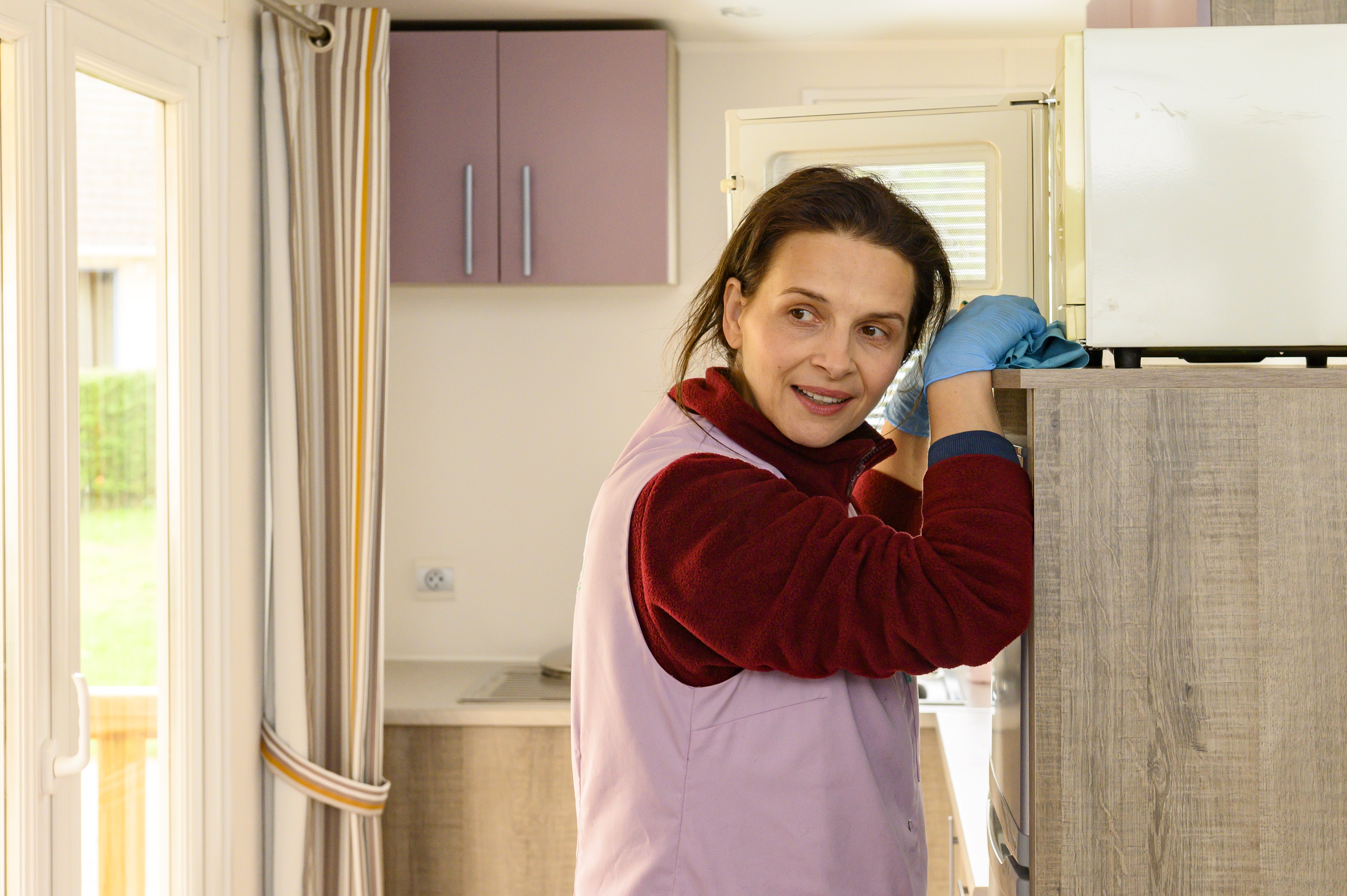
But she does her damnedest to fit in, learning the various cleaning regimens — public restrooms to rental vacation trailers to the ferries that rotate through the port of Ouistreham.
Strangers become new friends who entrust her with the loan of an ancient Citroen, which enables her to find more “hours” in more jobs, and to make more acquaintances.
Some folks have a dream, but many, like Chrystèle, barely have time for that. A lottery ticket and a laugh about meeting “some rich guy” is all she has energy to hope for.
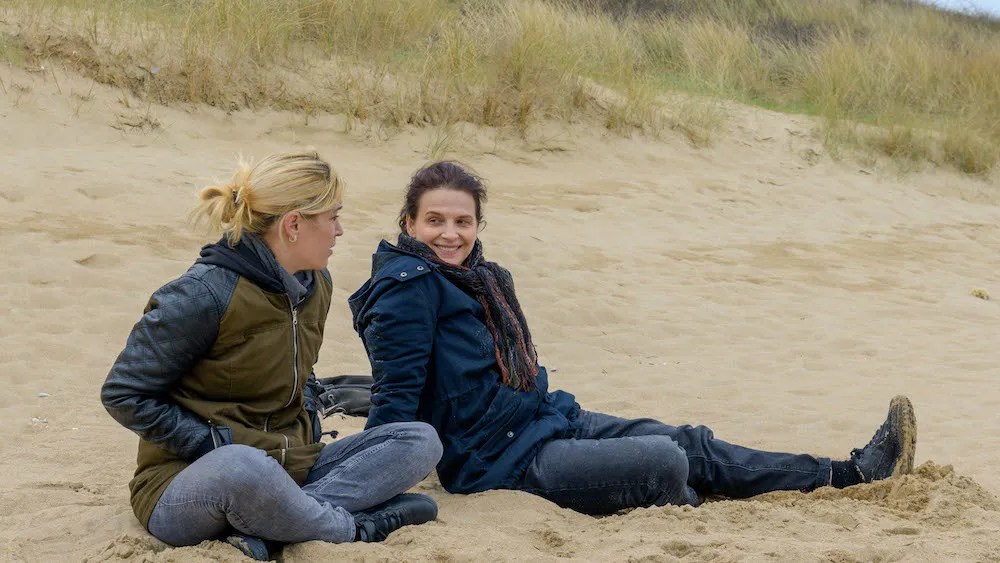
I love the way Lambert side-eyes this stranger when Marianne detours them to a beach, an over-worked working-class single-mom forced to bask in the beauty of the coast and to indulge this stranger who figures a little dip in the sea would be just the sort of lark she could use right now.
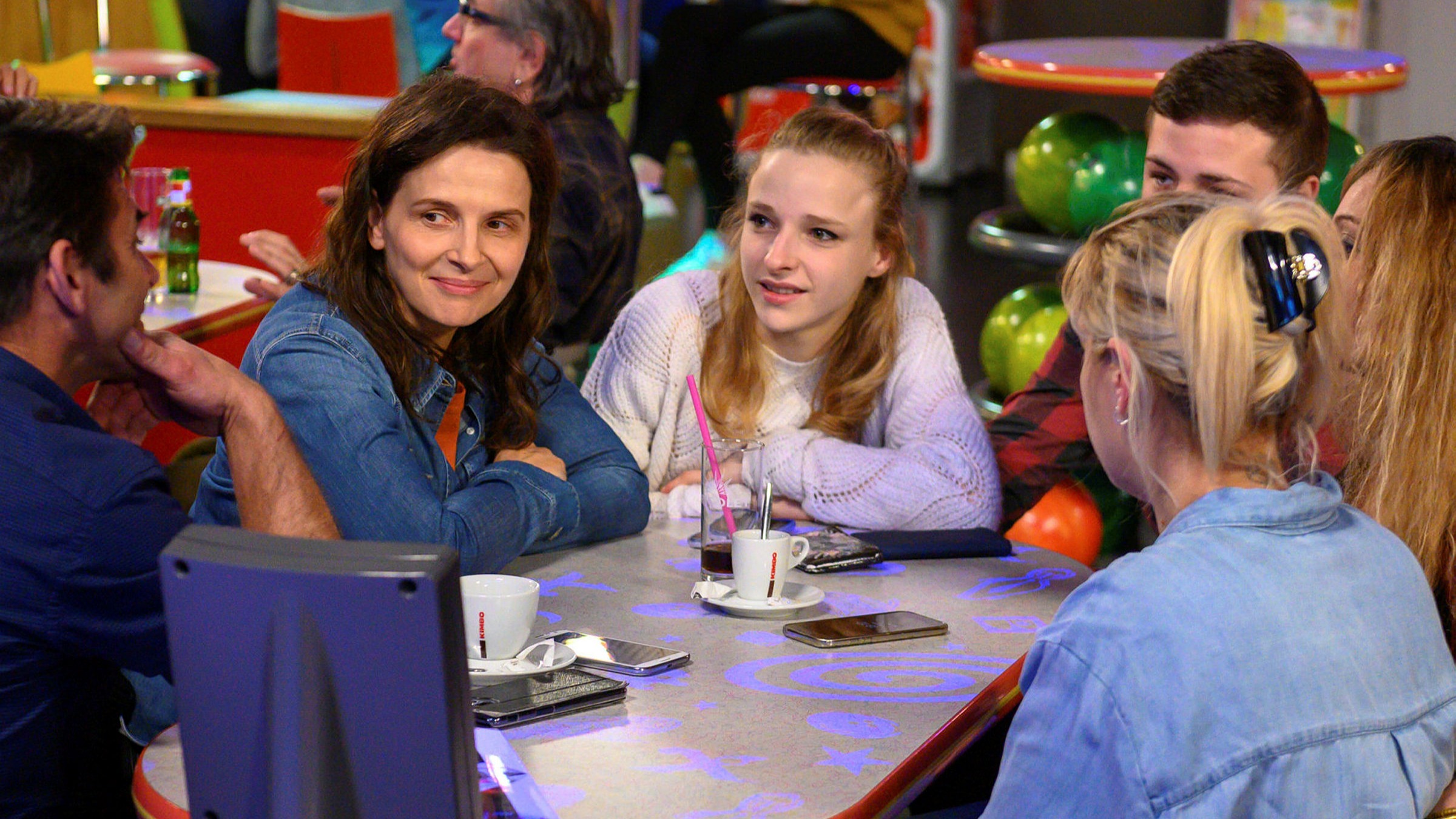
We know everything that’s going to happen here, including how these “two worlds” are destined to collide.That robs the film of some of the pathos of Netflix’s “Maid” and similar productions that really get into working class reatlities. Yes, there’s always a bowling alley scene, even in French entries in this genre.
So there’s a distance between us and cinemantic immersion and investment here just as Marianne feels a distance thanks to her dilettantism, how different she is from “these people.”
Its predictability doesn’t break “Between Two Worlds,” but it does soften the blows it intends to deliver.

Rating: unrated, profanity, smoking
Cast: Juliette Binoche, Hélène Lambert, Léa Carne, Emily Madeleine and Didier Pupin
Credits: Directed by Emmanuel Carrèr, scripted by and Hélène Devynck and Emmanuel Carrère, based on a book by Florence Aubenas. A Cohen Media Group release.
Running time: 1:46



