

The “Beanie Baby Craze” of the 1990s silenced anybody who ever had a laugh when learning of the
“Tulip Fever” that gripped Dutch collectors, investors and ordinary folk in 17th century Holland. And no movie about the Clinton Era plush toy mania could fail to find the fun in remembering folks who made and lost fortunes hunting down and “investing” in cute, cleverly-marketed children’s toys.
“The Beanie Bubble” may be a tad conventional in its approach to this “origin story” and its “rise and fall” narrative arc. But it’s a fun, infuriating trip down memory lane thanks to the people traditionally left out of this “story,” the women who made it happen for the guy who got all the credit.
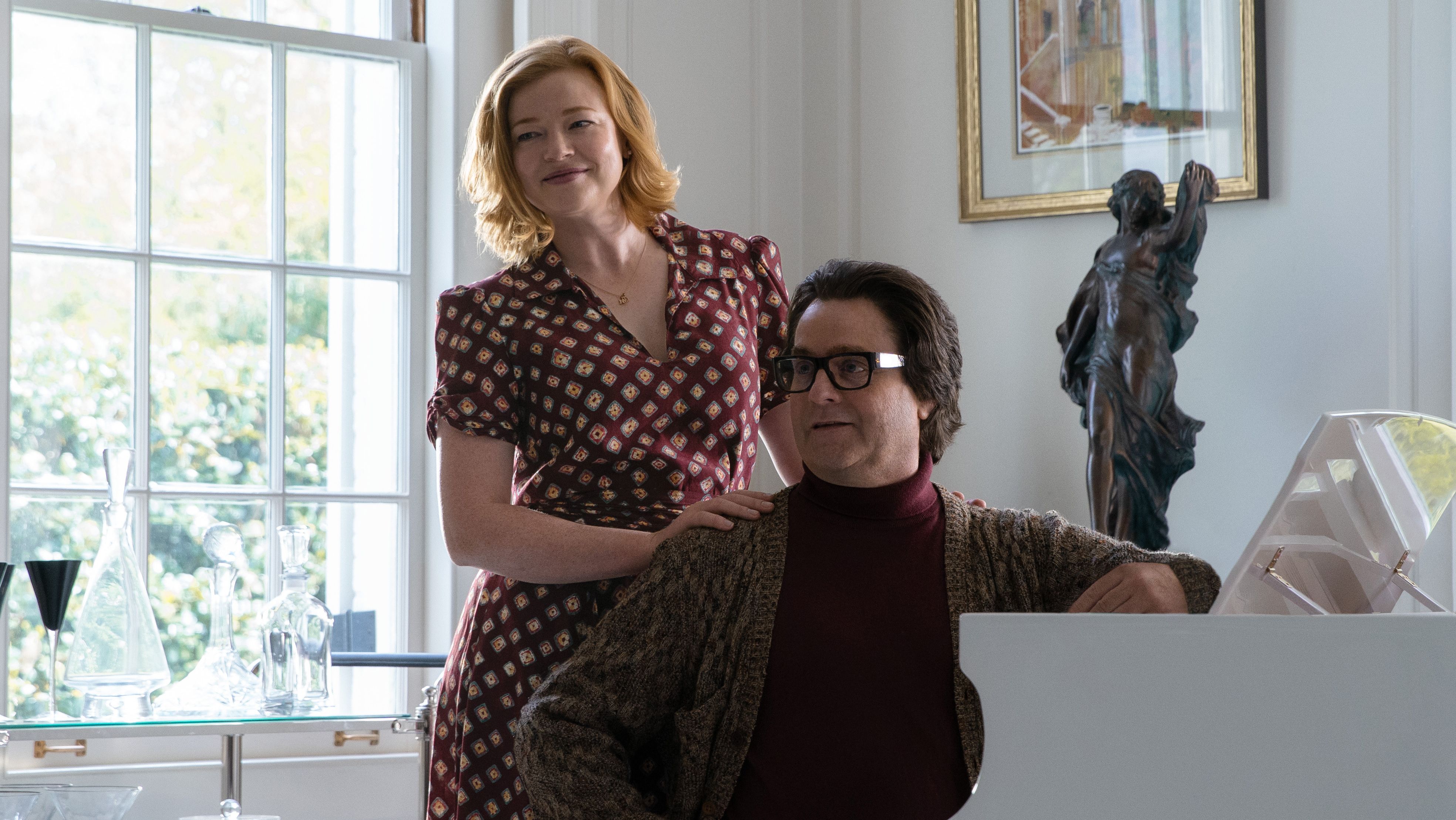
Zach Galifaniakis brings his disarming charm and a layer of “almost adorable creep” to his portrayal of Ty Warner, the “genius,” aka adult “child” who founded Ty Toys and spun his own myth out of it and the Beanie Mania it helped create.
But “Beanie Bubble” is about “Robbie,” the woman (played by Elizabeth Banks) who co-founded the company and became Warner’s partner, in and out of the office, only to have Warner cheat her out of credit and ownership. It’s about Maya (Geraldine Viswanathan), the smart young college student who joined the company as receptionist and who masterminded internet marketing and helped Ty Toys surf the ever-shifting shape of a business that turned from toys for kids to collectibles for “investors,” only to have her value discounted by the dopey, infantile and sexist CEO.
And then there’s Sheila (Sarah Snook) a single mom and business woman whose daughters became the original test-market for Beanie Babies and even helped design them with Sheila seduced into agreeing to marry this charming, kid-friendly billionaire. No, that didn’t work out either.
Each of the three narrates a portion of the story — Banks/Robbie remembering her struggles through a failing marriage to a paraplegic husband whom she supported with shop clerk jobs, only to meet Ty Warner and have him change her life, Maya recalling her Indian-American family’s disapproval of her abandoning medical school to learn on-the-job and invent internet marketing and Sheila recalling the way she, too, was swept off her feet by this sometimes clever, sometimes screwy toy company tyro.
The film is based on a book by Zac Bissonnette but fictionalized here, with probable composite characters exaggerated to fill a larger function in teh story, as one can’t quite nail down who this “Robbie,” “Maya” and “Sheila” might be, although the Internet provides some clues.
In the first act, each woman gives great reasons for the company’s success and their attraction to Warner as a partner/lover, boss or just suitor.
“We didn’t set out to make America lose it’s mind, but that’s what happened,” Robbie remembers.
“If he liked the way you think, he’d listen to you,” Maya enthuses.
“Oh Sheila, I would DIE before I let you down,” Sheila was told.
Giddy business breaks and happy accidents and courtship are covered in giddy musical montages set to The Cranberries (“Dreams”) and INXS (“New Sensation,” of course) and others.
Ty and Robbie take over toy conventions with their flash and their increasingly hot plush toy products. Ty has little epiphanies, and in spite of his sometimes shortsighted moves, he latches onto big ideas when he hears them.
One of Sheila’s little girls complains that she can’t get his “understuffed” (his real breakthrough) toys into her backpack to take to school. Let’s make something SMALLER, he decies. The chocolate-milk-addict Ty then grills the kids on naming critters that become best-sellers.
They’re his co-conspiractors, learning to dance and lip-sync with him to “Oh Sheila” for his bowling alley proposal to their mom.
Maya takes it on herself to knock out tiny poems to put inside the tag on every Beanie Baby sold.
Let the good times roll, with the warning signs popping up even in the best moments.
By the second act, every woman is seeing the flaws in Warner’s mercurial personality, and in the role “luck” played in his “empire,” which blew up almost in spite of his often poor understanding of business and the karmet, his bad hunches and general backward thinking.
And by the third act they’re all paying the price for his shortcomings, especially in the way he treats women.


Origin stories and their “Eureka” moments are endlessly fascinating to some of us. I never owned a Beanie Baby, or bought one for a child (Furbys, on the other hand…) or played “Tetris,” but the history of a product, a fad or a movement is great fodder for a film.
Producer-turned-writer/director Kristin Gore and music video-maker and actor-turned-director Damian Kulash set us up for a lot of those “when it happened” moments — that first suburban Chicago outbreak of “collecting,” the name of that first Beanie frog.
Their script bounces through two periods in time — the ’80s and the ’90s — taking shots at the Reagan recession and Reaganomics and the heady, unfettered new ideas (the Internet, instant-collectible toys) of free-for-all of the Clinton years, setting us up for “the fall.”
But the players are the chief assets here, with Banks giving us a magnificent meltdown, Viswanathan (of “Blockers” and TV’s “Miracle Workers”) embodying the tech, marketing and fad-savvy young person who isn’t so good at reading The Boss and Snook (“Run Rabbit Run,” “Steve Jobs”) impressing as the Only Adult in the Room.
It’s almost unfair to point out how this women’s story hangs on the quirky charisma of that damned Zach Galifianakis, but he’s just great here — charming, inspiring, motivating and in the end infuriating every woman he comes into contact with, real victim or a composite of all the women Ty Warner used and gave little credit or cash to in his heady years inflating “The Beanie Bubble.”

Rating: R, profanity
Cast: Elizabeth Banks, Geraldine Viswanathan, Sarah Snook, and Zach Galifianakis
Credits: Directed by Kristin Gore and Damian Kulash, scripted by Kristin Gore, based on the book by Zac Bissonnette. An Apple TV+ release.
Running time: 1:50


 Movie Nation