
This long awaited Dickens adaptation, “freely adapted” by Armando Ianucci & Co. finally earns wide (ish) release Aug. 28.
Where’d I put that sherry? Nothing like it for a Dickens adaptation.
This long awaited Dickens adaptation, “freely adapted” by Armando Ianucci & Co. finally earns wide (ish) release Aug. 28.
Where’d I put that sherry? Nothing like it for a Dickens adaptation.


Who would have guessed that Danny Glover and Maya Rudolph would make pleasant traveling companions for a tour of rural, backroads Mexico in pursuit of the perfect place to park his prized pig?
Actor and sometimes director Diego Luna, that’s who. With “Senor Pig (Mr. Pig)” he’s conjured up a pleasantly predictable time-filler if patently-absurd road comedy, more sentimental than silly. It’s up to Rudolph, playing things utterly straight, and the Glover at his most grandfatherly to make this work.
They never quite do, even as we get a glimpse of the Mexico old Ambrose Eubanks (Glover) remembers, a “beautiful country” or “good food” and “nice people.”
We meet Ambrose at the end of his tether, creditors nipping at his heels, his San Bernadino farm a cluttered, bankrupt shell of what it once was. Not that he gives that away to daughter Eunice (Rudolph) whenever she calls.
He’s 75, a sickly, broke and soon-to-be-homeless alcoholic who has just one asset free and clear, his beloved Howard, a pig. He flees town in a battered minivan, with a pocketful of just-received credit cards and a pig in the back, driving, sleeping on the side of the road and keeping the fact that Howard is undocumented and maybe a little sick himself from the authorities.
Until he hits Mexico. A little bribe keeps them going, but the place he’s selling the pig to, run by the son (José María Yazpik) of a long ago compadre, is this vast, gated complex of covered, crowded pens and a state-of-the-art abattoir. Howard just can’t do it.
“Imagine spending all your life in a little four by six pen, not able to even see the sun.”
Seventy-five is a little late for a pig farmer to grow this sort of empathy, but there it is. He can’t leave Howard there, can’t get him back across the border, can’t tell Eunice what he’s up to. But she finds him anyway.
And they’re off, driving from Jalisco to Guadalajara, hunting for Howard’s new home, a place where a breeding boar can have a life of porcine comfort.
The sweetness so informs the picture that you kind of wish Luna had taken the leap, cleaned it up and gone for something family friendlier than this. Howard’s drunken, profane tirades are abrupt and jarring, and don’t add a damned thing to the movie.
And something needed to be added. There aren’t enough incidents along the way, and what few there are we can see coming from a long way off.
Rudolph goes for “real” here, and that turns Eunice into somebody a hundred other actresses could have played. It’s a dull character given nothing special by putting a great comic in the role.
Glover has grumped through versions of Ambrose in scores of movies since his “Lethal Weapon” days. He’s charming, engaging to watch. But he alone, chattering away at a pig, is not enough to make the movie worth 100 minutes of your time.
The few samples of Mexican working class charm we’re treated to hint at a better movie that might have come from this idea, beginning with the better script that would have required.

MPAA Rating: TV-MA, much alcohol abuse, much swearing, much smoking.
Cast: Danny Glover, Maya Rudolph, José María Yazpik and Joel Murray.
Credits: Directed by Diego Luna, script by Diego Luna and Augusto Mendoza. A Canana release on Netflix.
Running time: 1:40


“Freak Show” is a sentimental satire of the “gay boy makes good at his new school” variety, a campy, cliche-ridden calypso not through “coming out,” but rather the “deal with it” part of that rite of passage.
Narrated, ad nauseum, by our stereotypically flamboyant, narcissist pronoun-neutral hero, it just goes to show what a mamma’s boy with fashion sense and an unlimited wardrobe can do to a private school where tolerance begins and ends in the African Americans they allow in to play for their football team.
Yes, Billy Bloom (Alex Lawther) “isn’t in Connecticut any more,” not in the boozy comforting company of his mother Muv (Bette Midler), who has left him in the care of his rich father in suburban New Orleans. “You’re in a Red State, now,” warns housekeeper/chauffeur Florence (Celia Weston, in rare form). He’d better lose the Boy George/Marilyn tributes and try to fit in.
Instead, “the ride that I call ‘My Life'” is a veritable Sherman’s March through Ulysses S. Grant Academy, as much as out-and-proud affront to the simple, happy natives as the idea of a school named for the Yankee general would be in Tulane territory.
Billy isn’t bending. He dons a fencing uniform and helmet to fend off the spitballs, and a Bride of Death dress to the near-fatal beating we know is coming.
If it wasn’t for Billy’s ready wit, the first straight “sidekick” (AnnaSophia Robb) who sidles up to him and the protection and friendship of “The Compassionate Jock (Ian Nelson) who is secretly into Jackson Pollock and Oscar Wilde, our Billy would never Bloom.
I didn’t take an instant dislike to “Freak Show.” It earned my disdain, the longer it carried on, through the romping “just friends” montage with quarterback Flip (Nelson) set to “a Plane Pour Moi,” the Muv flashbacks where Billy’s mother lectures him that when life kicks him, “You kick HIGHER,” the endless Oscar Wilde quotes and Billy’s assertion that “I didn’t choose to be fabulous, fabulous chose me!”
It’s not so much an assertion of “free to be me” as insufferable, where “edgy” is casting, oh, John McEnroe as the raging athletic coach or transgender icon Laverne Cox (“Orange is the New Black”) as the local TV reporter mean girl homecoming queen wannabe and raging homophobe Lynette (Abigail Breslin) vents to about Billy.
Girl. Please.
Actress turned first-time feature director Trudie Styler, who took over the gig at the last second, gets the first 45 minutes to dance by, and turns the last 45 into a slog, with no trite situation from an earlier teen or teen and gay dramedy left unrecycled, no costume change outrageous enough to truly outrage.
It’s not terrible, just irritating. “Freak Show” is too busy flying the white flag, surrendering to the obvious, to ever let its freak flag fly.

MPAA Rating: violence, sexuality, alcohol abuse
Cast: Alex Lawther, Abigail Breslin, AnnaSophia Robb, Ian Nelson, Celia Weston, Richard Pine and Bette Midler
Credits: Directed by Trudie Styler, script by Patrick Clifton and Beth Rigazio, based on the book by James St. James. An IFC release.
Running time: 1:31
David Arquette heads the cast of this horror heist tale. This one comes our way Oct 2.
Bills Rashida’s Dad, the one who figures her husband must be cheating on her in this Apple Films production for A24, or is it the other way around?

It’s melodramatic in the extreme, with lots of low lighting and women in emotional turmoil. But Argentinian drama “The Crimes that Bind (Crímenes de familia)” is dryer and quieter than your average movie-length soap opera.
Lacking even the emotional queues that music provides for most of its length, one can praise the glossy production design and courtroom scenes rendered as dull as real life, and that’s about it.
This latest feature from the director of “El Patron” weaves a tale of two crimes and one family so deliberately that by the time the twists and emotional payoffs in the third act arrive, we can be excused for being long past caring.
It’s a vehicle for Cecilia Roth, an Argentine screen legend (She was in Pedro Almodóvar’s second film, “Pepi, Luci, Bom and Other Girls Like Mom.”), who plays a Buenos Aires lady who lunches.
But the chats and meals with her closest friends have taken a turn when we meet her. We know why when she gets that collect call from the prison. Her son Daniel (Benjamín Amadeo) is in the slammer, domestic violence charges, or “assault aggravated by kinship,” as its called (in Spanish with English subtitles).
Daniel has drug problems, and an ex who won’t let him see their little boy. Alicia believes Daniel when he talks of being “set up.” Her husband, Ignacio (Miguel Ángel Solá) isn’t buying it.
They have a maid who provides a further source of stress. Gladys (Yanina Ávila) is a “simple” country woman in her early 20s, with a little boy, no social skills and the cowering manner of someone who feels out of her depth in any conversation. But Alicia keeps her on the job, and dotes on the little boy Gladys is seemingly unqualified to raise on her own.
The first twist in the plot is a bending of timelines. We get to know both Daniel and Gladys in court. She, too, has a charge against her “aggravated by kinship.” Eventually. Her trial comes after Daniel’s, even though the two court cases and Alicia’s struggles with them (She testifies in one.) are edited to seem concurrent.
We’re treated to long, semi-passionate harangues in the form of opening statements byt the accused and the prosecution to the three-judge panels. The difference between US and Argentine courts are interesting, up to a point. But these scenes, sans music and being only vague descriptions of the crimes, are “He said/She said” at their most boring.
Only one crime will be elucidated through flashbacks. Eventually.
Roth is a fine actress and gets a few heated moments to play. But in a film where much is withheld, including emotions, even she seems muted — muzzled. Her character’s journey is predictable, and even her Big Realization arrives with little fanfare or fireworks. Understated.
The title may fool you into thinking this is some sort of Argentine mob family saga, but don’t fall for that. This is a courtroom telenovela with better makeup and lighting, and fewer dramatics.
MPAA Rating: TV-MA, descriptions of violent crimes
Cast: Cecilia Roth, Miguel Ángel Solá, Sofía Gala Castiglione, Benjamín Amadeo, Yanina Ávila
Credits: Directed by Sebastián Schindel, script by Pablo Del Teso, Sebastián Schindel A Netflix release.
Running time: 1:39
This November release repairs the “Man of Steel” Kent parents, Diane Lane and Kevin Costner, for a story of ranchers who set out to rescue a grandchild living “off the grid” (Survivalists? Cultists? Druggies?) in the Dakotas.
Anything starring two of my favorite actors is already on second base. This Focus Features “awards season” release looks good.
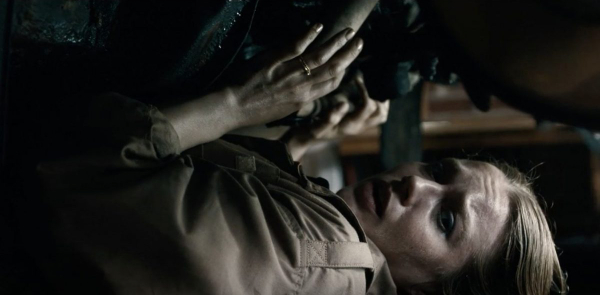
It happens often enough that it’s worth pointing out this neat bit of role-reversal in “The Unfamiliar.” Our heroine, Izzy Cormack, turns to her husband Ethan and says, “Stay here and call the police.” Or “Wait here, I’ll find” Emma or Tommy or Lily, whichever of their children is missing, taken by demonic spirits.
Izzy, played by Jemima West, is not just the protagonist here. She’s “wearing the pants” as we used to say — fixing their busted Mercedes, taking charge in a crisis, fighting back at whatever’s attacking her and her family, even if it’s all in her head.
Because Izzy is a British Army doctor, fresh back from Afghanistan. PTSD is very much on her mind as things go “bump,” her son Tommy (Harry McMillan-Hunt), husband (Christopher Dane) and teenage daughter (Rebecca Hanssen) act strange and all ANYbody can ask her is “Did you take your pills?”
The movie around this take-charge heroine is rubbish, with Hawaiian “spirits” stirring up stuff in a plot straight out of “The Brady Bunch.” There’s rarely a chill and only a scene or two in the third act that get across any sense of peril.
And you have to take off some of the points you give the script for making a woman the center of the action for laugh-out-loud moments of cultural appropriation. But aside from that…
Izzy comes home from a combat tour to a family that seems a little wrapped up in college-professor-husband Ethan’s latest project, either a non-fiction book on the Tiki gods and spirits of Hawaii, or “a children’s book,” complete with horrific illustrations, that uses those gods and monsters in a kid-friendly story.
Teen Emma (Hanssen) is still studying piano, but kind of remote. Son Tommy (McMillan-Hunt) is precociously tinkering with a short wave radio of his own design.
But the static out of that radio is sinister, Tommy keeps insisting he uses it to “talk to Dad when he’s asleep.”
Pictures fly off the walls, and Izzy is hallucinating deathly injuries her children incur. We see her visit a shrink, but don’t go into the session. Because there’s a fellow (Ben Lee) in the waiting room who seems to know her, reassures her that she’s “not mad,” and well, he has a BUSINESS card.
Why not bring him and his partner in for a seance?
Izzy’s efforts to “get to the bottom of this” include CCTV cameras, even though everybody knows demons don’t show up in HD. Ethan’s solution is a family holiday, back to Hawaii where his “research” began.
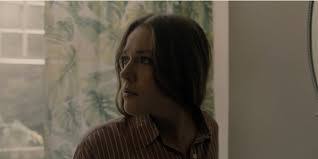
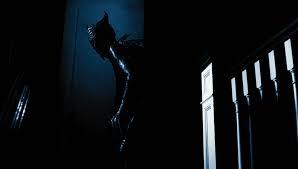
West never takes Izzy off the deep end — she is ENGLISH, after all. It’s a performance that shows us curiosity and concern, and the odd moment of shock. But Izzy isn’t given to panic, weeping or unalloyed terror.
That’s a justifiable approach to the character, but one that robs the movie of pathos and urgency. Because nobody else picks up the scream-in-fright slack.
What is the DEAL with these kids, this husband? So unconcerned. That mystery drives the story, and frankly isn’t enough to force the viewer engage with it.
The whole affair, with its posh accents, country house in England and absurdly roomie “jungle” rental in Hawaii, is entirely too prissy to scare anybody.
And the one good action beat — SOMEbody is allergic to bees, and is thus tormented by them by the demon — comes too late to make any difference.
MPAA Rating: Unrated, graphic violence, much of it involving children.
Cast: Jemima West, Christopher Dane, Harry McMillan-Hunt, Rachel Lin and Rebecca Hanssen.
Credits: Directed by Henk Pretorius, script by Henk Pretorius, Jennifer Nicole Stang. A Dark Star release.
Running time: 1:29

The most credible way for a story about Nigeria’s multi-billion-dollar Internet scamming industry to be told is by a Nigerian, from a Nigerian point of view. Only someone from the culture can speak freely to the attractions of this vast, illegal enterprise, and about the systemic corruption and moral decay that gave birth to it.
“Nigerian Prince” is a thriller that lays out the parameters of the “have-nots” preying on the “haves,” paints its anti-heroic “hero” into a corner and dares pass judgement on him, the “system” and maybe on us for falling for con artists.
First-time feature director Faraday Okoro has to contort this story to work an American into it, just to give the tale a victim and an outsider’s point of view, and that strain shows from beginning to end. But he’s still made a fascinating story of a dysfunctional country where everybody hustles, and all you can do is minimize the hustles pulled on you.
Eze, who prefers to be called “Easy” back home in the States, is the teen son of divorced Nigerian-American parents who arrives in Lagos, and is promptly conned out of “bribe” money. Eze (Antonio J. Bell) doesn’t want to be here, but his mother has shipped him there “to learn who you are” and maybe straighten him out. Not living with his father, he’s losing his way, getting in fights at school.
That entire premise, that sending somebody to an albeit vibrant but dangerous Third World African country so that he’ll “straighten out,” be safe and grow up to be better educated and more focused as an adult seems dubious. And “Nigerian Prince” in no way makes that case.
Unless the idea is that Eze sees just what his parents fled, and what they’re going through to give him a better life. Aunt Grace (Tina Mba) may be a college professor, but she lives in a tiny apartment with a single bed. Hot water is in short supply, and power black-outs are a fact of life.
“That’s Nigeria for you,” Auntie sighs, hinting that “powerful” people and corruption are the reasons for every chronic shortage and inefficiency in the culture.
The boy can complain to mommy back home all he wants. He’s stuck there for a month, he’s been told. Learn to eat the food, mind your aunt and cope with the limited Internet access.
That isn’t a problem for Prius (Chinaza Uche). When we meet him, he’s hustling some hapless Indo-African car shopper into buying the same stolen car he’s sold and resold before. The whole “I need you to send me your account information so that I can launder my cash through your accounts, giving you a BIG payday” online scam is just one con of many he’s running at the same time.
Prius is a “419er,” as they call the scammers of Lagos. It’s the number of the law in Nigerian legal code for Internet fraud. And when he and Eze meet, after mistaken identity punches have been thrown, Eze learns Prius is Aunt Grace’s wayward son. They’re cousins.
“Nigerian Prince,” which is ostensibly following two story threads — complaining Eze’s ongoing feud with Grace and his folks back home, and Prius’ parade of scams — merges into one story as Eze, who’s had his laptop and his lip busted by the older man, decides Prius is his new role model.
That unlikely turn of events is handled in a most ungainly and abrupt way, but never mind. Eze is quickly sucked into schemes aimed at keeping Prius out of jail, where the police chief who has him roughed-up is threatening a far worse fate.
“You are far too stupid to ever make any money in this (scamming) business,” he is warned. And by the way? Give the chief a bribe or you’re dead by Friday.


Okoro’s script, co-written with Andrew Long, plays with the racism-classism ingrained into Nigerian life. All a white Australian passenger (Craig Matthew Stott) at the airport has to do to retrieve Eze’s lost “bribe” money is be white and threaten to call the authorities.
The scams covered run the gamut, from the car title hustle to selling useless reserved tickets for rice you’ve been selling at a discount to customers who got there “too late” to get stock you have on hand, to literal money “laundering.”
Prius is caught, chased, hunted and threatened, and Eze falls into the background of the film, whose title is a play on words that works under several interpretations.
Uche makes a magnetic, amoral hustler who knows “this is wrong, but I don’t care.…In Nigeria, all anybody cares about is ‘money money money money.'”
The street life is vividly captured, and the dialogue — in English, Igbo and Yoruba (with English subtitles) — is sharp and expository.
If the plot takes a few predictable and a few implausible turns, that’s a forgivable sin in an otherwise eye-opening and immersive story that only a Nigerian could properly tell.

MPAA Rating: TV-MA, violence
Cast: Antonio J Bell, Chinaza Uche, Tina Mba
Credits: Directed by Faraday Okoro, script by Faraday Okoro, Andrew Long. A Vertical release on Netflix.
Running time: 1:44
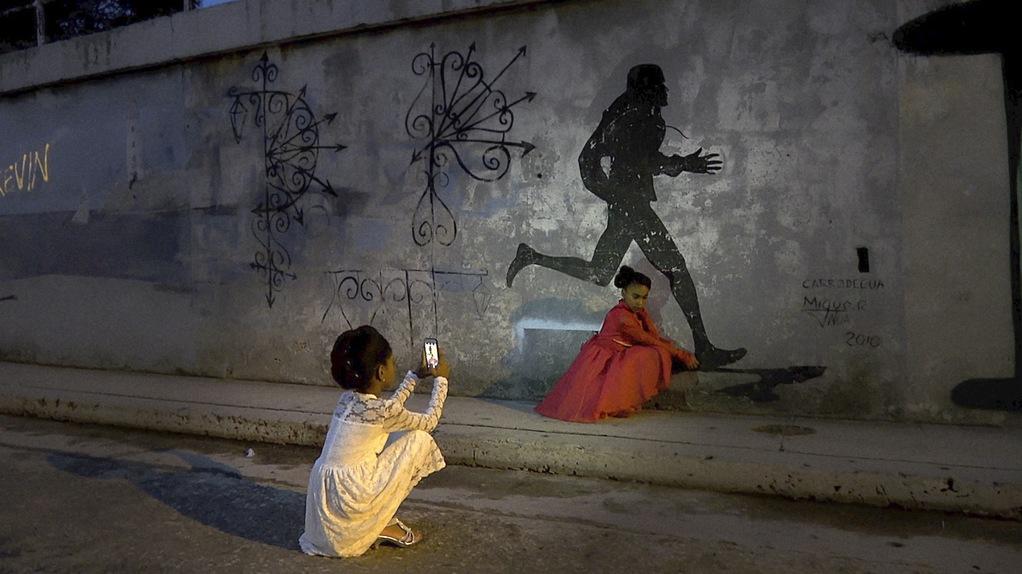
“Epicentro” is a lovely new tone poem to Cuba, as it is now, the Cuba behind the propaganda from within and without.
Havana is shown in all its worn, grimy impoverished glory and the people in all their vibrant, increasingly outspoken and testy semi-isolation. Long abandoned sugar refineries that once supplied Coca-Cola and crumbling housing dating back to the Spanish American War, the Eisenhower era American cars and the Soviet era trains, famed in many a travelogue, blend into this impressionistic sketch of the island After Fidel.
European writer-director-narrator Hubert Sauper (“We Come as Friends,” “Darwin’s Nightmare”) uses the idea of “Cuba as the epicenter of three dystopian chapters in human history — slavery, colonialism and the global projection of power.”
And the film, although loosely organized and more concerned with capturing arresting images, pays lip service to each of those.
The main focus is children, as we see Cubanschoolkids study dance and entertained by a silent film lecture/magic show that packs in the prehistoric landmarks of cinema — “The Kiss,” Melies “A Trip to the Moon” — and the earliest American “propaganda” films, about the destruction of the U.S.S. Maine and American intervention/invasion that chased out the Spanish colonizers.
The lesson? That history and media can be “faked.” And by the way, the “norteamericanos” “liberated Cuba,” no matter what happened between the two cultures in the 120 years since, no matter what you’ve been taught in school.
“Lies! All lies!” the little children shout, in Spanish with English subtitles.
Sauper follows European tourists into swank hotels and bars, and around town on a tour bu. And he visits apartments one could only call hovels. The gulf between “tourist” Havana and the real city is underlined when he stages an attempt to have a guest play the “daddy” of two adorable, neatly turned-out but dark-skinned kids so that they can swim in the four-star hotel’s pool.
“Not allowed, not allowed” the staff insist. With a camera present, they lose that argument. Racism, a vestige of slavery, is as evident there as anywhere else.
And Sauper spends a lot of time in conversation with women who seem to be sex workers, but who are outspoken critics of both U.S./Cuba relations, and of the limits of the lives in a country too poor to thrive without their former Soviet underwriters, and still under an American embargo on trade.

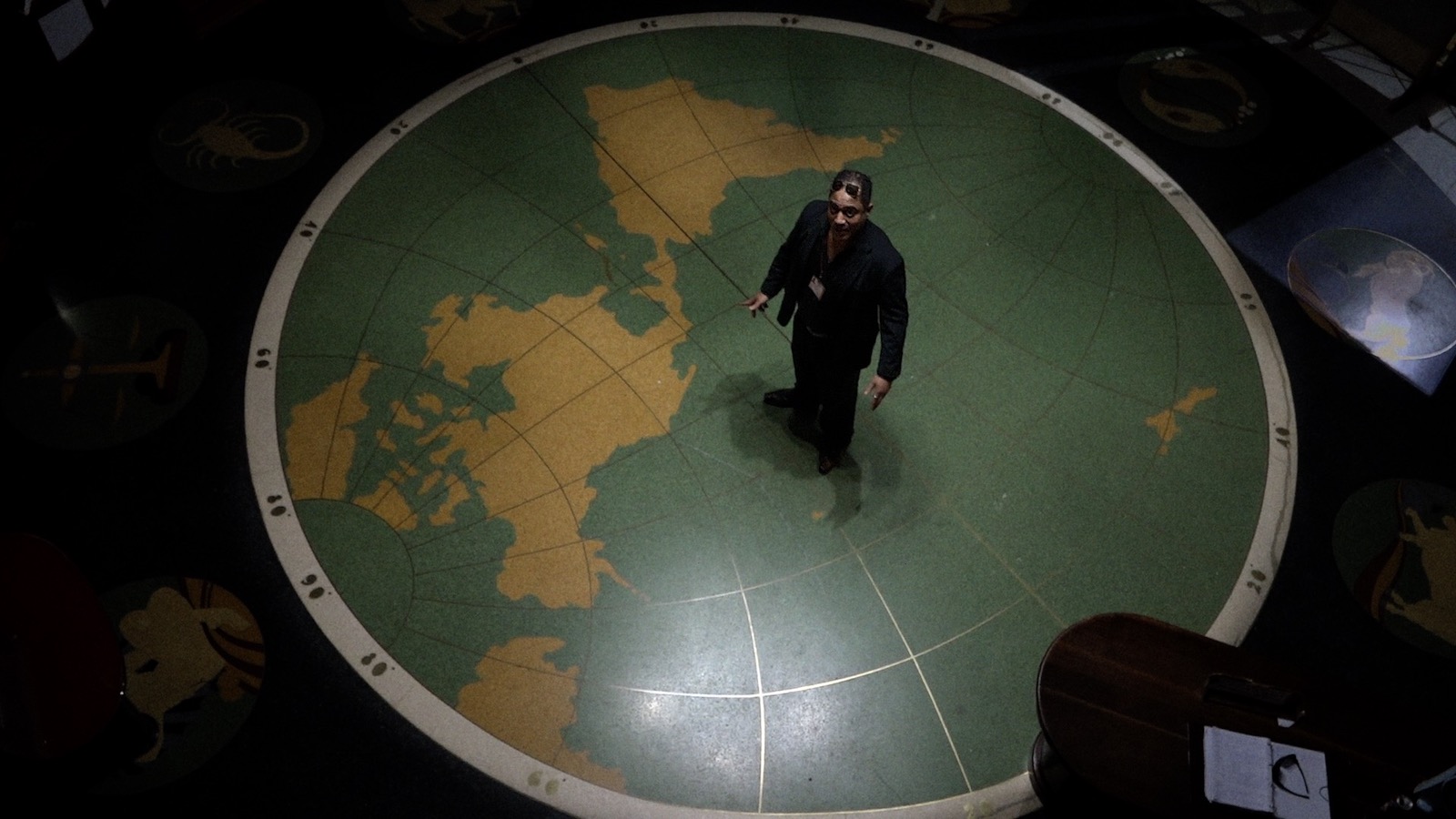

As “impressionistic” implies, it’s more a movie of impressions, quick sketches of street scenes — a photographer intruding on poor, private lives, captured by a cinematographer watching him do it, an old woman, singing along to “Bohemian Rhapsody” on her cell-phone in a back-alley bar so battered and timeworn that Columbus’s crew could have knocked back drinks there.
The children are given the screen time to recite long discourses on Cuban history and what they still don’t know about the outside world, just as isolated as their parents and grandparents were.
There’s just enough obesity, skin disease and bad teeth to make you question the marvels of the country’s famed socialized medicine. But the longer they’re kept from tourism and industrial investment and the further the Soviet subsidies drift into the past, that’s probably breaking down, too.
But whatever happens in the future, and there’s always a hint of “Cuba before it’s ruined by the US” to such films, Sauper has captured the island in the last days of Castroism (Fidel’s death is reported on TV) — lovely, crumbling, defiant and myopic, a “paradise” that has been tormented by the worst human history has had to offer.

MPAA Rating: unrated, profanity, alcohol
Credits: Written, directed and narrated by Hubert Sauper. A Kino Lorber release.
Running time: 1:48

 Movie Nation