Movie Review: Hopkins can’t save the Amateur Hour of “Elyse”

The opening voice-over narration of “Elyse” has a clumsy “English as a Second Language” wince about it.

“People would rather live in homes, regardless of its grayness.” “‘If we walk far enough,’ says Dorothy, “we shall sometime come to someplace.”

But the title character in this Stella Hopkins film is quoting from “The Wizard of Oz.” So you can’t blame the director and co-writer, wife of Anthony Hopkins, for the clunky usages.

The clumsy efforts at marrying a story of mental breakdown and treatment with L. Frank Baum’s children’s parable of 19th century monetary policy? That’s on Stella.

And yes, every other clunky line is hers. Even if she didn’t write them, she approved them. Every pretentious, empty directorial flourish — black and white scenes with splashes of color here and there — every amateurish performance, every second of this dithering, dull and pointless affair can be parked at Mrs. Hopkins’ feet.

Only her husband, playing the psychotherapist summoned to treat the bipolar/borderline personality disorder and possibly alcoholic “spoiled, entitled narcissistic little brat,” acquits himself with his usual immersive professional aplomb.

He’s indulged her — that’s the only word for it — and she’s parked her Oscar-winning spouse in a singular debacle, 94 minutes of almost uninterrupted ineptitude of a first-year-film-school-student level.

Elyse (Lisa Pepper, not good) is a rich lawyer’s (Aaron Tucker, dull) wife, daughter of “a lying b—h” of a mother (Fran Tucker, embarrassingly bad), mother of a nannied little boy, is unhappy and unstable, and the last one to realize it.

That first visit to Dr. Lewis (Hopkins) is shrouded in shadows and meanders between revelations, “Jungian or Freudian,” and discussions of the art of illustrator Maxfield Parrish.

And then Elyse, she of vivid dreams and hallucinatory idylls while she’s awake, gets drunk and breaks down. She’s catatonic, and not just over the party.

A hospital, medication and electroshock therapy are on the menu.

Inane snippets of conversation, an over-sharing reverie by a French-American (male) nurse, brittle, off-putting and stiff performances seemingly molded from single-use plastic, a story that goes nowhere and does so at an excruciating pace — “Elyse” is a quiet, shiny and empty catastrophe.

At least there’s a badly-scripted dream-memory of a trip to Joshua Tree by vintage MGA roadster back when Elyse was pregnant. The car is lovely. The light and staging? Incompetent.

And at least this won’t be the great Anthony Hopkins’ last film. “The Father” is due out in a couple of weeks. By then, this will be passed off as a husband’s Christmas present to a spouse out of her depth.

MPA Rating: unrated, alcohol abuse, profanity

Cast: Lisa Pepper, Anthony Hopkins, Aaron Tucker, Tara Arroyave, Julieta Ortiz and Fran Tucker

Credits: Directed by Stella Hopkins, script by Stella Hopkins and Audrey Arkins. A Margam release.

Running time: 1:34
Posted in Reviews, previews, profiles and movie news | Comments Off on Movie Review: Hopkins can’t save the Amateur Hour of “Elyse”

Movie Review: “Small Axe — Alex Wheatle”

Every film in Steve McQueen’s five-film series “Small Axe” has interesting characters, and a couple of them are strictly character-driven.

But it’s the milieu and the passing parade of history — real events, pivotal moments in British social justice — that grabbed me. And the further I get into it, the more convinced I am that the whole enterprise is best appreciated in a weekend long binge. Get through “Mangrove,” the densely-packed two hour opener. Adjust your ears to the dialect, the storytelling style and the overarching themes — Londoners from Jamaica, Trinidad, Grenada and The Bahamas overcoming virulent racism to become a vital part of British culture — and the later films just float by on a curry-scented Caribbeans-in-London breeze.

“Alex Wheatle,” the penultimate film, is about a much-honored British writer who overcame an orphaned childhood spent in the child welfare system, prejudice and imprisonment to find his voice and his place as one of his generation’s greatest authors of children’s and young adult fiction.

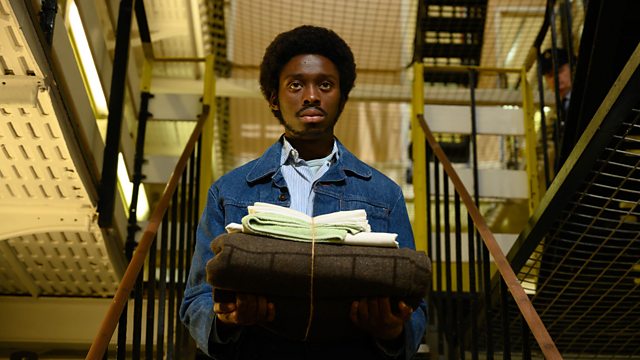
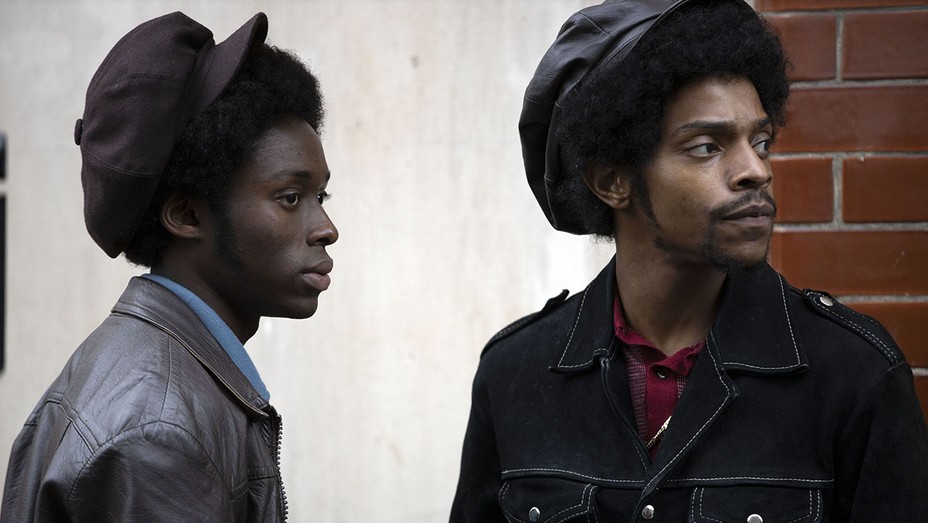
We meet Alex, born “Alfonso” (riveting screen newcomer Sheyi Cole) on incarceration day. He is shocked and sullen, a skinny waif settling into a cell with a friendly, helpful but oh-so-smelly convict he calls “a nasty rasta” (Robbie Gee, terrific).

As the kid lashes out at his new circumstances in rage, the great bear of a cellmate, the Rastafarian Simeon literally hugs the hate out of him.

“My ears is fully woken,” he says. Tell me your story and “start at the beginning.”

We see the abusive foster care Alfonso endured, the staid conformist attire and dialect he emerged from that system with, and his total immersion in all things Caribbean when he emerges, “on the dole” (“G-checks”) as a teen, taking a room in Brixton.

There’s something to be said for watching this entire series of movies with the subtitles on, which wouldn’t spoil Alfonso’s first meeting with his first mentor, the beret-bedecked hipster Dennis (Jonathan Jules, a delight). The kid is as mystified by the slangy, musical patois as any newcomer would be, as indeed any North American must be.

But not to worry. Dennis will set him up. First, get him out of those “PVC” clothes. I have no more idea what he means than Alfonso did.

A big step? “Learning the proper Black man’s strut…You always hunching like a Storm Trooper hunting the Jedi. You got to be the JEDI hunting the Storm Trooper!”

As the kid masters that, the dialect and getting by — “G-checks” and selling “a little kush” — he finds his first outlet, DJing.

And as all this is going on, the culture clash/racial-strife history we saw “begin” with “Mangrove” in the late ’60s comes to a head. An infamous house party fire — remember, we dove into community house parties with “Lovers Rock” — is on everybody’s lips — “New Cross Massacre” they call it.

That leads to protests, a street march becomes “a riot” and that’s how Alex ends up in prison, taking stock of his life and not even 20 years old.

McQueen makes the viewer work towards understanding the themes and subtexts of these films. He gloriously recreates the jaw-dropping delight the bullied, racially-taunted kid experiences the first time he sees the shops and colorfully-attired street life of “his” people on moving day.

But the state-provided ride there has a wonderful clue about Alfonso’s transition to Alex. The kid hears the long-running BBC radio series “Desert Island Discs” and he catches one of its decades of guests, a writer, talking about hearing music so obviously the product of greatness that he listens to it “just hoping some of that would rub off.”

That first visit to a record store furthers Alex’s transformation. It’s 1980 and he’s just been introduced to yet another whole new world, the one the viewer’s already been shown in “Lovers Rock.”

Departing from the formula or your typical streaming series, McQueen has created five stand-alone movies that intersect, and as they do further illuminate aspects of the culture, characters who shaped it and people like Alex Wheatle and yes, Steve McQueen who emerged from it.

Born in West London in 1969 to parents from Trinidad and Grenada, today a Turner Prize-winning artist, Oscar-winning filmmaker and Commander of the British Empire, no character in McQueen’s “Small Axe” could possibly have seen the day his success would be possible. But they could dream.

MPA Rating: TV-MA, violence, drug use, profanity

Cast: Sheyi Cole, Robbie Gee, Jonathan Jules

Credits: Directed by Steve McQueen, script by Steve McQueen, Alastair Siddons. A BBC Films/Amazon release.

Running time: 1:05

Posted in Reviews, previews, profiles and movie news | Comments Off on Movie Review: “Small Axe — Alex Wheatle”

Movie Review: McQueen’s “Mangrove” introduces us to the London he grew up in

“Mangrove,” the first film in Steve McQueen’s “Small Axe” quintet of movies revisiting the London of McQueen’s youth, is both the establishing film of the series and the most challenging to approach.

The movies, about the first generations of the Caribbean diaspora from former British colonies (Jamaica, Trinidad, The Bahamas, etc.), all paint a colorful picture of these
Black “outsiders” with their own music, way of dress and cuisine, and how difficult it was to gain acceptance in the rigid, racist UK of the ’60s and ’70s.

“Mangrove,” built around the community’s “Stonewall/Chicago 7” event, hurls us into the thick accents, the overt police harassment and violence and the politics of the times. And while it establishes McQueen’s style of immersive filmmaking for these movies, it’s of a denser texture and more trying length, forcing the viewer to adapt to the islands’ patois (accents softened with assimilation) in ways that the following films (“Lovers Rock,” “Red, White and Blue,” “Education” and “Alex Wheatle”) do not.

And it’s the most directly-historic film of the series, tracing Britain’s acceptance of one of the many cultures that make up the country’s fabric today to the last-straw-moment when that culture demanded acceptance.

The Mangrove was a landmark “Black Owned” restaurant that opened in Notting Hill in the pre-gentrification ’60s. The film captures the contagious optimism of Frank Crichlow (Shaun Parkes of TV’s “Lost in Space”) as he opens this Caribbean cuisine diner and brings “spicy food” to meet the demands of people who grew up with jerked chicken, goat curry and the like.

He could never have known it would start a culinary revolution that would reach full flower in the “Cool Britania” of the ’90s. But the opening of a place the diaspora could call its own was greeted with joy, a steel-drum band street party and success.

To keep it, Frank would have to fight. People would have to march, protest, be arrested and have their day — 55 days — in court.

McQueen builds the escalating cycle of police harassment and violence around the actions of one street cop, the racist de facto “sheriff” of Notting Hill, Frank Pulley. We see the seething resentment Pulley (Sam Spruell of “Legend,” “Sand Castle” and “The Informer”) embodies and passes on to his colleagues. The police department of the day was all white and racist enough to have stationhouse card games where the objective was to force the PC (police constable) who drew the Ace of Spades to “arrest (and beat) the first Black bastard we see” on the beat.

Pulley knows who Crichlow is from an oft-raided coffee shop, The Rio, he’d attempted to run earlier.

“He’s just got to know his place,” Pulley growls. And so the many visits and raids on The Mangrove begin.

Crichlow knows exactly what’s happening and what’s coming, and is furious and defiant from the start.

“We pay we taxes! We pay we bills! This a restaurant, not a battleground!”

But he’s wrong. The self-policing — we see his customers chase would-be drug users/dealers out — won’t be enough. Their mere presence is an affront to the white supremacist cops and “the system.”

Soon Crichlow will have to accept the offers of help from the Black Panthers, in the form of Altheia Jones (the wonderful Leticia Wright of “Black Panther”), and the poet laureate of neighborhood resistance, Darcus Howe (Malachi Kirby of the recent “Roots” remake). In truth, Crichlow was an activist himself and thus didn’t need persuading.

Soon they’ll be printing up fliers in the upstairs offices, despite cops busting in and smashing their mimeograph machines.

And soon after that, they’ll be taking to the streets, a dozen unprovoked “raids” later. That march leads to the police riot, and that’s what lands “The Mangrove Nine” in court.

The trial dominates “Mangrove,” and what’s striking in McQueen’s recounting of it is how effective the activists were at questioning cops and prosecution witnesses (some represented themselves), how fiery they came off, despite angry rebukes from the judge (played by Alex Jennings) and how quickly the mostly-white jury accepted both their decorum-shattering behavior, and their point of view.

It’s as if white people knew what was going on with an out of control, racist police force, and were ready to be embrace “enough is enough.”

“Mangrove” isn’t the most emotional film in the series, nor the easiest way to be eased into this world. Courtroom dramas are predisposed to bogging down on the screen. But McQueen makes its history come alive, and lets us see the importance of this restaurant and its place within the events, lives and culture that emerge from every other movie in the series.

“If you are a big tree,” Bob Marley sang in the allegorical anti-white supremacist song that gives its title to the series, “We are the small axe, Sharpened to cut you down (we shall), Ready to cut you down…”

MPA Rating: TV-MA, violence, profanity

Cast: Shaun Parkes, Letitia Wright, Malachi Kirby, Sam Spruell, Rochenda Sandall and Jack Lowden

Credits: Directed by Steve McQueen, script by Alastair Siddons, Steve McQueen. A BBC film on Amazon

Running time: 2:04

Posted in Reviews, previews, profiles and movie news | Comments Off on Movie Review: McQueen’s “Mangrove” introduces us to the London he grew up in

Netflixable? Frights come via phone in the Korean thriller “The Call”

Korean filmmaker Chung-hyun Lee makes a splashy K-horror debut with “Call,” which Netflix has unhelpfully retitled “The Call” for North American purposes.

Lee takes a simple supernatural premise and runs it to death and then some in this sinister tale of a land-line that cuts through time, if not space, in a Korean village.

Two young women of 28 who lived at the same address, in the same house, but decades apart, connect on an old cordless phone.

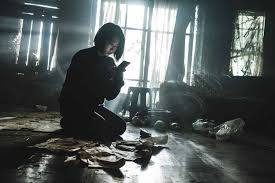
Seo-yeon (Park Shin-Hye) has had a bad day, resentfully visiting her sickly mother in the hospital, nagged to visit her father’s grave. To top it off, she lost her phone on the train back to the village where she grew up and the big old house Mom (Kim Sung-Ryung) has held onto all these years.

Luckily, she tracks down the cordless phone. But when it rings, she hears a frantic, confused voice that doesn’t make any sense. It takes her a while to figure out that the voice is that of someone who used to live there. It takes her a longer while to convince the voice on the other end, Young-sook (Jong-seo Jun) that her 1999 “present” isn’t Young-sook’s present.

“No Walkman? You listen to music on your ‘smart phone?'”

And it isn’t long until Seo-yeon realizes that Young-sook’s “present” is hellish — kocked indoors, tortured and subjected to occult rituals by her adoptive “shaman” mom (El Lee). Poking around the house Seo-yeon finds evidence of a secret basement room where some of this took place.

The late fall of 1999 was a fateful month in both their lives. And when Young-sook hears how Seo-yeon lost her beloved father, she makes a pitch (in Korean with English subtitles).

“Maybe I could bring your Dad back to life!”

If you know the date, time and means of accidental death, and it’s coming right up on the calendar, why not? Seo-yeon barely has time to get used to this miracle (Ho-San Park plays her dad) that transforms her life when, digging around, she uncovers Young-sook’s upcoming date with death.

“The Call” becomes a story of what comes afterward, the obligation, shared guilt and intertwined destinies of these two. Because one of the them is a lot more twisted than the other and saving her isn’t quite as simple as preventing a house fire.

The script cleverly hides the Mobius Strip engineering built into this tale of salvation, murder and woe. Young-sook, from the past, has an easier path to impacting the future. Seo-yeon has to do more research and up her game to 3D chess to fight back.

Pathos and suspense compete for screen time as the party line from Hell consumes them both, and others become collateral damage. Writer-director Lee taken that haunted phone/phone-calls-through-time gimmick from “Don’t Let Go” and other films and made the stand-out movie in the genre out of it. The effects — showing scars, and then people and automobiles vanishing as history is altered, are first-rate.

The leads aren’t given much time to soak in this incredible turn of events they’ve fallen into, and the script is at its trickiest in making us guess just how much info each has on what’s happening or about to happen that first time they connect via phone.

El Lee, in cadaverous makeup that gives her the look of a murderous manikin, stands out in support. Jun, playing an under-socialized naif with boundary and self-preservation issues, is a manic fright. And Park ably suggests an “innocent” dragged into this who isn’t all that innocent, and has inner resources of her own.

There have been too many movies titled “The Call,” so when Hollywood remakes it they’ll have to tweak that. But Chung-hyun Lee has delivered a tight, surprising and moving thriller good enough to ensure that they will.

MPA Rating: TV-MA, graphic violence

Cast: Shin-hye Park, Jong-seo Jun, El Lee, Ho-San Park and Sung-Ryung Kim

Credits: Scripted by directed by Chung-hyun Lee. A Netflix release.

Running time: 1:52

Posted in Reviews, previews, profiles and movie news | Comments Off on Netflixable? Frights come via phone in the Korean thriller “The Call”

Netflixable? “The Beast (La Belva)” is the Italian “Taken”

He looks to be 50ish, balding, tattooed and showing his miles. Troubled. And when his doctor asks what would help, his request is direct and simple.

“Up my dosage,” he says, in Italian, with English subtitles.

Captain Riva has his demons, and we see little flashes back to their source. He was in the service for 30 years. He saw things. He did things. And awful things were done to him.

You don’t need subtitles to read “post traumatic stress disorder” into the title character in “La Belva (The Beast).” And you don’t need our anti-hero (Fabrizio Gifuni) to mutter, into a phone, that he’s an “uomo con particolari capacità,” a “man with particular skills,” to see this thriller for what it is — an Italian “Taken.”

He’s haunted. He’s divorced. He has two children, a teen son who’s never forgiven him for being too wrapped up in his own mess, and a six year old daughter who adores him.

Guess who’s “Taken?” Guess what he does about it?

Director and co-writer Ludovico Di Martino (“Il Nostro Ultimo”) gives us a violent man who takes a horrific series of beatings, stabbings and shootings, all in a frantic pursuit of a person or persons who might be settling some old score with him or might just be into very little girls.

“The Beast” may hit its climax a solid thirty minutes before the movie ends. But the grit, the grim violence and the surprises — in a story that is as naked a “Taken” ripoff as Liam Neeson’s legal team could tolerate — make it a gripping, grueling ride, start to very very VERY drawn-out finish.

Gifuni (“The Cezanne Affair”) makes a properly hulking and stoic lead, traumatized, desperate for that “dosage” just so he can be close to “normal” and have his kids over to dinner. Mattia (Emanuele Linfatti) isn’t having it. Whatever he told their mother (Monica Piseddu), he and little Teresa (Giada Gagliardi) are ducking into a burger joint and ducking the crazy old man.

He only steps outside “for a second.” That’s all it takes to be “Taken.”

Leonida Riva isn’t waiting to tell his wife how their son screwed up. He’s not waiting for the cop (Lino Musella) to get results from the department’s frantic dragnet. He steals a police radio and we’re off– tracking the kidnapper, then the drug dealers who might know the kidnapper, then checking in with old contacts to see who might be responsible for all this.

The fights are savage and in-your-face, with the best set-piece an homage to that famous, furious brawl in the Korean classic “Oldboy.” The climax is more anticlimactic, and the third act goes on well beyond that, settling into something far more sentimental.

But no matter. We’re happy to be taken along on the chase and taken through showdowns showcasing our tough old guy’s “particolari capacità.”

MPA Rating: TV-MA, graphic violence, drug content

Cast: Fabrizio Gifuni, Lino Musella, Monica Piseddu, Emanuele Linfatti, Giada Gagliardi and Andrea Pennacchi

Credits: Directed by Ludovico Di Martino, script by Claudia De Angelis, Nicola Ravera and Ludovico Di Martino. A Warner Media film on Netflix.

Running time: 1:37

Posted in Reviews, previews, profiles and movie news | Comments Off on Netflixable? “The Beast (La Belva)” is the Italian “Taken”

Netflixable? “Midnight at the Magnolia” is Hallmark Channel bland

“Midnight at the Magnolia” is a holiday romance as tasty as bargain-shelf whitebread and edgy as a butterknife. It’s Example One in that age-honored adage that America is filled to the brim with competent actresses and actors, but “star power” and “screen charisma” are what count, and are still as rare as Tanzanite.

Maggie and Jack are lifelong friends who’ve realized a lifelong dream. They co-host “The Windy City Wakeup” onFM98.8 in Chicago. And all we need to know about the movie is right there, in the sparkling banter between perfectly pretty Maggie (Canadian Natalie Hall, of “You’re Bacon Me Crazy”) and unshaven/snarky Jack (Canadian Evan Williams, of “A Date by Christmas Eve”). As in, there isn’t any.

These two couldn’t host a podcast from Paducah, much less an energy-ratings driven morning show in the Second City.

But gosh, here’s their boss, telling them they’re up for a satellite radio promotion thanks to the legend “Judd” someone or other.

They chat, frankly but benignly, about their love lives on the air. Their families, who’re close, don’t mind. But their latest romantic partners? The ones they haven’t allowed to “meet” their respective families? They’re a bit put off. Nice about it, but…

Telling a radio audience they’ll relent and introduce them to their (united) extended families over the holidays in the legendary jazz bar/restaurant their dads co-own isn’t considerate or discrete. EVERYbody can see their friendship stands in the way of new love.

Who WILL they share a New Year’s kiss with on “Midnight at the Magnolia?”

I mean, their siblings and parents have all expected them to make a love connection, Maggie’s “If something were going to happen, it would have” notwithstanding.

Jack’s fecklessness and Maggie’s eagerness to accommodate show history, but can they “fake it” convincingly enough to fool their radio audience with a surprise “We’re TOGTHER” announcement, on the air and online, New Year’s Eve?

There isn’t a single line in the script pithy enough to bother quoting. “The Man Who Came to Dinner” this isn’t.

There is nobody in the supporting cast colorful enough to steal a scene, much less the movie.

And the leads? Competent, attractive, with no chemistry and zero sizzle or spark. G-rated or not, this “romance” should make us feel the longing they’re denying, the hurt they feel if things don’t pan out.

Hall and Williams would have trouble standing out in this blase supporting cast, much less as leads.

When everyone and everything is this low-heat, even a Hallmark level holiday romance faces that dreaded two-word review every actor and filmmaker fears.

Who cares?

MPA Rating: TV-G

Cast: Natalie Hall, Evan Williams

Credits: Directed by Max McGuire, script by Carley Smale. A MarVista movie, a Netflix release.

Running time: 1:27

Posted in Reviews, previews, profiles and movie news | Comments Off on Netflixable? “Midnight at the Magnolia” is Hallmark Channel bland

Netflixable? “Jingle Jangle: A Christmas Journey”

The choreography by Ashley Wallen sparkles and dazzles.

Madelen Mills, Anika Noni Rose, Ricky Martin and Lisa Davina Phillip sing, but so do Forest Whitaker and Keegan-Michael Key — who sings the villain’s show-stopper, “Magic Man G.”

The settings are baroque, brass-burnished and gorgeously detailed, creating a Dickensian city (Cobbletown) with a far more diverse populace.

“Jingle Jangle: A Christmas Journey” has the makings of a film kids get into, colorful and cute (ish) and tuneful — “Hugo” and “Short Circuit” mashed up with “The Greatest Showman.” If only it wasn’t so…long.

And the message of this “Christmas Journey?” Um, protect your copyrights, lest your assistant cash in on them? Toys will only work if kids truly “believe?” Because the holiday is all about the toys?

“Jingle Jangle” may be a giant step up in ambition for writer-director David E. Talbert (“Almost Christmas”). And while it never offends, this shiny, empty-headed musical bauble doesn’t cut the mustard, pleasantly-forgettable songs notwithstanding. The arrival of its show-stopper is jarring, because of how boring the first half hour has been. The fact that little that follows comes close to that highlight further dulls the senses.

A not-quite-pointless framing device has a grandmother (Phylicia Rashad) reading the kids a whole new story, something a little more up to date than Clement C. Moore’s “A Visit from Saint Nicholas,” she promises.

She tells of a great toy inventor, Jeronicus Jangle (Justin Cornwell) whose Jingle Jangle toyworks/shop is where the magic happens.

His greatest gadget of all is his new automata, a tiny metallic matador (voiced and sung by Ricky Martin) who develops a mind of his own with a dollop of magical elixir. “Every child in the world” will get one,” Jeronicus declares.

But the toy and the shop assistant, aspiring inventor Gustafson (Justin Cornwell) conspire to steal away with the master’s master blueprints, and Jeronicus is lost.

Years later, he’s just a widowed old man (Oscar winner Whitaker) keeping his banker (Hugh Bonneville) at bay, fending off the advances of delivery-lady Johnston (British actress Lisa Davina Phillip), dismissing his visiting granddaughter (Madalen Mills), desperate to come up with something unique and spectacular.

Once the granddaughter and nerdy new shop assistant Edison (Kieron L. Dyer) set their minds to helping, you know that’ll come, and that the older Gustafson (Keegan-Michael Key) will want to get his hands on it.

I’m not the age-range Talbert is shooting for here, but I laughed maybe once. The only songs that tickle are Martin’s matador number (a grin) and Key’s big mustache-twirling ego trip “Magic Man G.”

I liked the granddaughter Journey’s aspirational (“longing”) song, the “Square Root of Possible (is me).” The rest? Meh.

The dancing crackles, and even Whitaker gets into it (to a reggae-ish tune). There’s no slapstick to speak of, the new automata is a little “Short Circuit” and a lot of “Wall-E.” Aborbs, but come on.

The whole affair has a touch of “Polar Express” about it, kind of holiday heartless. Even “Toy Story” isn’t just about the toys.

Maybe the gadgets, the cute kids and the dancing will hold younger kids’ attention. But if they wander out of the room at the 75 minute mark, at least you’ll know why.

MPA Rating: PG for some thematic elements and peril

Cast: Forest Whitaker, Madalen Mills, Anika Noni Rose, Keegan-Michael Key, Ricky Martin, Lisa Davina Phillip, Phylicia Rashad and Hugh Bonneville

Credits: Scripted and directed by David E. Talbert. A Netflix release.

Running time: 1:58

Posted in Reviews, previews, profiles and movie news | Comments Off on Netflixable? “Jingle Jangle: A Christmas Journey”

Documentary Review: “Museum Town” tracks a dying city’s attempts at revival via a Big Museum

The largest museum of contemporary art in the world, acres and acres in size, was opened in a dying industrial town in The Berkshires of Western Massachusetts.

MASS MoCa was the most “out there” and yet doable pitch thrown at North Adams, Mass. locals and state officials when the one factory in their “one factory town” closed in the 1980s.

And getting it in there, obtaining state backing and the support of artists and the “arts community” which dumpy, industrial North Adams is pretty far removed from and gauging its impact (or the lack of it) on the city is the story of “Museum Town.”

This engaging documentary and labor of love from one of those instrumental in giving the facility its start, its first development director, now a first-time documentary filmmaker, Jennifer Trainer.

Trainer, a journalist by training, tells the industrial story of North Adams, which first industrialized as a print and dye works in the Industrial Revolution, a company that help on for nearly a century, providing employment even as it polluted the town.

“You could tell which dye they were using by the color of the river that day,” one older local remembers.

An electrical parts factory moved in afterwards, another vast workforce in a huge collection of spaces, putting most of the women of the city to work during World War II and the decades after. And then Sprague up and moved out.

Trainer’s film tells its story in three threads. There’s the history, and the efforts of local officials and boosters to find something to stop the city’s utter collapse (soaring unemployment, social services strained, etc). We meet the nearby artist/dreamers who pushed the idea and deal with its successes and failings to this day.

Then there’s artist Nick Cave — NOT the icon rock icon. We see this contemporary artist install, in a huge space, an exhibit quite typical of today’s MASS MoCa. “Until” was huge in scale, splashy, pushing the museum’s fabrication shop — where craftspeople help an artist “realize his vision” — to its limits. It is a show designed to draw a crowd, at least at the opening.

It took years of pushing, navigating the shifting currents of Massachusetts politics to obtain the huge amount of start up funding. Trainer and those she interviews take us through that, and serve up this delicious anecdote. The plans, approved by then-governor Michael Dukakis, needed further support from the incoming Republican governor William Weld. We hear how the skeptical Weld visited the place to make his mind up about it, treated to an edgy installation by art student turned rock star David Byrne.

“Who knew our Republican governor was actually a huge Talking Heads fan?”

Famous visual artists (Robert Rauschenberg) and artists who gained fame in other media (Laurie Anderson) are a signature of MASS MoCa, which has room for performance spaces, as well as performance art. Wilco shows and metal sculptures can vie for your attention on a given week.

Meryl Streep reads from Henry David Thoreau’s “Walden,” from letters between staff and artists, and from a scathing New York Times review of a museum low point, when a Swiss diva abandoned an ever-growing planned show because of problems of “vision,” exposing MASS MoCa to ridicule and vast losses.

What’s sobering about the film is how plainly this experiment in high culture re-purposing could never work any where else on this scale. Thomas Krens, the nearby college museum curator and co-founder who first came up with the of putting a museum in the Sprague factory points to the Guggenheim Museum in Bilboa, Spain, as akin to MASS MoCa. But whatever the violent history of Basque country, Bilboa’s landmark has a famous architect, a gigantic foundation and a scenic coastal city and waterfront property to recommend it.

Smaller scale versions of industrial buildings turned into galleries have worked all over the world. But try to replicate this grand experiment anywhere outside of The Berkshires, home to colleges, Tanglewood and affluence, and see how far you get.

“Museum Town” still makes makes for a fine recounting of one instance where “thinking big” in the always-strapped-for-cash museum world paid off in post-industrial North Adams. Trainer lets us meet bold thinkers who found a way to put a modern twist on what a museum — “an eighteenth century idea (stuck) in a 19th century box” — could be.

Credits: Directed by Jennifer Trainer, script by Noah Bashevkin, Pola Rapaport and Jennifer Trainer. A Kino Lorber release.

Running time: 1:16

Posted in Reviews, previews, profiles and movie news | Comments Off on Documentary Review: “Museum Town” tracks a dying city’s attempts at revival via a Big Museum

Netflixable? Bruce Willis in his C-movie twilight, “Hard Kill”

We always knew how Bruce Willis would spend his celebrity dotage — Shakespeare in the Park, maybe a spirited farewell tour as “Bruno” with his band.

OK, maybe we didn’t. But seeing him in — BARELY in — C-movies like “Hard Kill” is just another reminder that some guys can’t let go, can’t change a lifetime of piss-poor movie choices and don’t know, the way Garbo and Cary Grant did, when it’s time to “close the door” and leave with their screen image intact and immortal.

“Hard Kill” is a garbage thriller made because the producers had access to an abandoned factory complex, a lot of tac gear to dress their color-coordinated “terrorist” minions in and Bruce Willis’s name.

Willis plays Chalmers, the billionaire ex-military chief of a tech empire who hires/tricks an elite mercenary team led by Derek (Jesse Metcalfe of “Desperate Housewives” and “Chesapeake Shores”) and Sasha (WWE minx Natalie Eva Marie) into helping him recover not just the story’s “MacGuffin,” a magical artificial intelligence gadget that “in the wrong hands” could doom us all.

And it’s in the wrong hands, those of the terrorist named “The Pardoner” (Lamest villain name ever, lamely played by Sergio Rizzuto).

Another thing in the wrong hands? Chalmers’ daughter Eve, the tech genius behind his Charterhouse Industries, is being held hostage. And I didn’t have to look up Lala Kent, who plays her, to realize she’s a no-talent, either a model or reality TV creation.

The fights and shootouts are fine, basically commandos taking out one helmeted minion after another.

The dialogue is limp as week-old Ramen, and the performances give “perfunctory” a bad name.

Willis? He’s just a wizened, pistol-packing bald guy who used to spend his holidays flying to LA, “having a few laughs,” a very long time ago.

MPA Rating: R for violence and language throughout

Cast: Jesse Metcalfe, Bruce Willis, Lala Kent, Natalie Eva Marie, Texas Battle and Sergio Rizzuto.

Credits: Directed by Matt Eskandari, script by Joe Russo and Chris LaMont. A Vertical release on Netflix.

Running time: 1:38

Posted in Reviews, previews, profiles and movie news | Comments Off on Netflixable? Bruce Willis in his C-movie twilight, “Hard Kill”

Netflixable? A SWAT team goes rogue in the ruins of their Iraqi city, “Mosul”

For my money, the best action picture on Netflix right now is a grim combat thriller set in the bombed-out ruins of the Iraqi city, “Mosul.”

It’s an intimate “Blackhawk Down” meets “Saving Private Ryan” tale of a mission and “attrition,” grizzled professionals battling the murderous “on a medieval scale” soldiers of ISIS, or “Daesh” as they’re called in the Middle East.

The film feels like you’re trapped in a first-person-shooter video game where the stakes are real, the learning curve is steep and the peril — house-to-house fighting where every building is mostly ruined, and a potential threat. It feels like you’re in Mosul, when they filmed it in Morocco. And it’s so inside the combat zone and the culture — Arabic is the only language spoken — that it plays like an Iraqi war memoir, even though this “inspired by true” events tale was written and directed by the guy who scripted “The Kingdom” and “World War Z.”

“Mosul” is set in the last days of the city’s “latest” occupation, when Daesh is “fleeing.”

“Do THEY know that?” Major Jasem (Suhail Dabbach, in a breakout performance) growls.

He leads the Nineveh SWAT team, what’s left of it. They’ve survived the various occupations, they still have enough men and battered Humvees to carry the fight to Daesh. They show up just as young policeman Kawa (Adam Bessa) has fired his last round in the firefight that saw his unit — including the uncle who got him the job — all but wiped out, pinned down in a ground floor storefront.

Jasem sizes him up and brings him aboard. There’s no arguing. Just take your uncle’s hat, change shirts and you’re “one of us.”

He has no idea of “the mission” these guys are on in the “wrong side” of Mosul. But he can use a gun, and he’s kept himself alive.

“Lift your weapon and keep your eyes open” are Jasem’s only instructions.

Matthew Michael Carnahan’s story is a journey through the inferno of a city that could be Warsaw in 1945, Beirut in 1979 — bombed-out, littered with corpses, rife with murderous snipers who “punish” civilians trying to flee the dying remnants of Daesh.

It’s a movie of gritty details and jaw-dropping surprises. The well-equipped SWAT commandos keep small pickaxes and chisels with them. Yes, they can be weapons, but their main use it punching holes in walls so that they can shoot through them.

They work their way down streets, through hallways, with the worn remnants of well-taught and much-used military precision. But when Kawa sees what they’re clearing this one corpse-ridden apartment complex for, he’s a bit taken aback. As are we.

It’s midday, and their favorite “Kuwaiti soap opera” is on. They had to find a building with power and a working TV.

That’s a rare light moment in an otherwise relentless tale of hunt and be hunted, ambushes, with every firefight reducing their number.

Kawa is young, but a quick study.

Jasem is jaded, but hopeful. He rescues children when he can, pays to impose them on families (they rob the dead of their cash at every turn) and urges them to care for the child so that “the rebuilding” can begin. Every room that they stop in, he stoops to pick up trash, tidy up, as if for that eventuality.

“We have to rebuild everything,” he sighs. “But first, we have to kill every one of them.”

They can’t ask for help, for reasons that are both clear and obscured. “Don’t talk about the Americans, we’re beyond that” is the extent of Jasem’s politics, until he has to haggle with one of the Iranian “militias” that’s come in, an enemy “faction” fighting on their side. Jasem and his team bicker with the Persian commander (Waleed Elgadi) over history, British vs. French occupation, the works.

And when these little grace notes — tense as they are — end, there’s more blood, more street-level strategizing, anything to further this rogue unit’s “mission” which Kawa doesn’t want to know about until he absolutely has to.

No one in their right mind would want to go there, but for the viewer, “Mosul” is a combat thriller that passes on an appreciation of professionalism and patriotism in a different language, in different uniforms, but with a universal focus on “mission” and “hope.”

MPA Rating: TV-MA, graphic violence, constant smoking, profanity

Cast: Suhail Dabbach, Adam Bessa, Is’haq Elias, Qutaiba Abdelhaq, Mohimen Mahbuba, Thaer Al-Shayei and Waleed Elgadi

Credits: Written and directed by Matthew Michael Carnahan. A Netflix release.

Running time: 1:41

Posted in Reviews, previews, profiles and movie news | Comments Off on Netflixable? A SWAT team goes rogue in the ruins of their Iraqi city, “Mosul”