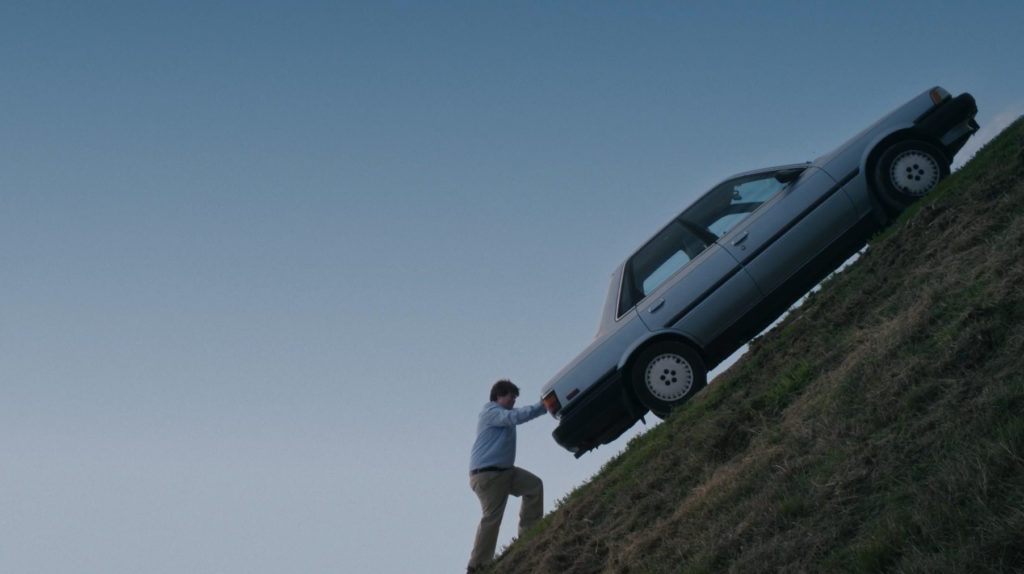
Oh look, somebody got Jim Gaffigan to narrate their student film.
Wait, isn’t it?
“I’ve Got Issues” is an attempt at “absurdist comedy,” bouncing through scores upon scores of VERY short vignettes, some so brief (a minute or less) that their title — “The Hurt,” “The Wooing of Susan,” “The Slippery Slope Job Interview” — is on the screen seemingly as long as the sketch.
That’s what writer-director Steve Collins serves up here, black-out sketches, perhaps aimed at making a point, most assuredly failing in that aim dozens of times.
A generally unknown and unpolished cast deadpans through “The Healer” (a “fraud” guru, played by Paul Gordon — I think), “Why Has it Got to Be Like This?” “Mr. Pizza” and “Please Help Mr. Pizza” and “Please Help Griselda.”
A sample sketch — “The Wooing of Owlnor” — has a Medieval performer explain and explain the tale he’s going to tell to a sparse senior center audience, announcing he’s telling it in Middle English, and promptly clearing the room.
And…SCENE.
Being unknowns, with scanty identification of character names and inadequate credits, one is left grappling with the hope that “Maybe bearded guy is in the next one (he’s almost funny)” or “Why did Collins try to create an Imitation Craig Robinson (“The Office”) etc.?”
That is Randy E. Aguebor’s lot here. Playing a keyboard, singing a song onto a cassette, sticking it in his mailbox, addressed to “Hollywood,” hoping for a break.
God knows the viewer is.
Gaffigan opens and closes with a morose, inane (scripted) lament, a shrugging “Humans...they struggle.”
As indeed Collins does. As will you. Honestly, I’m not sure Collins stays on topic (seven deadly sins, human foibles, things we “struggle” with emotionally) more than half the time.
NONE of these vignettes are funny. None. Cryptic and revealing? Nope.
I’m giving this one star for the decent indie cinema production values, and out of pity for the actors.
MPAA Rating: unrated
Cast: Macon Blair, Claire Titelman, Paul Gordon, Jim Merriman, Maria Thayer, Byron Brown, narrated by Jim Gaffigan
Credits: Written and directed by Steve Collins. A Gravitas Ventures release.
Once you’ve tattooed that last square inch of available, never-exposed-to-sunlight skin?
Once you’ve run through every hair dye variation know to humanity, and moved on to hats?
Once your sartorial sense has transitioned from “unique” and “edgy” to standard-issue uniform of the tribe, a “get-up” that gives your whole game away in a glance?
Once you’re on your 36th band and 55th band name?
Well, you either take stock and “grow up,” or you grab your bass or Strat and Fender Twin and hike down to the venue where a whole lot of 30somethings just like you gather, and thrash it out, banter-it-up, drink and put off Big Decisions because “Tomorrow is another day.”
With brutal wreck-the-relationship editing, Mike Cuenca’s “I’ll Be Around” could have been something on the order of Richard Linklater’s career and generation-defining “Slacker,” or at least “Slacker” meets “The Decline of Western Civilization” and set in “Portlandia.”
It’s a chatty, over-populated comedy that sprints out of the gate and gets gassed about an hour in. Its tragedy is that Cuenca chose to drag out this shambolic slice-of-the-scruffy-life out for another hour after that.
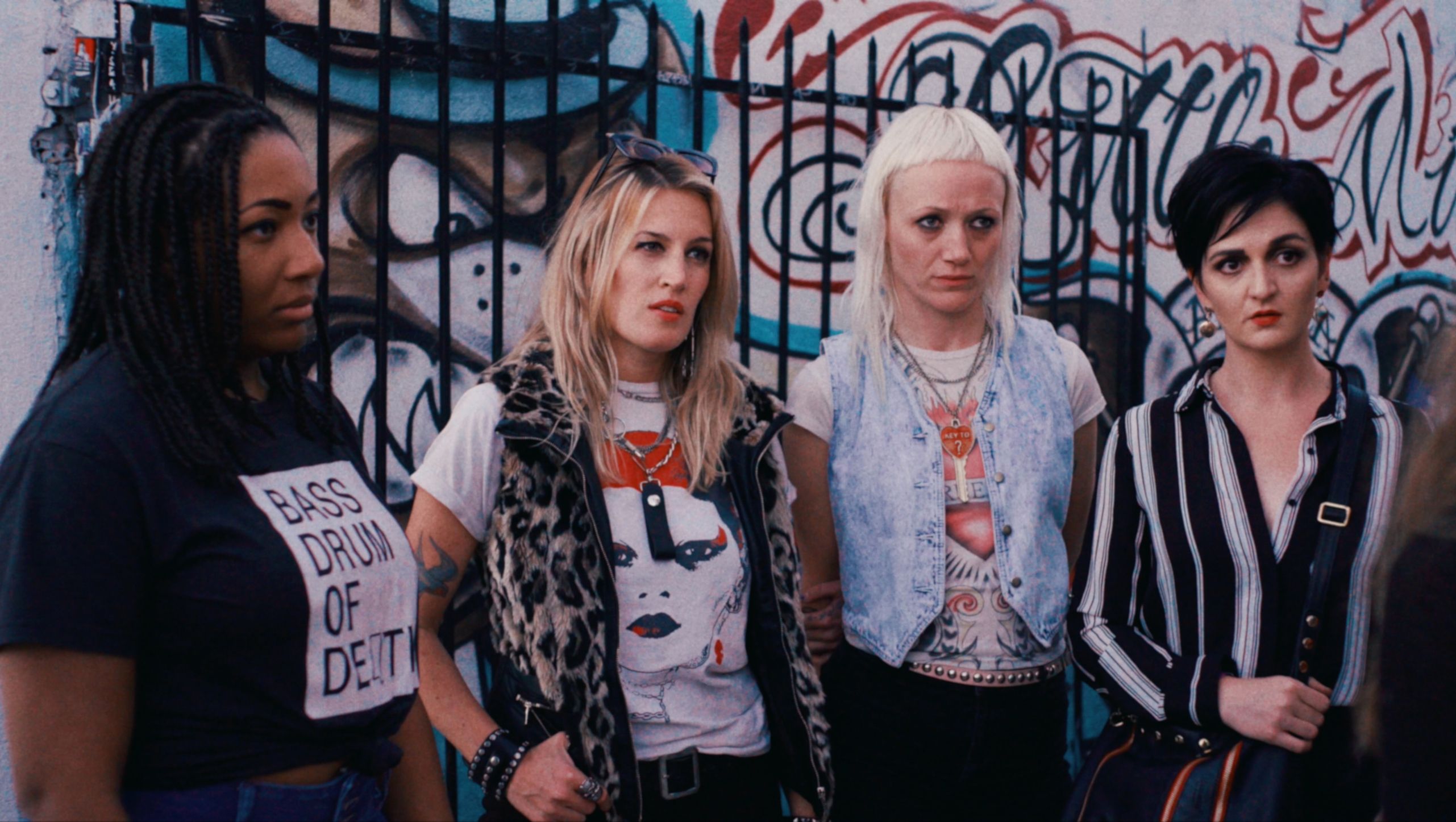
In urban Petropolis (LA), all the post-punk punks have left 30 behind, but are still waiting on tables, still spending their waiting-on-tables cash on studio time (Who DOES that anymore? A running gag in the movie.), still competing to be heard at the venue of choice, The Mirror.
Performers and bands with names like Avenson, Jentacular, Six Seconds in Dallas, The Motion Pictures, Contre nous and Attempted Choke! vie for spots on this sure-to-be-sparsely-attended “festival” that’s tonight. Before then, they rehearse, try to get out of work early, wrestle over relationships, bicker-bargain with a recording engineer, do drugs, couple, uncouple, make-out with randoms and banter. A lot.
They fight about music, no “cookie-cutter bands” allowed, “none of this romanticized, suicidal nonsense.”
“I’m Mario and you’re Luigi — always second best!”
What’s that?
It’s an AUTOharp? You ain’t never heard of the CARTER Family? You ain’t never heard JIMMY CARTER play before?”
“Can we not sleep with people in other bands? It’s so incestuous!”
“I’m gonna form my OWN band, just to prove, just to prove...”
You’re the star and chain-smoking lead singer (Sarah Lawrence)? Maybe should cut down, try vaping, a manager suggests.
“Did you know that musicians who vape are twice as likely to fire their manager?”
The first act of “I’ll Be Around” is a tsunami of sass, with many many funny lines, even the corny ones.
But there’s very little “establishing” in this “establish who the characters are” portion of the picture. We know Eve (Lawrence) is old enough to question everything about her tiny taste of “stardom” and cynical enough to warn others away from this “career.” We can see Phoebe (Sofia Grace) has burned through her young, beautiful and impulsive 20s, and now feels the need to settle down in her ’30s. “But not with some ‘normie.’ And no musicians…Not some sado-killer who’s a pushover in bed.”
Other musicians, a studio owner/engineer, a barking 60ish concert promoter and a veritable sea of randos clip by, making little to no impression as they do — a “dweeb” in glasses here, a cock-of-the-walk “star” with an over-waxed mustache there.
The obnoxious drunk singer from Jentacular abuses one and all for “stealing our song” or having no talent.
And at about that one-hour mark, the picture quiets down (even as the show is starting) and the screenwriters try their hand at meet-ups, dates, arguments and fights of more substance.
They don’t get there. And as there’s precious little of the music to tie this all together, a giddy romp becomes an LA punk scene Death March.
Edited down to a “Slacker” length series of funny first impressions, encounters and zippy lines, “I’ll Be Around” wouldn’t outstay its welcome. Which it does.
Cast: Sofia Grace, Sarah Lawrence, Brendan Takash, Kat Yeary, Joey Halter, Dew Clapp
Credits: Directed by Mike Cuenca, script by Mike Cuenca and Dan Rojay. An Indie Rights release.
I am checking in on relatives in NC, where cinemas are closed. But I’ve seen three films since Florida’s were almost certainly prematurely reopened by the right wing goon, cover-up COVID numbers at large and in schools, Governor Wuhan Ron DeSantis.
Wore my mask throughout the films, socially distanced in theaters set up for that. Virtually the only person at the cinema at any of the films I went to see.
I check with studio publicists to see what might be previewed in cinemas, and no studio or its PR arm is acting as if going to the movies is anything like a “safe” activity in the failed state among failing states.
Meanwhile, in China, where the virus originated and which warned the world (late, probably) and took draconian measures to shut social transmission of it down, “Mulan” has opened — tepidly. A $25 million weekend is better than nothing, better than anything is likely to manage in the US for a long while. But it’s a lot closer to “normal” that the US, where we’ve “normalized” a thousand extra deaths a day for much of this year, thanks to the cascade of crimes, corruption and crises created by #WuhanDon and his “all the best people.”
Fernando Ferro is a trauma doctor, so naturally he keeps a very busy schedule.
He works shifts at two hospitals, one in Mar del Plata, the other in Buenos Aires. That means he has to keep apartments in each place, as they’re some 264 miles apart.
And two phones? And two cars, which he exchanges at a midpoint, each trip north or south? The clothes he changes into as he does?
Fernando (Adrián Suar) also has two wives, two families. Why? Because with them, “I feel complete.”
“Paula,” an EMT nurse (Gabriela Toscano) living in Buenos Aires with their two teen daughters, “means everything to me.”
“Vera,” a surgeon (Soledad Villamil) living in Mar del Plata with their eight year old son, “means everything to me.”
Right now, I’m checking my notes to see if I have the right wife living in the right city. Imagine how much Fernando, “Fer,” has to keep straight to keep this charade up?
That’s the point for much of “So Much Love to Give,” an Argentine comedy co-written by co-star Suar. It’s a bigamy farce largely seen from his point of view, which is its primary failing.
Because this scenario doesn’t become interesting until he slips up, until the wives figure out each others’ existence, convince each other that they’re both victims, and plot their revenge.
Alas, that revenge is the secondary failing of this enervated comedy. The plot to trip Fernando up, trap him and exact vengeance is tepid, too.
Nothing is made of the little clues “Fer” can’t help but leave along the way — ending a call “besitos” (little kisses) with one wife just as the other walks up on him in the supermarket.
“Who was that?” (in Spanish, with English subtitles). “Gonzalo” (a colleague).
“Since when do you blow kisses at Gonzalo?”
He’s pulled this off by them being blind to all his “conferences” (anniversary vacations) in Cozumel, his need to keep the extra job “out of loyalty,” and by his never ever telling a soul that any of this is going on.
One character’s sister guesses the truth in a flash. Fellow doctor Gonzalo (Alan Sabbagh) pieces it together after an accident.
“Polygamy is much more widespread than you think,” is Fernando’s deadpan defense.
Suar, star of the more memorable “Me casé con un boludo (I Married a Dumbass)” comes off as charmless, Villamil as fiery and vengeful and Toscano as broken-hearted, with no character allowed much more than that.
The middle acts, discovering the infidelity, work better than the self-rationalizing and logistics-packed opening, or the tepid “revenge” of the finale.
“So Much Love to Give,” titled “Corazon Loco (Crazy Love)” in its original Spanish, needs a lot more laughs to give to be worth recommending.
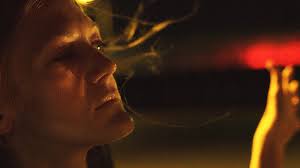
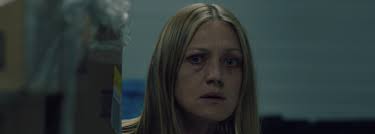
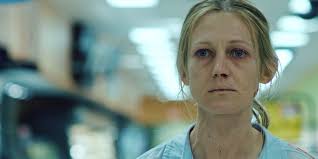
Azura Skye’s broken, powerhouse performance animates “The Swerve,” a brittle psychological thriller about a woman on the edge.
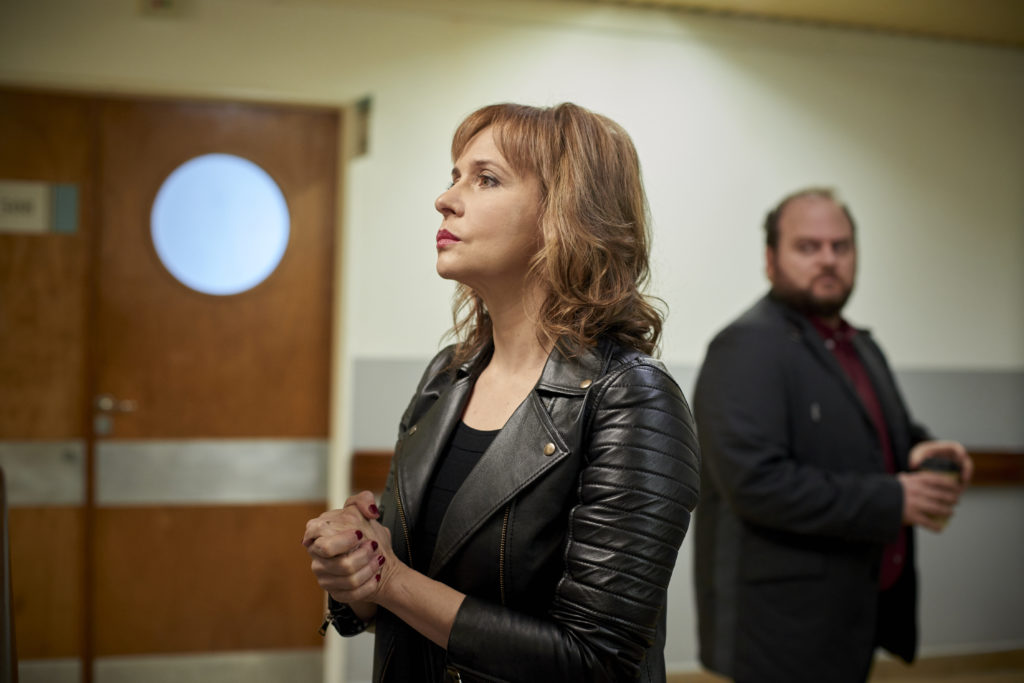
As Holly, a teacher, wife and mother breaking under the strains of holding an extended family, a home and her classroom together, dismissed, badgered and berated by all around her, the veteran character actress makes a Melissa Leo in “Frozen River”/Viola Davis in “Doubt” “star is born” statement.
First-time feature director Dean Kapsalis keeps his camera tight on Skye’s haunted face, letting her hollowed-out eyes show the impact of every body blow, every humiliation, every moment Holly is taken for granted.
Her husband (Bryce Pinkham) is too wrapped up in “getting that promotion” at the supermarket to get what’s going on. Her two foul-mouthed kids think nothing of interrupting her every conversation, leaning on her for every tiny detail of their school day routine, blaming her for every thing that doesn’t tick over like clockwork.
And her high school English classes test her constantly, and ignore her mostly.
Let’s not mention her needy/judgemental mother (Deborah Hedwall) and beat-you-down-so-I-don’t-feel-small sister Claudia (Ashley Bell).
It’s no wonder she constantly stops at the bathroom medicine cabinet for her daily dose. Wouldn’t you?
When she asks drunken husband Rob, in the middle of love-making, “Is it always going to be like this?” there is no answer that won’t bring silent tears.
It isn’t just one thing that breaks her. It’s the mouse she sees in the house that Rob doesn’t concern himself with. It’s the cruel way Claudia, in a family dinner that plays like an intervention — for Claudia — lashes out, laughing, at some long ago blemish on Holly’s family reputation. It’s the stoned, hooting and hollering redneck goons who threaten her on a back road on the drive home from that “party.”
That’s where “The Swerve” gets its title. Holly’s medicated journey makes her wonder if that really happened, if anything of this stuff (the mouse “was staring at me” or “attacked me”) is a big a deal as she is treating it.
The story, just a hellish week in Holly’s hellish-for-years life, and Skye’s unerring portrayal take us on her downward spiral — the lashing out that takes many forms, the self-loathing that drives her psychosis.
Kapsalis has written and directed an engrossing “woman on the verge” tale. But it is Azura Skye who draws us into it, earns our sympathy and makes us fear for how far this woman will be pushed before she pushes back, or snaps altogether.
MPAA Rating: Unrated, violence, sex, profanity
Cast: Azura Skye, Bryce Pinkham, Ashley Bell
Credits: Written and directed by Dean Kapsalis. An Epic release.
“The Babysitter: Killer Queen” is a sequel to the teen death-cult comedy “The Babysitter,” which all the cool kids gathered round the TV to “Netflix” back in 2017.
The sequel, in which finding fresh slasher comedy laughs shows, first scene to last, isn’t anything to skip (home) school for.
And there’s just enough down time, –in between the frenetic butchery, manic off-color one-liners, teens behaving badly, teachers cursing students and parents taking bong hits while they play VR “Halo” — to ponder the imponderable.
McG? What HAPPENED to you, man?
Granted, in this “post-director” filmmaking environment, where you’re either a legend or just this week’s hack who talks a good game and works cheap (Russo Brothers, cough cough), just finding steady work is a challenge.
But McG, real name Joseph McGinty Nicol, directed “We Are Marshall.” He survived the Cameron/Lucy/Drew “Charlie’s Angels” franchise (barely). He even got to do a “Terminator” sequel.
And here he is, just a couple of years after getting that AARP card in the mail, producing and directed a little TV here and there and making disposable shlock-shock comedies for Netflix.
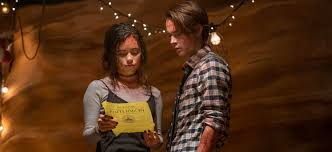
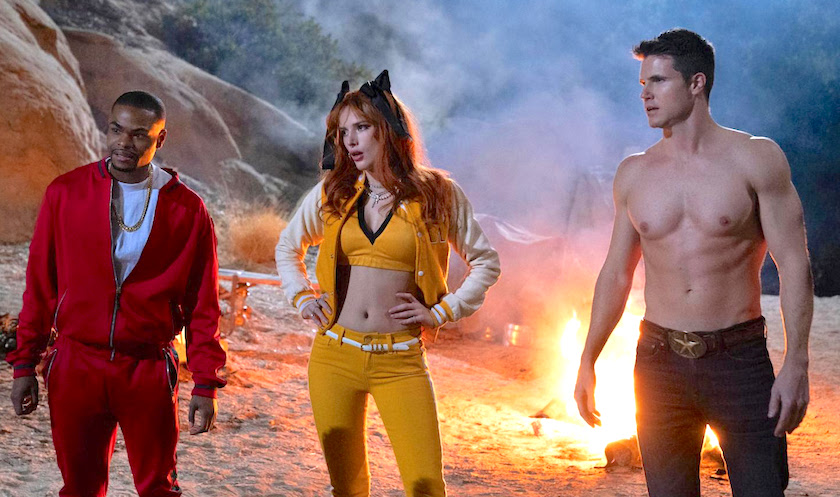
“Killer Queen” has our once-babysat fraidy-cat Cole (Judah Lewis) coping with high school bullies, parents (Leslie Bibb, Ken Marino) who never believed his babysitter was mistress of a Devil Book cult. The only “friend” who could verify the events of that awful, blood-stained night they survived two years ago is Mel (Emily Alyn Lind), the school hottie who refuses to ding her rep by confirming his worst nightmare was true.
As consolation, she invites him to a Teens Gone Wild houseboat party down on Lake Mead or Lake Powell (in the desert). And damned if the SAME murderous things go down, with many of the same villains. He and we are puzzled when Allison (Bella Thorne), Sonya (Hana Mae Lee) and John (Andrew Bachelor), among others, show up for more ritualistic “play.” Didn’t we see Allison’s head explode in a shotgun blast last time out?
“What can I say? The Devil gives good head!”
Maybe the new Goth girl, fresh from “juvie” and named “Phoebe” (Jenna Ortega) can help.
Every joke is a piece of low-hanging fruit, every gag sophomoric, every “zinger” a dated bit of teen-friendly innuendo.
Melanie? She’s “DTF,” her stoner-Dad (Chris Wylde) cracks. “Ditches (school) Thursday and Fridays.”
Some of the effects are OK, and the night shots around the lake show some sophistication.
But the script is utter crap, the performances pro forma and the “threat” even sillier, if bloodier, than it was last time around.
The romance and endless possibilities of a motorcycle create many an armchair adventurer. But if you’ve got the bike, the time and the yen for “Zen and the Art of Motorcycle Maintenance,” why not think big?
“Long Way Up” is the third epic motorcycle trip/travelogue undertaken by avid cyclists and longtime actor friends Ewan McGregor and Charley Boorman.
After “Long Way Round” (2004) took them around the world, across Europe, Siberia and North America, and “Long Way Down” (2007) saw them venture from Scotland to South Africa, they figured they’d never get around to one last super-long trip.
McGregor told me as much when I interviewed him as his film “Salmon Fishing in Yemen” came out, back in 2011.
But circumstances changed, McGregor’s family life blew-up thanks to a very public affair with a co-star, and his turn in “Fargo” — where he met said co-star — gave him the luxury of another months-long odyssey. So he and Boorman, fresh off a couple of hospital-stays due to bike accidents, took a pre-Pandemic ramble from Tierra del Fuego, on the bottom tip of South America, to Los Angeles, where McGregor now makes his home.
Such a trip killed Classic “Top Gear,” but Boorman and McGregor are such charmers you can’t imagine a Jeremy Clarkson-style international Argentine incident, complete with BBC coverup, this time round.
For their latest “Long Way,” the lads would be riding American metal — Harley-Davidson motorcycles, with Detroit-built custom trucks hauling the support team. The hook? The Harleys are electric prototypes, and the trucks are Rivian electric pick-ups.
This ride, with two 50ish dads, would be about the adventure, the scenery, meeting and sampling new cultures and new cuisines. As always. But it’d also be about the greener future. And part of the adventure would be the added degree of difficulty steering electric vehicles through corners of the world where they haven’t caught on and installed charging stations.
No wheelies and vigorous off-roading for the lads. Their 100-150 mile range bikes would turn them into hyper-milers.
In the dozen years since their African trek, tiny GoPro style cameras on helmets and tiny camera drones have become all the rage. The footage is a lot more varied, lots of aerial shots. And the quiet electric bikes mean they can chat at-will while riding.
They’re always ooohing and aaaahhhing over the scenery, the states of the roads, glaciers and penguins, llamas and deserts, rainforests and volcanoes of Costa Rica and Nicaragua. Occasionally, the dire state of their battery range dominates the conversation.
Ewan even sings and plays the guitar he buys en route — “Oh we’re ridin’ on a bike that doesn’t take no gas…I got the border blues, the border blues.”
“Long Way Up” shows us their “steep learning curve,” coping with battery range issues in the bitter cold southern South American winter, figuring out recharging in places where their support companies — Harley and Rivian — didn’t get charging stations installed (and they installed quite a few along the way), charming closed out-of-season hotels and hostels into reopening, it’s basically a nostalgic revisiting of the earlier quests’ Greatest Hits.
A Ewan McGregor movie is showing in one pub they stop in. There’s even a Chilean family that takes them in and feeds Charlie and Ewan, who mistakenly thought their house was an electronics business. That’s the first place somebody “makes” Ewan.
“La Isla,” the man says (“The Island”), in Spanish to his family, recognizing the star. Good thing Ewan’s Spanish is pretty bad at that stage of the trip. Reminding an actor of an infamous bomb isn’t good form — in Scotland, anyway.
Mobbed in Machu Picchu, and Ecuador, McGregor reminds us he’s a good sport.
National parks, seaside drives, deserts crossed, a UNICEF children’s shelter in Nicaragua — they even find themselves using local guides to dodge gang activity and “keep a low profile” in in Guatemala and Mexico.
It’s just that “Everybody that wants a selfie lets the world know where we are,” McGregor shrugs.
Many episodes and incidents remind one of why it takes a good-sized support team to undertake “Zen and the Art of Motorcycle Maintenance” on the “Blue Highways” of the less-developed world. A backup generator truck when the local power supply fails, an advance team to hold a ferry here and there, they even buy buses to fix up and use as campers for “night-driving” in dangerous Guatemala and Mexico.
The “Dad joke” nature of the trip slyly sneaks in here and there. Suffering the aftereffects of spicy food, Ewan, running his bike until the juice is gone — repeatedly, at first — Charley horsing around, just a wee bit, even though he’s coming off two bad accidents and long recoveries. Their epic adventure on bikes is more sweetly nostalgic this time round.
McGregor is much more the center of this trek, with Boorman more in the background. But the changes in McGregor’s personal life aren’t addressed in the least, which considering the “family” focus of the first two, leaves that as an elephant in the room. This isn’t “that kind” of friendship. No buddy bonding on-camera confessionals, or even fake ones of the type Steve Coogan and Rob Brydon serve up in their “The Trip” movies.
The arrival of McGregor’s adopted Mongolian daughter for part of a journey seems like a desperate and obvious effort to address that gap without doing anything of the sort. For a while, at least, his other kids wanted nothing to do with him.
Still, it’s a lovely travelogue – 13 countries worth. Hyper-miling to do it with electric bikes adds bits of suspense and touches of drama.
For those of us who can do math, noting how few miles they’re able to pile up in the bitter winter cold of southern South America, 13,000 miles in 100 days does start to seem like a ride-too-far.
But that’s a reason to stick around to the end, isn’t it?
MPAA Rating: TV-PG
Cast: Ewan McGregor, Charley Boorman.
Credits: Directed by David Alexanian and Russ Malkin. An Apple TV+ release (premiering Sept. 18)
I loved “The Long Way Round,” and “The Long Way Down,” two epic motorcycle road trips undertaken by actor pals Ewan McGregor and Charlie Boorman (son of the great director John “Deliverance” Boorman).
It’s been 13 years since the second trip, and now the lads have gone green and are riding from Tierra Del Fuego to LA on electric Harley Davidsons.
The pansies should go to Point Barrow, Alaska, but don’t tell them that.
I’m a bicycle not a motorcycle guy, but I can’t miss this Apple + TV (Sept 17) series (10 parts) because I’ve missed Ewan saying “Charlie Booooooooorman.”
McGregor and I talked about the series the last time I interviewed him, and he didn’t think they’d be nimble and unfettered enough to do another, due to their advancing years and obligations.