Heidi Schreck is a TV writer and actress who gave the world “Billions” and “I Love Dick” after writing “Nurse Jackie.” But back when she was a teenage in small town Washington State, she was a world beater at the American Legion-sponsored “What the Constitution Means to Me” contests. Lots and lots of them.
She refers to that as her mother’s “scheme” for her to make enough money to go to college. She makes that reference in her revival and adaptation of her speeches from way back when in her Broadway show “What the Constitution Means to Me,” and filmed a performance of it which premieres Friday on Amazon.
Her voice cracks when she says, “In recent years, I’ve been thinking a LOT about the Constitution...for various reasons.” Sure, it’s rehearsed. But yeah, we get it. Oh do we ever.
What stands out from this one-woman/two-co-stars show is how exhaustively and thoroughly she had to master this material — at 15 — dissecting and extemporizing on America’s Holy Writ, given an angle to speak about in her presentation — “America’s Constitution: A Living Document” or “The Crucible of the Constitution.”
So, the show, a sort of “TED Talk” meets “Full Frontal,” with the “very late” 40something Schreck dressed in The Samantha Bee Collection, remembering those speeches and debates. She “personalizes” those long ago-researched and prepped improvisations with stories from her family’s history and personal anecdotes about how the Constitution and the Supreme Court’s interpretations of it in making law impacted her, her family, immigrants and women.
Schreck and her show are smart, informative, funny and often touching.
Schreck talks about her abortion, at 21, her mother, aunt and grandmother’s abuse at the hands of an abusive stepfather her grandmother married.
She relates case law that contributes to America’s epidemic of violence against women, summons up statistics and punches holes in Supreme Court missteps, and awkward “progress” in civil rights and the “right to privacy” that opened the door for women gaining control of their own bodies.
Schreck, on a stage that mimics the Wenatchee, Washington American Legion hall where she “got her start” as a performer and writer, relates how a 1965 Supreme Court of “nine men, four of whom are cheating on their wives,” debated and heard arguments about a woman’s right to birth control.
And then we hear a tape of that clumsy, cluelessly sexist oral argument from way back when.
Schreck analyzes and sings the praises of Amendment 9, which says “just because a certain right is not in the Constitution doesn’t mean you don’t have that right,” which provided the avenue for much expanding of the rights, racial and sexual minorities.
And she breaks down, with an American Legion judge and moderator (Mike Iverson) asking the questions “on the clock,” Amendment 14, which promised everyone in the U.S. — immigrants included, “due process of law.”
Her family’s story includes a “bought” bride (“a good immigrant”) who “died of melancholia” and the shared trait among females of her clan — “Greek tragedy crying.”
And her own story includes what we’d today call something akin to “date rape,” involving a guy so nice she’d never figure there was any reason to fear him, but who triggered her “just stay alive” response to his aggression.”
“We’re friends to this day,” she offers. “I mean we’re ‘Facebook Friends.'”
At 100 minutes, “Constitution” plays a bit long. But if you’re going to Broadway, 60 minutes will never do.
Schreck fumes and jokes, rages and comes close to tears along the way, with a break only for her co-star Iverson telling the story of the “character” from her life that he’s playing and personal experiences and challenges he’s faced in regards to his rights in America.
And a third act “debate” with a new version of young Heidi, fourteen-year old (then) “Constitution” debater and speaker Rosedely Ciprian, plays to a live audience better than it does as something you passively take in as a TV viewer.
But as food-for-thought watching goes, this election season performance could not be more timely as our lifelong Constitution fan and expert reminds us, in fact and in anecdote, how our founding document is more flexible than the Antonin Scalias of history have ever believed, that it is a “living document” written by folks, flawed as they no doubt were, who recognized “Who we are now might not be what we will become.”
And what we need, more than many of the amendments that the country’s political, economic and ecological crises scream out for, is a Court made up of jurists who remember that.
MPAA Rating: unrated, profanity, some adult subject matter
Cast: Heidi Schreck, Mike Iveson, Rosdely Ciprian
Credits: Directed by Marielle Heller, script by Heidi Schreck. An Amazon release, on Amazon streaming.
A WWII combat medic and Holocaust survivor meets a woman who left her combat vet husband in an otherwise empty New York bar in “The Second Sun,” a crushing bore of a screen romance starring one of writer Norman Mailer’s nine children.
If you ever doubted that a movie with a Holocaust subtext could be dull, here’s 75 minutes of proof. It’s a three-set drama, with flashbacks and a lot of mundane flirtation that probes at the wounds he won’t show, but that she cannot hide.
Max (John Buffalo Mailer) came home from the war to a job in a pastry shop/breakfast cafe. But it’s at his Irish friend Joe’s empty bar that he meets Joy.
Symbolism much?
She (Eden Epstein) is mysterious, pretty and curious when he insists on talking to her, catering to her every need. She needs cold.
“Take my coat.” “That’s not necessary.” “I insist.” I said no THANK you.”
She wants to know about his life, the drab job he took on after “sewing people up” on the battlefields of Europe.
“Is it enough?” “Hell, just being alive is enough.”
Later, as the night wears on, he cuts to the chase of his personal survival.
“I stayed alive to meet the woman of my dreams.”
Mailer, slinging a Brooklyn (ish) accent, plays Max as a immigrant who learned to talk at the talkies, “gangster pictures,” a man sanguine about what he saw in the war and all those he lost.
When Joy sees the tattoo on his arm, she is taken aback by guilt, by how his experiences make her feel “small” by comparison.
But Joy has had her losses, her burdens to carry.
As they sip (she gulps) wine into the wee hours, she questions him and he picks up the pieces of her story. Flashbacks (black and white, drably-acted) fill us in on personal loss, war and the disconnect she senses and tries to flee, but which Max brushes off at every turn.
There’s a theatricality to some of the dialogue that makes one think James Patrick Nelson’s script started life as a simple single-set play, reliant on poetic word pictures to carry the load.
“Autumn — that’s my favorite time of year, the way the colors change, it’s like dying and coming to life at the same time.”
Working from that, director Jennifer Gelfer goes for something old-fashioned — a dance scene set in a pool of light on a dark soundstage, a tidy, well-lit bar that would pass for higher end, even then, complete with Irish owner (Ciaran Byrne) brogueing up a twinkle.
Mailer plays every scene and every line in a flat tone that suggests resignation, accepted fate and muted optimism — or a very limited range. Epstein, of the Starz series “Sweetbitter,” is at least more animated.
But for all the melodrama here and the dramatic possibilities presented, this is a stilted, stunningly stale directing debut. The performances don’t connect and the “reality” of it all is treated as an airless age of exhaustion and ennui.
The post-war past was never this dull.
MPAA Rating: unrated, sexual situations, alcohol, smoking
Cast: John Buffalo Mailer, Eden Epstein, Ciaran Byrne
Credits: Directed by Jennifer Gelfer, script by James Patrick Nelson. An 1844 release.
Of all the things necessary to make a screen thriller work, “urgency” has to rank at the top of the list.
That’s conveyed via direction, editing, sometimes a pulse-pounding score, but most importantly in a script that expresses high stakes and a clock ticking down to “doom,” and actors who convince us that they believe that.
“The Complex: Lockdown” fails at that as badly as any recent thriller I’ve checked out of late.
Sleepwalking performances, a lack of action and a general ennui behind the camera cripple this bio-terrorism thriller, which takes place in an “Andromeda Strain” lab complex under assault by those who would cover up a genocide, protected by a crusading doctor/researcher and her scientist ex.
“The Complex” began life as a video game/interactive movie. Does that explain the flat, emotionless turn by leading lady Michelle Mylett, who stars in that and in “Lockdown.”
I won’t say everybody in this dulls it down. But the static turns don’t exactly animate a movie where a lot of the “action” and debating is done via video phone.
Mylett is Dr. Amy Tennant, an “American” (Mylett is Canadian) “Doctors without Borders” type familiar with many a combat zone. Bio warfare isn’t just for Syrian dictators and their Russian masters any more.
She’s never keen on being teamed with Dr. Rees Wakefield (Al Weaver, not bad). They had a “thing,” we realize. We don’t realize that until they’re confronted with terrorist infiltration of their elaborate Kensington Corp labs.
A woman (Kim Adis, giving the best performance among some pretty bad ones) who stole the experimental computer-driven nano stem cells that Dr. Amy has been developing for space travel surgery and healing. Letting that stuff loose in London would be catastrophic.
Not that Mylett lets us feel that. Her Scottish boss, Nathalie Kensington (Kate Dickie), can’t get the curled, burred words out fast enough to jolt the good doctor out of her torpor.
Villains in hazmat suits toting automatic weapons are punching through “the void,” a ballroom-sized vacuum chamber entrance to the lab. You’d think the urgency would enter the this no-thrills thriller at this point.
But Mylett’s monotonous Dr. Amy doesn’t break a sweat and speaks as if she’s Siri ordering pizza.
“I’m not a murderer…This is madness. There has to be a way for her to survive…She has to pay for what she’s done…Nice work, Dr. Wakefield…End call.”
A good character and actress to carry all the exposition in the finale, BTW.
A couple of good action beats and two good lines adorn “Lockdown.”
“I listen to liars every day. You’re not a good one.”
“I knew there was something about Malkin, What kind of scientist wears a pony tail?”
But that finale. Damn. And pretty much every scene before it? Damn.
MPAA Rating: violence, profanity
Cast: Michelle Mylett, Al Weaver, Kim Adis, Okorie Chukwu, Kate Dickie and Rachel Petladwala
Credits: Directed by Paul Raschid, script by Lynn Renee Maxcy. A Giant Pictures release.
Netflix has a real prestige picture or three this holiday season. This adaptation of the room reflective, reactionary and some say self righteous redneck memoir by J. Vance has a Glenn Close Oscar nomination in its DNA.
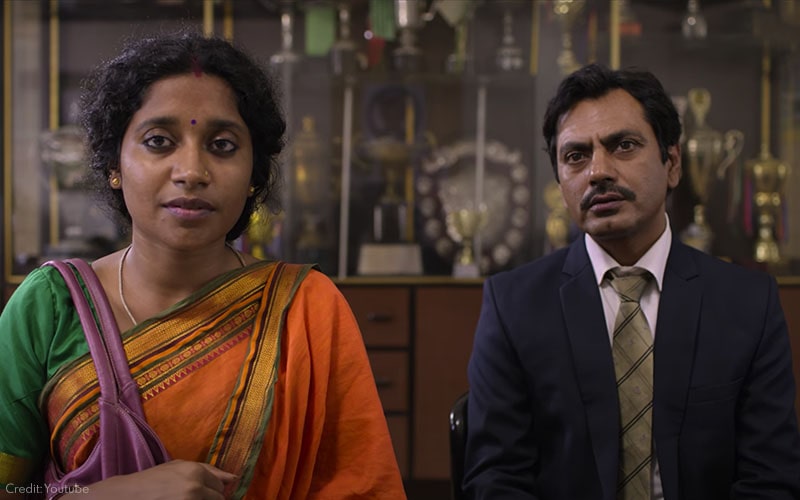
The father wants to get his kid into the exclusive Catholic school that will give his little boy the best chance at a brighter future. And it’s not going well. The admissions officer asks him a question in code.
“What kind of people are Mani?” he wants to know, referring to the dad’s surname.
“Good people!”
But that’s not what he’s asking, and Dad (Nawazuddin Siddiqui) cuts to the chase.
“We’re shudras, lower caste,” he blurts, and the whole office of this Mumbai institution flips out.
“We’re not ALLOWED to use that phrase,” even though that’s precisely what the classist creep wanted to know.
Mani is personal assistant to a scientist (Nassar) who heads an institute dedicated to getting government grants to search for signs of alien microbes in the upper atmosphere. The scientist is arrogant and insulting, calling Mani “Moron!” “Imbecile!” “Knobhead!” He can be that way because he’s upper caste. He can even get away with being a stubborn dope. Mani gets it.
The caste system still exists, Indian semantics be damned. A Tamil, he’s lived his whole life in a kind of comical defiance of the stacked-deck of India’s democratic meritocracy. And he’s hell-bent on getting his kid into that school, having the boy — mostly deaf in one ear — recognized as a genius, and putting it to India’s version of “The Man” as he does, as his son mingles with and joins the ranks of “Serious Men.”
Sudhir Mishra’s dramedy, based on a novel by Manu Joseph, is playful and profound, a commentary on India and its version of “privilege.” It’s also quite touching, a cautionary tale of “How far we’ve come” India, a sentimental father-and-son saga with a bitter metallic aftertaste.
The prologue shows Manu chewed out for speaking Tamil, when Hindi and English are all the upper classes will tolerate in upper class jobs. He jokes (in Tamil and Hindi, with English subtitles) with his pregnant wife (Indira Tiwari), sneaking her into an exclusive hotel’s pool, explaining the torrent of Tamil profanity she shrieks when she goes into labor as “It’s the Lord’s name…in Tamil.”
But once the child is born he’s all business. He will use what he’s learned to get little Adi into that school. He will teach the boy the science he overhears each day, and more importantly, the arrogant way the blowhards he works for carry themselves.
“I don’t have TIME for this” is a classic brushoff of annoying questions. “I can’t DEAL with primitive minds,” Adi fumes. “If you understood, you would be ME,” a brilliant person’s most effective put-down.
Adi (Aakshath Das) is distracted in class, pedantic when pressed on it. And by age nine, he has become a celebrity, the “little Einstein” of the BDD (slum) complex.
We have just enough time to ponder what Adi’s deal is — A genius learning to throw his weight around? A fraud? Dad’s trained, taught and doted-on revenge on India’s rigged society? — when a father-daughter PR firm and its idealistic, politically wired younger partner starts wondering how Adi can be of use to them.
“Aunty Anuja” (Shweta Basu Prasad) wants to lobby for money to improve the BDD slum, and a smart, articulate little boy with his eye on the skies just might be the face of that effort.
Like “Slumdog Millionaire,” “Serious Men” is a satire of Old India colliding with the new. But our hero this time always seems to have the upper hand against the Forces of Class and Caste. He and his wife may be “2G,” a generation removed from the filthiest, menial work of their caste. The top tier of India are 4G or higher. It’s just that Manu has been watching, listening and learning, and plotting his revenge.
Siddiqui, a wonderful actor who starred in “Photograph” and had a supporting role in “The Lunchbox,” beautifully embodies the resentment and hurt Manu lives his life by. He is the classic office underling rolling his eyes and cracking wise at the over-promoted cranks he works for.
“Alien microbes in the stratosphere?” It is to laugh.
Tiwari plays the wife and mother Oja as passive and provincial, exactly as Manu sees her — until he and we realize she isn’t.
Veteran character actor Nassar — he was in Hollywood’s “Fair Game” — has the bluff and bluster to pull off the imperious Dr. Acharya, and the range to show us the real man whose bluff has been called.
Young Aakshath Das sounds like a child speaking by rote, which is exactly right in this part. And Prasad, a beautiful actress given a facial scar and limp as Anuja, gets across a nice blend of ruthlessness and disability-driven empathy for the poor she might actually want to help.
Of all the countries where Netflix has planted its flag and financed home grown cinema, India is where their cash is producing the most impressive films. “Serious Men” is a serio-comic satire well worth the subtitles, and a sentimental drama worth the tears.
Credits: Directed by Sudhir Mishra, script by Bhavesh Mandalia, Abhijeet Khuman, Nikhil Nair and Niren Bhatt, based on the novel by Manu Joseph. A Netflix release.
Screenwriter Jeffrey Reddick mainlined something universal with his script, “Final Destination.” A film that launched a franchise, it tapped into that teen tendency to feel immortal and the conspiracy buff in us all that likes to see “coincidences” as part of “death’s grand design.”
Good movie.
Reddick must see something similar in the hook to “Don’t Look Back,” which he wrote and directed, basing it on a short film he made some years back. “Survivor’s remorse” or guilt is a well-documented psychological trauma, and Reddick’s spin on that is a commentary on the culture we’ve become.
These days, you can’t escape assaults and other crimes that fill the evening news, or Youtube — incidents which bystanders, instead of trying to intervene, instead of calling the police, record the assault on their cell phones.
With thuggish goons running rampant this election cycle, it’s become an American epidemic. Reddick is onto something. But applying Reddick’s “Final Destination” “coincidences” and “death’s grand design” supernatural formula to survivor’s guilt doesn’t quite come off.
Kourtney Bell is good if not dazzling in this, her debut as a lead, playing Caitlin, a young woman who survives a brutal home invasion that ends with her badly injured and her father dead.
Months later, still traumatized, she sees a murderous beating in a nearby park (this was filmed in Baton Rouge). Her shocked eyes scan every other face that witnesses this before she grabs a phone from some gutless man taping it and calls the police.
The victim was a local altruist and a righteous dude. Caitlin is appalled at what she didn’t do, mortified that nobody else even managed to call the cops. As she exits the police station, she glimpses the other witnesses, rationalizing away or stricken by their lack of action.
It won’t be long before Caitlin starts seeing the dead man everywhere. She’ll notice the crow hanging around her and others who witnessed the murder. And once she’s spotted the number “27” — a Bible verse from Luke, birthdates, etc. — she can’t stop seeing it.
As the public turns against her and the other eyewitnesses, thanks to a TV talk show host (Rainn Wilson, excellent), Caitlin reaches out to the others just at the moment the crow (harbinger of death) starts making house calls.
Who or what is doing this, and why?
The acting isn’t bad, or particularly emotional and compelling. But the bigger problem is that Reddick’s script lets down this promising “survivor’s guilt/revenge” premise in several ways. It throws a too-obvious suspect at us, and gives no one a single memorable line.
The “supernatural” deaths aren’t horror-movie creative in the least, a big part of “Final Destination’s” success (and to be fair, budget).
The angry public is happy to spit on these eyewitnesses and ghoulishly celebrate the “karma” that their deaths represents to them. But that’s a seriously twisted misinterpretation of karma, for starters.
And the universe as a judge and jury executing people for cowardice or callousness isn’t remotely as gripping as the idea that young “nothing can hurt me” people escape their fate, only to have “death” stalk them and take them out, as “death’s grand design” intended.
That’s why “Final Destination” worked, and a big reason that “Don’t Look Back” doesn’t.
MPAA Rating: unrated, violence
Cast: Kourtney Bell, Will Stout, Skyler Hart, Jeremy Holm and Rainn Wilson.
Credits: Written and directed by Jeffrey Reddick. A Gravitas Ventures release.
What overwhelms you about David Lean’s second most famous Dickens adaptation is the sense of hunger that washes off the screen and erases any sense of “period piece” about it.
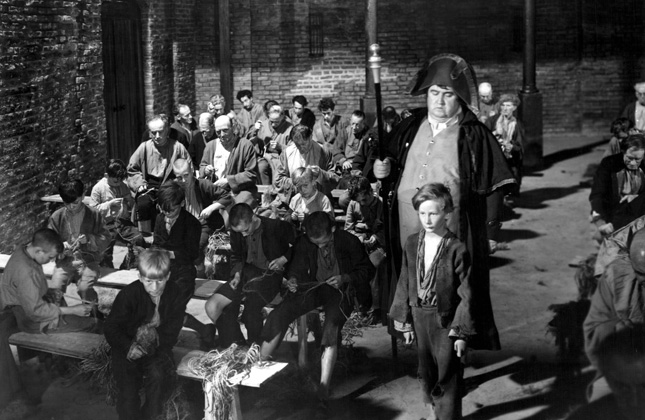
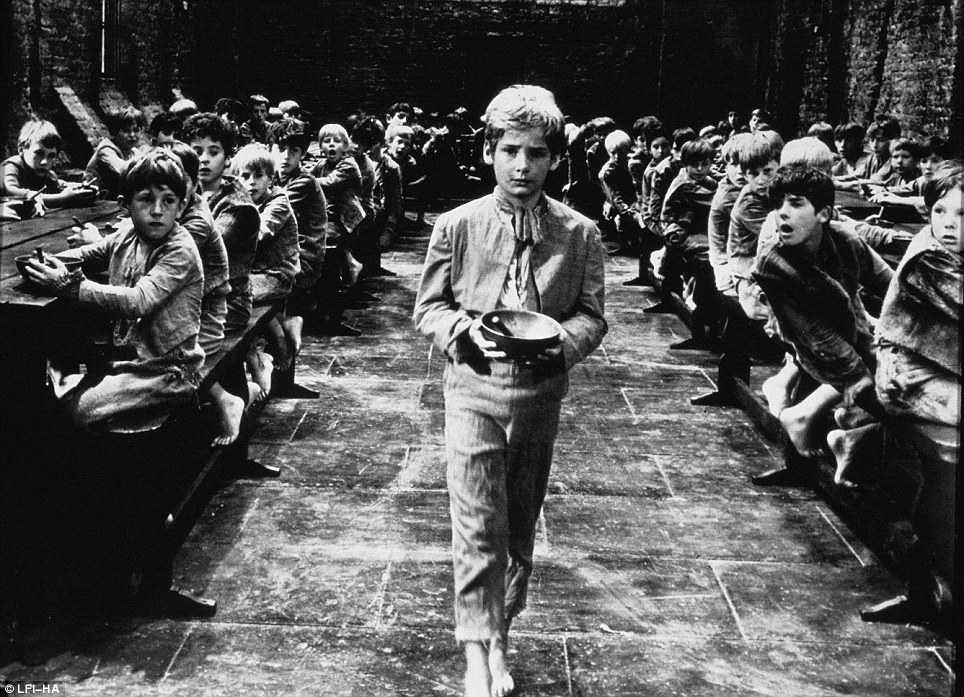
“Oliver Twist” makes hunger so timeless that the 19th century poverty it is part and parcel of becomes secondary. The stunning production design, the peerless cinematography of Guy Green, the poignancy of the story and the tragedy at the heart of it recede every moment a hungry child devours whatever crumbs a cruel society cares to give it.
It’s a 72 year-old black and white film of a novel by literature’s great sentimentalist, with accents so thick you wish it had subtitles at times. And it will break your heart.
I can’t remember catching this back when I first dove into David Lean via my grad school advisor, a Lean scholar who parked the master’s “Great Expectations” adaptation and other Lean films in the college’s film society every chance he got.
“Great Expectations” (1946) is the more celebrated film. And many Dickens titles have been filmed repeatedly, adapted into modern settings even, so none of his stories are capable of surprising the viewer, although Armando Ianucci’s “David Copperfield” and the giddy big screen “Nicholas Nickleby” of some years back came close.
But “Oliver Twist” is the first classic I’ve dipped into in ages that had my jaw agape and “Wow” coming out of my mouth more times than I can count.
There was a David Lean documentary some years back in which the veteran editor scoffed at the average moviegoer’s (and critic’s) oohing and ahhing over “that lovely shot.” “It’s the cutting,” he’d insist, the editing people like he did that made that masterful camel rider approaching out of a mirage in “Lawrence of Arabia” glorious.
Perhaps. But the crowded, dark and dingy London set designer John Bryan puts us in is total immersion, a Charles Dickens theme park of want, cruelty and shadows. I can’t imagine producers of the 1960s stage and screen musical “Oliver!” ever bothered to read the book. This “Oliver Twist” was all the research they needed.
A very pregnant woman (Josephine Stuart) staggers and groans her way through a dark night to a town workhouse, where she gives birth, comforts her infant for a moment, and dies.
The boy (John Howard Davies) may seem quiet and compliant as he passes through his early years at this orphanage/slave labor institution. But when The Beadle (Francis L. Sullivan) places him at an undertaker’s establishment, the kid shows his mettle. He won’t be bullied, won’t hear ill of his late mother.
And when he gets his chance, he flees to London. That’s where The Artful Dodger (future Brit crooner Anthony Newley) marks him, and that’s how he’s brought into the pickpocket mob run by Fagin.
Alec Guinness is almost unrecognizable in the makeup and hatchet-sized beak of this Victorian caricature. His Fagin was why the film was kept from release in the U.S., Jewish groups regarding the hideous stereotype that portrayal represents. He was edited almost entirely out of the picture when it opened here in 1951.
You can say the anti-Semitism is Dickens’ own, a British failing that was still on public display during Monty Python’s glory years. But Fagin is a wholly realized villain, memorable with or without historically slanderous Jewish associations.
“You’d like to make pocket handkerchiefs as easily as the Artful Dodger, wouldn’t you my dear?” Guinness purrs, turning Fagin’s catch-phrase, “My dear,” menacing when cajoling won’t do.
Robert Newton’s Bill Sikes is less horrific than later Sikes, perhaps because productions like Roman Polanski’s wanted to play up Bill and soften Fagin.
Through it all, young Master Davies (only nine when the film premiered), and underplays the hero in keeping with the spirit of the novel. Oliver is a reflection of the times, an underclass deserving better. Surrounding him with colorful character actors with those funny lines and outlandish Dickensian aptronym-names all but puts him in the background.
Grumpy cynic Mr. Grimwig (Frederick Lloyd) is just one minor character who has punchier lines than young Oliver.
“You old women never believe anything but quack doctors and lying story books.”
But what we remember from this tale, filmed refilmed and turned into a musical, beautifully rendered in one of the loveliest black and white films ever here, is a hungry child and the shame of those callous enough to let that happen, a little boy asking the one unforgivable request during one malnourished meal.
“Please sir, can I have some more?”
MPAA Rating: “approved”
Cast: John Howard Davies, Robert Newton, Alec Guinness, Kat Walsh, Francis L. Sullivan and Anthony Newley
Credits: Written and directed by David Lean adapted from the novel by Charles Dickens.