Movie Review: An Aspiring Writer remembers “My Salinger Year”

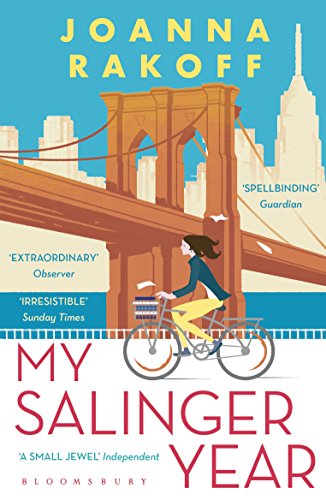
“My Salinger Year” is “The Devil Wears Prada,” set in a literary agency and with many of the rough edges rubbed off.

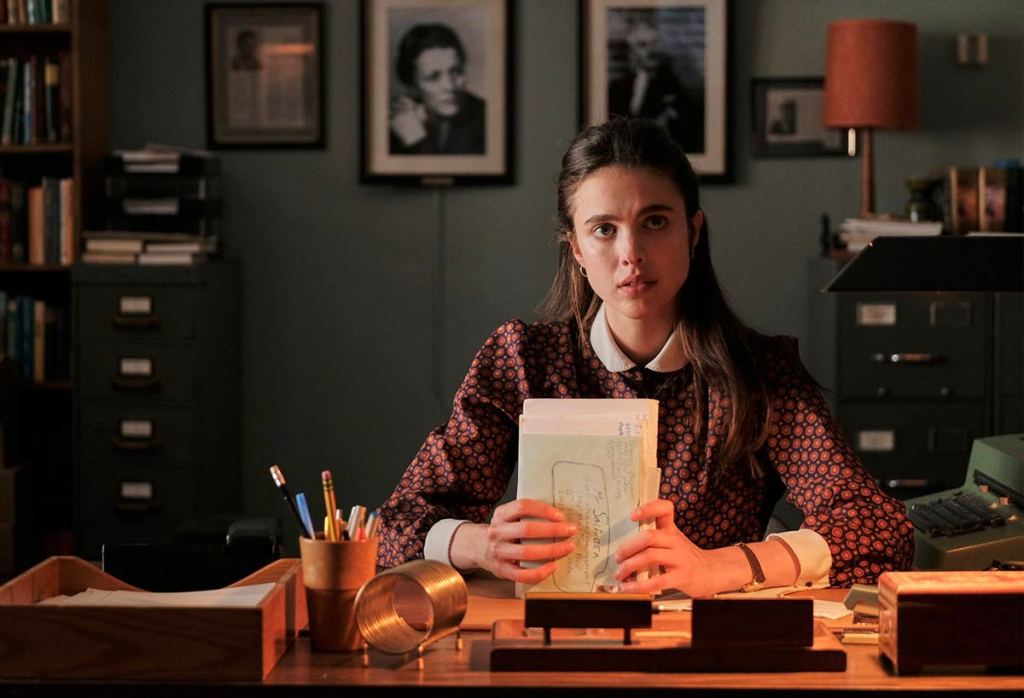
Margaret Qualley, cleaned-up from her grubby Manson disciple of “Once Upon a Time…in Hollywood,” is our privileged young heroine, plucky and cute and ever-so-eager to “be extraordinary,” to make her mark in literature after studying in London and Berkeley.

She just happened to get a job in a publishing house that just happened to have J.D. Salinger as its most celebrated client. Years later, she got a best-selling memoir out of that experience, charming Salinger when he called, handling his fan mail by reading it — “We have to be very careful after the Mark David Chapman thing.” — and still sending his standard form letter to one and all — “Mr. Salinger” does not desire “letters from his readers…”

The film adaptation by Philippe Falardeau (“The Good Lie”) could have lapsed into cloying, and the connections between Joanna’s “coming of age” story and Salinger characters, the personalization of the letters, showing us high school kids and Vietnam vets and everybody in between performing their fan mail, is awfully cute.

But here’s what Rakoff and Falardeau give us in this “Year” — the J.D. Salinger of “Catcher in the Rye,” the not-so-much-reclusive as just seriously “private” author who never lost an opportunity to pass along bromides about writing, dedication to the craft and getting on with “the work” to young people Holden Caulfield or Franny and Zooey’s age.

This is the J.D. Salinger of myth, the one somewhat lost in the lawsuits, the affair with college student Joyce Maynard when he was in his ’50s, the infamous testiness and writer’s block that rivaled that of fellow phenomenon Harper Lee. It’s the Salinger fans long for.

This mid-90s tale seems disconnected from the modern world, largely because of how Rakoff describes ANF Literary Management in the film, “like nothing’s changed since 1927.”

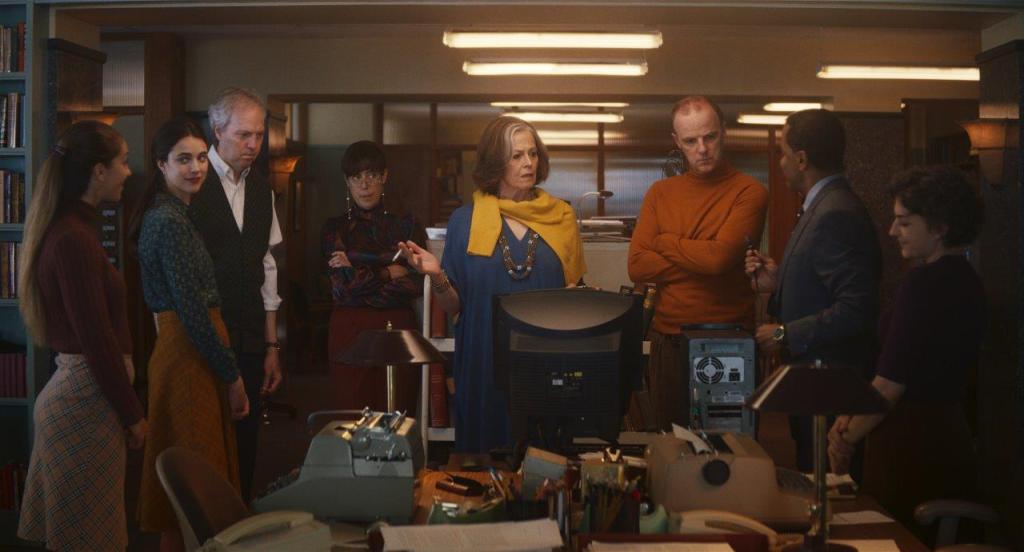
It’s 1995 and the imperious boss (Sigourney Weaver, perfect) has ordained “We choose not to use computers.” The offices are quiet, staid and pierced by natural light, the gentle hum of IBM Selectrics breaking the silence. Books fill shelves, portraits of legends of literature — famous clients all — adorning the walls. Dylan Thomas and Agatha Christie and Salinger aren’t the only ones honored there.

Margaret starts her job and gets the “talk about Jerry” the first day — what to do when he calls, what not to say and when to give out his mailing or personal address.

“NEVER.”

“We have to shield him from the outside world,” boss Margaret (Weaver) intones. That involves protecting their star client from fans, schools that want a commencement speaker, charities that want something personal to auction off, interview requests, all of it.

Our story is Joanna learning the ropes, dealing with the snobbery and balancing a personal life that has her abandon a high school love by not returning to college and taking up with a 1990s Bohemian socialist novelist (Douglas Booth).

The plot may feel timeworn, but Falardeau recreates this world, of Algonquin-Lite lunches filled with anecdotes about clients (a world denied to Joanna), Salinger eccentricities and the sort of staff it takes to keep him in his Cornish, New Hampshire seclusion.

It’s not insulting to say that the supporting cast in that publishing house could be their own high-toned sitcom, or at least a streaming dramedy series. Colm Feore is the wit who glides through offices, propping up one and all, Yanic Truesdale the snarky younger foil to the boss’s Luddite tendencies and Brían F. O’Byrne the contracts and legalities staffer who worked his way to that by doing what Joanna does right now.

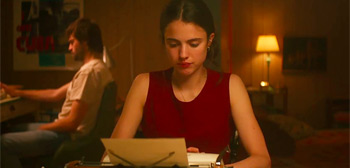
Qualley brings a guarded, dreamy quality to Rakoff, a young woman guilted every time Salinger called in, lying about “writing,” star-struck just standing in the lobby of The New Yorker, struggling with what to do with “my life” as she faces forks in her path and the Big Decisions of One’s 20s.

As I said, there’s not a lot of edge to all this. The many letter-writers never quite achieve wacky, crazy or poignant. Weaver’s Margaret is imperious and aloof, but more callous than cruel when compared to Meryl Streep’s “Devil Wears Prada” turn. The office isn’t bitchy or back-stabbing, which lets the movie lean more heavily on Joanna’s personal life.

And that’s just not as interesting as her trying to help the boss kid-gloves Joanna’s favorite author as a teen, Judy Blume, or gently steer a Salinger whim about finally publishing something…with a one-man publishing house in Virginia.

“My Salinger Year” was never going to be awards bait, but this cast and this world make for a grand escape from the mundane necessities of life as we’re immersed in a coming-of-age tale like few others, one that should make anybody with a soft spot for Salinger and empathy for those who had to “manage” him just a tad envious.

MPA Rating: R (Language|Some Sexual References), smoking

Cast: Margaret Qualley, Sigourney Weaver, Colm Feore, Douglas Booth, Yanic Truesdale and Brían F. O’Byrne

Credits: Scripted and directed by Philippe Falardeau, based on the memoir by Joanna Rakoff. An IFC release.

Running time: 1:41

Posted in Reviews, previews, profiles and movie news | 2 Comments

Movie Review: Another scary nun is on the loose in “The Parish”

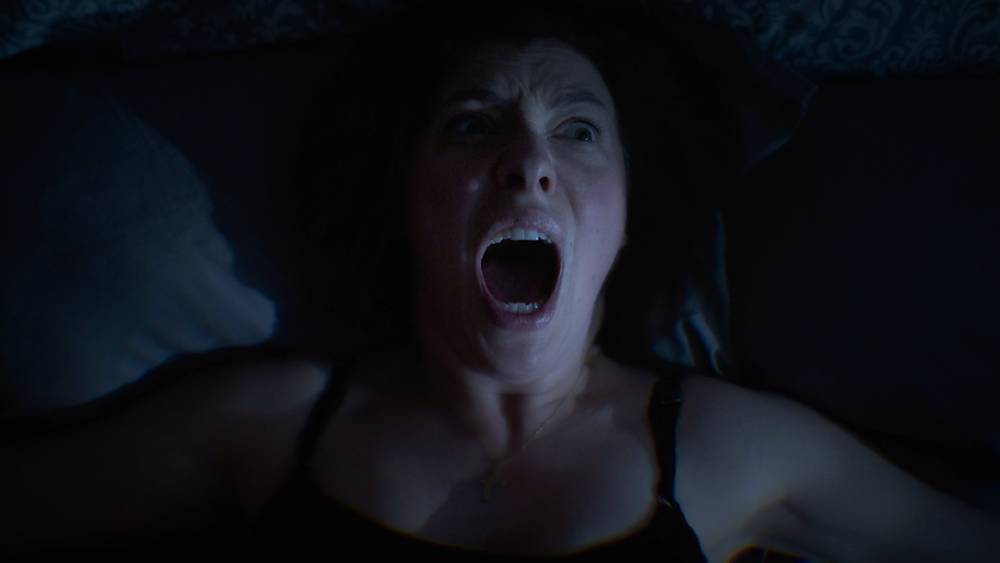
Actor turned director David S. Hogan gives us a C-movie that looks every inch an A-picture with “The Parish.” It may be that latest remix of a worn-out formula, with a “mystery” we’re two or three steps ahead of, first scene to last. But it has the sheen of major studio release, a decent performance or two and modest but effective effects.

Frights? Not really. How one manages to make a movie this dull centering on an alarming nun, when they’ve been horror icons since before “The Sound of Music,” is kind of a feat in its own right.

Liz (Angela DiMarco) and daughter Audrey (Sanae Loutsis) have moved “a thousand miles from San Diego” for a new start, a town where Liz’s pal from college (Sara Coates) is a realtor.

They’re getting over a loss. Husband Jason was killed in Afghanistan, and mother and daughter are still seeing him (Ray Tagavilla) in their nightmares. What’s he saying? Is he warning them?

A new house, new Catholic school and new drinking buddy for mom to empty wine bottles with should do the trick.

But “art therapy” isn’t doing anything to change sullen Audrey’s “I HATE it here.” It’s just creeping Liz and the kid’s teachers out.

At least she’s made a new friend, Caleb, another loner and “new kid.” But as Liz tracks Caleb down some stairs and never finds him, as she runs into a hulking mute janitor and then “Sister Beatrice (Gin Hammond), school folks start wondering about the kid, and then about her mother.

And you can guess why.

Horror veteran Bill Oberst Jr. (“Tickles the Clown”) is the parish priest who may have some answers.

But the questions the viewer asks aren’t just related to the story, which as I say, we figure out before any character does.

It’s a picture with a dead spouse and a family in mourning and little sense of pathos. Every character is a trope of some sort, most of them dating to the origins of the genre. And while most of the performances are at least OK, one is bad enough to make you wince.

“The Parish” needed to be more Catholic, more creepy and have a lot more suspense and sense of what’s at stake to come off.

MPA Rating: unrated, horrific images, blood

Cast: Angela DiMarco, Sanae Loutsis, Bill Oberst Jr. , Ray Tagavilla, Sara Coates, Amber Wolfe Wollam and Gin Hammond.

Credits: Directed by David S. Hogan, script by Todd Downing. An Uncork’d release.

Running time: 1:22

Posted in Reviews, previews, profiles and movie news | 1 Comment

Netflixable? A Satanic comedy from Germany, “How to be Really Bad (Meine teuflisch gute Freundin)”

Whatever their place within German culture, film comedies exported from Germany are a relatively rare thing and another reason to buy into “Around the World With Netflix.” How else are we to know what Hollywood and recent history’s favorite villains find funny?

How to be Really Bad,” or “Meine teuflisch gute Freundin” in German, could have been made most anywhere that high school comedies and laughers about The Devil might go over.

Remember Adam Sandler’s “Little Nicky?” Imagine that starring a cute redhead and set in a German high school. It’s like that.

Emma Bading (“In My Room,” “Different Kinds of Rain”) is the star, pale Lilith, the cruel and bored daughter of The Devil (Samuel Finzi), here depicted as a sharp-dressed man of finance running a sort of stock exchange of souls based in a modern black skyscraper in Berlin.

She tortures the minions and wishes for field work. Surely a year out turning sweet-spirited humans bad would do her good, she argues.

“I’ll give you a week,” Dad snaps back. And yes, everything sounds more menacing to American ears if it’s delivered in German.

She will stay with a hippy, eco-friendly and sweet-spirited family in Birkenbrunn. She will turn their daughter Greta (Janina Fautz) and anybody else she can from “nice” to “mean.” The only rule? “No physical contact” because Satan has no use for minions “in love.”

The Birnsteins are the sort of upbeat, progressive people who drive Devils and Deplorables nuts.

“So happy you’re here,” they bubble. “We’ll see about that” Lilith hisses back.

She’s here to chew licorice, kick ass and take souls. Lilith will badger and shame Greta, who wears dresses dresses knitted by her mother which Lilith thinks look like “oven cloth” (pot holders) and cause her classmates to label her “Miss Birkenstocks.”

She’s bullied, mocked and dismissed at school. Get her to notice this and “stand up for yourself” might be first step in her mean girl “makeover.”

Greta is innocent, sweetness and light, and her mother (Alwara Höfels) is heckbent on keeping her that way. A little teen rebellion is all it’ll take, Lilith figures.

Lilith’s efforts with Greta include ensuring her heart is broken by the class Lothario (Emilio Sakraya), which will turn her bitter. But then Lilith falls under the gaze of parkour-loving petty thief Samuel (Ludwig Simon), the class “Bad Boy.” Can she fight the urges her Hell-raised hormones are throwing at her?

The comedy spins out of the most obvious sources — Greta’s image change, in which Lilith lies to make her the most popular girl in school, even winning over the sexy aspiring mean girl singing duo “Pussy Deluxe” (Amina Merai and Matilda März), [ranks involving the headmaster (veteran character actor Johann von Bülow, the most-recognizable face in the cast), Lilith pummeling the headmaster’s son (Theo Threbs), who is also the class bully, and denying her first-ever attraction to Samuel.

The effects are simple enough — fire effects, Satanic changes in eye-color, feats of strength.

But the best laugh and most impressive effect here is Bading, a pale, red-headed (in this film) Satanic Emma Stone, eyes-narrowed, hair braided into top-knots that look like horns, setting her sights on mischief and mayhem.

She isn’t enough to pull “How to be Really Bad” off. But if you’ve been wondering about German humor, which Hollywood stereotyping preaches is in short supply, “How to Be Really Bad” suggests it’s there, and that it needs to move on from movie ideas that Adam Sandler would find funny, just like everybody else on Earth.

MPA Rating: TV-14, comic violence, smoking

Cast: Emma Bading, Janina Fautz, Ludwig Simon, Theo Threbs, Amina Merai, Johann von Bülow and Samuel Finzi

Credits: Directed by Marco Petry, script by Rochus Hahn and Marco Petry. based on a novel by Hortense Ullrich. A Wild Bunch Film on Netflix.

Running time: 1:40

Posted in Reviews, previews, profiles and movie news | Comments Off on Netflixable? A Satanic comedy from Germany, “How to be Really Bad (Meine teuflisch gute Freundin)”

Movie Preview: Hasidic Horror? “The Vigil”

Now this? THIS looks original.

Coming Friday.

Posted in Reviews, previews, profiles and movie news | Comments Off on Movie Preview: Hasidic Horror? “The Vigil”

Movie Preview: Canadian thriller aims to be the least “Woke” of all — “Sugar Daddy”

Kelly McCormack and Colm Feore star in this story of a musician who just needs a little help paying her bills until her big break.

From the looks of things, director Wendy Morgan (“Backstage”) keeps things just artsy enough to lift this April 6 release just above simple exploitation.

Posted in Reviews, previews, profiles and movie news | Comments Off on Movie Preview: Canadian thriller aims to be the least “Woke” of all — “Sugar Daddy”

Movie Review: An infamous Nazi opens up during “The Interrogation”

When she coined the phrase “the banality of evil” to describe the callous, uncaring and otherwise inconsequential men and women who carried out The Holocaust and society’s ways of “normalizing” their actions, Hannah Arendt was seriously underestimating Hollywood’s response to one of the most monstrous crimes in human history.

When the movies came to tell this story, the villains would be played by Gregory Peck and Ben Kingsley, Ralph Fiennes and Kate Winslet. They would love poetry and opera, urbane figures of sinister, rationalized villainy. Rarely would they be depicted as lumps, cowardly functionaries, dull mortals hiding behind “just following orders.”

Such a man was Rudolf Franz Ferdinand Höss, a World War I veteran lured back into “service” via SS leader Heinrich Himmler, an animal lover who might have been content to live out his equine fantasy on a farm had Himmler not put him in charge of the Auschwitz “extermination” camp in Occupied Poland for much of World War II.

Höss is the subject of “The Interrogation,” an Israeli film that uses the camp commander’s hastily-composed memoir, written awaiting execution for his role in the genocide, as its source material. It imagines a Polish translator/interrogator Albert (Maciej Marczewski) coming face to face with this unspeakably evil man (Romanus Fuhrmann), someone the Poles and the Allied Occupation governments want to speak out before he is hung for his Crimes Against Humanity.

Erez Pery’s film focuses on Höss’s reluctance to speak, the decision to talk based solely on an act of kindness he’d have never been capable of himself — Albert giving the SS officer back his wedding band — and his endless equivocations about his actions, most of them depressingly rational and thus all the more disturbing.

Höss recalls (in German with English subtitles) his indoctrination, the idea that “every order would have to be a sacred duty” drilled into him by the political/SS leaders over him. He recalls his greatest fear was being perceived as “soft,” as he was “too attached to the black frock” (the uniform) to disobey orders, even as he insisted he was “unfit for” this heinous duty. “I had too much compassion.”

Albert, leaving behind his wife and family for this work near the camp, which is where Höss would eventually be hung, tape records their interviews impassively. But his actions afterwards — a fling with a local prostitute, a violent response to a prisoner attack — suggest the Nazi is getting to him, corrupting him and making him a reflection of his prisoner.

The men both return to spartan surroundings after their sessions, Höss finishing up his untrustworthy memoir, Albert to a hotel room in 1946 Poland that’s little better than a cell itself.

This is how Pery runs with the “banality of evil” concept, suggesting its contagious, corrupting influence. It doesn’t take a big leap for Albert to act just a little like Höss, and he is chilled to the marrow when he realizes this.

“The Interrogation” is basically a simple two-hander, a drama almost wholly set at a table, listening to stories of camp life, the mass murderer’s attacks of conscience (after executing fellow Nazis), with Albert asking simple questions. The performances are as limited as the characters, mostly as confined as they are to their cells, their meetings and their narrow line of questioning.

It doesn’t cover any new ground on its subject. But in narrowing the focus to a bad man’s rationalizations to a possibly corruptible man interrogating him, Perry has made a quietly compelling Holocaust drama that uses words to paint pictures of the great horrors committed during this infamous time by evil as banal as dullards like Rudolf Franz Ferdinand Höss.

MPA Rating: unrated, violence, nudity, sexual situations

Cast: Maciej Marczewski, Romanus Fuhrmann, Joan Blackham

Credits: Directed by Erez Pery, script by Sari Azoulay Turgeman and Erez Pery. A Film Movement Plus release.

Running time: 1:24

Posted in Reviews, previews, profiles and movie news | Comments Off on Movie Review: An infamous Nazi opens up during “The Interrogation”

Documentary Review: Marilyn to Michelle, JFK to Elle, Kirkland captures the famous with “That Click”

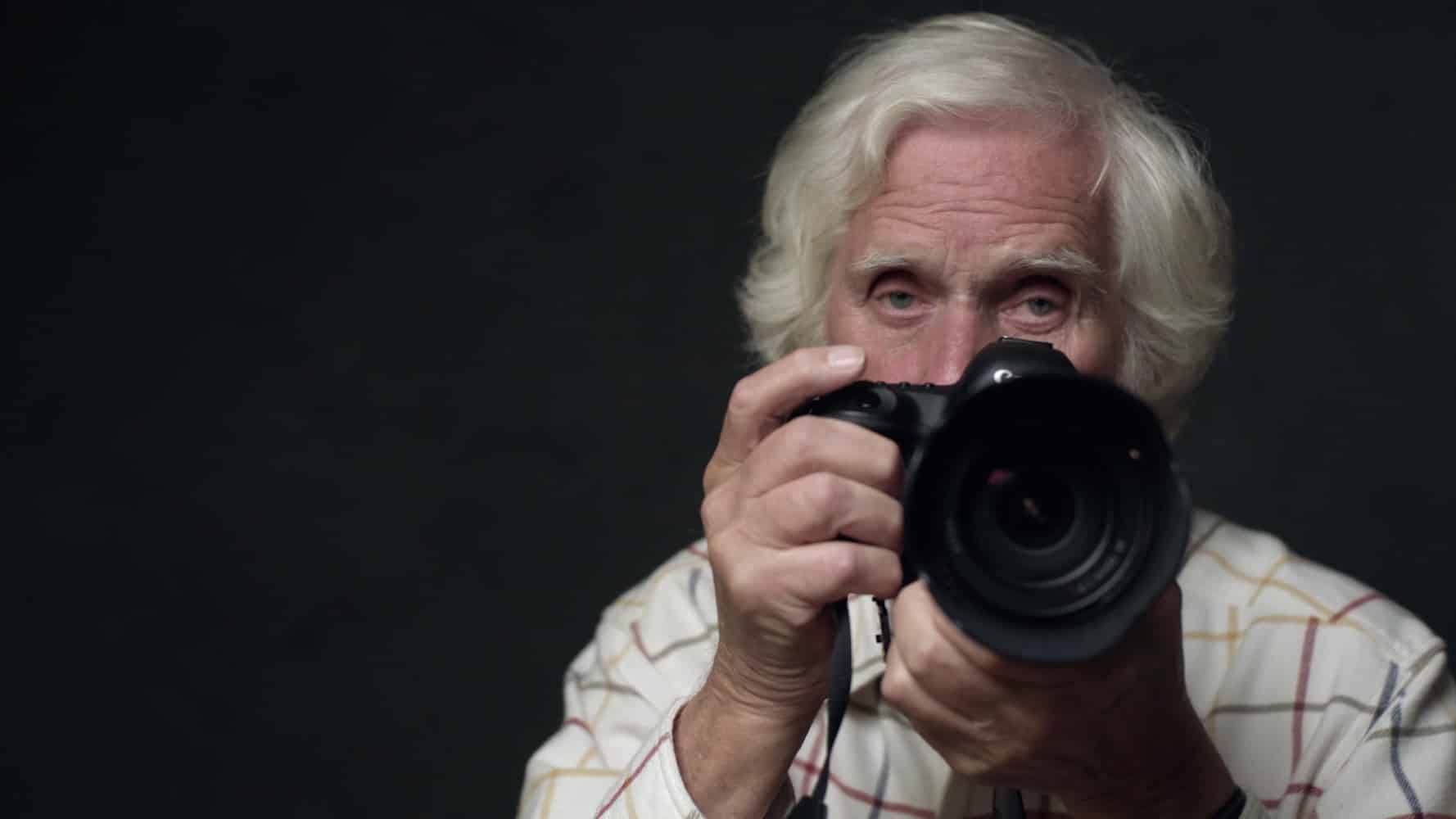
Douglas Kirkland isn’t the first name to pop up when the Western world ponders photographers of the celebrated and powerful.

Leibowitz, Avedon, Ritts, Helmut Newton, maybe even Irving Penn if you’re into history.

Penn was something of a mentor to Kirkland, who came to photographing the worlds of fashion and the famous via photojournalism. He was one of the stars of the glory years of that profession, shooting famous photo essays for “Look” and “Life” magazines, documenting the Kennedy White House, Marilyn Monroe at her most playful and Liz Taylor and Richard Burton in the ’60s.

Those shots led the celeb and fashion mags to point him at generations of beautiful people whom he’d always take care “to show at their best.”

And as we watch him prep an elaborate, floral set transforming Elle Fanning into a fashion plate/flower child, hooting “Yes Yes YES, I LOVE it!” as he fires off frames once she shows up, we realize that the documentary about him, “That Click,” isn’t about past glories only.

He’s lasted into “an age when everybody photographs everything” thanks to his distinct, playful style, his enthusiasm, the “aura” he projects to those subjects in his process, an aura that comes out through the photos he produces, Nicole Kidman offers.

He’s been on the sets of 500 movies, from “The Sound of Music” and “Butch and Sundance” through Baz Luhrman’s “Moulin Rouge,” photographed Andy Garcia (interviewed here) and his model/actress daughter, bringing to every shoot a “romanticism” in creating images in poses and settings that many a movie cinematographer has noted what he’s done, and copied it for the film.

His many endorsements, from celebrities and peers, aside, “That Click” — it takes its title from the Kodak Brownie camera’s shutter sound which hooked him for life — isn’t a deep film, barely hinting at the absentee fatherhood, his personal life or his “photojournalist” bonafides.

Director Luca Severi’s film zeroes in on the beautiful people photographed beautifully, and barely troubles with anything else. Celluloid, large format or digital, the gorgeous can trust Kirkland to immortalize them in the most flattering light possible.

There’s plenty of those and plenty of that, and if that’s your thing, here’s an artist with a camera you should know about, the last of the post-Golden Age of Hollywood, pre-rock’n roll generation to make a mark.

MPA Rating: unrated

Cast: Douglas Kirkland, Sharon Stone, Elle Fanning, Michelle Williams, Herbie Hancock, Nicole Kidman, Andy Garcia

Credits: Directed by Luca Severi. A Film Movement release.

Running time: 1:30

Posted in Reviews, previews, profiles and movie news | Comments Off on Documentary Review: Marilyn to Michelle, JFK to Elle, Kirkland captures the famous with “That Click”

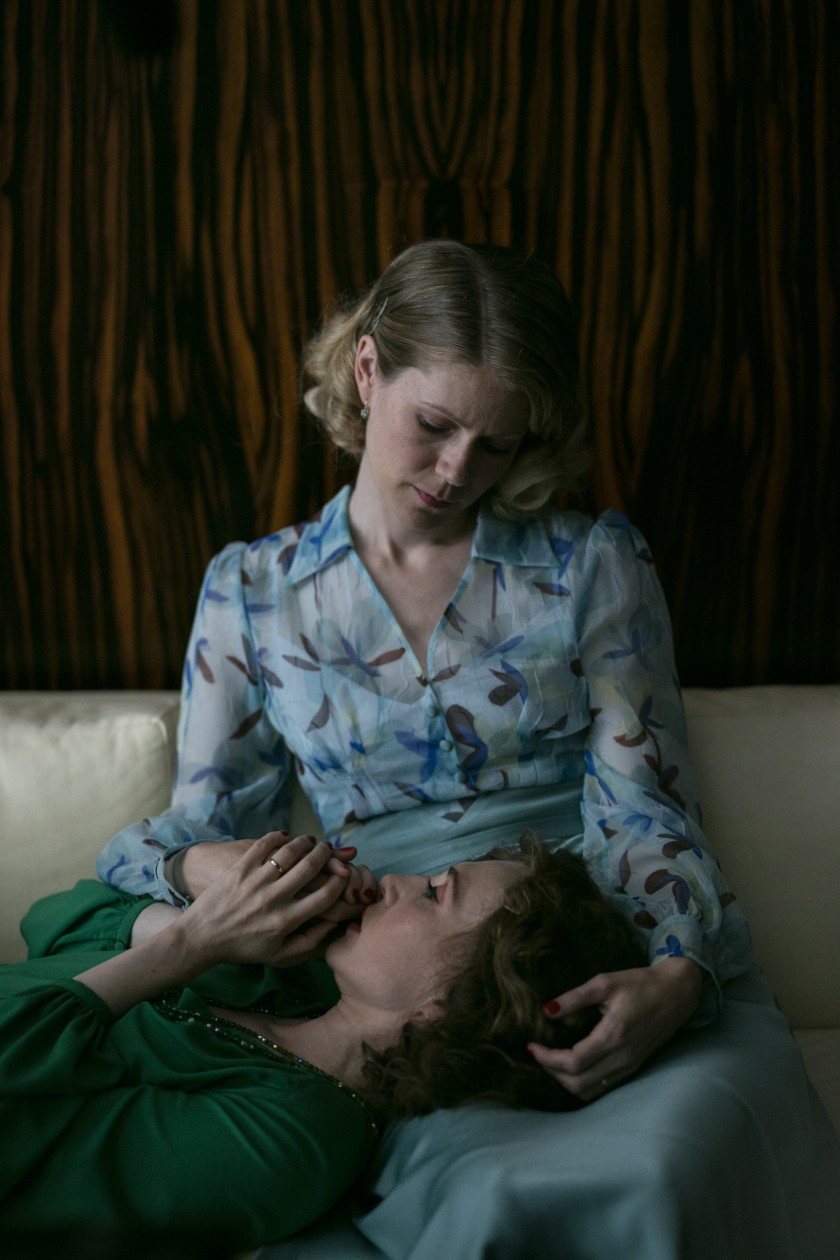
Movie Review: A Designer Home, Nazis lovers separated — “The Affair”

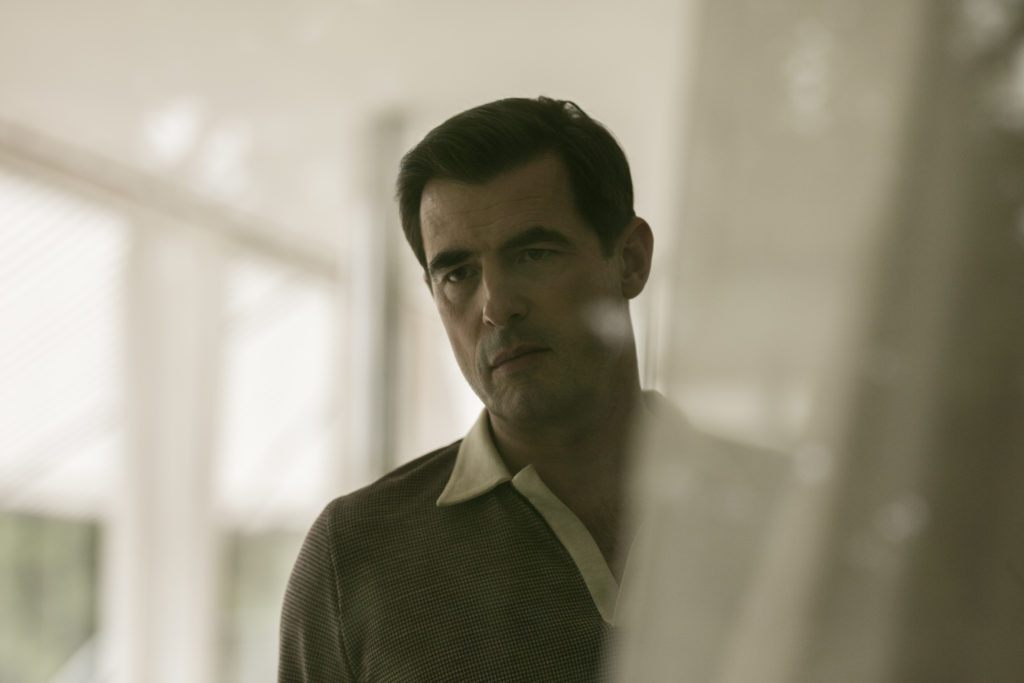
A tepid period melodrama set against the backdrop of Czech history, “The Affair” might best be described as a movie about a house. That’s more accurate.

Czech director Julius Sevcík (“A Prominent Patient”) has made a film of Simon Mawer’s “The Glass Room,” and shot it in both English and Czech. Let’s hope it’s better in Czech.

It’s a more torpid than torrid tale of two wealthy friends, played by Carice van Hoeten and Hanna Alström, who flirt with being friends with benefits, only to have the Nazis interrupt that — leading to decades of sad, heartfelt letters of longing as one flees to Switzerland and the other is left behind to face personal degradation and national humiliation, and the Nazi abuse and misuse of the designer modernist house Liesl (Alström) left behind when she and her family fled.

It’s the sort of movie where a conversation drifts from what it’s like to “live in a masterpiece” to mildly unnerving chatter about what’s going on right across the border.

Hanna is the one who points out “We’re both married to Jews,” while Liesl is Mrs. “It won’t happen here.”

“Liesl, it’s happening 50 kilometers away!

The film begins with the 1930s wedding of Liesl to Victor (Claes Bang) and the extravagant home she commissions from famous architect Von Abt (Karel Roden), with big glass windows and Onyx walls, filled with the latest in artwork and furniture destined to be included in the Museum of Modern Art as well.

The women, whose husbands are in business together, meet and share intimate conversations and friendship as their lives and families begin. One’s husband cheats with the nanny, which has consequences, but none that make us feel anything. Hanna must prostitute herself to a German aircraft designer (Roland Møller) to keep her and her husband from being deported.

“I am his whore,” she writes. This is how we live, an entire country doing what it must.”

Even that abusive relationship is bathed in blue light and pitched in a way that leaves the viewer cold.

Van Hoeten has been a European star since “Black Book,” and I can’t remember a performance of hers that moved me less.

The Swedish Alström, of the “Kingsmen” action comedies, is dry and distant as well. The leading ladies have little chemistry.

Bang (“The Square”) is on the periphery for much of the movie, with only a couple of heated moments to play.

Treating the history — 1930s to 1960s — as background noise lowers the stakes and renders the longing the women feel for each other’s company lukewarm throughout. The Holocaust, death, rape and wrenching separations recede as we refocus on what’s become of the house.

It has to work better as a novel because in the movie, that plays as heartless and hangs over the entire film, a pall that never clears and allows “The Affair” to bite, cut, sting or inflame.

MPA Rating: unrated, violent images, sex, some nudity

Cast: Carice van Hoeten, Hanna Alström, Claes Bang, Alexandra Borbély, Roland Møller and Martin Hoffman.

Credits: Directed by Julius Sevcík, script by Andrew Shaw, based on the novel “The Glass Room” by Simon Mawer. A Vertical Entertainment release.

Running time: 1:44

Posted in Reviews, previews, profiles and movie news | Comments Off on Movie Review: A Designer Home, Nazis lovers separated — “The Affair”

Producers Guild Narrows the Best Picture Field — “Borat” is a contender?

Um, okay.

“Borat: Subsequent Moviefilm” is a fine fun semi-scripted farce. Ripped Rudy a new one. But an Oscar contender?

No “News of the World” or “Another Round” or “The Father” or “emma.” Or “David Copperfield” or…what else do you see as missing?

“Mank” and “One Night in Miami” I wasn’t nuts about, but they at least have the scope and veneer of “Oscar contender” about them.

This might be your Best Picture field, but as all bets are off this Oscar season, that’s less likely than usual. No way in Hell a town full of actors will be backing a movie with only a couple of SAG members in it.

Posted in Reviews, previews, profiles and movie news | Comments Off on Producers Guild Narrows the Best Picture Field — “Borat” is a contender?

Movie Review: “Dutch” is a gangland saga that’s no treat

A rambling, generic mobster’s-rise-in-flashback story, with a ludicrous terrorism trial as its framework, actors ranging from competent to amateurish and most of them unable to hide their disengagement from the script, “Dutch” has it all.

And then you look at this slo-motion trainwreck’s IMDb page and see it’s the first film of a planned trilogy.

Take me now, Lord. And Lord, this Nashville-based “Faith Media Holdings” company that released this violent, N-word, F-bomb and C-word R-rated “thriller?” Which faith is that?

Lance Gross plays a Newark mob boss who imposes his case on a reluctant defense attorney (Natasha Marc) just as he’s arrested over their unscheduled lunch meeting.

Bernard James, aka “Dutch,” is charged with terrorism — conspiring to bomb a Newark police station, a bombing that killed 27 cops.

In America, that would be the media story of the year, a trial turned into a media circus. Here, there’s no press, a mostly-empty courtroom and some of the dullest, most tin-eared dialogue and most amateur performances this side of sophomore year projects at your average film school.

I don’t like to abuse actors, and as most everybody in these scenes sounds like they’re reading lines off cue cards, let’s just put that grimace aside.

Flashbacks prompted by testimony tell us the story of how he got his start, his early connection to a mobster creatively named Fat Tony (veteran character player Robert Costanzo), how he came by his nickname and the bloody mob intrigues that accompanied his rise — with an earlier stint in prison thrown in.

As thrillers go, there’s nothing thrilling in “Dutch.” Characters slow-walk through the action, stop and deliver speeches often packed with exposition, legal or illegal credentials of their characters.

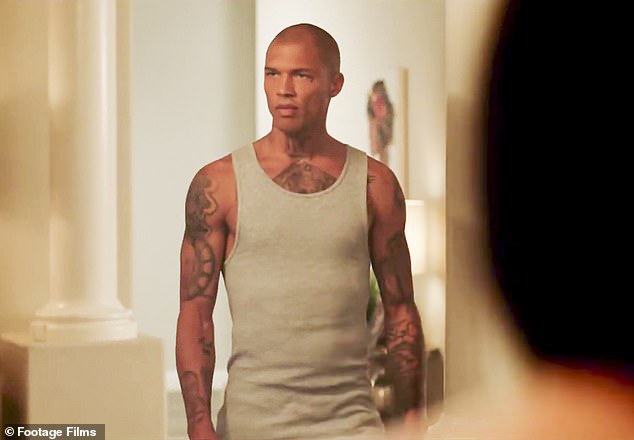
The finale is laugh-out-loud low-energy over-the-top. The actors so-underreact that you’d swear they were watching the film rather than participating in its violent, life-threatening story. Onetime web phenom “Hot Felon” Jeremy Meeks is in this cast, and as inexperienced as he is on screen, he’s not remotely the worst actor in this.

Is this story headed towards some sort of religious conversion? In the remainder of the trilogy?

I’d settle for an apology for wasting my time.

MPA Rating: R for language throughout, violence, some drug use, sexual references and nudity

Cast: Lance Gross, Natasha Marc, Jeremy Meeks and Robert Costanzo

Credits: Directed by Preston A. Whitmore II, David Wolfgang, script by Preston A. Whitmore II, based on a novel by Teri Woods. A Faith Media (!?) release.

Running time: 1:43

Posted in Reviews, previews, profiles and movie news | Comments Off on Movie Review: “Dutch” is a gangland saga that’s no treat