Documentary Review — “Long Live Rock: Celebrate the Chaos” makes the case for Metal Longevity via its fans

“Long Live Rock,” a doc about the undying devotion of aging white folks to their favorite metal bands, is littered with tattoo stories, accident stories, mosh pit and crowd surfing tales and a few yarns that begin with “We were drunk, so” or “We were so drunk,” oft told from the front porch of a single wide followed by a Sirius dj bitching about how “tired” he is of “stereotypes” about “this audience.”

Irony died three Metallica bassists ago.

But I kid. No, not all of them have gotten that AARP card in the mail, and the fact that they’ll never end up in “yacht rock” fandom says something. Not with all that ink and tinnitus.

Jonathan McHugh’s documentary, “Long Live Rock: Celebrate the Chaos” has a chaotic organization all its own. It purports to be from the fan’s perspective, and catches up with a lot of rural 50somethings, and a few folks outside that demo, who recapture their “7-11 parking lot” youth at the big rock festivals that are how the Slipknots and basically anybody who isn’t Ozzy or Metallica make their money these days.

But there are also scores of mostly ’80s-vintage band musicians, from Metallica, Guns’n Roses, et al, making the case that “we’re playing to entire families — parents, kids and grandkids!”

As an entertainment journalist, the first time I heard a musician claim that was for a still-touring vintage Big Band from the ’40s, on the road into the ’80s.

An oddball psychologist, and the eye-rolling and omnipresent Dr. Drew are here to talk about finding connection, one’s “tribe,” and what that gives devotees.

But they’re also on camera to talk about the rash of suicides and ODs that occurred just before the film went into production — Chris Cornell of Soundgarden, Chester Bennington of Linkin Park, the “demons” many spotlight performers face. Duff McKagan of GNR recalls drinking and drugging until “my pancreas burst.”

Rock’n Roll!

The film’s problem isn’t those excesses or its fans, it’s when it wanders all over the place instead of focusing on the most devoted metal fans. The people who hang onto the music, tattoo lyrics and logos on their arms and torsos, who turn these festivals into tailgating affairs, meeting up for beers and good times with friends, are mostly here for some good, clean and loud fun.

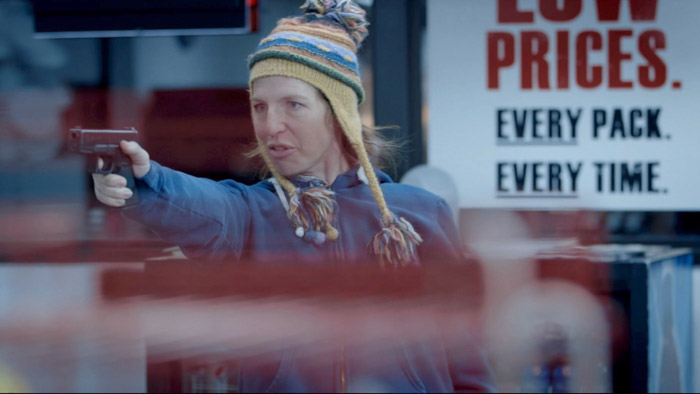
There’s a generous sampling of lives seeking “escape” and the poor judgment that often accompanies that — the potential violence of the mosh pit, the “groping” risks that “brave” woman face when crowd-surfing. The ex-con and the prison guard who run into each other at concerts now is a nice inclusion., the 30ish gun-nut nurse a bit of an eyebrow raiser.

But music is music, and another generation of performers have established themselves — Halestorm, et al — suggesting that pronouncements of “rock is dead” by Gene Simmons, Forbes Magazine et al, in the opening of the movie might be premature.

Music is “cyclical,” as more than one promoter says here, and there’s a chance that after a couple of generations of rap/pop mania, kids will pick up guitars or fall for musicians who do.

Still, you can’t help notice the elephant in the room that McHugh ignores. Despite the inclusion of 63 year-old Ice-T and acts with African American performers on the festival bills, the audience they’re playing to (as shown here at least) is entirely white, almost entirely over 30, mostly 50ish.

And the focus on festivals as “proof” of the future of the genre and the scene is ludicrous. Crowded-bill festivals are to metal what county and state fairs are to country music and cruise ships are to pop stars.

They’re the last stop on the road to oblivion.

MPA Rating: unrated, drinking, profanity

Cast: Lars Ullrich, Lzzy Hale, Ice-T, Duff McKagan, Machine Gun Kelly, Dr. Drew Pinsky, Tom Morello, etc.

Credits: Directed by Jonathan McHugh. An Abramorama release.

Running time: 1:23

Posted in Reviews, previews, profiles and movie news | Comments Off on Documentary Review — “Long Live Rock: Celebrate the Chaos” makes the case for Metal Longevity via its fans

Documentary Review: “My Beautiful Stutter”

“My Beautiful Stutter” is a film about stuttering and stutterers viewed through the efforts of an organization trying to “put children in a place” where they love themselves, teaching them “I stutter, and it’s OK.”

That organization is SAY, The Stuttering Association of the Young. Director Ryan Gielen’s film is about the organization’s outreach, its efforts to not so much explain stuttering/stammering or champion treatment and a “cure,” but to help young stutterers to come to terms with it as they work with speech pathologists, mental health professionals and others in coping with the bullying and insecurities that have long plagued school age kids dealing with this.

A common complaint? Listeners interrupting and “helping” somebody finish a thought. It’s not “helping.”

Taro Alexander, a stutterer himself, founded the organization, and eventually figured that the best way to help kids cope was to let them know they aren’t alone, and give them a chance to attend a summer camp in the mountains of N.C. where they could hear each other’s stories, provide support and be “normal” with activities — from theater to rock climbing, archery to basketball — where they weren’t under the spotlight of being the only stutterer in their age group.

Teen Julianna Padilla sings as a way of expressing herself that transcends struggles talking. A child traumatized as a toddler, another born prematurely, another who has gone on to give motivational “TED” style talks about the struggle.

There aren’t a lot of experts here explaining the condition, just reminders that 70,000,000 people worldwide suffer from it, that it’s not tied to intelligence and that the “nervousness” associated with that sort of speech comes from anxiety over having to speak, and is not the cause of stuttering.

Gielen’s film follows a formula familiar to anybody who watches documentaries, “The Lottery” format made most famous in that 2010 film about school assignment lotteries. Meet kids in various corners of the country or from various neighborhoods, profile them and bring everybody together to see what happens.

“Crip Camp,” the Oscar-buzzed Netflix documentary about a pioneering camp for children with disabilities, is the best recent film to work within this formula.

Most of “My Beautiful Stutter” takes place at that camp. And while it’s moving to see see what these children are coping with and inspiring to see how some of them manage to thrive, with a hint that not every parent sees the benefit of such a camp, the big emotional moments common to such documentaries are somewhat lacking here. The film’s narrow focus make it more an expression of support for those who stutter and those trying to make stutterers’ lives better than an “explainer,” a movie that covers a lot more ground on the subject.

Finishing at a “benefit gala” has a whiff of “we had nothing else to show you” about it.

It takes nothing away from the participants to suggest the film about this experience is informative, but not definitively so, and more interesting than moving. The too-similar “Crip Camp” makes for a more compelling film, built on exactly the same framework.

“My Beautiful Stutter,” shot mostly in 2015 and shown in festivals in 2019, makes its Discovery+ debut at a time when a stutterer is in the White House (not mentioned in “Stutter”).

MPA Rating: unrated

Cast: Taro Alexander, Julianna Padilla, Malcolm Venable, Dame Helen Mirren, John Sculley

Credits: Directed by Ryan Gielen, script by Steven Sander. A Discovery+ release.

Running time: 1:30

Posted in Reviews, previews, profiles and movie news | Comments Off on Documentary Review: “My Beautiful Stutter”

Sir Kenneth Branagh tapped to direct a Bee Gees biopic

That Hulu BeeGees documentary has A) reminded people of how they were or B) made Hollywood realize there are plenty of BeeGees fans kicking around out there. “Staying Alive.”

ttps://twitter.com/Variety_Film/status/1369748783890755586?s=09

Posted in Reviews, previews, profiles and movie news | Comments Off on Sir Kenneth Branagh tapped to direct a Bee Gees biopic

Movie Preview: Ruby Rose takes care of the action, Morgan Freeman pulls the strings in “Vanquish”

Ruby Rose in a buzzcut? Always badass.

She plays a former drug courier whose kid is held hostage as she’s forced back into working fo the Russian mob.

Freeman is the guy who might be able to give her the edge to get her kid back.

April 26 is when this thriller hits theaters.

Posted in Reviews, previews, profiles and movie news | Comments Off on Movie Preview: Ruby Rose takes care of the action, Morgan Freeman pulls the strings in “Vanquish”

Movie Preview: Natasha Henstridge guards a young witness from the Cartels — “Night of the Sicario”

Costas Mandylor is the other big name in the cast of this DEA/Drug Wars riff on “Sicario.”

April 16 in theaters, April 20 VOD.

Posted in Reviews, previews, profiles and movie news | Comments Off on Movie Preview: Natasha Henstridge guards a young witness from the Cartels — “Night of the Sicario”

Movie Review: An Aspiring Writer remembers “My Salinger Year”

“My Salinger Year” is “The Devil Wears Prada,” set in a literary agency and with many of the rough edges rubbed off.

Margaret Qualley, cleaned-up from her grubby Manson disciple of “Once Upon a Time…in Hollywood,” is our privileged young heroine, plucky and cute and ever-so-eager to “be extraordinary,” to make her mark in literature after studying in London and Berkeley.

She just happened to get a job in a publishing house that just happened to have J.D. Salinger as its most celebrated client. Years later, she got a best-selling memoir out of that experience, charming Salinger when he called, handling his fan mail by reading it — “We have to be very careful after the Mark David Chapman thing.” — and still sending his standard form letter to one and all — “Mr. Salinger” does not desire “letters from his readers…”

The film adaptation by Philippe Falardeau (“The Good Lie”) could have lapsed into cloying, and the connections between Joanna’s “coming of age” story and Salinger characters, the personalization of the letters, showing us high school kids and Vietnam vets and everybody in between performing their fan mail, is awfully cute.

But here’s what Rakoff and Falardeau give us in this “Year” — the J.D. Salinger of “Catcher in the Rye,” the not-so-much-reclusive as just seriously “private” author who never lost an opportunity to pass along bromides about writing, dedication to the craft and getting on with “the work” to young people Holden Caulfield or Franny and Zooey’s age.

This is the J.D. Salinger of myth, the one somewhat lost in the lawsuits, the affair with college student Joyce Maynard when he was in his ’50s, the infamous testiness and writer’s block that rivaled that of fellow phenomenon Harper Lee. It’s the Salinger fans long for.

This mid-90s tale seems disconnected from the modern world, largely because of how Rakoff describes ANF Literary Management in the film, “like nothing’s changed since 1927.”

It’s 1995 and the imperious boss (Sigourney Weaver, perfect) has ordained “We choose not to use computers.” The offices are quiet, staid and pierced by natural light, the gentle hum of IBM Selectrics breaking the silence. Books fill shelves, portraits of legends of literature — famous clients all — adorning the walls. Dylan Thomas and Agatha Christie and Salinger aren’t the only ones honored there.

Margaret starts her job and gets the “talk about Jerry” the first day — what to do when he calls, what not to say and when to give out his mailing or personal address.

“NEVER.”

“We have to shield him from the outside world,” boss Margaret (Weaver) intones. That involves protecting their star client from fans, schools that want a commencement speaker, charities that want something personal to auction off, interview requests, all of it.

Our story is Joanna learning the ropes, dealing with the snobbery and balancing a personal life that has her abandon a high school love by not returning to college and taking up with a 1990s Bohemian socialist novelist (Douglas Booth).

The plot may feel timeworn, but Falardeau recreates this world, of Algonquin-Lite lunches filled with anecdotes about clients (a world denied to Joanna), Salinger eccentricities and the sort of staff it takes to keep him in his Cornish, New Hampshire seclusion.

It’s not insulting to say that the supporting cast in that publishing house could be their own high-toned sitcom, or at least a streaming dramedy series. Colm Feore is the wit who glides through offices, propping up one and all, Yanic Truesdale the snarky younger foil to the boss’s Luddite tendencies and Brían F. O’Byrne the contracts and legalities staffer who worked his way to that by doing what Joanna does right now.

Qualley brings a guarded, dreamy quality to Rakoff, a young woman guilted every time Salinger called in, lying about “writing,” star-struck just standing in the lobby of The New Yorker, struggling with what to do with “my life” as she faces forks in her path and the Big Decisions of One’s 20s.

As I said, there’s not a lot of edge to all this. The many letter-writers never quite achieve wacky, crazy or poignant. Weaver’s Margaret is imperious and aloof, but more callous than cruel when compared to Meryl Streep’s “Devil Wears Prada” turn. The office isn’t bitchy or back-stabbing, which lets the movie lean more heavily on Joanna’s personal life.

And that’s just not as interesting as her trying to help the boss kid-gloves Joanna’s favorite author as a teen, Judy Blume, or gently steer a Salinger whim about finally publishing something…with a one-man publishing house in Virginia.

“My Salinger Year” was never going to be awards bait, but this cast and this world make for a grand escape from the mundane necessities of life as we’re immersed in a coming-of-age tale like few others, one that should make anybody with a soft spot for Salinger and empathy for those who had to “manage” him just a tad envious.

MPA Rating: R (Language|Some Sexual References), smoking

Cast: Margaret Qualley, Sigourney Weaver, Colm Feore, Douglas Booth, Yanic Truesdale and Brían F. O’Byrne

Credits: Scripted and directed by Philippe Falardeau, based on the memoir by Joanna Rakoff. An IFC release.

Running time: 1:41

Posted in Reviews, previews, profiles and movie news | 2 Comments

Movie Review: Another scary nun is on the loose in “The Parish”

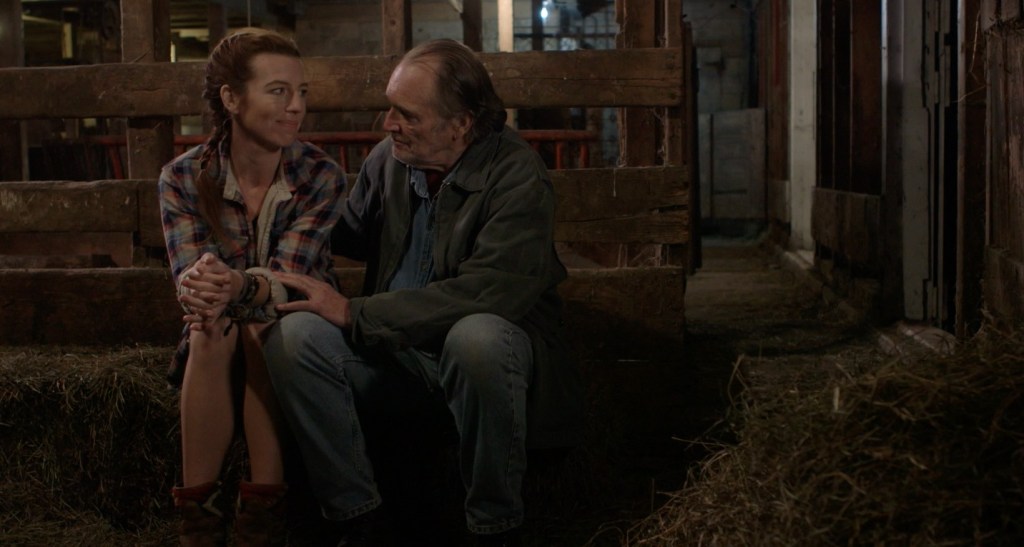
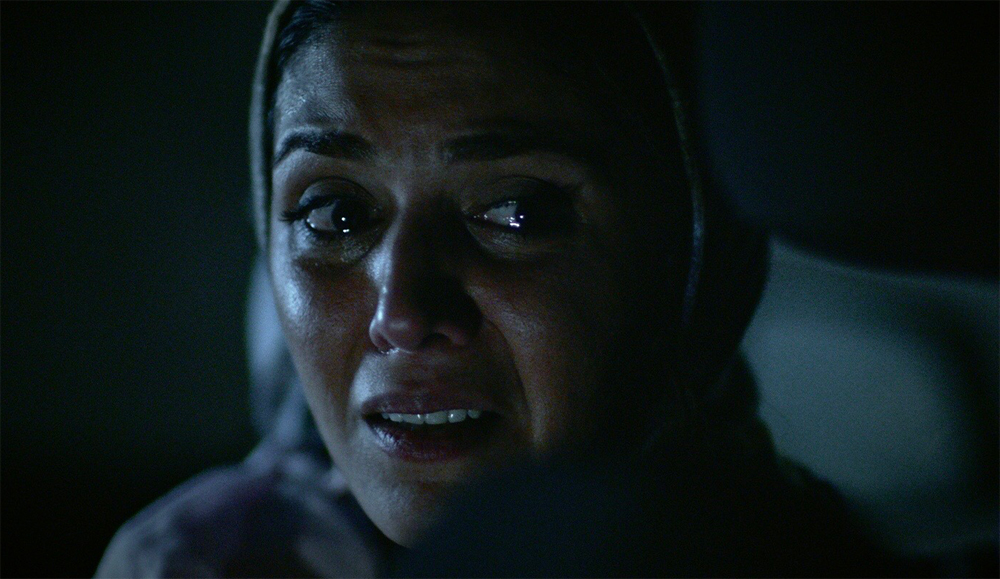
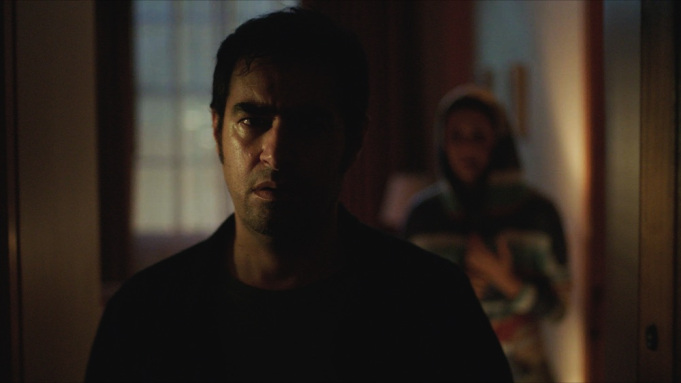
Actor turned director David S. Hogan gives us a C-movie that looks every inch an A-picture with “The Parish.” It may be that latest remix of a worn-out formula, with a “mystery” we’re two or three steps ahead of, first scene to last. But it has the sheen of major studio release, a decent performance or two and modest but effective effects.

Frights? Not really. How one manages to make a movie this dull centering on an alarming nun, when they’ve been horror icons since before “The Sound of Music,” is kind of a feat in its own right.

Liz (Angela DiMarco) and daughter Audrey (Sanae Loutsis) have moved “a thousand miles from San Diego” for a new start, a town where Liz’s pal from college (Sara Coates) is a realtor.

They’re getting over a loss. Husband Jason was killed in Afghanistan, and mother and daughter are still seeing him (Ray Tagavilla) in their nightmares. What’s he saying? Is he warning them?

A new house, new Catholic school and new drinking buddy for mom to empty wine bottles with should do the trick.

But “art therapy” isn’t doing anything to change sullen Audrey’s “I HATE it here.” It’s just creeping Liz and the kid’s teachers out.

At least she’s made a new friend, Caleb, another loner and “new kid.” But as Liz tracks Caleb down some stairs and never finds him, as she runs into a hulking mute janitor and then “Sister Beatrice (Gin Hammond), school folks start wondering about the kid, and then about her mother.

And you can guess why.

Horror veteran Bill Oberst Jr. (“Tickles the Clown”) is the parish priest who may have some answers.

But the questions the viewer asks aren’t just related to the story, which as I say, we figure out before any character does.

It’s a picture with a dead spouse and a family in mourning and little sense of pathos. Every character is a trope of some sort, most of them dating to the origins of the genre. And while most of the performances are at least OK, one is bad enough to make you wince.

“The Parish” needed to be more Catholic, more creepy and have a lot more suspense and sense of what’s at stake to come off.

MPA Rating: unrated, horrific images, blood

Cast: Angela DiMarco, Sanae Loutsis, Bill Oberst Jr. , Ray Tagavilla, Sara Coates, Amber Wolfe Wollam and Gin Hammond.

Credits: Directed by David S. Hogan, script by Todd Downing. An Uncork’d release.

Running time: 1:22

Posted in Reviews, previews, profiles and movie news | 1 Comment

Netflixable? A Satanic comedy from Germany, “How to be Really Bad (Meine teuflisch gute Freundin)”

Whatever their place within German culture, film comedies exported from Germany are a relatively rare thing and another reason to buy into “Around the World With Netflix.” How else are we to know what Hollywood and recent history’s favorite villains find funny?

How to be Really Bad,” or “Meine teuflisch gute Freundin” in German, could have been made most anywhere that high school comedies and laughers about The Devil might go over.

Remember Adam Sandler’s “Little Nicky?” Imagine that starring a cute redhead and set in a German high school. It’s like that.

Emma Bading (“In My Room,” “Different Kinds of Rain”) is the star, pale Lilith, the cruel and bored daughter of The Devil (Samuel Finzi), here depicted as a sharp-dressed man of finance running a sort of stock exchange of souls based in a modern black skyscraper in Berlin.

She tortures the minions and wishes for field work. Surely a year out turning sweet-spirited humans bad would do her good, she argues.

“I’ll give you a week,” Dad snaps back. And yes, everything sounds more menacing to American ears if it’s delivered in German.

She will stay with a hippy, eco-friendly and sweet-spirited family in Birkenbrunn. She will turn their daughter Greta (Janina Fautz) and anybody else she can from “nice” to “mean.” The only rule? “No physical contact” because Satan has no use for minions “in love.”

The Birnsteins are the sort of upbeat, progressive people who drive Devils and Deplorables nuts.

“So happy you’re here,” they bubble. “We’ll see about that” Lilith hisses back.

She’s here to chew licorice, kick ass and take souls. Lilith will badger and shame Greta, who wears dresses dresses knitted by her mother which Lilith thinks look like “oven cloth” (pot holders) and cause her classmates to label her “Miss Birkenstocks.”

She’s bullied, mocked and dismissed at school. Get her to notice this and “stand up for yourself” might be first step in her mean girl “makeover.”

Greta is innocent, sweetness and light, and her mother (Alwara Höfels) is heckbent on keeping her that way. A little teen rebellion is all it’ll take, Lilith figures.

Lilith’s efforts with Greta include ensuring her heart is broken by the class Lothario (Emilio Sakraya), which will turn her bitter. But then Lilith falls under the gaze of parkour-loving petty thief Samuel (Ludwig Simon), the class “Bad Boy.” Can she fight the urges her Hell-raised hormones are throwing at her?

The comedy spins out of the most obvious sources — Greta’s image change, in which Lilith lies to make her the most popular girl in school, even winning over the sexy aspiring mean girl singing duo “Pussy Deluxe” (Amina Merai and Matilda März), [ranks involving the headmaster (veteran character actor Johann von Bülow, the most-recognizable face in the cast), Lilith pummeling the headmaster’s son (Theo Threbs), who is also the class bully, and denying her first-ever attraction to Samuel.

The effects are simple enough — fire effects, Satanic changes in eye-color, feats of strength.

But the best laugh and most impressive effect here is Bading, a pale, red-headed (in this film) Satanic Emma Stone, eyes-narrowed, hair braided into top-knots that look like horns, setting her sights on mischief and mayhem.

She isn’t enough to pull “How to be Really Bad” off. But if you’ve been wondering about German humor, which Hollywood stereotyping preaches is in short supply, “How to Be Really Bad” suggests it’s there, and that it needs to move on from movie ideas that Adam Sandler would find funny, just like everybody else on Earth.

MPA Rating: TV-14, comic violence, smoking

Cast: Emma Bading, Janina Fautz, Ludwig Simon, Theo Threbs, Amina Merai, Johann von Bülow and Samuel Finzi

Credits: Directed by Marco Petry, script by Rochus Hahn and Marco Petry. based on a novel by Hortense Ullrich. A Wild Bunch Film on Netflix.

Running time: 1:40

Posted in Reviews, previews, profiles and movie news | Comments Off on Netflixable? A Satanic comedy from Germany, “How to be Really Bad (Meine teuflisch gute Freundin)”

Movie Preview: Hasidic Horror? “The Vigil”

Now this? THIS looks original.

Coming Friday.

Posted in Reviews, previews, profiles and movie news | Comments Off on Movie Preview: Hasidic Horror? “The Vigil”

Movie Preview: Canadian thriller aims to be the least “Woke” of all — “Sugar Daddy”

Kelly McCormack and Colm Feore star in this story of a musician who just needs a little help paying her bills until her big break.

From the looks of things, director Wendy Morgan (“Backstage”) keeps things just artsy enough to lift this April 6 release just above simple exploitation.

Posted in Reviews, previews, profiles and movie news | Comments Off on Movie Preview: Canadian thriller aims to be the least “Woke” of all — “Sugar Daddy”