Movie Review: If the barkeep says “The bar’s closed,” you’d better listen in “The Oak Room”

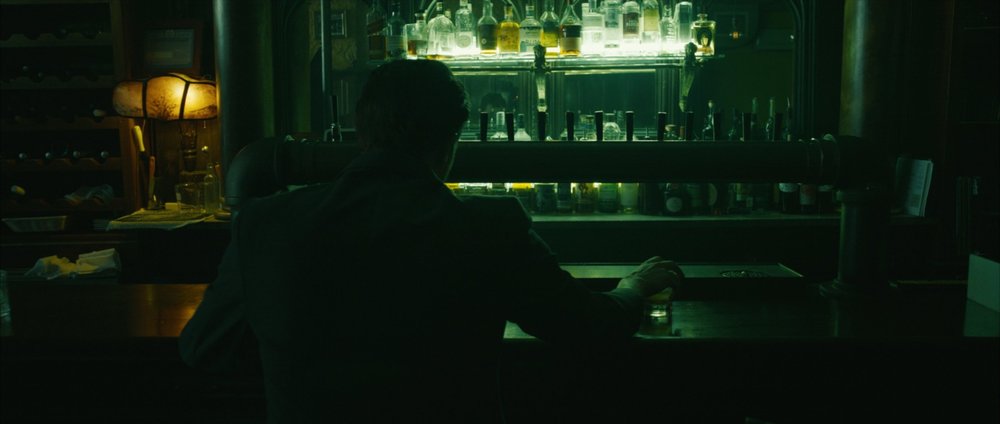
The latest beta test of the Screenplay Cliches Bot is titled “The Oak Room,” a moody, talky, stunningly-dull and hilariously-trite “thriller” mostly set in a bar — a couple of bars — in remote, snowy Ontario.

Cliche #1? “Bar’s closed.” This overused situation and utterly worn-out line is trotted out more than once in this “I’ve got a story” tale.

Tell me you haven’t heard this before, ANY of these “I watched a couple of movies, time for me to write my own SCREENplay” Cliche Bot excretions.

“I don’t want any trouble.” “You’re not from around here, are you?” “Let’s see you talk your way out of THIS one!” “Don’t play games with me, kid!”

“I’m sorry, have I BORED you?”

Rhetorical question, in this case.

“Oak Room” is a bad “memory play” committed to film, practically a spoof of the genre, only too witless to make that claim. A parade of cliches uttered by “types,” it is tedium itself.

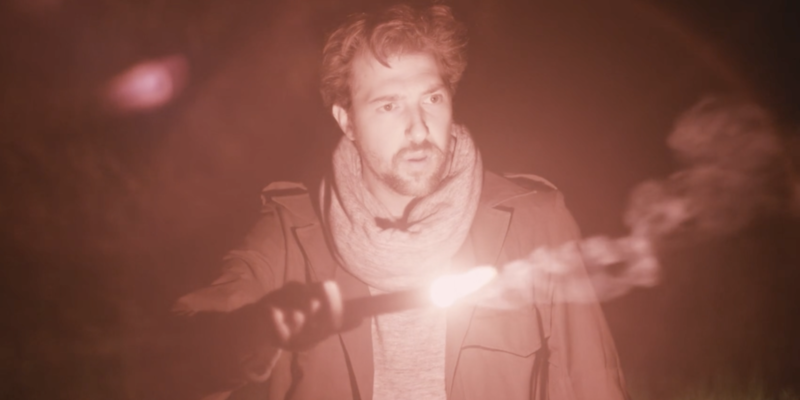
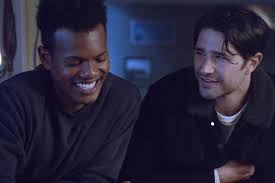
Guy in a hooded arctic jacket and face mask walks into a just-closed tavern. Bartender threatens him with a baseball bat. Guy takes the mask off and it’s “Stevie” (RJ Mitte) a “kid” who hasn’t been around these parts in years. The barking barkeep (Peter Outerbridge) unloads a dozen rounds of invective and threats straight out of the SCB (Screenplay Cliches Bot), about debts, a funeral missed, ashes stuffed in the old man’s old tackle box.

But Stevie’s “got a story.” And he tells it. It’s a flashback, and there are flashbacks within the flashback. It’s about another guy walking into another bar.

Stevie allegedly skipped town for college, but Mitte (“Breaking Bad”), who looks like Will Forte and talks out of the side of his mouth like Carl Spackler in “Caddyshack,” makes the guy seem “simple,” or at the very least “on the spectrum.”

He tells this wordy flashback involving another closed bar, another winter night and two guys (Martin Roach, Ari Millen) talking back and forth in a verbose scenario not unlike the one Stevie and Paul are acting out, one that includes its own flashback.

There’s a threat of violence lurking around the edges of both tales, but what the filmmakers were really interested in here isn’t action — it’s monologues in dimly-lit bars. Endless monologues. Childhood-on-the-farm memories. Barfly tells his “hitchhiking” story to the bartender.

And Stevie keeps adding details in that “I forgot” and “I messed up” because “I told you the ending first.”

Barkeep Paul speaks for himself and everybody who takes a gander at “The Oak Room” when he growls, “If I’m this bored with the ending, why should I wanna hear the BEGINNING?”

Director Cody Calahan (“Vicious Fun,” “Let Her Out”) does nothing to speed things along or give anything that happens any urgency. The actors never lift their characters, situations or dialogue out of the mud of a road traveled way too many times to count.

And, making his feature film screenwriting debut, Peter Genoway? Make him fill out any contracts on future films online. There needs to be a “Are you a bot?” box rider at the bottom of the page. Because this cut-and-paste cliche collection could have been written by a machine.

MPA Rating: unrated, violence, alcohol abuse, profanity

Cast: RJ Mitte, Peter Outerbridge, Ari Millen, Martin Roach, Nicholas Campbell, and David Ferry

Credits: Directed by Cody Calahan, script by Peter Genoway. A Gravitas Ventures release.

Running time: 1:28

Posted in Reviews, previews, profiles and movie news | 2 Comments

Netflixable? Japanese Father has to figure out “Any Crybabies Around?”

The mythic Japanese Namahage demon is a sort of twisted, monstrous “You’d better watch out, you’d better not cry, better not pout” character meant to give little children character and “good ethics” as they grow up.

In the corner of Japan where this practice lives on, men show up with horrific masks and costumes of straw and come bellowing into family events — often a tiny tyke’s birthday — shouting a child’s name and “Any naughty boys/girls here? Any CRYbabies around?”

Scares the daylights out of the kids, as the adults laugh and squeal and take video and photos. Seems pretty messed up to Western eyes, I have to say. But parents anywhere might get a little perverse pleasure out of it.

It’s just that in Tasuka’s case, that “character” and “good ethics” lesson never took. He’s still going around with the his Oga Peninsula Namahage Preservation Society, still scaring kids. But Tasuka (Taiga Nakano) is married, with a new baby Nagi. And he’s nobody’s idea of an adult — an inattentive screwup, tactless and clueless with his wife, Kotone (Riho Yoshioka). He laughs things off so much that she’s reached her “You’re not thinking at all” limit.

He’s off, leaving her with the baby one more time as he does his Namahage schtick with the boys, not picking up on her brittle dismay. And when she turns on the TV, there’s proof of his irresponsibility for the whole country to see. A live feature report on the tradition is interrupted by a drunken Namahage streaker. We don’t have to see the break-up or legal filing to know who was in the mask (and nothing else) or what followed.

“Any Crybabies Around?” is a dramedy about this hapless, childish can’t-hold-his-drink Peter Pan, picking up his story two years later when he realizes he wants to get back what he’s lost.

Writer-director Takuma Satô takes us on an odd odyssey from Tokyo back to Oga, through Japanese “apology culture” rituals, showing the limited value of that through wounds that cannot be healed with just words.

Nakano gives Tasuka this blank stare that perfectly suits a guy that bad things just happen to. He’s run over in company soccer games, avoids drinking and yet gets stuck taking care of a colleague who gets hammered and can’t get herself home.

That’s who he is — put upon, yanked about, attacked in a bar merely for spilling somebody’s drink.

Telling his story to that co-worker, leaving out the embarrassing bits, seems to steel his resolve. Nobody thinks of him as a grownup? He’ll go home, win back the ex and “be a father.” But things back in Oga? Complicated, his old pal Shiba (Kanchiro) warns. The ex is working as a “hostess” in a local “bottle service” club. One step above prostitute.

His understanding mother doesn’t give him much chance, and his brother is utterly dismissive. The ex? She just wants to know about child support and alimony.

And then there’s the older man (Toshirô Yanagiba) who has been trying to keep the Namahage tradition alive. He’d like to share his mountain of hate mail with dopey Tasuka.

“I’ll keep apologizing until I’m forgiven,” won’t get you far among these people.

“Any Crybabies Around?” (in Japanese with English subtitles) has a big, fat metaphor sitting right here for all to see, some good performances and local color. The tradition depicted is fascinating, funny and macabre.

But the film feels incomplete, a 110 minute movie that doesn’t quite finish its story even though it meanders through the middle acts to the payoff. The finale is poignant and packed with meaning, but feels unearned and frustrating. There’s a lot more to “growing up” and being responsible than just getting over being a “crybaby.”

MPA Rating: TV-MA, violence, alcohol abuse

Cast: Taiga Nakano, Riho Yoshioka, Kanichiro 

Credits: Scripted and directed by Takuma Satô. A Netflix release.

Running time: 1:48

Posted in Reviews, previews, profiles and movie news | Comments Off on Netflixable? Japanese Father has to figure out “Any Crybabies Around?”

Movie Review: Bullying as a romantic thriller — China’s Oscar contender “Better Days”

“Better Days” is a searing indictment of bullying culture and China’s insanely intense college admissions system, all tucked into a sadly compelling romantic thriller.

The added-attention of an Oscar nomination gives a welcome boost to a movie much of the world missed in late 2019, but one well worth enduring and embracing.

“Enduring” because Derek Tsang’s film has a relentless quality, heartbreaking twists all the way through its multiple anti-climaxes ending. It almost outstays its welcome as it flips back and forth about how it resolves itself.

But “Better Days” is worth embracing because of its downtrodden leading characters, their compelling story and the brutality they endure from a Darwinian academic and social culture’s winner-takes-all system.

A Hong Kong production shot in Chunkging, it tells the story of Chen Nian (Zhou Dongyu), a petite, mousy teen in a huge high school where every class drills kids for their senior exams, where every wall is adorned with slogans — “No Excuses,” “The Smart Always Find Ways” — where every teacher is a cheerleader and if that’s not enough, there are chanting pep rallies to reinforce cultural dogma.

“I will not fail my parents!” (in Mandarin with English subtitles) “I will not disappoint my teachers!”

Chen Nian is studious and smart, a walking endorsement of “meritocracy.” She is poor. Her single mom (Wu Yue) is locally infamous, hustling grey market goods, unsafe knock offs and the like.

“When you graduate from college (after excelling on the admissions exam) we’ll escape from this hellhole.”

Pressure? A little.

But then a classmate hurls herself off a balcony in front of everybody. As the other kids gawk and take cellphone shots, Chen Nian weeps and drapes her jacket over the body. They were deskmates. And when we see the mountain of books piled in front of each of them on that desk, we understand.

Except that’s not the whole picture. There’s a mean girl posse led by Wei Lai (Zhour Ye). And from the relentless way they go after Chen Nian after she meets with the cops, we understand the hell that these kids endure, not just from the system but from each other.

The bullying of Nian quickly escalates into assault, but the young cop (Yin Fang) who interrogated her after her deskmate’s death proves to be well-intentioned and ineffectual. Mean girls have parents and minions who back them to the hilt, at least in the movies.

It’s when Chen Nian’s compassion shows itself again that she finds a protector. She calls the cops when she sees a boy being beaten, and is slapped around herself for her trouble. Xiao Bei (Jackson Yee) is nothing if not gallant. He will repay her. A brittle relationship forms between the teen punk living on his own and neglected Nian (Mom has to go on the lam).

“Do you like me?” he wants to know.

“What is there to like?”

We watch Nian suffer by day but get a break from the after-school assaults after this connection is forged. But something about the tough guy should be a warning. His “I always get even in the end” means that the Mean Girl and her Posse wars will only get worse.

Actor turned director Tsang — he did “Soulmates” — fleshes out Jiu Yuexi’s novel with spirited montages of the pressure-cooker school and the grim routines of the life of students there. Who has time to be bullied or do the bullying?

But that’s the way of it, parents, teachers and cops agree. “You’re either a bully, or you’re bullied.”

Even the death of a classmate faces a circumscribed investigation, because the kids “can’t spare more time. Exams are coming.” A giant digital clock at school counts down the days. Parents show up, drop to their knees and beg teachers, and when that fails, they shriek at their kids and whale on them in front of the entire school.

With every hope of social mobility riding on the Chinese ACT/SAT, everyone feels the strain.

Two of China’s brightest young stars set off sparks in this bullying variation of the French classic “Breathless,” with its bad boy, the “good” girl, violence, love and eventually crime entering the story.

As I mentioned above, the third act tends to go on and on, twisting and twisting in on itself, undercutting the flashback structure (A teacher — Chen Nian? — looks back on 2011.) or making that something of a teen-fantasy-about-our-future interpretation.

“Better Days” may open with a disclaimer about this “worldwide” problem, which bullying is in our social media age. But as savage as that is here, it’s the unbearable pressure of “the system” that sticks with you. Social strata as grimly defined as Dickensian England and entire families living or dying by how the smartest kid does in these soul-crushing tests make “The Chinese Way” to global success not one many would be willing to emulate.

MPA Rating: unrated, violence, smoking

Cast: Zhou Dongyu, Jackson Yee, Yin Fang, Zhou Ye, Wu Yue and Huang Jue

Credits: Directed by Derek Tsang, script by Wing-Sum Lam, Yimeng Xu, Yuan Li and Nan Chen, based on a novel by Jiu Yuexi. A Well Go release.

Running time: 2:15

Posted in Reviews, previews, profiles and movie news | Comments Off on Movie Review: Bullying as a romantic thriller — China’s Oscar contender “Better Days”

Netflixable? A “Bad Trip” that goes a prank or two too far

If Hollywood is going to give screenwriting Oscar nominations to “Borat” movies, brace yourself for pranks, pranks and more pranks pictures.

“Bad Trip” is more at the “Bad Grandpa” with Johnny Knoxville end of the practical joke pictures spectrum. A little edge, a few confrontations with angry rural America, waaaay too many bodily function/bodily fluid gross-out gags.

There are a few scattered laughs, but the big take-away from this how easy it is to make Tiffany Haddish a gangsta nobody recognizes, and how how EVERYbody is scared of Tiffany Haddish when she goes gangsta.

The “plot” is just two minimum wage drones (Eric Andre and Lil Rel Howery) who take a road trip in a pink Crown Vic from suburban Tampa to New York.

Chris is chasing high school crush (Michaela Conlin) to an art opening there, and they have a few days. So why not take the Blue Highways there?

But that Crown Vic with the “Bad Bitch” vanity plates and “Bad Bitch” scrawled across the rear window? It belongs to Trina (Haddish), the inmate/thug sister of Bud (Howery). And when she escapes prison, she “ain’t tryin’ to KILL nobody.” Only she is. And she keeps showing their pictures and pix of the car in diners up and down the Eastern seaboard, shocking one and all with her loud threats and imprecations of violence.

Haddish, in corn rows, neck tattoos and coveralls, is recognizable. But nobody does. She’s that frightening. Even when she’s asking random strangers — including a cop — “You want a baby mama?”

She storms into Bud’s phone repair shop in her debut scene, bulls her way behind the counter and empties the register, warning “real” costumers “You didn’t see NOTHING” and “I REMEMBER faces!”

They believe her.

Andre is the headliner here, staging flip outs, gas station “accidents,” an “I met a GIRL” production number utterly disrupting a mall, and a zoo enclosure guy-in-a-gorilla-suit rape gag.

Oh my.

He gets kicked in the mall, enrages people left and right in a country music bar, gets cussed on golf courses and in diners, and leaves a lot more folks shocked, dismayed and concerned than furious.

Lucky him.

There’s a hint of America’s shared humanity (Black folks, and some white folks try to “help”), and bigger doses of the country’s racial divide. But the “poke the bear” bits fall well short of Sacha Baron Cohen’s most “out there” antics. And while there are scenes which seem realistic, too many others leave you questioning, “Ok, I KNOW those folks see the cameras on that bus/capturing that mall dance number,” etc.

Howery is basically his straight man for much of this. Well, save for the faked (editing suggests the “bystanders” knew this was fakery) car crash and the Chinese finger-trapped penis gag.

And then there’s the pals’ recreation (in front of real people at a charity reception) of “White Chicks,” made up and dressed up like Shawn and Marlon Wayans in that black-men-as-white-women comedy, remembering to “think white thoughts” and starting conversations with the unsuspecting patrons of this gala with “I’m going to see Megyn Kelly give a TED Talk later.”

Yes there are laughs, but a lot more cringes without giggles.

But every time things go wrong, lame or too gross, here’s Haddish stealing a police car by TEARING THE DOOR off, crashing (literally) an art opening and scaring Elderly White America into eight more years of voting Republican.

MPA Rating: R (Pervasive Language|Drug Use|Crude Sexual Content|Some Graphic Nudity)

Cast: Eric Andre, Tiffany Haddish, Lil Rel Howery, Michaela Conlin

Credits: Directed by Kitao Sakurai, script by Dan Curry, Eric André, Kitao Sakurai. A Netflix release.

Running time: 1:24

Posted in Reviews, previews, profiles and movie news | Comments Off on Netflixable? A “Bad Trip” that goes a prank or two too far

Classic Film Review: Magical Realism from Iran — “Women Without Men (Zanan-e bedun-e mardan)”

The first names that come to mind when you hear the literary term “magical realism” are South American, the second Bengali, and so on down the line.

But Iranian actress/author Shahrnoush Parsipour took her shot at this blend of harsh reality coped with through fantasy with “Women Without Men,” a look back at the crucial crisis of her country’s recent history — the 1953 British-backed and CIA-plotted coup that overthrew a nascent and fractious Persian democracy and set the stage for a decades of troubles to come.

Shirin Neshat and Shoja Azari turned that into a gorgeous, meditative and poetic film in 2009, a tale of four women who live through the crisis, coping and denying, protesting and helplessly caught up in the communist rallies and conservative religious zealotry that became the most potent counter and eventual overthrow of that regime decades later.

Arita Shahrzad is Farrokhlagha, unhappily-married to an army officer, her life shaken up by the return of an old lover (Bijan Daneshmand) who fled during earlier British rule. His return has her dreaming of starting over, buying an orchard and experiencing love in her late 40s.

Munis (Shabnam Toloui) is glued to her radio, increasingly upset by the early British blockade that was designed to bring down the government. She may wear black and be pushing 30 and unmarried, but she would be wholly radicalized if she weren’t under the thumb of her tyrannical fundamentalist brother Amir Khan (Essa Zahir) who is determined that she marry. We meet her as she’s giving serious thought to giving in to despair and contemplating suicide.

Her friend Faezeh (Pegah Ferydoni) is Amir Khan’s kind of woman. She longs to marry him, but listening to Munis’ alarm at the political situation and her personal enslavement is enough to give the devout Faezeh pause.


And most hopeless of all is Zarin (Orsolya Tóth). She is trapped, the most in-demand prostitute at a Tehran brothel. Haunted and emaciated, she despairs of ever escaping, of ever being truly “clean.”

“Women Without Men” follows each down her own path, into the coffee shops where politics and philosophy is bickered over in the middle of a coup.

“Albert Camus was WRONG!”

Radios crackle with alarming news updates, marches lead to rallies and rallies lead to crackdowns. And in voice-over narration, we hear characters’ inner musings and see their fantastical dreams. Musin finally gets to attend a rally.

“I was there not to watch, but to see!”

Image after image in this immaculately-composed picture stands out — misty groves at dusk and gardens of flowers, long walks down stark, empty roads, a death that isn’t really a death — or is it followed by a haunting?

The most chilling moment has to be Zarin’s shamed trip to the communal baths, women and their children unaware of her profession, helpful and supportive. But she would prefer to scrub her skin raw by herself, tormented by her lot in life.

Scenes like that remind us that there’s no way this depiction of pre-lapsarian Iran could have been filmed there. The explosive politics, the unflattering depiction of zealots and the sex and nudity, recreating a more liberal era before the Shah and the Army, before the mullahs ran things, had to be recreated in Casablanca.

For all the navel gazing, dreams and poetic interludes, “Women Without Men” is a film that’s aging well, a work of art that sends the same messages a dozen years after its creation — that whatever strife the men in charge of this troubled land stir up, it is the women who suffer and silently obsess over what the men leave out or take away.

MPA Rating: unrated, violence, sex, nudity

Cast: Orsolya Tóth, Shabnam Toloui, Pegah Ferydoni, Arita Shahrzad

Credits: Scripted and directed by Shirin Neshat, Shoja Azari, based on the novel by Shahrnoush Parsipour. An Indiepix/Film Movement release.

Running time: 1:39

Posted in Reviews, previews, profiles and movie news | Comments Off on Classic Film Review: Magical Realism from Iran — “Women Without Men (Zanan-e bedun-e mardan)”

Movie Review: Priests Pearce, Keith David and Stephen Lang face Satan in “The Seventh Day”

A sparkling supporting cast can’t save “The Seventh Day,” a tepid exorcism thriller that begins with promise and dies pretty much the moment the “lead” steps into the spotlight.

It’s got Keith David as a stalwart priest trying to save a possessed child in 1995 Baltimore while Pope John Paul speaks to the multitudes of the city just down the street.

There’s Guy Pearce as “the best exorcist” in the Church at a time when “the Church simply walked away” from the Hollywood-sensationalized Catholic practice. And Stephen Lang is the archbishop pep-talking our “young recruit, the best in his class” and lending gravitas to this latest thriller built on an ancient rite.

But that support and some half-decent effects don’t make this formulaic flop scary, tense or the least bit credible. If the lead doesn’t buy in and seem horrified at witnessing the supernatural and the terrifying for the first time, why should we?

So the presence — or lack thereof — of Vadhir Derbez as the young exorcist in training Father Daniel is instructive in one way only. Movie business nepotism isn’t just a Hollywood thing. It happens in Mexico (He’s Eugenio Derbez’s kid) too.

Not to lay this dog wholly at his feet, but Derbez seems to physcially shrink in his scenes with grizzled badass Pearce. As they share most of their scenes, well that’s a problem.

Another boy (Brady Jenness ) is possessed, the Church thinks. He’s gone nuts with an axe on his family and he’s in custody, awaiting a psyche evaluation. But before Father Daniel can join the team to save him, he’s got to pass muster with the chain-smoking, foul-mouthed Father Peter (Pearce). And Peter’s not impressed that Daniel did “two grueling weeks of exorcist nursery school.”

He tests the recruit by dragging him to a homeless camp and challenging him to “find evil” there.

“An exorcist doesn’t hide from evil. He runs TOWARD it, feels (evil) in his bones and can sense when it’s close.”

They meet the boy, question him and set out to contact-trace little Charlie’s disease, figure out where he caught the Devil’s Flu.

But mainly, this is just Derbez underreacting to everything, struggling to hold his own with better actors and generally killing any reason we should care about what we are supposed to invest in about this story.

The “trainee” business is promising enough, but “The Seventh Day” seems to give away the fact that it had its biggest names on set for very short periods. Derbez’s Daniel goes into many situations on his own, with limited screen time for Pearce.

There’s one fairly chilling kid interrogation scene — a floating boy, a pencil levitated into a weapon, cops lured into the interrogation room only to be attacked by a “presence.

Writer-director Justin Lange made a bit of a splash with “The Dark” a couple of years back. This come-down has plotting problems and lifeless scenes and the hoariest gimmick in the history of demonic possession cinema.

And Lange is the guy who hired a big Mexican star’s kid as his lead.

The failures pile up quickly after that promising first act and “The Seventh Day” doesn’t hold the interest past day two.

MPA Rating: R (Disturbing Images|Violent Content|Some Language)

Cast: Guy Pearce, Vadhir Derbez, Robin Bartlett, Brady Jenness, Stephen Lang and Keith David

Credits: Scripted and directed by Justin P. Lange. A Vertical release.

Running time: 1:27

Posted in Reviews, previews, profiles and movie news | Comments Off on Movie Review: Priests Pearce, Keith David and Stephen Lang face Satan in “The Seventh Day”

Movie Preview: Romanians look to “Queen Marie”to save their country

A little history we in the West don’t know.

This post WWI period piece opens May 7.

Posted in Reviews, previews, profiles and movie news | Comments Off on Movie Preview: Romanians look to “Queen Marie”to save their country

Documentary preview: Remember Tiny Tim? You SHOULD — “Tiny Tim: King of a Day”

Weird Al narrates (and speaks in Tiny’s place) in this April 23 release.

Posted in Reviews, previews, profiles and movie news | Comments Off on Documentary preview: Remember Tiny Tim? You SHOULD — “Tiny Tim: King of a Day”

Documentary Review: Miss “Tina” at your own peril

Best concert I ever saw? Tina Turner, the “Farewell Tour,” the first one — 2000.

It was the exclamation point on a sixteen year-long victory lap for the hardest working woman in show business. And yes, she left it all on the stage that night, 62 years-old and overwhelming a big backing band, wearing out backup singers and dancers half her age.

Best concert ever? Not. Even. Close.

We remember that she was a tornado in performance, a force of nature, a huge voice, an artist who struggled against racism in her genre of music and suffered like few others in the limelight — abused, escaping a marriage of literal “torture.”

We remember “What’s Love Got to Do With It?” — the “comeback” song, the hit motion picture, the myth.

But what “Tina,” the new HBO documentary profile reminds us, is how deep she is. Poised. Frank, modest, unschooled, very smart and well-spoken long before she took on an English accent. But deep — as good a spokeswoman and role model for the benefits of Buddhism as anyone who ever lived deep.

“It wasn’t a good life,” she recalled, back in 1981. “The good did not balance out the bad.”

But that was 1981. And nobody in show business ever had a third act like Anna Mae Bullock, aka Tina Turner.

“Tina” is built around a 2019 interview at her Swiss chateau and draws generously from tapes that led to that famous “People” magazine profile in 1981 that let the world know the abusive marriage she’d just escaped. There are tapes Kurt Loder made while writing “I, Tina,” her autobiography with her.

We hear from one of her sons, her backup singers, members of The Ike & Tina Turner Revue, her road manager, Oprah, the author of the recent “Tina” musical, and Angela Bassett –who played her on the screen. Archival interviews with the late Ike Turner and others help tell the story of a sharecropper’s daughter, abandoned by her mother, snatched from obscurity and the long march to fame, a “life without love” which only arrived very late.

Then the we see the grainy rehearsal footage, the stunning work ethic, the missteps that led her through “The Hollywood Squares” and a Vegas cabaret act to the unparalleled comeback spearheaded by a song others had recorded before, a song “I didn’t like…at all,” but which seemed to tell her life story.

And that’s the way she performed “What’s Love Got to Do With It,” from 1984 until the end of her last “farewell tour” in 2009 — as if she’d lived it.

“Tina” is a summarization and a celebration, a film that takes the singer and viewer from “Nutbush City Limits” to the break-out hit that never happened, “River Deep, Mountain High,” from Vegas to “Mad Max: Beyond Thunderdome,” hit records, full stadiums and James Bond movie themes.

Even those old enough to remember the epic, show-stopping cover of Credence’s “Proud Mary,” the signature song of her best years with Ike Turner, may have forgotten her Vegas residency — broke after the break-up, struggling in tiny venues with music that didn’t suit the big voice and electrifying performer she was.

“Tina” charts the serendipity of her comeback, the Olivia Newton John manager who helped her reinvent herself (and even Roger Davies was at a loss, at first, about what to do with her), “too old to rock’n roll” and running the legs off generations of forgotten successors, leaving it all out there every night — once, playing to 186,000 in Rio and sending everybody home happy.

“What I gleaned from her life,” Bassett says, “was love…Love of audiences, of music, love of her talent, of freedom…There’s a part of her that we’ve all laid claim to. I hope she knows how beloved, adored she is, throughout the world.”

“Tina” leaves little doubt of that.

MPA Rating: unrated, profanity, discussions of abuse, suicide

Cast: Tina Turner, Oprah Winfrey, Kurt Loder, Ike Turner, Katori Hall, Rhonda Graam, ERwin Bach, Craig Turner, Roger Davies, Le’Jeune Fletcher, and Angela Bassett

Credits: Scripted and directed by  Daniel Lindsay, T.J. Martin. An HBO release.

Running time: 1:58

Posted in Reviews, previews, profiles and movie news | Comments Off on Documentary Review: Miss “Tina” at your own peril

Movie Review: The delicious despair of the idle rich as they seek a “French Exit”

“French Exit” is like a Whit Stillman adaptation of Somerset Maugham’s “The Lotus Eater,” with producer Wes Anderson dropping by the set, late in the shoot, insisting that he “Make it more TWEE.”

It’s a tale of the idle rich facing the end of that wealth, of callousness, droll wit and a breakdown in the face of loss, with no one facing that loss mature enough to process it.

“Exit” succeeds on another fine “third act” turn by Michelle Pfeiffer playing a wounded woman of wealth intent on maintaining all the imperious cruelty of class that her unfaded beauty and diminished cash reserves allow.

Yes, you try to match the tone of the review to the ambitions of the film. If this reads as pretentious, that’s what’s called for in director Azazel Jacobs (“The Lovers”) film of Patrick DeWitt’s novel.

Profligacy and co-dependency are how widowed Frances Price (Pfeiffer) gets by. We meet her as she removes her son from boarding school. Years later, Malcolm (Lucas Hedges) still lives with her, still can’t face up to her — even to pass along the news that he’s engaged to prickly and prim Susan (Imogen Poots).

Oh, “to be youngish and in love-ish,” mother coos.

But her accountant has her more self-absorbed than usual. “It’s all gone.” She must “sell it all,” convert the NYC mansion, the art and jewels into cash. When her lone friend (Frances Coyne) offers use of her Paris apartment, Frances takes her payoff in Euros, stuffs it in her luggage, smuggles their black cat “Little Frank” in her purse and she and Malcolm sail for the continent.

So much for Susan, New York — where Frances has been a magnet for “odd” gossip ever since her husband’s notorious death — and life.

She muses about dying when the cash runs out. Very Somerset Maugham. It’s a good thing she doesn’t do that around Malcolm, who has been raised to be as pretty and useless as her.

Frances dines at the captain’s table on the crossing while Malcolm flirts with the no-sugarcoating-it fortune teller (Danielle Macdonald of “Patti Cakes”).

“A third of the people on this ship are in the presence of death,” she says. And she knows.

In Paris, Frances maintains her hauteur as she stacks her cash in a closet and spends like a drunken sailor, over-tipping like the madwoman she is.

A Madame Reynard (“Seinfeld vet Valerie Mahaffey) reaches out for friendship.

“I’ve no need of friends in my life, at the moment.”

But events conspire to soften Frances just a bit, and every dead husband (Tracy Letts), recent acquaintance (including Isaach De Bankolé as a French detective) and chicken comes home to roost, eventually, all in their spacious apartment in the City of Light.

“French Exit” is as dry as dry can be, an arch comedy cast in the glorious gloom of Paris in the fall. As with his brittle and theatrical dramedy “The Lovers” (co-starring Letts and Debra Winger as a bitter, long-married couple), Jacobs traffics in characters who hide their emotions behind cutting remarks.

“I’m going to miss you, Frances,” her financial advisor allows, not realizing she’s just insulted him in French.

“Won’t you all?”

The carefully-crafted put-downs, drolleries and profundities smother any chance of any one expressing anything resembling raw emotion. It’s a “simply isn’t done” sort of story and world we’re allowed to see into here.

“We allow ourselves contentment, and the heart brings us ease in good time” is all anyone here hopes for. Which is sad and wickedly observant. We wonder if Frances will have the courage to make that “exit” and if Malcolm has the wits to alter his fate and find happiness.

It won’t be to every taste, with the odd asides contrasting homelessness with genteel poverty, and its third act descent into seances seems silly, if not wholly off-key.

Pfeiffer is as grand as ever, and in every sense of the word. Hedges gives Malcolm a martini sophistication still childishly under Mother’s thumb air.

Whatever its virtues and failings, “French Exit” never loses that whiff of elegant, overdue decay and the sense that everyone around it smells it. They and we know what happens with Lotus Eaters in the end, even if they’ve kept their looks, their arrogance and their psychological scars. When the money’s gone, that’s all that remains.

MPA Rating: R for language and sexual references

Cast: Michelle Pfeiffer, Lucas Hedges, Imogen Poots, Danielle Macdonald, Isaach De Bankolé, Susan Coyne, Valerie Mahaffey and Tracy Letts

Credits: Directed by Azazel Jacobs, script by Patrick DeWitt, based on his novel. A Sony Pictures Classics release.

Running time: 1:52

Posted in Reviews, previews, profiles and movie news | Comments Off on Movie Review: The delicious despair of the idle rich as they seek a “French Exit”