Documentary Review: Secrets of the forest revealed, “The Hidden Life of Trees”

Dr. Seuss would have loved Peter Wohlleben. The writer who dreamed up the line “I speak for the trees” would appreciate a real, live Lorax among us. “The most famous forester in Germany” has become a worldwide spokesman for what’s really going on in the woods, drawing on research from others and his own decades of experience to declare that trees are “not gigantic robots,” but “sentient beings” that communicate, feel and cooperate as they “pursue their objectives.”

“The Hidden Life of Trees” is a documentary built around Wohlleben’s teaching, lecturing and travels, based on his book of the same title (“Das geheime Leben der Bäume” in German). It’s a lovely blend of science, travelogue and arboreal evangelism.

He explains the science that’s revealed how trees communicate and cooperate with each other, not so much “competing” for sunlight, water and nutrients, as “sharing,” sending sugars to each other to keep ancient roots alive even after a trunk has fallen.

He makes his own “Ents” from “Lord of the Rings” joke, but that’s after he’s shown us the way fungi — mushrooms, the stars of “Fantastic Fungi” — weave a “wood wide web” under the forest floor, passing on information about stresses, threats and the like from tree to tree.

And he preaches to foresters, timber concerns, politicians and anybody who will listen about the proper care of forests — benign neglect — and the damage done by clear-cutting and mechanized harvesting, of planting one (usually non-native) species on tree farms and acting as if that monoculture is “helping” anyone other than big lumber and pulp paper concerns.

“If we want to use forests in the battle against climate change,” Wohlleben insists, “we have to allow them to grow old.”

Jörg Adolph’s film follows the forester through forests of Germany — “reserves” where “old growth” has reproduced the “virgin” beech forests of ancient central Europe, recent sites of forest fires (where leaving the trees, even the dead ones, standing, is the best practice). He visits the world’s oldest tree, a 10,000 year-old spruce in Sweden. He pitches in on anti-coal mine/clear-cutting protests in Germany and Vancouver.

And nature footage by Jan Haft — extreme closeups and majestic panoramas, time-lapse sequences and slow-motion scenes — fills in the rest, showing us the grandeur and the quiet of great expanses of trees left to do what trees do, the collection of forest creatures who depend on the nuts, cones and seeds of trees to survive.

And that underscores Wohlleben’s main points (either presented on camera, in German, or narrated from his book in English). Deciduous trees, he says, “before they bloom, agree among themselves” about when to do it. They can hold off on dropping seeds for a year or two as a means of preventing the wild boar, squirrel and deer populations from growing too fast and threatening the forest. Smart trees.

He also makes the case for avoiding transplanting trees from nurseries, doomed to “die before their time” because of whacking the roots back to make them easier transport, and against mechanical harvesting altogether. Forest floors are ruined for water retention and life regeneration by the gigantic, automated harvesters that render the work so fast and efficient these days.

A chat with the Canadian scientist/philosopher David Suzuki lays out the shortsightedness of logging and loggers. Wohlleben, like the trees, is thinking in terms of centuries, ecosystems and sustainability. Big Timber is cashing in on the worldwide lumber shortage to clear cut much of North America, all over again. Take any backroad in the rural South and you’ll see this, descendants with little connection to the land selling off timber rights to rape, ruin and run clear-cutters and chip mills.

“The Hidden Life of Trees” won’t change that practice on its own. But if you’re tempted into the woods by this film, maybe you’ll be a little more open to the idea of “individual rights” gathered in number to battle “corporate rights” in search of a more sane and sustainable way of looking at the forest, and the trees within it.

MPA Rating: PG

Cast: Peter Wohlleben, David Suzuki, Markus Lanz, Achim Bogdahn

Credits: Directed by Jörg Adolph and Jan Haft (nature footage). A Constantin Films release.

Running time: 1:24 (North American version)

Posted in Reviews, previews, profiles and movie news | Comments Off on Documentary Review: Secrets of the forest revealed, “The Hidden Life of Trees”

Netflixable? Coming of age in pre-Erdogan Turkey — “Last Summer”

The “coming of age/first summer romance” hallmarks are all over “Last Summer,” a Turkish take on a Hollywood staple.

Period piece, like “Dirty Dancing” and “The Way Way Back” and many others? Check. Beach resort with lots of skin and a skimpy swimwear? Oh yes. Dance clubs soundtracked with the music of the day? Check. First booze, first cigarette, lots of talk of “virginity” and losing it?

Check, mate.

“Innocent” teen crushing on an older might-be-lover? Sure. Hey, it’s set in 1996, a “pre-Erdogan” secular “sexy” summer, so why not?

But Ozan Açiktan’s film is so chaste it plays as a melodramatic tease. The situations may be familiar, but the payoffs are tepid, the resolution to the romantic threads, too safe and muted.

Deniz (Fatih Berk Sahin) and his family have come to Bodrum for their long, annual vacation. He’s 16 or so, a late bloomer the other kids used to tease as “Pac-Man” for his “baby fat.” Now he’s a tall, lean, athletic swimmer. He’s got peers he can catch up with every summer here.

But his ready-for-college sister Ebru (Aslihan Malbora) isn’t as bothered when he hangs with her and her friends. Until her BFF Alsi (Halit Özgür Sari) starts making a LOT of “Lookit you, all grown up” remarks. He is flattered by the attention, and smitten.

Thus begins his summer-long ache, diving off “dangerous” cliffs to impress her and his sister’s crowd, brought into nightclubs with them, getting mixed up in Ebru’s drama over her secret new boyfriend Kaan (Eray Ertüren) and wondering just what Asli’s up to as she invites him everywhere, makes a point of staying behind with him, rubs suntan oil all over his and touches his face–a lot — when they dance.

There’s an innocence to it all, but a slightly-older woman with a belly button piercing is complimenting him, even if there’s a patronizing edge to her “You’re a tiger” (in Turkish with subtitles, or dubbed into English) flirtations.

And then a wealthy pal of Kaan’s (Halit Özgür Sari) befriends him, and starts hanging with the two of them. Burak is 20something, charismatic and masculine in ways Deniz can’t match. Who will be the third wheel, the “go between,” the “chaperone,” as this summer rolls by?

The cast is pretty and polished. “Last Summer” is beautifully shot, showing off Bodrum and the Aegean Coast to great effect. Shimmering, over-the-top nightclubs, rocky shores on “the wine dark seas,” fig orchards and beautiful people recreating and kicking back, this has to be a summer to remember, right?

Only it isn’t. The flirtation has a sexual edge thanks to Deniz ogling Asli (we never see her notice) at every opportunity. But there’s no heat, just hints of his teenage longing. Virtually nothing is going on here, and the filmmakers seem to figure that out too late.

The third act has a whiff of “not growing up to be my Dad” philosophizing, the angst of college entrance exams and the “future” that may be wide open, or may be abruptly shut down for those who don’t figure things out before it’s too late.

Even the reckless behavior of youth seems recycled from every other film in this summer romance genre.

Pretty it may be. But all those elements conspire to make “Last Summer” not one we’ll remember, but one quickly forgotten.

MPA Rating: TV-MA, sexual situations, underage smoking, alcohol, profanity

Cast: Fatih Berk Sahin, Ece Çesmioglu, Halit Özgür Sari, Aslihan Malbora and Eray Ertüren

Credits: Directed by Ozan Açiktan, script by Sami Berat Marçali and Ozan Açiktan A Netflix release.

Running time: 1:42

Posted in Reviews, previews, profiles and movie news | Comments Off on Netflixable? Coming of age in pre-Erdogan Turkey — “Last Summer”

BOX OFFICE: “Black Widow” breaks $80 million, “Quiet Place 2” clears the $150 million mark

A $39 million+ Friday (and Thursday night $13.2 million) makes ScarJo the Queen of the post-pandemic box office. “Black Widow” is rolling in the cash, racking up one of the best July opening weekends ever — well, top ten best. $80 million? Not too shabby.

“A Quiet Place 2” continues to roll in the dough, becoming the first pandemic era release to crack the $150 million mark (adding $ million this weekend), all-in. And summer isn’t over yet.

“Widow” did twice the Thursday night business that “F9” managed, proving that this superhero “family” trumps the tuner/heist team “fam” when all is said and done.

“F9,” the tenth film in Universal’s Chrysler/Dodge centric carverse, added another $10.8 million this weekend. It will be over $150 million by next weekend ($141 as of Sunday night).

“Boss Baby” is over $34.7 thanks to another $8.7 million this weekend.

“The Forever Purge” is headed toward black ink, another $6.7 million, over $27 million all in.

“Hitman’s Wife’s Bodyguard” is winding up its run, clearing $1.6 this weekend. It’s over $375 overall, and will leave theaters with about $40 million in the bank.

“Peter Rabbit 2” managed another $1.25 million. It’s over $37 and will also finish its run at $40.

“Summertime” did little ($200k) in limited release. “Zola” deserves better than the $600K it managed ($3.5 million total, per Exhibitor Relations).

Posted in Reviews, previews, profiles and movie news | Comments Off on BOX OFFICE: “Black Widow” breaks $80 million, “Quiet Place 2” clears the $150 million mark

Movie Review: Nicolas Cage just wants his “Pig” back

True confessions time. Be honest. We ALL first heard tell of this Nicolas Cage project “Pig” and thought, “Nic goes John Wick over a truffle pig.” Scan the Internet for postings of the first trailer to Michael Sarnoski’s film. Just about every comment had a chortle over the vengeance thriller B-movie possibilities that presented.

But dark as it can be, “Pig,” owes more to “Northern Exposure” than it does any generic thriller, Keanu Reeves A-picture of Nicolas Cage B-movie. It’s a fictional variation on the longer-in-production/first-in-theaters “Truffle Hunters” documentary. This is the story of a hermit who hunts for truffles in remote Oregon with his truffle-snuffling hog his only companion.

Cage is understated, intense and haunted in this seriocomic search for a stolen companion, a man on a quixotic quest through the dark underbelly of foodie Portlandia. Ever few years, the guy reminds us of why he won an Oscar and “Pig” is this decade’s “Joe.”

He lives a Spartan, unwashed existence in an off-the-grid shack deep in the Northwest forest. His only friend is his sow, whom he dotes on when they’re not off hunting pricey, edible fungi. He cooks up some of what they dig up and shares it with the tail-wagging pig, who may not have a name but is as expressive and devoted as any beloved dog.

A battered cassette that he slaps into his ancient boom box suggests his name is “Robin,” and whatever past life he lived, these days he’s down in the dirt, sniffing and even tasting it to get an idea of where the truffles hide.

His buyer (Alex Wolff) is a callow, sarcastic creep in a Camaro, rolling up once a week, bitching about “no cell phone” but offering to set the hermit up with “one of those (propane-fired) camp showers.” The kid may know something of how Robin ended up here, but he doesn’t understand it. And he doesn’t push it, because he has a good thing going.

Right up to the night when locals thugs bust in, club Robin and steal his pig. He is forced to revive his long-mothballed pickup, forced to visit civilization for the first time in years, forced to bring Amir (Wolff) in on his quest.

No cops. No trips to a gun shop. No bloody oaths and threats. “I just want my pig back.”

Thus does the man who eschewed civilized Portland and all its wonders drag Mr. “This isn’t really MY Problem” into his quest, meeting back-to-nature stoners and visiting underworld bumfights involving not just homeless folk, but kitchen staff in the city’s fey, foodie-favored fine-dining eateries.

The script, co-written by Sarnoski and Vanessa Block, gives Cage a few “Nic Cage” moments of rage. I mean, the man was mugged and his pig was pignapped, after all. But “Pig” hangs on Cage’s soulful intensity in the part, a man who used to be somebody who, as one contemptuous old acquaintance hisses “doesn’t exist” now. “You have no value.”

But Robin knows “We don’t get a lot of things to really care about” in this life. And he’s leading by example, showing others that in the long scheme on time, in a place “overdue” for a “city flattened” earthquake or volcanic apocalypse, he’s figured out what has value. We don’t have to agree. We just have to acknowledge where his Zen quest has taken him.

The biggest laugh comes from the reaction of an equally high-mileage fellow truffler at the news of the theft of the pig. “Mac” swears LOUDLY, drops what she’s doing, mid-truffle auction, and stomps off to get some answers and threaten the wrath of God. Damned if she isn’t played by Gretchen Corbett, James Garner’s lawyer/lady friend on “The Rockford Files.”

“Pig” is meant to leave a faintly bittersweet aftertaste. Quests can be fruitless, personal “history” can retain its mysteries and wry, deadpan commentary on foodie culture, “molecular gastronomy” and whatever else sucks the joy out of “The Joy of Cooking” doesn’t make this a comedy any more than a tale of bearded vengeance on the march.

It’s just touching in its approach to the subject, filling in the blanks on the sorts of fellows who truffle hunt, something “The Truffle Hunters” left out. But the human to truffle-hunting companion connection the documentary showed is writ large in “Pig.”

If, like most casual film fans, you’ve skipped the decades of Nicolas Cage’s B and C movies that he fills his every waking moment filming, maybe you won’t be as shocked at the layered tenderness of this performance, with just the occasional reminder, thanks to the actor’s on-screen baggage, of how this saga could turn violent and vengeful.

Final true confession? I’d totally like to see that movie as well. Maybe the sequel?

MPA Rating: R, violence, profanity

Cast: Nicolas Cage, Alex Wolff and Adam Arkin.

Credits: Directed by Michael Sarnoski, script by Vanessa Block and Michael Sarnoski. A Neon release.

Running time: 1:32

Posted in Reviews, previews, profiles and movie news | Comments Off on Movie Review: Nicolas Cage just wants his “Pig” back

Next Screening? Nic Cage wants his “Pig” back

In my mind, and perhaps in yours, I saw Cage going all John Wick in this “Truffle Hunters” tale. You don’t mess with a man’s truffle hunting pig. No-sir.

As someone who makes it a point to watch everything the Oscar winner puts on film, every B and C- movie he churns out in his workaholism as therapy lifestyle (He told me once he needs the work to get out of his head, and I believe him.), that’s the sort of film it sounded like when it was first announced.

Gonzo. Violent. Vengeful.

And since, as the trailer suggests, it isn’t, maybe they’ll do that with the sequel?

Posted in Reviews, previews, profiles and movie news | Comments Off on Next Screening? Nic Cage wants his “Pig” back

Movie Preview: Jason Mamoa goes to war with Big Pharma and his “Sweet Girl”

Best thing about Jason Mamoa taking on Aquaman? He gets into a much better class of B-movies.

Fun actor, great presence, wonderful big screen bad ass.

Posted in Reviews, previews, profiles and movie news | Comments Off on Movie Preview: Jason Mamoa goes to war with Big Pharma and his “Sweet Girl”

Movie Review: Friends film a dead colleague’s long-planned vampire movie — “Holy Beasts”

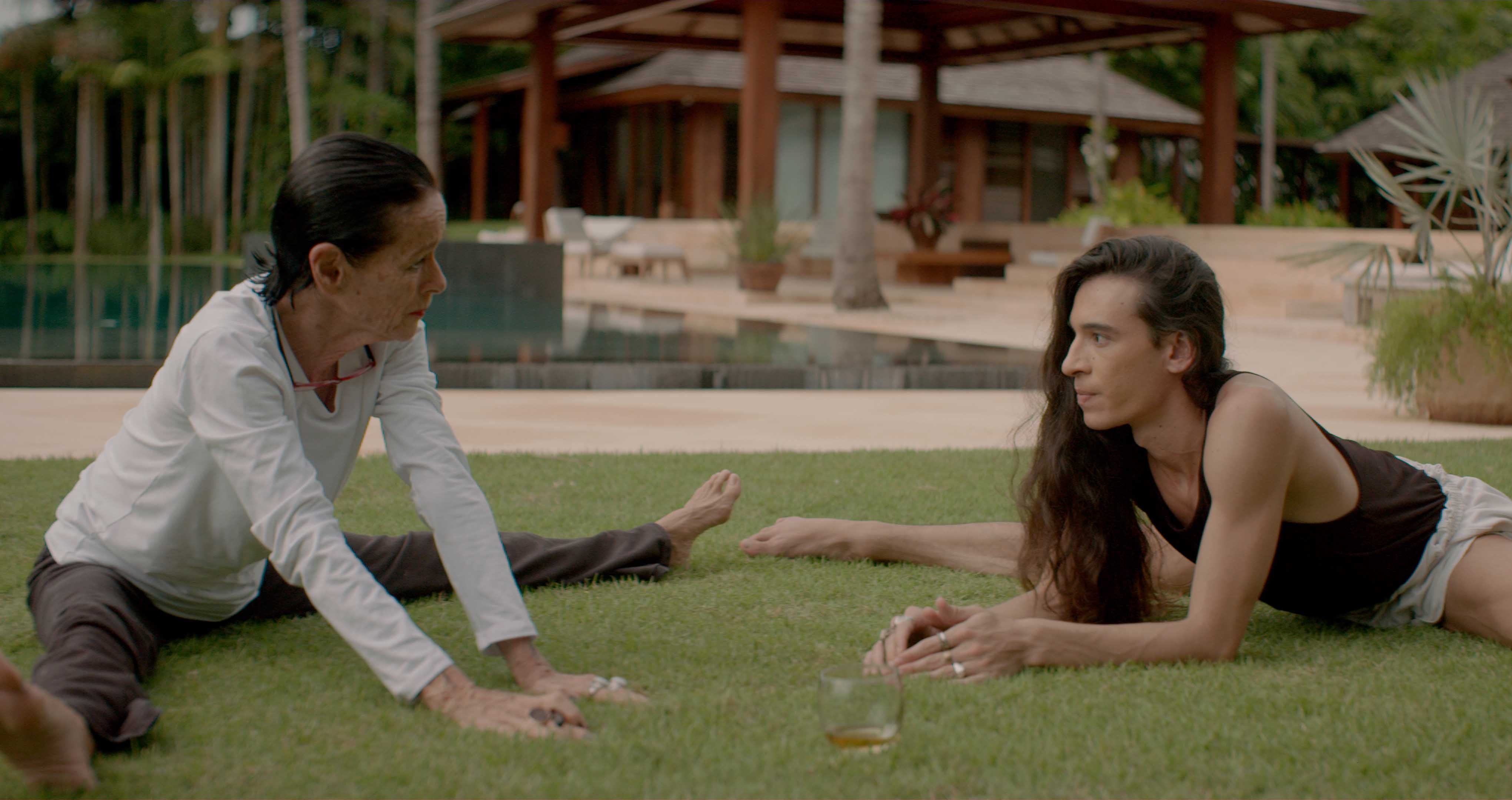
“Holy Beasts (“La Fiera y la Fiesta)” is a movie about making a movie, an “art film” about old friends gathering to make a murdered filmmaker’s long-planned dream project in his native Santo Domingo.

Geraldine Chaplin plays the aged actress and sometime director who will turn “Water Follies” into a movie. Vera was close to Jean-Louis, and narrates much of this dark, cursed vampire tale as a conversation with his ghost.

“I found your script and I’m going to shoot it,” she begins. But when she gets to the Dominican Republic, her hypeman/producer Victor (Jaime Pina) has leapt ahead, scrambling to bums-rush this thing into production before the money vanishes and/or Vera stumbles, gets cold feet or flips out at the sets, costumes and dancer casting that he’s run off and handled for her.

“I didn’t approve ANY of this!” The sets (seen as models) “look like cheap kitsch!”

“Kitsch is IN!”

She can bark “How can you DO this to me?” all she wants. Victor’s back on the phone, promising the Dominican film community that “This is going to be the BIG one!”

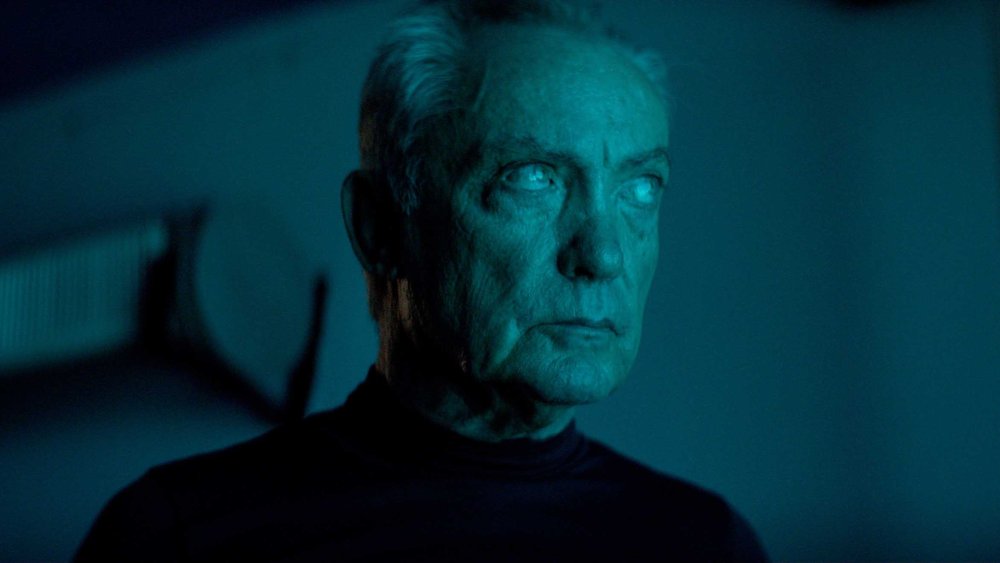
Vera summons her co-star, Henri (Udo Kier), who balks at making the trip. “Hurricanes? Erupting volcanoes? NOT for me!”

But he comes. As their equally aged cinematographer Martín (Luis Ospina) shows up, rehearsals begin and the location scouting ends. And that’s when things go seriously sideways.

This movie about an elderly dancer (played by Vera) whose cabaret is filled with eternally-young hoofers, thanks to the predations of a choreographer/vampire (Kier) starts to lose dancers, and not to “creative differences.” Oh no. They have fatal neck injuries.

One of the dancers is to be played Vera’s long lost grandson (Jackie Ludueña Koslovitch), a lithe, long-haired and exceptionally feminine young man, and through him we start to pick up on what made the real Jean-Louis Jorge stand out. His films –some of which are sampled here — featured erotically-charged, gender-bending sequences. A maid (Yeraldine Asencio) who could be of any number of genders, a short-haired producer’s assistant (Pau Bertolini) who has her/his pick of pronouns, this is apparently in keeping with Jorge’s themes and style.

But will they be able to finish a film that is so accident prone that Vera wonders if long-dead Jean-Louis himself is to blame?

Co-writers/directors Israel Cárdenas and Laura Amelia Guzmán take us back to the artier days of indie/international cinema with “Holy Beasts.” The dialogue feels improvised, the “relationships” seem real and there’s a little in the casting.

Producer Victor wonders if Vera has the “memory” and stamina to star in and shoot this film. But as he ticks off the names of their contemporaries, filmmaker friends who might be able to “help,” he’s the one who didn’t realize this or that “name” was dead.

It’s a dreamy making-a-movie narrative of stunning locations, elaborate costume parties and drugs, of geezers remembering their “Quaalude” days, and thankful that “Tough weeds never die.”

Like the film within the film, there’s a wistful contrast between the aged stars — in front of and behind the camera — and the fit and beautiful and often androgynous dancers in the supporting cast.

I was reminded of any number of cinema classics from the 1960s, starting with Truffaut’s “Day for Night” but staggering into the more obscure indulgences of Pasolini, Goddard, Fellini and Resnais. Like some of their works, “Holy Beasts” doesn’t quite come off in terms of coherence or dramatic tension, but impresses in almost every scene.

That’s the real homage here, to a ’70s-80s Dominican throwback to ’60s cinema who made art without seemingly trying too hard, sweating every detail or fretting too much about how coherent the script will seem to the casual viewer.

It’s offhand and off-the-cuff, extreme effort made to feel tossed-off, effortless. And if it’s all somewhat confusing, that was pretty much the point, back then and right now.

MPA Rating: unrated, bloody violence, nudity

Cast: Geraldine Chaplin, Udo Kier, Jackie Ludueña Koslovitch, Pau Bertoloni, Luis Ospina and Jaime Pina

Credits: Scripted and directed by Israel Cárdenas and Laura Amelia Guzmán. A Film Movement release.

Running time: 1:29

Posted in Reviews, previews, profiles and movie news | Comments Off on Movie Review: Friends film a dead colleague’s long-planned vampire movie — “Holy Beasts”

Movie Review: Maori “Cousins” search for their lost kin

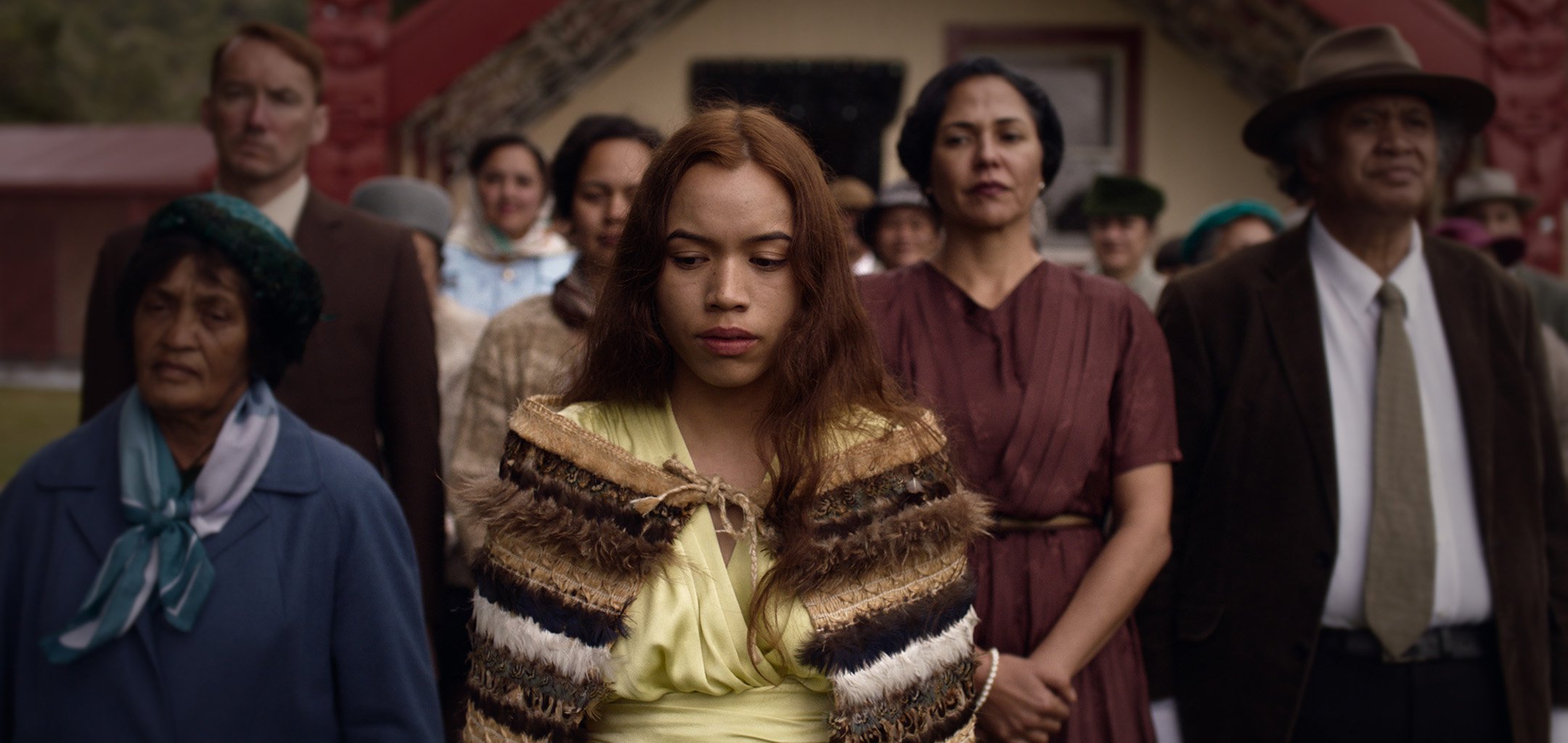
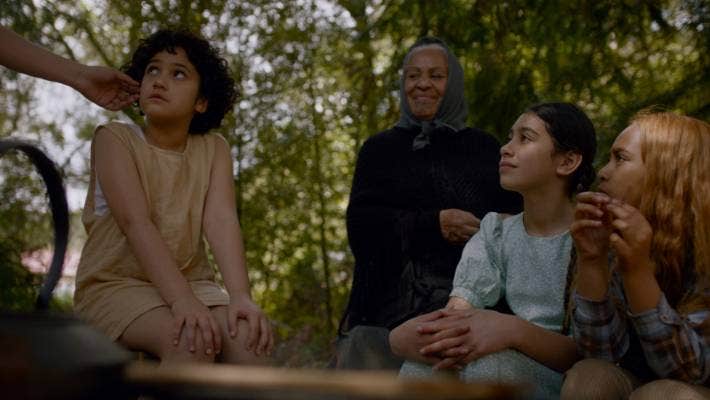
No movie I’ve seen this year has hit me harder than “Cousins.” This heartfelt, emotionally wrenching story set among New Zealand’s indigenous Maori is poetry on screen, a compact saga of one extended family’s history and the lost cousin that those who knew her never give up looking for.

Movingly-adapted from a novel by one of New Zealand’s most celebrated writers, Patricia Grace, it follows Mata, a child orphaned by the state, abandoned by her callous British father. But even as she’s shoved into a home for “Desolate Children,” indoctrinated with the Bible, denied her own culture and language and kept from her family, they’re looking for her.

The secret to the film’s power is the number of times the tale lets us hope that she’s “rescued” and “brought home,” only to have that snatched away by a racist system and the racists who benefit from it.

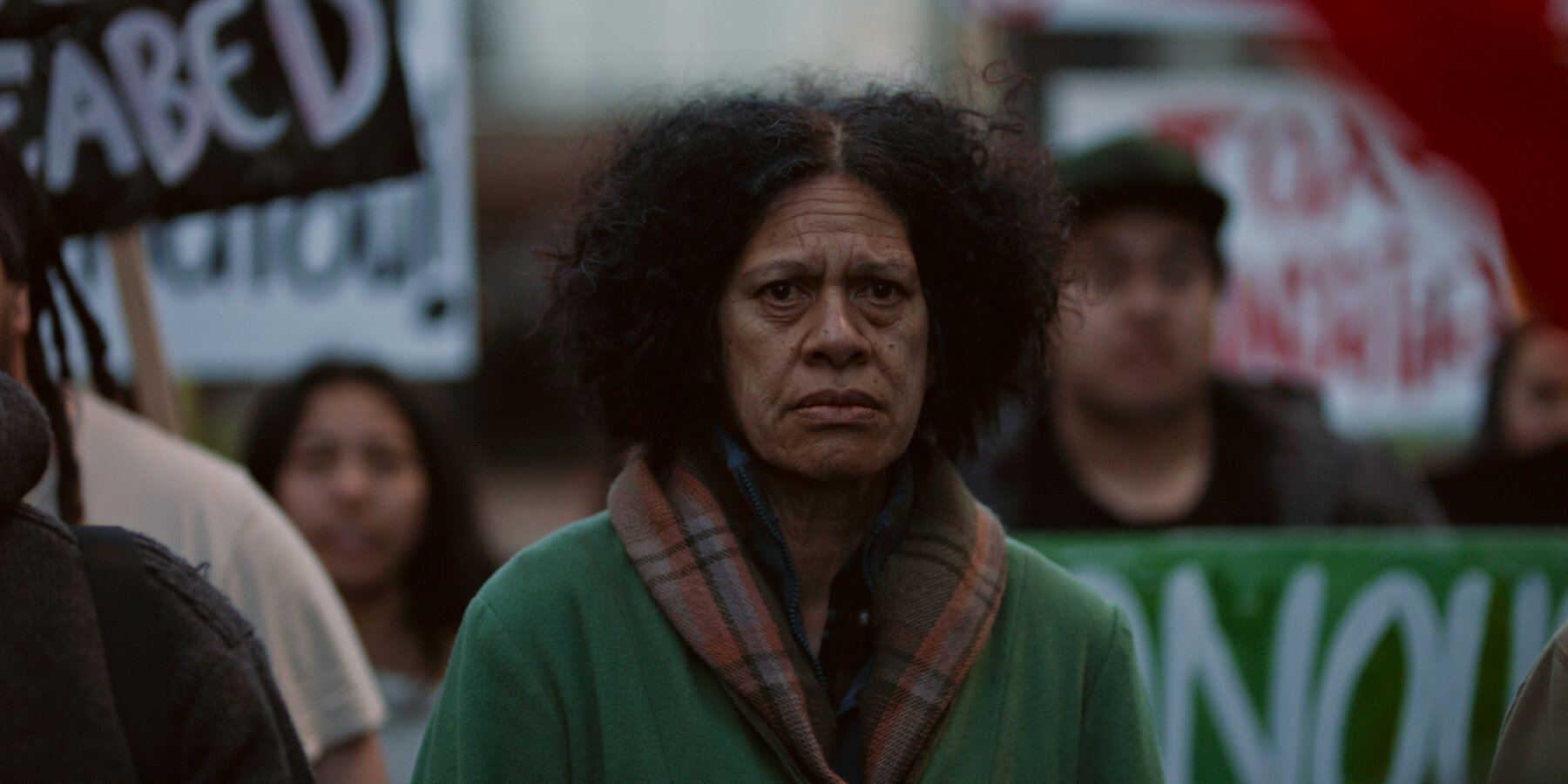
In the fictive present, Mata (Tanea Heke) is old and homeless in Wellington, lost in her thoughts, adrift on a stream-of-conscious that takes her through her earliest memories, her first reconnections with her family and the cruel hand life dealt her. She grew up exploited, neglected and unschooled about family, social interactions, love and sex. She grew up without her family’s loving embrace.

Prim Mrs. Parkinson (Sylvia Rands) becomes her legal guardian when her mother dies, the one who drops little Mata (Te Ao Marama Baker) at the Mercy Home and who later takes her back in as a virtual indentured servant.

Her family doesn’t find her for years, but Aunt Gloria (Cian Elyse White) and others track her down and get her “home” for the holidays, with cousin Missy (Keyahne Patrick Williams) in charge of introducing her around and getting the older relatives to speak English around her.

And slightly older cousin Makareta (Shannon Williams), the self-described “spoiled one,” recognizes the injustice going on and vows, “We’re going to get you back, Mata. I promise.”

Decades later, Makareta (co-screenwriter Briar Grace Smith) has become a lawyer, trying to help the family hang onto ancestral lands, still looking at old family photos and wondering, “Where are you, Cousin?”

Co-directors Ainsely Gardiner (he produced “Eagle vs. Shark”) and Briar Grace Smith (she wrote “The Strength of Water”) seamlessly blend the various streams of the past with the film’s present. Mata’s school years, where she absorbed a contempt for her “ugly” people who “worship false gods and drink beer,” her late teens when when entered the workforce (to the benefit of her “guardian”) on to the first young man to turn her head.

Makareta, groomed to be a “great leader” by her ambitious mother, endures her own trials. And Missy (Hariata Moriarty, and later Rachel House) grows up to be exactly what we saw in her as a child, the glue that holds the family together, come hell or high water. The stream of actresses, young, youngest and old, who tell this tale are well-cast and sympathetically directed.

It’s a melancholy script decorated with poignant grace notes — that rebel schoolmate who sticks up for Mata when she’s bullied, the glimmer of connection when a Maori groundskeeper recognizes her “people,” the sisterhood of hatmakers who embrace her and slowly socialize her in her first job, an “arranged” wedding, a sad funeral.

What Smith and Gardiner have adapted is a rare and precious thing, a movie whose narrative momentum is carried by the simplest of longings — hope.

“Cousins” moves us to tears by the mythic promise of their grandmother, one we trust that no matter how dark, how often hope is dashed, will be fulfilled.

“The land, her ancestors, will bring her home.”

MPA Rating: unrated, violence, adult situations, profanity

Tanea Heke, Te Raukura Gray, Te Ao Marama Baker, Ana Scotney, Rachel House, Briar Grace Smith, Miriama Smith, Tioreore Ngatai-Melbourne, Keyahne Patrick Williams, Shannon Williams, Hariata Moriarty, and Sylvia Rands

Credits: Directed by Ainsley Gardiner and Briar Grace Smith, scripted by Briar Grace Smith, based on a novel by Patricia Grace. Coming to Netflix July 22.

Running time: 1:38

Posted in Reviews, previews, profiles and movie news | Comments Off on Movie Review: Maori “Cousins” search for their lost kin

Netflixable? “Fear Street Part 2: 1978” lapses from homage into simple imitation

Terror totes an axe in “Fear Street Part 2: 1978,” the middle film in Leigh Janiak’s homage to horror films and the eras they came from.

Twenty five minutes into “Part 2,” the summer camp slaughterhouse instalment in the trilogy, a rerecorded version of “Don’t Fear the Reaper” turns up. Because the Captain and Kansas, Bowie and Neil and Tennille may set up the era, but nothing sets the mood like more cowbell.

That’s kind of the way of this film, entirely too “on the nose” for its own damned good.

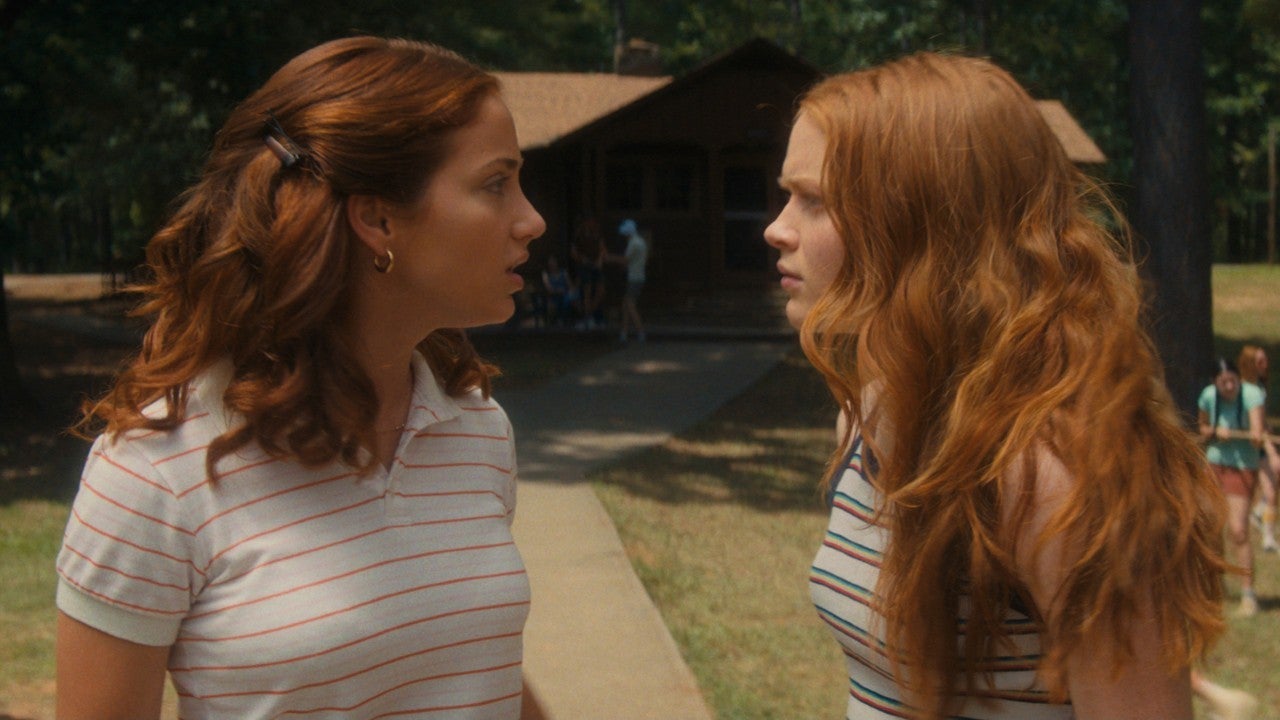
The finale to “Part 1” introduced us to a Camp Nightwing survivor of the the long-ago-executed “witch” Sarah Fier, rumored to possess spree killers over the decades in forever-sullied Shadyside. “Part 2” is about C. Berman, aka Cindy Berman (Emily Rudd), at that ill-fated camp where the kids of Shadyside and neighboring, affluent and less crime-ridden Sunnyvale gathered in the summer.

Until, that is, 1978.

Cindy is a goody-two-shoes at the camp. Her sister Ziggy (Sadie Sink) is a hellion, lashing out at their disintegrating home life and shrinking future, on the verge of being “hung” as a witch by the mean Sunnyvalers when saner heads prevail.

But the camp nurse (Jordana Spiro) has been poking around in the past. There’s a map, and a “treasure” at the end of it that might “end this curse” and save Shadyside. As we’ve already seen all hell break loose in 1994, we know better.

“You can’t stop her. Run as far as you can as fast as you can,” the adult C. Berman (Gillian Jacobs) warned 1994’s Deena et al.

It all ties together as one big convoluted and inter-connected and inbred narrative, the future sheriff (Ted Sutherland) and future C. Berman and others struggle to get through one hellish night, the back-story is filled in more, and we hear more of the local murderous nursery rhyme.

“Before the witch’s final break, she found a way to cheat death…”

There’s a perfunctory quality to the situations and performances, the dialogue and the “terror,” cribbed from scores of “kids killed at camp” thrillers. It’s pitiless, but one gets the feeling the actors have seen the films these borrowings came from are just imitating their forebears.

“Part 2,” truth be told, feels kind of gassed after the giddiness of “1994.” The threats, terrors and manipulations are hammered home with a cudgel.

I mean, being chased with a guy with an axe is still seriously harrowing, and Janiak handles the attacks with skill, amped up by the screams and shrieking violins on the soundtrack. But familiarity breeds you-know-what.

Telling us what the future looks like isn’t the “spoiler” you might expect. But as we descend down the rabbit hole with the writer-director, we can guess the real suspense will come from in the third film, set in “The Witch” era — 1666.

How WILL she manage a movie that isn’t stuffed with Foghat, The Runaways, “Carry On My Wayward Son” and more cowbell?

MPA Rating: R, bloody horror violence, sex, nudity, profanity

Cast: Sadie Sink, Ryan Sink, Emily Rudd, McCabe Slye, Ted Sutherland, Chiara Aurelia, Michael Provost

Credits: Scripted and directed by Leigh Janiak, A Netflix release.

Running time: 1:51

Posted in Reviews, previews, profiles and movie news | Comments Off on Netflixable? “Fear Street Part 2: 1978” lapses from homage into simple imitation

Movie Preview: Elijah Wood interrogates Ted Bundy, “No Man of God”

Even if Bundy is a serial killer subject who’s been beaten into submission, this August release looks intriguing.

Robert Patrick’s the warden, Luke Kirby is a charismatic but less sexy/cute version of Bundy than we’re used to, and Wood plays an FBI agent hoping to get a few last answers out of a genuine monster before he faces his final justice.

Posted in Reviews, previews, profiles and movie news | Comments Off on Movie Preview: Elijah Wood interrogates Ted Bundy, “No Man of God”