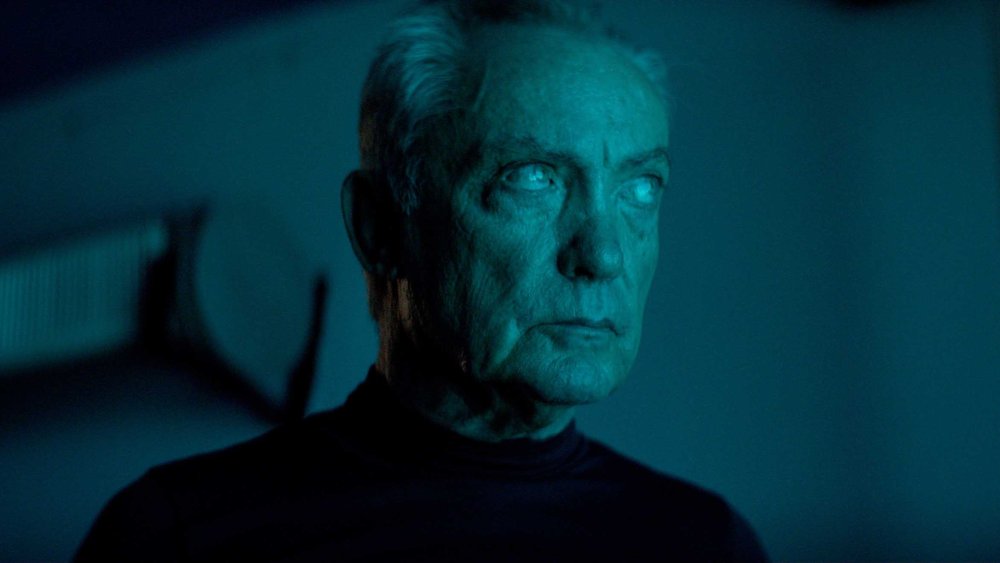
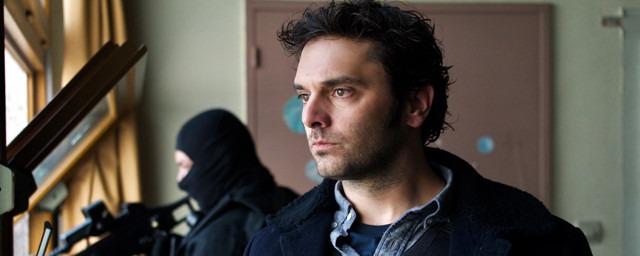
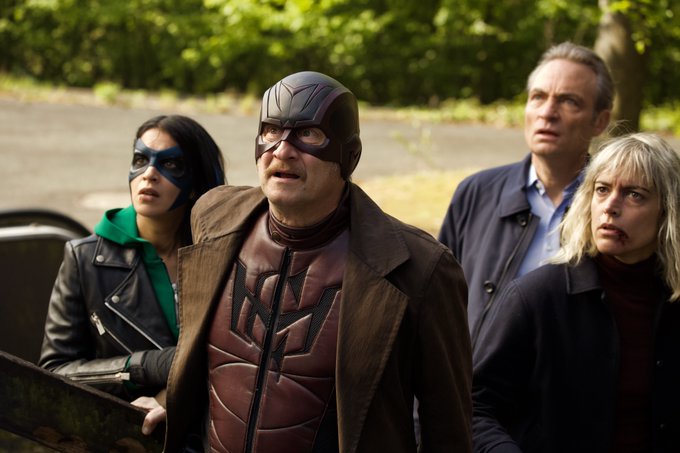
Movie Preview: Liev and Sarsgaard, Marisa and Maya Hawke invest in “Human Capital”

This murder mystery — Or was it an accident? — set around an IPO that could make a lot of people rich has a sparkling cast and is based on a best seller.

“Human Capital” will have limited release on March 20.


Posted in Reviews, previews, profiles and movie news | Comments Off on Movie Preview: Liev and Sarsgaard, Marisa and Maya Hawke invest in “Human Capital”

Movie Review: With “Onward,” Pixar takes a step backward

onward1

There’s a warm emotional payoff at the very end — the VERY end — of Pixar’s latest, “Onward.” It’s about fathers and sons, father figures and brotherly love. And it’s about 90 minutes too late to save the movie.

We’ve already been through 90+ minutes of a mashup of every wizard, witch, magic and sorcery trope blended into a story of elvish teens trying to have one more conversation with their long-dead father. The ugly truth of their “quest” is there isn’t a laugh in it.

This may not be Pixar’s worst movie — anything with “Cars” or “Planes” (they try to deny the lineage of that “Cars” spinoff, not having it) in the title, or “Monsters University” own that label. But it sure feels like the weakest.

In a world where centaurs and trolls, ogres and elves, flying unicorns and fire-breathing dragons never went away, science and industry have made lives better and “the magic faded away.”

Ian, voiced by “Spider-Man” Tom Holland, is turning 16 — friendless, with a bucket list that includes making friends, learning to drive and the like.  Mom (Julia Louis-Dreyfuss, but not that I could tell) dotes on him, worries about her boys growing up without a father.

But she’s dating a corny centaur cop (Mel Rodriguez). Older bro Barley (the unmistakable Chris Pratt) is a bit distracted, too. And an embarrassment. He’s “taking the world’s longest ‘gap year’ (as Mom puts it), and WAY too into role playing games like “Quests of Yore.” He swears that all this magic stuff in the games “really happened.”

Contrived plot point number one is their late father’s decision to leave them a present to open “when both of you are over 16.” It’s a wizard’s staff. Accountant Dad liked to dabble, apparently.

Super-enthusiastic Barley has this idea to bring Dad back though a “visitation spell,” but he can’t make the darned thing work. The staff, like a wand at Oleander’s wand shop at Universal’s Wizarding World of Harry Potter,” choses who gets to use it. Ian it is.

Clumsy fan-boy Barley interrupts Ian’s version of the spell, breaks the staff’s “Phoenix Gem,” and darn it — Dad only half-materializes. They’ve got 24 hours to find another Phoenix Gem to get their brief reunion with the father Ian never met.

onward2

They pile into Barley’s beater of a van and set off on their quest, stopping at The Manticore’s Tavern for directions. But it’s a theme-restaurant and the Manticore (I didn’t recognize Octavia Spencer‘s voice at all) is no longer the fearsome winged lioness of legend. She’s a restaurateur.

Style points to Pixar for casting potentially funny people in their leading roles. Major demerits for never giving them anything funny to play or say.

A manticore knocking back energy drinks? That’s all you’ve got for Oscar winner Octavia Spencer? Holland was a pointless expense for a blandly-written role any teen-to-20something could have played.

The animation’s good, lovely but not dazzling. There’s a spirited chase or two, not much payback for a movie that demands nearly two hours of your time. The best gags are the Harry Potter referencing stickers papering Barley’s van, “Gwinivere.” “Baselisk” is a band name in this universe. Disney’s still mad it didn’t get the Wizarding World?

A mock street sign sticker almost got a chuckle out of me — “None shall pass.” That’s a little “Monty Python and the Holy Grail” gag that the late Terry Jones would appreciate. John Cleese will.

Barley endlessly reciting spells he’s memorized, the “rules” of this one or that one, and delivering the picture’s overt message — “You have to take risks in life to have an adventure” — are no substitute for wit, originality or narrative drive.

You have to be very young to figure “Onward” has either of the last two. And even tiny tykes are unlikely to find this funny.

2stars1

MPAA Rating: PG for action/peril and some mild thematic elements

Cast: The voices of Chris Pratt, Tom Holland, Julia Louis Dreyfuss and Octavia Spencer

Credits: Directed by Dan Scanlon, script by Jason Headley , Keith Bunin and Dan Scanlon.  Walt Disney/Pixar release.

Running time: 1:54

Posted in Reviews, previews, profiles and movie news | Comments Off on Movie Review: With “Onward,” Pixar takes a step backward

Movie Review: “Come and See” the “Great Patriotic War,” Soviet style

see3

The newly-reissued “Come and See” is a crash course in Soviet cinema history.

Here it is, from Eisenstein until the Iron Curtain parted (briefly), a 1985 summary of Soviet acting, directing, technique and the obsessions of the culture, all in one sweeping epic.

It’s shot in old Academy aspect ratio, features actors staring straight at the camera, grim reality blended with romantic idealism in a movie repressed and controversial at the time because it dared to puncture the official State myth about the common heroism of Soviet resistance to the Nazi invaders.

Set in Belarus in 1943 as the tide of the war is turning, it’s about a boy of about 14 (Aleksey Kravchenko) who revels in playing war games with a younger friend, digging in the abandoned trenches for treasure from the abandoned defensive positions there.

Then he digs up a rifle. That’s his cue to join the partisans, still fighting the Nazis on this fringe of the front lines.

But Flyora’s plans send his widowed mother (Tatyana Shestakova) into understandable hysterics.

“Think of yourself son,” she cries, when she means “Think of US.” She has a few farm animals and twin little girls to cope with — in a war zone. She needs help and even the unlikely protection of her little man. “Have you no HEART?”

Apparently he doesn’t. He’s got the recruiters at the door, ready to take him away. Her cries fall on deaf ears, his partisan comrades barely bother reassuring her — “We’ll keep him warm.” They take the family cow, and a turkey. And they’re off to the forests.

Flyora finds himself in a tougher, rougher version of the partisans we saw in the Jewish resistance drama “Defiance.” Their leader (Liubomiras Laucevicius) reminds the veterans, and indoctrinates “the new recruit” as to what is expected — a reckless, patriotic disregard for you own safety — and what they’re up against, “total war” a fight to the death against an enemy bent on extermination.

This isn’t “playing war.” Flyora has to give up his boots to a more experienced fighter and finds himself left behind with the camp as the company-sized force marches off. It’s just him and nurses, including the teenage one (Olga Mironova) whose heart the commander just broke.

German paratroops and an accompanying air raid has Flyora leading Glasha to his old village because he knows “the perfect place to hide” (in Russian, with English subtitles).

Bombs chase them into the swamp, machine gun fire splinters the trees all around. There’s barely time for a rainy day reverie before they get to the village and Flyora takes her to his house where he insists they eat the meal left on the table.

“They’re not around,” he says of his family and the villagers. Glasha figures it out long before she distracts him to prevent Flyora seeing the pile of bodies behind the barn.

His mother was right. And this is but the beginning of his unhappy odyssey through a war zone, taking on mentors (Vladas Bagdonas), barely surviving every miscalculation, meeting the enemy in the flesh.

Stylistically, the images are grey, muddy and realistic in the extreme. Did director Elem Klimov (he did a well-regarded 1981 “Rasputin”) use “live fire” to get the bombing/machine-gunning effects?

The voices sound looped (dubbed in off-set), common in much of European cinema but generally abandoned by in the rest of Europe by the late 1960s.  And the acting is Noh Theater-broad, tending towards over-emotive declarative speeches.

Visually, “Come and See” still has a whiff of “State of the Soviet Art” in its gloomy, over-saturated colors and analog effects.

But even if the acting and sound make it dated, they don’t blunt the provocative anti-war message Klimov and his crew were getting across. “The Great Patriotic War” was Stalin’s last lie. Heroic, fatalistic partisans preyed on everyone to stay alive, and were encouraged to do that by The State.

Helpless civilians struggling just to keep themselves alive and their elderly parents or their children safe long enough to reach adulthood were held in contempt.

And there’s nothing romantic about “total war” — losing it, or winning it.

3stars2


MPAA Rating:unrated, graphic violence

Cast: Aleksey Kravchenko, Olga Mironova, Liubomiras Laucevicius, Vladas Bagdonas and Tatyana Shestakova

Credits:Directed by Elem Klimov, script by Ales Adamovich and Elem Klimov. Janus release.

Running time: 2:23

Posted in Reviews, previews, profiles and movie news | Comments Off on Movie Review: “Come and See” the “Great Patriotic War,” Soviet style

Movie Preview: Forest Whitaker and “Burden” sneak into a few theaters Feb. 28

The KKK opens a museum whitewashing its history in a South Carolina town, and a pastor tries to blunt its message by reaching out to a grand dragon. Garret Hedlund and the omnipresent Andrea Riseborough also star.

Posted in Reviews, previews, profiles and movie news | Comments Off on Movie Preview: Forest Whitaker and “Burden” sneak into a few theaters Feb. 28

Movie Review: The “Cabaret Maxime” is the nightclub of your drunken mob-movie dreams

maxime1

Imagine a nightclub that’s a mad melange of old school burlesque, classic balladeers and jumped-up Portuguese Latin rock, of strippers and stand-up comedy with an occasional dominatrix.

It’s old fashioned showbiz set in a mobbed-up milieu with “Goodfellas” decor, way too many “Sopranos” alumni and an actual daughter of Bobby Freakin’ DeNiro.

Can’t exist anywhere except for “Sin City,” right? A neon netherworld version of New York where all these dese-dem-dose actors have to be imported to Lisbon, where there’s no hint of “fado” but the street signs and police sirens are strictly European Union Portugal.

That’s “Cabaret Maxime,” a lurid lounge where Bennie Gazza (Michael Imperioli) presides, putting on a show like nobody ever put on a show. You’d pay to see a night of strippers with tigers, a hot band, bustiers and the last comic and MC to still tell comic stories (John Ventigmilia).

Three things about this cabaret, invented by Portuguese New Yorker writer-director Bruno de Almeida (“On the Run,” Operation Autumn”) , are worth noting.

One, I’d pay good money for an evening in a joint like that. So might you. The cover charge would have to be in the multiple C-note range for them to break even, though.

Two, the movie’s an odd catalog of cliches, over-familiar “running a night club with mob influence” riffs and dialogue that sounds improvised, often feebly.

And three, go back to point one. This setting, this set-up and this cast would make a pretty cool cable series, a “Sopranos” with a house band, a few tenors, coloraturas and altos to go with the strippers and wise guys.

As Bennie says at one point during the movie, “Not sure I get it, but I’ll drink to it.”

Bennie’s running this place at the pleasure of his made-man landlord and watered-down liquor supplier, Mr. Gus (David Proval). He’s married to his star attraction, emotionally troubled dancer/stripper Stella (Ana Padrão).

“Remember, Stella means STAR!”

He books acts through the ever-enthusiastic goof, Ripa (Mike Starr).

The house band is Ena Pá 2000, with guest guitarist Phil Mendrix, but the songs cover decades of American (and European) pop, with balladeer Sandro Core taking a bow.

Then, these goombahs (Nick Sandow, Anthony Siciliano and John Frey) set up a tacky “high end” strip joint across the street, and the trouble starts.

Virtually everybody in this with extra vowels in his name was on “The Sopranos,” so you kind of know every place “Cabaret Maxime” is going to take you long before it gets there.

It’s a somewhat flippant spin around the mob-backed-nightclub block, with violence that seems preordained without the care of “consequences” that might come later.

But like Mr. Gus says, “You get old, you make’a coupla bucks, then you die.” Why sweat logic or extravagantly pricey overhead or dialogue that struggles with “When’s the last time you had a good tomato?”

The cast is game, with Imperioli and Ventimiglia, Sandow and the Portuguese Padrão standing out.

The players, the colorful milieu and the parade of nightclub acts make this a fun if somewhat undigested night out, chased with a hangover.

To Bennie, to me, and maybe to you — Who knows? — all that matters is this.

“I’m not a pimp. I’m in SHOW business.”

Sometimes — badda-bing, badda-boom — that’s enough.

2half-star6

MPAA Rating: unrated, violence, nudity, sexual situations, alcohol abuse

Cast: Michael Imperioli, Ana Padrão , John Ventimiglia, Drena De Niro, Nick Sandow, Arthur J. Nascarella, David Proval, Mike Starr

Credits: Directed by Bruno de Almeida , script by Bruno de Almeida  and John Frey. A Giant Pictures release.

Running time: 1:35

Posted in Reviews, previews, profiles and movie news | Comments Off on Movie Review: The “Cabaret Maxime” is the nightclub of your drunken mob-movie dreams

Movie Review: “Vitalina Varela” travels far to learn about the husband who left her


varela2

The austere beauty of “Vitalina Varela” is in faces of its characters, the darkness that envelops a corner of Lisbon tourists rarely see.

It’s a somber, lyrical and relentlessly understated meditation on grief and a grudge, the story of a wife from the Cabo Verde Islands, a former Portuguese colony, who finally flies to Lisbon to join her husband. She’s been “waiting for my plane ticket for forty years,” Vitalina says (in Portuguese Kriol, with English subtitles).

She arrives three days after his burial, greeted at the airport by a striking Greek chorus of Capo Verdean expats who knew Joaquim. They are the airplane’s cleaning crew, who tell her “There is nothing for you in Portugal. Go home.”

In tenements of perpetual shadow, stark stucco walls without paint or decoration, she comes to the house where Joaquim lived, meets with and feeds mourners and starts to piece together the life that he had — a house with a leaky roof he never fixed, other women. If she’s looking for “closure,” Vitalina would never admit it.

“I won’t cry for no wretched man.”

Men who knew him talk of his dreams of fixing up the place for her arrival. But she knows better. When no one else is around, she growls her mistrust at the corpse she was not in time to verify. “Are you buried in the ground?”

Vitalina looks to the palsied priest (Ventura) for answers, but he has none. He has struggled to keep a hovel of a church going, to forgive himself for the sins of his past and failings on behalf of his flock. But “there is nothing sadder than a priest in this place…Nobody helps us.”

If Vitalina wants to speak with her husband, she must learn Portuguese, he insists. She can walk the dark, narrow streets and overgrown paths, looking for signs of him, for his body, but “there is nothing left for you here. The door has no lock.”

The screen compositions — almost all of them shrouded in darkness — are one perfect image after another. But the story is as spare and relentlessly shadowy as the images writer-director Pedro Costas and cinematographer Leonardo Simões conjure. Few characters are identified by name, relationships are sketchy, motives for any moment that isn’t Vitalina muttering in the dark about Joaquim’s formerly industrious nature abandoned for the skirt-chasing that brought him to Lisbon, are vague.

The film is a sort-of sequel to “Horse Money,” a Costas film in which Vitalina Varela also appeared and which is where we first learned of her sad married past — a husband who left for Lisbon and who never sent her the promised plane ticket to join him.

All of which tend to subsume the current film’s story and make “Vitalina Varela” inexcusably obscure. Beautiful as it is, it won’t be to every taste.

But there’s a richness in the title character (playing a fictionalized version of herself) turning this milieu bleak and forbidding with her brooding arrival. And there’s regret and recompense in the fleeting glimpses of daylight that arrive as she starts to assert her will — for a proper funeral — and remembers the poor but promising past they had back on those rocky, waterless islands off the coast of Senegal.

3stars2

MPAA Rating: unrated, death and smoking images.

Cast: Vitalina Varela, Ventura

Credits: Directed by Pedro Costa, script by Pedro Costa and Vitalina Varela.  A Grasshopper release.

Running time: 2:03


Posted in Reviews, previews, profiles and movie news | Comments Off on Movie Review: “Vitalina Varela” travels far to learn about the husband who left her

Movie Review: You just never know how much “The Night Clerk” sees

clerk4

“The Night Clerk” is a murder mystery with a killer premise. A man with Asperger’s witnesses a killing.

The movies and TV, which have treated this as a “Malady of the Month” for a few years now, teach us what to expect. Such a man, with his social awkwardness, manic chatter and refusal to make eye contact, would be an exasperating suspect and a maddening witness.

And if this thriller lacks much in the way of tension and suspense, if it loses track of the “crime” while it tries to flesh out the title character, a fine cast lifts the material and makes it worth your trouble.

Tye Sheridan (“Ready Player One”) is Bart, short for “Bartholomew,” a 23 year-old who has held onto an overnight desk clerk at a nice hotel for a few years. He is smart, even if his social skills are classic “on the spectrum” clumsy.

But Bart has applied his tech savvy to his “problem.” He wears a tiny camera in his tie in order to review and “correct” his inept interactions with the customers.

“How’s it going?” requires rehearsal. “Have a nice evening” is worth running through a few times, too.

Bart lives in his Mom’s basement, where she (Helen Hunt) gives him his space, leaves his meals on the steps and doesn’t watch him in front of his bank of video monitors. That’s a good thing, because Bart isn’t just about self-improvement.

Bart’s made the leap to the next step. He’s slipped cameras into hotel rooms, spying on guests, memorizing how they act with their dogs — “Boy oh boy oh boy, what did you DO?” — and as often as not, getting a peep show in the process.

That’s how he witnesses a murder. He can see it unfolding, an angry confrontation between a woman (Jacque Gray) and someone we assume is her cheating husband. Bart gapes at the violence, freaks out a bit and dashes back to work only get get there after the shot is fired.

She’s dead. He sits on her bed, hears “Don’t touch anything” from the other clerk,” and the moment the guy’s gone to call the cops, dabs his finger in the pool of blood surrounding her body.

John Leguizamo plays the detective who sizes Bart up, tries to get a rise out of him even as the clerk is blurting out his elaborate cover for why he was there.

“And that’s the story? I know you’ve got issues…”

“I DO.”

Oscar winner Hunt summons up her best Mamma Bear, fending off the cops. What does she know? What will they find out?

Bart, seemingly freaked out by the events as they happened, now has refocused his mind on his cover-up. And then another guest — played by Ana de Armas of “Knives Out,” — beautiful and inclined to be empathetic to his condition (“My brother had it.”) becomes his focus.

Actor turned writer-director Michael Cristofer collected a Tony and a Pulitzer for his play “The Shadow Box” over 40 years ago. His screen career has been spotty, with “Original Sin,” a thriller with similar bones starring Banderas and Jolie the stand-out credit.

He gives Sheridan the standard-issue “Asperger’s/On the Spectrum” tics and give-away moments — blurting out “You need to lose weight” to a car salesman, “I don’t want to wear anything you’d wear…because you’re old” to a haberdasher.

The scenes between Bart and Andrea have a pained confessional quality, and “brother had it” or no, seem a bit contrived.

The picture’s nocturnal gloom serves it well, matching the creep tone of young-guy-who-likes-to-“watch” story. Cristofer doesn’t do much with the “mystery,” and suspense is reserved for those moments when we wonder if Bart will just watch, or take action.

The dialogue is serviceable but generic in scene after scene. But Hunt, Leguizamo, Sheridan and de Armas put it over with feeling and let their eyes and investment in the characters do the heavy lifting.

If “The Night Clerk” rises above “near miss” status, that’s thanks to the cast.

2half-star6


MPAA Rating: R for language, some sexual references, brief nudity and violent images

Cast: Tye Sheridan, Ana de Armas, Helen Hunt, John Leguizamo, Johnathan Schaech and Jacque Gray.

Credits: Scripted and directed by Michael Cristofer. A Saban Films release.

Running time: 1:30

Posted in Reviews, previews, profiles and movie news | Comments Off on Movie Review: You just never know how much “The Night Clerk” sees

Movie Preview: Horror animates Shatner, Dani Lennon and Ray Wise”To Your Last Death”

This bad boy comes our way Mar. 17 — streaming, VOD.


Posted in Reviews, previews, profiles and movie news | Comments Off on Movie Preview: Horror animates Shatner, Dani Lennon and Ray Wise”To Your Last Death”

Netflixable? Cuaron takes us inside his “details” for “Road to Roma”

roma2

Did you swoon over Alfonso Cuarón’s “Roma,” his lyrical but meandering two hour and 15 minute recreation of his middle class Mexico City upbringing, as seen mostly through the eyes of his indigenous nanny?

The black and white memoir won three Oscars, as best foreign language film, for best director and best cinematography.

I found it rambling, somewhat shapeless, an indulgent movie that set the standard for Netflix’s “Great Filmmakers Get a Blank Check” series (see “The Irishman”).

The “making of” that movie documentary, “Road to ‘Roma'” (“Camino a Roma”) does nothing to soften my stance on the picture (lovely, but over-rated). Because if anything it allows Cuarón to double down on his choices.

His is the only voice, as eyewitness, to the movie. He is the sole interview subject. He describes the “challenge” working without a script and with a lot of non-actors around them was for the film’s professional actors. He talks about what the production designers did to recreate “the neighborhood I grew up in” (in Spanish, with English subtitles).

Nobody else gets to speak for themselves, even if they’re unlikely to have contradicted him.

The on-set footage is far less revealing than your average “making of” doc, although including a little casting clip and the odd rehearsal for the largely improvised “chaotic” scenes of family meals, sketched-out conversations and the like show us the technique he was using and what he was going for.

Cuarón says he was telling a story, pre-“Y tu Mama Tambien” — from the nanny of that film’s point of view.

He’s famous for paying homage to other filmmakers in his work, but he insists he did not for “Roma.” So all those Fellini-esque touches we all saw were…imagined?

A telling quote — he recalls the story of how Luchino Visconti, for his 1973 bio-pic “Ludwig” about Bavaria’s indulgent, Cinderella’s castle-crazy 19th century king, had the epic cakes made for feast scenes from the original ingredients baked in the original style, not something the viewing audience would realize and pick up on.

“A stubborn whim,” Cuarón says he USED to think when recalling that. But for “Roma,” a movie of “moments” and “details” and “memories” — whose director obsessed over tile and vintage clocks and products and posters and the tenor of street vendor’s calls in the chaotic market scenes — such forest-for-the-trees fanaticism was “liberating.”

At least that explains why I kept thinking of another infamous cinematic indulgence king, Eric von Stroheim. He’d do a period piece and insist that the performers wear period-correct underwear, which the camera would never see.

Michael Cimino’s “Heaven’s Gate” is another ready reference for this “I can get this exactly right, matching my vision/memory” obsessive sort of detailed filmmaking.

Not that “Roma” is the debacle either of those two produced. All great artists are obsessives. But in the many boring stretches of “Roma,” it’s heartening to hear Cuarón confirm he at least realized how this might come off –“Come on, now. This is a bit much and kind of pointless.”

Fretting over that image of soapy water washing over the courtyard tiles, admitting that “details” were “the film for me,” not script (he didn’t have one), not the “narrative plumbing” that he and his co-writer brother are famous for, but “intangible sensations,” it’s as if he’s inventing a new “Netflix” style borne of old “runaway production” Hollywood horror stories.

He did it this way because they said he could. Unfolding overlong vignettes, changing settings that mean everything to the director/creator but little to the casual viewer, revelling in a sort of guilt-ridden “So THIS was my nanny’s life” way, but only occasionally — it’s a movie that isn’t aging well, in my memory, at least.

roma1

“Road to ‘Roma'” is a short refresher course on why that’s an Oscar winner that I have little urge to ever see again.

2stars1

MPAA Rating: unrated

Cast: Alfonso Cuarón.

Credits: Directed by Andres Clariond and Gabriel Nuncio. A Netflix original.

Running time: 1:12

Posted in Reviews, previews, profiles and movie news | Comments Off on Netflixable? Cuaron takes us inside his “details” for “Road to Roma”

Documentary Preview: Cemetery abuse going back over a century, in Louisville, “Facing East”

It isn’t just funeral homes that get caught ripping off the grieving. Cemeteries do it, too.

Posted in Reviews, previews, profiles and movie news | Comments Off on Documentary Preview: Cemetery abuse going back over a century, in Louisville, “Facing East”