Charlize and Chiwetel, immortal mercenaries about to be exposed.
Coming to Netflix in July.
Charlize and Chiwetel, immortal mercenaries about to be exposed.
Coming to Netflix in July.

You can’t blame rom-com filmmakers for taking shortcuts.
So few of them work, make an emotional and comic connection and deliver a satisfying finale, it’s no wonder that screenwriters and directors go for “sure thing,” elements that worked in romantic comedies that preceded them.
So sure, work in a little Meg Ryan faking an orgasm from “When Harry Met Sally,” a little John Cusack and a boom box from “Say Anything,” buy the rights to that Scottish pop tune that taught us all the meaning of “havering.”
It’s only a problem when these little borrowings are the only things that work in your movie.
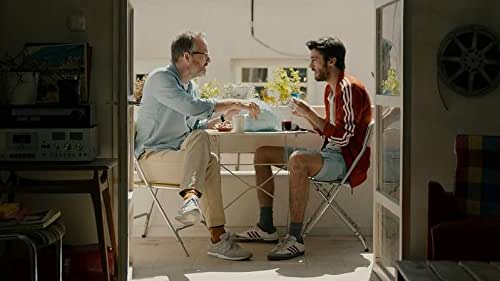
The Spanish romance “Te quiero, imbécil (I Love You, Stupid)” is the cut-and-paste job in question, a script with modest potential, a passable cast and cutesy execution.
And about the best you can say about it is that it finishes well.
It’s another story of a poor schlub (Quim Gutiérrez) dumped the night he proposes. Ana (Alba Ribas) gives Marcos the “take a break” (in Spanish, with English subtitles) speech, and he moves out and back in with his parents “for just a couple of weeks.”
We know better, and sure enough, the next day he’s laid off at the TV ad agency where he works.
His hunky pal Diego (Alfonso Bassave ) gives him the “monogamy doesn’t work” get OUT there speech. But Marcos finds the best “real” advice comes from the Internet, from the videos of an Argentine Lothario (Ernesto Alterio) with advice to the lovelorn.
A little screaming “mother—–r!” into the ether, more attention to grooming, hitting the gym? Yawn.
The better advice, straight out of every movie like this since the 1950s classic “School for Scoundrels,” is “be an ass—-.” That’s how Marcos lands a job at a sports media company where Diego works — via threats to tell the ladies’ man Diego’s secrets.
A couple of storytelling gimmicks are half-assed into the picture. Marcos complains and narrates to the camera (sometimes in voice-over) about his woes, his “What I SHOULD have said” moments. This comes and goes. Meh.
Funnier are various occasional online video suggestions from “influencer” Sebastián Venet (Alterio). Going to a party?
“Don’t be near the bar when the ice runs out and the most beautiful girl at the party wants a drink.” Nobody wants to be the doormat making an ice run for a pretty woman who expects such as her birthright, and won’t remember your name.
If the writers had more zingers and observations like this they should’ve used them. Director Laura Mañá can’t make something out of nothing.
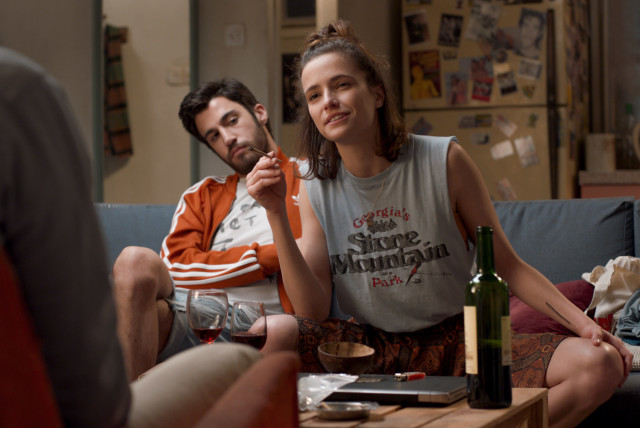
Natalia Tena plays Raquel, the mercurial, talented classmate from high school Marcos runs into, the woman who always gets his attention with “Oye, imbécil (Hey, stupid)!”
She’s pink-haired and insulting and vivacious. And while she may have had a crush on Marcos way back when, she’s way too cool for that now. She’ll just give him a makeover and a tattoo and play her accordion and sing and let’s see how long this takes each of them to figure each other out.
The metrosexual makeover jokes — facial masks and foodie gossip (among guys) may play better in Spain and in Spanish than they do in English. They’re passé in the extreme in this hemisphere.
Tena has the potential to be “that woman (girl),” the cute spitfire the guy must eventually come around to falling for. But the two of them don’t have much chemistry, and the script’s only help is in having her insult him constantly early on and having him dismiss her, hurtfully, later.
And then we get to the whole “Say Anything” and “Benny & Joon” stuff, and you kind of wish there were more of a movie before that. Because even “The Proclaimers” greatest hit can’t save this wilted romance.
![]()
MPAA Rating: TV-MA, sex, profanity, alcohol, nudity
Cast: Quim Gutiérrez, Natalia Tena, Alfonso Bassave, Ernesto Alterio and Alba Ribas
Credits: Directed by Laura Mañá, script by Abraham Sastre, Iván José Bouso. A Netflix release.
Running time: 1:27

Here’s what you remember about “Caro Diario,” Italian actor/director Nanni Moretti’s “diary,” essay, love poem and comical elbow in the ribs of his beloved homeland.
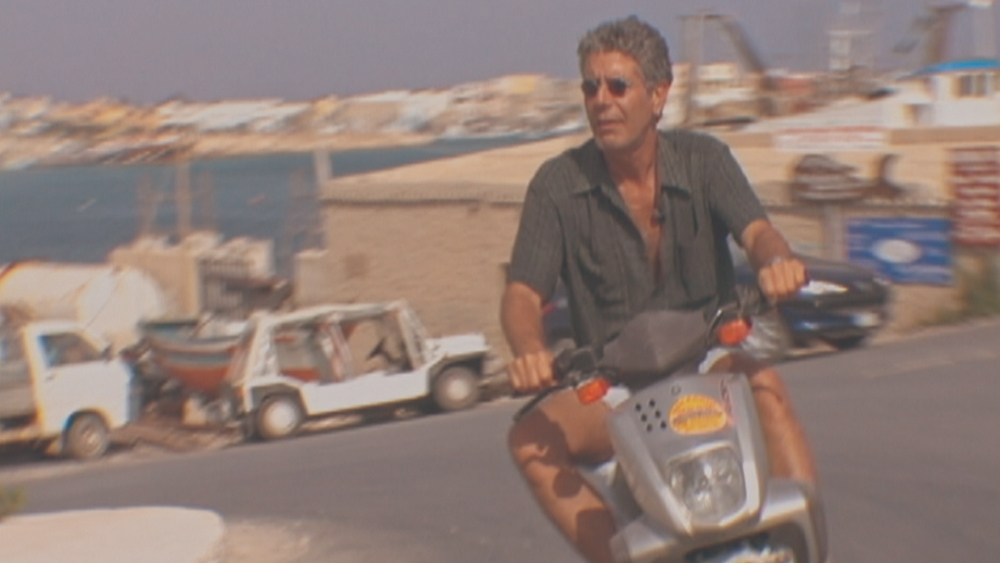
You remember the movie’s long, languorous opening chapter, just narrator, host and tour-guide Moretti “On My Vespa,” scootering from one Roman neighborhood to another, commenting on the stereotypes of each.
Bourgeois Casalpalocco is where one finds — or found 30 years ago when this film was made — German cars, new money and the blasphemy of “pizzas in cardboard boxes,” the mocked, characterless and (back then) poorer Spinaceto, where Moretti spends just long enough to agree with a guy he sees leaning against a crumbling industrial wall, “It’s not so bad,” Olympic Village (1960), Garbatella (1927), Montverde — each has its charms and its stereotypes.
The then-40 year-old Moretti riffs on the state of cinema, how the movie theaters in Rome “are closed for the summer” except for porn, martial arts and homemade Italian melodramas.
He ducks into theaters, mutters at the screen (in Italian with English subtitles) and obsesses and despairs over the savage thriller, “Henry: Portrait of a Serial Killer. He reads a review of that one and ponders the critic who wrote it.
“I wonder if whoever wrote this has a moment of remorse just before going to sleep.”
He even runs into “Flashdance” star Jennifer Beals and “In the Soup” and “13 Moons” (starring Jennifer Beals) director Alexandre Rockwell, with Beals — in fluent Italian — trying to brush off the pushy beardo in the dorky scooter helmet and shades, and telling Rockwell (in English) that “I think this guy must be a foot maniac.”
This comic travelogue is like a “Manhattan” era Woody Allen starring in an Italian/Roman version of Richard Linklater’s “Slacker” — droll, scenic and adorable. Moretti — this is his only well-known film — is a delight at showing how delighted this exercise makes him feel, “dancing” on his Vespa as he wheels down stradas and boulevards, whimsically thinking what his voice-over commentary on Garbatella will be.
The rest of the movie? Maybe, if you saw it when it came out (1993 in Italy, 1994 in the US), you were struck by a series of ferry visits to the Italian islands of Alina, Lipari, Alicudi, Panarea and the volcanic Stromboli.
That’s where his American soap opera-obsessed traveling companion insists Moretti quiz American tourists about what’s coming up (Italy used to get American TV shows and movies months later) on “The Bold and the Beautiful,” a shouted, language-barrier soap dissection that takes place on the lip of a volcano.
“Alicudi makes narcissists,” Moretti opines, because “everybody lives alone” and “everybody has just one child.” A montage of Italian brattery, indulged toddlers taking over the family telephone, makes that point.
“A party in honor of ‘bad taste'” is dodged, a persistent village mayor insists that they’ll be able to work in the quiet of his island hamlet, when of course they won’t — the film will make one nostalgic for travel, and wonder when today’s grounded globetrotters will get around to ruining these places, all over again.
What you might have forgotten if this new “virtual premiere” (streaming on Film Movement) is not your first encounter with Moretti’s near-masterpiece, is what a dull, pedestrian third act it finishes with. “Doctors” the chapter is called, and its about the convoluted, second, third and fourth opinions of Italian medicine.
If you’re coming to “Caro Diario” for the first time, you may want to preserve its travelogue charms and whimsy and check out after one or two lame doctor visits/”I have this itch” gags, before the movie’s overall effect is spoiled.
![]()
MPAA Rating: unrated
Cast: Nanni Moretti, Renato Carpentieri, Giovanna Bozzolo, Alexandre Rockwell and Jennifer Beals.
Credits: Written and directed by Nanni Moretti. A Film Movement release.
Running time: 1:41
The rest of the title of this Faith TV production has “Rise of Christian cinema” in it, and while the timing may feel a little late (peaked a couple of years ago), this is a natural for a movie about movies documentary.
Lots of clips from Biblical films, past and present, illustrating the history — from stories from the Bible and biographies of saints to famous and everyday people of faith to the angry victimhood of the “God’s Not Dead” era.
No Pixar pics during the pandemic, no Sony or DreamWorks. No interest in SCOOB!” What do you think? Should I review this one? Love that Bill Nighy

One day in 2015, two men went into Oslo’s Galleri Nobel and stole two large photorealistic paintings by Barbora Kysilkova, a lightly-regarded Czech emigre newly-settled in Norway.
There was surveillance footage of the crime, one guy in a hoodie, the other in a stocking cap, taking the rolled up paintings to a garbage can and spiriting them away.
They didn’t get away with it. The men were identified from the CCTV video and arrested. The paintings? Not recovered.
But in the courtroom, waiting for the trial to begin, Kysilkova screwed up her courage and went over to where defendant Karl Bertil-Nordland sat and asked him the two questions that were bugging the hell out of her.
“Why did you take those two paintings,” in other words, “Why me?”
“They are very beautiful.” Everybody’s a critic, and tattoos, drug history and arrest record be damned — “Bertil” knows what he likes.
“What happened to the paintings?”
“I can’t remember.”
Kysilkova may or may not have planned what she was to say next, but “I’d love to make a portrait of you” is what comes out of her mouth.
There is audio of this exchange which underscores drawings that illustrate the unofficial, unsanctioned courtroom meeting. Documentary filmmaker Benjamin Ree (“Magnus”) heard about this and thought “There’s a movie in that.”
“The Painter and the Thief” is his unusual exploration of art, the artistic temperament, empathy and compassion, a film about the human willingness to “see” and need to “be seen.”
It’s the sort of film you’d never expect to see or expect to be made in the United States. As Ree captures their out-of-courtroom meeting in a coffeehouse, and then sits in as a shirtless Bertil poses, covered in ink (“Snitchers are a Dying Breed”) as Barbora sketches him as they chat, an American might rightly wonder, “Why isn’t he in jail?” The longer the film goes on, the more we wonder.
The painter and the thief are studied and interviewed separately, and together, by Ree. We see the relationship develop, get a hint of each person’s backstory — the haunted painter with a taste for the dark side, the more-articulate-than-he-seems drug addict and petty thief.
An accident interrupts the relationship, and as a DWI is involved, we see Bertil do more time for that than he apparently did for swiping two paintings.
Bertil wonders if this “paint-your-portrait” come-on is “a trick.” Barbora’s Norwegian boyfriend is put-out and wondering if this clingy, “I don’t remember” robber isn’t more destructive to her than she realizes.
“She sees me very well,” Bertil admits (in English, and Norwegian with English subtitles). “But she forgets, I can see her, too.”
But our cynicism about this odd, overly-tolerant and weirdly compassionate pairing, and what having a camera in the room does to alter the dynamic, is given its own test when she reveals the portrait to Beril. He is shaken and moved to tears.

Things turn even more complicated as the film progresses, with the viewer never quite sure if Bertil is lying, if he sold her paintings and spent the cash on a drug binge. But Barbora is not the naive model of empathy she seems, either.
Bertil’s many injuries from his near-fatal car accident are reduced to body parts, in her field of vision.
“You have big nail holes, from the ROMANS!” She has simply GOT to paint the “stigmata” on his hands.
The film’s muted, Scandinavian tone means there won’t be any explosions. We just see the odd testy protest that she’s avoided asking him directly “What did you do with my paintings?” when he complains that she’s pestering him. And we hear the futile pleading of her “boyfriend” in front of a couples counselor about this “destructive” and “dangerous” thing she’s allowed herself to become entangled with.
What we’re left with is a fascinating glimpse of the myopic mania for “inspiration” of the artist, and a look at a culture where compassion and restitution (apparently) carry more weight than “punishment’ for the thief.
![]()
MPAA Rating: unrated, profanity.
Cast: Karl Bertil-Nordland, Barbora Kysilkova
Credits: Directed by Benjamin Ree. A Neon release.
Running time: 1:44
Truth be told, “End of Sentence” doesn’t get you, straight out of the gate.
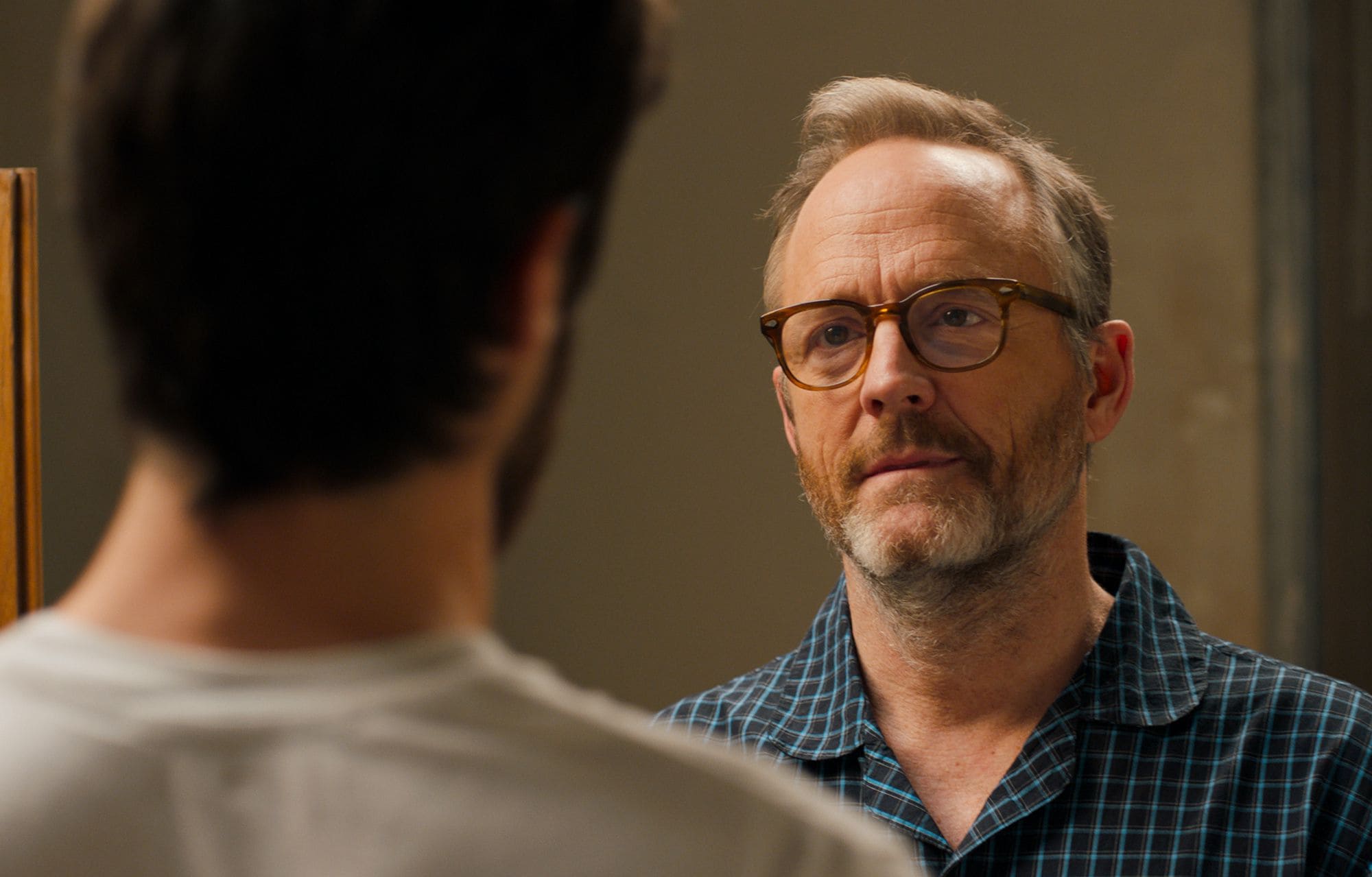
It’s downbeat, and the father-son rift acted out by Logan Lerman and John Hawkes feels contrived, more something dictated by the script and the near archetypes the two play.
But then this story of a sullen, just-out-of-prison son (Lerman, of Amazon’s “Hunters” and the tank movie “Fury”) who wants nothing to do with his doormat Dad (Hawkes of “Winter’s Bone” and “Three Billboards” and “Peanut Butter Falcon”) finds its way to Ireland. It’s where the husband promised to spread his cancer-stricken wife’s ashes when their boy got out of prison.
And even though that road picture/father-son “bonding” premise has a hint of the over-familiar about it, the movie lifts off, finds its heart and wit and transcends its potential.
It happens in a bar, after the quarreling father and son — each has issues, each blames the other for a BIG hidden hurt — have given a lift on their cross-Ireland trek to a bar pick-up (Sarah Bolger) the son has taken a fancy to.
There’s a band in the pub, as is sometimes the case in Ireland, ALWAYS the case in movies set there. And they launch into a song and Jewel joins in on The Pogues’ “Dirty Old Town.”
We’ve seen father Frank’s leeriness about giving her a ride, belligerent punk Sean’s insistence on it and Jewel’s sweet way of consoling a man who has lost his wife, who has started to doubt he’s even the father of this miscreant kid, who realizes that this whole trip is just another instance of somebody imposing what they want, their will, on him.
That moment puts an exclamation point on her kindness, lets her explain why she’s doing it — “You make a girl feel dignified” — and signals an abrupt turn for the better as the movie finally starts upending expectations and reveals its charms.
Producer (“What Maisie Knew”) turned director Elfar Adalsteins, working from a Michael Armbruster (“Beautiful Boy”) script, makes everything that the first act contrives to set up have some little payoff by the finale.
Maybe the opening bursts of hostility, where Sean refuses to let his father visit him in an Alabama prison — only his mother — his muttering to the guard who wonders “Who’s that?” about this man Sean won’t let pick him up at “End of Sentence” that Frank is “Nobody,” still seems extreme.
Maybe the bullying kid, testing and pushing around his old man, seems — in not justified, at least understandable.
A curious, unsettling Irish way in a Dublin bar that provides nothing but more doubts and few answers to Frank’s doubts, and a road trip that has the odd adventure and the occasional bittersweet connection to the late Anna’s past provide the build-up.
But it is Bolger, best-known for her work in the biker gang series “Mayans M.C.,” whose introduction may be sketchy and back-story a tad too pat, whose character raises the stakes and whose turn in a simple, formulaic scene gives “End of Sentence” the life it needs, just with a song.
![]()
MPAA: unrated, mild violence, profanity
Cast: Logan Lerman, John Hawkes and Sarah Bolger.
Credits: Directed by Elfar Adalsteins, script by Michael Armbruster. A Gravitas Ventures release.
Running time: 1:36
Sweet Variety piece on director Lynn Shelton, getting close to her special contributions to indie cinema.

https://t.co/K42GGS1zci https://t.co/llvNZjsYLj https://twitter.com/Variety_Film/status/1263112382462611457?s=20
You probably wrote their ad campaign, just based on the headline.
“You check, but you never check out.” Very “Hotel California,” in Europe. Without the “f—–g Eagles, man.”
A June 12 release.
Netflix puts Steve Carell in charge of “Space Force ” Seems so right.