
Dwight Yoakam is well paired with the Old Man of the Cinema in this September 17 release.
Dwight Yoakam is well paired with the Old Man of the Cinema in this September 17 release.
A September 3 musical with Camilla Cabello, Billy Porter, Idina Menzel and damnation, the only Irishman who can’t carry a tune, ear Pierce Brosan. Ok
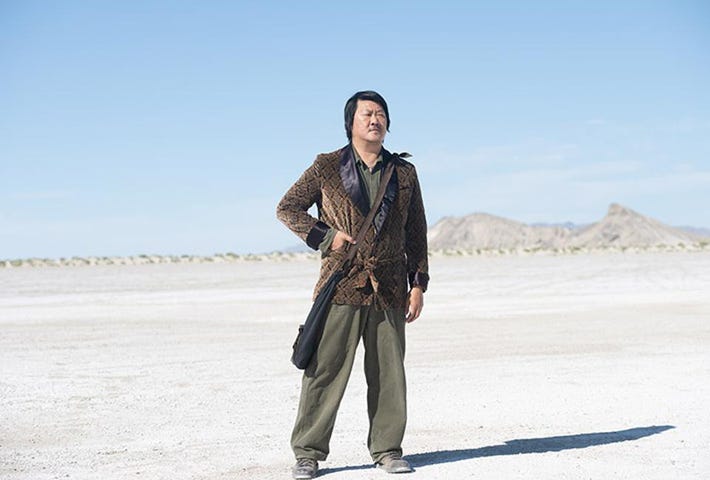
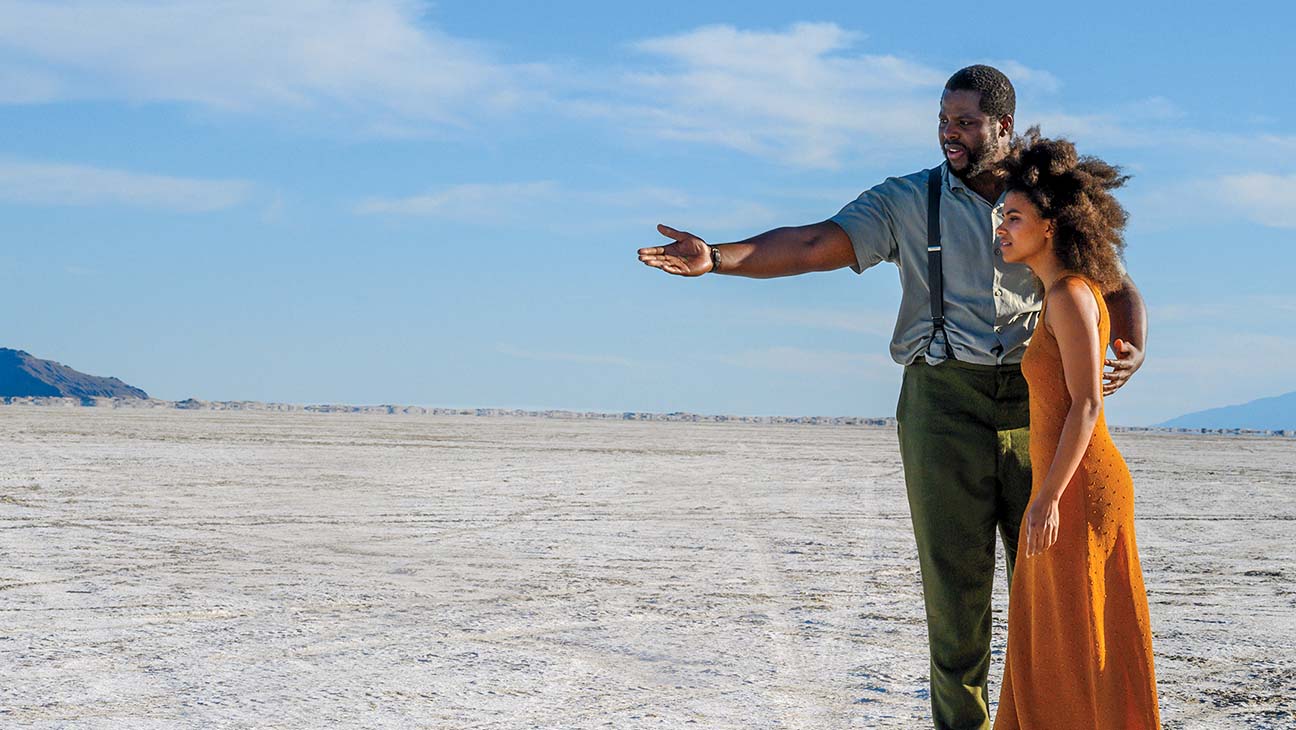
“Nine Days” is the sort of indie drama that makes you appreciate the wonder that is the actor’s heart as much as the actor’s art. A collective of rising stars and famous supporting players took a flier on first-time feature director Edson Oda’s dive into existential theatricality, and their presence made the movie a reality.
It’s the sort of thoughtful, human-condition-pondering picture that makes a head-snapping contrast to normal summer cinema fare. Of course, this isn’t a “normal summer,” so all bets are off.
And I can’t decide if I like this or even appreciate what Oda was trying to do. But perhaps by the end of the review, at the bottom of the page, just above the as-yet-undecided “star rating,” I’ll know, as will you.
It’s about a seaside desert safe house for souls auditioning for life on Earth. Candidates meet with an exacting interviewer (Winston Duke of “Us” and “Black Panther”), someone who talks up their chance at “the amazing opportunity of life.” But they have nine days of tests and exercises ahead of them and must pass muster with Will, this pedantic fussbudget whose top collar is always buttoned, a careful man who wears not just suspenders, but a belt, too.
Will monitors the lives of those he “passed” via a wall of old cathode ray tube TVs, seeing their lives through their lives. He keeps meticulous notes, and videotapes key moments. And all of this he files, in this house with filing cabinets that must hold infinity itself.
He isn’t the only one doing this, or interviewing new souls ready to be assigned to life, or rejected, in which case they’ll cease to exist. But he is the “star” of this system, a bit unorthodox, as his boss/friend (Benedict Wong) admits, yet thorough.
Among those he interviews in this latest group are sensitive Mike (David Rysdahl), more sensitive Maria (Arianna Ortiz), blunt Kane (Bill Skarsgård), callously glib Alexander (Tony Hale) and oh-so-thoughtful Emma (Zazie Beetz).
Over those days, they watch human life play out on those TVs and keep journals. Will puts them through role playing exercises, serving up moral and ethical dilemmas of a “Sophie’s Choice” sort, barking “What would YOU do?” in each situation.
“I’ll start a story, you’ll tell me how it ends,” he offers, jotting down every answer, deciding everyone’s fate, but “kind” enough to — as consolation — offer the failed souls a simulation of the “life” based on a moment they saw on one of the screens that they’re watching, one that was “truly meaningful.”
Everybody plays along, more or less seriously. But Emma is given to answering questions with counter-questions, puncturing the premise of Will’s “test” and, to be frank, the premise of the movie as well. Or they would if her responses generated any dramatic heat at all.
“I’m afraid I can’t answer that question.”
The “tests” don’t progress in difficulty or anything else. Winston’s quiz questions are awfully arbitrary, as are his let’s-get-real “punishments.”
“This is pain, and what you’re feeling right now is nothing compared to what people feel when they’re alive.”
The story’s arc has to do with letting go of loss, moving on from mistakes and finding a way to “live” the life one’s been gifted with. Will was once alive, and he needs to learn this as much as anyone he’s passing judgment on.
Oda gives the film a marvelous mystery as it opens, zeroing in on Winston’s solitary work in this Purgatory-by-the-Sea setting. But as that evaporates and the film settles into the “rules” and logistics of the work, I lost interest.
The “deserve to be alive” premise is wholly undercut by the unpleasant arbitrariness of the lives we see play out — a playful childhood leading to a musical career, then death, or bullying that invites interviewee suggestions of fighting back or passively just taking whatever life dishes out.
That in itself is intriguing, the idea that “Would we choose to be born if we had enough information to make an informed decision?”
Hale, playing a blend of distracted smarm and contempt, stands out in the cast. Beetz is, at most, mildly interesting as “the questioning one.” Skarsgård’s brittle character seems to fly in the face of the viewer’s sense of who passes and who fails and Duke’s Will never escapes the confines of being a “type,” emotionally shut-off after his one shot at life, traumatized by a “star” selection who died too soon.
Whatever each actor saw in her or his character that made them sign on, the profound (ish) speeches and musings didn’t do enough for me in terms of illuminating the human condition or engaging me in the story.
It’s all a tad dreamy, which seems to go with that “existential” territory. But thinking of all the films that have covered similar ground, “Eternal Sunshine of the Spotless Mind” made us cry, “Truman Show” made its poignant points with humor and “Waking Life” mesmerized and touched and connected, albeit at arm’s length.
“Nine Days” made me feel nothing save for the passing of time.

MPA Rating: R for language (profanity)
Cast: Winston Duke, Zazie Beetz, Benedict Wong, Bill Skarsgård, Ariana Ortiz,
David Rysdahl and Tony Hale
Credits: Scripted and directed by Edson Oda. A Sony Pictures Classics release.
Running time: 2:03
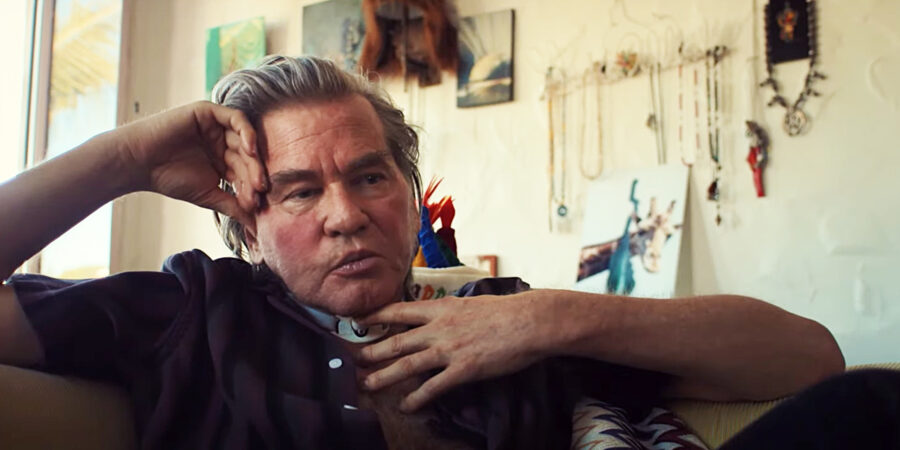
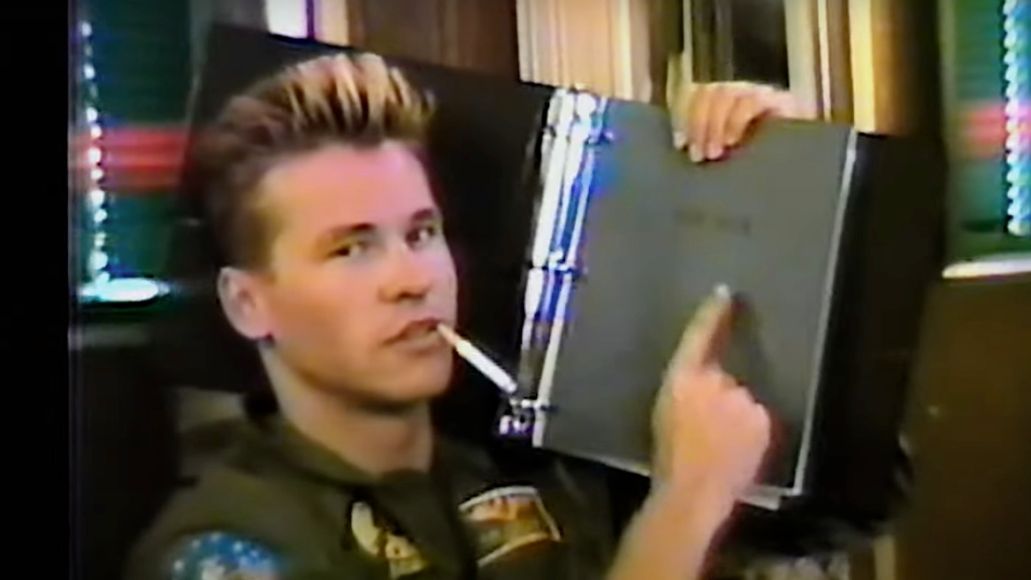
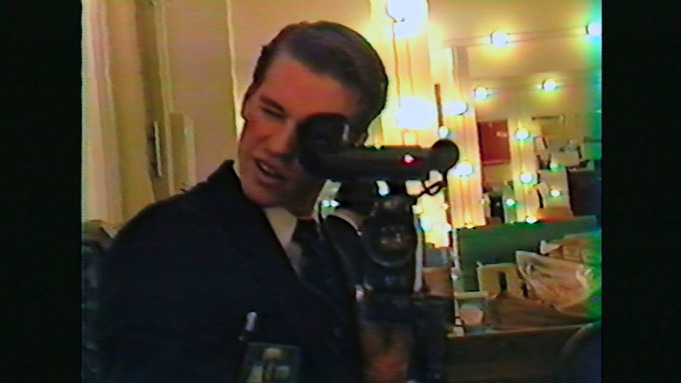
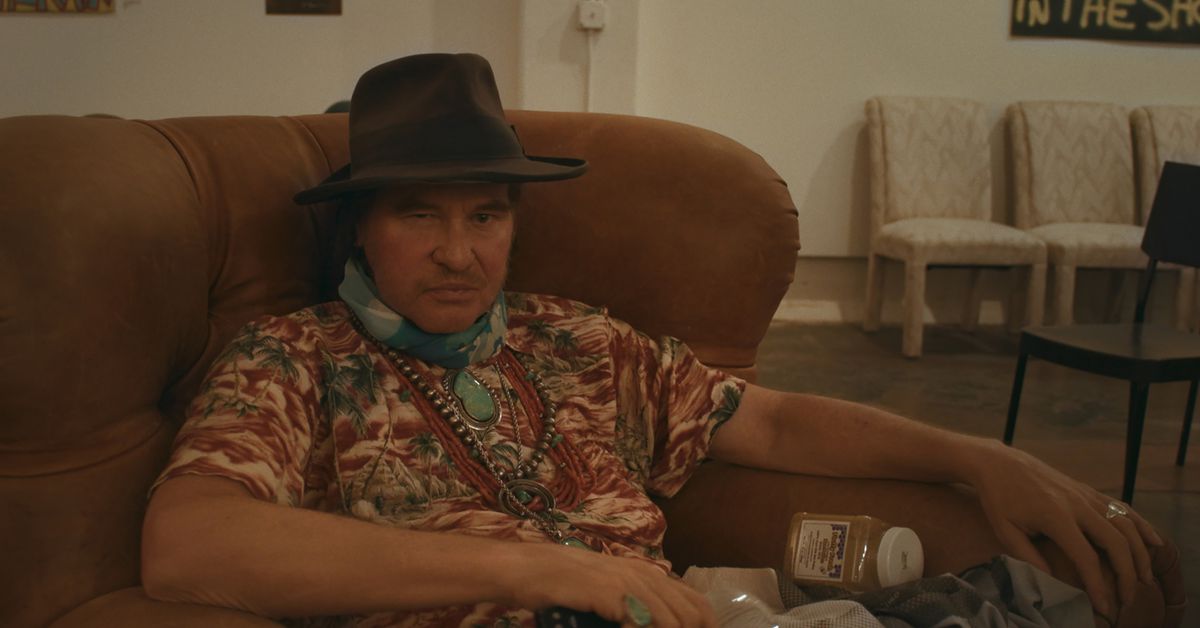
Jack Kilmer, Val Kilmer‘s son, reads his dad’s voice-over narration in “Val,” the autobiographical documentary he produced and which co-directors Ting Poo and Leo Scott assembled out of half a century of Kilmer home videos and movies.
Val lost his voice, perhaps permanently, to throat cancer, and speaks in a metallic rasp that requires subtitles or, if you’re meeting him in person, very careful attention to every bend of sound.
He’s 61 and can’t tour with the “Citizen Twain” one-man show he dreamed of turning into a feature film. And although his career isn’t over — he plays a mob boss/throat injury survivor, to good effect, in “The Birthday Cake” — he has reached something like the end of the line of his acting life, something acknowledged by this film and the charming autobiography, “I’m Your Huckleberry,” he published last year.
That makes “Val” a bittersweet outing, a movie about a man who was once a great screen beauty, who admits “I don’t look great” and “I’m selling basically my old self, my old career” by signing autographs and posing for fan photos at conventions and special screenings of his greatest hits — “Tombstone,” “Top Gun,” “The Doors,” “Kiss Kiss, Bang Bang.”
It’s a vanity project that washes away the vanity, a faded star who spent time in the tabloids being mocked for weight gains and letting himself go and a “difficult” actor, a diva who wasted a lot of his life explaining that away, or why he quit Batman after one movie, on chat shows over the years.
So while the film is largely in his words and entirely from his point of view, and the music rights budget (The Doors, Dylan, Donna Summer) could finance many a cheaper documentary, Kilmer owns up to who he is, where he’s been and what he’s become. And he explains things — acting, the movie star’s life and lot, and himself, how he got this “reputation.”
“I’ve lived in the illusion as much as I’ve lived without it,” repeating the familiar refrain that a character is part fictional, and partly “me.” “I have behaved poorly, I have behaved bravely.”
As he noted in his book, he was shaken to his core by the early death of his older, artistic and aspiring filmmaker brother Wesley, whose DIY movie parodies (“Teeth” was a goof on “Jaws”) they made together as children.
But what the movie does that the book could not is let us see clips of Val on movie sets in which he’s given his character’s room artwork created by Wes, who drowned at 15. Kilmer was an early and enthusiastic videographer, recording his easy interaction with the other pre-stardom Young Turks of Acting, Kevin Bacon and Sean Penn, backstage in their New York breakout play “The Slab Boys.”
We see snippets of his Juilliard work, rehearsals, his first film (“Top Secret”) and many of those that followed, videoing backstage and on-set footage, seeing the U.S.S. Enterprise (“Top Gun”) for the first time, chatting with co-stars and worshipping British actress Joanne Whalley in Danny Boyle’s “The Genius” at the Royal Court Theatre after each day’s filming on “Top Secret.” They later worked together on “Willow,” and married shortly afterward.
The wedding footage here is terribly touching, especially in light of the marriage ending during the making of “The Island of Doctor Moreau.”
Kilmer tells stories and talks about acting, the “soap opera” level posing that being clad in the restrictive Batsuit calls for and what you “really” do when you verbally agree to something that turns into a contract and then an obligation to make the movie.
It’s “your life that you’re agreeing to forfeit,” opinions, liberty, the works suborned to the studio’s needs.
We’re shown snippets of his many TV interviews where he was challenged about being “difficult” and “a perfectionist,” and see archival interviews with “Kiss Kiss” co-star Robert Downey Jr. and “Doors” director Oliver Stone defending the artist and his technique.
But there’s also unflattering footage where Kilmer kept videoing on the set of the “doomed from the start” bomb, “The Island of Doctor Moreau.” The replacement director John Frankenheimer, one of the greatest ever, was “just trying to get through” the picture that had become a lost cause, and Kilmer baits him with the video camera and indulges and idolizes Marlon Brando (who often sent a double to the set) backstage, the bloated star in his hammock asking Kilmer to “give me a shove” (so that it would swing).
We’re given the sense that co-star David Thewlis was Kilmer’s co-conspirator on “Moreau,” struggling to humor Brando (who switched off and all but shut down production), to collaborate and “write” better scenes each night off set. But even Thewlis slams the door on that notion in a later Kilmer clip, plainly irritated at what the two big-names were doing to make a bad situation unbearable.
Nobody came off looking good after that one. And including Kilmer’s calmly aggressive custody arguments on the phone with his unheard ex-wife Whalley, and seeing his childish silly string prank when she accompanies him to deal with his just-died mother’s corpse is another way the “vanity” is stripped away.
The portrait that emerges isn’t far off from the one journalists have picked up on from our chats with Kilmer over the years. He’s very smart, wonderfully thoughtful and articulate, gets deep into character and doesn’t suffer those who don’t respect the art and the effort it takes to make it. He’s still serious about the Christian Science Church his family raised him in. But arrogant? Oh yes. Asshat-level full of himself.
What “Val” shows us is that artist is still there (he paints and makes collages, now), enfeebled by the illness that turned the slow decline of his career into an abrupt halt, humbled but philosophical and grateful about all he’s gotten to see and do.

MPA Rating: R, some language (profanity), a little nudity
Cast: Val Kilmer, Jack Kilmer, with Joanne Whalley, Nicole Kidman, Robert Downey Jr., Oliver Stone, Mercedes Kilmer and Marlon Brando.
Credits: Directed by Ting Poo and Leo Scott. An Amazon Studios release (Amazon Prime)
Running time: 1:48
Frank Grillo, Alexis Louder and Toby Huss also star in this Sept.17 thriller.
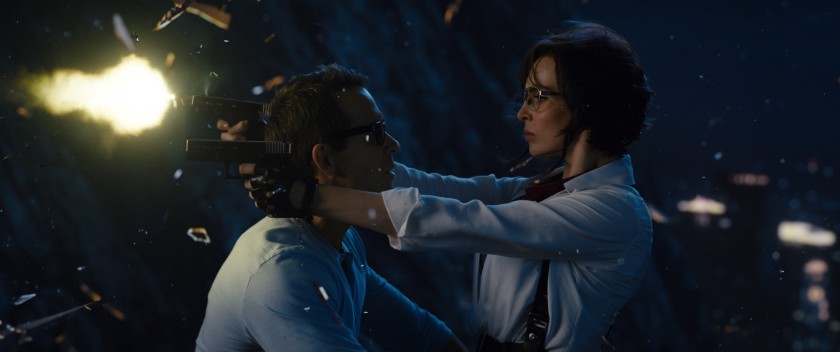
The irresistible off-the-cuff Canadian quips of Ryan Reynolds are unleashed in an inside-video-game comedy from the director of “Night at the Museum,” “Free Guy,” an amusing variation on what is by now a well-worn plot.
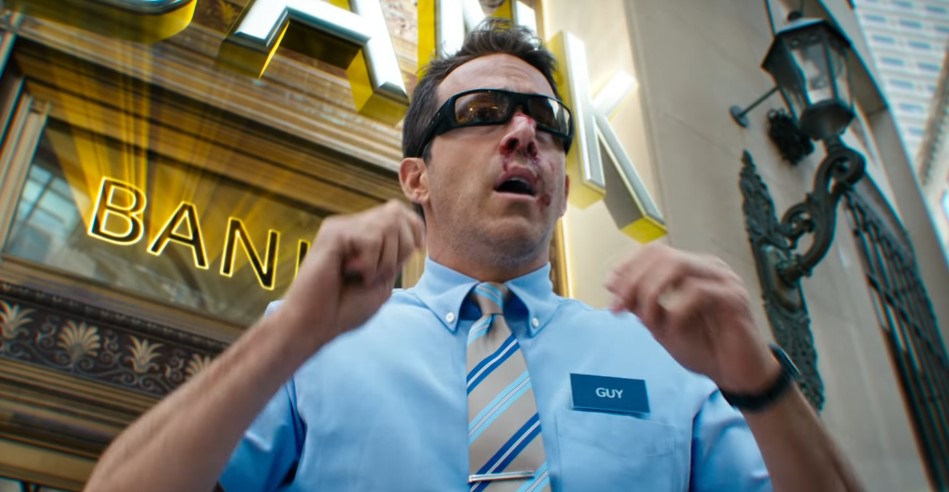
The new twist here? Our “Tron/Wreck it Ralph/Ready Player One” hero doesn’t know he’s in a game. And gosh, he’s fine with that, until that moment when he wonders if there might be “something more” to this life of same blue shirts, same espressos at the same cafe and work at the same bank, which is robbed multiple times every day because that’s what happens in your more violent video games.
“Free Guy” traffics in tired gamer/gaming types — that too many of “them” live with their moms or congregate in super-spreader-sized Asian game rooms, glued to their screens, addicted to both their favorite games and those enterprising nerds who’ve made online careers out of playing and commenting on others playing, making a living off fans who “watch” them online.
And as such its another commentary on gaming’s downside, the predatory nature of online game operations which, like Facebook, Twitter and Instagram, hunt for that perfect algorithm that gets us addicted, and keeps us logged in.
Nametag-wearing Guy (Reynolds) is a digital watch-wearing dork, relentlessly upbeat, chums with the security guard (Lil Rel Howery) who cowers on the floor with him during every robbery at the Free City bank where they both work.
“Don’t have a good day, have a GREAT day,” Guy gushes to one and all, which may be the most Ryan Reynolds line ever, delivered with an extra helping of sugary maple syrup.
But maybe one day he wants a different coffee drink. Maybe “normal” isn’t what he thinks he is. And maybe accepting that Free City is full of villains and heroes in sunglasses, and bystanders/victims like himself, has an expiration date.
He’s about to learn he’s living in a hellscape of a game, and learn what an NPC is, a “non-playable character.” He’s about to don…sunglasses.
Naturally, it’s a hottie heroine in a faux Tomb Raider get-up who triggers this epiphany. MolotovGirl is her online handle, a pretty cool avatar for Millie (Jodie Comer), who is shooting and punching her way through Free City with an agenda all her own.
Pretty soon Guy is a spanner in the works, a “trash-assed noob” thwarting robbers, disarming trigger-happy mass shooters and generally mucking up everybody on the outside’s games, game strategy and gaming life.
Guy’s epiphanies are many, some imparted by the puzzled MolotovGirl, who can’t figure out what he is, some which he arrives at all by himself.
“Life doesn’t have to be something that just happens to us,” he muses. And this AI creation is growing a soul, something the gamers themselves prefer to abandon once they log on.
“I’d never hurt innocent people.”
The script cuts between Guy’s new eyes on the mayhem all around him (often invisible, without the game character glasses) and the players themselves, profiled as “sociopathic manchild” types, and intrigues at the game corp where Millie once worked, Soonami. Her former partner and game developer Keys (Joe Keery) is still there, trouble-shooting this “noob” who is somehow mucking up the game and getting global attention for doing it.
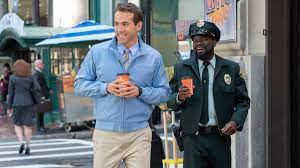

Director Shawn Levy has done a lot of comedies, but “Night at the Museum” is the right comparison here. He stuffs the screen with game action, game characters and game tokens. He . and Reynolds recruited legions of cameos, some of whom you’ll recognize, some only here as a voice.
Listen for somebody Levy directed in “Date Night” and somebody Reynolds has an epic celebrity feud with.
Comer, of TV’s “Killing Eve” and various series in her native Britain, makes a reasonably convincing badass in Free City, and a winsome idealist in her quixotic battle with Soonami and its manic man-child owner (Taika Waititi).
Whatever its loftier existential ambitions, “Free Guy” is never much more than big screen eye candy with Reynolds’ grinning deadpan anchoring it with his amusing over and under reactions to all that befalls Guy.
And if you love Reynolds — And seriously, who doesn’t? — that’s enough.

MPA Rating: PG-13, (fantasy) violence, language (profanity)
Cast: Ryan Reynolds, Jodie Comer, Lil Rel Howery, Joe Keery, Utkarsh Ambudkar and Taika Waititi, along with many cameos.
Credits: Directed by Shawn Levy, script by Mark Lieberman, Zak Penn. A 20th Century release.
Running time: 1:55
The year’s second Capote doc, after “Tennessee and Truman,” is due out Sept. 10 and seems to lean heavily on interview excerpts from his very life, heavily televised life.
This Sept. 10 Netflix release gives it’s titular heroine 24 hours to get a dirty job done.
Woody Harrelson explains it all to us.

I can’t say everything I know about modern Japan I got from anime. Because, you know, “Iron Chef,” “Godzilla,” J-horror, “Hello Kitty,” etc.
Japanese history, Japanese folklore, Japanese fads like steam punk, styles of dress, teaching methods and styles, cuisine, you can get a pretty good taste of the culture through the animated art form they call their own.
“Words Bubble Up Like Soda Pop” isn’t an instant classic and doesn’t have the bloodlines of the anime greats, filmmakers mostly associated with Hiyao Miyazaki’s Studio Ghibli.
Like a lot of midrange anime, it’s a tale that more easily have been told in a conventional feature film, with actors and sets and no animators. But this featherweight made-for-Netflix film gets by on charm and “cute” and the water colorish pastels the medium is famous for.
“Bubble” folds cherry blossoms, haiku, self-consciousness, “communication disorders,” sentimental memories, old age and J-pop into its teen romance tale set in modern day Oda City. We’ve seen prettier animation and stories with a more vivid sense of place. And they should more with the pop music element, seeing as how an old record store and a missing record are big parts of the plot.
But this simple story told simple engages and and should keep you — and perhaps the Young Adult audience its aimed at — interested, start to finish.
Yui is the boy all the kids call “Cherry.” He’s obsessed with haiku, the simple, minimalist Japanese poetry that has a lot in common with anime itself. Anime is typically under-animated, leaning heavily on drawn and painted images and thus a tad less fluid in character movements and the like. Often the poetry in it is in images and word pictures drawn by characters, not in “action.”
Yuki is the ever-grinning, always-upbeat “Smile,” a social influencer on Curiosity, a social network. She takes selfies and live-streams, squeezing products into her postings, with “Smile for me!” as her bubbly catchphrase.
They “meet cute” at the mall, a collision generated by graffiti artist, prankster and all around punk Beaver. That’s how their phones are mixed up.
Smile goes into a panic. Cherry, who is “on the spectrum,” given to wearing headphones to block the noise of the world, is a put out in a more low-key way.
But hey, she’s a cute girl who wants to talk with him, or at least get her phone back. And he’s just as “cute,” a word that Japan didn’t coin, but should have. Her sisters go back to the mall, where Cherry takes the old residents of a nursing home out for walks, and eventually, they made the switch and take in each other’s passions.
He is impressed with her social media presence, but tactless enough to blurt out “braces” when he sees her without the mask she wears to hide them.
“Buck teeth” used to be her trademark, but she’s having them corrected, and she’s embarrassed about it.
He keeps a special haiku dictionary in his phone case, because inspiration strikes him everywhere.
“Lights in summer’s eve, winning with a false start, against the sunset.”
The translations for the English language soundtrack miss a syllable, a break from the “five-seven-five” syllable format of haiku.
But his passion and her branding “work” take a back seat when they take on the quest of finding a missing record whose empty sleeve a very old nursing home resident clutches like it’s his last piece of an earlier life — because it is.

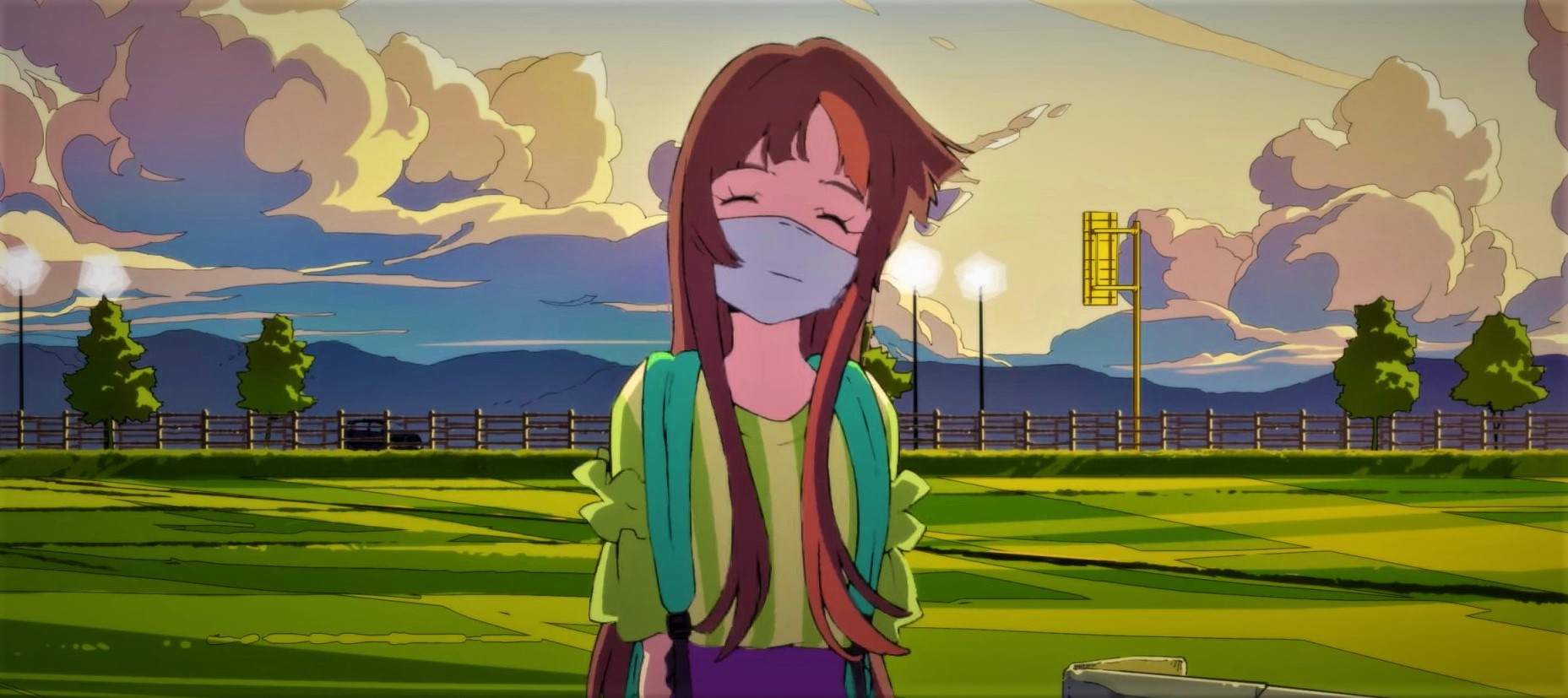
Kyohei Ishiguro’s film of Dai Satô’s screenplay unfolds at a sedate, civilized pace, allowing the story’s mystery to settle in and the uncertain courtship — if you can call it that — play out in unhurried time.
There’s a lot of poetry here, haiku painted and edited (in Japanese calligraphy) by Cherry and his friends Japan and Beaver. The movie’s connection to pop music could have been emphasized and underscored (with actual J-pop) a bit more, and every coming-of-age romance could use a little more humor.
But as the words do indeed “Bubble Up Like Soda Pop,” this plain but pretty story draws you in, the movie weaves its spell and Japan’s fixation of anything and everyone that can be called “cute” is evident in scene after scene.
MPA Rating: TV-PG
Cast: The voices of Hana Sugisaki, Ivan Mok (English language version)
Credits: Directed by Kyohei Ishiguro, script by Dai Satô. A Netflix release.
Running time: 1:28

You see a straight razor in a movie, your first thought is “Sweeney Todd.” Even when the movie’s about online voyeurism, you know that straight razor is coming out, and if somebody’s REALLY unlucky, the “stew” is going to have “something special” in it for dinner.
“Eye Without a Face” begins with a tilted camera watching a brunette stalk into the frame, her bloody hand holding such a razor. So we know what we’re getting into, even if it plods its way back to that moment “one week” later.
Dakota Shapiro plays Henry, an agoraphobic with daddy issues, stuck inside the junk-filled/half-ruined LA house he inherited, staring at a whole collection of young women’s intimate lives as he’s hacked their PC webcam.
“I’m their guardian angel,” Henry confides in his Aussie actor renter (Luke Cook). Sure he is.
There’s Sky (Evangeline Neuhart), an unhappy singer-songwriter living with a brute, and Tessa the online sex worker, the over-eager blonde Ella (Sarah Marie) and, oh yes, that brunette.
Laura (Vlada Verevko) has an Eastern European accent, a nice apartment and a lot of dates. Funny thing. Henry sees the dates come in, sees her serve them drinks. But he never notices them leave. And hearing an electric carving knife and seeing how much Laura likes red meat, he has his suspicions.
“I, I…saw it. I’ll show you!”
Vain, shallow womanizer Eric is flippant and skeptical. But he’s just a little bit curious, too.
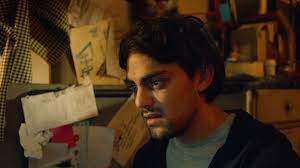
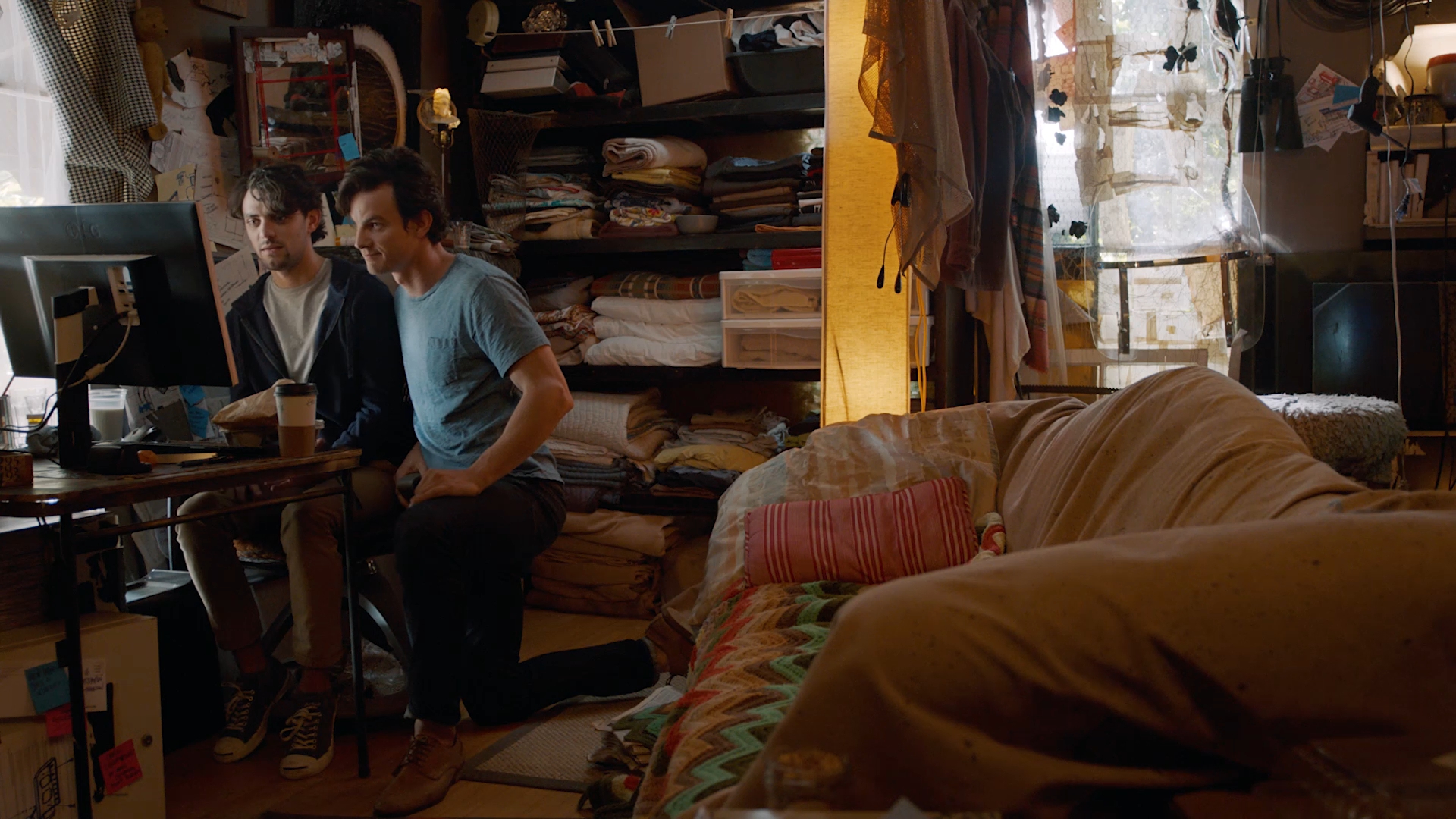
Writer-director Ramin Niami (“Shirin in Love”) has been making movies few see for years. Here, he’s teamed with (I guess) his daughter/cinematographer Tara Violet Niami for a bit of slumming in horror.
The project is credited as “a film by Ramin Niami and Tara Violet Niami, so perhaps she co-directed. The movies have a rich tradition of “buying your son/daughter their first big screen credit,” so perhaps that’s what’s going on here.
They know what to do with the camera, tilting it, giving us first person stalker’s-eye-view sequences as Henry’s worst fears, that the “angels” he’s guarding are stalked by a Devil-masked slasher.
But the acting’s perfunctory and unaffecting. There’s not much story here, and nothing that’s all that original. There’s virtually no building of suspense, just a lot of Peeping Henry behavior and signs of his quick mental decline, thanks to what he’s experiencing voyeuristically through his PC.
Once the straight razor comes out, we know what’s coming. Just a question of who’s wielding it. The hard work is making us care who that is, and “who’s next.”

MPA Rating: unrated, bloody violence, sexual content, profanity
Cast: Dakota Shapiro, Luke Cook, Vlada Verevko, Ashley Elyse Rogers
Credits: Scripted and directed by Ramin Niami. A Gravitas Ventures release.
Running time: 1:38

 Movie Nation