Movie Review: Oklahoma gangsters are all beholden to “Ida Red”

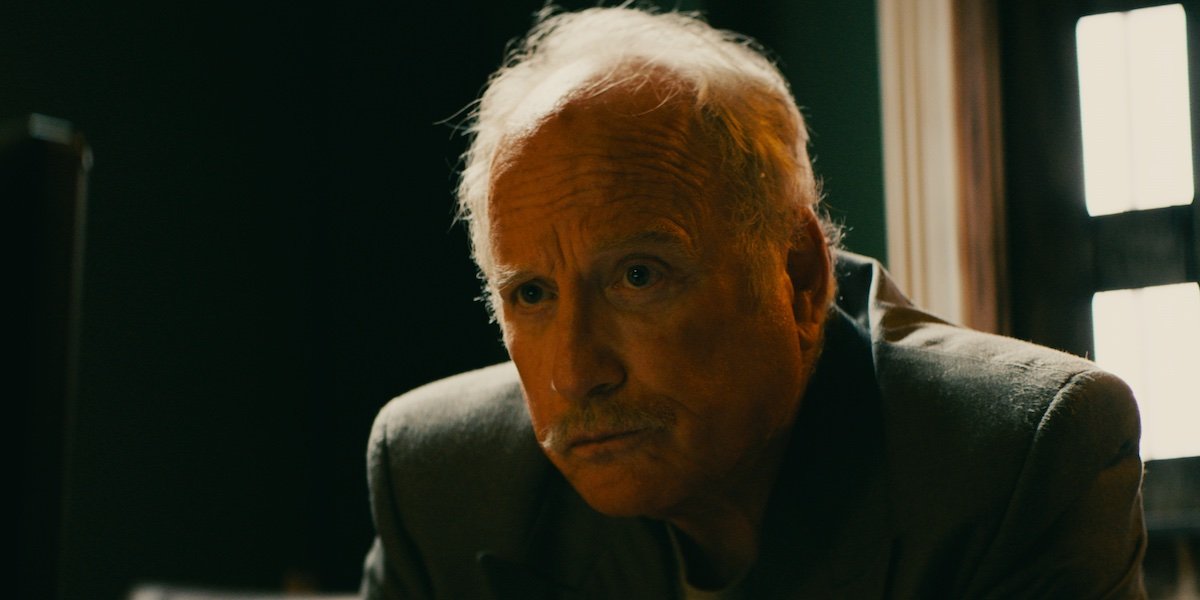
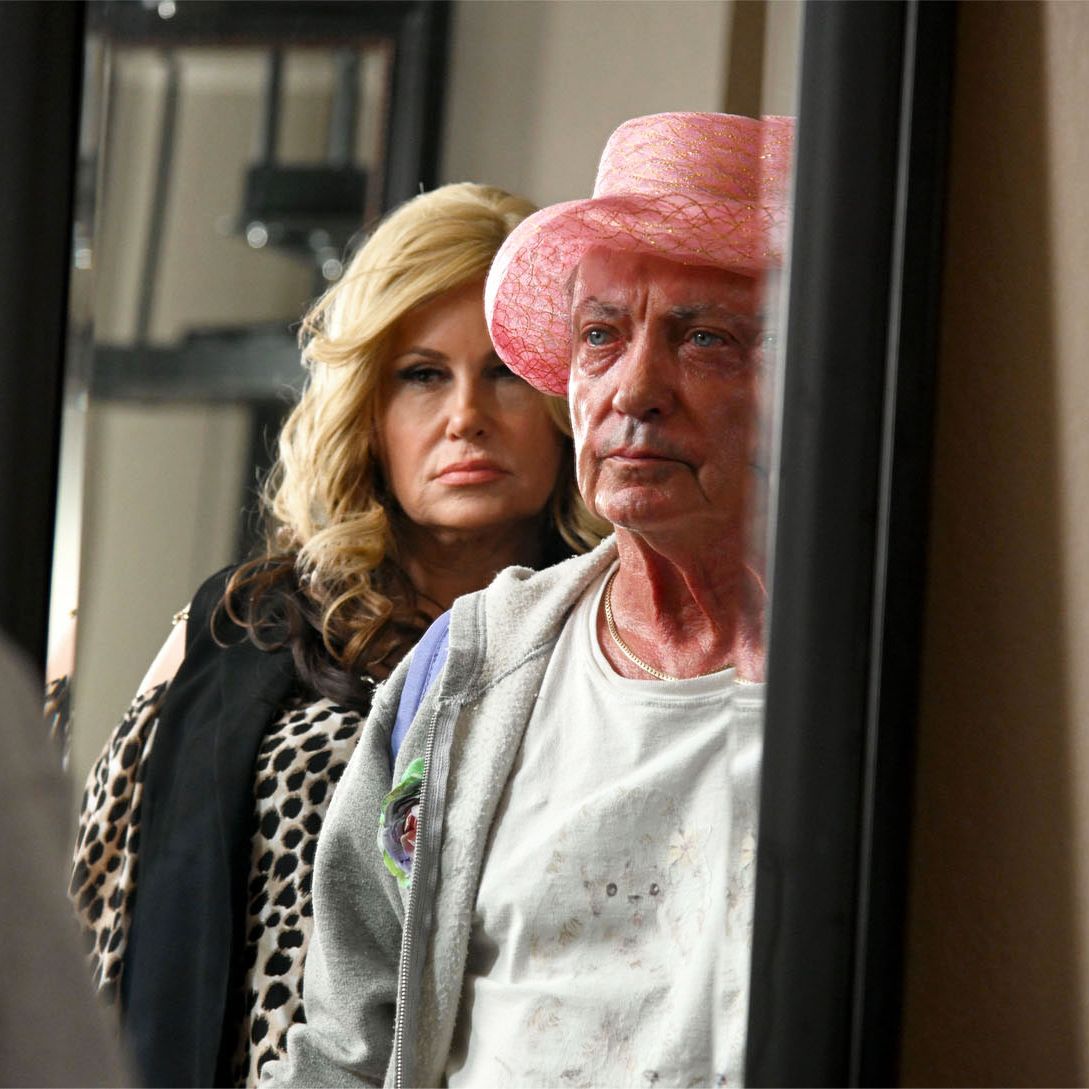
A bloody-minded B-movie of drug heists, prison, “cleaning up” and revenge, “Ida Red” is a straight-up B-movie with the some good performances and the odd good scene interrupted its funereal pacing and over-the-top violence.

There’s an outlandish lawlessness in play that makes you wonder how far down breakdown of the rule of law hole this country — or Oklahoma — has gone for any of this to be plausible.

It’s another “Variation on a Theme Introduced in ‘Animal Kingdom'” thriller with Oscar winner Melissa Leo, in a supporting role, as a criminal matriarch her kin are angling on getting their dying mother/aunt out of prison before she kicks the bucket.

The movie strides confidently out of the gate, stumbles to a halt and never quite gets up to speed as Feds and local law enforcement, “family” and loose ends mix it up and “clean up” after a tractor trailer drug hijacking goes wrong in the opening scene.

Josh Hartnett and Frank Grillo play son nephew Wyatt and Dallas, masterminds of a late night Interstate heist of a Federal pill shipment in which people are killed, and members of their gang aren’t reliable enough to leave alive to keep it all under wraps.

Ida Red (Leo) is able to track what they’re up to from prison, offer her “clean this up” advice and sit back, sickly and perhaps not all that mentally capable of weighing what she’s just suggested.

Because whatever pangs Dallas (Grillo) may have about snuffing out a surviving truck driver who has a Marine Corps Veteran cap, he’s a sadistic piece of work. He’ll cover this face with a pillow, shoot bystanders without compunction or regret.

With a Fed (William Forsythe) and Wyatt’s cop brother-in-law (George Carroll) breathing down their necks, how is this crime family going to tidy up, cash in and free Ida Red from prison before she breathes her last behind bars?

There’s a 15 year-old niece (Sofia Hublitz from “Ozark”) who’s starting to go wrong. Wyatt’s sister Jeannie (Deborah Ann Woll of “True Blood” and “Escape Room”) may be freaking out. She’s the one married to the cop. Wyatt? He just shrugs it off.

“It’s in the blood.”

As the bodies pile up, interrupted by this or that misstep by the teen, kidnapping a parole board member and shrugging off law enforcement’s timid inquiries, “Ida Red” teeters to and fro, never quite finding its footing and going completely off the rails in the finale.

That comes after the homage to the epic shootout in “Heat,” and some choice acting by Woll, Hartnett, Leo and Grillo — who each have one well-written scene to chew up and play with gusto.

Writer-director John Swab (“Run With the Hunted”) finds a pithy line here, a scene Grillo can chew up and spit out there. But he has no sense of pace. Genre pictures, thin on surprises and big on grit, sink or swim on their forward momentum. This Tulsa-filmed B-movie gangland thriller never has that.

“Ida Red” is good enough that we can see what the cast saw in it, and bad enough to wish another writer had taken a swipe at a rewrite (the ending is awful) and maybe producer-Swab had hunted up a flashier director — even one fresh out of film school — to helm it.

Rating: R, graphic violence, profanity

Cast: Josh Hartnett, Sofia Hublitz, Deborah Ann Woll, William Forsythe, George Carroll, Melissa Leo and Frank Grillo

Credits: Scripted and directed by John Swab. A Saban Films release.

Running time: 1:51

Posted in Reviews, previews, profiles and movie news | Comments Off on Movie Review: Oklahoma gangsters are all beholden to “Ida Red”

Movie Review: Another Cumberbatch eccentric — “The Electrical Life of Louis Wain”

Whatever the “Diagnostic and Statistical Manual of Mental Disorders (DSM)” has to say on the subject, the movies have long maintained that there’s a thin line between “loveable eccentric” and “mentally ill.” While we’ve (mostly) progressed beyond the “all the mentally broken really need is love” cure in screenplays, the original trope and that always “thin line” is ever with us.

“The Electrical Life of Louis Wain” skips back and forth across that line. It’s a giddy then sad and somewhat forlorn biography of a great English illustrator and a man the film maintains was Britain’s original “cat fancier.”

Before Louis Wain, cats were “useful” as “mousers” and little else. But when Wain and his wife took one in as a pet, and he then started painting them, illustrating them in either cuddly and adorable poses, or silly settings (cats playing cards, golf), dog-mad Britannia went feline fur baby crazy.

And when he and his work came to America, we followed the Mother Country off that cliff.

Wain makes another grand eccentric in the repertoire of Benedict Cumberbatch. Working from a script by Simon Stephenson and the film’s director, Will Sharpe, Cumberbatch creates a somewhat manic polymath — or “poly-hobbyist,” as our droll narrator (Oscar winner Olivia Colman) describes him. Antic, full of “patents” and theories and ideas for art, he’s “on the spectrum,” we’d say today. The Victorians didn’t know what to make of him.

He pitches an opera to a famous composer without knowing how to write music, sees “electricity” everywhere, as the driving force of life and death, jumps into a bullring to get a better view of an animal he wants to draw and is scolded for his “imbecility” in big and small ways by the publisher (Toby Jones) of “The Illustrated London News.” That’s the publication that wants to hire him “at poverty wages” to be their pre-newspaper photographer illustrator of people, street scenes, fairs, sporting events, etc.

As he paints with both hands at once, Wain is unnaturally fast at this. He confesses he doesn’t “find this sort of work particularly taxing.” What convinces him to take the job are the fact that his widowed mother and his five unmarried sisters live under a home he’s supposed to provide them with.

And bossy, practical oldest sister Caroline (Andrea Riseborough, who makes a grand harridan) has hired a governess for the three youngest sisters. The governess, our narrator wryly informs us, makes Louis “tingly” inside. As he doesn’t “really know what the hell is going on,” he’ll take the job to employ the governess and try to sort out this “tingly” business in the company of Miss Emily Richardson.

She’s played by Claire Foy of “The Crown” and “The Girl in the Spider’s Web.” So we get the attrraction.

Actor-turned-co-writer/director Will Sharpe’s tale is told in three acts, with the first a sort of “Miss Potter/Personal History of David Copperfield” romance between two smart, quirky oddballs from “different stations in life.” The second is where fame, success and tragedy weigh in. And the third act tells us of Wain’s greatest fame and most debilitating tragedy.

Sharpe (“The Darkest Universe”) employs color-blind casting, peopling Victorian Britain and Edwardian America (look for a Taika Waititi newspaper editor cameo) with faces with India and Africa in their heritage as fellow train travelers, friends (Richard Ayoade), boxers and business associates.

Wain liked to pay prize fighters to let him get in the ring with them, with gloves not brushes. Add that to his early obsession with and wild theories about electricity, and his later certainty that taking cats in as pets would cause them to rapidly evolve into big blue-eyed, hind-legs walking companions who converse with their hosts, and you can see how the Victorians, Edwardians and others would have regarded this fellow as something of a nut.

Cumberbatch brings a twitchy, bird-like quality to Wain, who uses constant motion to keep his demons at bay because, our narrator tells us, “His mind was a dark, screaming hurricane of crippling anxiety and recurring nightmares.”

His childhood fears are related in old-fashioned, black-and-white “iris-in” flashbacks. His way of seeing the world pops up in scenery that morphs from photography to colorful illustration.

The leads have splendid chemistry, with Foye matching Cumberbatch in studied, intense oddness — antic line-readings, wide eyes darting at the sparks each recognizes that they’re setting off with the other.

And Jones is well-cast as the kindly, Dickensian employer who gives Wain a break, a light kick and a safety net, when need be.

The first act is so upbeat and charming that when things turn sour, it can feel like a sucker punch. But the “decline and fall” isn’t precipitous, the adoration by the now-cat-worshipping masses and the richly-detailed settings make our tumble to the ground, like Wain’s, slower. That softens the blows to come.

Although the later acts slacken the pace and earn this “Electrical Life” something of a downer vibe at times, I found it fascinating even when the thrilling first 45 minutes recede into the sunset.

This won’t be the eccentric character that wins Cumberbatch an Oscar. But fans of his, of lovely recreations of Victorian Britain (skimming past its “bizarre social prejudices”) and cat lovers will find much to embrace and enjoy here. Especially the cat lovers.

Rating: PG-13 for some thematic material and strong language.

Cast: Benedict Cumberbatch, Claire Foye, Andrea Riseborough, Toby Jones, Richard Ayoade, Dorothy Atkinson, Crystal Clarke, narrated by Olivia Colman

Credits: Directed by Will Sharpe, script by Simon Stephenson and Will Sharpe. An Amazon Studios release.’

Running time: 1:52

Posted in Reviews, previews, profiles and movie news | Comments Off on Movie Review: Another Cumberbatch eccentric — “The Electrical Life of Louis Wain”

Netflixable? Italy discovers American-style DNA-CSI with “Yara”

Today’s “Around the World with Netflix” outing is a “true crime” police procedural about the hunt for a missing Italian teen, and the precedent-setting steps a dogged prosecutor took to find her, and then arrest her killer and bring him to justice.

A decade after American TV debuted “CSI: Crime Scene Investigation,” and years after the U.S began collecting and keeping a DNA database to help track down criminals, the Yara Gambirasio case riveted Italy and eventually forced an embattled investigator/prosecutor to bring her country into this millennium, and rely on this corner of advanced police forensics.

“Yara” won’t feel dazzling and new to anyone who remembers David Caruso yanking off his sunglasses or the darkened, production-designed labs of the many “CSI” spinoffs. But it’s intriguing as a peek into a different style of criminal justice, the back door way Italy joined this world of modern policing, and a better appreciation of this theoretical (not often employed, as any prosecutor will tell you) newest tool in the murder investigator’s tool bag.

Isabella Ragonese of “Somewhere Amazing (In un posto bellissimo)” stars as Letizia, a motorcycle-riding single mom and veteran of mafia prosecutions who takes on the case of the missing teen Yara.

We meet the prosecutor, a job that puts her in charge of police investigations of capital crimes, the day a model plane hobbyist finds 13 year-old Yara’s body, months after she disappeared on her way home from gymnastics class. A positive ID means that the winter-long hope that the missing girl might still be alive — kidnapped somewhere — gone.

Flashbacks take us to the snowy November 2010 night in which Yara brought her dance/gymnastics school a replacement boom box for its classes, and introduces us to her (Chiara Bono) voice. Yara kept a diary.

Director Marco Tullio Giordana and screenwriter Grazniano Diana tell this story through two timelines — one beginning the night of the disappearance, her parents’ prompt and tearful report that she’s overdue within hours of her not coming home — the other timeline in the film’s “present,” the investigation that finally gets some traction once the police have a body and a crime scene to investigate.

The diary, read in voice-over, produces red herrings — false trails that are pursued. The family is considered, a “crush” at school, a native-Arabic speaking “foreigner” working at the construction site where the body becomes a person of interest. This police procedural emphasizes the process of elimination involved in good police work.

Letizia is attacked in the press, politicians weigh in and her Ministry of Justice boss gives away his prejudices as he lectures her, “as a father would” (in Italian with English subtitles). He needs “results. Time is running out!” Maybe a man should pitch in.

And yet years pass until the decision is made that voluntary DNA testing of everyone who might have had some connection to Yara is proposed, financed and launched, a game-changer in Italian justice, or so it’s implied.

The trial, when we see and hear it, has drama in it, and also confirms non-Italians’ bias fears, as prosecutorial innuendo battles the defense counsel’s implied suspicion of “new” science, and the judicial panel hearing the case seems intent on cutting off any chance of second-guessing their decision.

An American can’t help but think of the Amanda Knox case at the odd eye-rolling assertion, implication or conclusion is leapt to.

Ragonese lets us see the strain the case put on the prosecutor, the resignation that sets in after years of work and little progress. It’s a performance and a film with few histrionics, more dry “Law & Order” than sexy “CSI” in tone and pitch.

But like any true crime story boiled down to a feature film, it’s got a certain built-in appeal. It’s solidly built, with a couple of emotional moments tossed in with the slowly building suspense.

And again, the measures taken “over there” can look a little extreme — civil rights and privacy limits tested — to outside eyes.

If you’re into this sort of thing “Yara” might be just the sort of thing you’re into. If you’ve watched enough “CSI,” this will seem quaint, slow and dramatically thin.

Rating: TV-14, implied violence, descriptive material

Cast: Isabella Ragonese, Chiara Bono, Thomas Trabacchi, Sandra Toffolatti and Alessio Boni

Credits: Directed by Marco Tullio Giordana, scripted by Graziano Diana. A Netflix release.

Running time: 1:36

Posted in Reviews, previews, profiles and movie news | Comments Off on Netflixable? Italy discovers American-style DNA-CSI with “Yara”

Classic Film Review — Eisenstein’s “October (Ten Days That Shook the World),” Montage of a Revolution (1927)

Coming back to Serge Eisenstein‘s textbook on screen editing and second best masterpiece of Soviet propaganda makes me recall when I first saw it, the MTV-80s.

Back then, filmmakers moving from TV commercials and music videos were taking over the cinema, and “MTV editing” became shorthand for any movie build out of a blur of edits.

But Eisenstein, the master of montage, had perfected the quick impression — image/cut/image action/cut style in the silent era, running with the technique D.W. Griffith popularized (some say invented) with “Potemkin” (his greatest silent film) and taking it to its absolute extreme with “October, 10 Days that Shook the World,” his Soviet docu-drama about the Bolshevik Revolution of 1917.

“October,” co-directed and edited by Grigoriy Aleksandrov and based on American journalist and Soviet champion John Reed’s (the subject of “Reds”) book “Ten Days that Shook the World,” may have its primitive moments, simplistic and manipulative messaging. It was made for bucking up the proles — many of them still illiterate — all over the then-new U.S.S.R. to celebrate the 10th anniversary of that revolution, in 1927.

It’s not hard to imagine it flickering to life on a simple screen in a remote school, a factory wall or “workers” meeting in the far reaches of the former Russian Empire, its juxtaposition of heroic, windswept and backlit Bolsheviks with fat, sneering nobles and bourgeoisie reinforcing the talking points of The One Party dictatorship, the Fox News/OAN of its day.

A sea of scythes here, a forest of firearms there — the flurry and fury of “the people” breaking into The Winter Palace and smashing the Tsar’s wine cellar, a tidal wave of armed workers storming into government councils and seizing the members of the provisional government, climbing a statue of Tsar Alexander III and pulling it down.

This movie has been “re-staged” for the camera in revolutions, real and imaginary (the Saddam statue toppling set up by Bush II in Iraq), for 100 years.

But set aside the storytelling — with images and intertitles (some of the ones on the newish Corinth re-rerelease have misspellings) doing all the work that modern screenwriters insist on voice-over narrating or expositioning to death.

What stands out are the iconic images — “The Traitors” slipping out to sabotage train switches and trains, disappearing into a pool of black behind them, the iconic Lenin (played by Vasili Nikandrov) taking over the uprising, rousing the Central Committee and bestriding that armored car like a colossus, cheering on the masses.

And then there’s the movie’s money shots — montage, Eisenstein’s metier. A cut , an edit every 3-5 seconds that makes Paul Greengrass’s “Bourne” blur look like the digital updating of a very old and polished technique. “Proletarians, learn to use your rifle” shows us weapons, bullets, hands chambering a round and that round going into an open-sided (partially disassembled) firearm in a sequence that’s been digitally copied scores of times in the “Bullet Time” “Matrix” era.

I’ve seen “October” a few times over the years, most memorably at a college film society where one can appreciate it among fellow cognoscenti and debate its power — fading with time, but still glimpsed. It’s not as dazzling as “Potemkin,” as visually striking as “Ivan the Terrible” or “Alexander Nevsky,” which Corinth Films is packaging it with for a new (let’s unload our overstock) two DVD release.

But it’s still essential viewing for any student of the cinema, like “Birth of a Nation” or “The Big Parade” or “The General” or “Modern Times,” the silents that made the modern cinema, the movies that made motion pictures the dominant storytelling medium of the past 100 years, from nickelodeons to the Golden Age of the Podcast.

Rating: Unrated

Cast: With Vasili Nikandrov as Lenin, Nikolay Popov as Kerensky

Credits: Scripted and directed by Grigoriy Aleksandrov and Sergei M. Eisenstein, based on the John Reed book. A Corinth Films release.

Running time: 1:43

Posted in Reviews, previews, profiles and movie news | Comments Off on Classic Film Review — Eisenstein’s “October (Ten Days That Shook the World),” Montage of a Revolution (1927)

Watch Discovery Channel’s Emmy Winning plastic pollution doc “The Story of Plastic” — free here and elsewhere through Nov. 30

Living on the water, I see the evidence of the poisonous litter that never goes away every single day.

Let the cranks rage about losing their Mountain Dew bottles and straws, this nightmare is killing our waterways and getting into everything and everyone.

Here’s a doc that lays that bare. Congrats to The Discovery Channel for making it, airing it, winning and Emmy and making it free to watch all this month.

Posted in Reviews, previews, profiles and movie news | Comments Off on Watch Discovery Channel’s Emmy Winning plastic pollution doc “The Story of Plastic” — free here and elsewhere through Nov. 30

Movie Review: Tom Hanks might be The Omega Man in “Finch”

For an hour or so, I wondered why exactly National Treasure Tom Hanks would take “Finch,” a sometimes cutesy, often maudlin End Times tale pairing him with a robot.

Then he gets to the “telling anecdote,” the tale his character tells to Jeff, the robot of his own creation, a story of the ways civilization ends and the humanity that disappears with it.

So I get it — a pre-pandemic one-hander with a little “Silent Running” here, some “Wall-E” there and the fear that it could go all “Omega Man” at any minute.

It’s a kid-friendly thriller of the sci-fi apocalypse variety, forlorn but engaging enough to sit through. Barely. High stakes, thin on action and heavy on sentiment, it takes “Short Circuit” to doomsday and reaches for tears — here and there — as it does.

In the title role, Hanks is the Last Man in St. Louis, scavenging for food in the still-standing supermarkets, minimarts and theaters, holing up in the factory where he once worked.

Finch tools about in a massive Komatsu dump truck, sings along to “American Pie” (“This’ll be the day that I die!”) and gets around outside in a haz-mat suit, customized to inform him when the UV radiation and simple heat in the atmosphere are more than he could tolerate.

He has a custom-built helper robot, the four-wheeled, silent and basket-equipped Dewey. And he has a dog. Much of their scavenging involves the search for cans of dog food.

Finch and Dewey download books from the company library into his next piece of tech, a walking robot. He finishes it just after the latest supercell passes through the dust bowl that was St. Louis — a city — like the world around it, baked, burned and parched out of existence after the ozone layer gave out.

Coming to life, the machine has questions. “Where is everybody?” And where are those “holes in the sky” that make it “like Swiss cheese,” that Finch talks about?

Finch takes the time to answer those questions. But he knows they need to move on. With this new gadget, he loads a customized RV so that they can all make their getaway. “West” it is. San Francisco.

The robot learns to talk, and sounds like Ukrainian comic Yakov Smirnoff impersonating Stephen Hawking. Later, the voice morphs into the cheery boyishness of Caleb Landry Jones.

Finch gives the robot “four prime directives,” adapting Isaac Asimov’s “Three Laws of Robotics.”

“A robot cannot harm a human, or cause a human to be harmed by its inaction.”

Finch frets over Directive Four the most.

“Protect the welfare of the dog.

As they make their way through the wastelands towards the West, Finch tells stories, urges the robot to imitate him and “take initiative, and tries to give the machine — which chooses to name itself “Jeff” — “some common (human) sense.”

There are perils out there, and not all of them involve the holes in the sky.

“I know you were born yesterday, but it’s time for you to grow up.

Series TV director Miguel Sapochnik doesn’t fret about borrowing the endless stream of visuals and situations from other “end of the world” tales, from “Omega Man” to “Zombieland.”

There aren’t many dramatic incidents breaking up this road-trip odyssey, and the few that there are are from most every other movie we’ve ever seen in this genre.

Hanks makes a sad, stoic lead. And the robots are “Silent Running” cute enough that we worry for their safety as much as we worry for Finch’s. But maybe not as much as we worry for the dog’s.

With real apocalypses staring down at us in every direction, movies like “Finch” take on a fatalism that they sometimes lacked in earlier eras. The threats are as real as they ever were. But now, we can see that we’ve become too dense to take action to prevent them. That adds a resigned acceptance of the doom we see on screen, and we see coming on the evening news.

So yeah, it’s “kid friendly” in all the usual ways. But how often is the family in the mood for a cutesy bummer of a movie?

Rating: PG-13 for brief, violent images

Cast: Tom Hanks, the voice of Caleb Landry Jones

Credits: Directed by Miguel Sapochnik, scripted by Craig Luck and Ivor Powell. An Apple TV+ release.

Running time: 1:55

Posted in Reviews, previews, profiles and movie news | Comments Off on Movie Review: Tom Hanks might be The Omega Man in “Finch”

Netflixable? A Spaghetti Western featuring African Americans of the Old West — “The Harder They Fall”

British singer-songwriter and filmmaker Jeymes Samuel got Netflix money and an all-star cast to make his follow-up to “They Die By Dawn,” a Western that gathers many of the most famous or notorious African American figures of the Old West into one story.

“The Harder They Fall” is a Blaxploitation pastiche of Spaghetti Westerns, resetting the West — brutally violent, lawless and Darwinian by myth — as a largely Black world where whites are train riders or bankers and bank customers to be robbed, or genocidal Army troopers to be massacred.

It demands an open mind — not for the characters and stereotype-smashing casting. As an opening title points out, figures such as Nat Love, “Stagecoach Mary,” Rufus Buck and Bill Pickett? “These. People. Lived.”

But as he fills the screen with an A-list that includes Oscar winner Regina King, Idris Elba, Delroy Lindo, LaKeith Stanfield and others, self consciously and randomly references African American cinema classics, peppers the dialogue with a Tarantino-load of Samuel L. Jacksonisms and layers the soundtrack with reggae, hip hop and R&B, Samuel goes beyond parody and settles on just grating.

Samuel is plenty flippant. He’s just not that damned funny.

From the first moments we see costume-designed, dry-cleaned and pressed characters, gold-filagreed pistols toted by players who, as Our Lord Blackadder once cracked, “ride a horse rather less well than another horse would,” big things and small take anybody who’s ever seen a Western out of this one.

Samuel and his cast lean on “the cool parts” and “cool lines” and upend conventions, sure. But blowing so many details — beyond the intentional anachronisms — is too Sergio Leone Lite even for me.

Jonathan Majors of “Lovecraft Country” and “Last Black Man in San Francisco” is Nat Love, a preacher’s son who survives his parents’ murder, but bears the knife-mark on his forehead of their killer, Rufus Buck (Idris Elba). Needless to say, Love is looking for revenge on “the Devil himself” well into adulthood.

Nat Love’s gang robs Rufus Buck’s Crimson Hood gang, kills a lot of them, and sets up a showdown after Rufus makes his escape from custody.

So we’ve got Nat and his compadres — including old flame, shotgun-armed singer, saloon-keeper and shootist “Stagecoach” Mary Fields (Zazie Beetz), transgenderish bouncer Cuffee (Danielle Deadwyler) and others — taking on Rufus, Cherokee Bill (Stanfield), saloon-keeper “Terrible” Trudy (King) and company.

Deadwyler, of the indie Appalachian thriller “The Devil to Pay” (Track that down!) pretty much steals the show, a badass born to be under-estimated. Gunslingers?

“I seen faster,” she spits.

Where?

“In the mirror.”

Not a bad bouncer, either.

“Don’t nobody come in here gunned-up or they might could get gunned-down.”

Racial commentary is limited, which kind of misses the point of it all. Just “I seen the Devil, and Rufus Buck ain’t him — he white,” from Lindo’s Marshal Bass Reeves. And a backstabbing sheriff (Deon Cole) is dismissed with “A man like you’d have us all subservient to the end of our days.”

“You gonna just let us get away Dred Scott free?”

The story’s so “Silverado” conventional that “The Harder They Fall” needs its novel casting and soundtrack gimmicks and “Quick and the Dead” gunplay to be the least bit watchable.

Extreme close-ups for the stare-downs, split screen shootouts, oozing wounds and blasted body parts brought to mind the earlier martial arts outings of rapper-turned-filmmaker RZA — a superficial grasp of genre, whistles-and-bells action editing and the like. RZA got better.

I tried to get into the bloody campiness of it all, the anachronisms and all that. But this is a seriously soulless affair, all bullets and blood and no buckskin or satiric bite. There’s nothing wrong with the pitch, the casting (well, some folks need riding lessons) or settings. It’s the plot, the story arc and execution that Samuel screws up. And the details.

That spoils the pseudo-serious send-up he set out to make, and leaves “The Harder They Fall” far short of the parody or even homage it might have been.

Rating: Rated R for strong violence and language

Cast: Jonathan Major, Idris Elba, LaKeith Stanfield, Zazie Beetz, Delroy Lindo, Danielle Deadwyler, Edi Gathegi, RJ Cyler, Deon Cole, Damon Wayans Jr., Julio Cesar Cedillo and Regina King

Credits: Directed by Jeymes Samuel, scripted by Jeymes Samuel, Boaz Yakin . A Netflix release.

Running time: 2:17

Posted in Reviews, previews, profiles and movie news | 2 Comments

Movie Review: Strike a pose, “Eternals”

Oscar winning best director and indie icon Chloé Zhao presides over another big budget, huge-cast “All in the Fractious Family” Marvel monstrosity with “Eternals,” an origin story that dates from when the comic book colossus ran out of things to do with its Avengers, et. al.

It’s a derivative, noisy, sometimes-amusing Greek myth-reinventing eye-roller, full of fan-service, inclusion, dry-eyed deaths and “high stakes” that feel like a half-hearted send-up of that idea.

When you put the ’60s weeper (“Don’t they know, it’s) The End of the World” on the soundtrack, you know subtlety isn’t what Zhao was going for.

Overloaded with characters, geographical and temporal settings and exposition, it’s pretty much the generic bore the trailers promised. This could be Marvel’s “Suicide Squad” level bust.

They’ve been on Earth for 7,000 years, a long opening credit tells us and the characters keep reminding us. They’re “not to interfere” with humanity’s progression, we’re told, time and again. We see them interfere, time and again, from pre-history to the Hanging Gardens of Babylon.

But not when Cortez was going Medieval/Genocidal on Tenochtitlán. Very “prime directive” of them.

Ajak (Salma Hayek) is their leader, the one in charge of their “mission,” the one who talks to “Arisha,” of the space gods called “Celestials,” giants who manifest themselves in modified “Iron Giant” gear and pull the strings in the universe.

The Eternals’ ostensible mission was to kill off the “Deviants” — dragonlike gargoyles who devoured humans from hunter-gatherer days onward. “Eternals” picks up their story 500 years after they wiped them out.

They’ve scattered, with Sersi (Gemma Chan of “Crazy Rich Asians” and a lot of British TV) and the perma-pixie Sprite (Lia McHugh of “The Lodge”) hanging out in London, where Sersi — having split up with Ikaris (Richard Madden of “Game of Thrones” and “Cinderella”) — has taken up with non-Eternal Dane (Kit Harrington).

Druig (Barry Keoghan) is off in South America, Thena (Angelina Jolie) and Gilgamesh (Ma Dong-seok of “Train to Busan”) and deaf-and-mute “Female Flash” Makkari (Lauren Ridloff) are off doing versions of their own thing.

Ajak retired to South Dakota, Ikaris got off to who-knows-where and brainy, tech-oriented Phastos (Brian Tyree Henry of TV’s “Atlanta” and “Godzilla vs. Kong”) has settled down in a same sex couple in the city.

And most amusingly, Karun (Kumail Nanjiani of “The Big Sick”) has been passing himself off as generations of Bollywood stars (explaining away his eternal life/youth) — a century of vampy romances and campy musicals, big paydays with a Man Friday/valet (Harish Patel) at his beck and call.

The Deviants are back, Arisha is not pleased. The world must be sorted and made safe for “this special race” humanity again.

So characters have to get over old grievances, suit up, fly around, shoot bolts or balls of energy out of their hands, conjure up gadgets, wield light swords and shields and get on with the business of killing dragons.

One wrinkle? The Deviants have evolved. Another? An Eternal has lost some of her marbles. A third? Some are questioning “our mission.”

There’s a whole lot of striking a pose, either as a complete Band of 10, or in smaller groups.

Nanjiani delivers laughs as a vain and flippant film star who wants to shoot a documentary of their exploits.

Jokes like “Are you a wizard?” and “Superman!” park the picture right on the edge of (not funny enough) self-aware camp.

Conflicts break out in some predictable, some utterly inorganic (script requirement) ways.

And classic rock, from Pink Floyd to Foreigner, swirls onto the soundtrack. Because that’s what the Guardians of Fanboydom demand.

I liked the next-gen effects, and Zhao keeps the action beats visually coherent, not something you can say about every picture of this genre. The cast is not-quite-“Justice League/Avengers” impressive, but good actors to a one, even if they’re only challenged in the most modest hint-of-human-relationships ways.

But the dialogue is strictly boilerplate — “Druig, I can see you’re upset!” “Know your place!” The “We are family” ethos is Pixar pablum of the “Fast and Fading” variety.

The idea that these aliens from “Olympia” inspired assorted cultures to call them gods and spell their names differently — Sersi becomes “Circe,” “Thena” becomes “Athena,” etc. — wasn’t exactly a great moment in Marvel brainstorming. “Who mourns for Adonais?” anyone?

And as generic as the fights inevitably are, the dead zones between them — with little dollops of Nanjiani/Patel comedy — are excruciating. This picture seems to go on forever.

It’s not like the exposition in this origin story never ends, but it does go on an on, unlike some of the alleged “Eternals.” Whatever “meaning” their deaths convey, Zhao delivers them perfunctorily.

The relationships — a sex scene included — are the only hint that there’s an Oscar winner behind the camera. Much of the time, Zhao is just another Marvel traffic cop, trying to keep the endlessly inter-connected stories straight, the fights and laughs at the appropriate intervals and the fans sated, if not exactly delirious at seeing something “new.”

Let’s hope she has the cash, and the good sense, to never do this again.

Rating: PG-13 for fantasy violence and action, some language and brief sexuality.

Cast: Gemma Chan, Richard Madden, Salma Hayek, Kumail Nanjiani, Brian Tyree Henry. Lia McHugh, Ma-dong Seok, Lauren Ridloff, Barry Keoghan, Kit Harrington, Harish Patel and Anjelia Jolie

Credits: Directed by Chloé Zhao, scripted by Chloé Zhao, Patrick Burleigh and Ryan Firpo. A Marvel release.

Running time: 2:37

Posted in Reviews, previews, profiles and movie news | 1 Comment

Too Many DVDs to get Through on Just One Holiday?

Maybe.

I’ve reviewed five films on the day before Veteran’s Day. So far (“Eternals” i finally get around to watching tonight.).

Another five tomorrow? Maybe not. But “Nevsky” and “October?” You bet I’m getting to those.

Posted in Reviews, previews, profiles and movie news | Comments Off on Too Many DVDs to get Through on Just One Holiday?

Movie Review: A cheating Hollywood Agent tries to pass “The Beta Test”

Jim Cummings isn’t subtle in “The Beta Test.”

He mugs, he twitches. His expressions are broad. His banter hurtles, almost out of his mouth’s control. He hits his punchlines a little too hard.

But damn, he’s funny in it.

As a foul-mouthed, increasingly manic Hollywood talent agent, about-to-marry and yet tempted by this mysterious (printed) invitation to a blindfolded, anonymous “no strings attached” afternoon assignation at a swank Hollywood hotel, Cummings is in his element. And he should be. He co-wrote and co-directed it.

The deal is that once this sexual encounter has happened, Jordan needs to cover it up. He needs to know who did the inviting, who he was there with. And hunting for this information turns a wrapped-too-tight hustler into a breathless, sometimes hilarious paranoid.

Wait until he figures out that, as we’ve seen in the movie’s dark and shocking opening scene, that the significant others who learn about this betrayal by their wives/husbands/lovers have a habit of snapping and murdering them — with a knife, a gun, poison. Whatever works.

Cummings (“Thunder Road,””The Wolf of Snow Hollow”) and his co-writing/co-directing co-star PJ McCabe, play fast-talkers in a hyper-competitive agency in an era where clever agents might see the writing on the walls. They’re hyper, motor-mouthed dinosaurs in a collapsing house of cards. Maybe.

That’s why they talk so fast all the time. That’s why they’re at war with the WGA (Writer’s Guild, union). That’s why every agent we ever see depicted on screen — in movies, in “Entourage” — seems about to blow a fuse at any moment. That’s why we’re treated to montages of Jordan blurting “We’re so excited” to every potential client, about every possible “package” and every backend “streaming” deal.

But this purple envelope, this invitation, upended his world. He’s locking eyes with every beautiful woman he sees, dazed and embarrassed all the while. And that’s before he actually goes through with it. That’s before the follow-up uh, notes. That’s before he hears about the murders.

Whatever’s going on, Jordan and his colleague PJ — yes, he’s got the same initials as his character — think it must have something to do with their corrupt business, our corruptible times, “this climate,” post #MeToo, after “Harvey,” beyond social media, something to do with the algorithms in play with whatever the hell or whoever the hell is behind those damned purple envelope invitations.

“The Beta Test” is a wired, wound-up and instantly-hip/instantly-dated Hollywood riff on relationships — romantic, business and otherwise.

There’s overreach here, a Big Message that feels a little Western Union in a Grindr/Instagram age.

The technique — rapid fire patter of the “Ni Hao...the hell are you?” to a Chinese mogul (Wilky Lau) variety, 360 degree camera pans to illustrate Jordan’s increasingly unmoored state after wondering just what he’s gotten himself into, more and more frantic-antic encounters with people who might be that one-afternoon-stand — can be wearing. And the technique doesn’t whizzbang over the simple plot all this “story” is lathered onto.

But our invitation is to just go with it, go with Jordan as he plunges does that rabbit hole. Sure, as his increasingly leery fiance (Virginia Newcomb) notes, “It must be exhausting, pretending to be you.” Because it kind of is, as is “The Beta Test.”

Cummings? Whatever message they go for here, he and McCabe have polished off a pretty good/pretty exhausting 93 minute audition for that “Entourage” reboot.

Rating: unrated, violent, sexually explicit

Cast: Jim Cummings, Virginia Newcomb, PJ McCabe, Wilky Lau

Credits: Scripted and directed by Jim Cummings and PJ McCabe. An IFC release.

Running time: 1:33

Posted in Reviews, previews, profiles and movie news | Comments Off on Movie Review: A cheating Hollywood Agent tries to pass “The Beta Test”