
This is what happens when you let a guy doze off watching a “Green Acres” marathon.
Jay O. Sanders might be the most famous face in “The Road to Galena.”
Ben Winchell, Will Brittain and Aimee Teagarden are the leads.
July 8?
This is what happens when you let a guy doze off watching a “Green Acres” marathon.
Jay O. Sanders might be the most famous face in “The Road to Galena.”
Ben Winchell, Will Brittain and Aimee Teagarden are the leads.
July 8?
Listen to the way Spain’s matinee idol hits his lines, the relish he brings to saying his name “Poooos in Boots.”
Damn he’s funny in this part. Same with Salma Hayek, their latest greatest pairing?
“The Last Wish” is “coming soon.





The title is “Dreaming Walls,” so don’t dive into this documentary about New York’s famous — and infamous — Hotel Chelsea expecting a literal history lesson.
Twelve stories of brick that opened on 23rd St. in 1884, it hosted Oscar Wilde and Mark Twain, and was home to everyone from Janis and Hendrix to Marilyn and Tennessee Williams, Sam Shepard, Arthur C. Clarke — who wrote the screen treatment for “2001” there — and Bob Dylan.
The original “Dylan,” the poet Dylan Thomas, took his boozy, fatal turn for the worse in a Chelsea room, which was a real selling point to poet-rocker Patti Smith, seen in footage dating from the ’70s.
It was “the first place I came to in New York,” a very young Smith enthused, walking around rooftop terrace. “I’m SURE he throw up one too many rums off this roof!”
The Rolling Stones sardonically referenced its “Chelsea Drugstore” drug-addled reputation in the 1969 classic “You Can’t Always Get What You Want.”
But the address’s star-studded, woozy history is mostly glimpsed via projections on its hallowed walls by Belgian filmmakers Maya Duverdier and Amélie van Elmbt. They made a movie about an institution and landmark cluttered, outdated and in transition.
A string of changes in ownership, a clientele that included many ancient, grandfathered-in apartment tenants (a few of them hoarders) and an endless renovation that ate up the 2010s — it only reopened this past Feb. — makes their film more paleontological than historical. We’re taking a peek at the bones, mid-dig, hearing stories archived on film and remembered by the aging denizens of this dark, stained-glass monument, lamenting what it is becoming, regretting what’s been lost.
The more historical longtime tenants recognize it and themselves as “remnants of another time in New York,” when Warhol shot “Chelsea Girls” on one floor, when “Bohemians” of several generations were drawn to it, right up to and including that aspiring Michigan dancer Madonna Louise Ciccone, who returned to shoot photos for her book “Sex” after she became the world’s most famous bottle blonde.
There’s a little archival footage — an interview with composer Virgil Thomson, a longtime resident who died there in 1989. But mostly, we’re seeing an arduous renovation through the camera’s lens, hearing the reveries and gripes of a lot of seriously elderly residents — dancers and drag queens, retired painters and others who got into this cheap, centrally-located piece of Manhattan real estate through the machinations and indulgence of the longtime manager Stanley Bard, son of one of its many longtime owners over the decades.
If there’s a failure to this approach with their film it’s in the reliance on the viewer to know much of that history tied to the place going in. We’re invited to dream along with the filmmakers, without a lot of background, footnotes or interviews with experts or the celebrated folks who once lived there.
They gave us an 80 minute movie. Another 10 minutes, summarizing its notoriety, getting snippets of Mick and Elliott Gould or Patti S. or Bette or Jane Fonda or Russell Brand, Robbie Robertson or Eddie Izzard doesn’t seem like a lot to ask.
“Dreaming Walls” still manages to play as a visual poem to the place at the tail end of its long decay, before its latest pricey sprucing up and upscale reinvention.

Rating: unrated
Cast: Rose Cory, Merle Lester Levine, Stanley Bard, Gina Healey, Pablo Martinez, Zoe Serac Pappas, Nicholas Pappas, Virgil Thomson, Steve Willis and Bettina Grossman
Credits: Scripted and directed by Maya Duverdier and Amélie van Elmbt. A Magnolia release.
Running time: 1:20
July 1.

Interview enough actors or read enough actors’ autobiographies and you’ll run across what has to be their most common pet peeve.
It’s a stage direction that everybody who steps onto a set and into the frame seems to hate.
“OK, let’s do it again. But FASTER.”
Hate it they might, but there probably isn’t a more important edict in screen comedy. By and large, faster is funnier. Slow burns and deadpan have their place, but comedy that’s in your face and quick on the draw has a better shot at delivering laughs.
“Heart Parade” is a pokey Polish rom-com about finding love amongst the wiener dogs of Krakow. It’s set up for “fish-out-of-water” jokes, contrasting “What’s your hurry?” Krakow with “Go go go we’ve got deadlines” Warsaw. There’s not enough here that’s funny, and what is here passes by like, well, a dachshund parade.
Anna Próchniak of “Bad Day for the Cut” and “The Innocents” stars as Magda, a go-getter TV producer and top aide to Arena TV’s Director of Programming, Zula (Monika Krzywkowska). Magda shares a penthouse apartment with star TV presenter Anatol (Wasyl Wasylik) and has their lives planned out well into the future.
Promotion to Zula’s job, marriage and “eighteen months from” that date, babies.
But Magda’s got a mild case of cynophobia. She has nightmares about dogs. And it’s driven by, we figure, her boss’s doted-on dachshund, Todd. Magda has to walk him, cater to him and care for him when the boss is distracted.
And like many a dachshund, Todd is a stinker. On the day her promotion is announced, Madga messes up and the dog gets into something he shouldn’t and it’s “You’re FIRED.” No promotion for you!
She can’t even pack up her desk without catching opportunistic Anatol hooking up with another pretty colleague.
“Heart Parade” is about Madga’s plan to get back in the game. There’s this famous dachshund parade/”trial” over in Krakow that she already knows a lot about, thanks to Todd. Funny thing about it, they don’t want any publicity.
Somehow, there’s a media blackout about a dachshund parade. Is somebody worried the country will OD on “cute?” That seems nuts, but Poland can be…different.
Hyper-organized Magda will infiltrate the secret organization that runs this event, befriend the leaders and get a story her ex-employer will love.
“Heart Parade” is a romantic comedy, so here’s hunky sculptor and tombstone carver Krzysztof (Michal Czernecki). as a possible love interest. Magda rents a room from him, which should make love blossom, right?
Except neither he nor his quirky co-leaders of the Dachshund Day Afternoon is all that keen on taking in the fish-out-of-Warsaw stranger.
There’s a neighbor (Katarzyna Zielinska) who has her eye on Krzysztof and is willing to sabotage anyone who gets in her way.
Krzysztof is widowed, with a little boy, Karol (Iwo Rajski). Karol has this dog he’d love to be able to train to get him into the wiener trials. If only somebody had the time to help him.
And there’s an entire bureaucracy of “My hands are tied” slow-walking Krakow-pokes to overcome.
So we have a cute couple, the obstacles to their romance and a backdrop of adorable little dogs. Why doesn’t “Heart Parade” work?
The filmmakers can’t manage a single decent sight gag for the dogs, not one thing. Hell, I’d have settled for a couple of recycled gags from Disney’s “The Ugly Dachshund.” I guess they’ve never seen that 1966 classic, and they certainly didn’t hire trained dogs who could manage that.
The jokes are of the “You’re not from around here?” and “Why the big hurry? Like a cup of tea?” variety.
There’s no real spark between the leads, although Próchniak pairs up nicely — and “maternally” — with the kid.
Mainly, it’s a question of pace. This 107 minute romp never romps. Even adjusting the speed (it’s in your Netflix screen controls) doesn’t help. Even playing back the movie faster can’t get it moving.
This dog never manages much more than a waddle.

Rating: TV-PG
Cast: Anna Próchniak, Michal Czernecki, Iwo Rajski,
Monika Krzywkowska, Katarzyna Zielinska and Wasyl Wasylik
Credits: Directed by Filip Zylber, scripted by Wiktor Piatkowski, Natalia Matuszek and Marianna Pochron. A Netflix release.
Running time: 1:45


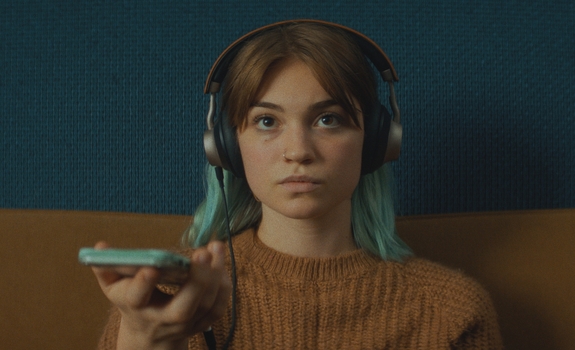
A shy young podcaster immerses herself in her local indie music scene as a way of finding herself and getting noticed in “Poser,” a mesmerizing immersion in music, a “scene” and the obsessions of a member of the “Hey everyone, notice ME” generation.
This terrific debut feature from a couple of Denison University film school alumni takes an unironic dive into their own scene, a music underworld in Columbus, Ohio, surviving on the fringes of Ohio State U.
In cinema shorthand, it’s “Slaves of New York” meets “Slacker,” with a bracing blast of Buy Local indie rock (and a little rap poetry) as its backdrop.
Newcomer Sylvie Mix has the title role, a pretty but somewhat mousey 20something who has the right hair — multi-tinted — the proper allotment of tattoos and the optimal number of nose-piercings (one). She even has the perfect hipster name — Lennon Gates. Is that an affectation, too?
Lennon is a background figure, restaurant dishwasher by day (her worried mother subsidizes her lifestyle), specter of the scene by night. She’s all about “secret shows” and finding music the same way generations of the “tuned-in” have done it — noticing photocopied ads stapled to telephone poles, “discovering” vinyl that’s “tucked away” in the stacks of her favorite indie record store, “hidden from shallow people,” who’ll never find what she’s stumbled across.
She has a guitar and fancies herself an artist — “I’m a songwriter, too.” But her real outlet is gathering audio — overheard inanities at a gallery opening, “ambient” sound, stuff like that. And since she’s got an iPhone and there are online how-to’s on everything, she starts her own podcast.
After a few rebuffed approaches, shy Lennon finds generous musicians who are desperate for any exposure at all who agree to chat, even perform for her. She then transfers the Pencil Weed, Wyd, Caamp and Papa Fritos digital phone audio to hissy audio cassettes, “because analog sounds better.”
“I go real lo-fi,” she tells her guests, the perfect thing to say to people who categorize their music as “junkyard bop,” “queer death pop” and the like.
But when she finally talks her idols, Damn the Witch Siren, into a sit-down, Lennon’s search for acceptance in this crowd takes a turn. Vivacious lead-singer/songwriter Bobbi Kitten (as herself) makes every chat coquettish and flirtatious. Best of all, she takes tiny-fish-in-a-tiny-pond Lennon seriously.
Co-directors Noah Dixon and Ori Segev build their film on careful observation of this sub-subculture, and pull drama out of Lennon’s growing confidence in her work and her place in the world, and her obvious obsession with this pixie indie rock dream girl.
Bobbi has magnetic stage presence and the charismatic confidence of the young, the talented and the beautiful off-stage. Lennon is forever on her heels around her, enthralled at her presence. She even takes to bringing an analog video camera to shows to further document this musical moment, Bobbi’s and by extension, hers.
Mix is instantly-credible as the introvert who figures out the way “out of my comfort zone” is to steal phrases like “out of my comfort zone” from conversations of the art gallery crowd, and mimic and emulate her girl-crush, Bobbi Kitten. She narrates her podcast in a “This American Life” monotone, but what she’d really love to become is a Bobbi Kitten coquette.
Even as things take a turns towards conventional movie melodrama, Dixon and Segev pull us in and keep us there with their eye and ear for detail. The music is all over the place, and intriguing. The milieu is absolutely fascinating.
They’ve made a movie that is the synthesis of Generation Disruption. In days of old, there’d be one “scene” at a time, so designated by major record labels and legacy media like Rolling Stone — Jersey to Bowery to Manchester to Minneapolis to Athens, Ga. to Seattle to Austin, Orlando or wherever, one hotbed of musical activity sucked up all the attention until everybody moved on.
That’s been disrupted by the Great Internet Democratization of Culture, especially as it pertains to music.
Here’s a subculture that most every college town has a version of, where “success” isn’t instant or national or even substantial. It’s a cult following building to a goal just around the bend, “an EP we’re releasing next year” or an LP (go vinyl or stay home) “due out in 2026.” It’s another week of podcast interviews waiting for that flash in the pan moment when the Internet’s attention points your way.
It’s all about getting attention. And with or without “the goods,” the talent, it’s all a pose.

Rating: unrated
Cast: Sylvie Mix, Bobbi Kitten, Abdul Seidu
Credits: Directed by Noah Dixon and Ori Segev, scripted by Noah Dixon. An Oscilloscope Labs release.
Running time: 1:28
This movie, set during the 2014 Russian invasion of Crimea and Donbass, seems to explain why Russian officers have limited shelf lives while on their “special operation, invading, murdering and raping their way across Ukraine.
July 1, from Well Go USA
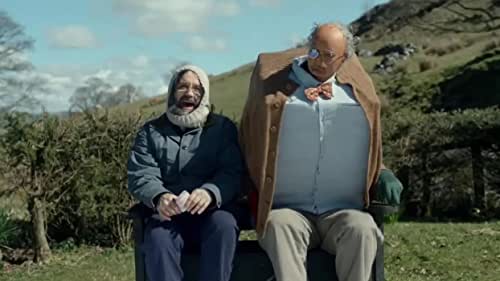
“Brian and Charles” is a “bloke builds a robot” comedy that’s so cute you want to pinch its inanimate cheeks until they’re red.
A mockumentary that pays homage to British tinkering, Welsh eccentrics and the lesson Dad always taught you about how to deal with bullies, it’s a little daft, a little sweet and exceptionally twee.
Co-stars David Earl and Chris Hayward, expanding their short film of the same title, co-wrote this adorable, folksy and feel-good comedy as a star vehicle for themselves. That’s true even though Hayward spends the movie hidden under a Larry David manikin head, his upper torso tucked in a washing machine fuselage, his speech sounding like he was the high-bidder on “Who gets Stephen Hawking’s Voice Box?”
A film crew is following solitary tinkerer Brian (Earl, of Ricky Gervais’ “After Life”) around his cluttered, isolated Plaxgreen Cottage as he shows off ditzy inventions like an Egg Belt, a pine cone bag and his “cuckoo clock,” a flying machine sans wings that he’s sure he can get airborne over his home village, giving everyone the time any time they deign to look up.
“I got so much goin’ on up ‘ere,” he brags to the filmmakers, who keep their cackling off the soundtrack to maintain the air of professionalism.
One day Brian gets the hare-brained notion that he can build a robot, and “72 hours” later, there it is. Except it won’t power up. It looks like David Byrne’s Huge Suit, fresh out of a washing machine box and being worn by Herman Munster. But if it won’t work, “nice laugh, isn’t it?”
It’s the bin for him.
That is, until a lightning storm rumbles through and Brian finds himself coming home to a “plastic pal that’s fun to be with,” a robot who is plainly sentient and learning as fast as he can read…books.
Brian has no wifi, apparently, otherwise the front-loader who agrees to the name “Charles” would plow through toddlerhood and adolescence a lot faster than he does in this light, brisk comedy.
Brian decides to keep his new friend to himself, which Charles bristles at. It’s not just that the village wouldn’t understand. There’s this bully (Jamie Michie) of a neighbor with his brutish brood to be avoided at all costs.
Naturally, he and they cannot be avoided forever. Brian faces his moment of truth. Perhaps Charles will as well.
Sight gags like Charles dressing up in a DIY hula skirt to “walk” to Honolulu, once he’s seen it on the telly, or donning shower curtains and a hat that make him look like an Italian monsignor, abound.
And situations include Charles matter-of-factly fixing Brian up with the equally awkward and lonely Hazel (Louise Brealey, terrific) the way unfiltered little kids do.
Earl makes a pleasant eccentric as the lead, a sort of on-the-spectrum/not-quite-social Nick Frost. Who doesn’t love Nick Frost?
It’s all of a piece, and just as charming and engrossing as a silly mockumentary about a robot maturing from boot-up to rebellious teen can be. No, Wales doesn’t come off as anything but grey and repressed and backward. But whatever “Brian and Charles” don’t do for Welsh tourism they more than make up for in warm, goofy entertainment value.
Rating: PG for language, mild violence, and smoking
Cast: David Earl, Chris Hayward, Louise Brealey and Jamie Michie
Credits: Directed by Jim Archer, scripted by David Earl and Chris Hayward. A Focus Features release.
Running time: 1:30
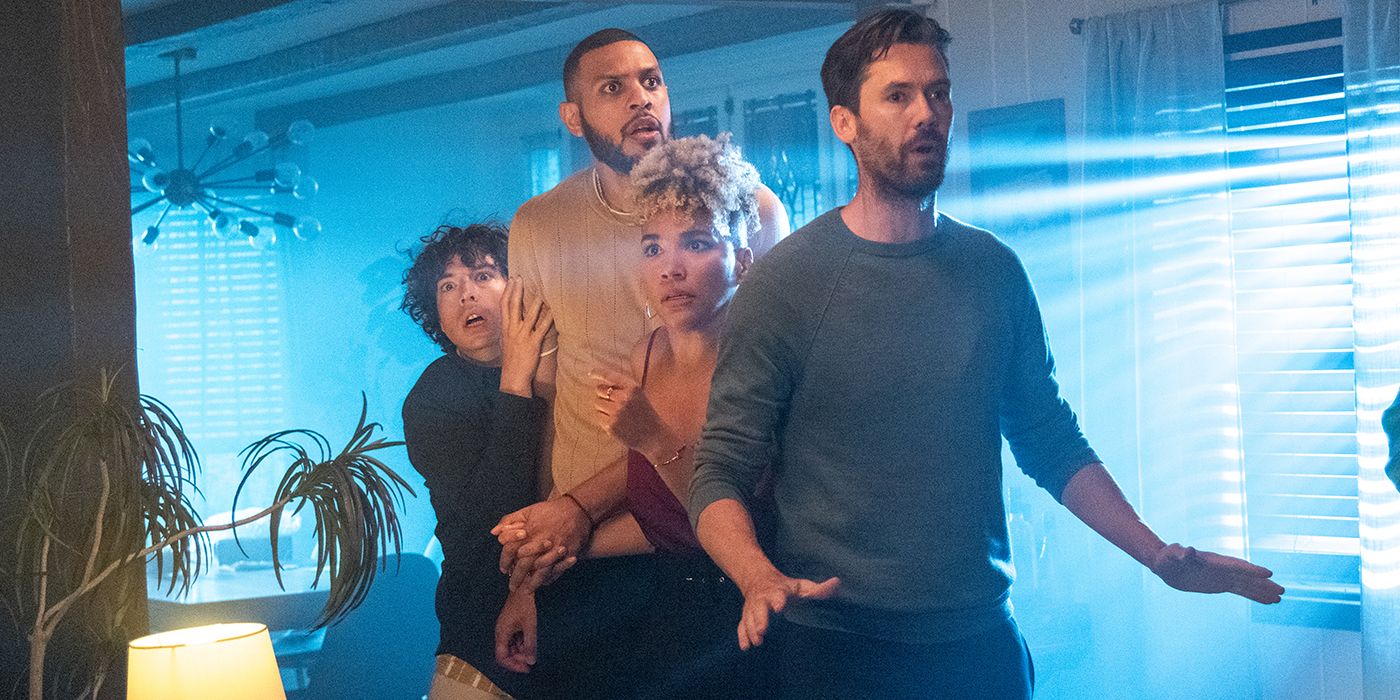

Well here’s a pleasant surprise.
“Gatlopp” might be a supernatural board game comedy plainly inspired by “Jumanji,” with the players trapped “in” this supernatural game until it finishes and they face up to their “issues.” But the script has flashes of wit and a dash of pathos, and the cast throw themselves into this no-budget indie’s mania with gusto. So it generates laughs and a moment or two of sad self-examination, and best of all, it plays.
Jim Mahoney (“The Orville”), who scripted the darkly-adorable holiday cartoon “Klaus” for Netflix, wrote and stars in this story of four friends-since-college pals kind of collectively hitting the wall, even though Paul (Mahoney) seems to be the real basket case of their quartet.
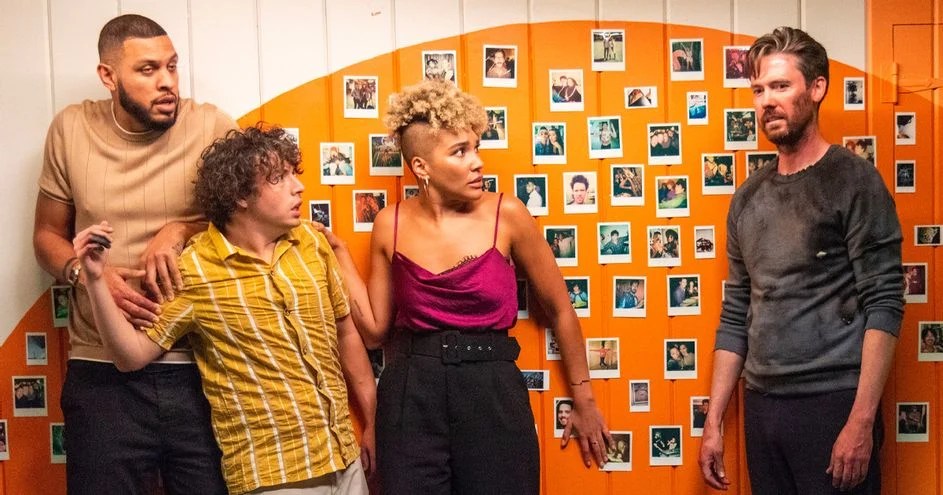
Samantha (Emmy Raver-Braveman of TV’s “Umbrella Academy”) is a brusque, embattled, over-scheduled TV producer. Troy (Sarunas J. Jackson, best-known for TV’s “Insecure”) is a tall, handsome actor trying to piece together a career that hasn’t really hit. And Cliff (Jon Bass of TV’s “Miracle Workers: Oregon Trail”) is still doing clubwork — DJing, “promotions” and the like, obviously stuck in some sort of college-era rut.
But Paul is the one whose house just sold, whose marriage just ended. He’s got to move into the Venice bungalow Cliff must have inherited. He’s not handling it well, so that’s where they all gather, at the scene of over a decade of parties and good times, just to console him.
A clever touch — Cliff has a “Mistakes Wall” covered with Polaroids of all his friends at their drunken worst at various parties. That includes a shot of Cliff, passed out, his mates having given him a “Braveheart” face-paint job.
“FREEDOM!”
Paul might not be in the mood for this, seeing as how his cheating ex (Shelley Hennig) is badgering him to sign the divorce papers and we’ve just seen him download his bile on the happy, eyes-on-the-future couple buying their old home. Good rant, by the way.
But Cliff’s counting on him and everybody else, so bottom’s up. And by the way, there was this board game with the Swedish word for “gauntlet,” “Gatlopp,” as its title, that was tucked into this credenza Cliff just acquired. Let’s play and drink and “test our knowledge of the world!”
The others are reluctant, but the concentric circles board is unfolded, the die is rolled and the cards flipped over as they skip right past the rules and dive in.
Whoopsie.
Innocuous questions turns seriously personal, the drinking turns into a “drinking game” as wrong answers get “punished.” And then the punishment turns ugly.
Shrieks of “This isn’t HAPPENING” are greeted with a card that says “This is happening.”
And as they’re debating whether this scenario is more “Black Mirror,” “Hitchcock” or “Outer Limits,” first blood is drawn.
Mahoney and director Alberto Belli (Netflix’s “Casa de Flores,” “House of Flowers”) tell the story with flashbacks and teleportations. Sometimes, the game takes them back to pivotal moments from their past. Other times they’re hurled onto some ’80s Jazzercise challenge TV show to DIY a routine…or die.
That’s the implication, that if they don’t finish “by sunrise” they’re goners. And that’s a warning. Watch what you say.
“Go to HELL, Paul!” could send somebody off in a poof, and getting him back is just as easy. Only he’s a bit singed, now.
The energy of the cast sells the longtime-nature of the relationships, and even smaller roles — Hennig as the shallow, manipulative ex-wife and Jon Ales as the shallower, 50something rich foreign douche she’s taken up with — stick and find a laugh or two.
“Gatlopp” can show its budget and feel a little malnourished, here and there. And the emotional moments are mostly superficial cliches, with a trite, tried and true familiarity.
But no cut-rate, scratch-the-emotional-surface “Jumanji” knock-off should play this cute, funny and sweet.

Rating: unrated, violence, sexual situations, profanity, alcohol abuse
Cast: Jim Mahoney, Emmy Raver-Lampman, Sarunas J. Jackson, Jon Bass, Shelley Hennig and Jon Ales.
Credits: Directed by Alberto Belli, scripted by Jim Mahoney. An XYZ release, on demand June 23.
Running time: 1:21


One of the definitions of a “classic” film is one that should never, ever be remade.
Forget what Coppola said about movies being like operas, with new generations of artists taking their shot at interpreting classic texts. He’d be the first to bitch if somebody pitched Paramount on a new “Godfather” trilogy.
In Hollywood, where “intellectual property” and “rights” are everything, they’ve flirted with “Casablanca” and “Gone With the Wind,” and that upstart Spielberg fellow had the temerity to take Coppola at his word and attempt his own “West Side Story.”
Horror classics are particularly prone to remake. But in the case of the best of them, Hollywood should recognize how resistant some stories are to this urge. Whatever your fondness for TV’s “Bates Motel,” does anyone remember the remake of “Psycho?” Or “The Wicker Man,” infamously brought back from the dead as a Nicolas Cage vehicle (2006) that lives on only in a sort of “awful movies” purgatory in most fans’ minds?
Watching the original anew reminds us that you should never touch any iconic story with a “big reveal” at the end. Once you know who Norman Bates’ mama is, you can’t unknow it.
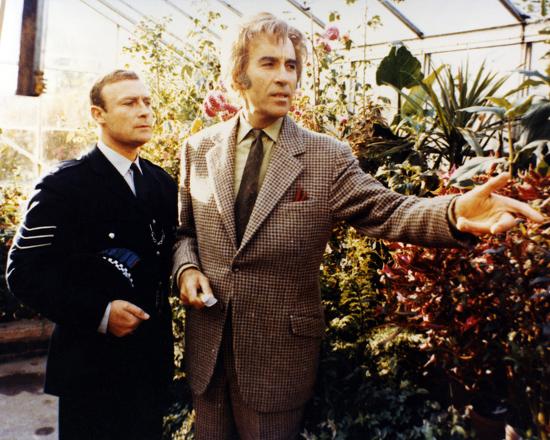
Whatever spoiler title screenwriter Anthony Shaffer (“Frenzy,” “Sleuth,” the 1970s “Death on the Nile”) chose to pin on David Pinner’s novel “Ritual,” until you actually see “The Wicker Man” in the film, you have no idea what its purpose is, even if the metaphor in it grows more obvious every time our protagonist, a brittle and fragile Scottish police sergeant (Edward Woodward) opens his pious, Christian mouth.
The first thing that strikes you in the film’s opening credits is a reminder of how the Brits long-revered the word and the writer who writes it. It is billed as “Anthony Shaffer’s ‘The Wicker Man.'” Sure, it’s based on Pinner’s novel. Robin Hardy directed it, one of only three films he managed, one of which was a disastrous revisiting of the material, “The Wicker Tree,” which was based on his own novel in a “Wicker” vein.
Shaffer, a barrister and advertising copy writer who turned to novels, plays and then screenplays, is the artist most responsible for this compact and still-creepy-after-all-these-years horror parable.
The penny-plain plot — Sgt. Howie (Woodward, later of “Breaker Morant,” and TV’s “The Equalizer”) flies to remote Summerisle, piloting his own float-plane, to chase down a missing person. Someone there wrote him that a girl had gone missing.
The villagers aren’t keen on helping, even declining to provide a dinghy to get him to shore. “The Lord” needs to be consulted, and they’re not talking about The Almighty. Not exactly.
The Sgt. finds himself trotting out “official police business” threats to one and all as he is stonewalled at almost every turn on this agricultural Scottish island. No, nobody there remembers “Rowan Morrison,” the object of the unarmed sergeant’s search. And they have “our ways,” which this stranger won’t understand. The suggestion that he “go home” is broached by more than one local.
But there is a pub and rooms to let. Surely they must get the occasional tourist, you think.
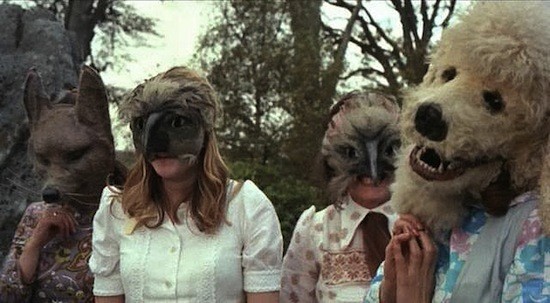
Sgt. Howie gets a glimpse of what goes on there, the history of the place, through photographs and moments where the locals appear to perform pagan rituals and pass them on to their children.
“They never learn anything of Christianity?” He is shocked.
And as he pokes around, finding evidence that the girl no one “can recall” or has ever heard of was enrolled in school, and “died” but has no death certificate, as the gorgeous barmaid Willow (future Bond girl and Peter Sellers’ ex Britt Eklund) comes on to him in the most frank ways, this puritanical policeman (the “extended cut” of the film shows he used to be a preacher) turns to sputtering rage.
Can I do anything for you, Sergeant?
” No, I doubt it, seeing you’re all raving mad!”
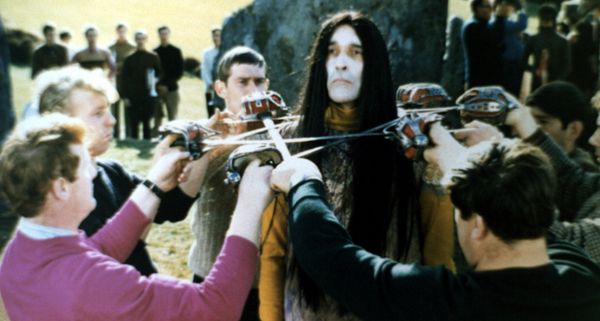
Then, at long last, he meets Lord Summerisle. And despite the fact that Christopher Lee — Britain’s greatest horror icon — plays him, Sgt. Howie doesn’t have the good sense to flee.
“Do sit down, Sergeant. Shocks are so much better absorbed with the knees bent.”
There’s a high-mindedness to the theological debates between the Sgt. and the Lord, a gloom that hangs over the story when we start to fear for this arrogant, brusque outsider who cannot see there’s an island full of simple folk who plainly do not want him there, not for May Day (the next day).
It’s a film that capitalizes on its location — Plockton, Dumfries & Galloway Scotland, and environs — and the now almost-lost sense that there are islands off Britain where time stands still and quaint, strange and disconnected-from-modern-reality things go on. Remember, this came out just a couple of years after “The Prisoner.”
I love the tidiness of “The Wicker Man,” the lack of wasted scenes or moments in Shaffer’s lean, drumtight script. Every character is on screen to make a certain point, and only on long enough to make that point. There’s a shrugging “Just go home” warning in their brush-offs and a shrugging “Well, you asked for it mate” acceptance of his fate when the Sgt. doesn’t heed those warnings.
Woodward’s sputtering self-righteousness, his “One Way” blind faith, is beautifully-contrasted with Lee’s whimsical, long-haired (he even sings), laid-back Lord Summerisle.
“And what of the TRUE God? Whose glory, churches and monasteries have been built on these islands for generations past? Now sir, what of him?”
“He’s dead,” Summerisle quips. “Can’t complain, had his chance and in modern parlance, blew it.”
That sort of flippant swipe at Christianity is particularly, peculiarly British and very much of its era. Monty Python ruled the TV and shots at Protestantism and Catholicism were all the rage, and part of a long tradition in the UK.
And that’s another reason “Wicker Man” would be nigh on impossible to Americanize. We don’t have that tradition here.
I’ve long thought that it’s the flawed adaptations of literary masterpieces, period pieces or biographical films of great lives that should be remade, not “classics.” Yes, a fresh take on “Casino Royale” was justified. “The Beguiled? Maybe. “Catch-22” was worth taking another shot at. No, George Clooney wasn’t the right guy to attempt it.
But looking at “The Wicker Man, now coming up on 50 years since its release, its tidy, compact and menacing perfection is easy to grasp. Attempts at longer cuts of the film only unraveled some of the mystery that is a vital component of its appeal. And unlike most “out there” scenarios, this is one case where “It needs a little more Nicolas Cage” simply does not apply.

Rating: R, violence, nudity, re-rated
Cast: Edward Woodward, Diane Cilento, Britt Ekland and Christopher Lee.
Credits: Directed by Robin Hardy, scripted by Anthony Shaffer, based on the David Pinner novel. A British Lion film, released by Warner Brothers — on This TV, Amazon, other streamers.
Running time: 1:28

 Movie Nation