Movie Review: Chat Show host can’t hang up on “Final Caller”

As an ex-radio guy, I’m a sucker for most anything set in that milieu — be it a TV show, play or movie.

When your thriller’s titled “Final Caller,” sure I’ll take a look. It could be the next “Talk Radio,” “Feedback (also titled “Hostage Radio)” or “The Night Listener.”

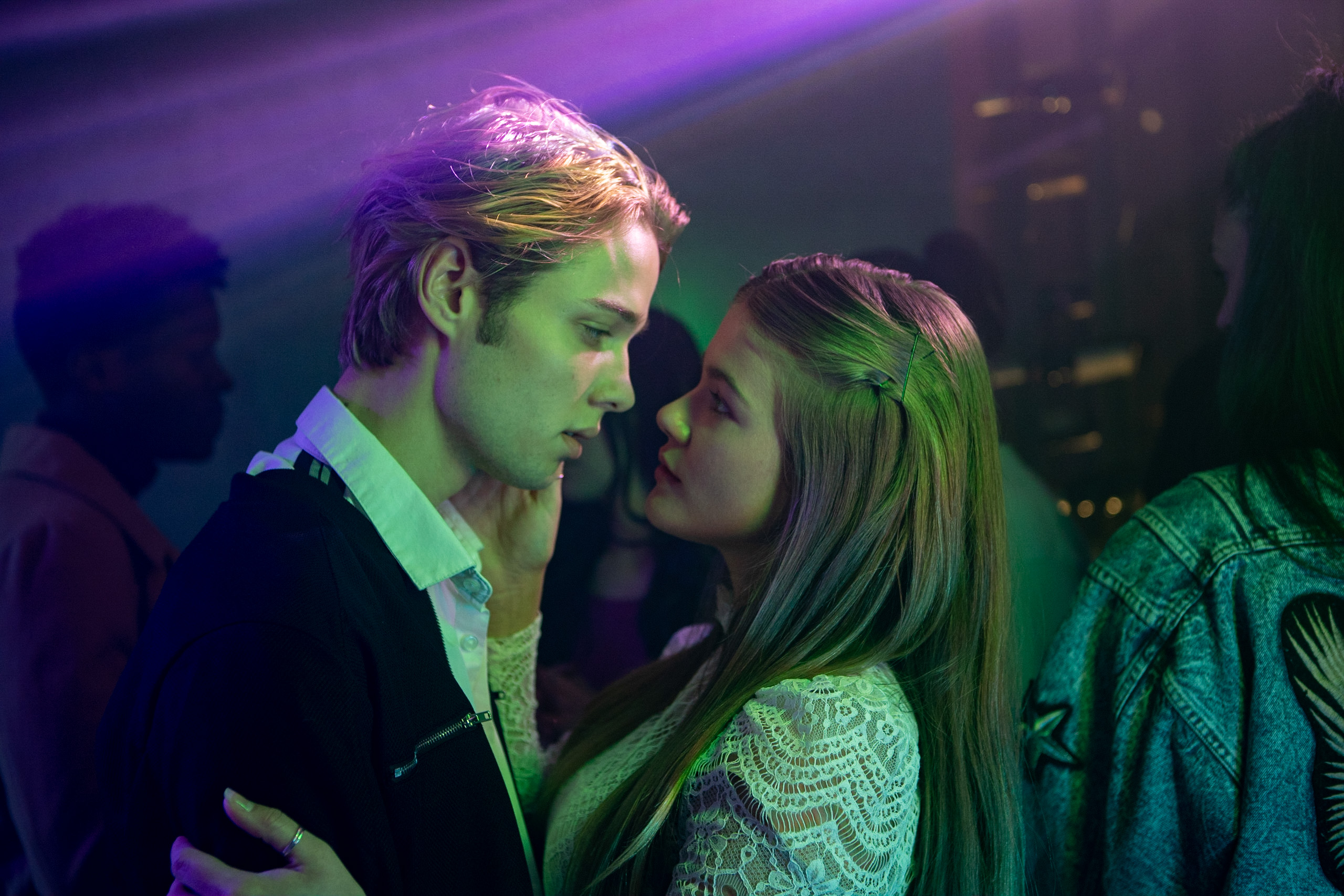
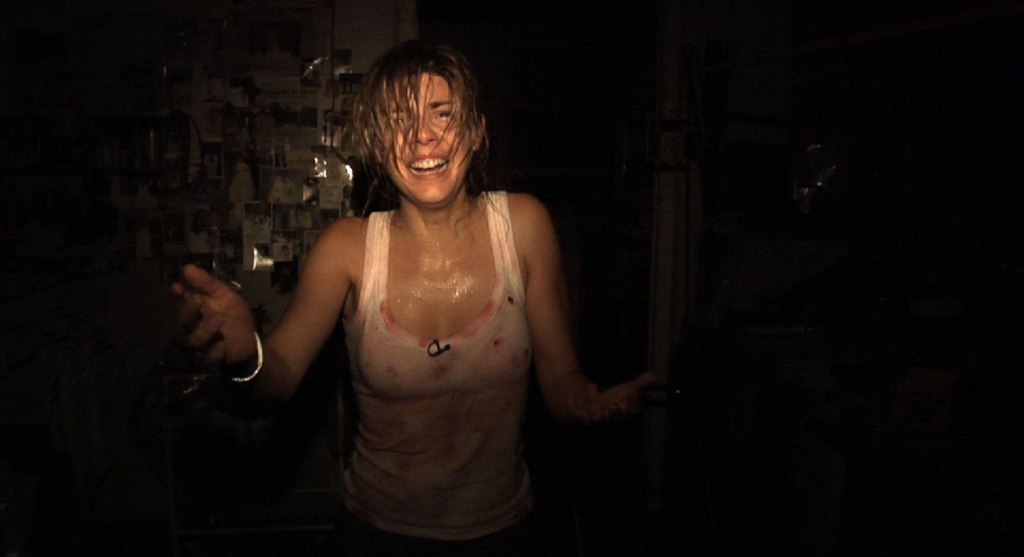
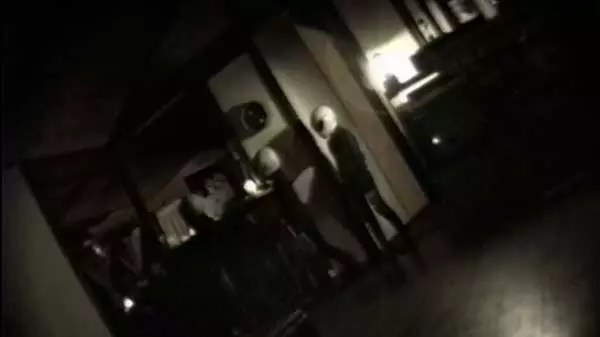
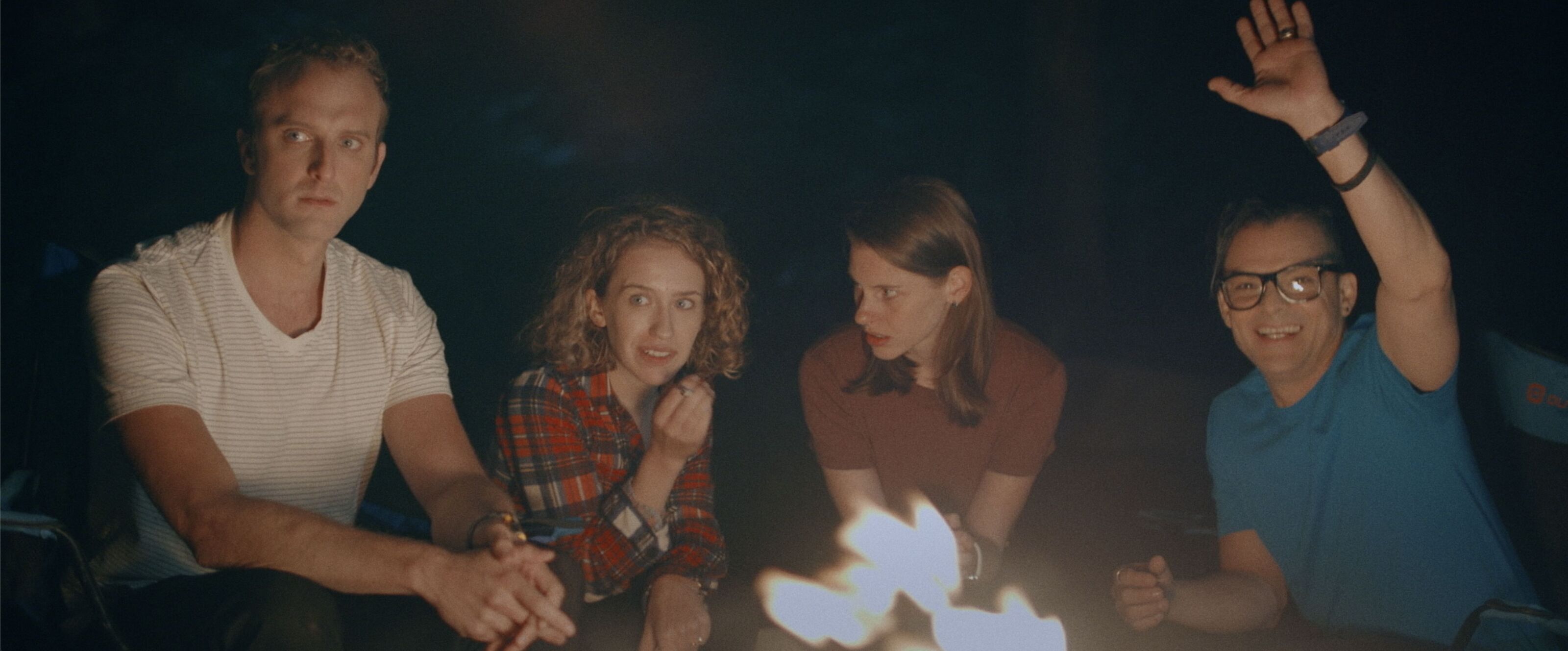
Look at the sampling of photos I posted above and guess the error of my ways.

“Final Caller” is a gory, shlocky, ineptly-designed, poorly-cast, badly-acted and sloppily-directed splatter film. There’s not one thing to recommend it.

As it is by the director of “Clownado,” I probably shouldn’t have gotten my hopes up.

Set in a radio studio that looks like cut-rate podcasting set-up — which is entirely plausible, thanks to today’s technology, but utterly robs the film of atmosphere — starring people who don’t have even the faintest whiff of “screen actor” about them, and shot in ugly close-ups with seemingly every “first take” (blown lines, clunky line readings) making it onto the screen, “Final Caller” is excruciating, first scene to last.

Douglas Epps plays the rage-aholic host of “On Through the Night,” a Western U.S. based late-night call-in show inexplicably “syndicated in 129 markets.”

Epps, as Roland Bennett, doesn’t have a radio voice. Shooting him in full-screen/mouth close-up doesn’t change that. It only makes the white-walled, non soundproofed studio look more like a rented office cubicle.

Roland is shrill, and Epps makes his on-air insults and off-air rages at his producer/call screener (Alexander Brotherton) and “the current but soon to be ex wife” Claire (Jane Plumberg) sound like tirades being read right off the page.

Nobody here has the gift of making dialogue sound fresh, invented in the moment. Even the callers, who have nothing to concentrate on but the vocal performance and the lines they don’t even have to memorize, read their lines by metallic rote.

And then there’s that one particular caller, “let’s just call me ‘The Outsider (Jack McCord),’ a creepy, mansplaining 60ish incel who starts lecturing on Druid rituals and his connection to them as we hear a woman’s stifled screams in the background.

It takes a couple of tries for him to make clear that yes, he’s kidnapping, torturing and murdering women. It takes a couple of calls for the producer, the continuity director (Rachel Lagen) and Roland’s in-studio “guest,” his “soon to be ex,” to convince raging Roland to take The Outsider seriously, and figure out that keeping him on the line is the only way they’ll have a chance to get the cops to track him down.

There’s no sin in a no-budget movie. But it is a sin if you’re not competent enough to hide that fact. This is an ugly looking film, and I haven’t even gotten to the gory power-tool torture and cannibalism yet.

Badly-designed and incompetently-lit, it’s painful to look at, much less sit through.

Most of the cast makes one wonder if writer-director Todd Sheets cruised biker bars looking for the greasy, the 50something, the tattooed and the nose-ringed with an affinity for carny-tart makeup.

Not one of them has the screen actor’s gift. The camera hates them all. Epps can’t pull off the added pressure of playing a “performing” radio personality. I wouldn’t listen to this screeching voice-bot if he was a caller to a talk show, much less the host.

The lines Sheets gives him to shout have a “Google searched” inauthenticity, and were probably as bad on the page as they are coming out of Epps’ mouth.

“Sounds like you logged a few too many hours of World of Warcraft online” in “your mama’s basement,” he cliche-fumes at The Outsider, who has eight victims to sacrifice according to his Druid calling.

I dare say anybody not in the cast or an investor backing “Final Caller” could watch five minutes of this and see exactly why it’s self-distributed. No self-respecting film studio would touch anything this amateurish and ugly with a ten foot power tool.

Rating: unrated, gruesome, explicit splatter movie violence

Cast: Douglas Epps, Jane Plumberg, Jack McCord, Alexander Brotherton and Rachel Lagen

Credits: Scripted and directed by Todd Sheets. An Extreme Entertainment release.

Running time: 1:31

Posted in Reviews, previews, profiles and movie news | Comments Off on Movie Review: Chat Show host can’t hang up on “Final Caller”

Movie Review: Joey King slices, stabs and strangles as “The Princess” who WON’T be a bride.

“Kissing Booth” queen Joey King turns avenging angel in her latest, a movie about the Medieval mayhem unleashed when “The Princess” is hellbent on NOT becoming “The Princess Bride.”

Vietnamese action filmmaker Le-Van Kiet and his “Furie” fight choreographer Kefi Abrikh turn the former child star into a short, fiery harpy who slashes, stabs and pummels her way through the family castle to free her parents and little sister from the prince and his mercenaries who have taken them prisoner.

Even if you’ve figured out that the diminutive King will take on anything, from TV’s “Fargo” to “The Act,” from big screen teen sex comedies like “Summer ’03” to the historical tragedy “Radium Girls” and even the horror of “Slender Man,” it’s a shock to see her put through her swordfight paces here.

It’s also a hoot.

Kiet matches her up against mountainous, armor-plated fighting men in duals, three, four or five on one fights, and the character only known as The Princess tumbles, spins, dodges and slices them down to size, just the way you’d expect someone with a height disadvantage to manage it. She starts with the foot, the thigh and the Achilles heel. She cuts them down to her level and they drop like flies.

The Princess wakes up, in her wedding gown, visions of being drugged and shackled her most recent memories. There’s this ignoble noble (Dominic Cooper, perfectly vile) who strong-armed her “pacifist, placator” father (Ed Stoppard, son of playwright Tom) and reluctant mother (Alex Reid) into a kingdom-saving arranged marriage.

When The Princess bristles at this, Julius goes all Brutus on her and her family, unleashing a company of armed thugs on their palace, shackling her and consigning her parents and little sister (Katelyn Rose Downey) to the dungeon. His sidekick/side-piece (Olga Kurylenko), all leather and studded gloves and lethal bullwhip, is there to back him up every evil step of the way.

She wakes up fearing “This is all my fault,” for turning down a perfectly power-mad offer from a charmer whose love language is “I always get what I want.”

There’s nothing for it but to dislocate her wrists to lose the shackles, head-butt her captors and grab swords, ropes, crossbows and whatever else is handy and kill her way downstairs from the tower to that dungeon.

That’s all there is to the plot — fight, bind this or that wound, catch her breath, hide for a moment, and fight again, with flashbacks establishing that her parents, who really wanted and needed a son as successor, let her Vietnamese nanny-companion (the terrific Veronia Ngo of “Furie”) train her in the martial arts she will unleash to turn the Middle Ages into the Dark Ages in a single, savage day.

There’s no sense in working out the weight differential and simple physics of somebody Joey K’s size taking down blokes two or three times her throw-weight. Kiet makes sure there’s no time for that sort of reasoning.

And King and her stunt team do a damned fine job of tumbling, stumbling, strangling and impaling this Fury’s way from one fight to the next. It’s not nearly as frenetic and furious as “Furie,” but it’ll do.

The combat is personal, visceral and vicious — none of this “just knock them out and move on.” On no. One last through slash, brutal bash of the skull or stab in the sternum is in order, to make sure she doesn’t have to repeat herself. The body count is staggering, and can’t help but become a comical running gag here.

The screenplay’s simple point A to point B structure means that the writers, director, fight choreographer and star spent their time working out “gags,” ways to get The Princess out of this fix — yank off those pearls to trip up that mob coming her way — and into the next one.

The dialogue, with King affecting a period posh Brit accent, is strictly of the “Someone needs to teach you your PLACE,” “I’ve heard THAT before” variety.

It’s all eye-rolling, laugh-out-loud action nonsense, and often damned entertaining, another highlight of King’s ever-lengthening highlight reel of a career.

And Kiet turns his American movie making debut into a lean, silly and action-packed showcase. Not to oversell this, but he makes a sort of John Woo statement, with “The Princess” as his version of “Hard Target,” proof that he can take any Hollywood star, any simplistic script, unleash all hell around her and have her come out looking like a badass.

The world’s leading ladies should be licking their lips over the possibilities “The Princess” unleashes.

Rating: R for strong/bloody violence and some profanity

Cast: Joey King, Dominic Cooper, Olga Kurylenko, Veronica Ngo, Alex Reid, Ed Stoppard.

Credits: Directed by Le-Van Kiet scripted by Ben Lustig and Jake Thornton. A 20th Century release on Hulu.

Running time: 1:36

Posted in Reviews, previews, profiles and movie news | Comments Off on Movie Review: Joey King slices, stabs and strangles as “The Princess” who WON’T be a bride.

Documentary Review — “Hallelujah: Leonard Cohen, a Journey, a Song”

At the age of 74, Canadian poet and troubadour Leonard Cohen started a world tour — his band in matching fedora, with backup singers, many of whom had been with him for years and with a seemingly endless and boundless itinerary.

And “years” were how long this venture went on, five years of performing his ornate, soulful, introspective ballads and laments on a valedictory tour, a victory lap, revered everywhere he played, every show building to that one transcendent moment, that one song with every night’s crowd singing along to what a fellow singer calls “a modern prayer,” “a church moment” at the end of every single concert.

Cohen gave this tune everything he had, night after night — leaning into it one night, laying back on it the next — honoring a singular composition that he recognized had given him everything, and delivered that “everything” late in life, when the “elder” that he’d longed to become could appreciate it.

“Hallelujah: Leonard Cohen, a Journey, a Song” isn’t really a new Leonard Cohen bio-documentary, although it has plenty of footage of his early career, prefiguring his transition from privileged Montreal poet to self-taught singer-songwriter. Folk songbird Judy Collins was among his mentors in making that leap. And we hear other bits of his personal history and track his entire career through this Daniel Geller and Dayna Goldfine film.

But what they focus on is the thing that made him, not his Tom-Waits-without-the-gravel baritone or his Anthony Bourdain-the-prototype dash and good looks. It’s that one song.

“Hallelujah” took him seven years to write and re-write, tinkering and expanding and contracting the scale of this magnum opus as he saw fit over the decades after its 1984 introduction on an album his U.S. record label refused to release here. His friend and favorite journalist, Larry “Ratso” Sloman of “Rolling Stone” and other publications, recalls Cohen turning out “150-180” verses of “Hallelujah,” notebook after notebook filled with variations of Cohen’s blending of “the holy with the horny,” an epic song deconstructing how that song was built.

“It goes like this, the fourth, the fifth
The minor fall, the major lift
The baffled king composing ‘Hallelujah’…”

The Jewish Cohen was singing about Old Testament King David struggling to compose a song built around that ancient word of praise in that opening verse. But it’s easy to see himself — seven years struggling, never gaining commercial success and notoriety until his 60s and 70s — as an equally baffled “king.”

The bafflement extends to the song’s journey to glory. An unreleased album, a 1984 music video (glimpsed here) that did nothing for it, a gorgeous melody with glorious lyrics destined for the dustbin.

But Bob Dylan started playing it in concert. Velvet Underground alumnus John Cale took hold of it and performed it in a spare, solo piano and voice version. Jeff Buckley found it and gave it a bracing blast of sexualized youth. “Shrek” came along and Dreamworks got Rufus Wainright to record a streamlined version of it. “American Idol” and other singing competition shows had singers take it on. Eric Church covered it. Kate McKinnon performed it as a funeral dirge on “Saturday Night Live” the week the disgraced ex-president took the White House.

The song itself may be over-performed and indeed over-exposed, something Cohen fretted about late in life. But how can any singer resist a melody that prompts an almost Pavlovian response in tens of millions of listeners, the tears starting long before the chorus?

“It’s become it’s own thing,” Brandi Carlile marvels. “Universal.”

Geller and Goldfine’s film breezes through that history and attaches the tune — Cohen’s friend John Lissauer wrote the moving, funereal arrangement — to Cohen’s life as a “spiritual seeker,” a Zen student who spoke Hebrew and absorbed “the charged speech” and song “I heard in the synagogue growing up.”

We hear from Cohen’s rabbi and get a handle on how the song fits within Cohen’s faith, and where it sits in his life-long discography, “a mature man chronicling his life” via his musical “conversations with eternity,” struggling with love and spiritual meaning to the very end.

And through it all, we see the many guises of Cohen on camera, Canadian TV in the ’60s, struggling to find his place as a folk bard in the pop singer-songwriting of the ’70s, clinging to a career as he aged into the ’80s and ’90s, warm and playful interviews, recollections of mistakes (working with Phil Spector and his “Wall of Sound”), hints at heartbreak.

“Hallelujah” may not get as deep into Cohen’s life story as the earlier Cohen doc “I’m Your Man.” It doesn’t dig deep into the song itself, with the filmmakers content to show scores upon scores of performances of the tune, never having anyone parse the lyrics and break down its construction.

But narrowing the focus to this song elevates the film and its subject, and makes a fascinating window into one creative life, lived in curiosity, looking for answers and groping — for seven years — just to come up with a song that explains it all.

Rating: unrated

Cast: Leonard Cohen, Judy Collins, John Cale, Sharon Robinson, John Lissauer, Brandi Carlile, Adrienne Clarkson, Jeff Buckley, Rufus Wainright, Vicky Jenson, Glen Hansard, Eric Church, Clive Davis and Larry “Ratso” Sloman.

Credits: Scripted and directed by Daniel Geller and Dayna Goldfine. A Sony Pictures Classics

Running time: 1:55

Posted in Reviews, previews, profiles and movie news | Comments Off on Documentary Review — “Hallelujah: Leonard Cohen, a Journey, a Song”

Movie Review: The stakes are global and personal in a modern day “Attack on Finland”

So many things go awry or are just never quite right with the film adaptation of “Attack on Finland” that one scarcely knows where to begin. But begin one must, so here goes.

“Good villains make good thrillers,” Hitchcock said. The filmmakers cast a colorful one, Estonian actor Juhan Ulfsak, for this story of murderous high-stakes Russian interference in Finland’s democracy. But they left him offscreen for almost the entire film.

The surrogate bad gal-and-guy (Nika Savolainen, Sverrir Gudnason) who fulfill those duties for most of the movie are neither colorful nor menacing enough to pull it off.

The shootouts, fights and other action beats play like walk-through rehearsals before filming the real thing. Slow. Unconvincing.

The story — which includes kidnapping Finnish and international dignitaries on Finland’s Independence Day, struggles to incorporate sequences and plot points in Estonia, Finland, Sweden and Belarus — is literally all over the place.

Different security forces are named, a “dark side of the EU” team breaks into people’s houses and accidentally shoots a child. Perhaps they were distracted. There’s this bloodless low heat love affair between a Finn (Jasper Pääkkönen) and a married-with-kids Swede (Nanna Blondell).

The NATO thing makes this film, based on an Ilkka Remes novel, either instantly topical or instantly-dated. The kidnappers demanding payment in Bitcoin is kind of hilarious as I type this.

Long convoluted plot made simple — a hustling entrepreneur Vasa (Gudnason) is coerced into helping this mysterious team led by a lawyer (Savolainen) stage a terror attack whose aim is to free Vasa’s war-criminal, “My son is DEAD” father (Miodrag Stojanovic).

So, Daddy issues lead to a raid on a celebratory ball, where Finland’s president and some NATO (I think) higher-up are nabbed.

“Free Dad and gimme $100 million in Bitcoin!”

That assault is dully-staged and filmed by director Aku Louhimies, as is every counter-assault and border crossing that follows. This or that moment plays well enough. But this ungainly beast is hard to follow. It’s even harder to invest in any character in it.

The dialogue — in snatches of English, and Finnish and Russian with English subtitles — is unquotably dull.

Sure, all is forgiven and “Welcome to NATO,” Finland and Sweden. But honestly, check out how the Swedes and Norwegians are making thrillers these days and learn from “Attack on Finland’s” many stumbles and miscalculations.

Rating: unrated, violence

Cast: Jasper Pääkkönen, Nanna Blondell, Sverrir Gudnason, Nika Savolainen, Juhan Ulfsak and Miodrag Stojanovic

Credits: Directed by Aku Louhimies, scripted by Jari Olavi Rantala, based on a novel by Ilkka Remes. A Samuel Goldwyn release.

Running time: 1:59

Posted in Reviews, previews, profiles and movie news | Comments Off on Movie Review: The stakes are global and personal in a modern day “Attack on Finland”

Movie Review: Gibson’s the bomb squad cop, Kevin Dillon’s the hacker in the “Hot Seat”

The mad-bomber thriller “Hot Seat” gives you a moment — here and there — where you’re allowed at least the hope that this will amount to something — an action beat that works, a plot twist you don’t expect, a clever clue.

It’s got Mel Gibson and Kevin Dillon in it, so maybe it’ll get off the C-list and manage to achieve B-movie status.

But those moments are fleeting in a movie that is instantly awful even if it never quite crosses over into hatefully bad.

It’s about a bomber/blackmailer/robber on the loose at Christmas season somewhere in the urban sprawl of New Mexico. And here’s what we see in the opening scene of the latest by James Cullen Bressack, a filmmaker who finally takes a break from his helping Bruce Willis (“Fortress,” “Surviving the Game”) destroy his legacy.

A character blows on his hands in the winter cold, when it’s plainly not the least bit cold, as others — not Canadians, we assume — walk around in shirt sleeves. We see an old fashioned LED timer counting down, and then see the bomb actually triggered by a key fob instead.

Well, which was it? I’m so confused.

“Hot Seat” is “Speed” in an office chai, “Speed” without any sense of “speed” or urgency whatsoever.

An “I’m not in the game anymore” hacker (Dillon), his marriage on the rocks and stuck in a computer repair call center, learns his chair is wired to explode if he gets up before carrying out an online hack/heist for a mysterious, voice-synthesized villain in a hoodie.

Stuff blows up, which shows everybody this guy means business. Gibson and Eddie Steeples play the geezer and the newbie from the bomb squad who have to figure out what’s going on, as the police chief (Shannen Doherty, worse than ever) is ready to let SWAT shoot this ogre in an office chair and be done with it.

Younger bomb squad guy bickers with old bomb squad guy.

“Listen, Ol’ Yeller…” “Listen, ‘Action Jackson.'”

Old guy taunts other cops about where to stand, the advantages of “the debris zone,” because they’re standing in the “vapor zone.”

Young guy snarks to old guy that “Chief wanted me to remind yo to stop leaving your Cialis out.”

And Dillon, a lifetime of playing third banana mugs behind him, is supposed to be “Mr. Ivy League” whom the the mostly-unseen villain keeps yelling “TICK TOCK TICK TOCK” into his ear as he scrambles to hack his way into wherever the money or what-not is kept.

The situation has suspense built into it, but there is none. The premise is predicated on urgency. We never feel it.

And the viewer never gets further into the thought that “This might not be all…” than that, before the next eye-rolling, dumb or absurdly illogical thing pops on screen to break the “might be almost competent” spell.

Rating: R for violence and profanity

Cast: Kevin Dillon, Shannen Doherty, Lydia Hull, Eddie Steeples, Kate Katzman and Mel Gibson

Credits: Directed by James Cullen Bressack, scripted by Leon Langford and Collin Watts. . A Lionsgate release.

Running time: 1:39

Posted in Reviews, previews, profiles and movie news | Comments Off on Movie Review: Gibson’s the bomb squad cop, Kevin Dillon’s the hacker in the “Hot Seat”

Cameron Diaz comes out of retirement for Jamie Foxx and Netflix Money

Cameron Diaz made her last film — “Annie” — in 2014, and officially said she was retired && married, new child, etc. — in 2018.

Now Jamie Foxx and Netflix have lured her back in front of the cameras. She hadn’t been in anything good in a while, but she was a gifted comedienne and decent in dramatic parts. The work dries up for screen beauties over 40.

The name of the next feature, co starring Oscar winner Foxx? “Back in Action.”

She turns 50 in Sept.

It used to be network TV and cable that gave actresses a second wind in their 40s-60s. Now it’s Netflix.

Posted in Reviews, previews, profiles and movie news | Comments Off on Cameron Diaz comes out of retirement for Jamie Foxx and Netflix Money

Movie Preview: Rockwell and Ronan star in a Brit period piece murder mystery/farce — “See How They Run”

This isn’t the 1940s British play of the same title, although am characters name, Inspector Stoddard, hints at perhaps its inspiration.

It stars Sam Rockwell, Saoirse Ronan and Adrien Brody about is about time cast of an about to film murder mystery who start dying.

Hilariously set in the 1950s, a touch of “Knives Out” magic is what they’re hoping for.

Sept. 30.

Posted in Reviews, previews, profiles and movie news | Comments Off on Movie Preview: Rockwell and Ronan star in a Brit period piece murder mystery/farce — “See How They Run”

Movie Preview: Julia Roberts and Clooney, as exes with a “Ticket to Paradise”

Flying to Bali for their daughter’s wedding. To break it up.

Cute. Kind of madcap. Ish. Trying WAY too hard.

Apt use of Three Dog Night singing a Randy Newman tune.

Look for this one Oct. 21, because you know I will.

Posted in Reviews, previews, profiles and movie news | Comments Off on Movie Preview: Julia Roberts and Clooney, as exes with a “Ticket to Paradise”

Movie Review: Fiennes and Chastain are terrible tourists in “The Forgiven”

Victimhood is a scab that should never be picked, because the last thing the martyred want is for a wound to heal.

And there it is. You bathe in the proverbs and aphorisms of John Michael McDonagh long enough, he’s got you doing it.

“The Forgiven” is a decadents-in-the-desert parable from the writer-director of “The Guard” and “Calvary,” the brother of the more famous Irish playwright and writer-director of the Oscar-winning “Three Billboards Outside of Ebbing Missouri.”

Alternately stark and lurid, poetic and very well acted, it’s a return to form for McDonagh, who rather lost the plot with “War on Everyone.” He’s adapted a Lawrence Osborne novel, a story of infidels gathering to party in the desert — Westerners doing what they’ve long done in Morocco — until an accident sobers at least one of them up.

Londoners Ralph Fiennes and Jessica Chastain spend a bit too much time in the Tangier bar, and bars along the way, to get to a party in the middle of nowhere on the edge of the Sahara. That’s how it happens — a boy, standing in the dirt road in the pitch black night, a driver arguing over directions with his wife, an accident.

But we’ve seen the teenager having his own argument, egged on into something other than selling fossils to European tourists. We’ve seen the pistol, even if David and Jo Henninger — even their surname is alcoholic — never do.

They show up at the Baccanale tossed by the rich gays Richard (Matt Smith) and Dally (Caleb Landry Jones) with a crumpled bumper and a dead boy in the back, which barely interrupts the festivities.

Rent-boy Dally might gripe “What a bore they are, what a mess they’ve made,” but at least Richard has the good sense and character to call the police and face whatever limited music there might be for killing “a nobody” standing in the road in the middle of the night.

David’s an instant reminder that the Brits invented most of the world’s racial slurs, and probably xenophobia, too. What might the locals have in store for him? “Lynch me? Public castration?”

His American wife has had about enough of this boozy, posh poseur.

“What a nice little fascist you’ve become.”

But maybe David’s right to be paranoid. The foreigner-coddling cop wears his sunglasses at night for effect and keeps his reassurances short. Still, there’s also the matter of the boy’s father.

The stars of this movie may be two Oscar winners, with a Doctor Who and former X-Man (Jones) to boot. But the Arabic cast is what really classes it up.

Mourad Zaoui plays the Islamic aphorism-quoting Hamid, an unflappable but judgmental head servant, who shames David –“It’s the honorable thing.” — into meeting with and then accompanying the boy’s grieving Berber father (Moroccan actor Ismael Kanater) back to his distant home village to be buried. The father is a bitter, self-righteous man who seems capable of just about anything, which gives David pause, but only a pause.

And the wonderful French-Arabic character actor Saïd Taghmaoui (“Wonder Woman,” “Hate”) plays the sad old man’s translator, who might be here to comfort David, or lead him to his fate.

“The desert is what we fish,” he says of the vocation of the boy who died. “The fossils are what we catch…God is making a joke.”

The story has familiar McDonagh themes of redemption of the irredeemable and is overflowing with the tasty, testy dialogue of the witty and the damned, his family’s true gift to the cinema.

“The tongue has no bones, sir,” Hamid says, settling a boozy dinner-table argument. “But it crushes, all the same.”

“Piece by piece, the camel enters the couscous.”

You can see why McDonagh was drawn to this material, and why actors fight for the chance to work in either of the two gift-of-the-screen-dialogue-gab siblings’ movies. You’d swear Moroccans settled Ireland, or the other way round.

The film flirts with a few tropes that drag it down — sexual misadventures, a glib, uncaring and arrogant man finally feeling remorse, the idea of martyrdom as something a gentleman might find “honorable,” if told that’s “customary in these parts.”

There’s also something inherently silly in all these coddled pale-faces exposing themselves to the Saharan sun, SPF450 Brits and Americans (Chastain, Jones and Christopher Abbott) oblivious to the irony.

And making Chastain’s character’s husband a dermatologist is just, well, rich.

But you can tell McDonagh’s back on form just by the way he throws all these pearls — either cribbed from the novel, Mark Twain, or his own inventions — before us, as if there’s a never-ending supply of them. Because maybe, in his case, there is.

“A woman without discretion is like a gold ring in a pig snout,” is funnyand biting in English or in Arabic with subtitles.

“You should have a Twitter account.”

Rating: R for language throughout, drug use, some sexual content and brief violence.

Cast: Ralph Fiennes, Jessica Chastain, Ismael Kanater, Saïd Taghmaoui, Mourad Zaoui, Marie-Josée Croze, Christopher Abbott, Caleb Landry Jones and Matt Smith.

Credits: Scripted and directed by John Michael McDonagh, based on a novel by Lawrence Osborne. A Vertical/Roadside Attractions release.

Running time: 1:57

Posted in Reviews, previews, profiles and movie news | Comments Off on Movie Review: Fiennes and Chastain are terrible tourists in “The Forgiven”

Movie Review: Binoche’s romantic obsession grabs at love from “Both Sides of the Blade”

The French invented the “menage a trois,” so leave it to them to conjure up a particularly messy one that looks at love from “Both Sides of the Blade.”

Titled “Avec amour et acharnement” in French, and first-titled “Fire” in English by director Claire Denis, this Juliette Binoche drama has heat and hurt and a whiff of intrigue as Denis (“High Life,” “Beau Travail”) peels away layers of background that reveals more and more of the true nature of her characters.

For her third film with Denis (“Let the Sunshine In” was the first), Binoche gives us Sara, a smitten but wholly adult 50something who is all over her lover of several years, Jean (Vincent Lindon of “Titane”) — in a solitary romantic cove on the Riviera, in their apartment — filling his ear with “Mon amor, mon amor, mon amor” as they make love.

But a glimpse of a former lover, a younger man, François (Grégoire Colin), rattles her and sends Sara into reveries of the past.

“François, François, François,” she purrs, hoping no one hears. Being a radio talk show hostess, she hides nothing from Jean, who is 60ish and struggling to keep a handle on his acting-out teenaged son (Issa Perica), who lives with Jean’s constantly-calling elderly mother (Bulle Ogier), who is raising him.

It turns out Jean and Sara’s meeting is something she remembers more fondly than him, a meeting that happened when he was still married and she was still with “François, François, François,” who left her alone at the end of the night while Jean showed concern for her over her then-lover’s callousness.

“Why am I with the one who leaves?” she asked herself, recollecting that night to Jean.

So much is revealed in that simple exchange — Sara’s willingness and ability to get the she wants (casting Binoche makes that a no-brainer), her tactless confidence in mentioning that she’s seen François, and Jean’s solicitous devotion, a devotion that can be re-directed.

When François reaches out to Jean with a business proposition, we figure the younger man out with his first line (in French, with English subtitles).

“So, you kept her?”

It takes Jean and us a moment to figure out he’s talking about Jean’s 35 year-old Mercedes. And then we and he wonder if that confusion is intentional, what François really wants and what he and Sara might be up to, or get up to if given the chance.

“Both Sides of the Blade” is a film of chats that sound like interrogations, big revelations that drop in normal, everyday transactions and mixed emotions all around. Jean’s acceptance of a business offer from François might seem easy and natural, but Lindon’s tight-lipped playing of it suggests just how fraught all of this whole situation is to him.

Is Sara adult enough to resist swooning? How dark is Jean’s dark side, and when will he show it? And just what is François on about with this “offer?”

Denis, who co-wrote the script with Christine Angot, gets at the fragility of relationships and the narcissism of love in a film where the stakes might be low, but promise to go higher at any moment.

Every character has her or his “sketchy” side, impure motives or selfish desires. Even though we’ve glimpsed an idyllic romance in the opening scenes, the three corners of this menage seem co-dependent. Perhaps that loving couple needed whatever drama in the past launched and fed that relationship, and everything they do now is overcompensating for that.

But Denis won’t let us wrestle with that directly as we listen in on Sara’s radio show or lose ourselves in whatever drama’s going on with Jean’s biracial son Marcus. Thus, the testy and tender resolution simply sneaks up on it.

Life and love on can be harrowing and messy. And maybe you have to be your most selfish to get what you want from it, grabbing that knife from “Both Sides of the Blade.”

Rating: unrated, sex, nudity, profanity

Cast: Juliette Binoche, Vincent Lindon, Grégoire Colin, Bulle Ogier and Issa Perica

Credits: Directed by Claire Denis, scripted by Christine Angot and Claire Denis. An IFC release.

Running time: 1:56

Posted in Reviews, previews, profiles and movie news | Comments Off on Movie Review: Binoche’s romantic obsession grabs at love from “Both Sides of the Blade”