Netflixable? Aimee Garcia and Freddie Prinze Jr. consider “Christmas with You”

Any rom-com with “Christmas” in the title is bound by law to have a stale whiff of “Hallmark” about it, and Netflix hasn’t been shy about trying to grab that audience.

So any cute or touching moments in “Christmas With You” will have to come from stars Aimee Garcia (TV’s “Lucifer”) and Freddie Prinze Jr., whose rom-com heyday was the ’90s. They manage a couple of “awwws,” but making a mark in any movie designed to have most of the rough edges of life rubbed off is always going to be an uphill battle.

Garcia plays a pop star famous enough go by one name — Angelina. But like Britney, Mariah, J. Lo and even Beyonce, there’s a wall staring her in the face at 40 and her record label’s chief (Lawrence J. Hughes, amusingly callous) isn’t making any bones about it.

Talented bombshell or not, when you’re looking to “the past” and your “greatest hits,” he’s looking to the future. He yanks her planned mag cover appearance and tells her to come up with a Christmas song — “get in touch with your ‘Holly jolly,” — and quick, for a Thanksgiving New York showcase.

That’s one thing her confessor/manager (Zenzi Williams) can’t help her with.

Cristina (Deja Monique Cruz) is a cute teen in some snowy town out in the provinces, a Latina about to turn 15 and have her quinceañera. Widowed dad (Prinze), the music teacher at her school, is pulling out all the stops for the party. But Cristina’s idol, and her late mom’s favorite singer, was Angelina. A heartfelt plea to meet and “get a selfie” with Angelina is posted online. And one of the 20 people to see it is the singer.

Yeah, it’s gotten that bad. Not-really-dating a telenovela star-influencer (Gabriel Sloyer) hasn’t helped Angelina’s social media decline.

On an impulse, the star and manager Monique take the Escalade into the country, just for a pop in to make a fan’s day. As no good deed goes unpunished, a blizzard sets in and Angelina and Monique are trapped, staying with their “biggest fans.”

I’ll bet there’s a Christmas song in that.

Like any romance of the Hallmark genre, there’s sadness underneath the cute and cuddliness. The audience demands it, because everybody is going through something. This script attempts such tugs at the heartstrings, but never hard enough to pay off.

The rare light touches — Angelina almost seriously sexing up a 15 year old’s “Baile de Sorpresa,” Cristina’s abuela’s efforts to “Dios, mio” this visitor out of her “lettuce diet” because she’s too skinny — play, but are played-out.

Garcia sings and dances like this could be a new genre for her to make her mark in, and one always admires professionalism in these movies. It might serve her well, just as it didn’t do Lindsay Lohan any harm in her Netflix debut.

Prinze takes to the “dad” role easily enough. But he’s rusty at generating that romantic sparkle and the script doesn’t give him much to do.

Because there’s always another worn out cliche or trope of the genre to get to. When the goal is TV comfort food, you can forget the idea that anything will be spicey, or that dessert will offer anything more than empty calories.

Rating: TV-PG

Cast: Aimee Garcia, Freddie Prinze Jr., Deja Monique Cruz, Zenzi Williams, Gabriel Sloyer and Nicolette Stephanie Templier

Credits: Directed by Gabriela Tagliavini, scripted by Paco Farias and Michael Varrati. A Netflix release.

Running time: 1:29

Posted in Reviews, previews, profiles and movie news | Comments Off on Netflixable? Aimee Garcia and Freddie Prinze Jr. consider “Christmas with You”

Classic Film Review: Sellers and Sommer, Lom & Sanders take “A Shot in the Dark” (1964)

One of the first movie-going memories from my childhood was my parents taking me to see “A Shot in the Dark,” probably at our small town drive-in, because in that corner of Virginia, the downtown cinema never stayed open for more than a year or three at a time.

All I can be certain of recalling was my father’s endless amusement at the wonky sound a French paddy wagon made every time it arrested and hauled off the film’s bumbling hero, Inspector Jacques Clouseau of the Paris Sûreté. But there is zero doubt about its impact on me.

My first movie star obsession spun out of the film — no, not of bombshell starlet Elke Sommer, but of comic genius Peter Sellers. Years of Sellers movies led to decades of British comedy mania, from the former Goon to Monty Python, Douglas Adams, Rowan Atkinson and Ben Curtis and ever onward.

It was the first movie Blake Edwards made about the character, as he and future “Exorcist” author William Peter Blatty adapted Hollywood screenwriter/playwright Harry Kurnitz’s play and turned it into a Sellers/Clouseau vehicle.

Sellers and his mustachioed bungler were supporting players in Edwards’ “The Pink Panther,” which was filmed second but released first — in 1963 — and that’s how the “franchise” that came out of all this lunacy was titled and is remembered to this day.

If you love Peak Sellers and the string of classic comedies, dark and light, that spun out of his “Doctor Strangelove/The Millionairess/Lolita/The Magic Christian” 1960s, it’s essential viewing, even if comedy ages rather less well than other genres for a variety of reasons.

I’ve seen it often enough to figure I have it memorized, but memory always rearranges the order of scenes. I seem to remember the nudist colony highlight of the film as its climax, but of course there’s an evening of nightclubbing assassination attempts and that Agatha Christie-ish gathering of murder suspects that must wrap it all up.

Much of the genius of Sellers, his ability to invent based on what was on the set in front of him, was laid out beautifully in the cable TV film “The Life and Death of Peter Sellers,” which starred Geoffrey Rush and recalled the ways Blake Edwards saw the man making funny out of whatever prop was at hand on the set.

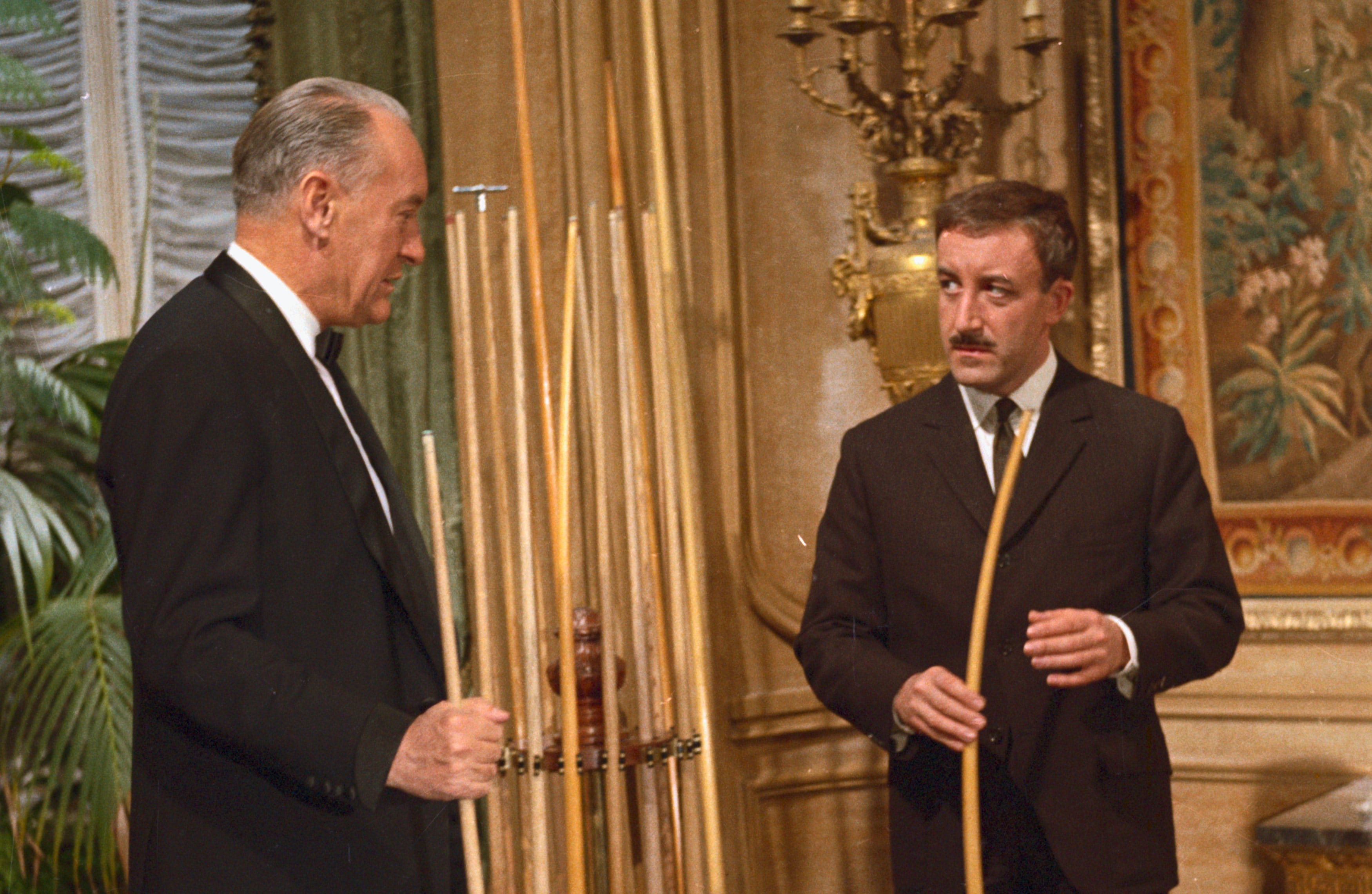
A globe in Clouseau’s office becomes a finger trap, a pool cue rack a fitting nemesis, a blown line something worth repeating — if Sellers could avoid cracking himself up during the take.

Sellers was notoriously difficult to work with, “only good for one take” many filmmakers and acting collaborators would say, from Kubrick onward. Edwards would work with him time and time again — “The Party” and “Pink Panther” sequels aplenty. Blake Edwards knew funny.

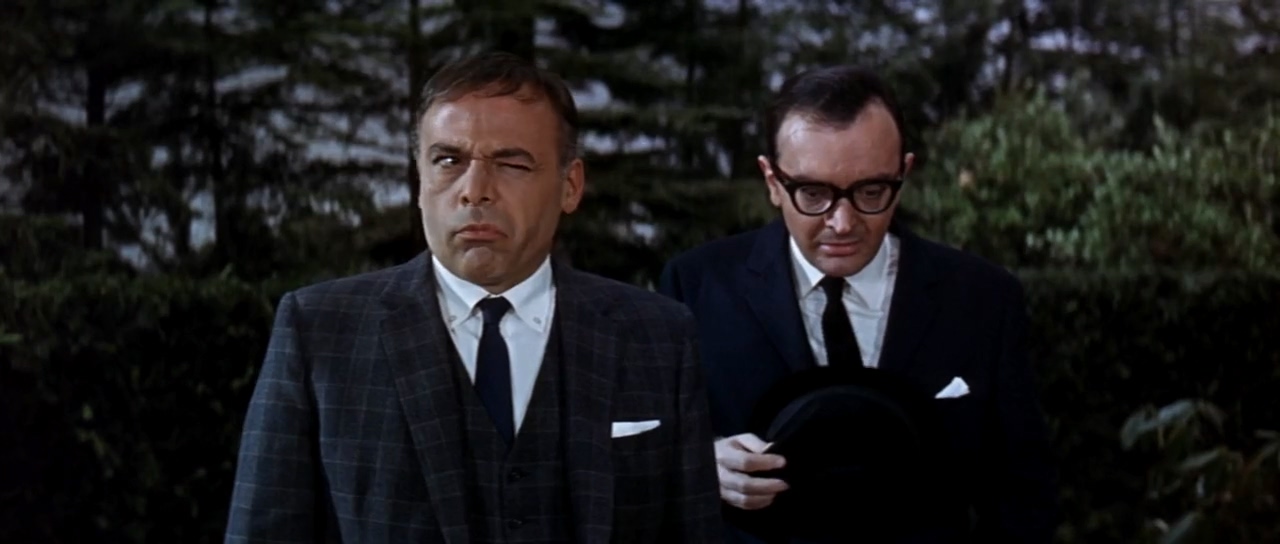
The running gags of the “Panther” series were established in “A Shot in the Dark” — the trench coat, the manservant/martial arts trainer Kato (Burt Kwouk, hilarious and a very good sport, too), the long-suffering sidekick Hercule, the eye-twitching boss and nemesis whom Herbert Lom turned into a comic icon all his own.

“Give me ten men like Clouseau and I could destroy the world.”

The plot is very proto-“Clue,” a daft murder mystery/low farce that could never have been one of the inspirations for Rian Johnson’s “Knives Out” movies.

Staff members at an estate outside the city start dying off. The shapely maid, Maria Gambrelli (Sommer) is the dead-to-rights suspect, as she always is caught with the murder weapon in her hand.

But a smitten Clouseau won’t hear of it, and keeps finding reasons to let her go so that she can be followed and he or his aide Hercule (Graham Stark) can find out who she’s covering for.

“Facts, Hercule, facts! Nothing matters but the facts. Without them the science of criminal investigation is nothing more than a guessing game.”

But it’s “do as I do, not as I say,” in this case. The facts pile up against her. Clouseau can’t tear his eyes off her, or her décolletage.

Meanwhile, we viewers suspect her oily employer, Monsieur Ballon (the ever-droll George Sanders), and others.

Clouseau’s boss Chief Inspector Dreyfus (Lom) is exasperated, but as the rich and powerful Ballon prefers to be investigated by the “idiot,” there’s nothing for it but to channel his outrage into tics, twitches and a cascading series of accidents which Dreyfuss can only share with his analyst, the audience and eventually his worst detective.

“What you’ve said, Clouseau, qualifies you as the greatest prophet since Custer said he was going to surround all those Indians!”

Watching the film anew I was struck by utterly soundstage-bound it is, with only second unit footage of Paris (those wailing police vans) and a snippet of a British estate meant to be the Ballon mansion glimpsed.

Parlors or parks and Paris offices with a view, a greenhouse, a nudist colony with a lake — all of it faked on MGM’s London soundstages. A Jaguar peels out, a Radford Mini deVille roars into a scene, all of it soundstaged.

I paid much more attention to Sanders this time around, watching him keep his composure no matter what Sellers got up to in the hunt for laughs in a take. Did Sellers annoy the hell out of him? I have read every Sellers bio I could get my hand on, but I can’t recall.

And that’s the way it looks, a nearly-unflappable suspect played by an actor hiding his fury at whatever take they were on as Sellers finds a new way to destroy a billiards room.

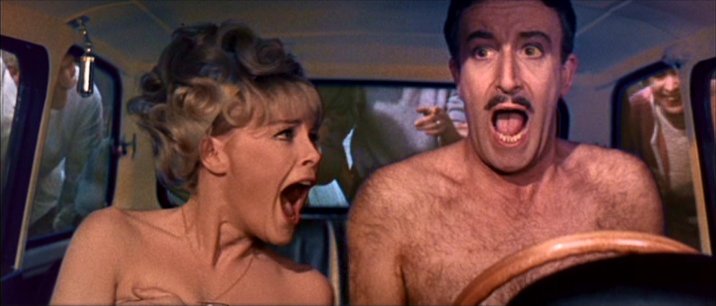
The nudist colony sequence was a lot naughtier then than it comes off now, but there is still fun in all the efforts to hide the stars’ bits and pieces. Mike Myers has named Sellers as a big influence, and the “Austin Powers” movies riff on Sellers’ turn as James Bond (“Casino Royale”) and his appearances as Inspector Clouseau.

For all its faux French setting and “Continental” attitudes towards sex, marriage and nudity, and its American production team, it plays as quintessentially British and of its time — class-conscious Clouseau and Dreyfus, a winking attitude towards “those French” and their sex and Citroens and Renaults and chic Paris clubs where one can travel from Spain (flamenco) to Russia and beyond, all in a single night of pub-hopping.

The folk guitarist/bouncer “Turk” who blocks a fully-clothed Clouseau from entering the grounds of Camp Sunshine was played by Bryan Forbes, an actor, screenwriter and director who gave the world the first cinematic “Stepford Wives,” the loopy satire “The Wrong Box,” “International Velvet” and “The Madwoman of Chaillot.”

And while that comical espionage music that Henry Mancini cooked up for this cat-and-mouse detective comedy would live on in other films of the series and the TV cartoon based on this character titled “The Inspector,” and still never be as famous as his saxophone-heavy “Pink Panther Theme,” there is an Easter egg in this movie that you won’t read about anywhere else.

Mancini famously handed off his baton to the animated Pink Panther in the credits to one of the later films in the series. But watch as Clouseau enters Camp Sunshine and tries to “fit in” with the happy, naked naturists. We hear that theme being played by the buck-naked house band as Clouseau strides past them.

Say, over there on the left side of the frame. Who IS that tall, balding and shirtless Italian-American sax player jamming with the band?

No, “A Shot in the Dark” is not as hilarious as it was when it was fresh and new. But it still lands laughs even as it ages into a sort of comic mayhem-in-a-murder-mystery Ur text, its star one of the most mercurial ever to step in front of the camera and turn a blown take into a gem that still tickles through time.

 “And I submit, Inspector (sic) Ballon, that you arrived home, found MIG-well (Miguel) with Maria Gambrelli, and killed him in a rit of fealous jage!”

Rating: PG, violence, nudist colony nonsense

Cast: Peter Sellers, Elke Sommer, George Sanders, Burt Kwouk and Herbert Lom

Credits: Directed by Blake Edwards, scripted by Blake Edwards and William Peter Blatty, based on the play by Harry Kurnitz.

Running time:

Posted in Reviews, previews, profiles and movie news | Comments Off on Classic Film Review: Sellers and Sommer, Lom & Sanders take “A Shot in the Dark” (1964)

Netflixable? Kid Cudi’s “Entergalactic” album tie-in romance is an animated jewel

One of the best animated efforts by Netflix this year isn’t for kids. Not very young ones anyway.

“Entergalactic,” inspired by and paired with Kid Cudi’s latest album, didn’t even need to be animated. It’s an utterly conventional young Black New Yorkers on the rise romance that somehow required five screenwriters to conceptualize the artsy not-quite-Buppy lovers and invent seriously mundane obstacles to their love.

But first-time feature director Fletcher Moules, who counts “Lego Star Wars: The Padewan Menace” among his credits, and production house DNEG give the characters a rough, chiseled Lego-ish look and movement. Production designer Robh Ruppel turns Manhattan into a lurid, splashy Skittles-scape. Animating “Entergalactic” lights this story up and expands its possibilities, from anime-inspired flashbacks, to trippy (stoned) dream sequences and an artist hallucinating his break-through creation to life.

We meet Jabari (voiced by Scott “Kid Cudi” Mescudi) as he is moving into a swank loft that suggests the young man has made it. Sure, he still scoots around town on his “pegs,” his Mongoose BMX bike. And he’s still tagging the city with his “Mr. Rager” graffiti, stark, sharp-edged and stylized images of a blacker-than-black avenger/hep cat.

In his dreams and more edible-or-joint-flavored moments, he can even hear the guy and his demonic laugh. Of course Mr. Rager sounds like Keith David. And of course Jabari is moving on up, because he’s sold the character to a comics publisher where he’s working to bring Rager to book form.

Jabari stumbles into his gorgeous ex Carmen (Laura Harrier), who is instantly over whatever “Forget You” impulse might have driven the split, seeing as how he’s now a man with possibilities.

His boys, Ky (Ty Dolla $ign), Jimmy (Timothée Chalamet) and Downtown Pat (Macaulay Culkin), might endorse second chance love or whatever the kids are calling “hit it and quit it” these days. But Jabari isn’t falling into the new “Chill Carmen,” who is plainly still Miss High Maintenance, not if he can help it.

Can he? Help it? Because now that he’s Uptown, he’s got a head-turner of an artist neighbor Meadow (Jessica Williams). And all the “Never f–k your neighbor” advice in the world isn’t likely to stop the attraction.

Meadow spends her days taking street pictures and her evenings either at art openings or getting an R-rated earful from her hormonal, pregnant and down for Meadow getting down bestie Karina (Vanessa Hudgens).

Can young, hip, monied 20somethings find love and happiness in the big, impersonal and never-more-colorful city?

The “Young, Gifted and Black” story is broken into chapters which don’t take their names from the titles of tunes on the Kid Cudi LP. We get cute scenes where Jabari sweeps Meadow off her dressed-to-impress feet from an art world party that bores her.

“You know I came here in a Maybach, right?”

“Well, you’re leaving on a Mongoose!”

The courtship feels natural, organic. He insults her taste in music (they meet when her latest party goes too late and too loud), she tricks him into vegetarian burgers, which he’s just mocked, by asking “You trust me?” at her favorite diner.

And the banter with “the boys” has a nice snap, even if the script leans heavily on the street argot of the moment, something that always has a whiff of “trying too hard to be hip” and instantly dates any film — animated or otherwise.

It’s the look that sells this film, and it’s visually arresting, a movie inspired by an album that benefits from a vast array of smart choices — from voices to production design, color palette to comic book flashbacks.

I can’t say the dreamy Kid Cudi hip hop that inspired the movie helps or hurts the storytelling. It’s just there, pleasant enough but indistinct background music, I thought. The movie’s more memorable than the LP.

Rating: TV-MA, drug use, sex, profanity

Cast: The voices of Kid Cudi, Jessica Williams, Laura Harrier, Vanessa Hudgens, Ty Dolla $ign, Timothée Chalamet, Macaulay Culkin and Keith David.

Credits: Directed by Fletcher Moules, scripted by Ian Edelman, Maurice Williams, Esa Lewis, Sidney Schleiff and Judnick Mayard, story based on an album by Kid Cudi. A Netflix release.

Running time: 1:33

Posted in Reviews, previews, profiles and movie news | Comments Off on Netflixable? Kid Cudi’s “Entergalactic” album tie-in romance is an animated jewel

Movie Review: Horses and Snow and Gunslingers So Slow — “The Desperate Riders”

Sometimes, it seems to me that what we’ve labeled “Westerns” in fiction and on film or TV over the generations really should have been called “Southwesterns.” Because that’s the geography that became iconic in the genre.

The combination of arid, less usable and therefore less developed land, parks and wilderness meant that “The Searchers” could be set in Texas when we could plainly see it was the sandy, dry, unfarmable Monument Valley, Arizona. Almost every film and TV show was parked firmly in tumbleweed, sand and bare rock country, so much so that the occasional departure — “Shane,” in Big Sky Country, “True Grit” in mountainous, green Colorado, “Jeremiah Johnson” in the prettiest parts of Utah — could be refreshing.

The recent John Cusack Western “Never Grow Old” was set in the Pacific Northwest and filmed in Ireland. “The Sisters Brothers” was set in Oregon, but filmed in Romania, and that different look and feel made for fresh takes on the law-of-the-gun genre.

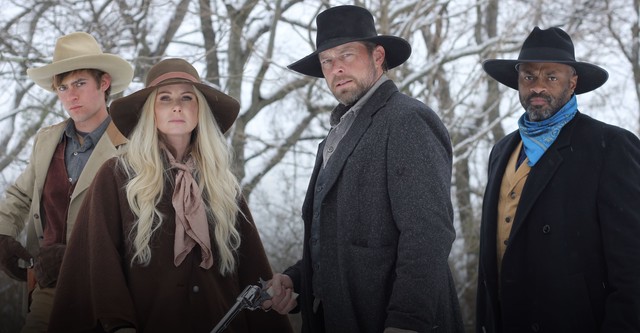
“The Desperate Riders” is a low-budget Western that Roku bought from Lionsgate, a film of damp and fog and snow.. It’s a little disorienting, even if the occasional trope of the genre makes an appearance — a saloon that doesn’t quite look like anything Miss Kitty would run, a mansion that plainly predates what one character takes pains to describe as “The War of Northern Aggression.”

Wherever the fictional “territories” setting, it was filmed in Tennessee, full of trees and forests and the cabins made from the logs of those trees. Fair enough, as I used to live there and often thought “Somebody ought to set and film a post-Civil War Western here.”

The dialogue is plenty flinty, a baseline requirement for any horse opera.

“I don’t think I’mo let you boys kill a kid today.”

“Ma’paw says th’only thing more important than a man’s gun is his humility!”

But the entire enterprise was shot between 9:40 and 9:45 am, the harshest and least filtered light of the day. The cast could have been costumed at their local Western outfitters outlet, with hats from The Halloween Store.

The cast has a couple of “names,” but it’s not like anybody expects country singer and Wounded Warrior Project champion Trace Adkins to get better, the more films he does.

Tom Berenger plays a not-to-be-trifled-with dentist/bullet wound surgeon, the most credible character (a Texas combat surgeon decades before) and most credible actor playing a part.

The gun-slinging has a “first take, first time I ever picked up a six-shooter” feel and speed. This holds true all the way through the cast, in scene after shootout scene. Why you’d make every confrontation a quick draw contest when nobody in your cast can fake his way through that is beyond me.

And the plot — with blood feuds, a teenage card sharp/gunslinger (Sam Ashby), kidnapping and pursuit — is a tried and true, but trite here. Adkins plays the heavy, who kidnaps a woman related to a family that landed him in prison. A loner in a duster (Drew Waters) decides to make this his business, so he and a lady sharp shooter (Vanessa Evigan) are determined to save her.

Michael Feifer, a prolific producer-director of TV fare ranging from Hallmarkish (“12 Pups of Christmas”) to horror (“Psycho Sweet 16”) and pretty much everything in between — including the odd (ahem) Western (“A Soldier’s Revenge”) — has no feel for the genre. None.

All of which is a far bigger hindrance to “The Desperate Riders” coming off than the pretty, rustic and yet decidedly non-Southwestern locations. Planning your shoot so that you can film horses in snow is all for naught when the script is crap, nobody good enough to expect a decent paycheck will sign on and the director is probably better at filming puppies.

Rating: PG-13, gun violence

Cast: Drew Waters, Vanessa Evigan, Victoria Pratt, Sam Ashby, Cowboy Troy, Trace Adkins and Tom Berenger

Credits: Directed by Michael Feifer, scripted by Lee Martin. A Roku TV release.

Running time: 1:30
Posted in Reviews, previews, profiles and movie news | Comments Off on Movie Review: Horses and Snow and Gunslingers So Slow — “The Desperate Riders”

Movie Review: Navy Fliers test limits of “Devotion” over Korea

The first thing that pops out of “Devotion,” the new Korean War Naval aviators action biopic, is how far digitall- animated aircraft and aerial combat have come since the first films to lean heavily on that technology — “Flyboys” and “Red Tails.”

This is another big step beyond “Midway,” as in-flight/in-cockpit real plane/digital plane footage is seamlessly integrated to create moments that are impressively realistic. I’d say the digital Jeeps in the film are more obviously animated than the F8F Bearcats and F4U Corsairs depicted here.

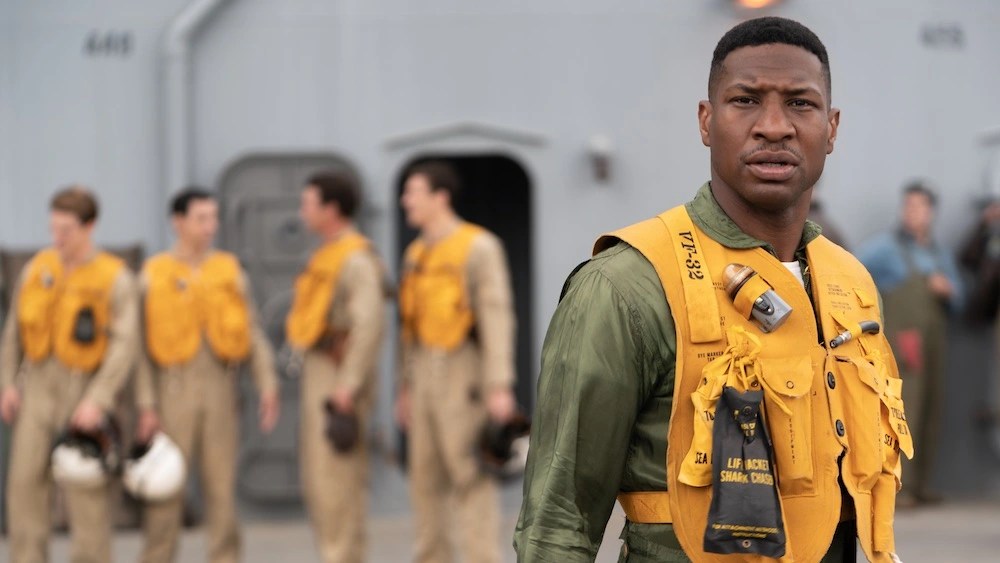
Director J.D. Dillard’s film, “inspired by” the “true story” of Jesse L. Brown, a color-barrier-breaking pilot for the U.S. Navy, may be a straight up B-movie, from its lesser known cast to story beats that flirt with war movie tropes and over-the-top hokum. But it sure looks like an A-picture.

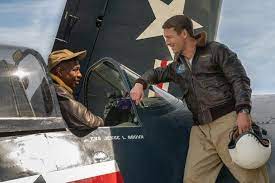
Jonathan Majors of “Lovecraft Country” and “Da Five Bloods” plays Brown, whom we meet when a new Annapolis grad, Lt. Tom Hudner (Glen Powell of “Top Gun: Maverick” and “Hidden Figures”), checks in to their Rhode Island Naval Air station in 1950.

Ensign Brown is the lone African American pilot with the squadron, a man who makes it a point to be the last out of the locker room before training missions. He stares into the bathroom mirror and repeats racial slurs and insults to his skills, intelligence and lineage, just to get his game face on.

Hudner is assigned as his wingman, and seems at ease with supporting role, despite Brown’s standoffishness and a hint of “colored pilot” prejudice from their fellow pilots.

In the movie’s version of this first Black Naval combat aviator story, one has to go the Marines to find the bigger bigots.

The Ensign tests his new wingman, and declines to get friendly. At first. It takes a while in such movies for the touchy Black man to trust the entitled white one, and a little longer before Hudner meets Brown’s wife (Christina Jackson) and little girl.

There’s an earnestness of intent here that kind-of/sort-of wins you over. When your picture’s as pokey as this one, wearing you down is a part of the bargain. You’ve got the time.

Cold War headlines give us a taste of the tensions of the day — Soviet acquisition of the atomic bomb, communist aggression, reconnaissance plane shoot-down — with our Navy pilots moving up to the much heavier “big nosed” FU4 fighter-bomber, learning to land them on their assigned carrier, the U.S.S. Leyte before deploying overseas.

The film takes us through 1950’s run up to The Korean War, sampling the rules of engagement and the fraught early missions, into the winter of the Chosin Reservoir battle.

But before that, there are more bonding experiences — shore leave at Cannes, invited to the casino by then-eighteen-year-old Elizabeth Taylor (Serinda Swan), no less, and a bar fight.

Through it all Hudner learns bits and pieces of what a struggle Brown has endured, how it has scarred him so that he can’t be sure he can even trust the landing signal officer on a carrier, fearing a racist waving those flags might direct him into a crash that will kill him.

Hudner is sure accidents happen due to carelessness. “Do what you’re told and you won’t get killed.” Brown opens his eyes to the realities of segregated America and its barely-integrated military.

“You can’t always do what you’re told.”

The screenplay doesn’t go much beneath the surface of either character, which in Brown’s case seriously limits the scope and emotional depth of the film. The odd touching moment seems to land almost in spite of itself, with Majors’ performance veering between his loner “squadron of one” hostility and mistrust, and quick tears at the different expectations and rules he has live by.

Powell’s getting labeled “handsome” in too many films for his own good. We still haven’t seen what he can do when bigger demands are put on him.

Including how the African American sailors on board the Leyte root for and revere Brown like he’s “Jackie Robinson about to steal home” is probably accurate, but handled in the same chilly way as other big emotional payoffs here are.

Once you’ve decided to include scenes with the potential to be maudlin, stopping well short of a big, obvious tug at the heartstrings is something you do at your own peril.

The script so flattens out the trials of Brown and the “Devotion” of these two for one another that we find ourselves thinking, “Well, I guess we have to take their word for it.” But whatever the closing credits tell us, that’s the missing heart of this promising B-movie, a tipping point it never quite crosses.

Rating: PG-13 for strong language, some war action/violence, and smoking.

Cast: Jonathan Majors, Glen Powell, Christina Jackson, Thomas Sadoski, Serinda Swan and Joseph Cross

Credits: Directed by J.D. Dillard, scripted by Jake Krane and Jonathan Stewart, based on a book by Adam Makos. A Sony/Columbia release.

Running time: 2:18

Posted in Reviews, previews, profiles and movie news | Comments Off on Movie Review: Navy Fliers test limits of “Devotion” over Korea

Netflixable? Swedish skiers look for second chances at love “Off Track (Ur spår)”

You take the cute with the not-nearly-so-cute in the Swedish rom-com “Off Track,” titled “Ur spår” in ABBAland.

It’s about a coupling or two, and people destined to bump into each other at the annual cross country Swedish ski race, “The Vasa,” or “Vasaloppet,” And one way you can tell this film was meant for domestic consumption is the lack of explanation of that race, its place in Swedish history and lore and connection to Gustav Vasa, the king regarded as The Founder of Modern Sweden.

Let me just say, Swedes, that no American film would use say, the Iditarod as a backdrop and not explain the race’s historic origins. And when your movie’s as pokey and slow as this one, there’s no sense arguing “We didn’t have time.”

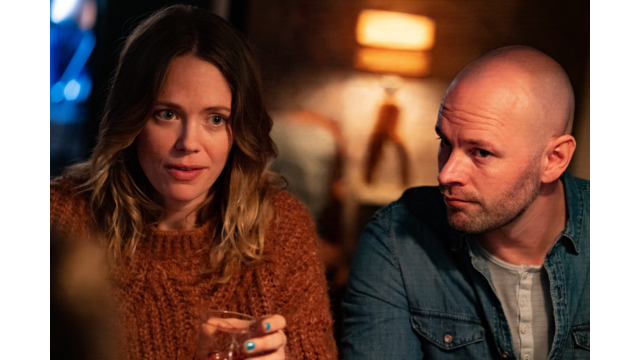
Lisa (Katia Winter) is a newly-divorced drunk whom we meet in the early stages of a bender at a bar known for being the pick-up spot for divorcees. Actually, she’s so clumsy and tipsy that she’s shown up at the bar next door to the bar sure to get her “laid laid LAID.”

She will be hit on by younger men, whom she insults, and get so blasted she gets tossed (and injured) by a bouncer, only to wind up in the drunk tank. A very tolerant cop (Ulf Stenberg) takes her home the next day because she’s supposed to pick up her kid (Kelly Flogell) for shared custody time.

In just that one scene, we see her irresponsibility, her cavalier entitlement (treating a cop like a chauffeur) and lax child-rearing.

It’s no wonder that child welfare is on her case in a flash. An unasked and unanswered question might be “Who ratted her out?” The ex (Peter Perski) or the cop? That matters because the policeman figures further in our story.

A laundry accident wrecks her apartment, which is how she ends up staying with her personal trainer/skier brother Daniel (Fredrik Hallgren). He and his wife (Rakel Wärmländer) are secretly making every effort to have a baby. But he’s also training for another run in the Vasa, so that’s adding to their stress.

With child welfare breathing down her neck, no visible means of support, “depressed” and about to lose custody, Lisa decides her way out of rock bottom is the ski the race, too. And sobering up.

Meanwhile, policeman Anders (Stenberg) has learned from his jerk brother that he’s been drafted to be the one who will accompany their competitive but older and just-had-a-heart-attack mother (Chaterarina Larsson) in her attempt to achieve “legend” status by racing the Vasa one more time.

The race is, of course, the climax of the movie. But it’s woven into the film in a way that implies everybody does it, “like a cult” as Lisa says. Her brother, his wife, even her social worker are skiing it.

Lisa? She’s the only Swede who doesn’t know how to “snowplow” to a stop.

Maria Karlsson’s script tries to slow-juggle a lot of balls in the air for this comedy — fertility clinic visits and arguments over hormone shots and sperm delivery, an alcoholic trying to sober up, a cop bullied into things by his older sibling, a neglected child not all that happy staying with dad, and so on.

There’s little pace to it all, but there are flashes of wit that show us what director Mårten Klingberg could have gotten out of this with clever editing and maybe streamlining the script before shooting.

Fortyish Daniel is so into the ski training that he hires a cabbie (Leif Andrée) who delivers his sperm sample — yes, we see Daniel uh “create” that sample — insisting the guy keep it “warm” by stuffing the bottle down his pants as he drives kilometers and kilometers to the clinic where wife Klara angrily waits.

Lisa meets Anders at the race site, and neither can figure out how they met.

Anders’ aged mother won’t wait for him to catch up, “used the wrong wax” she hisses when asked where the slowpoke is.

And at the pre-race warmup for the mob of skiers awaiting their 90 kilometer test, their limbering up calisthenics are choreographed to the PA system blasting “Hooked on a Feeling.” Remember the “ooogah chugga” band that recorded that? Blue Swede.

That’s…adorable.

Maybe this film played as quick and warm and fun in Sweden. But for me it just lumbered and stumbled along. Perhaps Klingberg, seen on skis in the closing credits, used the wrong wax?

Rating: TV-14, adult sexual conversations

Cast: Katia Winter, Fredrik Hallgren, Rakel Wärmländer, Ulf Stenberg, Chatarina Larsson, Peter Perski, Kelly Flogell and Leif Andrée

Credits: Directed by Mårten Klingberg, scripted by Maria Karlsson. A Netflix release.

Running time: 1:48

Posted in Reviews, previews, profiles and movie news | Comments Off on Netflixable? Swedish skiers look for second chances at love “Off Track (Ur spår)”

Classic Film Review: There is but one Thanksgiving Movie — “Pieces of April” (2003)

Twenty years after its release, it’s about time to acknowledge what has been obvious since the day it came out. Once upon a time, Peter Hedges, Katie Holmes, Patricia Clarkson, Derek Luke, Oliver Platt, Isaiah Whitlock Jr. and Sean Hayes made the best damned Thanksgiving movie ever.

“Pieces of April” is a little movie — a tiny one, really. It’s about a Thanksgiving dinner, the prodigal daughter who isn’t very enthusiastic about cooking it, and the family that’s even less fired-up about traveling to visit her and eat it. But this slowly unfolding domestic disaster, set in New York’s Greenwich Village, is funny and bittersweet and as emotionally satisfying as any holiday movie. The writer of “What’s Eating Gilbert Grape?” makes his writer-director debut a charmer of mild surprises, heartfelt laughs and genuine humanity.

Katie Holmes stars as April, the problem child who left home to start anew as a struggling actress in New York city. “I’m the first pancake,” she says — the first pancake, the one you throw out.

That’s what her mother did with her. April’s mom, given a vivid, irked and lived-in feel by the peerless Patricia Clarkson (“Far From Heaven,” “She Said,” “The Station Agent”), no longer speaks to her daughter. Her Dad (Oliver Platt) is hoping for the best from one and all, and for one and all.

But he’s always burdened by the weight they all carry, the significance attached to this sad but hopeful meal. And he’s the one April should be more concerned with impressing. He’s still willing to give his screw-up daughter one more chance.

“God-dammit, April.”

April’s meal preps go awry. Her oven dies and she must introduce herself to one strange neighbor after another to find another stove she can use for the turkey.

She meets the cliched cross-section of New York life — the understanding and culinarily savvy black couple (Lillias White and Isiah Whitlock Jr.), the prissy snob with the state-of-the-art stove (Sean Hayes), recent Chinese immigrants, a belligerent vegan.

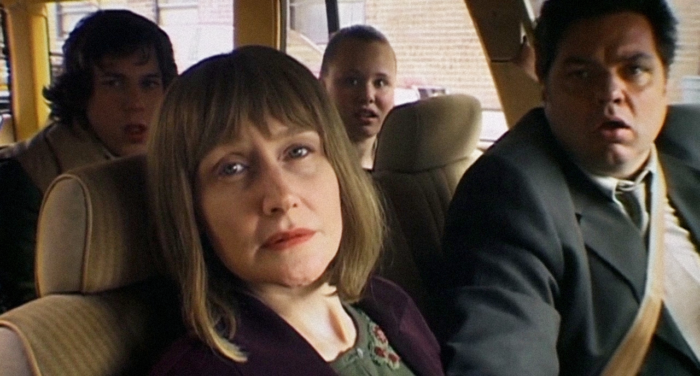
And all her family’s functioning dysfunction — Alison Pill plays the snotty, eager-to-impress April-bashing little sister, John Gallagher Jr. is her more forgiving brother, whom Mom relies on to roll her medical marijuana joins, and Alice Drummond is the mildly-demented grandmother dragged along — stuffed into a station wagon, rattling its way toward the confrontation to come.

Mom’s hostility blasts through at every turn. She’ ‘s sarcastic about the ways they’ll have to hide their revulsion at April’s cooking. And she insists they all gorge on Krispy Kremes, a comment on what she thinks of her oldest daughter’s domestic skills. “

“We’re going to have a very nice time,” April’s embattled dad keeps telling her mother and her siblings. As played by Platt, not even Dad seems to believe that. But he’s determined to make the effort.

And April’s beau, played by Derek Luke, seems more worried about the meal and making an impression on her parents by decorating the apartment than she is.

“They don’t deserve decorations,” she snaps. “You don’t really believe that,” he fires back.

The men in Peter Hedges’ scripts are often the peace-makers. Think of “Gilbert Grape,” “Dan in Real Life” or Hedges’ adaptation of “About a Boy.” Here, April’s ill-tempered struggles and mom’s mood swings play out like an impending Western showdown, “High Noon” with canned cranberry sauce.

“Pieces of April” — which takes its title from a song Three Dog Night made famous — has all these cliched holiday situations — a disastrous meal in the making, cranky relatives, damaged characters, old wounds and grievances, assorted stock type neighbors. And yet somehow Hedges makes it work. The cliches are turned on their ear. We buy into the tale and allow ourselves to be surprised when things don’t play out the standard Hollywood way.

Thank the actors for that. Holmes is a revelation, firmly establishing a surly yet likable and complex big-screen presence after too many years on “Dawson’s Creek.” Clarkson makes her mother compelling, hateful, understandable and even lovable. And Platt’s turn as a long-suffering spouse with the weight of the family on his shoulders is nearly pitch-perfect.

“Pieces of April” won’t change the world or conquer the box office. But its story of grudging reconciliation will touch you, maybe even break your heart, if you let it. It seems better with every viewing, and grows in stature as Thanksgivings pass by, decade after decade.

And with the holidays coming, a little well-placed sentiment seems just what the movie doctor ordered every year at this time.

Rating: PG-13, profanity

Cast: Katie Holmes, Patricia Clarkson, Derek Luke, Lillias White, Isaiah Whitlock Jr., Sean Hayes and Oliver Platt.

Credits: Scripted and directed by Peter Hedges. An IFC release on Tubi, Amazon, et al.

Running time: 1:20
Posted in Reviews, previews, profiles and movie news | Comments Off on Classic Film Review: There is but one Thanksgiving Movie — “Pieces of April” (2003)

Documentary Review — “Salvatore: Shoemaker of Dreams”

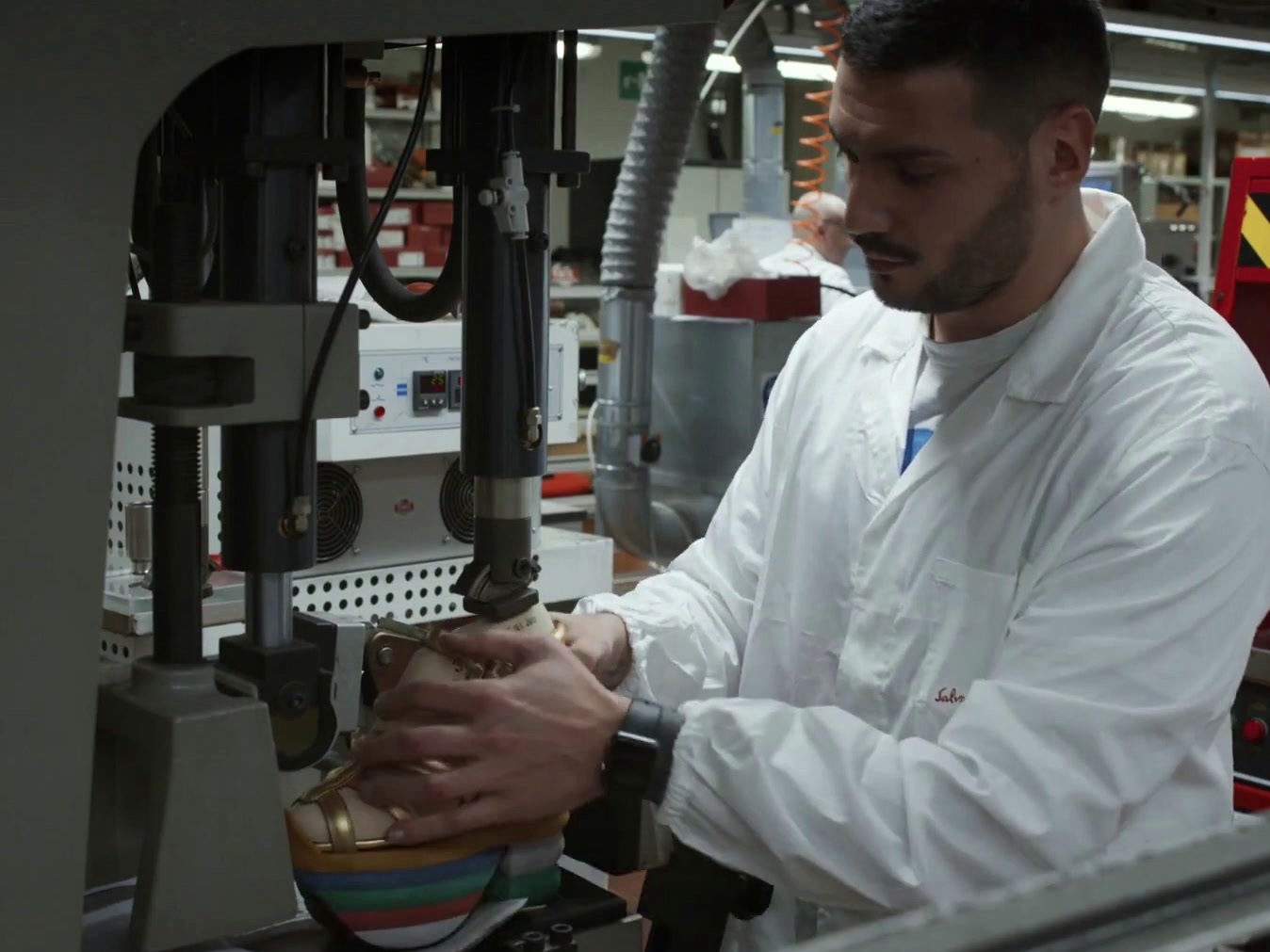
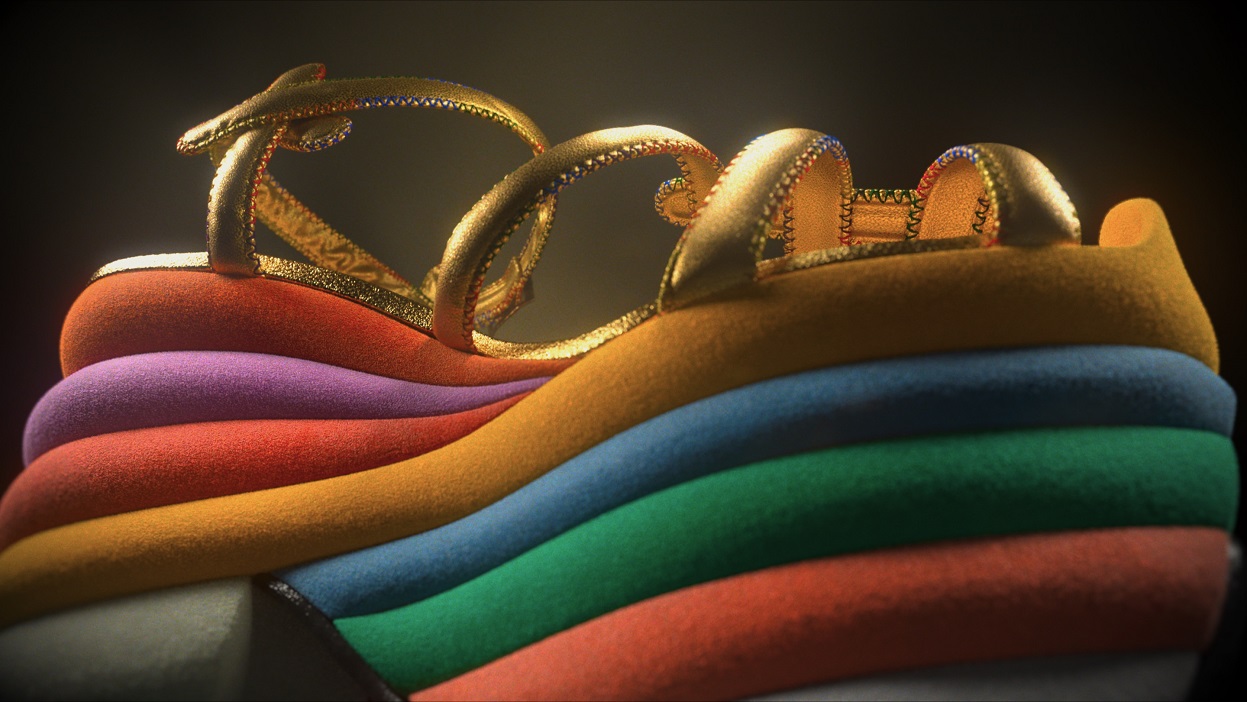
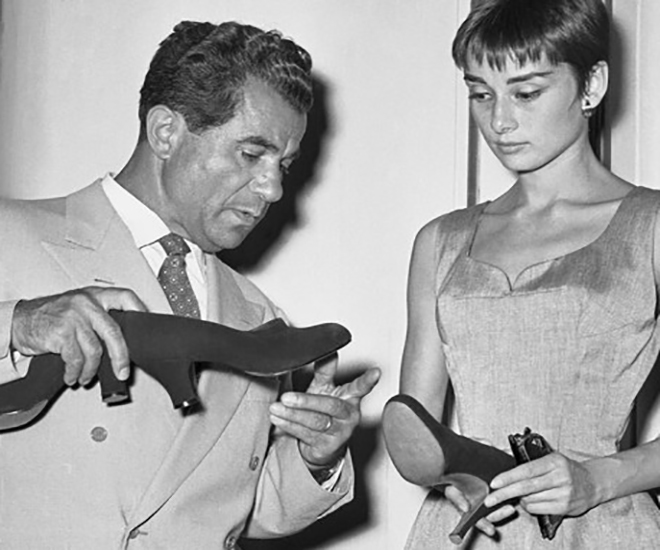
An iconic haute couture footwear brand’s origin story is told in sometimes inspiring strokes in “Salvatore: Shoemaker of Dreams,” Luca Guadagnino’s story of the life and work of Salvatore Ferragamo.

Fashionistas, fashion historians, film historians, modern shoe icon Manolo Blahnik, Ferragamo and family members tell his tale, sing his praises and marvel at his many innovations, which revolutionized shoe design and construction and covered the feet of movie stars on and off sets from the silent era onward.

Ferragamo himself is heard in an interview that amounted to an oral history, relating his Southern Italian childhood poverty and early fascination with feet, that first pair of shoes he made for his little sister and the apprenticeship from age 9, into setting up his first business in tiny Bonita, east of Naples, before he reached his teens.

The soothing, almost comically-whispered narration by Michael Stuhlbarg fills in around the edges as he reads Ferragamo’s words, and almost hint at places this film might take us.

“I looooove feet! They talk to me” takes on an almost kinky, popophilia tease that the film never shakes nor explores.

But film buffs will perk up at Ferragamo’s American years, when a small-time Neapolitan shoemaker gambled it all and came to America to start over — at 17 — working briefly with a brother at a Boston shoe factory (“I was not interested in mass production.”) and quickly convinced his siblings to move to the west coast with him in 1915.

No, he didn’t go to Hollywood or even Hollywoodland. Los Angeles’ status as film capital was not yet established. Scenic and more tony Santa Barbara was where he opened shoe repair and custom-made shoe shop that was quickly embraced by the thriving local film community.

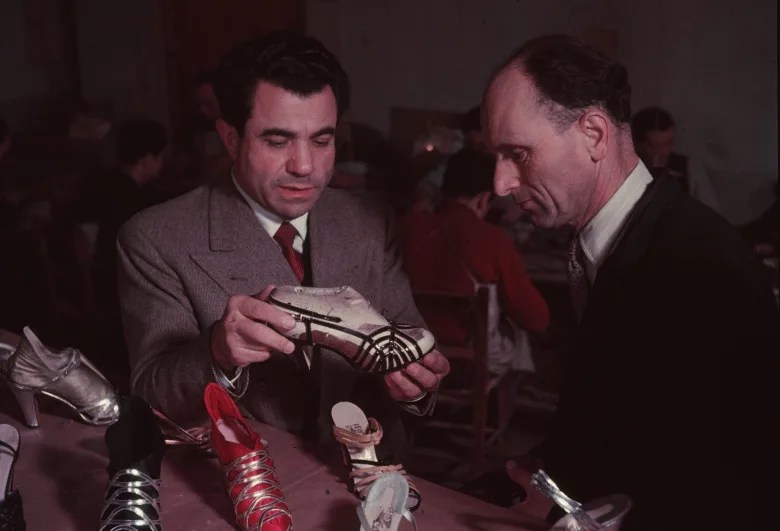
Making stylish, fashionable and above-all-else comfortable shoes for film productions had stars from Lillian Gish, Pola Negri and Douglas Fairbanks to every Pickford in film demanding and wearing his footwear. Cecil B. DeMille insisted on Ferragamo shoes for all his movies, Biblical spectacles included, and never walked onto a set unless he was wearing Ferragamo boots.

Italian-American filmmaker and Ferragamo shoe fan Martin Scorsese and others weigh in on this right-place/right-time part of the shoemaker’s history, the association that made him and the future Ferragamo brand.

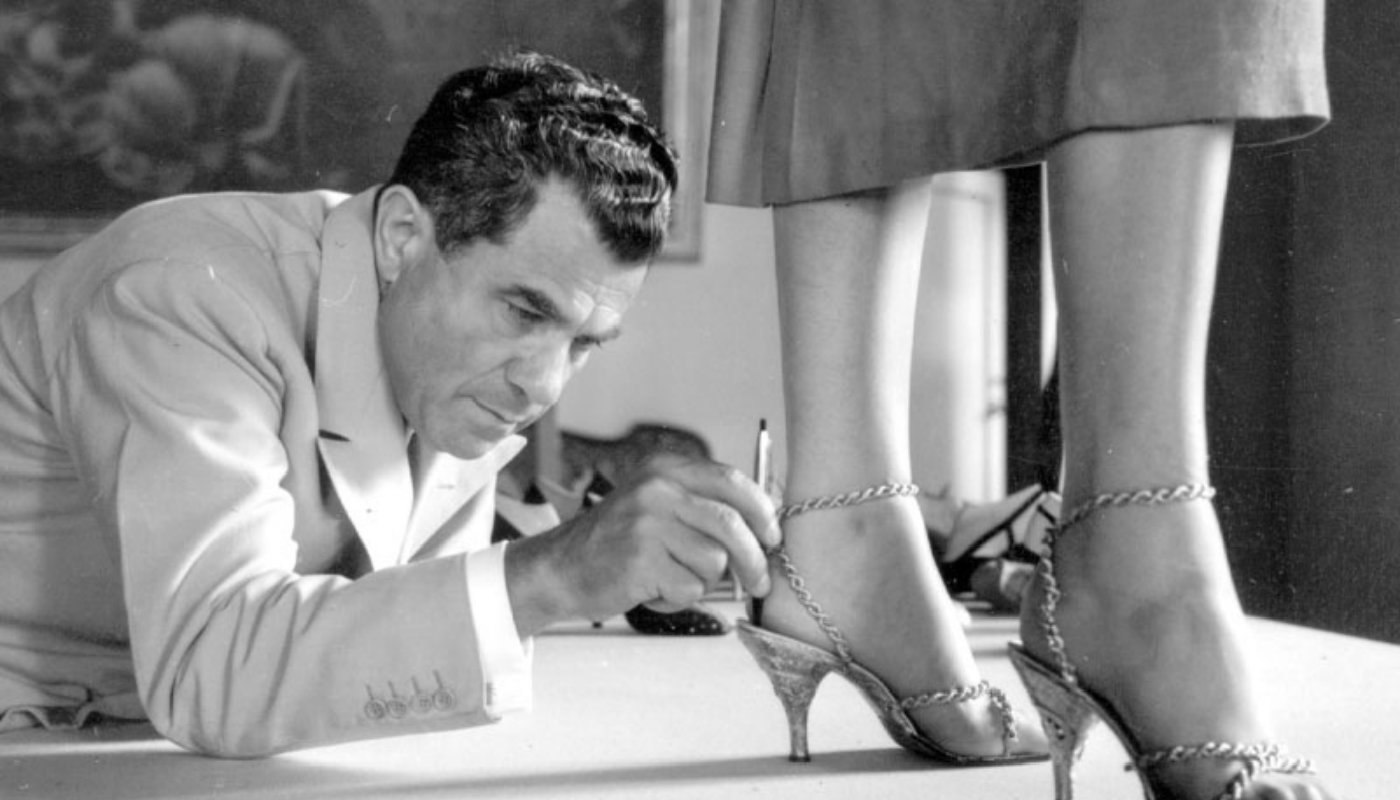
When all of filmdom migrated to Hollywood, Ferragamo went with them, after first taking anatomy classes at UCLA to complete his understanding of the musculature and bones of the foot, allowing him to master the ability to design shoes both pedestrian and exotic that would fit, function and be comfortable to wear while dazzling any set of eyes that deigned to look down at the wearer’s feet.

By the mid-1920s, Ferragamo was famous — the subject of newspaper and magazine profiles — and flush with cash. There was nothing for it but to expand, and the only place to do that was where artisanal shoemaking still flourished.

It’s here that “Shoemaker of Dreams” stumbles in the telling of the tale. Clocking in at a generous two hours when it made the film festival rounds, trimmed to 1:50 for theatrical release, the film’s most glaring omission has to be obvious to all but the most fashion-obsessed viewer.

Ferragamo returned to Florence in fascist Italy in 1927. He struggled to set up his “Made in Italy” worldwide brand there, and even went bankrupt in the process in 1933. But he didn’t stay bankrupt, and skimming over his years living well under an authoritarian dictatorship, dismissing World War II with a blithe “It was not the happiest of times in Italy” may be the most grating euphemistic treatment of a war since Southern Americans took to calling the Civil War “the late unpleasantness.”

Yes, he continued “innovating” when leather and raw material shortages set in under a totalitarian dictatorship and its blundering wars of aggression. Glibly skipping over who the shoemaker catered to under nearly 20 years under this regime and its nattily-attired leader, its labor implications and the like in a nearly two hour film about a man who only lived from 1898 to 1960 is damned near unforgivable, even if he, the filmmaker and this film’s audience is only interested in “the shoes.”

But the shoes were his glory, and the ooing and cooing over this breakthrough, that elegant “Thief of Bagdad” slipper and the like gives us an interesting if seriously superficial grasp of the man who made fashionable footwear famous.

Rating:  PG for smoking and a suggestive reference

Cast: Salvatore Ferragamo, Manolo Blahnik, Grace Coddington, Suzy Menkes, Deborah Nadoolman and Martin Scorsese, narrated by Michael Stuhlbarg.

Credits: Directed by Luca Guadagnino, interviews conducted and scripted by Giuppy D’Aura and Dana Thomas. A Sony Pictures Classics release.

Running time: 1:50
Posted in Reviews, previews, profiles and movie news | Comments Off on Documentary Review — “Salvatore: Shoemaker of Dreams”

Movie Preview: Willem Dafoe is an Art Thief trapped “Inside” a mark’s mansion

This looks good.

Focus can be one of those “Witness Protection Program” distributors, movies you can never find largely because of anemic promotion budgets and efforts, but I’d love to see Dafoe in this guise.

Posted in Reviews, previews, profiles and movie news | Comments Off on Movie Preview: Willem Dafoe is an Art Thief trapped “Inside” a mark’s mansion

Movie Review: A Spielbergian Childhood, aka “The Fabelmans”

.

As he approaches his 76th birthday in December, Steven Spielberg can safely be assumed to be in the “memoirs” stage of his life and celebrated career. But as a filmmaker always more comfortable with the language of cinema, it’d be a shame if he tried simply telling that story on the page.

And no mere chronology of “how I came to be” would do, either. With “The Fabelmans,” he goes for a lightly fictionalized “fable” version of the upbringing that shaped and made him, the influences, encouragements and life events that drove him to succeed.

It’s a magical movie memoir of the making of a movie-maker, with Spielbergian sparks of delight and inspiration, and heaping helpings of Spielberg sentiment. Through it, we come to understand the man who gave us so many broken or breaking families, so many plucky on-my-own kids, so many sad heart-tugging moments undercut with wit, warmth and humor.

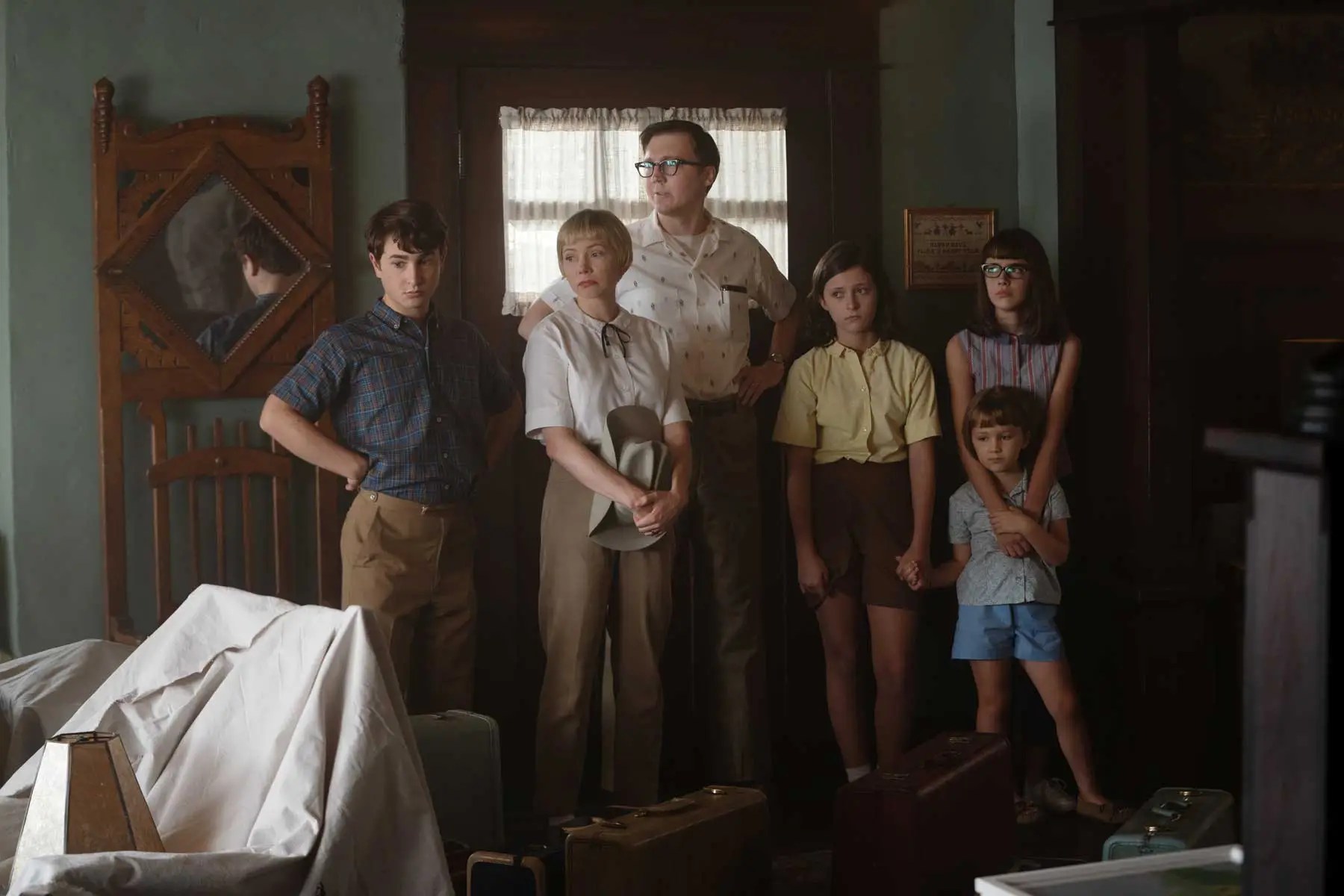
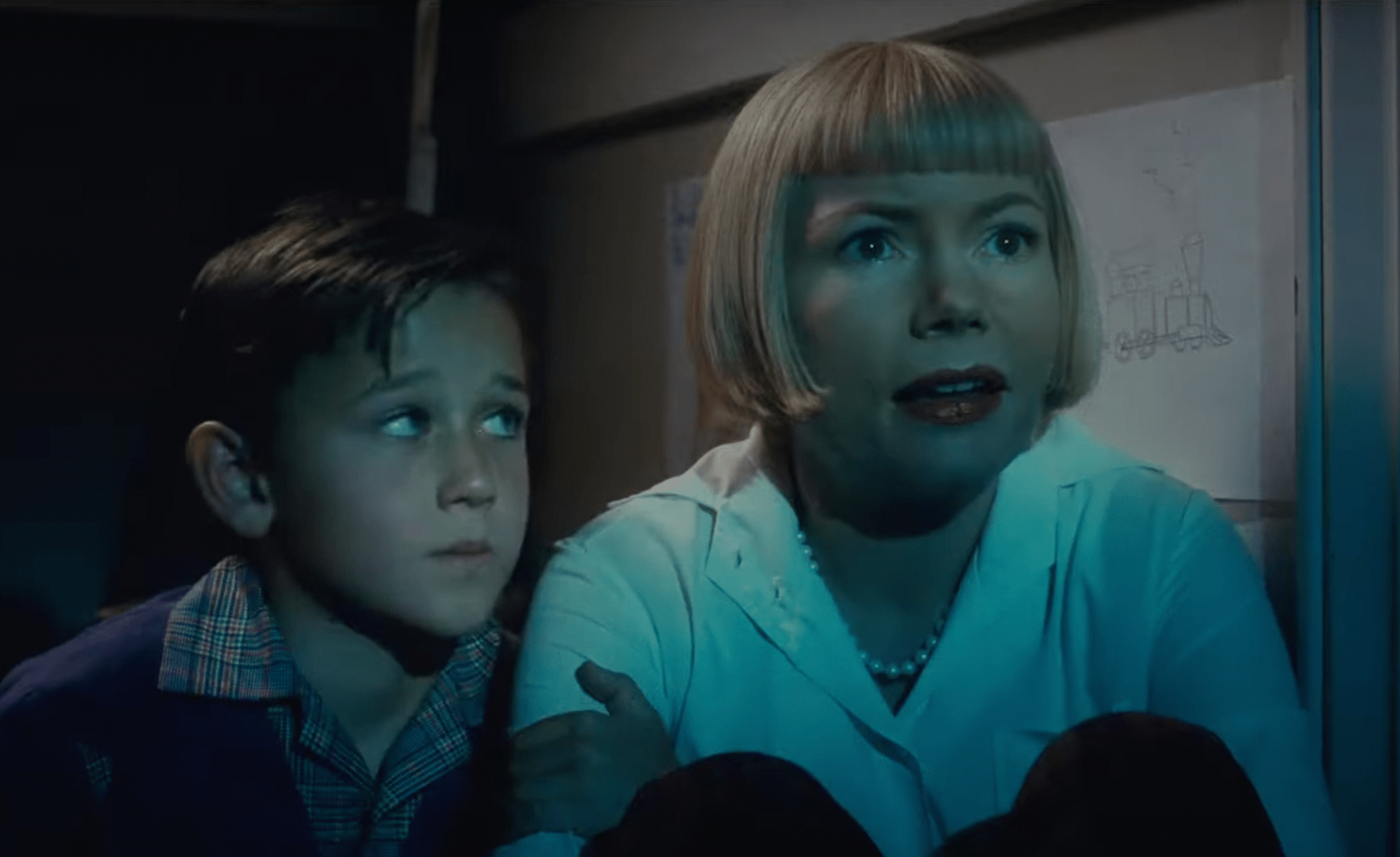
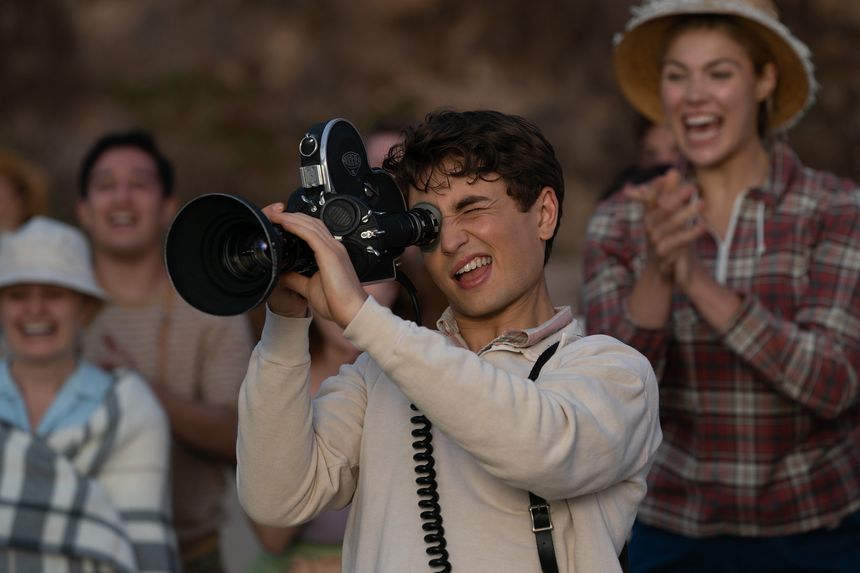
It’s a movie-lovers night at the cinema, taking us from his “first ever movie,” his mercurial, musical Mother (Michelle Williams) passing on her enthusiasm, his pedantic engineer Dad (Paul Dano) patiently explaining the “giants” they’d see on the screen are just images captured on celluloid, projected with light and blown-up to enormous size.

From the moment six year-old Sammy Fabelman (Mateo Zoryon Francis-DeFord) sees that spectacular train crash effect in “The Greatest Show on Earth” (1952), he is hooked. But it’s not just the train that grabbed him and caused his father to give him one railcar or locomotive or set of tracks per day during the following Chanukah.

Little Sammy liked to see things crash and blow up.

And when Mom swipes Dad’s 8mm film camera, Spielberg lets us see what makes Sammy run…to the photo shop, home from school to enlist family and friends in his little movies, to the notebook whose drawings become storyboards by the time he’s old enough for the Boy Scouts.

That Sammy (Gabriel LaBelle, a bit player in movies and in TV since 2013) is the one who uses his Phoenix, Arizona BSA Troop 275 as cast and crew in movies he’s learned to storyboard, shots he’s learned to frame, effects he’s ingeniously figured-out how to fake for silent films that have a beginning, middle and end, and a helluva lot of entertainment value.

That Sammy would be shushing his fellow girl-crazy Scouts when they get too rowdy at a theater showing “The Man Who Shot Liberty Valance,” and that Sammy will write letters and knock on Hollywood doors after high school, and in the film’s climax, meet one of his movie making idols, uncannily brought back to life by another legendary director.

“The Fabelmans'” odyssey, from New Jersey to Phoenix and California, following Dad’s career as an RCA then GE and eventually IBM electrical engineer, make up the movie’s more conventional and melodramatic middle acts.

It was a troubled marriage. The family was more observantly Jewish when the grandmothers were around, and when the holidays popped up. Grannies would show up for Mom’s elaborate dinners served on paper plates with plastic forks, all of it tossed with the paper tablecloth when the meal was over.

Mom’s musical side — she is a concert pianist who gave it all up to raise three daughters and a son — would come to the fore, singing Hebrew duets with Dad. “Uncle” Benny, Dad’s work pal (Seth Rogen) would come in and be the “fun uncle” only not a “real” uncle at these gatherings.

And Sammy’s adoring, spirited sisters would not have to be his extras and crew for once, and could lose themselves in the festivities.

Judd Hirsch comes off as a kvetching stereotype in the brief snippet he’s glimpsed in the movie’s trailer. In the film itself, he is an earthy, warm and no-nonsense “circus” (and silent film) veteran, the uncle who comes to mourn his sister, one of their grandmothers, and impresses on young Sammy the tug-of-war his life will be in the arts, yanked between family obligations and life-responsibilities, and “the heart.”

Williams turns this mother into a fragile, impulsive free spirit, piling the kids in the car to chase the first tornado any of them ever saw. Dano was born to play a prototype “computer nerd” who sees a lot of himself in his artsy but technocratic craftsman kid.

Comical young love, the first serious blasts of anti-Semitism Sammy faced in a new school, a smart-aleck who takes a bloody nose as a small price to pay for a withering comeback, this third of the film has been in a thousand other coming-of-age tales before, and often done better. Still, there’s an earnestness to these scenes that counts for something.

Tony winning playwriter (“Angels in America”) and “Munich” screenwriter Tony Kushner came on board to give this story shape, to make “The Family’s Dark Secret” pay off.

But it’s all the things that have become the director’s trademarks that lift “The Fabelmans” into Spielberg Fable status. The fractious, playful scenes with the siblings, the noisy but enthusiastic mob of Scouts needed to create a silent 8mm World War II drama “Escape to Nowhere,” the “Eureka” moments when young Sammy figures out this effect or has his first moment “directing” a performance are brimming with heart and that “gee-whiz” fun.

As for the rest, the Oscar winning icon may hint at the emotional turmoil of a home life with a somewhat manic, frustrated “artist” and the workaholic engineer who takes forever to stop calling what Sammy does with a camera, an editing table and celluloid “a hobby.”

This loving tribute to them and everything that he and they went through and how it informed his art suggests they did something very right along the way.

Rating:PG-13 for some strong language, thematic elements, brief violence and drug use.

Cast: Michelle Williams, Gabriel LaBelle,Mateo Zoryon Francis-DeFord, Seth Rogen, Paul Dano and Judd Hirsch.

Credits: Directed by Steven Spielberg, scripted by Steven Spielberg and Tony Kushner. A Universal release.

Running time: 2:31

Posted in Reviews, previews, profiles and movie news | Comments Off on Movie Review: A Spielbergian Childhood, aka “The Fabelmans”