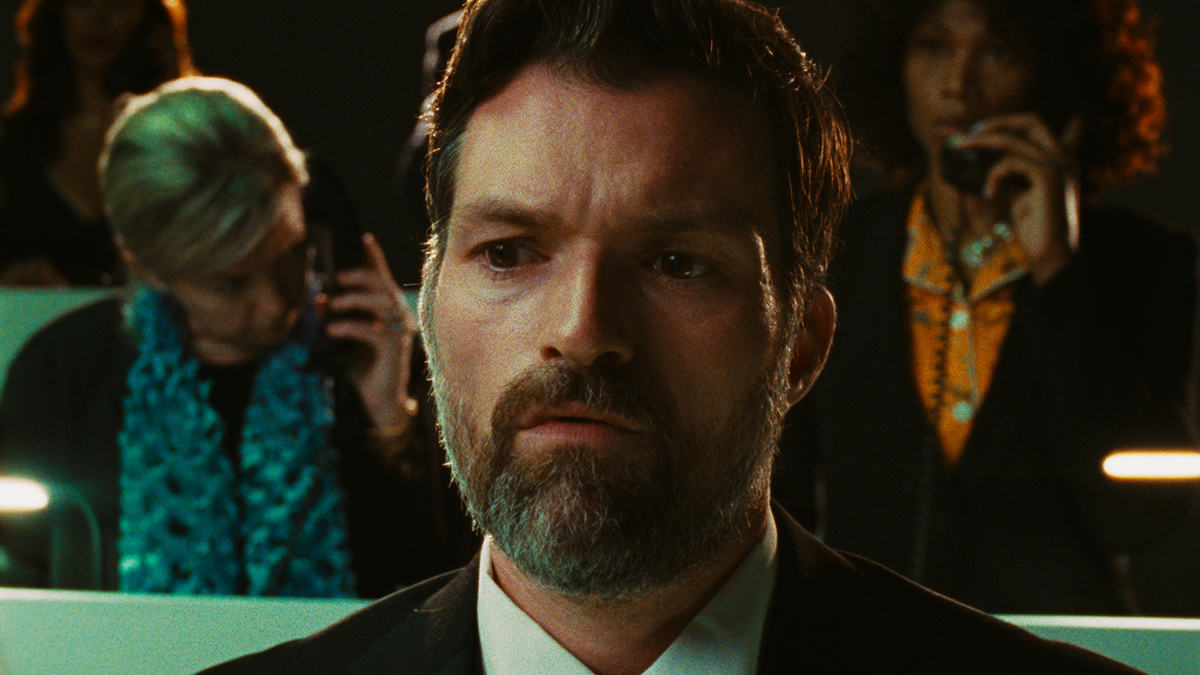
Netflixable? A campout turns its German bachelors into “Prey”

Even allowing for the minimalism of its formula, the German “hunted in the woods” thriller “Prey” offers slim pickings for those who enjoy watching and reasoning one’s way out of the pre-ordained predicament it puts its victims and the viewer in.

The set-up is so familiar your average 12 year-old could script it. Five friends set off on a kayaking/camping hike into the mid-European forest. Somebody starts shooting at them. They don’t know who, and even after they do, they have no idea “why.”

As they’re picked off and avenues for escape, “plans” to get out of this come to nothing, who will show himself capable of learning, scheming and figuring out how to fight back before they’re all dead?

Such thrillers, even the most unsurvivably supernatural among them, have the hunted and the viewer experience a learning curve. That’s who wins these Darwinian Hunter Games, those who adapt.

But there’s no learning here, no scheming. The most important figure to go into this kind of clueless and come out the same way is writer-director Thomas Sieben. If you ever wondered how boring and frustrating it might be to watch the young, athletic and helpless stagger to their deaths, with little agency in their fate, Sieben’s made a movie for you.

No. That’s not giving away the ending. But when Jerry Seinfeld and Larry David vowed they’d make an American sitcom whose characters lived by a “NO LEARNING” ethos, they had no idea they’d inspire some German with a Netflix deal to try it in a thriller.

Sieben (“Kidnapping Stella”) serves up a bachelor party of five, guys with little woodlore among them, riding inflatable kayaks, hiking and perhaps camping in a national park in early winter.

Roman (David Kross) is about to get married. Albert (Hanno Koffler) is the start-up entrepreneur some of them work for. Vincent (Yung Ngo) is the one most out of his depth, the one given to throwing up under stress and whimpering and crying when things get real.

You would be, too, if you were the first one shot. They hear what they assume to be hunters’ rifle fire, here and there. But it’s only when they try to get in their SUV and leave that the “accident” that winged Vincent stops looking like a mistake. They’re being hunted.

They flee into the forest without their gear, with no cell signal and little to fight back with save for a single knife and their wits.

In Sieben’s screenwriterly mind, that’s game over. These guys have “issues.” Little is done to develop the group dynamic, just this guy needing a job, that one needing investors, Vincent just wanting it all to end and Roman wishing he was with his fiance.

There’s talk of “every man for himself,” which sounds even uglier in German. The shots keep coming, even as they halfheartedly attempt to reason their way out of this jam, or plead from afar with the motiveless, murderous shooter.

“Why are you DOING this?”

Flashbacks show the “tests” Roman has faced in the relationship he’s about to consummate with marriage. Yawn.

When your Around the World with Netflix film puts more effort into explaining “motivations” than it does on five educated, healthy men incapable of teaming up, brainstorming or spitballing until they find an escape or counter-attack that works, that “explanation” had better justify all this.

It does not.

Perhaps our writer-director was making satiric fun of male bonding, the myth of primal male woodland prowess and the like. Probably not, and seriously, that’s all I’ve got on “Prey.” Alas, Sieben has to admit the same.

Rating: TV-MA, violence

Cast: David Kross, Hanno Koffler, Robert Finster, Yung Ngo, Klaus Steinbacher and Nellie Thalbach

Credits: Scripted and directed by Thomas Sieben. A Netflix release.

Running time: 1:27

Posted in Reviews, previews, profiles and movie news | Comments Off on Netflixable? A campout turns its German bachelors into “Prey”

Movie Review: Brotherly Bonding turns raw and complicated — “Small Engine Repair”

There’s one thing you can say for a melodrama that gives you whiplash. It must be quite a ride.

Actor (“This is Us”) turned writer-director John Pollono brings his off-Broadway slow boil of a thriller “Small Engine Repair” to the screen in an immersive, Big Twisty and somewhat uneven star vehicle that still delivers the goods. A great supporting cast will do that for you.

It’s a slice of Flyover America male bonding built around a trio of friends played by top dog character actors Jon Bernthal and Shea Whigham, with Pollono holding his own with two of the best. “Engine” starts clumsily — no, we don’t need to to have the nickname “Manch Vegas” that locals pin on Manchester, New Hampshire explained — and meanders ever onward establishing the characters, revealing their flaws and flashing back to explore their lifelong history.

And then it turns dark on a dime. And turns darker. And still, in all that lethal seriousness, it finds a laugh or two with these mugs, how they talk and what they find funny.

Pollono is Frankie, owner of said “Small Engine Repair” shop, a guy we meet as he gets out of jail, his arm in a cast. It was a short stay for this single dad. Fortunately, he’s got his childhood pals Swaino (Bernthal) and Packie (Whigham) to look after little Crystal.

Swaino’s an unfiltered blowhard who brags about sex and “makes one too many gay jokes” to not take a ribbing about that. Frankie’s jail stint was where he put down the bottle and what made him give up bar brawling. And while he might have raised Crystal (Ciara Bravo) to have his filthy vocabulary and coarse sense of humor, a few years later she’s headed for college.

Packie seems on-the-spectrum and off-center, the sort of talker who knows everybody’s buttons and clumsily pushes them at just the wrong times. But he’s smarter than he looks.

“Small Engine Repair” spends its first hour just hanging with these three, reveling in their “one-legged duck swims in a circle” witticisms, sex life anecdotes and red letter days and nights from their collective past.

It’s New England. Yeah, they have a “Game Six” story.

But one bar fight too many means they have a big falling out. We’re left wondering what it would take to bring them back together.

No matter where the story goes, I laughed a lot at the weather-and-whisky-worn rapport of our power trio. Whigham’s way with Packie’s many layers of tetchiness is a delight. Don’t use this word or make light of that subject. He’s thin-skinned about it. ALL of it.

“As an Irish American, I f—–g offense at that!”

Bernthal has a lot of fun with a brawny, butch and over-compensating lug whose friends don’t know he still does group facials with his sisters.

Bravo (“Cherry,” TV’s “Wayne”) throws her weight around in this bantering bucket of testosterone.

Jordana Spiro sinks her teeth into Karen, the blowsy, high-mileage tart who rarely sees her daughter Crystal, or the guy who fathered her.

Pollono’s Frankie is the alleged grownup in their midst, and even he is quick with the un-PC putdown.

“Who without a vagina actually f—–g SAYS that?”

As a director, Pollono doesn’t do much that doesn’t signal “stagebound” in turning his play into a film. But that “Game Six” anecdote, which starts out nostalgic, turns grim and shocking and finds one helluva punchline to exit, is the film’s great set-piece. Packie tells the story, and Pollono has the adult Whigham place himself back in their collective childhood, watching the World Series with two child actors playing his friends as they were then.

The abrupt shifts in focus and tone are jarring, and the finale feels a lot less satisfying than it should. But “Small Engine Repair” is the sort of slice-of-life, drinking buddies tested melodrama that will resonate with a lot of American men, and the kind of movie that’ll play in Nash-Vegas, O-Vegas, Minni-Vegas or Manch-Vegas without some actor/playwright/filmmaker patronizingly explaining the obvious to us.

Rating: R for pervasive language, crude sexual content, strong violence, a sexual assault, and drug use

Cast: John Pollono, Jon Bernthal, Ciara Bravo, Jordana Spiro and Shea Whigham.

Credits: Scripted and directed by John Pollono, based on his play. A Vertical release.

Running time: 1:42

Posted in Reviews, previews, profiles and movie news | Comments Off on Movie Review: Brotherly Bonding turns raw and complicated — “Small Engine Repair”

Netflixable? Kiss me? No. KILL me “Kate”

“Kate” is the most laughably predictable thriller since the silent film era. We know where it’s going the instant it starts. We know what the hack screenwriter used for his mashup — “D.O.A./Crank” meets “The Professional.” We know the rancid cheese dialogue by heart before anybody utters a word of it.

The lady assassin (Mary Elizabeth Winstead) has “one simple rule, no kids.”

Her handler, the guy who “groomed” her for this work (Woody Harrelson), has his cliches memorized — “Not your first rodeo…collateral damage” yadda yadda yadda.

She wants “a life, a real regular life.” She wants to “finish the job, and then I’m out.”

His jokes — “picket fences…suburbs” are older than he is.

And it’s all downhill from that opening scene.

Visual effects artist turned director Cedric Nicolas-Troyan — he did VFX for “Snow White and the Huntsman” and got to direct the “Huntsman” sequel nobody saw — and screentypist Umair Aleem (“The Extraction”) make the most of the movie’s most arresting element, its Japanese setting.

We see Noh theater performed (to no audience), yakuza and geishas and J-pop and lurid blacklit nightclubs and neon-drenched streets and a tall, willowy American hit-woman who doesn’t stand out. Oh no, not at all.

In one glorious moment, after Kate has botched an assignment because she’s got the shakes from the Putin-approved poison somebody slipped her, she makes her escape in the most conspicuous getaway car this side of the Oscar Mayer Weinermobile.

See above.

The whole movie’s like this. She’s an assassin captured by the cops and hospitalized after wrecking that garishly painted and lit tuner/hoonigan getaway car. And she wakes up with no cops present.

She has just enough time to get her “24 hours to live” diagnosis, make a plan and start her escape before the first J-cops show up. It’s pretty much the last we see of them.

Kate must chase and catch and threaten and kill her way to whoever ordered the hit on her.

Granted, she has no right to be offended. Because she MURDERS people for a living. But hey, we’re all a little self-righteous these days.

There’s a fouled-mouthy kid (Miku Patricia Martineau) and a lot of about-to-be-dead mobsters, a laundry list of them Kate must shoot, punch, stab, kick and head-butt her way through to get to whoever wanted this “revenge.”

She sickens every step of the way, and the kid — whom she kidnaps — speaks her mind in Janglish and American-accented curses.

“F— you, cancer b–ch!”

Winstead and/or her stuntperson handle a little parkour and a whole lot of fight choreography with a modicum of ease. No, the supermodel physics of such movies never computes. It hasn’t since “La Femme Nikita” or its Hollywood cover, “Point of No Return.” But Winstead rarely lets us see enough to say “No WAY SkinnyKiller could manage that.”

But the movie? It’s not much fun, and not particularly gripping. The opening scene tells us pretty much everything to come — the kill, the “kid,” the fatal misstep — all of it.

That just leaves Tokyo at night. And as luridly arresting as that can be, it’s just not enough, “Kate” or no “Kate.”

Rating: R, for strong violence and language (profanity) throughout

Cast: Elizabeth Winstead, Miku Patricia Martineau, Jun Kunimura, Miyavi and Woody Harrelson

Credits: Directed by Cedric Nicolas-Troyan, scripted by
Umair Aleem. A Netflix release.

Running time: 1:48

Posted in Reviews, previews, profiles and movie news | 4 Comments

Movie Review: Walton Goggins pines for more pitchman laughs — “John Bronco Rides Again”

Walton Goggins and his unique brand of drawling, skinny redneck ornery is so in demand that he’s always got a couple of TV series going on while Hollywood tries to find a way to pair him and Tim Blake Nelson up in something Western — modern, with pick-up trucks, or vintage, with saddlebags.

But in between episodes of “The Righteous Gemstones” and “The Unicorn,” making a killer pilot for a TV version of James Ellroy’s “L.A. Confidential” (not picked up) and movies such as “Words on Bathroom Walls,” he squeezed out a goofy little one-joke short “John Bronco” for Hulu.

It was a vamp on ’70s TV, men with mustaches, the disco era dating ideal (Bo Derek) and a “legendary” pitchman who shared his rawhide-tough name with the pre-OJ SUV, the Ford Bronco.

And for a one-off, it was just funny enough to work, immersing us in how a guy famous for commercials in TV’s cheesiest era could make a big mark in show business.

I can’t say as much for the sequel, “John Bronco Rides Again,” premiering Sept. 13 on Hulu. They’ve ridden that one-trick pony lame, slurped that waterhole dry and what not. There’s barely a laugh in it.

The entire team concocting it is different. They don’t have Dennis Quaid narrating. And when you’re not so much scripting the zingers as relying on the funniest line on the set improvs to pay off, you’d better have funny actors and actresses on the payroll to help with the heavy lifting. Goggins is on his own.

This one is narrated by a John Bronco geek (Tim Baltz) who is a Ford Motor Co. archivist, host of the Broncast podcast, and man searching the country for the reclusive ex-pitchman so he can get him a star on the Hollywood Walk of Fame. Leaving the voice-over narration to his character is a non-starter. Trying to wring laughs out of exposition is a blunder.

The Bronco “King of All Media” snippets packaged here include a 1960s Texas Exposition (not the World’s Fair) sketch for kids that went wrong, a Scooby-Doo knockoff kiddie cartoon — “John Bronco Mysteries” — a brief stint as a Vegas stand-up, John Bronco Reads the Classics audio books (“Moby Dick,” as vaguely recollected by the pitchman, who confuses it with “Jaws”), his own brand of breakfast cereal and of course, lots of lots of Ford Bronco TV commercials, “meaner’n a wet panther you forgot to invite to your birthday party.

The new Ford Bronco co-stars, pitched as “There’s nothing better for the inside of a man, than the outside of a Bronco.” There’s also Tim Meadows as Bronco’s cynical longtime manager, with cameos by Michael Chilkis, appearing here as a former child-actor traumatized by working with Bronco, and Brian Austin Green.

I’ve been a big Goggins fan for years, and keep hoping he’ll land something as funny as “Vice Principals” again, teamed up with Danny McBride one more time or Tim Blake Nelson. So I’d say this was funny if it was, but I can’t because it isn’t.

Rating: unrated, seriously inoffensive

Cast: Walton Goggins, Tim Baltz, with Tim Meadows, Michael Chiklis and Brian Austin Green.

Credits: Directed by Jonathan Krisel. A Hulu release.

Running time: :25

Posted in Reviews, previews, profiles and movie news | Comments Off on Movie Review: Walton Goggins pines for more pitchman laughs — “John Bronco Rides Again”

Documentary Review: What he really thought, and what his “friends” really thought about him — “The Capote Tapes”

Oh, to have someone say this about you after your death.

“I haven’t had a good laugh since he died!”

Most of us only experienced the late life “public” Truman Capote, the bitchy literary gnome who flitted among the beautiful people, drank with the great and near great and the elfin “bad boy” chat show guest who scored laughs by insulting many of those whose paths he crossed.

But he was a publishing sensation at 23, world famous in his ’30s, threw “the only important (masked) ball of the 20th century,” and had barely sobered up from his infamous Studio 54 days when he died at 59 at the end of the summer of 1984.

“The Capote Tapes” is the second documentary appreciation of his talent and how he used or abused it in the space of a year, following “Truman and Tennessee,” the similarly structured (tape recordings) documentary about his long friendship and rivalry with the great playwright Tennessee Williams.

The hook here is in the title — “Tapes.” Former White House deputy social director and first-time documentary filmmaker Ebs Burnough got his hands on “tapes.” Not just talk show interviews, radio conversations or TV documentary footage from Capote’s glory years — the 1960s — although Burnough generously samples those. No, he acquired the recordings of “a journalist,” a coy early credit in the film teases, someone who knew Capote and traveled in his circle.

He could have just said “I got George Plimpton‘s extensive interviews with Capote and those in his social whirl, writers and rich people, friends and colleagues, and made a film out of them.” Because as polished and entertaining if not exactly exhaustive and thorough as “The Capote Tapes” is, with a solid lineup of fresh on-camera interviews with the likes of Dick Cavett and Jay McInerney, Sally Quinn and fashion editor Andre Leon Talley, it’s Plimpton’s work that makes it.

Plimpton got on the phone with Lauren Bacall and Lee Radziwell and Slim Keith and other surviving Capote “swans,” the beautiful society women he was friends with. He collected anecdotes from Norman Mailer about dragging Capote to a New York Irish working class bar, without thinking, and marveling over how accepted the famous, tiny and effeminate writer was and just what it “cost him” to maintain the cocky, swishy New York persona he first affected in his 20s throughout his later life. Plimpton recorded the screenwriter, George Axelrod, tasked with sanitizing Capote’s “Breakfast at Tiffany’s” into a general audiences blockbuster starring Audrey Hepburn and Henry Mancini’s wistful “Moon River,” and got Jack Dumphy, Capote’s longtime companion on the phone.

Those interviews provide the killer, pithy quotes. “Truman saw everything and he remembered it.” Film siren Bacall called him “an intellect…someone you looked forward to seeing.” “Lionized” and “Sleazy” and “seductive,” and someone who remained, his entire life, “a naughty little kid,” Capote made an impression. And even some of the people who never forgave him for publishing a scandalous magazine excerpt of his never-finished “masterpiece” and final “non-fiction novel” “Answered Prayers,” were full of opinions they were willing to share with Plimpton after Capote’s death.

Burnough complements those with a collection of still-surviving friends and acquaintances who provide the distance and whole-life framework that the film needs. This isn’t a PBS film built on chats with Capote biographers. Here’s playwright and sometimes cruising companion Dotson Rader, and the daughter of Capote’s manager, who left his wife for a fling with the writer in the ’60s. Kate Harrington, along with chat show host Dick Cavett and peers like Lewis Lapham provide lots of context and sympathetic views of Capote’s celebrity “trap” and how his partying and drinking cost him years and books he might have written.

“Bright Lights, Big City” author Jay McInernery, a former “boy wonder” of publishing himself, adds the perspective that “early success is a bit of a curse.”

We tend to forget Mailer was a fan, and he comes off as someone who appreciated what Capote had to struggle with, from his emotionally crippling childhood to his mother’s suicide, not long after he became famous. Conservative columnist, magazine publisher and chat show host William F. Buckley Jr., a notorious homophobe, gave Plimpton a snide, patrician thought on two of the “not a fan” variety.

The movie leaves out much of Capote’s Hollywood experience, and avoids some worn out anecdotes while recycling others, such as Capote regaling Johnny Carson about how “great an actor” Brando is, while noting that he is “so stupid he makes your skin crawl.”

The most revealing Capote nugget of all might be the one that provided the title of his “lost” last book, a roman a clef that was to serve up much of the dirty gossip about “the bored rich” he thought he’d become friends with, but whom he came to realize “saw him as a servant.”

“More tears are shed over answered prayers than unanswered ones.”

The early fame, topped by the sensation that “Breakfast at Tiffany’s” and “In Cold Blood” created, may have allowed him to host the celebrated, all-star “Black and White Ball” at New York’s Plaza Hotel in 1966. His celebrity exceeded his wildest dreams, and led to endless travel, sailing yacht vacations and every high society invitation that was worth having. He was a gay icon before such creatures existed, and normalized gay acceptance with every florid and flamboyant TV appearance.

But in the end, those “answered prayers” were his undoing as a star writer, A-list guest and famous wit.

This may not be the “definitive” Capote biography. Perhaps PBS will be the one to get around to that, some day. Burnough’s still made an entertaining and generally brisk overview of the career and the life of the most famous writer of his day.

Rating: Unrated, profanity, adult subject matter

Cast: Dick Cavett, Kate Harrington, Sally Quinn, Dotson Rader, Jay McInerney, Lewis Lapham, Andre Leon Talley and the voices of Truman Capote, George Plimpton, William F. Buckley Jr., Lauren Bacall, Norman Mailer, Lee Radziwell and Slim Keith.

Credits: Directed by Ebs Burnough, scripted by Ebs Burnough and Holly Whiston. A Greenwich Entertainment release.

Running time: 1:38

Posted in Reviews, previews, profiles and movie news | Comments Off on Documentary Review: What he really thought, and what his “friends” really thought about him — “The Capote Tapes”

Movie Review: Warning the Super Rich with an Argentine history lesson — “Azor”

A quiet chill clings to “Azor,” the debut feature of Argentine filmmaker Andreas Fontana. It’s set among his country’s uber-rich, their grand, inherited estates and stables, their horse racing outings, Michelin star dinners and galas. But they’re a glum lot, filled with resignation or dread.

“Azor” is set a few years after Argentina’s 1976 military coup, the time of “los desaparecidos,” “the disappeared,” when a military dictatorship made tens of thousands of Argentine activists, political rivals and other “undesirables” disappear — one of recent history’s most infamous state-sponsored mass murder programs.

And as many times as our protagonist, the visiting Swiss banker Yvan De Wiel
(Fabrizio Rongione) is told “You don’t understand, this country was a mess” and that the coup brought “much needed reforms” and that “a purification phase” was in order to deal with “parasites,” he’s seeing resignation in the faces and fear in the voices of the well-heeled.

He can tell his wife, confidante and traveling companion Ines (Stéphanie Cléau) “It’s like being in Europe,” but there are soldiers on the streets, stopping anybody young, anybody at all.

And for the rich, who along with the higher-ups in the Argentine Catholic Church who might have backed that coup, the drunken revel in “owning the left” is past. The hangover is here.

“The military is getting restless,” one client sighs (in Spanish, with English subtitles). Another takes them horseback riding, but there is no joy in the outing. His estate is missing one resident. His daughter “disappeared.”

“These days, they don’t have enough with people,” still another gripes. “They ‘disappear’ horses, too.”

And in the small talk of “Do you know Gstaad?” and “You are more than welcome to stay with us when you visit,” Yvan and Ines hear snippets of the unthinkable.

“Did you hear about Perez? They went to his house and took everything from him!”

The oligarchs got their way, a government of their choosing. And now it’s eating them, too.

Fontana’s covering some of the same ground as the Argentine classic “The Official Story” and “The Disappeared.” But he uses a seriously unsympathetic outsider as his and our tour guide, letting one of those famously discrete and infamously amoral Swiss bankers see a nightmare that their clients help bring on by hiding their assets, dodging taxes and backing governments that let them get away with it.

The title is a bit of Swiss (French, Italian and German speakers) banker slang for “ask no questions.” And the story, as its opening chapter reveals, is “The Camel Tour,” a “private” banker coming to the clients, far and wide, trying to help them navigate the shifting political sands and hyper-inflation that dog the country.

He and his wife are there because his bank’s partner, Keys, who ran things in country, might be laying low in Argentina or even Switzerland, or “disappeared.”

They hear an array of opinions about the man, good and loyal to manipulative and crude. Some of the very wealthy — and that’s the only world De Wiel travels in — including the Monsignor (the person to refer to the victims of the regime as “parasites”), have an idea of what happened to Keys.

There are other “commercial” bankers working over this client list, promising investments in currency speculation, which might keep pace with the ruinous inflation — something the rich all over the world fear more than death or dictatorships, their accumulated wealth losing most of its value.

De Wiel has to suffer business and social slights and boorish lawyers (Juan Pablo Geretto), the threat of losing clients to better (currency speculating) offers or to government “interest.” Can he adapt, on the fly, to maintain his business and preserve his own inherited wealth?

Fontana’s film is a cautionary tale an overt red-alert warning. Beware the world you make, superrich. It will eat you, with only the bankers figuring out a way to profit from the violence that comes from extreme wealth disparity and government by kleptocracy. Maybe the police and soldiers and some of the rabble are on your side, for now. But when “the military gets restless…”

Veteran Belgian actor Rongione, last seen in “Rose Island,” makes this poker-faced banker flinch now and again, a man recognizing what’s going wrong and how it will impact him even as he scrambles to piece together the business his partner was mixed up in. When De Wiel faces the indignity of an armed search, he is shocked enough to say the privileged part out loud.

“Us too?”

Cléau (“The Blue Room”) is perfectly crisp and businesslike as Ines, a woman whose role is to look tall, thin and rich and charm the wealthy women and men they interact with, rendering this “private banking” personal.

And Geretto stands out in the supporting cast, an oily, blunt speaker of harsh judgments about his countrymen, even those who use his services.

Fontana’s tale is austere, quiet and posh, mirroring the world he’s depicting. There’s enough mystery here to hold our interest. Still, as we count up the mysterious off-camera figures in it — Keys, a rival banker Lutz and the sinister name scribbled on a note left by Keys, the soldier Lazaro — one can’t help but be reminded of “The Third Man” and think Fontana neglects the core mystery and leaves the stakes entirely too low, or at least removed from this world of money and connections.

We see no shootings, no disappearances. There is little in the line of surprise appearances, and De Wiel’s quest is more vague than directed. The coda has a punch and comes completely out of the blue, yet could have used more build up.

But “Azor” is still riveting entertainment and dispiriting in its “It happened there, is it happening here?” allegories. If you aren’t chilled by the consequences of this coup, you must think Jan. 6 was “a normal tourist visit.” Here’s what happens if the next one succeeds, and they come for you.

Rating: unrated

Cast: Fabrizio Rongione, Stéphanie Cléau, Juan Pablo Geretto

Credits: Scripted and directed by Andreas Fontana. A Mubi release.

Running time:

Posted in Reviews, previews, profiles and movie news | Comments Off on Movie Review: Warning the Super Rich with an Argentine history lesson — “Azor”

Documentary Review: White Privilege and Immigrant hunger team up for soccer in “Hood River”

Every documentary filmmaker’s first major hurdle is finding a subject worthy of the intense labor, spread over what is often a prolonged period of time, a subject that’s novel enough that it will stand out in a tsunami of documentaries that are finished and unleashed on the public in a given year.

I am pitched upwards of 50 documentaries a month, producers, publicists and filmmakers desperate for a review, a little recognition and a chance their film will get noticed as it reaches public presentation.

With major streaming services like Netflix and HBO, Hulu and Amazon picking them up for distribution, there’s at least a better chance of getting your story out there and seen these days.

“Hood River” is about an Oregon high school’s soccer team, the way its coach, Jaime Rivera, tries to blend the disparate players from a student body of white affluence and LatinX immigrant working poor into winners, year after year.

Yes, it seems like 240 other sports dramas, comedies and documentaries we’ve seen before it. Even the story arc, taking us through a season of lopsided wins and serious tests, has the ring of the familiar. If you’ve seen enough sports movies, you can guess where this is going, how it all will play out and who will be the hero or goat when the payoff hits.

It’s that limply predictable. Even the jolt of a kid’s father being caught, “sent to immigration jail” and deported, seems like an ingredient in a formula.

The film’s narrow focus circumscribes its reach and aims. On the field it’s somewhat interesting, off the field somewhat less. And neither plays as anything particularly new.

What’s more, it’s the first cinema verite/fly-on-the-wall documentary I’ve seen in ages that makes you painfully aware that there’s a camera in the room impacting how ordinary people — kids and their coach — behave.

The PG-party scene feels real (ish), and the Hood River Valley High Eagles games and practices have their own drama and meltdowns. Some of the home life scenes have an invisible-camera vibe. Then there’s the illegal immigrant father’s melodramatic pep talk with his son, the tall, wealthy white kid’s painfully awkward, might-not-have-been-his-idea visit with an immigrant teammate’s family so that the team captain can feel like a “leader.”

The financially-strapped immigrant family books a flight so that the son can fly down to visit deported Dad in Zihuatanejo, Guerrero, Mexico. With a film crew in tow. Did the production pay for everybody’s flight?

Needless to say, whatever drama “Hood River” delivers, I didn’t buy it.

There’s built-in suspense in the ups and downs of any sports movie, something that explains the ongoing appeal of this or that sport — the idea that “anything can happen” in the one entertainment we all partake in that isn’t scripted.

The trouble with “Hood River” is that it feels scripted and pre-ordained, even if it isn’t.

Rating: unrated, profanity

Cast: Domingo “Mingo” Barraga, Jaime Rivera, Saul Chavarria, Angel Sonato and Erik Siekkinen

Credits: Directed by Steven Cantor and Jonathan Field. A Gravitas Ventures release.

Running time: 1:21

Posted in Reviews, previews, profiles and movie news | Comments Off on Documentary Review: White Privilege and Immigrant hunger team up for soccer in “Hood River”

Movie Review: “Queenpins” try to pull off the big coupon con

Phoenix friends set up a massive grocery store coupon scam, raking in tens of millions and spending like drug lords until they bring down a massive Federal tactical response in “Queenpins,” a caper comedy overflowing with dark farce possibilities.

The script lured former “Veronica Mars” co-stars Kristen Bell and Kirby Howell-Baptiste, as well as Vince Vaughn, Joel McHale, Stephen Root, Bebe Rexha, Jack McBrayer and Paul Walter Hauser of “I, Tonya” and “Richard Jewell.”

It’s got adorable not-dumb but hardly brilliant criminal masterminds, oafish over-eager corporate “loss prevention” and (postal) law enforcement, coupon stealing and money laundering, Lamborghini collecting and arms dealing.

And after all these balls are tossed in the air, writers/directors Aron Gaudet and Gita Pullapilly (“Beneath the Harvest Sky”) make a nearly complete hash of things. A promising set-up, a bouncy first act, some fun performances, and the whole enterprise goes off the rails.

“Inspired by actual events” (a $40 million bust in 2012), our story is narrated by the perky, obsessive Connie Kaminsky (Bell), a Phoenix housewife and retired Olympic gold medalist race-walker who has thrown herself into couponing.

And of all the things to invent for your fictionalized version of a “pink collar” criminal mastermind, that there is a doozy. Was it to flatter Bell into taking the role?

Connie is couponing buddy with neighbor JoJo (Howell-Baptiste), a bubbly, failed-saleswoman, hard-luck would-be entrepreneur and Youtube “personal brand” builder who does videos about couponing as the SavvySuperSaver, “the savior of saving.”

They both love the thrill of watching a supermarket receipt subtracting price after price until that final total prints out and they can take home what one cashier calls “your trophy.”

They’re both experts at what a “six month stock up price” is for this or that product, and are willing to dumpster dive for proof of purchase boxes to feed their mania.

“Watch the pennies, and the dollars will take care of themselves!”

And yes, both women have their sad reasons for this compulsion.

It isn’t until Connie learns the rewards of writing strong letters of complaint to assorted food and household product empires that they see a bigger score — reselling those “free” coupons such companies send out to maintain customer loyalty among the disgruntled.

And that’s what points them to Chihuahua, Mexico, where the coupons are printed and also processed, the promise of NAFTA at work. When Connie pushes them to figure out how to steal those coupons, smuggle them home and sell them illegally, they have their caper.

“Sounds bad when you say it like that!”

All that’s left is selling them online and stuffing cash into empty Pampers boxes.

They’re going to need help avoiding getting caught. That comes from identity theft queen Tempe Tina (singer/actress Bebe Rexha). And if you’re laundering money, why not spend it on high-end guns, the kind that go up in value when you see them in a film?

“No better commercial for a gun than a John Wick movie!”

Hauser, who is making a career out of playing law-enforcement wannabes, is the “Let’s cut to the Chevy Chase” loss prevention officer who can’t quite piece this all together. Vaughn is the Postal Policeman who gets interested when the FBI (Root) laughs off the crime. And McHale plays Connie’s tightwad, always-on-the-road/never-the-wiser IRS auditor husband.

With so much to work with, the writers/directors have trouble figuring out the tone and who and what to direct our attention to.

Our heroines aren’t heroic, but not enough is made of their desperation and no effort is given to making them identifiable and sympathetic. They’re cute together, but the “Robin Hood” ethos is a hard sell.

Better to have locked-down on the nuts-and-bolts logistics of low rent larceny and made our leading ladies dizzier and luckier — let their mistakes be more obvious, their downfall more comically suspenseful.

Their first meeting with “Tempe Tina,” involving blindfolds and a drive into the night for a secret rendezvous could have been tense comic gold, but is so ineptly-handled it should have been cut.

Vaughn and Hauser are co-starring in a crude, cut-rate “We’re not partners” cop-buddy picture with a few lowball laughs tossed around. And they’re the comic standouts in the cast. Bell and Howell-Baptiste never quite come off as comical as their characters seem destined to be.

The “sell guns to Arizona militia nuts” with their Proud Boys’ guts seems a lot more chilling now than when this was filmed, and might have taken me right out of the movie if it hadn’t lost me several scenes earlier.

All these complications make for a cluttered script that staggers towards a long-overdue and anticlimactic finish. And the epilogue is an unnecessary afterthought.

The first act of “Queenpins” makes you giddy at the comic possibilities, but the finale is the final straw in the letdown it too-quickly becomes.

Rating: R for language (profanity) throughout.

Cast: Kristen Bell, Kirby Howell-Baptiste, Paul Walter Hauser, Bebe Rexha, Joel McHale, Stephen Root and Vince Vaughn

Credits: Scripted and directed by Aron Gaudet and Gita Pullapilly. An STX release.

Running time: 1:50

Posted in Reviews, previews, profiles and movie news | Comments Off on Movie Review: “Queenpins” try to pull off the big coupon con

Movie Review: Morales, Duplass make definitive Lockdown “Zoom” dramedy — “Language Lessons”

Many have taken a shot at creating a “Zoom” call comedy or drama or dramedy during COVID. But it took actress (“Parks & Rec.”) turned actress-director Natalie Morales and actor and sometime writer-director Mark Duplass (“Jeff, Who Lives at Home,” “Safety Not Guaranteed”) to stick the landing.

“Language Lessons” leaves COVID more or less out of the picture. It’s just an affluent, middle-aged Oaklander unknowingly signed-up for Spanish lessons by his husband, and the utterly charming Spanish speaker on the other end of the video calls.

The unseen Will signed up former-Spanish speaker Adam up for 100 lessons, immersive conversations carried out via video chats which he can do from the comfort of their too-tasteful hillside McMansion.

“Casa GRANDE,” Adam admits, and Cariño, as his teacher is nicknamed, has to agree. She’s taken $1,000 for 100 lessons, so it’s no great shock to learn (a little later) that she’s not down the street or across the state. She’s in another country.

Adam is “muy incómodo,” he confesses. VERY uncomfortable. “It’s bad that I have all the things and that you don’t have them.” Sure, her perfectly-streaked hair and designer glasses suggest “Hollywood,” just a little. But her simple video call background of chalkboard and bulletin board and taking $10 per lesson/conversation is a real liberal “privilege” guilt trip.

Morales and Duplass give us a taste of the effortlessly charming and undemanding movie that “Language Lessons” might have been in the opening scenes. He’s conversational in Spanish, but makes plenty of grammatical stumbles. And Duplass masterfully conveys a man trying to remember what he once knew, and mentally searching for words he might never have mastered as he does. He even makes the classic gringo new-to-Spanish boo-boo.

“Yo soy muy MUY embarazado!” he confesses. And Morales, like every native Spanish speaker in all of recorded history, cackles at yet another American confusing “I am so VERY embarrassed” for the Spanish word for “pregnant.”

We just have time to settle in for a cute movie about learning a new language when “Language Lessons” takes its first turn toward serious. It’s not the last. As these two banter, struggle to schedule this weekly meet-up into routine and slowly let layers of their real lives peel away in the conversations, grief and danger and melodrama Zoom into play.

Our leads have the kind of chemistry rom-com screenwriters dream of, and the fact that Adam is gay and rich and Cariño isn’t only makes it their connection that much more interesting, and great fodder for jokes.

“You’re so poor,” as Adam puts it, “and I’m pregnant.”

They chat or video-mail each other about their lives and movies, mostly in Spanish (with English subtitles), but slipping into Spanglish when the need arises. She catches him in bed, just waking up, in the pool or sweating in the home gym. She gives him a peek at the bamboo garden behind her house, and even has a tipsy musical moment — via Zoom — commemorating his birthday.

When tragedy strikes, they share and reach out to one another, because they’re compassionate human beings. But there’s a lot being avoided here, a lot she isn’t saying or that he isn’t figuring out.

The film travels from light and frothy to abruptly and less-convincingly sad, and for my money, that happens too early on in the narrative. Give us more of the giggly stumbling through Spanglish bonding before turning dark.

But even in the film’s third act lurch into sheer melodrama, with brittle conversations carried out on eggshells, Morales and Duplass are wholly immersed in character. The twists are believable because they’re totally credible in their roles.

They make “Language Lessons” a most engaging human connection, and a seriously entertaining way to brush up on your own rusty Spanish in the bargain.

Rating: unrated, profanity

Cast: Mark Duplass, Natalie Morales

Credits: Directed by Natalie Morales, scripted by Mark Duplass and Natalie Morales. A Shout! Factory release.

Running time: 1:31

Posted in Reviews, previews, profiles and movie news | Comments Off on Movie Review: Morales, Duplass make definitive Lockdown “Zoom” dramedy — “Language Lessons”

Netflixable? COVID and romance in the Philippines? Maybe it’s happening “Here and There (Dito at Doon)”

Whatever new ground the Philippine cinema is breaking in dramas and thrillers, the romances and rom-coms rolling out of there and onto Netflix aren’t making any impression.

Even taking into account cultural differences as we travel Around the World with Netflix, “Here and There (Dito at Doon)” is a sleep-inducing nothing of a romance, every bit as warm and/or titillating as that photo of its star, above, sitting there swapping stories, insults and (tepid) flirtations via computer during COVID lockdown.

This reuniting of co-stars from “The Woman and the Gun” doesn’t do much for either Janine Gutierrez or JC Santos, or for anybody hoping for something — anything — to motivate you to stick with it.

Len (Gutierrez) is at home, alone and bored with her nurse-mom (Shyr Valdez) at work and overwhelmed by the spreading pandemic. Len socializes via Facenook (tee hee), where she grumps that this lockdown isn’t a big deal with her friends, all of whom are of the “just drink at home” (in Filipino with English subtitles) instead of going out mind.

Save for this one commenter who gets under her skin. “Caloy” takes her and her pals’ “just stay at home, what’s so hard about that, mother-f—–r?” slaps personally.

They exchange a few shots, and that’s that. Until Len convenes her girlfriend/boyfriend pals Jo (Yesh Burce) and Mark (Victor Anastasio) for a group guzzle and gab — online.

Wouldn’t you know it? Mark invites his buddy “Cabs” into the mix. And before too long, as Len vents about her annoying exchanges earlier that day, Cabs figures out, and then Len is clued in, that he was the guy who got on her nerves.

Hanging up only means, their “meet cute” (note remotely) will require an apology or two to really come off.

It does, and she figures out he’s from Cebu, runs a street vending coffee cart for his livelihood, and the shutdown is basically putting him out of business.

They chat and chat and call and what not, and whatever will be, will be.

The film’s most modestly clever conceit is the way Len imagines these conversations playing out. The group is gathered in her living room, or later Caloy is talking to her in a more intimate way at the foot of her bed.

That sounds even less racy than it is. This film’s chastity rivals the coy extremes of Bollywood in terms of “romance.” At least in Bollywood they make eyes at each other and sing and dance with one another as they court and flirt.

“Here and There” can’t even manage that.

Comedies and dramas made under COVID conditions either strain to not seem claustrophobic, mimicking the solitude and isolation we all feel, or lean into it. This one does both, to zero effect.

It’s a polished production, as handsomely mounted as any Hollywood, Bollywood or British soundstage romance. It’s just not romantic. And unlike the dramas and thrillers exported from the islands, it ventures little in the way of commentary on the state of the nation under the autocratic goon Duterte.

Anybody hoping to see a Filipino version of Tom and Meg or Miss Bennett and Mister Darcy in this new “couple” will be sorely disappointed. It’s dull and pretty much charmless.

Rating: TV-14, beer drinking, profanity

Cast: Janine Gutierrez, JC Santos, Yesh Burce and Victor Anatasio

Credits: Directed by Jaime Habac Jr., scripted by Kristin Parreño Barrameda, Alex Gonzales A Netflix release.

Running time: 1:38

Posted in Reviews, previews, profiles and movie news | Comments Off on Netflixable? COVID and romance in the Philippines? Maybe it’s happening “Here and There (Dito at Doon)”