Movie Review: Beware “Bloody Mary” and her thing for “Mandrake”

The Irish do the gloom thing quite well. Poets and painters, novelists and filmmakers, they get their greys right and the grim earth tones of fall and can all but consume any notion of cheer and the Irish spring long past, or the one you hope is coming.

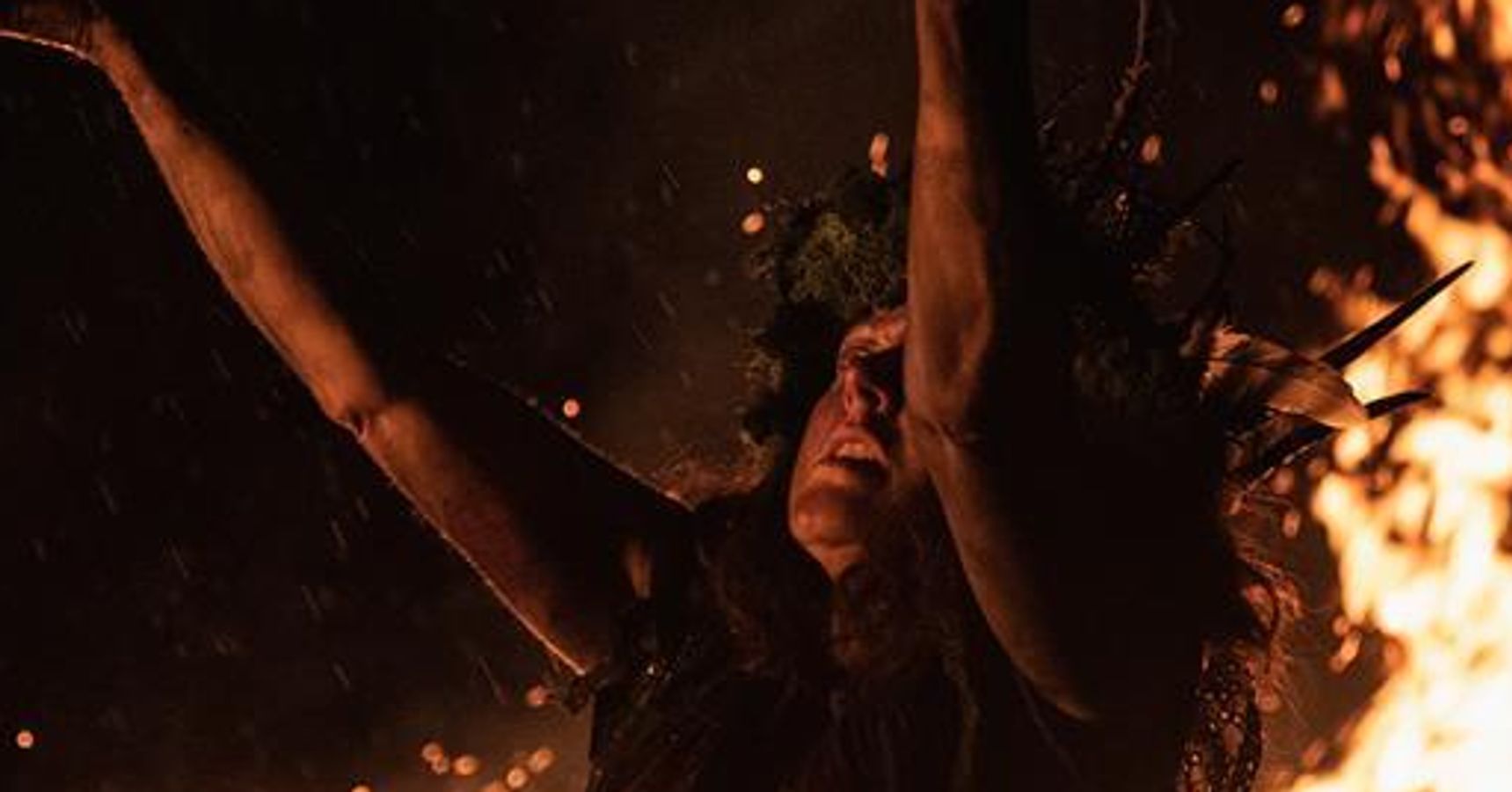
“Mandrake” is a moody little Northern Irish tale of spooky goings on out in th’bog, children disappearing and the “witch” the locals are convinced is behind it all, seeing as how she just moved back after serving time for killing her abusive husband.

“Bloody Mary” they call her. Not terribly original, and it’d confuse viewers if they’d titled the film this.

Deirdre Mullins plays Cathy, a divorced and dedicated probation officer who tries to keep her charges on the straight and narrow, and can fight them off when they aren’t. But this Mary Laidlaw (Derbhle Crotty) woman she’s taken on would give Freddy Krueger the creeps.

She’s blowsy and bluff and sexual, 50something and walking with a cane. When Cathy attaches an ankle monitor on her after she’s returned to the half-ruined home where she nearly died, and where she killed the man who almost killed her, the probation officer can’t help but notice scars.

Mary acts as if she knows Cathy, talks about her ex-husband, the cop Jason (Paul Kennedy), mentions their marriages troubles and even a possible cause of them. She knows.

Mary’s all about herbs and the roots of the forest, teas and potions and whatnot. And don’t get her started about mandrake.

When a couple of local kids, smart-alecks who “want to see the witch,” disappear from the woods near Mary’s place, the locals want to lynch her. Cathy and Jason intervene.

“This town thinks she’s the f—–g devil!”

But is she?

Lynne Davison’s debut feature is properly creepy and mysterious, with folk horror stick figures and even a shrubby looking beast glimpsed in the shadows, wandering the forest. That’s true all through the first act and into the second.

It’s when things head into hostage-taking/rituals and the like that the spell is broken. The best mysteries are the ones left only half-explained.

But there are kids and a woman imperiled, primitive goings on in the woods and lots of fiddling about with roots that seem kind of human when you wash and cut into them.

And a lynch mob delayed can be justice denied. Or murderous conclusions leapt to by groupthink. It’s the gloom that gets in their Irish souls and won’t let go.

Rating: unrated, bloody violence, nudity, profanity, inuendo

Cast: Deirdre Mullins, Derbhle Crotty, Paul Kennedy, Seamus O’Hara and Jude Hill

Credits: Directed by Lynne Davison, scripted by Matt Harvey. A Shudder release.

Running time: 1:25
Posted in Reviews, previews, profiles and movie news | Comments Off on Movie Review: Beware “Bloody Mary” and her thing for “Mandrake”

Is this the greatest film of all time?

The new Sight and Sound magazine “Greatest Films of All Time” list has gotten its once-a-decade updating.

It’s the list that first enshrined “Citizen Kane,” that later critics/voters replaced with “Vertigo,” and so on, down the decades since 1952.

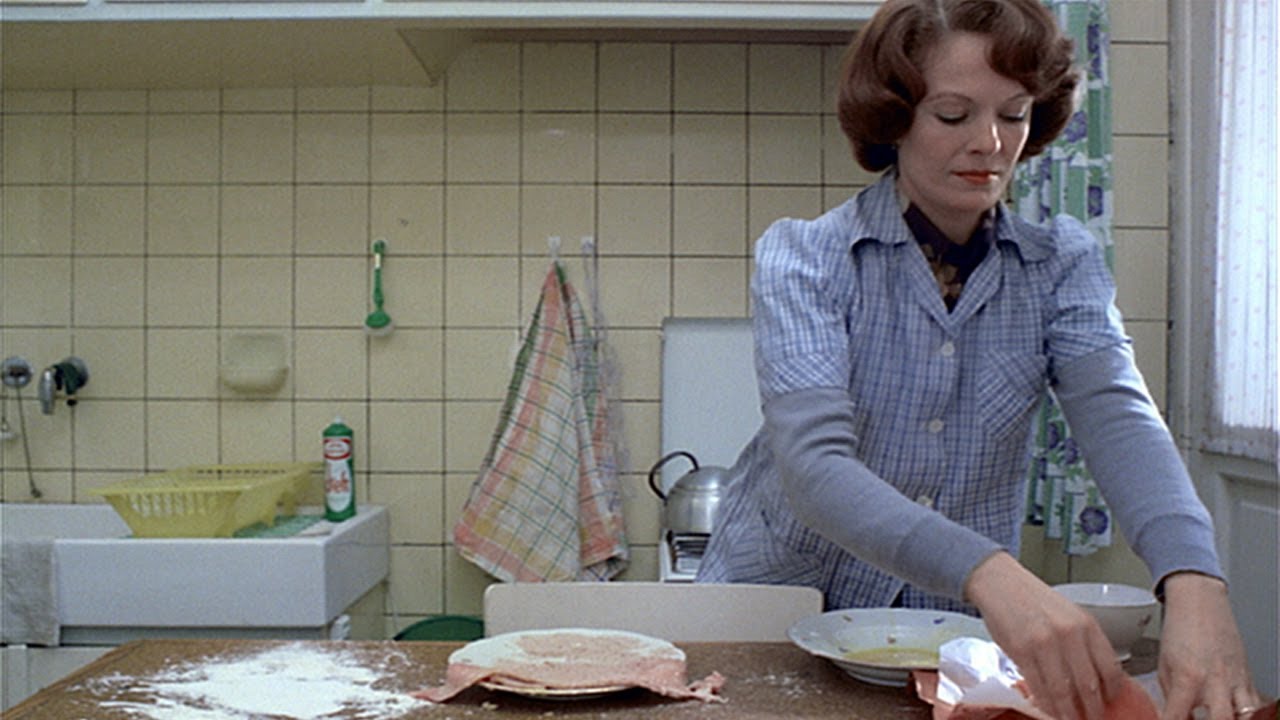
And they picked a film that has long been held in esteem, a 1975 Belgian drama that runs for three hours and 20 minutes, with the pithy title “Jeanne Dielman 23 Quai de Commerce, 1080 Bruxelles.”

Say what now?

“An epic of experimental cinema” following a widow (Delphine Seyrig) through her daily routine of housekeeping, cooking and caring for her son. Oh, and she’s a Belgian prostitute, a sex worker “turning the occasional trick.”

It was on the last version of the S&S poll at #36, but magically jumped all the way to the top when the polling sample size was greatly increased, almost certainly to diversify the demographics of those being polled.

The British Film Institute will offer it for free on its onsite player starting Thursday, since most of the world, and probably a lot of those folks casting ballots this time around in the S&S poll, have never seen it.

Filmmaker, screenwriter and critic Paul Schrader (“Taxi Driver” script, “First Reformed” writer-director) has questioned this abrupt shift, using the term “woke” in describing the sudden ascent of a film that has been well-regarded, but not deemed the cinema’s finest film in any circles until now.

Is it an anchor movie in Women in Film courses and film societies the world over? No idea. I’ve never seen it, but I plan to.

But if you don’t think “Sight & Sound” and its polling population have been patrician and hidebound for most its history, you’re almost certainly guessing wrong. Just read the polls over the decades and guess how they’re more male and Anglo-Centric than they’d like to admit, as certainly mostly European and North American voters have been predominant in the tastes reflected in what they’ve published up to now.

Did they get it wrong? Was this a grade-on-the-curve, jump an under-represented populace to the front of the line thing? Probably. Pity they couldn’t have picked a better known film and female filmmaker.

Posted in Reviews, previews, profiles and movie news | Comments Off on Is this the greatest film of all time?

Netflixable? Calabrian hitman and his daughter hunt his hunters — “My Name is Vendetta”

“My Name is Vendetta (Il mio nome è vendetta) ” is a properly blood-spattered Italian hitman thriller with a few loopy touches — and blunders — that mark it as a B-movie.

Generic as it generally is, it’s worth a look for some fine action beats and its Italian mob sense of what pitiless violence looks like.

It’s about a father and daughter who have to go on the lam when the Sicilian mafia family he once hit IDs him in the remote timber country of — Austria, I guess?

Santo (Alessandro Gassman) always told teen Sofia (Ginerva Francesconi) that he left Calabria (the toe of the Italian boot) “for love.” He fell for her German speaking mother, and that was that.

But working in a sawmill and cheering her on at her hockey games is very much a “new” life. Santo wasn’t always “Santo.” And when Sofia snaps and posts a shot of her dad against his oft-expressed “no photos” wishes, she brings the wrath of the Lo Biancos down on them.

Mom and an uncle are beaten to death. But Sofia — a bit of a jock and an impulsive hothead on the ice — makes her escape. Dad has to rescue her, take them off the grid and um, start explaining.

“I wasn’t a good person” (in Italian, or dubbed into English) should about cover it.

The rich, vengeful old man Lo Bianco (Remo Girone) will have his pounds of Santo’s flesh. His more corrupt than murderous son (Alessio Praticò) and all his minions will just have to go along with it.

A pseudo-clever touch of the screenplay is to tie this “Kill or be killed” tale to father Santo’s favorite book, “The Call of the Wild.” He was a beast in a previous life, and he’s got to return to his savage state — and to teach Sofia — if they’re going to survive.

After a LOT of bratty blowback in which the kid who got her mother and uncle killed by not accepting Dad’s “no photos” dictum, mid GETAWAY tantrums and the like, Sofia buys in. A lesson in knife fighting, where to cut to get the advantage, where to stab to kill, what to puncture if you want your foe to live long enough to have the sight of his killer be his last thoughts, because “no revenge is crueler,” is taken to heart.

Hot-wiring a car? That’s something she picks up just by observing.

There are a lot of unexplained/little-explained stashes, bits of ordnance acquisition, novice-driver in a car chase and gearing up and getting the drop on the bad guys details here. The plotting is sloppy, never more so than when we hear a hostage calling out “Please PLEASE” from a distance, only to have his captor walk up and…tear off the duct tape that covers his mouth so that he can take a drink.

Yeah.

And a lot more could have been made of “the wild” that this “Call of the Wild” riff rides on. The only connection with the book, which is quoted from in a few voice-overs, is the savagery of all involved.

Still, as it never aims to be more than a film de genere, “Il mio nome è vendetta” isn’t all bad.

Rating: TV: MA, graphic violence, nudity, profanity

Cast: Alessandro Gassman, Ginerva Francesconi, Alessio Praticò, Francesco Villano and Remo Girone

Credits: Directed by Cosimo Gomez, scripted by Cosimo Gomez, Sandrone Dazieri and Andrea Nobile. A Netflix release.

Running time: 1:32

Posted in Reviews, previews, profiles and movie news | 1 Comment

Movie Review: Palestinian and Israeli women learn about filmmaking, and each other in this Oscar Submission — “Cinema Sabaya”

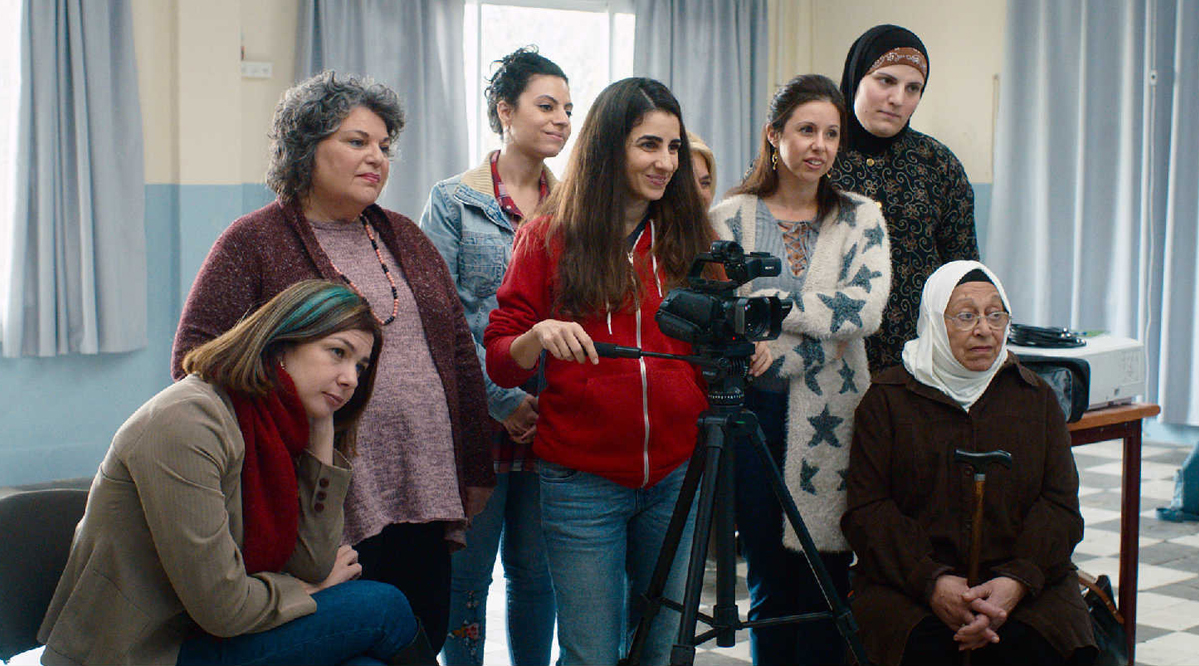
Israel’s bid for Best International Feature Oscar glory this year is a charming but slight drama about a group of women who take a filmmaking course in a community center in the Israeli city of Hadera.

Eight women join a class pitched by a Palestinian course planner at the center, taught by a young Israeli filmmaker, Rona (Dana Ivgy).

Right away, there’s a tiff over how it will be instructed — in Hebrew. It’s a concession the Palestinians taking the class don’t want to grant, but must as “we all understand Hebrew anyway,” the 73 year-old keeper-of-the-peace Awatef (Marlene Bajali) shrugs. All of the paperwork, and most of the class discussions will be in Hebrew, with some Arabic (all of it subtitled in English) peppering the chatter.

It’s unavoidable. Forced to live together, of course each has at least a little understanding of “the other.”

But that word the Palestinians use to greet each other, “Sabaya?” The somewhat tactless Israeli HR director Eti (Orit Samuel doesn’t know it.

“It means ‘prisoner of war.‘”

That’s an apt title that might be more so if there was more conflict here. As you might guess, the idea is that these women — Palestinian and Israeli, married, divorced, young-and-single or gay — will learn just how much they have in common as they study the basics of camera shots, edits, writing and cinema storytelling.

Rona keeps a smile on her face as she encourages women all across the spectrum, conservative Muslim to outspoken and more agnostic Israeli, to “open up” simply by taking the assigned video cameras home and showing their classmates, and us, their lives.

Their baby steps in filmmaking are often revealing. A simple walking and talking “scene” showing us a living room, a cat and a slightly-amused but churlish husband ends with his veiled criticism.

“How about filming the kitchen?”

Carmela (Liora Levi) lives with her dog on a sailboat. Souad (Joanna Said) is 35 and is overwhelmed by six kids and a husband who won’t let her get a driver’s license. Nasrin (Amal Markus) sees this as her last shot — she’s 50ish — at a singing career. Yelena (Yulia Tagil) is newly divorced, an embittered single mom forced to live with her parents.

They get a look into each other’s lives, chide and nag one another to take action to improve those lives and share more than a few frank assessments of their marriages, mental states and “dreams.”

A background noise awareness exercise even has one capture audio of a domestic abuse situation involving her neighbors.

The acting is uniformly fine, with many characters too guarded to let their true natures show, others pasting smiles over their real feelings about the others.

Some will be timid, others brought out of their shells and prejudices aired — by Israelis who “avoid” contact with people they’re sure want to kill them, by a Muslim who declares “You’d be dead to me” if this or that member of their circle turns out to be gay.

“You think murdering children and babies is right?”

“And you have the world’s most ‘humane’ army?”

It’s another one of the many Israeli films over the years that emphasizes connection, accidental or forced, in the close-quarters of Palestine — Israel, the Occupied Territories, lands under the Palestinian Authority.

And like most of these films, it offers a glimmer of hope, even if it’s too much to expect Orit Fouks Rotem’s film to play out as wholly neutral. They really are “Sabaya” trapped in the same sunbaked camp, with shared history and shared antagonisms, with or without a class on making movies that show much they have in common.

Rating: unrated

Cast: Joanna Said, Liora Levi, Dana Ivy, Marlene Bajali, Aseel Farhat, Yulia Tagil, Ruth Landau, Amal Markus, and Orit Samuel.

Credits: Scripted and directed by Orit Fouks Rotem. A Kino Lorber release.

Running time: 1:31

Posted in Reviews, previews, profiles and movie news | Comments Off on Movie Review: Palestinian and Israeli women learn about filmmaking, and each other in this Oscar Submission — “Cinema Sabaya”

Movie Preview: “Guardians of the Galaxy Volume 3”

I’m getting a “Toy Story 3” vibe from this one. You?

Posted in Reviews, previews, profiles and movie news | Comments Off on Movie Preview: “Guardians of the Galaxy Volume 3”

Movie Review: The disaffected young are victims and the victimizers in Taiwan’s Oscar bid — “Goddamned Asura”

“Goddamned Asura” is a somewhat accessible but frustrating Taiwanese drama about disaffected young lives brought together in a random act of violence — a mass shooting at a night market filled with street vendors, street food and customers.

Director and co-writer Yi-an Lou (“A Place of One’s Own”) tells this story in the time-honored “strangers linked by tragedy” fashion. Only they’re not strangers. They’re all connected in a variety of ways before a miserable incel (Joseph Huang) celebrates his birthday with a social media post — “Eighteen, and already fed up.” — and a deadly, walking and shooting spree that kills one and wounds many.

It’s a hard film in which to find your moorings, as the script takes its sweet time naming characters, for starters. And after the second act climaxes with a mystery, a mystery’s solution and more violence, the third act promptly undoes all that with a “What might have been” alternate storyline, which is fitting, because our central figures have created an online comic, inspired by a third character, and “Raging Zero” impacts the lives of everyone else in this story.

One can appreciate the ambition and the tinkering with formula, while grinding your teeth at the filmmaker’s obscurant gimmicks. Which I did.

Jan Wen is the shooter, sullen and stereotypically sociopathic, even when he’s dealing with is pal, classmate and artist Xu Axing (Devin Pan). They collaborate on the comic “Raging Zero,” building it out of people and settings they know, taking it into the dark corners of Wen’s psyche as they do. He stops at the same shop every day to video a beautiful dog he names “Oreo,” an animal going stir crazy in a tiny cage.

One day, he finally does something about it and frees the dog. Yes, that’ll make the comic. But given all that we’ve seen happen in the film’s first scene — the shootings — we fret over the fate of Oreo and everyone else.

Xu Axing is Wen’s sounding board, the one guy who hears out his lost-child-of-rich-divorce’s darkest thoughts and turns them into art. Xu Axing is also gay, hitting the Taiwanese version of Grindr for hook-ups with his fellow skinny gay teens. There’s a hint of homoerotic attraction between the leads, as well.

Linlin (Yu-Xuan Wang) is a math savant and a bit of a punk, working at odd jobs and street level drug-dealing to keep a roof over her head, and that of her alcoholic ex-mobster-moll mom.

Vita (Peijia Huang) is a video game ad exec weary of her life of abusive clients and the clingy, civil servant/game-addict fiance Hu-Sheng (Hao-Zhe Lai) who pesters her day and night, and is only truly himself as Shine, a gaming/vlogging kingpin of King’s Realm, a popular game in his corner of the metaverse.

And Morning Tzu-Yi Mo is “Mold,” an apt nickname for a chain-smoking young badass of local online journalism, a guy who not only pieces together the accounts of the various people who were present or otherwise involved in this mass shooting, he was there and actively involved.

The film is about the culture and the parenting that goes into creating a Jan Wen — living with his rich, aloof and never-home father, kept at arm’s length by his mother — and the other unhappy lives spinning into collision with him on that fateful night.

Yi-an Lou gives us a peek at the sometimes supportive/often toxic online environment in gaming circles, class boundaries and all the ways people can disconnect and take their eyes off of larger goals — life, financial liberty and the pursuit of romantic and creative happiness.

He explores this world mostly through co-dependent, dysfunctional couples — Jan Wen and Xu Axing, Jan Wen and each parent, in turn, LinLin and her mother, Vita and Hu Sheng.

The comic book tie-in to the storytelling isn’t likely to delight any viewer, even if Jan Wen’s father seems out-of-step and foolish as he ridicules the form’s lack of value as “literature” and the film all but suggests comic vengeance tales as being the manifestation of what Jan Wen ends up doing.

That third act flip-the-script business serves little purpose aside from suggesting the randomness of life and the ways any of us could be the victim or a perpetrator, given the right circumstances. Yes, and?

But “Goddamned Asura” — the title comes from a game character and online gamer’s handle — taps into the same sort of existential angst we’re seeing in a lot of films these days, especially those from Asia. The rise of various economies there has led to a leap from Third World to G-20 status, and left a new generation grasping for meaning and connection and ways to tell its own stories other than social media “attention” posting.

This isn’t my favorite among the Best International Feature submitted titles I’ve seen this year. But it’s always interesting to immerse yourself in a culture we only skim the surface of in news stories and travel programs, to poke at the friction beneath the surface and see that, as the wiser among us always say, “Everybody’s going through something.”

Rating: unrated, violence, sex, profanity

Cast: Joseph Huang, Devin Pan, Yu-Xuan Wang, Hao-Zhe Lai, Morning Tzu-Yi Mo and Peijia Huang

Credits: Directed by Yi-an Lou, scripted by Singing Chen and Yi-an Lou. Distribution TBD

Running time: 1:54

Posted in Reviews, previews, profiles and movie news | Comments Off on Movie Review: The disaffected young are victims and the victimizers in Taiwan’s Oscar bid — “Goddamned Asura”

Netflixable? Remembering a Spanish Bankrobber and Anarchist, “A Man of Action”

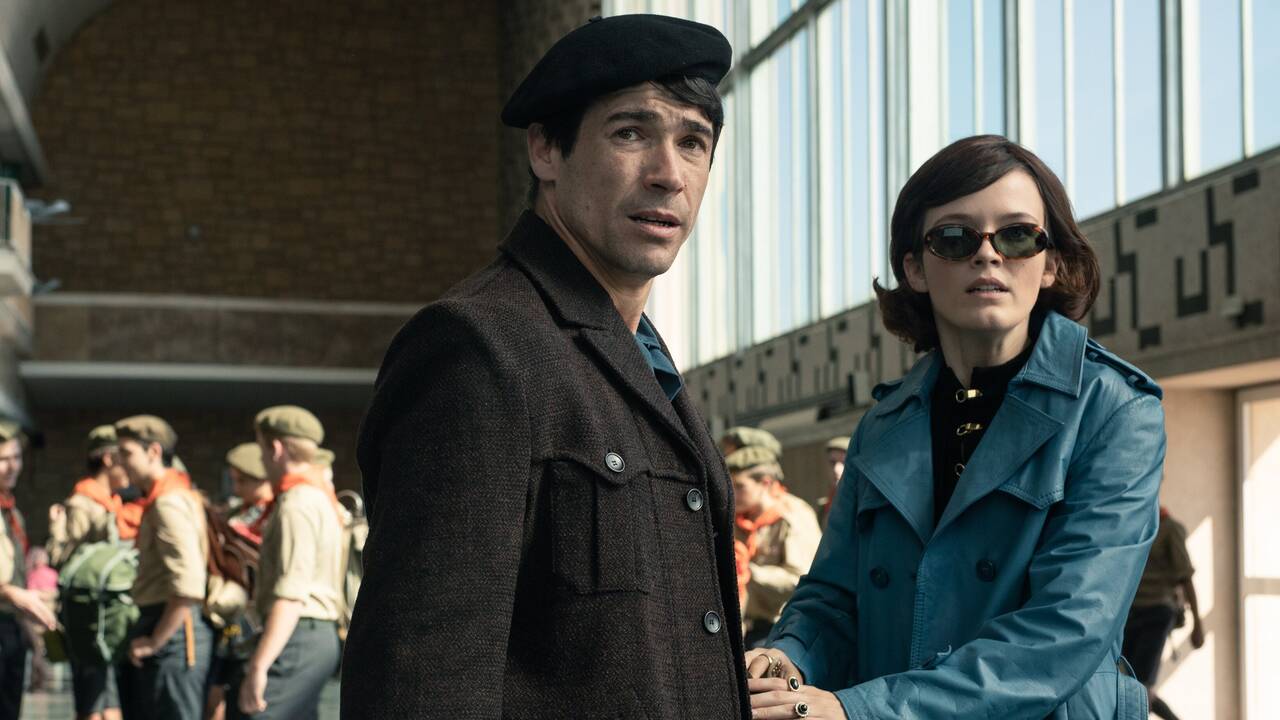
This isn’t Lucio’s first scrape, and the fact he’s wearing that “Lookatme, I’m an anarchist!” beret tells us this man has never sold out and never denied who he is. They effect an amusing escape — not his first, not their last — and we’re off.

We see teenaged Lucio entrusted with begging the local bank for a loan for medicine that will allow his dying dad to pass in peace a couple of years after the Spanish Civil War. The locals don’t trust “Republicans,” the leftists who lost, and that includes the banker. Pulling a knife on the guy just makes Lucio wet his pants.

There’s nothing for it but to accept his draft notice and desert Franco’s fascist military the first chance he gets. That’s how he ends up in Paris, leaning on his now-married sister (Ana Polvorosa) and her French mint employee husband (Fred Tatien) until he can get on his feet.

Construction work is all he’s qualified for, and it’s while learning the ropes as a brick layer that he has his political awakening. His co-workers ask him a lot of questions about his opinions and his politics, and all he can say is “I don’t know.”

Well, you don’t take orders and you don’t like authority. Hijo, you’re an ANARCHIST. A quick history lesson later, and he’s attending meetings, getting irritated at the wishy washy ways this affront or that outrage is being protested. That’s how he falls in with tall, dashing and action-oriented Quico (Miki Esparbé). Quico robs banks.

One pants-wetting robbery later and Lucio is sold. He will “expropriate” bank money — not stealing from the customers. Quico teaches him how to distribute the loot — one third to “the movement,” one third to “comrades in jail, and their families” and one third they keep for themselves.

Lucio is all-in, robbing from the all-powerful capitalist construct that “creates inequality” in the world and keeps poor people poor, gaming a system built wholly for the bankers’ benefit. His views and action oriented dash are catnip to the activist college coed Anne (O’Prey) he pursues.

“I don’t play around,” he growls (in Spanish with subtitles, or dubbed English). “I don’t compromise.”

But robbing banks isn’t the smart play. Buying a print shop so that they can turn out posters and pamphlets without police interference points these anarchists in a new direction — counterfeiting.

You’d think director Javier Ruiz Caldera, who has experience in the action comedy genre (“Spy Time”), would have a lighter touch with all this. “A Man of Action (Un hombre de acción)” has every ingredient necessary for a classic action comedy bio-pic, including the dogged French police inspector (Alexandre Blazy) who hounds our hero for years, trying to catch him in the act.

“Man of Action” is at its best in action. But when it’s inactive, it lumbers along, with Ballesta giving Lucio enough dash but not enough playful twinkle to compensate for that sluggish pace.

The capers are simple and daring, the hero charismatic and the story a fascinating piece of leftist history, many of them Spaniards continuing to fight the idealistic Spanish Civil War against the banks of France and later America.

But the fact that “A Man of Action” barely clears for take-off is the one crime here we cannot pardon.

Rating: TV-MA, violence

Cast: Juan José Ballesta, Luis Callejo, Liah O’Prey, Alexandre Blazy and Miki Esparbé

Credits: Directed by Javier Ruiz Caldera, scripted by Patxi Amezcua. A Netflix release.

Running time: 1:51

Posted in Reviews, previews, profiles and movie news | Comments Off on Netflixable? Remembering a Spanish Bankrobber and Anarchist, “A Man of Action”

Movie Preview: A Friday the 13th (of Jan.) Horror release — “The Devil Conspiracy”

Ab”Boyd fron Brazil” conspiracy concerning “The Shroud of Jesus.”

So, The Shroud of Turin had a lawyer?

Jan 13. Feast your eyes on this.

Posted in Reviews, previews, profiles and movie news | Comments Off on Movie Preview: A Friday the 13th (of Jan.) Horror release — “The Devil Conspiracy”

Movie Review: Japan’s Oscar Contender is about an Aging Populace Considering “Plan 75”

Japan’s aging and shrinking population is the inspiration behind “Plan 75,” the debut feature of writer-director Chie Hayakawa. Expanding her short film of the same title, she imagines a Japan which a government program, “Plan 75,” incentivizes the elderly to choose euthanasia.

Do it for the convenience — as an agency will arrange everything, even “group cremations,” for the comfort of not being a burden on the young, and for a little cold hard “last splurge” cash.

In a world where a capital-obsessed conservative politician in the U.S. suggested that elderly Americans let themselves get sick and die from COVID, this is a totally credible concept. In divided and fractious America this would never happen. In culturally, racially and socially cohesive and “duty” conscious Japan, it’s not hard to imagine.

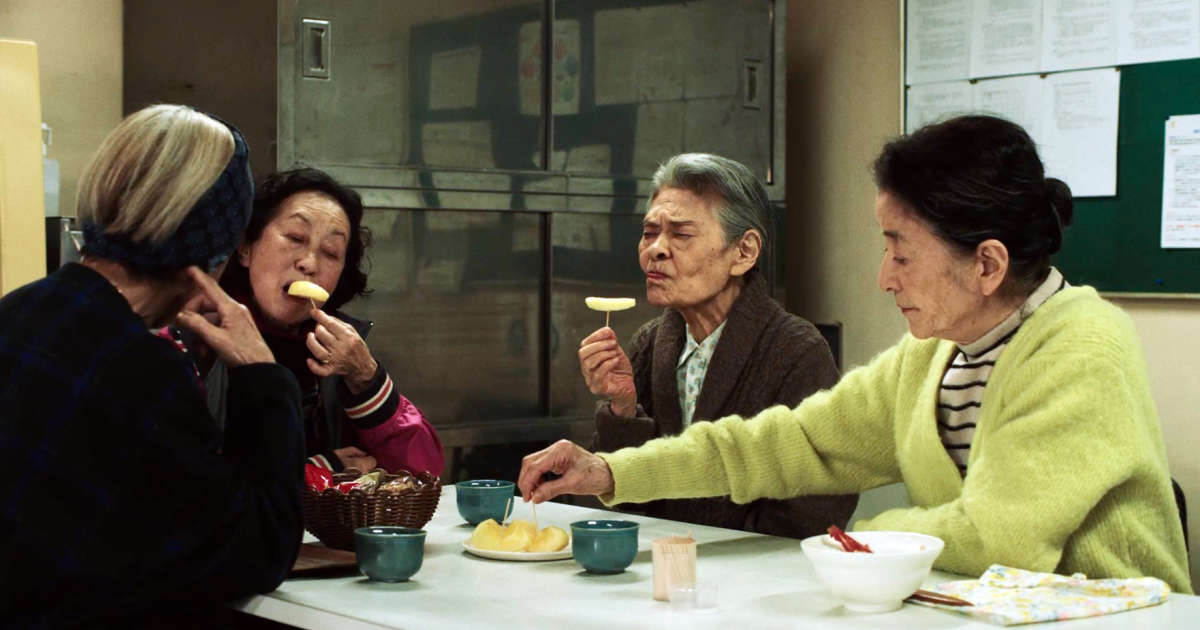
Hayakawa’s spare, quiet film doesn’t have to reach for “Soylent Green is PEOPLE!” to make us recognize capitalism’s dispassionate end game. She doesn’t need sentimental music or many poignant moments to pass on that funereal, doomed “On the Beach” vibe. She just introduces us to a group of little old ladies who have a work “family,” cleaning hotel rooms well into their ’70s, a young bureaucrat helping administer this new government program — which is straining the nation’s crematoria — and a single-mom Filipino retirement home caregiver who finds higher paying work in the employ of Plan 75.

Meeting 78 year-old Michi (Chieko Baishô), you wonder about the limits of Japan’s social safety net. She is all alone, save for her workmates, other widows and the unattached elderly who have to work to keep going, well after what used to be considered “retirement age.” When a friend and co-worker collapses in the middle of cleaning rooms at their hotel, all of the elderly employees are given little “retirement” tokens and put out to pasture.

A notice on her apartment building bulletin board is the first she learns that the place is scheduled for demolition. No protests, no government stopgap to protect anyone. She’s hunting for an affordable apartment, and a job to pay for it — at 78.

A rental agent tells her he’s found one place that will “take elders” — for “two years rent, up front” (in Japanese with English subtitles). Mich’s’s starting to rethink a friend’s question from when Plan 75 was first announced.

“You ready to kick off?”

Hiromu (Hayato Isomura) is one of those faceless functionaries answering potential clients’ questions, assuring everyone who calls or comes in to sign up that “you can back out at any time,” but also stressing the convenience of knowing your final “arrangements” and expense are covered. Then a long-estranged uncle, a loner, comes in to sign up. Hiromu follows him home, notes that he is still working — picking up trash — and wonders where “death with dignity” figures into any of this.

Maria (Stefanie Ariane) is one of those foreign workers who has to make up the gap in employees in an aging, dying-off populace. She has a nursing home job, which doesn’t pay enough to help her sick five-year-old. But she has a church and that church not only takes up a collection for her, a lady there gives her an inside tip on “a government job.” Maria will be helping the elderly die.

Hayakawa opens her film with a montage of “facts” and faux news interview coverage — accounts of hate crimes against the elderly, and a young person telling an interviewer, “Surely the elderly don’t want to be a blight on our lives.”

Then she shows us what Kurosawa hinted at in “Ikiru,” what Bergman showed us in “Wild Strawberries” and what any number of films about aging and the elderly underscore.

Life is lonely and only gets lonelier by the day. Even in places which don’t have Every Woman/Man for Him/Herself economies, life shrinks, financial uncertainty grows and despair closes in from every corner with every passing year.

Although the film was written and directed by Hayakawa, it’s worth mentioning that the story came from Jason Gray, for years the Japanese correspondent for Screen International and a longtime translator of Japanese films into English. That would seem to account for the film’s outsider-looking-in perspective, a foreigner seeing something unique happening to a culture that was the envy of the world 30 years ago. The first “tiger of Asia” has lost its teeth and, the film suggests, its compassion.

A favorite moment comes when the operator Michi regularly deals with has to call her with her final, legally-required “update” and “get out of this at any time” reminder. The young caller is unsettled, if not wholly upset by this part of what is otherwise a telemarketing job. She’s taking on hospice counseling duties, and even if she doesn’t know this kind, almost anonymous woman who keeps thanking her for her reassuring manner, she lets us see she doesn’t think this is the best idea.

Maybe she, unlike the culture that has resorted to this draconian act, has genuine compassion. Or maybe she’s simply thinking “Some day I’m going to be on the other end of this phone call,” and that this is no way to go.

“Plan 75” rarely manipulates and never tugs so hard at the heartstrings that it breaks your heart. Honestly, I think it needs to.

Our filmmaker keeps a safe remove from this material, mimicking the compassion/generation gap she shows us in the movie. But she’s still managed to make a film that will give you pause, make you ponder your mortality and hope that no person, politician, government or insurance oligarchy ever gets the license to suggest that your life is more useful to “society” if it ends.

Rating: unrated

Cast: Chieko Baishô, Hayato Isomura and Stefanie Ariane.

Credits: Scripted and directed by Chie Hayakawa. A Loaded Films production.

Running time: 1:45

Posted in Reviews, previews, profiles and movie news | 2 Comments

Movie Review: Middle Eastern combat from a United Arab Emirates Point of View — “The Ambush”

French action auteur Pierre Morel of the “Taken” movies delivers a solid, tactically-fascinating Middle Eastern combat film with “The Ambush,” a United Arab Emirates -acked account of a firefight that really happened during the Yemeni Civil War.

It’s a movie that opens with a brief explainer that reads more like a UAE apologia about its involvement there, so the viewer — like the filmmaker — is best served by divorcing this action film from Byzantine Middle Eastern politics.

It’s got a lot in common with “Black Hawk Down” — soldiers trapped, others fighting to rescue them, obvious moments of foreshadowing, mistakes made, bravery celebrated, “hesitance” noted.

Here, when we meet the beefy, camo-clad GIs in the gym tent lifting iron (Concrete barbells?), there’s no cussing in the World Cup banter and all the bickering is in Arabic.

Here’s your World Cup analogy for the mission that two Humvees are about to undertake.

“The person who wins is the one who believes they can do anything.”

As with “Black Hawk Down,” true story or not, there’s always one guy who subs in for “my last chance” to hang with his guys on patrol before heading home. One trooper has a wife he’s concerned about and swapping urgent text messages with, another is feuding with him and getting an earful about “respect,” a third is responding to his little girl’s request for a “magical horse” gift by carving her one out of wood and they’re all going on about “just one more week before we go home.”

The foreshadowing ends when they load up and move out — two Humvees wrapped in cages meant to absorb rocket propelled grenade impacts, with remote-controlled machine guns so that no soldier is exposed to direct fire in a shootout, and a dashboard complicated with all sorts of comm, engine, nav and smoke-bomb mortars buttons.

A routine patrol, dropping off supplies and a soccer ball to a shepherd and his family, starts out routinely and turns tense almost right away. A lot of Arab nation allies have been involved in Yemen, and keeping them all straight is an ongoing chore.

The Humvees get separated, and the lead one is trapped by a large cadre of rebels armed with AK-47s, mortars, mines and RPGs. It quickly turns out that it’s going to take a lot more than that second Humvee and its crew to “extract” them.

“Do you need to call your wife to ask permission? GET GOING!”

Morel emphasizes the claustrophobic nature of fighting inside a vehicle that’s meant to take a beating…up to a point. We see how limited their field of vision is, note the improvements that have been made on such fighting vehicles since the American Afghan War and Iraq War, but otherwise see familiar combat conditions — trapped in a rocky canyon, surrounded — and familiar command dilemmas.

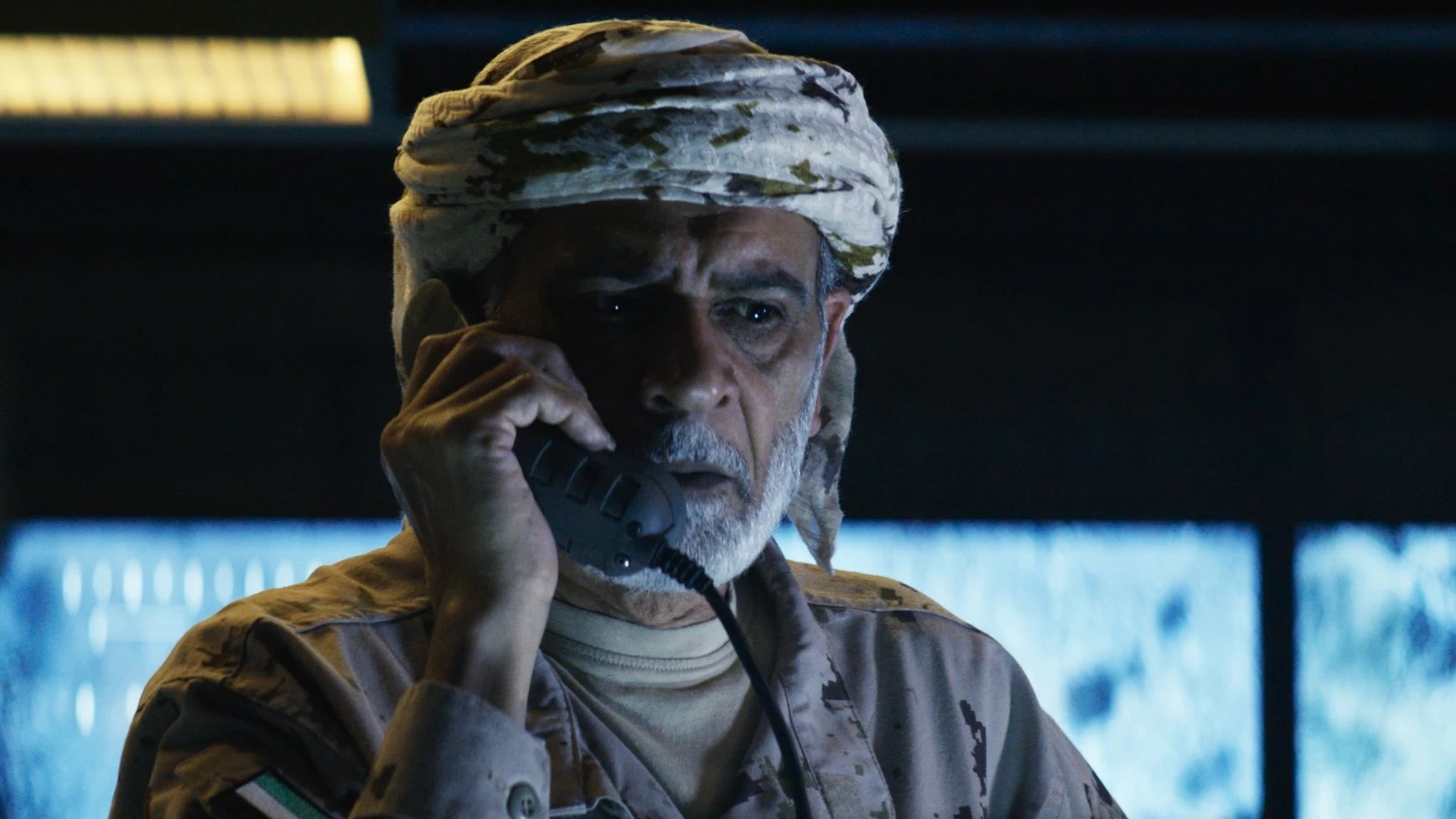
One thing you pick up on is the sophistication of the chain of command, and the capability and bravery of the troops. The first is no different from any American film about that corner of the combat world — a CO (Saeed AlHarsh) who stoically responds, in a flash, to the danger and leads a Quick Response convoy of Humwees and more heavily armored troop transports — and his CO (Mansoor Al-Fili), making snap decisions about drones, “the Falcons” (F-16s) and Apache attack helicopter support.

A woman is in charge of communications, and the Apache in question has a female pilot, something not every Islamic state would sanction. I got the feeling, at times, that there was image burnishing going on amidst the firefights, mortar barrages and “mortars neutralized” airstrikes. Make sure that women recruits are “seen.” And every tentative action, hesitation to dash into a dangerous situation, must be excused.

“We fear nothing but Allah!”

“The Ambush” immerses us in trained troopers improvising, commanders strategizing on the fly, and combat situations being faced and confronted.

A commanding officer recognizing the difference between 80mm and 120mm (unsurviveable in a Humvee), giving a “no easy way out” speech by radio and bitter rivals making up in the flush of combat is nicely contrasted with the sort of tough-guys-in-war exchanges Hollywood genre fans know and love.

“Are you OK?

“I’m in a flipped-over vehicle with you,” the most observant Muslim in the lot barks. “Get out of my face. You reek of TOBACCO!”

The performances are solid, insofar as there isn’t a lot you’d call “great acting” in most combat films, with most of the actors playing combat film “types.” But “The Ambush” works, even if there’s little about it that’s special save for this different point of view, something one suspects was the point in financing it.

That point of view has its value, even if you suspect the picture’s motives. Reverence for fallen comrades, a “leave no man behind” ethos, esprit de corps valued and a fondness for good ol’American made military hardware make this one worth checking out. Any film that reminds us how human beings are a lot alike in dire situations is a good thing.

Rating: R, violence

Cast: Omar Bin Haider, Marwan Abdullah, Kafliffa Al Jassem, Mohammed Ahmed, Saeed AlHarsh and Mansoor Al-Fili.

Credits: Directed by Pierre Morel, scripted by Brandon Birtell and Kurtis Birtell. A Well Go USA release.

Running time: 1:51

Posted in Reviews, previews, profiles and movie news | Comments Off on Movie Review: Middle Eastern combat from a United Arab Emirates Point of View — “The Ambush”