Critics use the phrase “instantly awful” to describe bad movies entirely too often and far too cavalierly. For that, please accept my heartfelt mea culpa.
We should all reserve “instantly awful” for C-movie garbage like “Pistolera,” an underworld vengeance thriller that is almost unwatchable, godawful pretty much from the first frame to the last.
Romina DiLella wrote it and has the title role, Damian Chapa directed it and co-stars. Neither can write or direct or act.
“You got to stop being so jooompy,” DiLella purrs in halting Ingles, playing a Spanish badass out to avenge her papa’s murder. “Gon’ get some blood pressure or som-sing.”
“Pistolera” begins with our scarred and haunted heroine awakening from another nightmare. We see what scarred her, physically and emotionally. As a child, she and her mob family offspring went from playing with toy guns to shooting their way out of a mob hit on Angel and Rico’s fathers in the Spain of about thirty years ago.
Present day Angel (DiLella) gets out of her latest prison sentence, dons her BDSM hitwoman togs (black leather bustier and coochie-cutters) and heads to the tattoo parlor.
“Do you do booolets,” she asks her inker? “Leetle CUTE ones?”
Every line is a cringe, every scene an affront to the cinema and the senses. Start with the mob child who mows down murdering mobsters with her papa’s new Gatling gun, dive into the fight-choreography picked up on Youtube tutorials, check in with Robert Davi as the mobster everybody wants to get even with and drift over to Danny Trejo as the sunglassed “tio” who goes by the nickname “The Aztec” because “I was so savage,” and you still come back to the amateurishly delusional leading lady and leading man.
Hell, DiLella even sings (not awfully) and dances pseudo flamenco (quite badly).
My FAVORITE moment though, has to be the drone shot of the “present day” that establishes the veteran Pistolera is in prison and about to get out.
They went to the trouble of hiring a drone operator, and filmed a prison that plainly hasn’t seen use in this century, or much of the last one — overgrown, empty, trees growing through caved-in roofs.
Yeah, it’s like that.
Rating: unrated, violence
Cast: Romina DiLella, Damian Chapa, Robert Davi and Danny Trejo
Credits: Directed by Damian Chapa, scripted by Romina DiLella. A Tubi release.
Guillermo del Toro is not here to protect your tiny tykes from the grim realities of the big bad world. Like Walt Disney before him, he acknowledges the dangers and tragedies of life, and that life itself is fleeting.
Wars happen. Some people are cheats, and many are cruel. Fascist leaders are false prophets, guns kill and everyone, eventually, dies.
“Guillermo del Toro’s Pinnocchio” is darker than “The Disney Version,” any Disney version. But not by much. Like Walt, del Toro wants to play up the darkness and dangers of Collodi’s novel — the scary parts — as well as the moral lessons of a boy taught not to lie.
“Lies, my dear boy, are found out immediately! They are like a long nose, visible to all but the teller of the lie.”
This stop-motion animated jewel is just the latest of scores of adaptations of Carlo Collodi’s classic 19th century fairytale. The Mexican Oscar winner and his team go back to the original story, deeper into its “origins,” and update it by setting it in post “Great War” Italy, when that country had its first taste of the perilous pitfalls of fascism.
Yes, we’re all tired of pop culture reminders of the fascist threat facing freedom lovers the world over. If you’re more “triggered” than tired of this trend in film, TV and music, maybe stop voting for lying fascists and it’ll all go away.
Geppetto, voiced by veteran character actor David Bradley, is a doting widowed single-father when we meet him, the town wood-carver who makes and sells toys and is so good at his job that he’s entrusted with carving a new giant crucifix for the church. He dotes on his boy Carlo, who marvels at the planes they see passing overhead and dreams of fighting in World War I until Dad sets him straight.
Carlo is killed when the church is bombed, and Geppetto crawls into a bottle, an embittered recluse just medicating his way to the end. In a drunken fury, he carves out a rough, pinewood puppet, alas out of a tree he rage-chopped down that was the home to Sebastian J. Cricket (Ewan McGregor), a world traveler and our narrator, who tells us that he’s just settled down to write “The Stridulations of my Youth,” his memoirs.
But Geppetto’s mournful state has earned the pity of a wood sprite (Tilda Swinton), and with the cricket’s urging and his agreeing to look over and instruct the puppet boy, Pinocchio is brought to life.
The rough-hewn little fellow clumsily dances and crashes his way through Geppetto’s shop, singing “Everything is new to me,” and we realize Geppetto and the cricket have their work cut out for them.
You know the way stations of this story — a stab at “school,” that first lie (in church, here), the temptations of a traveling carnival barker (Christoph Waltz, who steals the movie), escape, a giant whale and so forth.
How co-director (with Mark Gustafson) del Toro and co-writer Patrick McHale flesh out this familiar fable into a two hour movie is with grand and glorious action beats and a decent-sized dose of life in Italy under Il Duce, whose Mussolini graffiti is glimpsed on walls and whose dogma is personified by the local fascist capo, Podesta (“Hellboy” Ron Perlman, perfect).
The fascist just sees a seemingly “immortal” little wooden boy as “a good little fascist soldier” in the making. Let’s ship him off for training. ‘The carny? He sees a gold mine, and he is sure to put the wooden boy under a binding contract.
“I think you misunderstand our relationship, my little firestarter.”
I laughed and laughed at everything the vulpine Count Volple (Waltz) said. But make no mistake, this is a dark movie that doesn’t sugar-coat even the grimmest dilemmas.
The film’s gorgeous look is realized via wooden texture of the puppet and the settings. There’s an often overcast earth tones production design that gives it a somber subtext. And playing down the whimsical “Pinocchio on stage” chapters sets the stakes. We will see death (off camera), animal abuse and fascist salutes and goose-stepping. Mussolini has a cameo, a “strong man” depicted as a pudgy runt.
Theology? Pinocchio looks up at his creator’s wooden carving of Jesus and asks. “Why do they (the locals) like him and not me?”
The lessons within the story have to do with people fearing the unknown, love and devotion equating with sacrifice and lies giving everyone around you splinters.
Oscar winning composer Alexandre Desplat wrote the songs, with lyrics byRoeban Katz& del Toro, and if they aren’t quite instantly forgettable, they are one area this “Pinocchio” falls well short of Disney’s 1940 masterpiece.
As might be expected of a filmmaker known for horror and “Hellboy,” del Toro’s “Pinocchio” more readily compares to the stop-motion animation of Henry Sellick, of “Nightmare Before Christmas” and “Coraline.” It’s dazzling and amusing — we see Geppetto fishing for their dinner inside the whale — if not quite as playful as either of those films or the grand whimsies of Wes Anderson (“The Fantastic Mr. Fox,””Isle of Dogs”).
But none of that takes anything away from the best animated film Netflix has ever made, and the best animated film of 2022.
Rating: PG for dark thematic material, violence, peril, some rude humor and brief smoking
Cast: The voices of Gregory Mann, Ewan McGregor, Tilda Swinton, John Turturro, Ron Perlman, David Bradley and Christoph Waltz
Credits: Directed by Guillermo del Toro and Mark Gustafson, scripted by Guillermo del Toro and Patrick McHale, based on the book by Carlo Collodi. a Netflix release.
The animation’s slightly better than TV’s current state of the art, but the screenplay is strictly “Scooby-doo” for Disney’s latest former 20th Century Fox franchise revival, “Night at the Museum: Kahmunrah Rises Again.”
I guess with the Disney+ “Diary of a Wimpy Kid” animated remake, we can see a pattern that’s an official corporate policy, now. They paid for these 20th Century properties, and the best way to monetize them is remake them on the cheap, with animation.
None of the voice actors from the adorable “Night at the Museum” films return. And animating that story, about the exhibits at New York’s beloved Museum of Natural History coming to life after hours,kind of spoils it. There was delight in seeing a place millions have visited turned into a kids’ adventure fantasy in which that famous Teddy Roosevelt statue started chatting and riffing (Robin Williams played him in the movies) and “Rexy,” the T-Rex, came to life as a skeletal Labrador Retriever.
“Kahmunrah Rises Again” isn’t very funny, either, and not terribly original.
Our former night watchman Larry (voiced by Zachary Levi, aka “Shazam!”) is leaving the job to run a museum in Tokyo. As nobody else can get over the shock of what goes on there, pranked by a stuffed monkey, the rambling Rexy, Sacagawea (Kieran Sequoia) and Joan of Arc (Alice Isaaz) manikins coming to life, menaced by toy-sized cowboy and Roman centurion models, Larry recommends his now teen son Nick (Joshua Bassett) for the gig.
Nick’s in high school, an aspiring DJ with perfect pitch who still can’t get into the school jazz band…because he’s a DJ. But since he knows the “secret” of the museum and the living exhibits know him, he’s the guy.
Wouldn’t you know it, his first night back he’s faced with a disaster as that “freaky pharaoh” Kahmunrah (Joseph Kamal) is revived. Labeled “The Disappointing Son” in his Museum of Natural History exhibit, he’ll show them, the world and his daddy by using ancient Egyptian god magicto take over the world.
That sends Nick and his friends from the Museum on a quest through time and distance, chasing Kamunrah as he seeks the spirits of his motherland along the Nile.
Of the supporting cast, Thomas Lennon makes Teddy Roosevelt’s pedantic banter funny, although no one could replace Robin Williams’ riffs in the role. Isaaz has some fun wiss zee funny French acCENT of St. Joan.
“Ayye DANZ on your GRAVE!”
Kamal curls his lips around the ironically hip, fourth-wall breaking villain. Siccing “Rexy” on Kamunrah, “atta girl, EAT’em” is no way to win a pharaoh’s favor.
“NO! Don’t eat me! That’ll make a really SHORT movie!”
The running gags about “unresolved daddy issues” and “childhood trauma” won’t amuse kids, and do little for the grownups either.
Pretty limp jokes and plotting all around, I’d say, with even the big finish brawl playing like “Scooby-doo” circa 1972, which really lets down the animation.
Two films isn’t a trend chiseled in stone, but I’d say this Disney practice of remaking 20th Century intellectual properties as “quick and a dirty” cartoons is something of a bust, unless they really need streaming filler that badly.
Rating: PG for action/peril and some mild rude humor.
Cast: The voices of Joshua Bassett, Alice Isaaz, Kieran Sequoia, Joseph Kamal, Gillian Jacobs, Chris Parnell, Thomas Lennon and Zachary Levi
Credits: Directed by Matt Danner, scripted by Ray DeLaurentis and William Schifrin, based on the children’s book by Milan Trenc. A Disney + release.
Running time: 1:18
Posted inReviews, previews, profiles and movie news|Comments Off on Movie Review: Disney revives a franchise via animation — “Night at the Museum: Kahmunrah Rises Again”
The inventor of the detective story has already been featured in a film about his West Point career this year.
But this Scott Cooper adaptation of a modern novel about bloody goings on at the U.S. Military Academy in the early 1800s has a big cast and the sheen of a Major Motion Picture.
Father Manuel is used to the lashing out, the blind, disruptive rages that can turn into riots at the shelter he runs.
These are damaged kids, and often he’s “the only one in this world who gives a damn about” them, something he may remind them of after this or that meltdown.
His shelter is for sexually-abused children, many of them homeless teens who wind up there, after lifes of forced prostitution and years of abuse, telling him their stories, stories he tries to get the law interested in pursuing. Police-assigned doctors will meet with the kid, make an assessment and decide whether or not this damaged minor will be a convincing witness for the prosecution.
But you doctors, Manuel fumes at one such panel, “are why these rapists keep getting away with it.”
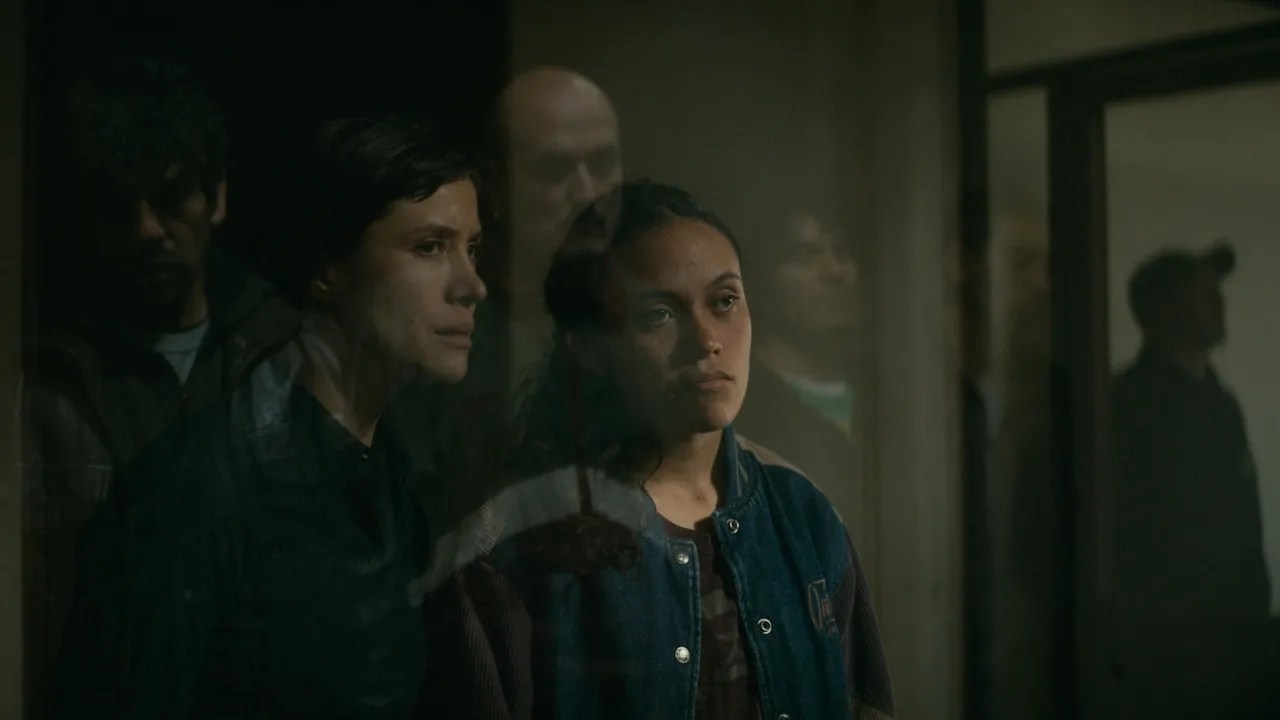
One of the most troubled is Carlos, who bears the physical and emotional scars of years of horror. The only one who can calm him when he loses it is Blanquita, the 18 year-old who has lived in and out of this shelter almost all of her life. When she comforts Carlos, she hears tales that mirror some of her own experiences as a prisoner of a child prostitution ring. Familiar geography — living under “the Chuck Norris overpass,” seemingly anonymous clients sharing traits and are perhaps too rich and connected to touch.
When the law comes down on one such figure and a public scandal, Blanquita tells Father Manuel she wants to come forward. Cool, calm, furious and focused, she will be the witness Carlos never could be — credible, committed and hellbent on seeing this through and the guilty, including a senator, brought down.
“Blanquita” writer-director Fernando Guzzoni (“Dog Flesh,” “La colorina”) turns this grim, gripping drama into Chile’s Best International Feature Oscar submission. He builds this story around new star Laura López, who makes Blanquita convincingly tough-minded, and also a teen mother with teenaged temperament and impulses. She leaves her baby in the care of others to hang with peers, enjoys nights at the carnival like anybody else her age.
But regarding her past and her story she is all business — dropping intimate details on the congresswoman who takes on the prosecution of a colleague, sticking with her story even when Chilean justice has her and the accused interviewed in the same room at the same time.
Alejandro Goic (“The Maid,” “Chile ’76”) is equally compelling as Father Manuel, a righteous man who believes Blanquita and her certainty, even as the viewer is given reason to develop doubts.
Inspired by a true story, “Blanquita” has a touch of ends-justify-the-means about it which the viewer can embrace or reject. But as we hear details of the sorts of things about which there is no doubt, the perversion, cruelty and impunity of the well-connected accused, it’s easy to dig in one’s heels like Blanquita herself, hoping for the best, hoping that something resembling justice will come out of this version of “the truth,” no matter how twisted it might be.
Rating: unrated, adult content, graphic discussions of child abuse, profanity
Cast: Laura López, Alejandro Goic
Credits: Scripted and directed by Fernando Guzzoni. An Outsider Pictures release.
It wouldn’t be Christmas without Netflix offering some wacky riff on the holidays from Brazil. This year, it’s semi-amusing rom-com built around the comedienne/influencer Gkay, aka Gessica Kayane.
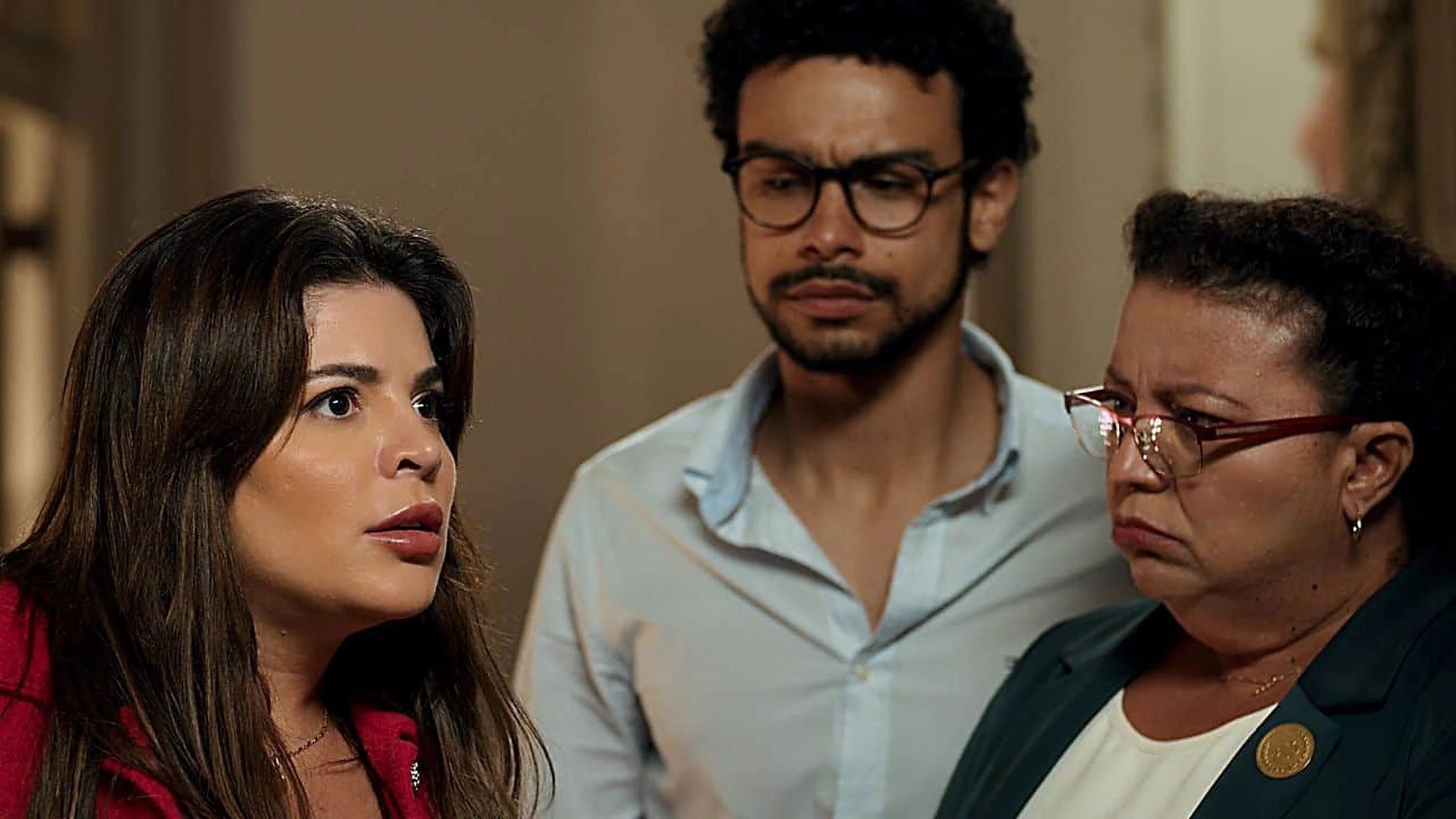
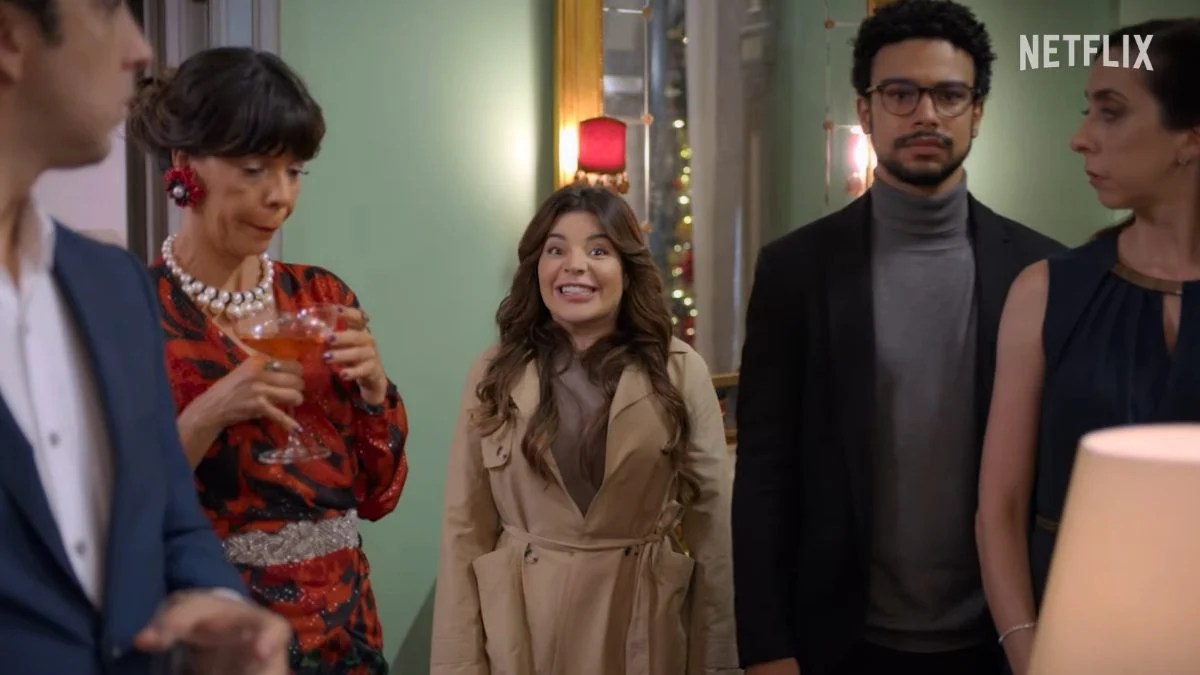
In “Christmas Full of Grace,” the bubbly, curvaceous Kayane plays an unfiltered, loud vulgarian who rom-com-plot-tropes her way into a rich family’s holiday gathering, and business succession drama.
Gkay — think Tiffany Haddish, only shorter and speaking Portuguese (or dubbed into English) — does her best to bull-in-a-china-shop her way through this formulaic film, with only occasional laughs for her efforts.
It’s a hit-or-miss variation on the “bring a stranger home to pass off as my girl/boyfriend” rom-com, as old as the cinema itself, as fresh as Ryan and Sandy in “The Proposal.”
Sergio Malheiros plays Carlos — Carlinhos to his family — one of the younger heirs to a Rio-based business empire, an overworked one-percenter who figures Christmas Eve, before theyhelicopter out to spend the holidays on his family’s estate, would be the perfect day to put a ring on his longtime girlfriend, the blonde bombshell Bebela (Monique Alfradique).
The minute he comes home, seeing lingerie scattered about their penthouse, we have our first taste of “formulaic.” Finding her in a bubble bath MUST mean there’s some paramour under the water, hiding while Carlos goes through a big ring-offering spiel.
The only amusing variation on the gag is when the hidden figure pops up through the bubbles gasping for air, she’s a dish. Bebela swings both ways.
Fleeing their flat brings no relief, only the sloppiest, most-contrived “meet cute” ever. This frantic “just got robbed” woman named Graca (Gkay) hurls herself at Carlinhos. And one whiff of his “just caught her cheating” later, she’s graciously agreed to accompany him to his family’s get-together, just to take the pressure off and lessen the “cuck” shaming.
Sure, Graca usually spends her holidays in Aspen with her family, she says. But robbed and all, no luggage or phone, she’d do him a solid. Whose idea was this? Did he even invite her?
While there, blowsy, brassy, unfiltered Graca has to fake her interest in finer wines and her skills in ballroom dancing and polo. She will be the cliched “breath of fresh air” amongst the stuff. And as the stern matriarch, Lady Sofia (Vera Fischer) is ready to announce her successor as head of the company, Graca will stand up to bullying cousin Pedro (Heitor Martinez) and assorted other snobs, boors and lazy trust funders in the family on her new beau’s behalf.
The slapstick is strained and worthy of nothing but groans. Watch the free spirt slide down the bannister, make cracks about splinters and sex and generally bury to snobs in gaucherie. But hey, if you want to avoid being labeled a meek cuckold, there’s nothing like a busty broad bragging about your “Spanky Hanky Panky” skills to buck you up.
“Sex on demand,” she complains with a wink. Carlinhos is “too much for my clothes to bear.”
The proletarian vs bougie contrast still plays, but the laughs are too tame and too few in this tepid take on a tired formula. Gkay has potential, but this was never going to go anywhere as a PG or PG-13 rom-com. She was going to have to go full Haddish-nasty for this ever to bring the brio and go with gusto to that place we know where it’s going, right from the start.
Rating: TV-PG, some innuendo
Cast: Gkay, Sergio Malheiros, Vera Fischer, Heitor Martinez
Credits: Directed by Pedro Antônio Paes, scripted by Carol Garcia. A Netflix release.
“Women Talking” is a parable about feminine power. Framed as a heated debate in search of a resolution of what women can do about men and their age-old “war on women,” controlling, abusing and silencing them, Sarah Polley’s film is about how to confront an increasingly hostile patriarchy when the men in question are not just silencing and controlling thy women in their midst. They’re beating and raping them and their little girls.
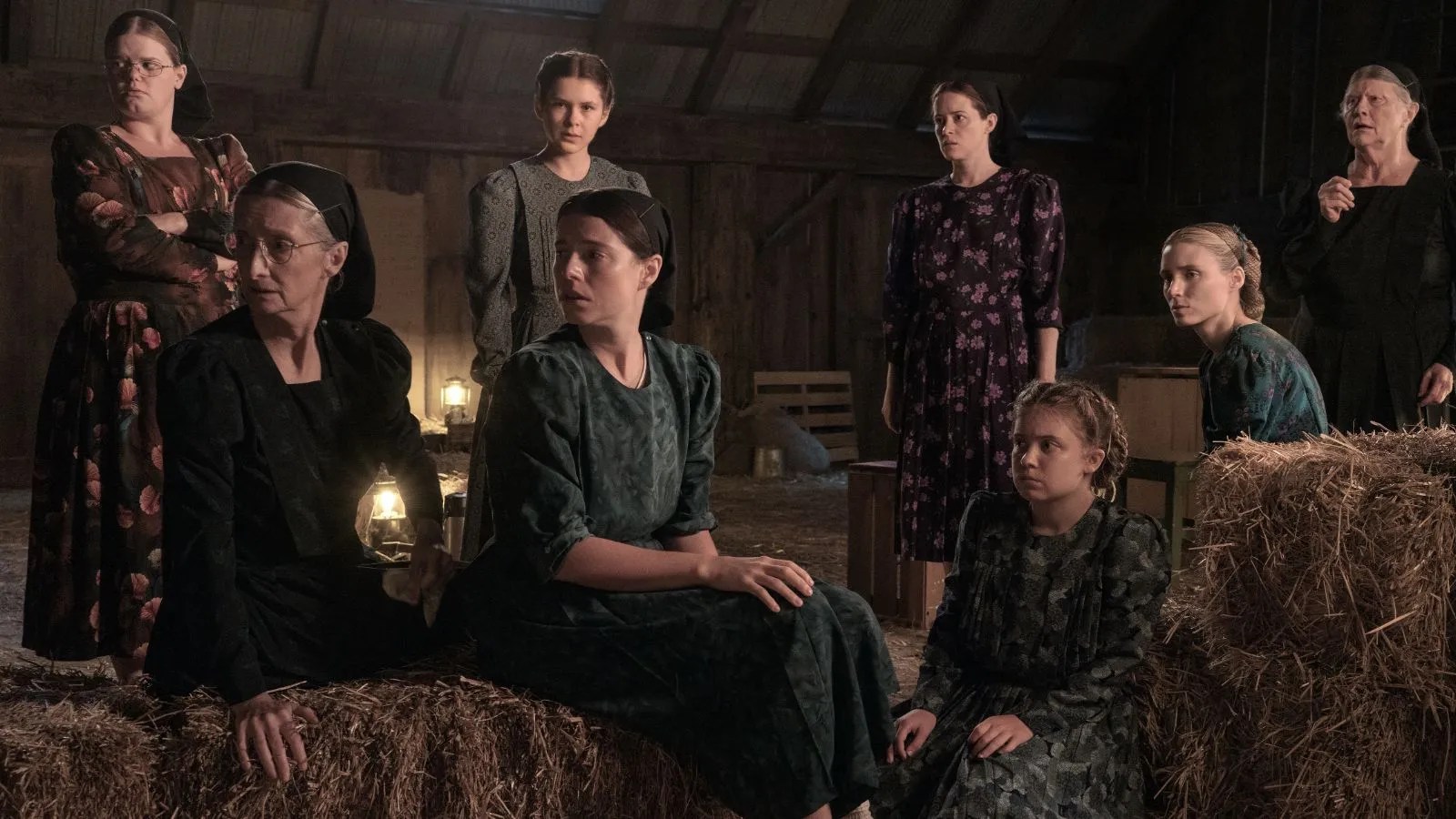
Miriam Toews’ novel may be based on a recent historic incident, but Polley’s film unfolds like Greek theater, sounds like Arthur Miller and summons up the heightened emotions of classic drama and pointed modern social ills satire. It is “The Crucible” and “Lysistrata,” reminiscent of “A Handmaid’s Tale” as it passes by “Day of Absence” (the inspiration for the film satire “A Day Without a Mexican”), as a committee of women gather in a hayloft to consider their options.
The title dictates the story, and sets its limits. This is a talking film. But an extraordinary cast headed by Oscar winner Frances McDormand, which includes Rooney Mara, Claire Foy, Judith Ivey and Jessie Buckley make it riveting, and the subject matter turns it into a movie of our moment, one not to be missed.
They live in “The Colony,” an unnamed patriarchal sect in an undisclosed corner of farm country. It is a religious community, a horse-drawn culture in a John Deere, General Electric and Monsanto world. Everyone there lives under the rule of The Elders, who enforce piety, illiteracy and total submission with the threat of excommunication, denial of entry into “the gates of heaven,” upon the women.
The men? We’re not sure of the strictures they’re supposed to live under. They’re barely glimpsed.
But the bloodied bedsheets and bruised thighs we see in a montage speak to a sinister cost of this male”control” — rape. The men have figured out something that they use in agriculture is the ultimate date rape drug, and when confronted by evidence of what’s happening, dismiss it as “wild female imagination.”
But after “we finally caught one of them,” female fury that is positively Greek in its rage is finally unleashed. Now this select group is meeting to consider and vote on their options of what to do next. Do they stay and “fight,” “flee” or “forgive” and just try to get over this monstrous, violent betrayal?
The story is framed by voice-over narration, a girlish voice passing on to a child an account of something that happened “before you were born.” The women of this debate in the past lay out the stakes, the choices and the urgency. The authorities have rounded up and arrested so many of the men that they women have a day to come to a decision before the arrested, and those scrambling to come up with their bail money, return.
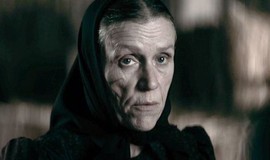
McDormand is “Scarface” Janz, older, allegedly wiser and of the “forgive” and let this blow over faction.
Buckley is Mariche, enraged but realistic bordering on fatalistic. Women can’t fight men. They’re stronger. And the women can’t leave, because don’t know how to read, have no idea of the world outside of The Colony and lack even a map to get there. Mariche’s great at cutting the legs out from under every option, but her fellow females know that “all you do is fight,” and take her with a grain of salt.
Foy is in fine fury as Salome, a raging avenger with castration in her eyes. Stay and fight is her hotheaded argument.
When “we have been PREYED upon like ANIMALS,” “forgive” and forget seems a non-starter.
Agata (Ivey) and Greta (Sheila McCarthy) are older, but of the opinion that for their daughters and granddaughters, the only solution is leaving. They won’t use the word “flee” because that’s just another thing that sets Salome and Mariche off.
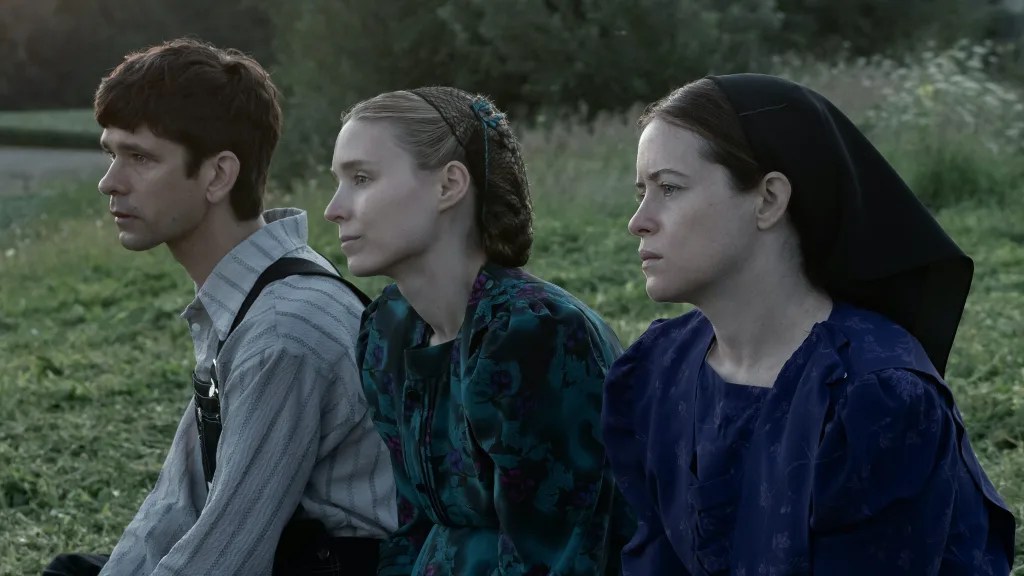
And Mara plays Ona, the conciliator, a patient, smiling and pregnant woman pouring oil on troubled waters to keep the debate civil and rational and fact-based. She has summoned August (Ben Whishaw), a man who grew up in the colony, who left it to go to college and came back “to help,” to teach the boys. He will take notes, keep the minutes of this meeting. As sensitive, romantic August pines for Ona, of course he says “Yes.”
Other women and girls are here, weighing in, considering this option or that faction, exasperated much of the time as anyone who’s ever had to make a decision by committee often is.
The discussion is rarely less than fascinating as the women wrangle with their “objectives,” “what it is we’re fighting for,” what will make them and their daughters safe and the “power” they feel they need. Religious dogma and doctrine will have to be reconciled, and the finer points of forgiveness and pacificism parsed, all while the clock ticks down to the moment the men start coming back.
The veteran Canadian actress and director Polley — she was in “The Sweet Hereafter,” and directed by the Oscar nominated “Away from Her” — gives her actresses room to live in these characters. Foy and Buckley bring the heat and Mara touches on the idealistic and ethereal.
And Polley takes pains to keep novelist Toew’s emphasis on the myopia of such sects, how these women have to struggle with this decision, this process and this debate because they’ve been kept so uneducated that even our narrator, years later, is at a loss to give an accurate account.
“Where I come from, where your mother comes from, there was not language for” this violent predicament.
I love the way Greta uses the behavior of the horses that pull her buggy as metaphors for this or that factor in their decision and means of making that decision.
Flashbacks recount not only the violence that has visited almost every woman in this debate, they explain why the transgender man (August Winter) in their ranks no longer speaks, make us wonder who actually fathered Ona’s baby and reminds them all of a random, bizarre encounter with the outside world — a census taker driving a pickup truck with loudspeakers on the roof, calling them “out of your houses” to be counted as Davey Jones and the Monkees croon “Daydream Believer.”
Watching and listening to “Women Talking” during another fraught, fractious election year just underscores how damningly topical it is, despite every pain that’s been taken to render it “timeless.” Mormon, Amish, Baptist, Catholic, Hutterite. Muslim or Mennonite, we don’t need to know which particular sect The Colony belongs to, as the shared characteristics driven home here render that irrelevant.
“Power” and “control” through religious coercion, buttressed by the denial of this right or that one, or education or independence itself, is what these women and women everywhere confront in the ebb and flow of what’s disguised as “The Culture Wars.”
Polley has taken a pointed, of-its-moment novel and turned it into an indictment and a plea for civil discourse in a call-to-arms moment. To flee, to fight or to simply keep voting for the people who would enslave you is on the table. And until superstition is addressed and the power not being used — or worse, squandered on whatever fear and outrage the Pied Pipers in charge gin up today — is flexed, every woman is in danger and a failing culture will fall further into an ungovernable abyss.
Nothing’s going to get better without “Women Talking.”
Rating: PG-13 for mature thematic content including sexual assault, bloody images, and some profanity
Cast: Rooney Mara, Claire Foy, Jessie Buckley, Judith Ivey, Sheila McCarthy, Michelle McLeod, August Winter, Ben Whishaw and Frances McDormand.
Credits: Scripted and directed by Sarah Polley, based on the novel by Miriam Toews. An Orion release.
A fellow named Seuss wrote a character called “Grinch.” Mr. Jones just knew a hit cartoon would be a cinch.
But lo and behold, horror hacks “parodied” this wit. Such a pity the filmed “Mean One” turned out to be s—.
“The Mean One” is a horror spoof of a certain Universal-licensed green “mean one,” himself the subject of a movie or two, and a TV special that’s become a holiday classic.
The film’s a bloody, grim and not very funny account of Cindy Lou you-know-who dealing with ongoing issues about the mass murderer, “The Christmas Killer,” living on the pointy-topped mountain that overlooks tiny Newville and all who live in it.
That’s right, Cindy Lou (Krystle Martin) is coming back to her hometown. Dr. Seuss’s sugary account of how she converted the Christmas-hating mountain man/beast into loving Christmas wasn’t, our narrator (Christopher Sanders) rhymes, “how it went down.” Her mom died fighting the toothy, growling green creature (in a costume Jim Carrey might have worn) that came down their chimney that Christmas Eve long ago.
Dad (Flip Kobler) is driving her “home” so she can get a little closure. But the creature of her nightmares is still around. And when he starts killing again, it becomes clear the town’s in denial, or in cahoots.
Cindy Lou and the town’s lone Jew (Chase Mullins), a cop, are on the case, with everybody else in this Christmas-banning village trying to stop them.
Officer Burke sings “Dreidel Dreidel Dreidel,” makes nose jokes and takes his best shot at speaking in Woody Allenese, as he offers his help.
“That would’ve been nice.”
“Would’ve. That sounds...future imperfect!”
Ba-DOM-bum.
Slasher films aren’t the hardest genre in which to finance, film and fake the bare minimum of competence. This looks pretty amateurish, from script and settings and shot selection to the acting. The slaughter scenes are generic. What’s most amusing are the ways they work their way around intellectual property parameters to try and rustle up an anemic laugh or two.
This guy who seems to know what’s going on is named Zeuss.
“Zeuss? Like the god?”
“Everybody calls me ‘Doc.'”
Ba-DUM-bom.
“He’s a mean one, that Mister…” is interrupted by the waitress hollering out take out orders.
“FINCH! Last call for Mike Finch!”
The narration may be the most Seussian thing about “The Mean One.”
“Cindy’s nightmares continued about the blood and the beast. If she hadn’t lost her mind, she’s misplaced it, at least.”
But I did not care for “The Mean One” mess. I do not like bastardized Seuss, I confess.
Rating: unrated, bloody violence
Cast: Krystle Martin, David Howard Thornton, Amy Schumacher, Chase Mullins, narrated by Christopher Sanders.
Credits: Directed by Steven LaMorte, scripted by Finn Kobler, Flip Kobler and Steven LaMorte. A Sleight of Hand release.
It’s nice to see Hugh Bonneville truly slip the tuxedoed bonds of “Downton Abbey” and take on a real rotter for the change.
In the thriller “I Came By,” he may be posh and entitled, if not titled. But there’s little that’s soft about this just-resigned-judge who’s run afoul of pranksters who stumbled into his “secret.”
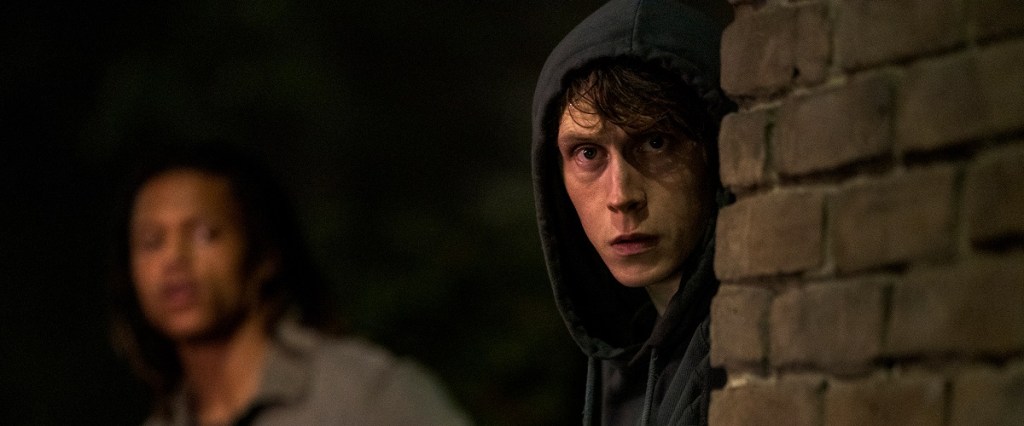
George MacKay of “1917” stars as Toby, a tag-happy graffiti artist who veers between righteous and self-righteous in his quest for attention and rough justice. Toby and his mate Jay (Brit bit player Percelle Ascott, getting a nice break) break into the houses of the rich and rattlecan-paint statement “tags” in prominent places.
“I Came By” is their signature and their message. To Toby, they’re “showing them we can GET to them.” Maybe they’re giving other graffiti artists a bad name, but the fit, anarchistic Toby is dedicated to the cause…and little else.
His psychotherapist mum (Kelly Macdonald) is at a loss and fails in every effort to make him shape up and find direction. And when Jay and his girlfriend Naz (Varada Sethu) get pregnant, his partner in political crime checks out.
But not before Jay gained access to a pricey home owned by a former judge (Bonneville) and gave Toby the idea of tagging him. Jay’s take was that the judge supported the right causes and seemed like a righteous chap. Toby, determined to carry on without him, does not care.
That’s how the punk discovers the judge’s secret, disappears and puts everyone he knows in jeopardy in the process.
Much of the film has Macdonald playing an out-of-the-loop, guilt-ridden and desperate mother trying to find her son, or what happened to him. Jay might help her, but the just-clever-enough mother Liz has a bit of her son’s rashness and recklessness. And Jay gives up what he knows far too reluctantly for Liz’s needs.
Bonneville brings on the slimmed-down and sinister as this well-connected menace, saying the right things, playing the angles, gambling that he’ll know how to handle and deflect the police when the chips are down.
The plot points and plot devices aren’t the most original in this Babak Anvari film. But I love the graffit-as-protest hook. The cast is spot-on, the action beats visceral and desperate. And the British-Iranian filmmaker works lots of inclusive touches in around the edges — the judge’s immigration connections, Naz and Jay’s interracial relationship, which her parents condemn.
It’s similar to far too many recent films to shock and impress, but “I Came By” is one of the tighter thrillers Netflix has put its money behind. And MacKay, Bonneville, Macdonald and Ascott remind us in this genre, it’s what you spend on acting talent is what matters the most.
Rating: TV-MA, violence, profanity
Cast: Tom MacKay, Hugh Bonneville, Percelle Ascott, Varada Sethu and Kelly Macdonald
Credits: Directed by Babak Anvari, scripted by Babak Anvari and Namsi Khan. A Netflix release.