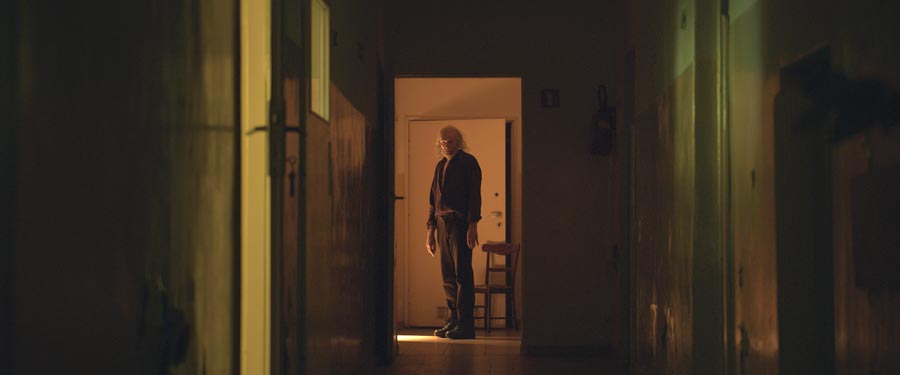
The neglected and abused elderly become avenging zombies in the German thriller “Old People,” a film with a clever hook, grisly details and a motivated, some would say justifiably so, “villain” class.
Writer-director Andy Fetscher’s depiction of the horrors of old age has its sad, universal truths, even if it uses them to trot us through the same old genre tropes, even if it stumbles from its initial premise.
In the opening tease, a fictional “present” a young, distracted elder-care nurse hangs up her phone, checks in on an aged client and is promptly murdered by him.
The implication is that this has been going on for some time, that seniors started turning into the “Living Dead” the previous summer in a rural nursing home visited in a long flashback that is the movie’s primary focus. Yet somehow, this front line worker in the present day’s social safety net is unaware of the threat that every home visit now carries with it.
That summer before, Ella (Melika Foroutan), her teen daughter (Bianca Nawrath) and younger son (Otto Emil Koch) return from Berlin to the rural hamlet where she grew up. They’re back because her sister (Maxine Kazis) is getting married.
Ella figures she and the kids will drive her dad to the wedding and reception, celebrate the ceremony and head back to the city. But sister Sanna notes “you haven’t called” or been back in quite a while. She doesn’t know Dad’s in a nursing home? Wait, the head nurse there (Anna Unterberger) turns out to be the woman Ella’s husband (Stephen Luca) left her for. How’d that hap…never mind.
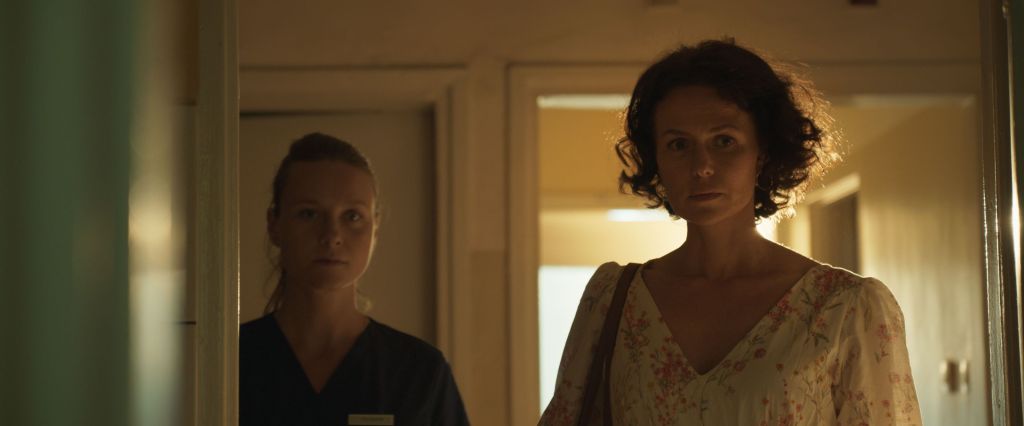
Ella’s guilty neglect is all over her face as she visits the chillingly quiet Saalheim Home and sees the nearly catatonic residents there, the more active among them “restrained” in their beds. This Nurse Kim gives a “What can you do?” (in German with subtitles, or dubbed) and strikes us as a real piece of work. And she might be one of the “good” nurses there.
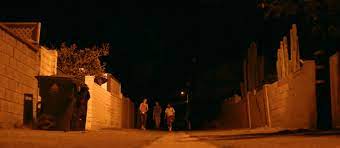
Because as the family dresses for the wedding, and Ella and Sanna’s silent father (Paul Faßnacht) is taken out for the evening, the impersonal cruelty of such warehouses for the very old becomes clear. They’re kept to a schedule, lightly taunted that they weren’t “invited” to the wedding festivities in this aged, dying village they’ve spent their entire lives in, but which they can hear across the way — until the windows are unceremoniously closed.
They snap. There’ll be no “happily ever after” for the newly-married couple or for Ella and her obviously-conflicted ex, who never wanted to leave this town. The mob may be old and largely quiet. But they’re motivated.
Continue reading