

Documentary Review: Indigenous People are the Front Line of Brazil’s Environmental Struggle — “We Are Guardians”

It’s hard to have much hope that the people of planet Earth will ever have a day of mass enlightenment to the environmental crises scientists and tuned-in politicians and activists have warned us about for decades, and which are plainly and evidently coming to pass right before our eyes.

But movies like “We Are Guardians” attempt to give that hope that in a world where well-financed propoganda organizes ignorance, greed, poverty, naked corruption and racism into an alliance against taking action on saving a polluted, deforested planet from the consequences of short-term thinking, some people aren’t going quietly.

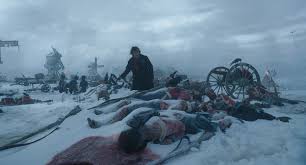
Filmmakers Edivan Guajajara, Chelsea Greene and Rob Grobman, backed by producers Fisher Stevens, Leonardo Di Caprio and others, present us with an inside look at the front lines of efforts to save the rapidly-shrinking Amazon rainforest, “the lungs” of our planet — responsible for mass carbon sequestration, vast oxygen production and the single biggest rain engine in the Earth’s ecosystem.

It is a struggle in which Indigenous rainforest tribes have been forced onto those front lines. It is their land, in most cases, that is being poached, logged, clear cut and systematically stolen by outside interests using Brazil’s poorest as their labor force and political bloc to back nakedly corrupt and racist leaders such as the former president Jair Bolsonaro.

Malcan is a tribal activist taking training on how to organize and arm himself to chase off often murderous loggers and farmers and Big Ag workers who have worn out the Portuguese phrases “Why go after me? I’m the little guy!” and “Just this once” or “I need money to feed my kids/for coffee and sugar,” etc. in decades of defending themselves for their roles in the vicious cycle.

Tadeu is a landowner who bought pristine acreage decades ago for a nature preserve with a small rainforest hotel/lodge in it, only to walk his acreage and see fresh incursions or “invaders” and “looting” by “criminals,” whom he confronts on his land and who to a one just shrug off his complaints.

It’s “the biggest environmental crime on Earth,” he declares. His many official complaints to the authorities fall on deaf ears. They’re in on it, and have been for decades.

Scientists like Luciana explain the rainforest’s function, and reporters such as Bruno lay out the layers of corruption that trap emerging economies like Brazil in Third World politics — oligarchies and kleptocracies.

Chainsaw-and-pistol-packing Valdir and others we meet at the bottom of the rainforest-raping ladder brush off the illegality and immorality of what they’re doing and rationalize how their lives came to depend on this stealing.

But Indigenous activists like Puyr dress in native garb, protest, talk on TV and speak to crowds to try and mobilize their countrymen on behalf of people their then-president described as “wretched,” with no right to protected lands.

It’s customary in such films to try and see the point of view of the “little guys” on the criminal food chain — the manual labor force committing the crimes — sneaking into forests, marking trees, then planting fence posts and later wiring up the fence to complete the theft. Once the harvestable trees are gone, the land is burned and in come the soybean and cattle farm operations, huge and small.

But decades of such sympathy have hardened us to see these as the same “easy money” laborers who opt out of the struggle to prep oneself for a more productive and socially acceptable life in any economy.

“We Are Guardians” also does a good job of naming names among the big corporate beneficiaries of this blind-eye sanctioned looting and environmental disaster in progress. Burger King, McDonald’s, Cargill, JBS, Kroger and Food Lion are among the beneficiaries of deforestation — corporations on the receiving end of beef and soy raised on stolen, illegally cleared land, greenwashed rainforest lumber illegally harvested and shifted through multiple companies before it winds up in the U.S., Canada and China.

Yes, it’s a little disappointing to see some of these names. Et tu, Costco?

As hopeless as literally everything on this perpetually back-burnered crisis can seem to be, with brainwashed masses demonizing Greta Thunberg but lionizing the Kochs, Bezoses, Bolsonaros and Trumps of the world, “We Are Guardians” reminds us that some fights you can’t give up, even as they seem more impossible with every step-backward election. And that some people realize that one hard truth before the rest of us.

Rating: unrated

Credits: Directed by Chelsea Greene, Rob Grobman and Edivan Guajajara. An Area 23a release.

Running time: 1:23

Posted in Reviews, previews, profiles and movie news | Tagged , , , , , , , , , , | Comments Off on Documentary Review: Indigenous People are the Front Line of Brazil’s Environmental Struggle — “We Are Guardians”

Classic Film Review: Coming of Age with a Kestrel — “Kes” (1970)

“Kes,” the break-out feature of Ken Loach, is an unblinking, unsentimental coming-of-age tale about a boy and his kestrel. It’s a Yorkshire “Yearling” from one of the greatest “kitchen sink realists” the British cinema produced, and one of the last.

This 1970 dramedy hangs on one of the cinema’s greatest child performances and offers a grim snapshot of the last years of working class coal-mining and the inflexible class system that kept most from ever escaping it.

Loach, the socialist filmmaker who’d go on to direct “The Wind That Shakes the Barley,” “I, Daniel Blake,” “Jimmy’s Hall” and “Sorry We Missed You,” and only recently retired with “The Old Oak,” was a stickler for authenticity and a filmmaker who made mostly working class movies that had something to say about class and work even if that wasn’t ostensibly what they were about.

So “Kes,” adapted from a Barry Hines novel, is about a boy who steals a kestrel chick from its nest and teaches it falconry. But it’s more about a lower-class latchkey child in a fatherless home, brutally bullied by an older stepbrother, neglected by his mother and judged by the system then in place to be best-suited for dropping out and learning a trade.

Billy (David Bradley, raw and real) is an almost Dickensian urchin, 16 and rail-thin and looking much younger when the film was shot, a veritable Artful Dodger in 1960s Barnsley, Yorkshire. He’s a thick-accented Yorkie determined to “not go down pit” into the mines, like generations before him and his bitter, brutish stepbrother Jud (Freddie Fletcher).

He’s got a pre-school paper route and a habit of swiping milk and cheese from the milkman, whom he’s cheerfully befriended, and pilfering from others, no matter how much he swears “I haven’t been nicking for ages” to his boss.

Sleepy, distracted and probably a little hungry at school, he’s an indifferent student where a short-tempered headmaster (Bob Bowes) and punishment-crazed teachers can’t cane him enough to change his attitude.

But he’s got this idea about catching and training a baby kestrel. And once he does, his whole life revolves around the care and education of the bird. He swipes a book on training birds in falconry, needs meat to feed it and doesn’t care how he gets it or the money to pay for it.

Loach tells that story but makes it just one element of this award-winning classic. We get a heavy dose of school life, how the problems hanging out with the wrong crowd (the kids who smoke) helps circumscribe one’s future, the drudgery of low-expectation classes with berating/name-calling and quick-to-punish teachers doubling down on giving up on the kids who can’t make themselves care.

Actor and screenwriter Colin Welland (“Chariots of Fire”) plays a cinematic cliche, that “one teacher who cares.” The other kids rat out Billy’s real obsession, and Mr. Farthing indulges himself and everybody in class by letting the kid with that word-dropping/archaic accent hold forth on terminology, methodology of connecting with these wondrous trained-but-untamed raptors.

Loach finds chuckles in local club entertainment — off-color novelty sing-alongs and the like — and laughs in an extended soccer game in which the childish physical education teacher (Brian Glover) picks the teams, puts himself on one as its “Manchester United” star, coaches while playing and cheats in his other role as the game’s biased, bullying and vain referee.

Billy seems hapless at this, climbing the goal posts that hold no net in this school, and aside from that kestrel recitation, seems doomed to menial jobs in a future that the school and system are anxious to shove him into any day now. But he’s cleverer than that. He wants to check out a falconry book, but the librarian wants him to get a parent to fill out a card (Billy can’t be bothered) and points out how grubby his hands are, and how he’ll dirty any book he checks out.

“But I don’t read dirty books,” he protests

His accent and speech and low birth sentence Billy to the future he isn’t clever enough to delay or avoid. “Kes,” his name for his female kestrel, is all that matters and he never thinks to mention his way with animals to people who might be able to arrange a more useful and perhaps meaningful future.

But the point of it all is that generations of people of his class have been pigeonholed and limited by a system that is so stunningly hidebound and unfair that it’s a wonder Britain has been able to avoid open class revolts.

People like Billy are trapped, trained and kept under the thumb of their betters — fed just enough to keep them hungry and eager to please — if ou’re looking for kestrel metaphors.

Loach gets a marvelously unaffected performance out of his star, a working class child from mining country as natural the speech as he is at learning how to train a bird as he is helpless in mastering anything useful in school, on the soccer pitch or enlisting anyone to help change his fate.

Although the film is quite dated in some of ways, it remains fresh and vital and poignant in all the best ones. “Kes” a hard-nosed look at growing up in a place where that wasn’t easy, where “growing up” came too soon and where choosing the future life you wanted to lead was out of the question if you didn’t have family, teachers and peers to help you find your dream and figure out how to pursue it.

Rating: PG-13, violence, bullying, corporal punishment, nudity, alcohol abuse, teen smoking and profanity

Cast: David Bradley, Freddie Fletcher, Lynn Perrie, Bob Bowes, Brian Glover and Colin Welland.

Credits: Directed by Ken Loach, scripted by Barry Hines, Tony Garnett and Ken Loach, based on a novel by Hines. A United Artists release on Tubi, Amazon, etc.

Running time: 1:51

Posted in Reviews, previews, profiles and movie news | Tagged , , , , , , , , , | Comments Off on Classic Film Review: Coming of Age with a Kestrel — “Kes” (1970)

Movie Review: A Maine Lobsterman can’t escape “The Ghost Trap” of his life

A script that leans into melodrama and wildly uneven performances are the undoing of “The Ghost Trap,” an immersive peek into Maine lobstering life and the people who live it.

Zak Steiner and others in the cast doing the baiting, dropping, hauling and emptying the traps from their weathered lobster boats give the picture credibility. But we can’t help but notice dashes of inexperience, amateurism and players who never learned to manage much more than affectation when “acting” was called for.

You’d have to spend time judging student films to see more people on one set who plainly don’t know how to fake smoking a cigarette.

Steiner plays Jamie Eugley, the latest and perhaps the last of a long line of lobstermen on Great Pound Island, Maine. His last name created his nickname among his mates — “Ugly.” But Jamie’s the Marlboro man of lobsterman.

The hunk works his boat with his longtime “sternman” and lady love, Anja (Greer Grammer), who is over the moon for him. He doesn’t really fend off questions about “When’re you gonna put a ring on it?” from the grizzled ships’ store owner (Heather Thomas). It’ll happen.

But of course that’s foreshadowing for the woman-overboard accident that leaves Anja with a brain injury. Three years of rehabilitation later and she’s still childlike, stuttering, struggling to regain what she might remember from their old life but sounding and seeming like a finger-painting six-year-old.

Jamie got her into this, so there’s nothing for it but to bear the guilt and spend them into the hole with rehab as he tries to support them in an embattled fishery where outsiders are elbowing their way in even as over-fishing, regulation and rising business costs turn the locals cutthroat.

Jamie’s got a lobstering pal (Taylor Takahashi) who drags him out fishing for summer season coeds at the local pub, a dad (Steven Ogg) who disapproves of his work ethic, a generations-old feud with the rival Fogerty family and a town that notices his every move, including his response to the cute coed turned charter sailing gypsy (Sarah Catherine Hook) who comes on hard with the “Forget your troubles. Let’s sail off to Key West!” pitch.

The “trap” of the title is a lobster trap dropped overboard without its float attached, or one left on the bottom because the line to that float has been cut. As a metaphor, it suits Jamie’s life — stuck in a business that’s going going under, tied to romantic obligations, buried in debt and lashed to a town where he feuds with the Fogertys because it’s the family way.

The assorted plot elements are introduced somewhat hamfistedly, which bends the drama towards melodrama. And just enough of the cast is “off” to stop too many scenes in their tracks with thoughts of “You couldn’t get somebody better?”

Not going to name nepo baby names, but somebody’s got no idea how to make “brain trauma” come off with believable symptoms.

And again, try not to notice the cigarettes as props.

Rating: unrated, fisticuffs, profanity, smoking, alcohol

Cast: Zak Steiner, Greer Grammer, Sarah Catherine Hook, Taylor Takahashi, Steven Ogg, Heather Thomas, Billy Wirth, Xander Berkeley and Whip Hubley

Credits: Directed by James Khanlarian, scripted by James Khanlarian and K. Stephens, based on a novel by Stevens. A Freestyle release on Amazon Prime.

Running time: 1:46

Posted in Reviews, previews, profiles and movie news | Tagged , , , , , , | Comments Off on Movie Review: A Maine Lobsterman can’t escape “The Ghost Trap” of his life

RIP Michael Madsen –1957-2025

Legendary character actor, Tarantino darling and Oscar nominee Virginia Madsen’s brother, Michael Madsen has died at 67.

The cause, at this juncture, is listed as “cardiac arrest.” Everything he’s been through over his 67 years — substance abuse, the loss of a child to suicide, etc. — may pile up. He’s not looked good on screen in a while, now.

But the man was a terrific actor who found himself in a lot of movies that called for that. “The Natural” and “Thelma & Louise” to “Reservoir Dogs” and “Kill Bill,” with “Sin City” and “WarGames” and two “Free Willy” pictures to boot, lest you think he was all tough guys in tough guy roles.

He made a soulful heavy and a sensitive dad when the script called for it.

Even in B-pictures at the very end, he gave fair value, always giving us the notion that here was a man who has done things, seen things and been places, a lot of which he’d like to forget and can’t.

RIP.

Posted in Reviews, previews, profiles and movie news | Comments Off on RIP Michael Madsen –1957-2025

Netflixable? Theron returns to “The Old Guard 2” — and shouldn’t have

The responsibilities of a movie star, to her career, her “brand,” her projects and how they get made stand front and center in “The Old Guard 2.” Oscar winning star Charlize Theron carries a heavy weight on this one.

A lot of people got work based on her saying “Yes” to more Netflix money. Players without her clout surround her, a supporting cast largely brought back from the 2020 film “The Old Guard,” with Uma Thurman and Henry Golding added to the ensemble for this Italian working vacation.

Without her, this second action film would probably have not employed a female director, something Theron ensured in the first “Old Guard” as well.

So without Theron, the movie would not have been made. And perhaps that would have been for the best.

Scene after scene lands like a cold-in-the-ground corpse, lines delivered at an enervated whisper, fight choreography that reveals itself as “choreography” as we can practically see cast members silently counting off steps as they make each move.

In a way, that befits a low-stakes action enterprise like this. In case you’d forgotten — I know I had — the “Old Guard” is about “immortals,” fighting and getting injured, with cuts healing and fingers magically re-attaching, our heroes hurling themselves into certain injury or death only to get up, crack their necks. re-set their nearly-severed-feet and shake it off.

The only thing to up the ante in such an actioner is the threat of losing that immortality.

“Time means nothing, until it means everything,” as our villainess (Thurman) reminds us, mid-“Kill Bill” swordfight.

With so little truly at stake, it’s no wonder the actors don’t bring a moment’s urgency to any of this.

The ancient immortal Discord (Thurman) is out reviving Quynh (Veronica Ngo of “Furie” and “The Creator”), pulling her coffin from the wine dark sea and putting her to work setting evil deeds in motion.

Andromache or Andy (Theron) lost her immortality in the first tale. Like someone between insurance policies, she’s got to be a tad more circumspect about putting herself out there.

“Do I need to remind you you’re not mortal,” she tells ex-CIA agent and sidekick Copley (Chiwetel ?Ejiofor) at the end of an opening raid/brawl at an arms smuggler’s Croation coastal mansion? That sets up Copley to “need I remind you” back to Andy in the next fight. These days when she’s cut, she bleeds.

As a sinister plot comes to light, Andy must consult the historian/librarian of this class of people, Tuah (Golding) for guidance.

“So, how old ARE you?”

“Let’s just say 2300. It’s a nice round number.”

But Tuah is “afraid” for the first time in milennia. Discord is coming for them all. Yawn.

“Old Guard 2” is 20 minutes shorter than the original film, but if you think that means it’s more brisk you’re mistaken. The script staggers right from the start, with a nearly pointless save for the “reintroduce-the-team” requirements assault on that arms merchant’s compound, a sequence that ends with an anti-climax so loud you can almost hear Theron going “That’s IT?” in the first read-through.

And if she didn’t, she was misreading the script and her responsibilities. This star vehicle — which never recovers from that funereal start as it bounces through locations (James Bond “industrial facility” sets) and struggles through creaking flashbacks that give us Andy and Quynh’s “history” and the like — isn’t diverting or interesting or even time-killing enough to merit ever going into production.

We rarely can blame actors when a picture goes wrong. But in this case, that’s on Theron. Because without her, this mess would never have been made.

Rating: R, violence

Cast: Charlize Theron, Kiki Layne, Chiwetel Ejiofor, Veronica Ngo, Matthias Schoenaerts, Luca Marinelli, Marwan Kenzari, Henry Golding and Uma Thurman

Credits: Directed bu Victoria Mahoney, scripted by Greg Rucka and Sarah L. Walker, based on the graphic novel series by Greg Rucka and Leandro Fernandez. A Netflix release.

Running time: 1:47

Posted in Reviews, previews, profiles and movie news | Tagged , , , , | Comments Off on Netflixable? Theron returns to “The Old Guard 2” — and shouldn’t have

Movie Review: Dumb and dumber? Nah. “Heads of State”

If puns are “the lowest and most groveling form of wit,” where does the jokey/dopey action comedy “Heads of State” sit on that scale?

It’s got puns. Groaners. Lots of them. And action film cliches and buddy comedy bickering and a ludicrous/obvious plot that calls attention to itself and mocks itself, as if that’ll stop us from doing the same.

A film starting out from “Let’s reunite those two supporting players from ‘Suicide Squad‘” as its big idea sets the bar pretty low. But Idris Elba and John Cena, as an “embattled” British Prime Minister (Yes, we know the PM’s not “Head of State.” Shaddup.) and movie-star/pop icon U.S. president thrown together to fight for their lives, NATO and the future handle the banter and the tough-guys-trash-talking-each-other business with ease.

“Drop warheads on foreheads?”

“Where’s your back-up?” “There IS no back-up!”

A kicker — “It’ll be great for our memoirs.”

Priyanka Chopra Jonas handles fight choreography with aplomb, and Paddy Considine tries to give us something — anything — interesting in his shade of villain.

“Hardcore Henry” and “Nobody” director Ilya Naishuller pulls out more of his Guy Ritchie editing tricks — boiling down entire harrowing escapes to short and silly “How’d you FIND us?” montages.

But damn, the been-there/needle-dropped that feeling is strong with this one. The “dumb” just won’t quit.

A trio of screenwriters, including a “Mission: Impossibl” duo do-over pile on the travel, the epic set pieces and the mayhem and try to find the fun in all of that.

When you’re putting Air Force One in a dogfight and staging a bloody ambush in Buñol, Spain’s over-the-top tomato-tossing food fight (La Tomatina), who cares about helicopter crashes, presidential limo chases and Jack Quaid as a gun-slinging not-really-amusing nerd of a CIA agent?

The story — a wildly popular president stops in London to meet an unpopular prime minister who all but endorsed his opponent in a recent election. One is great at working the press. The other? More statesmanlike.

“He still hasn’t figured out the difference between a press junket (promoting a movie) and a press conference!”

Maybe PM Sam Clarke is just jealous of Will M. Derringer’s cool name, and initials — “WMD” — and his box office take.

“The universe keeps telling me I look good with a gun in my hand!” the cinema’s once-and-future “Water Cobra” jokes.

But when the two try to mend fences on the way to a NATO summit on Air Force One, they’re shot down. They’ve got to get along, work together and fight and trick their way from Belarus to Warsaw and on to Trieste. Because somebody’s hijacked the CIA’s super surveillance ECHELON system and is plotting their demise, and NATO’s.

Jonas plays an ace MI-6 agent who used to have a thing with our PM. Quaid’s a Warsaw Station agent just tickled that his favorite action hero turned president is dropped into his care, if only briefly.

Agent Comer has just enough time to arm up in the cliched “Look at my ARSENAL” scene and load up The Beastie Boys (“Sabotage”) on the CD player.

A little Mötley Crüe here, some “Total Eclipse of the Heart” Bonnie Tyler there, and you’ve got your soundtrack to your formulaic action comedy.

Comedy mainstay Stephen Root is here to tip us about the tone they were going for, and plays maybe the least funny role in “Heads of State.” Wade Briggs, Katrina Durden and Alexander Kuznetsov are costumed, hair-dyed and shaved to look like everybody’s idea of a villain.

Look for Sharlto Copley in a single scene and “Mission: Impossible” vet Ingeborga Dapkunaite as a Belorusian sheep farmer.

But all those players are but pawns in the big, fat empty-headed action beats involving brawls, shoot-outs, chases and a hysterically high body count in a movie you don’t so much watch as “consume.”

It turns out that reuniting Bloodsport and Peacemaker from “Suicide Squad” wasn’t the can’t-miss that nobody predicted.

Rating: PG-13, lots and lots of violence, some of it bloody.

Cast: John Cena, Idris Elba, Priyanka Chopra Jonas, Jack Quaid, Carla Gugino, Stephen Root, Sharlto Copley and Paddy Considine.

Credits: Directed by Ilya Naishuller, scripted by Josh Appelbaum, André Nemec and Harrison Query. An MGM/Amazon Prime release.

Running time: 1:54

Posted in Reviews, previews, profiles and movie news | Tagged , , , , | Comments Off on Movie Review: Dumb and dumber? Nah. “Heads of State”

Classic Film Review: “How to make a cute/kinky ’60s Euro-thriller”is laid out in “Trans-Europ-Express”

“How to brainstorm a genre screenplay” is trotted out and exposed for the amusing and mundane process it is in Alain Robbe-Grillet’s goof of a thriller, “Trans-Europ-Express.”

Every trope, all the cliches and archetypal characters, the “How do we get from Paris to Antwerp?” problem solving of the plot, where to introduce “the gun,” the obligatory nudity and sex — including 1960s bondage — it’s all laid bare in this spoof from the screenwriter of the obscurant “Last Year at Marienbad” and director of “Successive Slidings of Pleasure.”

Robbe-Grillet was a “cult” director, “cult” screenwriter and plainly a man with a sense of humor about the mental or erotic titillations that were his specialty. Because ’60s-dated or not, “Trans-Europ Express” still plays, still amuses and still “applies” when it comes to formula films like the one it sends up.

Three filmmakers — a director, producer and script supervisor — board a train in the Gare du Nord station in Paris. The moment they settle into a compartment, “We should set a film on a train like this” (in French with English subtitles) occurs to them.

The director (Robbe-Grillet) gets his script supervisor (Catherine Robbe-Grillet, his wife) to break out a tape recorder to take notes. It’s a suitcase-sized portable reel-to-reel, a ’60s tech joke “Austin Powers” missed. With the producer (Jérôme Lindon) pitching in, they conjure up a plot.

How does one get cocaine from Paris to Antwerp? Where can you buy a “false bottom suitcase?” Wouldn’t our “trafficker” be more likely to smuggle diamonds in and out of Antwerp?

An actor crosses their field of view. “Isn’t that (Jean-Louis) Trintignant? He’d be PERFECT” for this!

We see the trenchcoated Trintignant — of “And God Created Woman,” “Z,” “Under Fire” and in 2012’s “Amour” — side-eye everyone and everything, doing his best version of “sketchy.” He shops for a suitcase. “The trafficker model. Just kidding.”

He is eyed by the sexy stranger (Marie-France Pisier of “Cousin, Cousine” and Truffaut’s “Love on the Run”). Who is she? “An agent for a rival gang!” “An amateur detective?”

Over the course of the train ride, the trio dreams up an absurdly convoluted plot that involves multiple suitcases and multiple handoffs, legions of middle-men and women and an ever-evolving code-phrase about when one last saw “Father Pettijohn.”

Leaky bags of sugar are loaded into the suitcase for a dry run. A small semi-automatic pistol of the era is hidden in a hollowed out paperback novel (about trains). Cops and “fake police,” an inspector, a fake blind man (Ivo Pauwels) and others aid, pursue or work with Jean, our trafficker.

Eva (Pisier)? She’s a sex worker, or a spy who asks questions.

“What do you do for a living?”

“I’m an assassin.

“Oh, a professional?”

“No, an amateur. Semi-professional, actually.

All these interruptions, arrests and interrogations?

“Tests.”

Our brainstormers send Jean from hotel to hotel, into a nightclub or two, one with a bondage show, train stations to drawbridges to dry docks.

Yes, he picks up a bondage magazine for the train ride. Yes, he buys rope. Will that play into “the whore subplot?”

What turns him on?

“Rape. Any rape.”

“All right. But it’s more expensive!”

It’s all weird and witty, and yes, one could totally imagine a film coming to life in just this way — plot, characters, complications, “Chekhov’s gun,” sex and violence, titillation and tension trotted out, debated and worked-out and shoved into the script on a train ride.

No, it never adds up to much or much that makes a lot of sense.

“Trans-Europ-Express” is like that ’60s train ride, mainly interested in simply getting from point A to point B, with requisite plot complications, a black and white tour of Antwerp and the Gare du Nord, hand-held tracking shots (camera work is glimpsed) on foot and in rail cars, vigorously obvious editing and kinky jokes that were daring for their time and can still push several politically incorrect buttons along the way.

If you want to take a 100 minute course in thriller cliches and how to apply them (right down to the obligatory “strip club” scene), Robbe-Grillet summons you aboard and announces “Class is in session” the moment he says “We should set a film on a train like this.”

Rating: unrated, violence, nudity, bondage, sex work jokes

Cast: Jean-Louis Trintignant, Marie-France Pisier, Christian Barbier,
Ivo Pauwels, Jérôme Lindon,
Catherine Robbe-Grillet and Alain Robbe-Grillet.

Credits: Scripted and directed by Alain Robbe-Grillet. A Lux/Kino Lorber release on Tubi, Amazon, et al.

Running time: 1:45

Posted in Reviews, previews, profiles and movie news | Comments Off on Classic Film Review: “How to make a cute/kinky ’60s Euro-thriller”is laid out in “Trans-Europ-Express”

Movie Review: If the Priests Aren’t Up to it, “Dark Nuns” Will Handle this Exorcism

Back in the olden days, a local archdiosce might appeal to the Vatican for a little help when it came to demonic possession of good Catholic folk in their care.

Before you could say “La plume de ma tante!” Max Von Sydow would fly in, or Russell Crowe would Vespa over dressed in black to go to war with Satan.

That’s not how they roll in the ROK. Korean exorcisms, as depicted in “The Priests” and now “Dark Nuns,” cover all the polytheistic bases — Catholocism, Buddhism and shamanism.

For the ten-years-later sequel to “Priests,” all the guys in cassocks and crucifixes are busy. So it’s up to a couple of “Dark Nuns” — one older, unordained and uncensored enough to be over this “s–t” — take up the cause of saving a boy from whatever demon in whichever of the “twelve manifestations” has moved in and turned the kid suicidal.

Director Hyeok-jae Kwon tries to match the sass, spookiness and tone of “The Priests” in a slog of a thriller that manages to be even longer and slower than the 2015 original film.

Song Hye-kyo of John Woo’s “The Crossing” movies stars as Sister Junia, stomping in with a five liter can of holy water and ready to kick ass by getting a demon to say its name.

She’s unfiltered and big on backtalk, to demons — “Coward! Taking over a child’s body!” — and to Catholic higher-ups, who as in many an exorcism movie including “The Priests” disapprove of having to “approve” this fighting-the-Devil dirty work. So they keep it at arm’s length.

Unordained or not, we’ll find you a priest to pitch in and you go, girl!

But Father Paolo (Lee Jin-wook of “Squid Game”) runs the hospital where poor Hee-joon (Moon Woo-jin) is being unsuccessfully treated.

“Possessions are not real,” Paolo argues (in Korean with English subtitles). And God, he reminds Sister Junia, “exists solely in heaven.”

He won’t be much help unless he upends his disbelief. So his young protege Sister Michaela (Jeon Yeo-been) will have to join the cursing, smoking Junia on her quest.

They appeal to the Vatican for the priests from “The Priests” to come and help. No dice. St. Francis’s Bell from that first film? Maybe. “Saint Peter’s Keys?” You know, the ones on the tarot cards?

Yes, this script, like the first film’s, spends a staggering amount of screen time on arcane Catholic myth, tortured explanations of “why” Father Kim and Father Choi can’t be bothered to help this time (the actors got more famous) and Korean polytheistic work-arounds.

Tarot, shamanism, let’s throw the works at this demon and see if we can save this boy.

Both films have decent enough effects, but neither manages the existential dread that “The Exorcist” served up and few “exorcism” films since have come close to imitating in the 50 years since.

Both “The Priests” and “Dark Nuns” go for jokes, just not enough of them. Each story is driven by a maverick Catholic character who could have been a lot more fun to hang with and root for. But neither film gets enough out of that engaging central character.

All “Dark Nuns” manages to do is provide equal opportunity for disappointment.

Rating: unrated, violence, some profanity

Cast: Song Hye-kyo, Jeon Yeo-been, Lee Jin-wook, Huh Joon-ho and Moon Woo-jin.

Credits: Directed by Hyeok-jae Kwon, scripted by Hyo-jin Oh and Kim Woo-jin. A Well Go USA release.

Running time: 1:54

Posted in Reviews, previews, profiles and movie news | Tagged , , , , | Comments Off on Movie Review: If the Priests Aren’t Up to it, “Dark Nuns” Will Handle this Exorcism

Movie Review: Tracking a Syrian War Criminal down a French “Ghost Trail”

An obsessive search for justice and closure consumes a Syrian on the hunt for an Assad regime war criminal in “Ghost Trail,” a quietly gripping thriller about Syrian expats in Europe pinning their hopes on “international justice” as they conspire to track down a torturer.

But is the trail cold? Is their quarry too careful and cunning? With “justice” imperiled all over the world, will they get what they’re looking for from others? Or will the tempation of simple revenge be too hard to resist?

Back home, our hunter was Hamid, a professor of literature in an Aleppo university imprisoned at Sednaya, released in the middle of desert by callous soldiers in the film’s grim opening. But in Strasbourg, France, he calls himself Amir. Or Saleh. Many names. He (Adam Bessa) does day labor in construction. But that’s just to get to know the crew so that’s he comfortable asking around.

“Have you seen” his cousin, he wants to know? He questions anybody who was ever in a refugee/resettlement camp, haunts the welcome conters and visits the Turkish quarter where some Syrian refugees settled. His photograph of the man he’s looking for is blurry. His vague questions earn mistrust. Escaping a murderous dictatorship leaves one and all paranoid.

When Yara (Hala Rajab) says that she knew someone who knew “Sami Hanna,” after she tests him by quoting Arabic literature. She goes so far as to flirt a little. He barely notices.

Hamid is on a mission, one that has him lying to his mother (Shafiqa El Till) in a Beirut refugee camp, lying to French authorities who insist he’s overstayed his welcome and should return to the country that accepted him — Germany. He will seek psychological counseling if that will prolong his stay.

Hamid is “sure” his quarry is here. He rebuffs doubts from the online first-person-shooter video where he and his co-conspirators chat. He takes the money from his French go-between (Julia Franz Richter) in silent spy-game exchanges.

And when he spies someone who fits his profile, Hamid will not let anyone distract him from his prey or dissuade him that he’s got the wrong guy. It’s him, he tells his compatriots (in Arabic, French and German with English subtitles).

“I can sense it.”

He will stalk, eavesdrop and spend days and weeks looking for this college chemistry student (Tawfeek Barhom) to give himself away.

Bessa, of “Mosul” and “Extraction,” internalizes everything about Hamid, an educated man driven by loss, grief and revenge to listen to the victims’ tapes and plumb the depths of his own trauma to see if he has a match.

Others speak of being covered with a hood, counting the steps their persecutor took and smelling the sweat, breath and cologne of this creep who beat, electric shocked and burned his victims with acid. What detail will be the one that confirms or denies that our obsessive, disturbed stalker has his man, or that he’s lost any ability to be objective and weigh facts?

Barhom’s performance has a caginess that leaves room for doubt. And Richter’s Nina lets down her guard long enough to show the wrenching emotions about her reasons for joining this search-and-expose-or-kill cell.

Director and co-writer Millet scrupulously avoids melodrama and he immerses us in Hamid’s isolation, in the life he’s lost and the future he abandons for this obsession, his desire to get that closure and perhaps give all that was taken away meaning.

We invest in this quest, put ourselves in this man’s shoes and wonder, like him, if “justice” is itself a ghost, if it’s even possible in a world where tyrants and their minions face no consequences for their crimes, even in alleged democracies.

Rating: unrated, violence

Cast: Adam Bessa, Julia Franz Richter, Hala Rajab, Shafiqa El Till and Tawfeek Barhom

Credits: Directed by Jonathan Millet, scripted by Florence Rochat and Jonathan Millet. A Music Box Films release.

Running time: 1:48

Posted in Reviews, previews, profiles and movie news | Comments Off on Movie Review: Tracking a Syrian War Criminal down a French “Ghost Trail”

Movie Review: Korean Catholics have their own way of Exorcising Demons — “The Priests”

Well Go USA is about to unleash the sequel to the Korean exorcism thriller “The Priests,” titled “Dark Nuns,” in North America. So they figured they’d put the original 2015 hit out there for people who want to catch.

Not a bad idea, as that film may be easy enough to follow, but writer-director Jang Jae-Hyun (“Exhuma”) so cluttered his narrative with so many characters and bits of back story that it’s hard to keep track of who is whom. It takes some adjustment to get into the “style” of storytelling.

Naming more than one character “Park” in a Korean film is just plain mean.

A prologue shows us that Italian priests have taken their shot at this one Korean case and failed. They got the demon out, tucked it under one priest’s cassock for disposal (all becomes clear in the third act) and didn’t get it across the finish line.

One maverick Korean priest (Kim Yoon-seok of “Escape from Mogadishu”) has plunged into the case of the teen girl (Park So-dam of “Parasite”) and failed. Her allegations of “touching” were an added difficulty, with what the world knows about priests and this particular demon knowing what accusation to make.

Other priests and deacons have come and gone as this child’s possession keeps her in a coma between exorcisms. But they all took notes and recorded cassette tapes of their efforts.

Young, eager and perhaps troubled Deacon Choi (Gang Don-won of ““Peninsula”) is the latest recruit, summoned and cajoled by a church heirarchy trying to keep this entire enterprise off the books and out of the news.

Tactless, jaded Kim isn’t impressed by the new guy.

“You look like a Mormon,” he mutters (in Korean with English subtitles). “Idiot” becomes his nickname for the young guy, who starts to see things the moment he looks into the case and long before he meets the victim. That makes him qualified for the work.

The novelties of this 2015 film are its droll, sarcastic humor and the distinctly Eastern touches added to all the vomiting/bed-levitating tropes of the genre. A little Buddhism and a sprinkling of shamanism and the like suggest that the Civilized East has been dealing with these devils since before the Vatican, William Peter Blatty and William Friedkin got involved.

Demons are typically lions, snakes or scorpions and can’t be destroyed. The best you can hope for is to trap them in another animal’s body and toss them in a river “at least 15 meters wide.”

Yeah, they’re damned specific, or so Father Kim says as he has Deacon Choi ring a bell made by the founder of their order, St. Francis of Asisi as part of the ritual.

Kim is sanguine about what it will take to defeat this “5,000 year old bastard,” and Choi’s stomach, spine and will shall be tested in the battle. Is he up to it?

The film begins in gloom and mystery, drifts around interminably in the middle acts as earlier priests and deacons are discussed and even revisited, men terminally changed by their battle with The Beast.

Church politics further muddy up the narrative, not adding anything to it, just slowing the movie to a crawl.

But if you’re going to see one Korean exorcism thriller this year, you can’t make it “Dark Nuns.” Not without catching “The Priests” first, and not without wading through a lot of distractions that keep us from focusing on our leads and their quest to save a teenager from a demon who has to be convinced to “say his name.”

Rating: unrated, Satanic violence

Cast: Kim Yoon-seok, Gang Don-won, Park So-dam and
Lee Ho-jae

Credits: Scripted and directed by Jang Jae-Hyun. A Well Go USA release.

Running time: 1:47

Posted in Reviews, previews, profiles and movie news | Tagged , , , , , | Comments Off on Movie Review: Korean Catholics have their own way of Exorcising Demons — “The Priests”