
Rosario and Lakeith and Owen and DeVito and Jamie Lee and Tiffany and Leto and on it goes — ghosts and ghost busting? And all on July 28.
Rosario and Lakeith and Owen and DeVito and Jamie Lee and Tiffany and Leto and on it goes — ghosts and ghost busting? And all on July 28.
Yeah, I’ve got a couple of movies that just came in to review. “Urgent” the last minute publicists say.
“Manana,” I say.
Why?
#ItHappensEverySpring.
A spring training break at the Trop in the Banana Republic of Florida. And no movie fan would be fully dressed without his Durham Bulls cap.


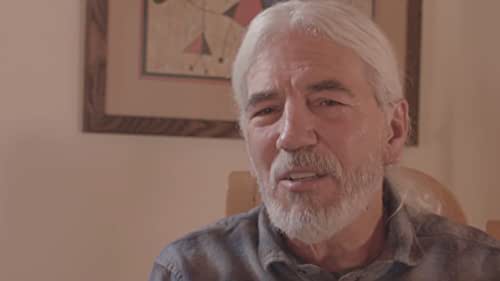

Unfortunately titled, not quite as polished, shot, edited and “expert” driven as you might hope, “American Bolshevik” begins with a wealthy Newport, Rhode Island philanthropist recounting stories of dogs she’s lost to coyotes. It features more disturbing still photographs and scenes of wanton slaughter and animal cruelty than the average viewer would find tolerable.
But this documentary about the durability and brutally, expensively and stubbornly-pursued efforts to wipe-out North America’s most populous and successful canine predator, the coyote, is certainly an eye opener.
It’s titled from a phrase that Western nature writer and folklorist Dan Flores, the anchor interview in the film, coins to describe these ultimate survivors, predators who have thrived despite backward, “official” and special interest-driven efforts to exterminate it the way species from wolves and grizzlies to buffalo and bighorn sheep were almost wiped out.
Like “Bolsheviks,” the Red Menace pursued with a murderous, extermination-minded zero tolerance in from the 1910s onward, the canis latrans has endured. It has survived trapping, bounty-hunting “contests,” mass-poisoning, shooting from helicopters and snowmobiles and government-backed planned-extinction efforts. Much of this has been conducted out of public sight, with public money and largely at the urging of “lazy,” shortsighted and stubbornly misguided and misinformed Western ranching interests.
An Eastern sheep farming wildlife biologist is the one who characterizes the 150 years of ranchers this way in a film that makes the case that bad human practices are always what leads to “bad” coyotes, who adapt to prey that’s made easily accessible by “open range” grazing, to suburban human “feeding nature” practices, critters who react murderously to any other canine that comes sniffing around their cubs.
“They don’t call them ‘wily’ for nothing!” one coyote-studying expert enthuses.
Being a species of dogs, there’s always the danger of sentimentalizing a predator ferocious and clever enough to hunt and kill sheep, and in its larger Eastern wolf-interbred incarnation, take down deer. But even folks who have lost pets to them — leash-law violating dog and cat owners — confess a fascination with these new “neighbors who migrated north and east from the American Southwest, west and prairies to tip over their garbage can and eat the dog and cat food left out for their household companions.
Flores, a Louisiana native now living in New Mexico and professor emeritus with the University of Montana-Missoula, collects stories and Native myths attached to coyotes, stories that pass on the intelligence and foibles they seem to share with humans in fable form, and marvels at their adaptability.
Others note the long road traveling from officially-sanctioned slaughter and the long road to turning away from it. A lot of this still goes on thanks to ranchers and their livestock associations, whose business models were built on free access to public land for their own personal use and cheap meat made possible by a 150 year long government handout. Their practices get backhanded more than once in the film, which suggests that corporate mentality drives coyote killing simply to save Big Ag and entitled fat cat ranchers from the bother and expense of fencing in their four-footed assets.
But “American Bolshevik” isn’t likely to change that mindset, or end the pointless (“Hunting them NEVER works” is explained in blunt, biological and mathematical terms.) and destructive practices in the land of “Money talks.” Nor is the film likely to reach a wide audience thanks to its title and sometimes graphic imagery and harsh subject matter.
Still, if you’ve ever stumbled into a coyote on a hike or checking out your yard or patio in passing, the film is worth a look just to familiarize yourself with what you’re seeing and dealing with and what you’re doing to enable or encourage the stigma of a “menace” laid upon a singing wild dog who’s just doing what comes naturally.

Rating: unrated, disturbing images of animal cruelty and mass slaughter
Cast: Dan Flores, Numi Mitchell, Camilla Fox and Chris Schadler
Credits: Scripted and directed by Julie Marrron. A Lemon Martini release on Apple TV, Amazon and Vudu
Running time: 1:24

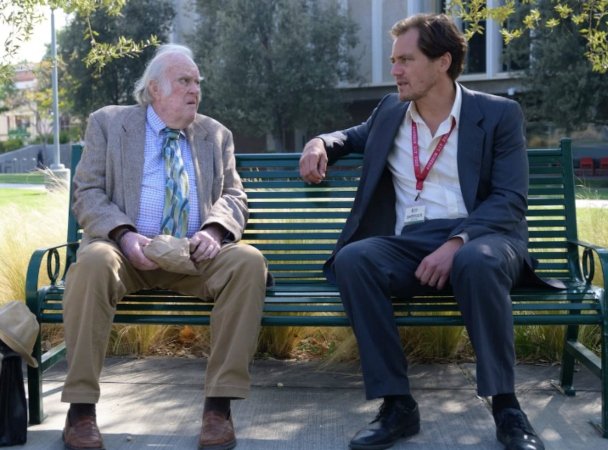
I can’t speak for what they’re like today, but in less politically-correct times, university writer’s conferences were a literary spectacle that unleashed famous novelists, poets and non-fiction authors and their fans and groupies on assorted august academic institutions and their young, “innocent” student bodies in what amounted to an annual academic bacchanale.
The limp but lighthearted and sensitive “A Little White Lie” brought to mind all sorts of lore I picked up covering and broadcasting my grad school’s mid-winter midwestern fete, the University of North Dakota Writer’s Conference. Tales of which literary legend chased which faculty member, or of the Pulitzer Prize-winning playwright who tested a 40-below March in his birthday suit while drunk, entered UND myth.
The film, about an imposter (Michael Shannon) crashing such a festival, having been invited by mistake, brought to mind a hilarious story I heard (and broadcast) at the UND version of such an event. Norman Mailer read at that conference in the mid-80s. He chose “Our Man At Harvard,” a comic anecdote, heavily fictionalized I trust, about a scheme Mailer and others cooked up as Harvard undergrads to raise money for their literary magazine.
They schemed to pretend they’d landed the great British novelist Somerset Maugham for a fundraiser cocktail party to help fund their university literary magazine. They hadn’t reached Maugham, but instead teamed up to maintain the ruse that “you just missed him” during the party in a large, rambling house on campus. It’s hilarious, and so much funnier than this movie, based on a novel by Chris Belden, which could have been inspired by any of a number of writer’s conference stories, with an added fictional “reclusive author” twist.
In Michael Maren’s downbeat debut “comedy,” Kate Hudson plays a writer and academic at southwestern Acheron U., someone whose annual writer’s conference is facing extinction until she lands a long-shot star attraction for the 92nd edition of the event. He’s a J.D. Salinger figure named “Shriver,” who published “Goat Time,” a generational literary event, over 20 years before. He wrote it and promptly vanished from sight.
She gets an address of someone with that name, a sad, introverted alcoholic who works as an apartment building super in a city back east. When this Shriver (Shannon) gets the invite and reads that there’s a “prize,” and figures the real guy would never surface to expose him, he and a drinking buddy Lenny (Mark Boone Junior) resolve to reply.
A follow-up letter asks him to show up with “new writing” to share. So Shriver gets a notepad and starts scribbling an introspective, Bukowski-esque novel about a wet spot on the ceiling of his apartment.
He’d like to chicken out, even after deplaning out West. But running into the disappointed Claire (Hudson) in the airport bar makes him take pity, and our play begins.
Shriver’s conscience is the alter ego (Shannon as well) whom he hears in his head, berating him and assuring him he’ll never get away with it.
It’s the sort of thing that could make a sensitive fellow like Shriver have a William S. Burroughs-styled existential crisis, wondering if he IS Shriver, if he killed his wife, which is what the misogynist hero of his “over-hyped adolescent macho wet dream of a novel” did.
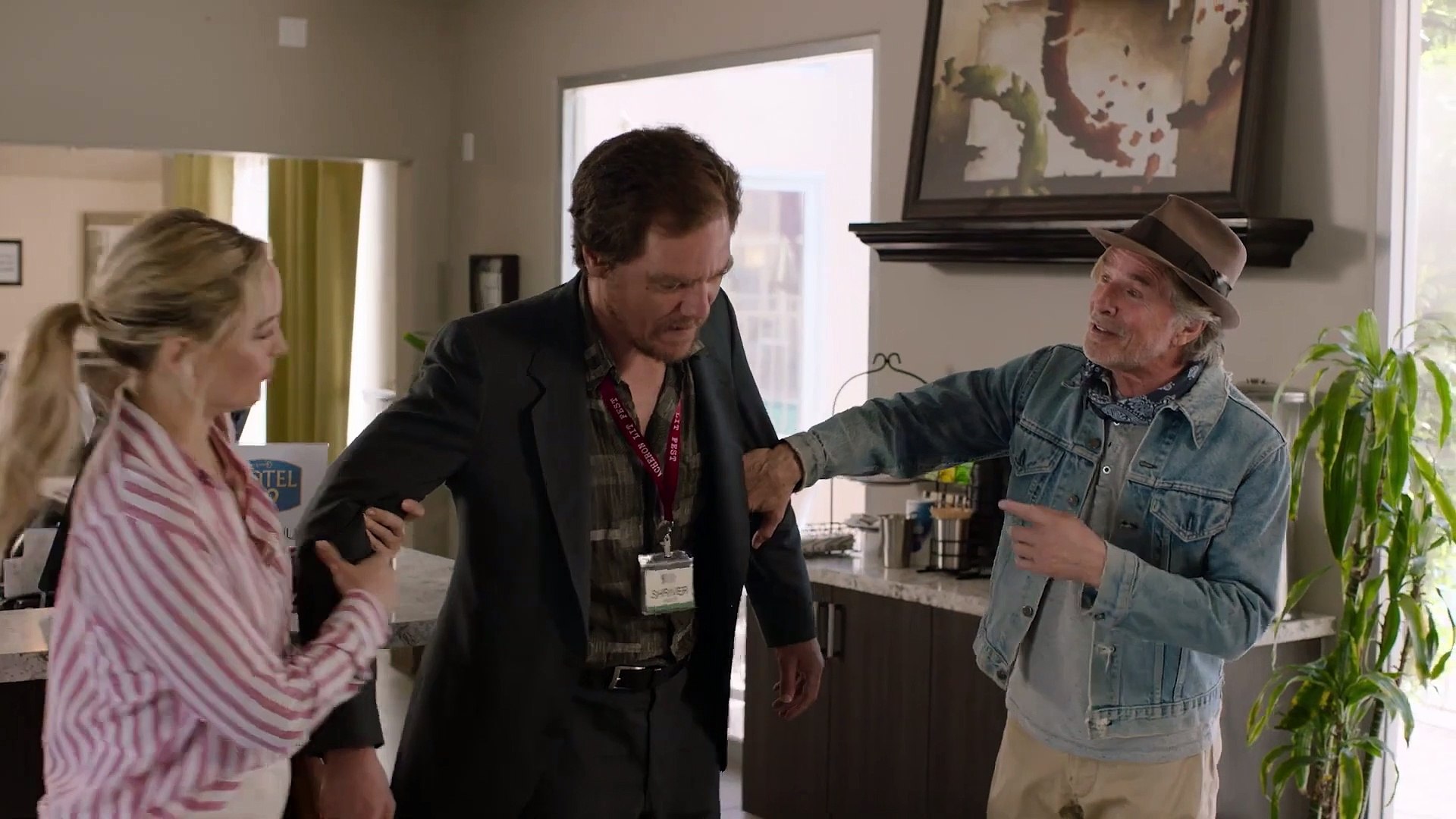
Meeting the drunken Thoreau-quoting faculty member/writer Wasserman (Don Johnson, the life of the party) who drinks so much that he can’t drive, so he rides to work each day on his trusty steed — Byron — a literary-minded grad assistant, an opinionated Black feminist poet (Aja Naomi King) and a fan (Da’Vine Joy Randolph) complicates his trap.
“I need you to behave for three days,” Claire pleads. “Can you do that? I need you to be the man who wrote one brilliant novel.”
Taking his pal Lenny’s direction to “always be depressed,” with a natural eccentricity (never showering), Shriver is reluctantly dragged to this workshop or that panel discussion or reception where a cougar groupie (Wendy Malick) tries to add him to her trophy wall, Shriver just might pull it off.
Continue readingBig, brassy popular pop band takes an Iron Curtain countries tour for the State Dept. and the wheels come off their 1970s career.
This seems paranoid and perhaps delusional, but true, false or exaggerated, it could be fascinating.
March. 24.
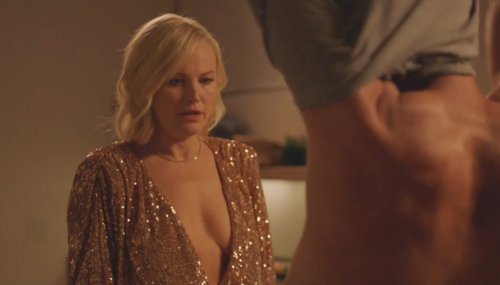
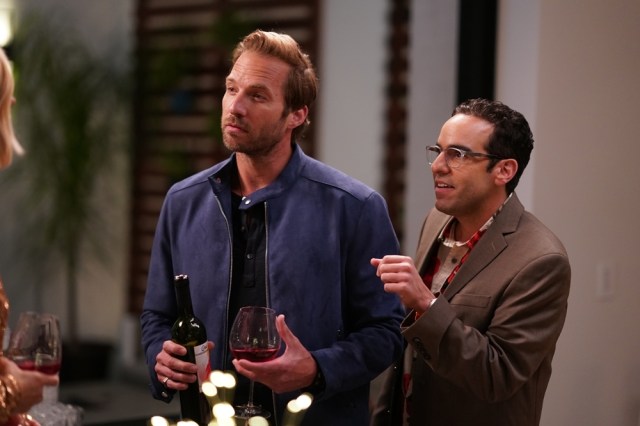
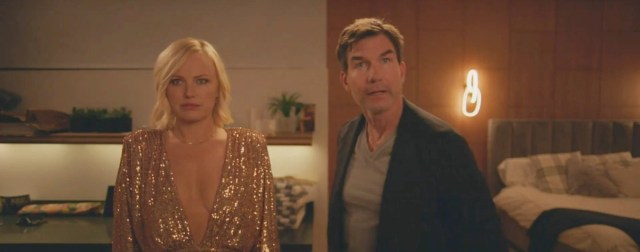
In her latest, Malin Åkerman plays a 40something divorcee who has “baby fever,” which is why she finds herself coming on to select single men the night of her peak ovulation, turning a friend’s birthday gathering into “The Donor Party.”
The debut feature of writer-director Thom Harp is a raunchy, skirt-hiking farce that never quite achieves the happy ending all involved were hoping for, although it finds a few laughs and some oh-no-they-didn’ts.
Jacqueline is doing fine until she runs into her ex (Ryan Gaul) and the woman he left her for, who is now pregnant. He didn’t want children with her. Let the record reflect that she’s a jilted divorcee who “wasted all my good eggs” on “that a—-le” Todd.
Her besties Amandine (Bria Henderson of TV’s “The Good Doctor”) and Molly (Erinn Hayes of “Children’s Hospital”) try to console her, and then come up with “a plan” for how to solve her problem.
The script has Jacqueline dismiss “adoption” and sperm bank implantation as “too expensive.” And yet she expects to be able to afford to raise a child.
She’s over 40 and can’t waste any more time dating. There’s nothing for it but to aggressively pursue a one night stand. The search for “A single man who is disease-free in the suburbs” begins.
But to ensure success, they decide Jacqueline had better make it “three one-night-stands.” And as Molly’s about to throw a birthday party for her husband (Rob Corddry), Jacqueline might be able to triple down, all in one night. With her ovulation app as her guide and lesbian Amandine and long-married Molly doing the match-making, and Jacqueline looking like the Swedish Canadian blonde goddess Malin Åkerman, this should be a snap.
The party is populated by pregnant women (including Aarti Mann of “The Big Bang Theory”) and other moms who warn Jacqueline about the consequences of childbirth — career loss, body strained and stretched, a loss of your childless friends and a change in your “interests.” Those will become what your child is interested in, not you.
But it’s also got daddy candidates, from the arrogant and sexist portrait painter (Jerry O’Connell) to TV’s “Shirtless Chef” (Jeff Torres), a preening poser who fancies himself the new Jeff Goldblum, to the short, sweet nebbish (Dan Ahdoot) and hunky blond flirt Armin (Ryan Hansen).
The night will include wine spiked with “Molly” for the unknowing potential “sperm donors,” clumsy come-ons from Jacqueline, who is out of practice, and a lot of intercourse — in all of its (not really R rated) messy glory.
Henderson may be playing a modern rom-com “type,” the sassy Black gay BFF. But she lands a lot of the laughs, aiding and abetting the “sperm-napping” or whatever everybody wants to call it. Armandine is the “coach,” urging her player to “‘Ho’ now,” so she can “Mom later.”
Corddry’s good for a giggle or three, Hayes does an amusing stoned act and O’Connell heads right over the top as a jerk who trots out every “shaming” in the book for our expectant-to-be-inseminated heroine.
Åkerman throws herself into this with something resembling the skin-and-sweat-and-sexual abandon she brought to her breakout film, “The Heartbreak Kid.” But Jacqueline is older, sadder, so long off the seducing a man market that she’s taking man-catching advice from a sarcastic lesbian. Åkerman plays that desperation, too.
Not every actor brings something fun to the table, because the misfiring script has so many characters to service that most have no chance to make an impression.
There are moments when we hear monologues on aging, the disparity in dating (men always with younger women), the gamble that your chosen mate will be a good father, or even want to be one.
But this isn’t anywhere nearly as thought-provoking, amusing or sentimental as the raunchier “Knocked-Up.” And the one-night/many partners thing, vulgar as it is, isn’t as amusing as it might have played with script doctoring and a deeper, more comically-experienced cast.

Rating: unrated, drug abuse, sex and sex and profanity about sex
Cast: Malin Åkerman, Jerry O’Connell, Bria Henderson, Erinn Hayes, Ryan Hansen, Dan Ahdoot, Aarti Mann and Rob Corddry
Credits: Scripted and directed by Thom Harp. A Vertical release.
Running time: 1:33
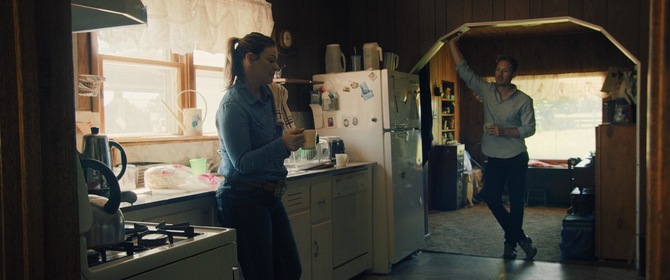
“The Pilgrim” is a serene, scenic and soul-searching indie drama that goes adrift as it charts an over-familiar course.
It’s about a workaholic manager at a London construction firm summoned home to the Great Plains after his mother dies. He will come to terms with his relationship with her, his sister and the beautiful topography of South Dakota and Wyoming he left behind.
Jeff Worden is “Will” in London, a guy juggling workers, clients and architects in a job that rides him day and night. Even his live-in London girlfriend (Lou Llobel) takes a back seat to his ever-ringing cell, even on holiday.
“I can’t NOT take calls!”
One call he wishes he’d dodged was from sister Jeannie, telling “Billy,” as she’s always known him, that their mother died. Girlfriend Claire sees his ordained priorities clearly even if he does not.
There’s nothing for it but to fly “home,” to the small ranch his mother owned and to the bitchy divorced rancher sister (Rebekah Stein) who isn’t inclined to cut the guy who got away (from Nebraska, I think) any slack.
“When’s the service?” he wants to know. “We already had it.”
They clash, she shoves the old coffee can with “what’s left of her” in it into his hands, and he Jeeps off to Wyoming, where his estranged mother grew up, to the family homestead where Aunt Kay (Julie Oliver-Touchstone) presides because their mother wanted her ashes scattered where the buffalo roam.
Director/co-writer Joshua Benson makes his debut feature a “Nomadland” postcard of the prairie, the northern plains and Wyoming hill country. But he’s not very good at finding novel or particularly compelling things for our “Look Homeward, Angel” wanderer to do.
Will stops off at a small town (South Dakota, I think) rodeo as Aaron Copland’s classical music warhorse “Rodeo” plays on the soundtrack, soul-searches in a rustic, clapboard roadside church, gets hit on by the hottest cowgirl in a honky tonk and picks up a working class hitchhiker on her way to an open pit mine just to be “helpful.”
The settings embed us in a sense of place, be it London or South Dakota sh–kicker country. The dialogue is sparse and spare, but the trauma that separated mother from son is as trite, tried and true as that enthusiastic blonde honky tonk angel (Emerald Clark) or the solemn, sober and thoroughly adult hitchhiker (Rachel Colwell).
The finale offers no real surprise and bears the hallmarks of “outsider” thinking.
Grace notes aside, it’s funny how often green, big city filmmakers (Benson’s a Brandeis alum who attended a London film school) romanticize the tug of rural values/virtues cliche, ignoring the reality that runs up against this weary narrative trap. People leave for a lot of good reasons.
Rating: unrated, sexual situations, profanity
Cast: Jeff Worden, Lou Llobel, Rebekah Stein, Rachel Colwell and Julie Oliver-Touchstone.
Credits: Scripted and directed by Joshua Benson. A Freestyle release.
Running time: 1:34
Sort of a “Scream” send up, genre aware and genre mocking higher-minded than the “Scary Movie” outings of yore.
June 16.
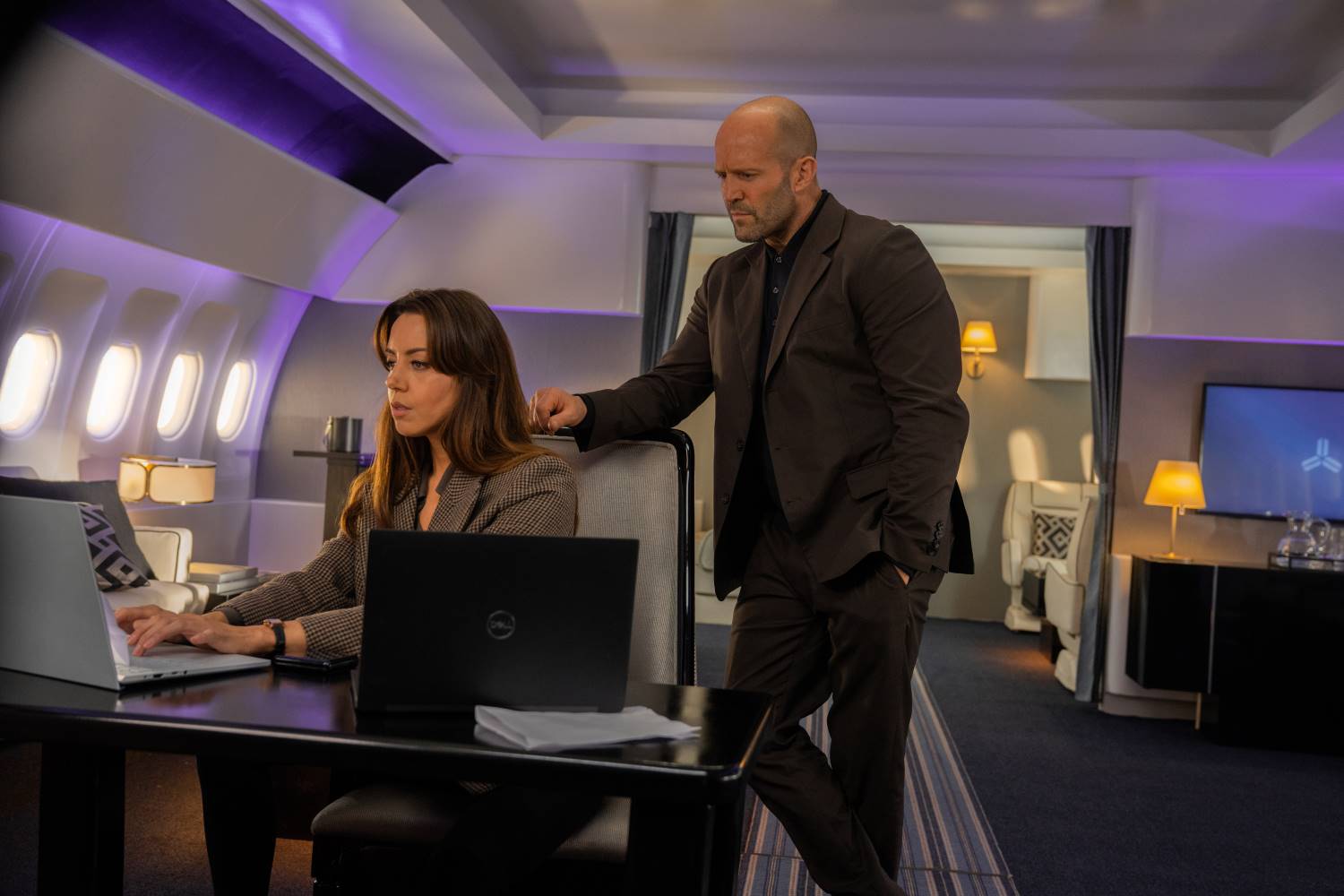
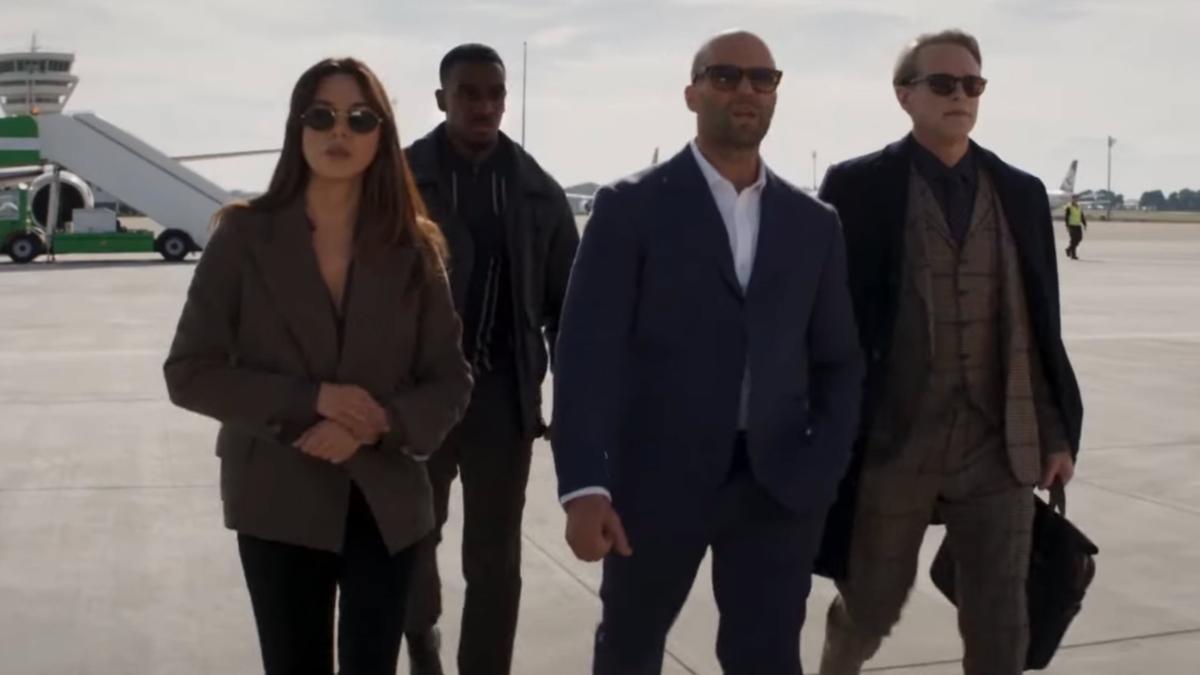

Guy Ritchie may have — at long last — lost his fastball when it comes to action ensemble pieces with his muse, Jason Statham.
But their fifth collaboration, a “Mission: Somewhat Improbable” caper (action) comedy, has Aubrey Plaza, Hugh Grant, Josh Hartnett and Cary Elwes to pick up the comic slack whilst Statham throws his punches. And rapper Bugzy Malone makes that “competent sidekick” thing look easy in this good-natured “gangs all here” romp that never quite romps, but bounces along well enough to summon up memories of Statham/Ritchie triumphs of the past.
“Operation Fortune: Ruse de Guerre,” is the ungainly title of this much-delayed COVID era Miramax project that went through STX’s hands before Lionsgate took over and presents it to the public. Right from the start, it parks us squarely in the middle of Guy Ritchieland as Mr. “Unique Set of Skills” Statham sees his latest “rehabilitation retreat” interrupted by his posh oenophile control agent (Cary Elwes).
“Mind if I come in?” “Yes I fu—-‘ DO!”
“Aren’t you going to ask me why I’m here?” “No I’m fu—-‘ NOT.”
Something they’re calling “The Handle” has been violently snatched in South Africa. The world’s most dangerous folks are all abuzz about whatever it is — bomb, formula, program, pee pee tapes.
There’s nothing for it but for Orson Fortune to have a go getting it back. He’s lost some of his team to “the competition.” But with driver/sniper/tough guy J.J. (Malone) and new “coms” and IT specialist Sarah Fidel (Plaza) in tow, and boss/fixer Nathan Jasmine (Elwes) pressed into service in the field, maybe they’ll have a spot of luck, eh wot?
An international arms dealer not-quite-able to hide his Cockney past (Grant) is involved. And as he’s obsessed with this Hollywood action star (Hartnett), there’s nothing for it but to persuade the American to come “play yourself,” Nic Cage style, to lure the villain into letting them all break into his yacht, his villainesque villa and his computer so’s they can get a “handle” on the handle.
The whole thing is a Bond-lite lark, lots of “Mission: Impossible” locales — Morocco, London, Madrid, Antalya, Turkey — and swank settings for parties, heists and Statham to bust out a little of the bald-headed, five o’clock shadow fight choreography that made him rich.
Eddie Marsan plays the head of whatever “Special Branch” signs their checks, Peter Ferdinando is the half step ahead or behind rival secret agent hunting the same “handle,” and Grant is more charming and smitten (It’s Aubrey, we get it.) than ruthless — for much of the film — which tends to lower the stakes.
As “the competition” in this pursuit is possibly in-house, another rival agency within British Intelligence, there’s a real void where a Big Bad Villain ought to be. Ritchie didn’t give us a lethal-enough Grant sidekick that is pretty much required in such films to give them a sense of balance.
But Statham and Grant know their way around a punchline or double entendre and Hartnett can be amusing, playing an action hero forced to be heroic.
“Are you a patriot?” “I don’t vote Republican, if that’s what you mean.”
And Plaza is as reliable a dirty laugh as the movies have these days.
“Please don’t pee on me. I don’t do that anymore.”
The “Operation’s” not vintage Ritchie, not classic Statham. But this “Ruse” pays off in ways that will let fans reminisce about the good old days, when their movies were rougher and you needed bloody subtitles to figure out what those limey hoodlums were saying.

Rating: R, violence, profanity, Aubrey Plaza
Cast: Jason Statham, Aubrey Plaza, Bugzy Malone, Josh Hartnett, Cary Elwes and Hugh Grant.
Credits: Directed by Guy Ritchie, scripted by Guy Ritchie, Ivan Atkinson and Marn Davies. A Miramax film, a Lionsgate release.
Running time: 1:54
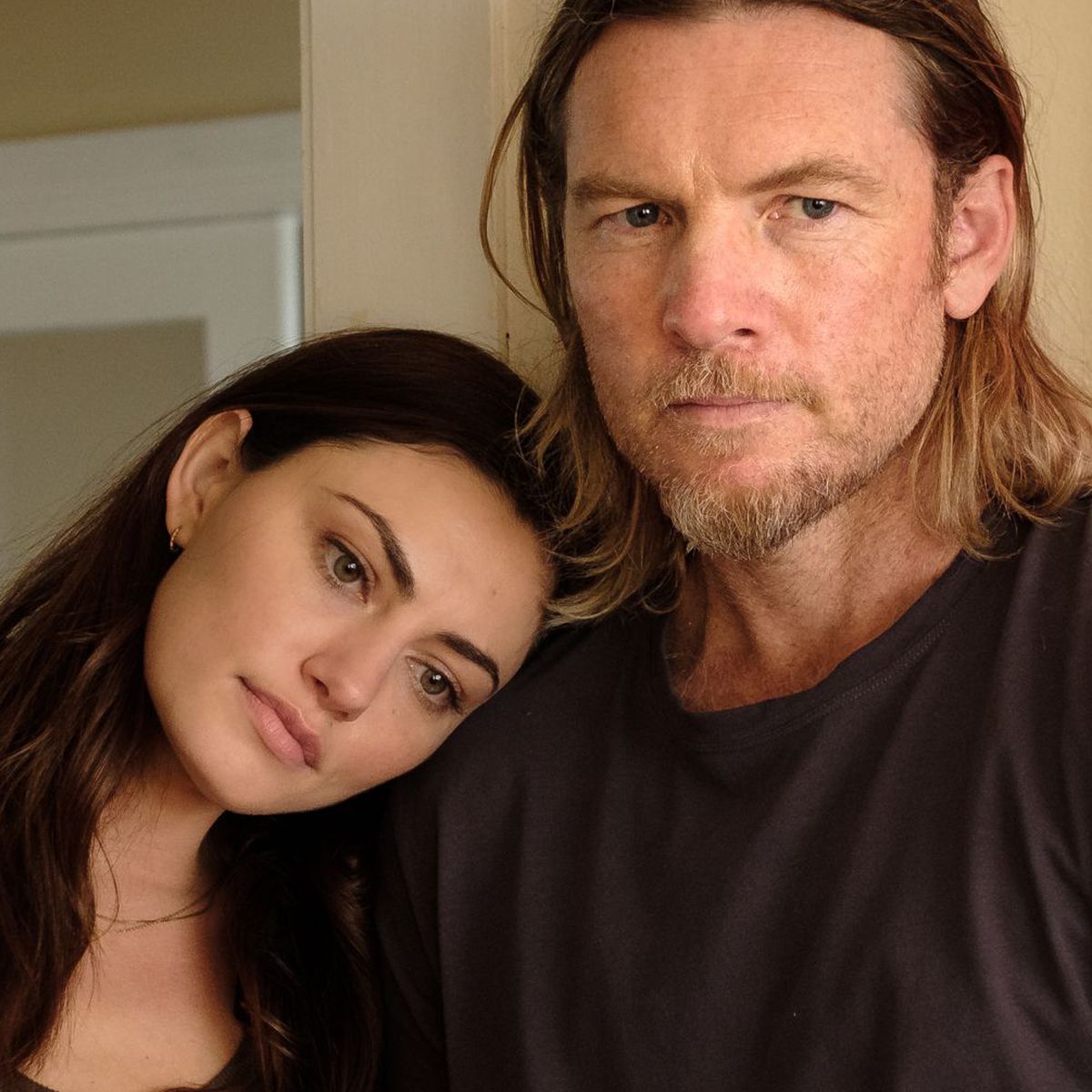
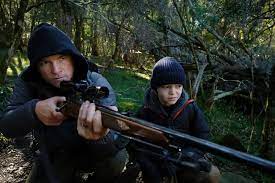
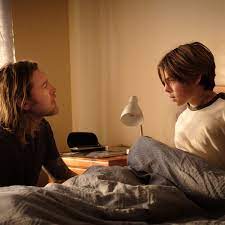
Sam Worthington plays an Aussie sniper roped into some violently sketchy business in “Transfusion,” a thriller about a father, a son, a comrade-in-arms and a late wife who keeps lecturing her husband, post mortem, about how he’s “failing” their boy. Rugby star turned actor Matt Nable wrote, directed and co-stars in this meandering, stumbling thriller that reaches for pathos in between fights and shootouts, and never seems to get out of its own way. We meet Corporal Ryan Logan (Worthington) and his sergeant Johnny (Nable) as they’re on a small-scale “retrieval” mission in Iraq. Logan’s a sniper who ends up taking a bullet meant for his mate when they finally get close to their quarry. Back home, Ryan’s got a little boy (Gilbert Bradman) he’s trying to teach manly hunting skills, a beautiful wife (Phoebe Tonkin) and another baby on the way. A car accident while he’s on duty wrecks his perfect life. “Eight years later,” he can’t hold a job, his teen son (Edward Carmody) is in and out of trouble, and his old comrade Johnny needs his help on the one type of “job” both of them might still be good at doing. “One night, in and out, zero rounds.”
Right.What follows a fairly bloody robbery — torture included — is more violent, more disorganized and littered with not-that-easy-to-follow “complications.”
And little Billy Logan? He’s up to no good, furthering Dad’s problems.The child’s journey might have been the most interesting one to follow here, taking him from “Will I be brave like you one day?” to the troubled teen he is today.Flashbacks show us the aftermath of that long-ago car crash, the decisions that were made the fates that were sealed.
Meanwhile, there’s this messier and messier business with Johnny that’s going to require more sniping, neck-snapping and such to get hold of. And Billy can’t stay out of trouble long enough to keep Ryan’s “debt” from growing.Worthington’s not a bad actor, handling the fight choreography and the sensitive scenes with his usual skill.
But this story is all over the place, and bringing the whole dead-wife-as-conscious thing along because you want to keep someone as stunning as Phoebe Tonkin (she was in “Babylon”) in the picture wasn’t a subtle play.Nable’s got a decent, brawny and weathered screen presence, and he wrote himself an OK supporting part for this, his feature writing and directing debut. It’s just that he can’t stop himself from cluttering up the works with complications, back stories and unsatisfying “resolutions” to this or that, all pointing to the sloppy sentiment you just know will settle in for the finale.
Rating: R for violence, teen drinking and drug use, profanity
Cast: Sam Worthington, Phoebe Tonkin, Gilbert Bradman, Edward Carmody and Matt Nable
Credits: Scripted and directed by Matt Nable. A Saban Films release.
Running time: 1:46

 Movie Nation