Next Screening? Branagh does Christie again — “A Haunting in Venice”

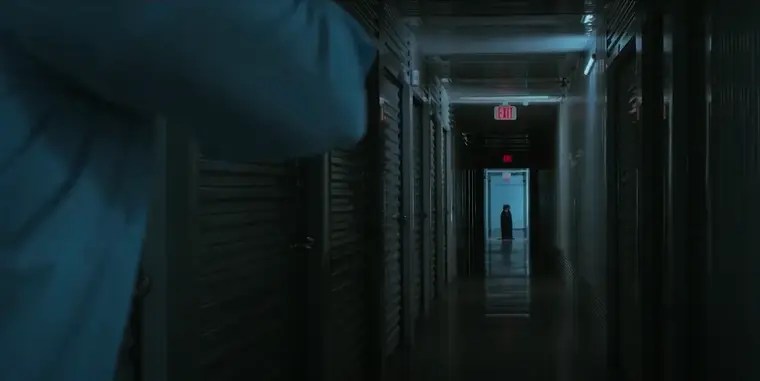
These renditions of the classic, most-filmed tales from Dame Agatha’s canon feature shimmering production values, all-star casts and Sir Kenneth Branagh vamping up Hercule Poirot amongst them and expertly-handling the murder-mystery directing chores.

Newly-crowned Oscar winner Michelle Yeoh, Tina Fey, Jamie Dornan and Riccardo Scamarcio are among the suspects, with Kelly Reilly, Amir El Masry, Emma Laird and Camille Cottin also on board for a story of a death that might have supernatural implications.

This one opens Set. 15, but 20th Century Studios figures they have another winner on their hands and they want to get the word out.

Posted in Reviews, previews, profiles and movie news | Comments Off on Next Screening? Branagh does Christie again — “A Haunting in Venice”

Movie Review: A Hit Back Home, and Maybe a Warning to the Chinese Diaspora as well? “No More Bets”

“No More Bets” is a heavy-handed Chinese thriller about the evils of gambling, the perils of emigrating and the righteousness of Chinese policing as it pertains to international online scamming conspiracies.

Overlong and somewhat lumbering, it’s sometimes entertainingly suspenseful, built around a pop star/actor who plays a young programmer enslaved in an online gambling organization’s predatory Malaysian operation. But it’s xenophobic in the ways it lectures Chinese expats to only trust each other and the Motherland in the face of all these Malaysian/Singaporean scammers, thieves and human traffickers. There’s even a side swipe at a couple of “other” cultures China has beefs with (the Philippines, for instance) in its messaging.

Yes, it was a huge hit in China. So its Malay distributors have packaged it for release in North America, where I caught with an all-Asian audience in Durham, N.C.

Pan (Zhang Yixing) is a disgruntled 30ish programmer who has a backup plan when a promotion he was counting on goes to “Kevin.” He’s been recruited, along with a few others, with the promise of big bucks and a quick access to promotions with a Singaporean “Firefly” company.

Pan is cocky enough to drop his ID badge and stalk out in the middle of his a big promotion ceremony for his rival, and to hack into the phones of his fellow recruits and their smiling, glad-handing recruiter, Cai (Sunny Sun) before the plane even takes off.

But upon landing (in Singapore, I think), as they take a little walkabout, members of the group are ambushed by organized street gangs. Pan isn’t able to escape, and when the gangster Cai delivers a final blow, the jig is up.

They’ve been conned and kidnapped, and they’re taken — in hoods — to their new sweatshop. Their real “employer,” GoldenCarp.com, is a vast online conspiracy of scammers, recruiters, catfishers, human traffickers and enforcers.

Smooth-talking Mr. Lu (Chuan-jun Wang) is the charming “good cop” of the operation, promising big paydays — money sent back home to families that need it — and suggesting promotions and “freedom.” Eventually. But he packs a pistol and is utterly ruthless when it comes to his unwilling indentured servant workforce and the hapless Chinese gambling addicts they prey upon. Cai gets to be the “bad cop,” a brute who makes examples of those attempting to flee or get word about their enslavement out, “whistleblowers.” They’re beaten and tortured.

Pan resolves to outsmart these creeps, but he and we can’t help but notice the cultish “Money is EVERYthing” indoctrination that he and his fellow programmers and “employees” live under. Starved, housed in a filthy warehouse, they’re broken. He will almost certtainly be on his own.

But maybe he isn’t. Anna (Gina Chen Jin) is a beautiful model there under duress, one of the legion of multi-national “dealer” women used to smile and deal cards, to advertise and lure in new gamblers, who are then scammed via offers of “inside deals” which expose their online accounts to hacking and looting.

Anna’s back-story suggests a broad conspiracy as she was sabotaged at her modeling agency, entrapped by those who wrecked her career, lured to a not-really-named foreign country and just as much a slave to all this — despite promises of release when she reaches her “sales” goal — as Pan.

Conventional thrillers like this would spin around these two meeting, scheming and outsmarting their captors, but that only happens in the most teasing sense here.

“No More Bets” suggests all are helpless, especially the new college grad Tian (Talu Wang) whom we watch spiral into gambling addiction. Even his girlfriend (Ye Zhou) can’t break his habit, and his family melts down around him as his debts and addiction deepen and his exposure to Golden Carp’s predation grows.

Who can save them? Perhaps Madame Zhang (Mei Yong), the leader of a police task force eventually shamed into taking action and who lucks into leads.

Director and co-writer Shen Ao’s (“My Dear Liar”) narrative is meandering to the point of frustrating, and not simply because he’s avoiding the Hollywood touches by downplaying the two trapped and attractive victims — whom we’re meant to identify with — and their role in getting out of this predicament.

Tian’s descent into gambling is overwrought, melodramatic and yet at least familiar enought to feel “realistic”.

But with the introduction of the email-tapping Chinese police, “No More Bets” seems more nakedly agenda-driven. Local police are uniformly corrupt. When the Chinese task force finally makes its way into the country, only a powerful local Chinese expat businessman can be trusted to give them help and save them from the corrup cop “connected” mob that’s doing all these awful things to the innocent Chinese.

Why, exactly, does the film show villains praying to Buddha? People’s Republican fear of religion?

The film’s focus on “the other” as the source of a gambling-crazed culture’s woes is faintly racist right up to the film’s final image, which is nakedly racist. It’s a Byzantine Chinese version of every American thriller about cops battling “cartels” and their Spanish speaking minions South of the border.

Stretches of “Bets” work. And suspense builds as the stakes rise and we note how insidious this “organization” is and puzzle over how our heroine and hero will escape its clutches. It’s only when their scheming to escape is given short shrift to work in another lecture on the evils of gambling and the crusading efforts of civil rights-trampling Chinese police that we start to pay attention to the film’s darker failings.

Rating: violence

Cast: Zhang Yixing, Gina Chen Jin, Mei Yong, Sunny Sun, Chuan-jun Wang, Talu Wang and Ye Zhou and Talu Wang

Credits: Directed by Shen Ao, scripted by Shen Ao, Xu Luyang and Zhang Yifan. A Mega Films release.

Running time: 2:10

Posted in Reviews, previews, profiles and movie news | 3 Comments

What movie are you seeing Labor Day? “Bottoms” up, for me

A string of movies escaped at the end of summer, as they do every summer, as August-Labor Day is the traditional dumping ground of titles with low box office expectations which studios unload on cinemas, desperately in need of content that isn’t “Barbie” or “The Sound of Freedom.”

One of those titles is MGM’s “Bottoms,” which I’ll get to on the road, traveling back from a (working working always working) vacation in God’s Country.

That Rachel Sennott (“Shiva Baby,” “Bodies Bodies Bodies”) is working that New Aubrey Plaza thing, I tell you what.

Posted in Reviews, previews, profiles and movie news | Comments Off on What movie are you seeing Labor Day? “Bottoms” up, for me

Documentary Preview: Errol Morris interrogates John le Carre — “The Pigeon Tunnel”

Holy Karla Goes to the Circus!

I had no idea this happened or was in the works. The obscurant title flitted by once or twice, but I didn’t realize is harkened the cinema’s greatest interviewer sitting down and going deep with the greatest spy novelist of them all.

Apple TV has “The Pigeon Tunnel.” I cannot wait. No really. I am getting after this the minute I see it in my Apple previews.

October 20. Cornwall fans, get your Apple TV+ subscriptions in order.

Posted in Reviews, previews, profiles and movie news | Comments Off on Documentary Preview: Errol Morris interrogates John le Carre — “The Pigeon Tunnel”

Documentary Preview: Nick Cave fans take note — “Mutiny in Heaven — The Birthday Party”

Obscure music docs are kind of a thing for a lot of us, especially those of the belief that “if it’s really popular, it can’t be all that good.”

This doc about the breakup of a band most have never heard of captures Nick Cave before The Bad Seeds.

Love “What might have been” music docs like this one, set to roll out in very very limited release in Oct./Nov in much of the Nick-speaking world.

Posted in Reviews, previews, profiles and movie news | Comments Off on Documentary Preview: Nick Cave fans take note — “Mutiny in Heaven — The Birthday Party”

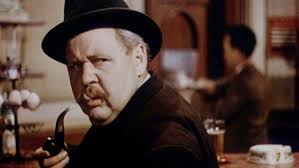
Classic Film Review: Co-stars’ marriage survives the Debacle of “The Tiger Makes Out” (1967)

Eli Wallach and Anne Jackson had one of the most enduring actor marriages in Hollywood, a union that lasted some 56 years and only ended with Wallach’s death in 2014. Jackson died two years later.

The talented master craftsman and craftswoman often worked together on and off Broadway, most famously in the 1964 romantic comedy “Luv,” written by Murray Schisgal. Their chemistry on stage and blunt give-and-take about how to get their performances in sync off-stage were legendary.

They appeared on screen and TV together less frequently. And watching the Schisgal-scripted atrocity “The Tiger Makes Out,” it’s no wonder.

While there are exceptions, every time I watch a Hollywood comedy from the late ’60s I get a vivid sense about how the business was floundering, flopping about trying to figure out what audiences liked or wanted from the big screen alternative to TV sitcoms and romances.

“Tiger” has credits that create reasonable expectations. It had Jackson and Wallach, playwright and screenwriter Schisgal, who had a hand in “Tootsie” as well as the film of his play, “Luv” and it was directed by Arthur Hiller a few years before “Love Story,” “The Out of Towners” and the genuine classics “Silver Streak” and “The In-Laws.”

“The Tiger Makes Out” has the feature film debut of Dustin Hoffman, a single scene lovers’ quarrel that crackles with reality and comic promise.

But man, is this clunker hard to watch. The acting is broad and forced, the jokes unfunny well on their way to cringe-worthy. I’m loathe to name every “vintage” film a “classic,” as in cases like this, it’s old but terrible. Still, “vintage” film doesn’t SEO scan well, so here we are.

Wallach plays Ben Harris, a 40something loner, a cranky, dyspeptic, preachy, smarter-than-everyone else (in his mind) postman a Incel in the making. By and large his neighbors and others he meets treat him better than he treats them.

But when you’re having landlady issues, neigbhor issues, housing authority complaints and no one is willing to listen to them (David Doyle plays the city housing functionary), you kind of understand it, and Ben.

He rages at “all the indignities I’ve suffered” at the hands of “illiterate” “idiots.”

“Intellect is not a byproduct, but an INSTINCT” he shouts to anyone who will listen.

Some day, and some day soon, Ben Harris will have his REVENGE upon this culture, these “Imbeciles. Sheep! Baa, baa, baa, baa, baa, baa, baa sheep!” Is he about to coin the phrase “going postal?”

Jackson is Gloria Fiske, a suburban housewife hellbent on finishing her abandoned-college education and getting “my baccalaureate degree.” Her office-job-in-the-city husband (Bob Dishy) does nothing but whine about this and earn reproaches about his “lower middle class” attitudes towards being married to a woman of culture, taste and education.

Ben has a bad day dealing with bureacrats and other NYC “types.” Gloria can’t get past the elusive and cowardly registrar (1960s game show mainstay Charles Nelson Reilly) to pursue her education.

The pawn shop that provides Ben with a trench coach and hat he figures he needs for his nefarious plan sizes him up and offers to sell him a shotgun, which will fit under it just so.

Nice. Gun dealers, then and now, am I right?

Gloria’s paranoid “He’s LOOKING at us” divorced friend is hardly an endorsement of the “freedom” of being single again.

What happens when the nut acts out by kidnapping the unhappy, frustrated housewife? A whole lot of talking, not much of it remotely amusing.

Ben threatens rape, makes Gloria drop her skirt, stuffs her in a trunk and makes cracks about “fa—t” tight pants, letting Gloria and the viewer see Ben’s intellectual insecurity, which she bucks up as there’s barely a thought of escaping this nut. Considering her husband’s spouse abuse jokes from that morning, perhaps we don’t blame her.

Almost everything about this comedy grates today and reeks of Hollywood desperation — faux pop-rock theme song, strident jazz score, that “young people” scene with Hoffman and Marieclare Costello.

They were trying to figure out “What Americans” and especially young Americans wanted in a screen comedy. Their best idea, often as not, was to simply adapt a Broadway show.

And as I mentioned in my recent review of the not-quite-as-bad “Enter Laughing,” that rarely worked because there was only one Neil Simon. Not everybody could make New York as funny (for its day) as him.

“The Tiger Makes Out” must have been badly received upon release, and its ugly sexual attitudes and clunky stage production theatrics aren’t letting it age well either.

At least Anne and Eli were smart enough to shrug it off and move on, even if their broad characters and arch, verbose exchanges were bad enough that “Tiger Makes Out” can be rightly regarded as their worst collaboration ever.

Rating: “approved,” threats of sexual assault, a gay slur

Cast: Eli Wallach, Anne Jackson, Bob Dishy, Charles Nelson Reilly, David Doyle and Dustin Hoffman.

Credits: Directed by Arthur Hiller, scripted by Murray Schisgal, adapted from his play. A Columbia release on Tubi, Youtube, Amazon, etc.

Running time: 1:34

Posted in Reviews, previews, profiles and movie news | Comments Off on Classic Film Review: Co-stars’ marriage survives the Debacle of “The Tiger Makes Out” (1967)

Movie Preview: Hilary Swank’s faith-based feel-good drama — “Ordinary Angels”

This October 13 “inspired by a true story” drama is the best kind of faith-based film, uplifting, hopeful, righteous and apolitical.

Nancy Travis and Alan Ritchson also star.

Posted in Reviews, previews, profiles and movie news | Comments Off on Movie Preview: Hilary Swank’s faith-based feel-good drama — “Ordinary Angels”

Documentary Preview: “Oye como va?” “Carlos” gets his own Film Biography

This looks like a grand appreciation of one of the giants of music, a ’60s survivor, guitar hero and Latin icon.

Lovely.

Posted in Reviews, previews, profiles and movie news | Comments Off on Documentary Preview: “Oye como va?” “Carlos” gets his own Film Biography

Documentary Review: Remembering the culture-capturing tyro Tom — “Radical Wolfe”

In magazine articles, non-fiction books and novels, Tom Wolfe coined era-defining phrases like “The Me Decade,” “Radical Chic” and “The Right Stuff.”

A “helluva reporter” and a master stylist, the courtly, dapper Richmond-born Wolfe underscored his legacy when he started talking about writing a “Vanity Fair” for the America of the 1980s.

“The Bonfire of the Vanities” became just that, a scalding and amusing snapshot of the “Greed is Good” Reagan decade in America. And his obituary writers — Wolf died in 2018 — had the perfect comparison. He was America’s William Makepeace Thackeray — its keenest 20th century observer and satirist.

“Radical Wolfe” is a new documentary appreciation of the perpetual “outsider,” an Ivy League trained best-seller whose Southernness made him stand out in the world of New York journalism and publishing of the 1970s and onwards.

The film, inspired by a Michael Lewis (“Moneyball,” “The Big Short, “The Blind Side,””Liar’s Poker”) magazine article and relying much on Lewis’s take on the man, the writer and his self-created mythos, is a reminder of Wolfe’s once-giantic footprint in the culture.

Wolfe was a best-seller from an era when a best-selling book — fiction or non-fiction — could dominate the national conversation, something amply demonstrated by “Radical Wolfe’s” many samples of Wolfe interviews — by Cavett and Letterman, Rose and Buckley — and breathless TV coverage of the “lines around the block” at bookstores, eagerly awaiting “A Man in Full,” his Southern affluence-skewering followup to “Vanities.”

A white-suited dandy and gifted raconteur, Wolfe “invented” that look and persona, he freely admitted during his lifetime. “He wanted to be noticed,” and he was, Lewis and others note.

He was “such a polite man,” good-mannered and gentle, but “a terrorist with a pen” who eviscerated big city elites and made lifelong enemies as he “reported” on things he witnessed and took lots of notes on.

Leonard Bernstein’s reputation, it is implied, never quite recovered from the way Wolfe reported on an ego-tripping, dilettantish Bernstein party/fundraiser for the Black Panthers political party in tony New York in 1970.

“Radical chic” became the ultimate putdown of such poseurs, rich entitled swells mingling with hip, edgy and politicized members of the underclasses.

Lewis and others marvel at how Wolfe was able to infiltrate and fit in with an emerging Southern California car-modifying culture or pre-“brand” NASCAR or cozy up to first-generation NASA astronauts, to find a singular figure representing a larger point and an “overlooked America” — often southern, like NASCAR’s Junior Johnson, “The Last American Hero,” or test pilot Chuck Yeager, the embodiment of “The Right Stuff.”

But it was the writing — inventing a self-referential, slangy, onomatopoeia-phrasing that delighted millions and enraged his rivals as “New Journalism” — that made Wolfe a publishing phenomenon and a fan favorite.

“The world was used to enormous egos in artists, actors, entertainers of all sorts, in politicians, sports figures, and even journalists, because they had such familiar and convenient ways to show them off. But that slim young man over there in uniform, with the enormous watch on his wrist and the withdrawn look on his face, that young officer who is so shy that he can’t even open his mouth unless the subject is flying— that young pilot— well, my friends, his ego is even bigger!— so big, it’s breathtaking!”

A relatively brief documentary, “Radical Wolfe” trips through the creation of the various works that “made” Wolfe, “The Right Stuff” being the crowning achievement of his non-fiction years. The film skips back to give us some of the origin story, a privileged young man — son of an agronomist and magazine editor — educated at Washington & Lee and then Yale where he first noticed how Northern elites look down their noses at the South.

Wolfe cultivated his “outsider” status, friends and Lewis agree. Upon graduating, he didn’t venture into the high-flying world he’d inhabit straight-away. He became a cub reporter at the Springfield, Massachusetts newspaper, learning the ropes and becoming a stand-out by standing up to young John F. Kennedy (pictured above), who tried to turn a frank discussion of how Washington worked to local business leaders into an “off the record” talk. Cub reporter Wolfe wasn’t having it.

Wolfe’s “eureka” moment is revisited, with Esquire editor Byron Dobell remembering how a “blocked” Wolfe sent him a long letter, filled with his notes on that California car customizing story that he said he could not write. Dobell published the “letter,” and that breakout, breezy, flippant and funny piece — “The Kandy-Kolored Tangerine-Flake Streamline Baby” — became “The New Journalism,” a phrase Wolfe coined to describe using everything in the fiction writer’s arsenal in nonfiction stories.

His amusing, fake-feud relationship with fellow “new journalist” Hunter S. Thompson is related (Thompson “hated” being lumped into that genre), and his real-feud with novelists Norman Mailer, John Updike and John Irving, aka “My Three Stooges,” is remembered.

And Wolfe’s pinnacle, the glories of “The Last American Hero” and the Oscar-winning classic “The Right Stuff” becoming great movies, and the decline that seemed to set in after “The Bonfire of the Vanities” became an epic bomb is documented.

Junior Johnson — a book subject then and an interview subject here — and friendly colleagues like Gail Sheehy and Gay Talese fill in the man and his gift for fitting in with different groups he was writing about. And Jon Hamm reads snippets of Wolfe’s works, although that hardly seems necessary, as many public readings as Wolfe gave were captured on video over the decades.

The film is entirely too brief for Wolfe fans. But Lewis is the right writer to build this Wolfe appreciation around, as he can rightly be considered Wolfe’s peer as a reporter — a thorough, immersive master of non-fiction. I’m a big fan. But neither Lewis nor anyone else writing today could hold a candle to Wolfe’s gifts as a stylist in the English language.

Like Wolfe, Lewis has a gift for finding unheralded, representative figures and spinning them into heroes of his narratives — Billy Bean of “Moneyball,” Michael Oher of “The Blind Side.” But his effort to fold his own myth into Wolfe’s story backfires hilariously with his first words on camera, the first words in the film.

Princeton man Lewis remembers “discovering” Tom Wolfe on his corporate lawyer father’s bookshelves, and feeling blessed because he was, at the time, growing up in “New Orleans, not a particularly literary place.”

“New Orleans.” “Not a particularly literary place?” Where Tennessee Williams lived and caught the Streetcar, where Faulkner and Bukowski and F. Scott and Walker Percy and Lillian Hellman sojourned, where Anne Rice and James Lee Burke lived, and John Kennedy Toole discovered “A Confederacy of Dunces?”

As Lewis notes in “Radical Wolfe,” that Twain/Hemingway-based “all writers” feel the need to become larger-than-life characters thing was a part of Wolfe’s makeup and became something of a trap, a persona he couldn’t shake.

But privileged Michael Lewis trying spin a literarily deprived childhood in one of America’s most literary cities is like Steve Martin’s narration in “The Jerk,” the bit about being “born a poor Black child.” One can imagine how “radical” Tom Wolfe would have had endless fun ridiculing that.

“Hardscrabble Ivy League literarily deprived chic?”

Rating: unrated, scene of Hunter S. Thompson drug abuse, some profanity

Cast: Tom Wolfe, William F. Buckley, Jr. (archival interviews), Junior Johnson, Michael Lewis, Gail Sheehy, Gay Talese, Alexandra Wolf, Lynn Nesbit and the voice of Jon Hamm.

Credits: Directed by Richard Dewey, scripted by Michael Lewis, based on his magazine article. A Kino Lorber (Sept. 15) release.

Running time: 1:17

Posted in Reviews, previews, profiles and movie news | Comments Off on Documentary Review: Remembering the culture-capturing tyro Tom — “Radical Wolfe”

Jimmy Buffett: Singer Songwriter, Broadway and Movie Producer, Life Coach, Influencer and “Brand” Ambassador: 1946-2023

The Alabama troubadour who discovered “Margaritaville” has died.

Jimmy Buffett, a singer-songwriter who popularized “Floridays,” a tipsy laid back beachside Florida lifestyle, who put Key West back on the map and who parlayed a musical fanbase into a “Latitudes” and “Margaritaville” brand empire was 76. The family confirmed his death was from complications from skin cancer.

Emerging from the singer-songwriter generation that followed Paul Simon and included James Taylor, Laura Nyro,  Bill Withers, Bonnie Raitt and others in the ’70s, Buffett chronicled a boozy, surf and sunshine Gulf coast scene that his music so popularized it lured millions South, to Florabama — the seaside from Key West spreading west to Mobile, Alabama, where he grew up.

He came up in the music business with his guitar-picking songwriter pals Jim Croce, Steve Goodman and Jerry Jeff Walker, and like them, was a storyteller in song. A train ride Goodman, Walker and Buffett took as struggling young artists on a struggling rail service became iconic songs like “City of New Orleans,” for Goodman, and “Railroad Lady,” co-written by Walker and Buffett.

Buffett’s first hit was a 1974 real-life detail-littered story song about missing someone while on tour, “Come Monday,” whose first big royalty check, Buffett liked to tell fans, “bought me my first sailboat.”

But with “Margitaville,” a tale of resigned heartbreak and alcohol-soaked recovery set in surfside Florida, he became world famous and was set for life. He went from opening for The Eagles and Linda Ronstadt to a headliner, and toured to packed venues until the very end of his life.

He  turned generations of fans into “Parrotheads” and eventually a lifetyle brand, with Margaritaville restaurants and gift shops and more recently, Latitudes housing developments for that aging fanbase.

More than anybody else, the “Son of a Son of a Sailor” singer — he was named for his ship captain grandfather — inspired the label, “yacht rock.” “Gulf & Western,” was his quip label for his sound and genre.

I first encountered him on a snowy mid-winter phone call in college in the late ’70s. He was playing at a university nearby, and having found his music as a weekend country music DJ, and just between breakups with The College Hot Mess Girlfriend, I needed a break so I called for a ticket, or just to see if the show was still on, snowfall be damned. I called the wrong number, and got backstage rather than the ticket office. It was soundcheck time.

A distinct Alabama drawl picked up, with the sounds of laughter and tuning-up in the background.

“Sold out? Naaaaaw. COME on over!”

Had to be him. Years later, interviewing Buffett when he produced and took a small role in the film of his Florida journalist/novelist pal Carl Hiaasen’s kids’ novel “Hoot” into a charming, enviromentalist adventure comedy, I tried to confirm that, and he laughed but would only say “Sounds like something I did back then.”

His live record from that era, 1978’s “You Had to Be There,” was celebrated at the time as “uproarious” in its inebriated, good-humored bravado and definitive live-versions of songs, with Buffett introducing each by recalling how he’d written it or come by it.

His first brush with the movie business came when he wrote songs for and appeared in the 1974 Jeff Bridges/Sam Waterston Montana comedy “Rancho Deluxe.” It was based on a novel by Buffett’s brother-in-law, Tom McGuane.

“Hoot” had a similar trip to the screen. Buffett told me in 2006 that he was chatting with his friend Hiaasen, the topic of why “Hoot” — about Florida Keys kids protecting burrowing owls from the state’s rapacious developers — hadn’t been made into a movie yet.

Buffett told Hiaasen, “I believe I know a few folks who can make that happen,” became a producer, provided songs for the soundtrack and played a laid-back teacher in the film.

Fame made him rich, had “60 Minutes” and magazines profiling him and let him dabble in Broadway shows as he repackaged his seminal ’70s hits into boxed sets accompanied by essays on “Why I love my seaplane” and the like. 

But he often returned to Key West even after he’d transformed the place into the tourist mecca (“trap”) it is today, performing free solo shows and benefit concerts, which were a big feature of his post-fame career.

He wasn’t to everybody’s taste, but the dream idyll he sang of was intoxicating. I should know. I live on a sailboat. In Florida. And I still like my margaritas and flip flops, even if I’m watching my salt intake.

Buffett was one of a kind, a singular success as a singer-songwriter whose tunes made that lifetstyle so alluring that you can’t visit a marina in North America without seeing sailboats named after his tunes, so omnipresent that you can’t hit a pub in the waterfront South without hearing a picker singing one of his songs as the sun sets, the flounder sizzles on the griddle and the blender churns up “Boat Drinks,” margaritas included, in the background.

Posted in Reviews, previews, profiles and movie news | Comments Off on Jimmy Buffett: Singer Songwriter, Broadway and Movie Producer, Life Coach, Influencer and “Brand” Ambassador: 1946-2023