Netflixable? Vengeance in Pointe Shoe Pixie Form — “Ballerina”

Any list of the best vengeance thrillers of recent vintage has to include Park Chan-Wook’s “Oldboy” and
Hans Petter Moland’s “In Order of Disappearance.” Add your favorite here, because there are lots of examples through film history, movies about a great wrong that one furious character — most often a man — sets out to right, one malefactor at a time.

I’m thinking Korean writer-director Chung-Hyun Lee’s “Ballerina” is worth adding to that conversation, and not just because our avenger is a pint-sized pixie who punches well above her weight. The set-piece fights are epic, the “clean house” shoot-out is John Woo-sized and hell, this tiny dancer packs a flame thrower.

Jeon Jong-seo of “The Call” plays Ok-ju, not the “dancer” of the title, just the dancer’s friend. But as we’ve seen in the convenience store hold-up she interrupts in the opening scene, Ok-ju has her own special skills, her own way of staying en pointe.

She pummels and generally just messes up four hoodlums, deflecting and neutralizing their knives with cans off the shelf, kicking ass and paying her tab on the way out.

Later, her friend Min hee (Park Yu-rim) calls her over, and a box of wrapped ballet slippers are on the bed, a gift with a note — “Please avenge me!” Min-hee was mixed up with something, and someone. And the consequences of it caused her to take her own life.

There’s nothing for it but for Ok-ju to honor that last request and track down whoever did this. As flashbacks show us how the two met, how Min hee got into dancing while Ok-ju found a life in “security” work, we see where we’re going.

No private eye, bodyguard or “agent” or whatever Ok-ju is can rest until their friend’s killer is brought to justice — rough justice.

The suspect is perfunctorily narrowed down to long-haired, handsome and Lamborghini/gated estate-rich Choi (Kim Ji-hoon of “Money Heist: Korea”). Our villain is into BDSM, Ok-ju discovers.

But setting a trap for him is the easy part. Bringing him down is going to take more than one fight, villainous accomplices who must be dealt with and it might require some inside help.

I really like Chung-Hyun Lee’s debut thriller, “The Call,” a supernatural murder mystery. Here, he’s got a story stripped to the basics — kicking ass and breaking glass…that you shove in somebody’s mouth when they won’t talk.

The action scenes are shot and cut with brio — frenetic. The violence is over-the-top, so much so that every scene that lacks it feels slow. Set pieces in the kinky hotel our bad guy likes to take his BDSM victims to (he drugs them with his designer fish ampules) for his videotaped fantasies, in a drug lab and in a rich mobster’s riding stables deliver.

And there’s even time in this generally brisk thriller for a pause for a little humor. Gun shopping in Korea is a hit-or-miss affair, with our dealers here an elderly couple who sell out of a sideshow balloon-popping-with-pistols van. The old man pushes revolvers and a deringer. The old lady doesn’t mess around. Flame thrower.

The knives come out, the blood spills and sprays and the complications are mere afterthoughts in this march towards one last murder. A few plot lapses aside, it’s a lot of fun. And if it isn’t the best vengeance thriller in the age of four John Wick films, it deserves a place at the table and a mention in the conversation.

Rating: TV-MA, bloody violence, drug and BDSM content, profanity

Cast: Jeon Jong-seo, Kim Ji-hoon,
Park Yu-rim

Credits: Scripted and directed by Chung-Hyun Lee. A Netflix release.

Running time: 1:34

Posted in Reviews, previews, profiles and movie news | Comments Off on Netflixable? Vengeance in Pointe Shoe Pixie Form — “Ballerina”

Movie Review: WWII Hungarians in the USSR contend with partisans and atrocities in the grey “Natural Light”

The company is Hungarian, pressed into service with their German allies occupying a corner of the partially-conquered Soviet Union during World War II. But as they troop through the dreary woods, drifting from one fraught encounter with the locals to the next, a pall of doom hangs over their actions as they await the next partisan ambush and that next atrocity against civilians.

They could be any army or EveryArmy caught up in a Vietnam, Iraq, Central America or Central Africa, men in arms trapped in tedium, tit-for-tat reprisals and indefensible actions reconciled with a shrug and a thought but never said aloud excuse and explanation — “The fog of war.”

Director and co-writer Dénes Nagy’s “Natural Light” (“Természetes fény”) is a somber, myopic grunts-eye-view of occupation duty in a forested corner of the USSR in the early 1940s. We see the grim routine of men in their own country’s uniforms, but wearing the helmets of their German overseers, oppressing, exploiting and terrorizing the natives far behind the front lines.

It’s a movie of few words and a few telling incidents, all of it captured in a nearly monochromatic color film of wintry greys, browns and foggy, diffuse “natural light.”

Corporal Semetka (Ferenc Szabó) is our poker-faced guide to this world, a combat veteran just following orders, accepting the latest denial of leave, silent as his patrol relieves two hunters, who went to all the trouble to fashion a raft to bring the elk they shot home to their families, of the all their meat.

Semetka is savvy enough to silently de-escalate an encounter with wood-cutters, even if he guesses their partisan sympathies, human enough to fancy a local widow in a village his company takes over as shelter, man enough to recognize that walking away from that tempation as the most humane thing he can do in a world of rape, summary executions and stealing food from the starving.

And he’s experienced enough to know the proper pace to set on a march into partisan-infested woods, which his brusque commanding officer ignores and promptly gets killed for swapping out Semetka from walking point.

“Natural Light” is more a study in sober, building dread than a straight-up combat film. The action is limited to a nightime firefight, a couple of harrowing moments of interrogation and threats and a rare burst of emotion.

Nagy lets us sense what is coming and steadily steel ourselves for it and resign ourselves to it as it happens.

The lack of action beats makes it somewhat static and dull at times. But the film fits into a rich tradition of combat cinema where the dangerous drudgery of the work, the moral compromises it demands and the ugly shocks of action and reaction are both sudden and wholly-expected long before they happen.

Others step into the frame with Szabó, but he is the face and the conscience of the movie, not quite playing the Hungarians as Victims party line of that country’s right wing historical revisionists, acknowledging guilt and expressing remorse only with his thousand yard stare.

And Nagy immerses us in this time and this world with simple images, archetypal characters and common-to-combat-film situations, another army far from home, out of its depth and uncertain of the necessity and ethics of its mission.

Rating: unrated, violence

Cast: Ferenc Szabó, László Bajkó, Illés Pál and Anna Lancenka

Credits: Directed by Dénes Nagy, scripted by Dénes Nagy and Pál Závada A Film Movement release.

Running time: 1:43

Posted in Reviews, previews, profiles and movie news | Comments Off on Movie Review: WWII Hungarians in the USSR contend with partisans and atrocities in the grey “Natural Light”

Movie Preview: Costner finally makes his “How the West Was Won” — a Two Part Western Epic, “Horizon: An American Saga”

If you’ve ever seen a Kevin Costner interview or heard an acceptance speech from him, you know his “movie that changed my life” was the big, bloated Cinerama Western “How the West was Won,” an all-star epic that took viewers from the post-War of 1812 frontier to a final showdown, “High Noon” style, at the closing of the frontier.

I’ve interviewed him a few times, and it’s never far from the conversation, especially when he’s talking about anything with horses and bad hombres.

This movie event from Warners, slated for next summer, will be released in two parts and will give the “Yellowstone” icon one last swing for the fence.

Sienna Miller, Jena Malone, Giovani Ribisi, Sam Worthington, Jeff Fahey, Dale Dickey, Luke Wilson, Danny Hiuston and Thomas Haden Church saddle up for this pre and post Civil War “saga.”

Fingers Crossed. But that…title. Ugh.

Posted in Reviews, previews, profiles and movie news | Comments Off on Movie Preview: Costner finally makes his “How the West Was Won” — a Two Part Western Epic, “Horizon: An American Saga”

Movie Preview: Willa, Dermot and Shane and Chevelles — If the Stereotypes Fit, it must be “The Dirty South”

That’s Willa Holland, Dermot Mulroney and Shane West starring in a honky tonks and Chevy Chevelles and small town corruption and cover-ups.

“The Dirty South” indeed.

Posted in Reviews, previews, profiles and movie news | Comments Off on Movie Preview: Willa, Dermot and Shane and Chevelles — If the Stereotypes Fit, it must be “The Dirty South”

Movie Review: Class and Race and Drag and Murder in the D.R. — “Candela”

Mesmerizing from its crypto-poetic opening to its drop the mike finale, “Candela” is a thriller as exotic and mysterious as its locale, a brisk and atmospheric tale bathed in drugs, sex and corruption.

First-time feature director Andrés Farías and his award-winning film’s co-writer, adapting a novel by Rey Andújar, give us a daring and dark fever dream of the Dominican Republic, a film that is as quintessentially Caribbean as any in recent memory.

A drag performer — Candela (Cesar Domíngue) — in native garb, bathed in black, intones that there’s a hurricane coming, but not to worry, that it will “fall in love with us,” and only kill a few thousand. Such is the fatalism of the poor islands off the Fodors Guidebook to the Caribbean.

An inutterably gorgeous woman — Sera (Sarah Jorge León) — in impossibly high heels and an erotically short skirt begins and ends her days with “a bump” of cocaine, her very essence reminding us that around the world, there’s no substitute for being young and beautiful and incredibly rich. She quietly bridles at the corporate “merger” facing her senator-father’s company and another, one that entails her marrying the boor-heir to the other firm. She acts-out through bar pick-ups and furtive infidelities in the alley behind The Remora, the toniest night club in the Caribbean.

Sera’s most reckless act that night sets our plot in motion and her in collision with working poor Lubrini, the gay drag performer Candela who utters poetic pronouncements from the stage between lip-synced Latin pop.

Because who does Sera stalk, kidnap at gunpoint and demand sex from? That would be the college-educated poet, Renate Castrate (Richarson Díaz), Candela’s lover. When Renate doesn’t come home, Lubrini gets a lady friend to summon her estranged father, the cynical loner Lt. Perez (Félix Germán of “The Projectionist”).

And even though his captain assures him that this body below the open window of the rich brat’s penthouse will be a matter “Everyone’s going to drop…like nothing happened (in Dominican Spanish with subtitles),” even though the dazed coronor (Pepe Sierra) would rather watch Internet porn on the clock than do a job the “higher ups” want dropped, Perez is determined to stay in his daughter’s good graces by pursuing something like “justice” here. More or less. And up to a point.

“It’s too soon to be tired,” he tells the losing-faith Lubrini. “That’s how things are in this country.”

The story, divided into narrative “chapters” like the book, takes some effort to grab hold of early on. Farías and co-adaptor Laura Conyendo cast us into mystery and slowly lead us out into something more conventional than it looks at first glance.

The exotic drag act and glimpses of extreme wealth, isolation and privilege in a poor country misdirect us from the only-in-the-movies nature of the crime and death, the inevitable attempt at a cover-up, the insertion of “drugs” and a Jabba-the-Hutt sized drug dealer — all elements of a much more ordinary thriller.

But “Candela” isn’t ordinary. It’s smart and strange and damning and frustrating, immersive in the ways it layers in Perez’s only friend, a hooker (Ruth Emeterio) who sees him as her lifeline as he should see her as his, in the details about the coronor, the rich bride-to-be’s bodyguard.

That hurricane we hear is coming is just another spiritual cleansing, another punishment for a place set up to serve the needs ot the very rich and which keeps everybody else blaming Haitian immigrants for their troubles.

What Farías and Conyendo conjure out of Andújar’s novel is a poetic allegory wrapped around an ordinary murder mystery thriller, and one of the best films ever to come out of the Dominican Republic.

Rating: unrated, violence, drug abuse, sex, nudity

Cast: Cesar Domínguez, Sarah Jorge León, Félix Germán, Ruth Emeterio, Pepe Sierra and Richarson Díaz

Credits: Andrés Farías, scripted by Laura Conyendo and Andrés Farías, based on a novel by
Rey Andújar. A Breaking Glass release.

Running time: 1:29

Posted in Reviews, previews, profiles and movie news | Comments Off on Movie Review: Class and Race and Drag and Murder in the D.R. — “Candela”

Netflixable? Lost at Sea in a Container in the middle of “Nowhere”

The best survival narratives, from “Robinson Crusoe” through “The Martian” all focus on “work the problem” details.

How do you survive a shipwreck or sailboat sinking (“All is Lost,” “Dead Calm”), being trapped in a forest fire, being marooned on Mars or kidnapped by murderers? The most fascinating part of such films are their “MacGuyver” DIY, reason-it-out elements.

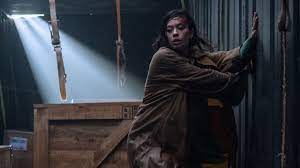
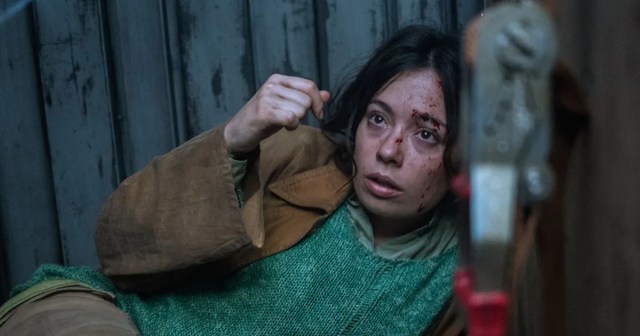
In “Nowhere,” a new Spanish film (dubbed into English if you prefer) on Netflix, Anna Castillo plays Mia, an expectant mother, an emigrant fleeing a draconian “auesterity regime” Spain and mainland Europe.

“Governments are falling everywhere,” she and husband Nico (Tomar Novas) know. They’ve already had a child snatched from them as fascist “Not Enough for All” measures are enforced. She and Nico have paid a smuggler for their escape. But they are separated and she finds herself trapped in a shipping container that was washed overboard, supposedly on its way to safety, sanctuary and civilization — Ireland.

Mia must fight back her terror, find out what’s in the few crates in her floating coffin that might be useful, and reason and work her out of a deadly dilemma to save herself and their baby.

That’s what’s fascinating in this Albert Pintó (“Money Heist”) thriller. But in a bold and misguided move, we see a lot of the backstory that puts Mia in that predicament in a drawn-out opening act that explains the political situation spreading across Future Europe, lets us meet the murderous goons doing the enforcing and the pitiless predators smuggling people out — for a price.

The typical way to handle that sort of back story is to dole it out in quick impressions and slightly longer flashbacks. This straight-forward narrative is dull enough for long enough to make us ponder a much bolder take on this subject — casting a native African or Arab, setting her story in the present day, and daring the viewership, many of whom are going to be anti-migration, to root against her.

We see the ontrived way the couple is separated, get a glimpse of the authoritarianism, riots and chaos, and pause for a long “search the false-walled container” and government massacre that is more momentum killing than riveting.

But four screenwriters serve up all manner of melodramatic menaces facing the lone survivor in that container, from machine gun bullets to whales, leaks to the impossiblities of breaking out of it at sea. That’s all with a baby in her belly or in her care, because you just know her water’s going to break before the waters rise inside that metal box and add even mure urgency to the need to escape it.

The film’s problem-solving is mildly inventive, when it isn’t being creatively lazy. And Castillo maintains a plucky determination that hardens into resolve, with the occasional lapse into despair throughout.

If survival against the odds tales are your thing, it’s worth a watch despite the occasional eye-roll.

Rating: TV-MA, violence, profanity, childbirth

Cast: Anna Castillo, Tomar Novas and Tony Corvillo

Credits: Directed by Albert Pintó, scripted by Indiana Lista, Ernest Riera, Seanne Winslow and Teresa de Rosendo. A Netflix release.

Running time: 1:49

Posted in Reviews, previews, profiles and movie news | Comments Off on Netflixable? Lost at Sea in a Container in the middle of “Nowhere”

Movie Preview: Looking for the Supernatural, and a missing person — “The Bell Keeper”

Oct 13, a bunch of streaming ghost hunters get more than they bargained for.

Posted in Reviews, previews, profiles and movie news | Comments Off on Movie Preview: Looking for the Supernatural, and a missing person — “The Bell Keeper”

Movie Preview: Juliette Binoche is in the Kitchen to show us “The Taste of Things”

A lush and savory period piece about a love affair, perhaps unconsummated (Over the consumme? Mon dieu!), this “Best International Feature” submission from France will hit theaters in Feb.

Posted in Reviews, previews, profiles and movie news | Comments Off on Movie Preview: Juliette Binoche is in the Kitchen to show us “The Taste of Things”

Movie Preview: George Clooney directs “The Boys in the Boat”

I remember liking the book, about rowing and the 1936 Hitler Olympics that Jesse Owens ruined for the Austrian corporal.

I also remember when “George Clooney directs” ginned up a lot of buzz. He’s taken on another history lesson, but after bombing out with “Catch-22” and underwhelming with “Monuments Men,” “Suburbicon,” “Midnight Sky” and “The Tender Bar,” the bloom is off the Amalfi Coast rose.

That’s a lot of misses or near misses in a row.

Still, we’ll see.

Posted in Reviews, previews, profiles and movie news | Comments Off on Movie Preview: George Clooney directs “The Boys in the Boat”

Movie Review: Canadians trapped in Toxic Masculinity Oz — “The Royal Hotel”

The most chilling consideration in “The Royal Hotel,” a tense tale of two Canadian 20somethings stuck in a mining town bar in the middle of Toxic Masculinity, Australia, is how nothing that happens there seems the least bit far fetched.

There’s nothing melodramatic about Kitty Green’s latest feature with her muse, Julia Garner. Garner’s performance has a “seen this” and “on the lookout for that” wariness, making her something of an Everywoman wading through the minefield of A Man’s World. Whatever Hanna wants out of life, a free-spirited trip with her bestie Liv (Jessica Henwick of “Game of Thrones”), sight-seeing, partying, maybe even a little romance on the road has to be pursued or practiced with an eye peeled for threats.

The threats can be almost any man she meets, given the right “wrong” circumstances.

Garner plays a young Canadian leery and weary of male privilege, men taking liberties and masculine loutishness trapped in the Armpit of Oz because her traveling companion didn’t budget for the trek. Next thing Hannah and Liv know, they’re broke and have to take temp “travel” jobs as barmaids/waitresses at what probably isn’t the roughest roadhouse in the Outback. “The Royal Hotel” is just rough, retrograde, unenlightened and in all likelihood “typical.”

They could use a translator and the viewer wouldn’t mind subtitles for their communications with their boss, Billy (Hugo Weaving). His accent’s thick, his business practices simple and his bar a worn institution he inherited from his father. Carol (Ursula Yovich) cooks for the joint, tolerates Billy’s brusqueness and watches his alcohol intake.

He lives in a travel trailer out front, and most nights, he passes out before he gets there.

The one thing the Canadians figure they understand is what sounds like the ugliest insult they’ve heard in years. But maybe “Smart c–t” is just “a cultural thing,” Liv offers. Hanna is a tad appalled at the setting, the work and the miners, alkies and “sh–kickers” who frequent the place. Liv has a lot of get along to get by about her.

“It won’t be so bad.”

But they can’t help but notice the drunken send-off the English barmaids who precede them get, the liberties taken and alcoholic “consent” and risks involved. And we can’t help but notice what the customers gripe about and their new boss raises hell about.

“What, no smile?”

We see the harassment, hear the off-color come-ons and catch the leers. There’s a lot of testosterone and an air of violence about the place and most every man in it.

Hanna and Liv pick up on that. And seeing their far-more compliant predecessors leave under than safe circumstances has Hanna suspicious even of a guy (Toby Wallace) she might be interested in and Liv careful in how she rejects one (James Frecheville) interested in her.

Because they’re all potentially future Billies, and possibly present variations of the menacing Incel Dolly (Daniel Henshall). Staying safe long enough to save up to flee is going to be tricky.

Green and “Ozark” alumna Garner made “The Assistant” together, another sly and unsettling look at a powerless young woman in toxic male work environment.

Hanna here is aware of her surroundings, cautious when it comes to the situations she allows herself to get into, capable of being charmed but always guarded enough and assertive enough that we don’t naturally fear for her.

Unless, that it, we consider how the willowy, pale blonde could stand up to the brute force on display all around her. And trying to look out of Liv in all this alcohol and testosterone may be Hanna’s riskiest undertaking. Because Liv is forever minimizing the risk.

Green and Henwick never let Liv become just a “type,” the looser, more careless one less suspicious of the motives of men. But we can see Liv is the weakest link in situations that will require them constantly on guard for each other to survive.

Weaving looks like himself but is almost unrecognizable in a boozy, slang-slurring fury. It’s a marvelous turn, even if the character’s function is to play up the “harmless” self-destructiveness of the male culture.

But this is Garner’s vehicle, and it helps to remember her flinty, opportunistic turn in “Ozark” when we see Hanna veer from gentle mollifying to bluff and blunt “Last call” in a bar where the burly clientele might not want to leave, and what’re YOU going to do about it?

Green takes some pains to avoid letting this story play out in tried and true “ladies face perils” or “women finally have had enough” fashion. She skips over moments that seem fraught in their build up — that tiny women “clearing the bar” at closing time (there is no law enforcement in this corner of Oz, even if the menfolk are forever wary of DUIs — or say they are) for instance.

But filmmaker and muse/alter ego have put recognizable, human characters in an extreme situation and dared us to guess how they’ll exit it. And no matter how they might leave, we absolutely believe every possibility of what might come, because that just comes with being a woman in a world that’s more hostile to them than you think.

Rating: R, violence, alcohol abuse, profanity

Cast: Julia Garner, Jessica Henwick, James Frecheville, Daniel Henshall, Ursula Yovich and Hugo Weaving.

Credits: Directed by Kitty Green, scripted by Kitty Green and Oscar Redding. A Neon release.

Running time: 1:31

Posted in Reviews, previews, profiles and movie news | Comments Off on Movie Review: Canadians trapped in Toxic Masculinity Oz — “The Royal Hotel”