Movie Review: Can Orlando Bloom “Make Weight” for his Comeback Fight? “The Cut”

Just when you think there’s nothing new that can be done with “The Big Fight” picture, “The Cut” comes along and finds all its drama in the preliminaries.

The latest film from the director of “Anthropoid” is a fascinating exercise in reinvention and minimalism. It’s about boxing, and there’s a fight in the brief opening scene and some sparring sessions are featured. But this movie set against that deadly, gladiatorial and CTE-inducing sport is about something almost as hellish as getting your brains beaten in by an opponent in the ring.

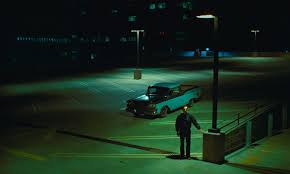
Almost the entire picture is about a washed-up fighter struggling to “make weight” so that he fight the Light Middleweight (or Super Welterweight) champ and change his destiny. It’s just a few days in Vegas, in a gym or a hotel room or toilet — sweating, extreme dieting, pill-popping and inducing vomiting — trying to drop almost thirty pounds in under a week so that he’ll be allowed the shot at that “comeback.”

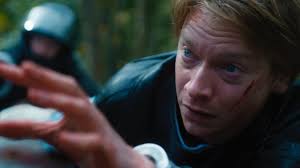
Orlando Bloom plays our unnamed Northern Irish boxer. He had a bit of a breakdown in the ring ten years before, “prematurely” ending his career. Now he and his corner-woman Caitlyn (Caitriona Balfe) run a gym, teaching boxing to little girls and boys and making a life together.

But the leading contender just got himself messed up in a stunt-brawl with a Youtube boxer. With a huge fight pre-sold and set for the following week in Vegas, the promoter (Gary Beadle) is desperate. But it was the Irish boxer who called him, not the other way around.

“People like ‘a comeback story,'” Donny the promoter shrugs. Making the cut-off weight to qualify for the fight is “just a formality,” the fighter and his trainer-partner are assured. Yes, the fighter’s in shape. But he’s got a middle-aged spread, or just a hint of one. And he weighs over 180 pounds.

The cut-off for light middleweight? One hundred and fifty-four pounds.

“Just a formality” or not, Caitlyn pitches in, and they bring in a nutritionist and an extra trainer (Ed Kear) once they land in Vegas. But eating a couple of bits of carrot and an aspargus stalk or three and a severely limited diet of “fat, protein and water” isn’t going to drop almost 30 pounds in six days.

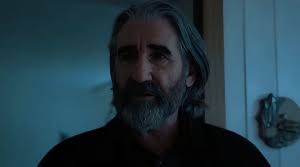
The promoter tells them they need The Boz. But that extreme step, they’re warned, means “TOTAL commitment.” Because this guy (John Turturro) is unscrupulous, heartless and maybe a tad mad.

“Your team, their problem is they CARE about you too much,” Boz purrs to them when they meet.

The Boz? He doesn’t give a you-know-what about their fighter’s health or even his life. The boxer’s haunted past, flashbacks to a childhood in Northern Ireland where mum (Clare Dunne, excellent) was a sex worker and “The Troubles” were ongoing?

Your past, Boz hisses to him, “is the extra weight” he has to lose.

“The Cut” doesn’t hit its stride until it’s just Turturro and Bloom, with Boz client and Boz True Believer Lupe (Mohammed Mansaray) along for extra motivation as a more deranged “make weight” partner in a hotel room, in the gym, in the sauna and in the tub urging himself, Boz and the Boxer into the realm of the extreme.

The Boxer’s issues aren’t cured by this intense environment as he hallucinates more and more memories of the trauma of his youth. The partner/trainer’s back-story — “The gym is what’s kept me clean!” — is under-developed, the opponent is barely mentioned.

What matters here is the body horror show that Boz has in store for them and us, and Turturro makes damned sure he delivers.

He is uncompromising and utterly callous about long-term effects, the health of a fighter or whether he might put him in the hospital. He is sexist. “We don’t have TIME for hysteria, sweetie. Your soft touch doesn’t apply.”

He is a motivational speaker, a seriously twisted life coach and a sadist. “COMMIT.” Go “All IN.” “Full throttle, full SWEAT” never seemed so scary.

As time winds down and the desperation grows, something or someone in this sweatbox trio is going to give. And not just blood, drawn intraveously “just to lighten you up a little bit.”

Turturro is great and Bloom is pretty damned committed, even if he isn’t the most convincing boxer you ever saw. The man was “cut” coming in, and he lost serious weight (over 50 pounds, if you believe the hype) to get an authentically gaunt look.

The suspense rises steadily with Boz’s blood pressure. The boxer’s vital signs? He’s barely able to stay upright.

The compactness of Justin Bull’s script is an asset, and anybody who’s ever tried to drop a couple of pounds to get into an old suit, last year’s shorts or a wedding dress can empathize with this dilemma and its degree of difficulty, even when you take things to the medical and life-threatening extreme.

But the preliminaries — brisk as they are — need to be raced through or skimmed over. The meat of the movie is basically a play, just three guys in a couple of settings, frantically trying to change their lives and life trajectories by losing as much weight as possible in an insanely short period of time.

Perhaps little more workshopping this script was in order, because the three main characters put on their own three act play in the film’s latter half. Everything that delays packing us in that pressure cooker with them undercuts the most novel version of “a boxing picture” that most of us have ever seen.

Rating: R, violence, drug abuse, nudity, “sexual content” and profanity

Cast: Orlando Bloom, John Turturro,
Caitríona Balfe, Mohammed Mansaray, Clare Dunne, Ed Kear and Gary Beadle.

Credits: Dirrected by Sean Ellis, scripted by Justin Bull. An Altitude/Republic Pictures release.

Running time: 1:36

Posted in Reviews, previews, profiles and movie news | Tagged , , , , , | Comments Off on Movie Review: Can Orlando Bloom “Make Weight” for his Comeback Fight? “The Cut”

Robert Redford: 1936-2025

Hard as it might be to believe, there is such a thing as being too “classically handsome” or just entirely too good looking when you’re a movie star.

Don’t ask Warren Beatty, whose ambition and range were obvious and whose connection with the zeitgeist could be uncanny.

But ask Cary Grant. Or Paul Newman. Or Brad Pitt. Or Robert Redford, who passed away today at 89.

A chronically underrated icon, THE leading man of his era — just after Newman and McQueen and Poitier, just before Denzel and Pitt — it took a lot of doing to get critics to take Redford seriously and for The Academy to not punish him for being the complete package — too damned tanned, rugged and WASPy beautiful for his own good.

I mean, awarding Beatty was enough, right?

But Redford dazzled in action, in comedies and action comedies, held the center in epics that wouldn’t have passed muster without his presence and made a handful of the most enduring films in American cinema history.

Tick off a list of your own favorites and weigh them against the Oscar winners the year they came out. We’re still watching “The Sting” (an Oscar winner, just not for Redford), “Downhill Racer,” “The Candidate,” “Butch Cassidy and the Sundance Kid,” “Jeremiah Johnson,” “The Electric Horseman” and “All the President’s Men.”

“Three Days of the Condor” holds up, his “The Great Gatsby” is still viewed by kids looking for shortcuts in a book report. And “A Walk in the Woods” amused, his last fun “buddy” picture with Old Man Nick Nolte, who outlives him.

We should be watching “The Hot Rock” –still a hoot — and “All is Lost,” not his final performance, but one of his finest. He still brought that twinkle that could take your breath away in the charming “The Old Man & the Gun.”

Fans embraced the former high school baseball star as “The Natural” and “The Way We Were” was the most celebrated romantic schmaltz of its day. “Out of Africa” to “Sneakers,” “Brubaker,” in his prime — which lasted decades — his movies were events.

He directed with skill and “actor’s director” care on prestige pictures such as “Quiz Show,” making his debut behind the camera with “Ordinary People,” which finally earned him Oscar recognition — behind the camera.

He was the voice of The West in “A River Runs Through It.” He founded The Sundance Film Festival and helped launch the independent cinema movement.

I interviewed him a few times over the years and found him disarming and even amusing, a Hollywood Man in Full, so comfortable in his status and his own skin that he was among the first Big Names to move away from Hollywood to keep his focus, his sanity and his mystique.

Newman was his great role model.

A Santa Monica native who wound up in New York studying acting, and landing roles first on TV, he turned his big breaks (“Inside Daisy Clover,” “This Property is Condemned,” “Barefoot in the Park”) into status.

Redford’s move to Utah pushed his environmentalism into the spotlight, a passion that, like his politics, he wore on his sleeve and was hated by the hateful for it. The few late movies that leaned into those politics — “Truth” and “The Company You Keep” — were interesting failures.

Recent generations have rediscovered him, zeroing in on his turn as “Jeremiah Johnson” as if they discovering an overlooked Grand Master, which he kind of was.

Redford laughed and laughed about lying his way into the role of a solo sailor who faces disaster in “All is Lost.” At 77, he didn’t really have an idea of what he was getting himself into. Director J.C. Chandor had the last laugh on that “test,” which is riveting and “real” thanks to Redford’s commitment.

But another awards’ season passed without the acting recognition that should have come his way, yet never really did. He’ll make a helluva “In Memoriam,” thought. At least he outlived the generation of critics who never took him seriously.

Posted in Reviews, previews, profiles and movie news | Tagged , , , , | Comments Off on Robert Redford: 1936-2025

Movie Review: “Samurai Fury” Triggers an Insurrection in Old Nippon

A badass ronin swaggers and slices his way through Medieval Kyoto in “Samurai Fury,” an action epic about a tax revolt in a time of plague and famine.

Ryosuke Kakine’s historical novel — “Muromachi Outsiders” — was inspired by real events in 15th century Japan. Director Yû Irie (“8000 Miles,” “Ninja Girl”) leans into the tropes and archetypes that earned samurai films the nickname “Japanese Westerns” for this action-packed, Spaghetti-Western-scored Soba Noodle swashbuckler.

In the Kyoto of 1461 (Muromachi Era), plague and famine have killed tens of thousands. But the ruling shogunate, which “did nothing” to lessen the suffering or save lives, has allowed its ruling class, lords and monks, to maintain their lifestyle at the expense of impoverished peasants, who are in debt — taxed and tolled at every turn.

The regime’s fearsome head of security, Honekawa Doken (an imposing Shin’ichi Tsutsumi), is charged with keeping the peace even as the prissy, posh shogun forces debt slaves to haul a vast stone to decorate the center of his palace’s lake, a stone he then decides he doesn’t like after he sees it installed.

“Flowers would be prettier, I think,” he decides, in Japanese with English subtitles.

There’s talk of a revolt or insurrection among the peasants and ronin, with one form of uprising being more serious than the other. So Doken meets up with a ronin (unemployed “vagabond” samurai) he knows, Hasuda Hyoe (Yo Oizumi,) and commissions him to take the pulse of the public and help fend off the threat.

The canny, charismatic Hyoe not only drives a hard bargain, he cracks that his old friend Doken has become “the shogun’s pooch.” He agrees to do the job if the Doken will let him take this “brat” Saizo (former pop idol Kento Nagao) who resisted the “bloodsucking monks” who bound and gagged him over a debt with plans to have Doken execute him.

“Frog,” the roaming samurai nicknames his pupil. The kid fended off monks and their henchmen for a while with just his staff, is a lad with “spirit but no skills.” Hyoe gives him a few life lessons about “money,” and giving the monks what they deserve, drops Saizo off for a year’s training with his weapon of choice with the Old Master (Akira Emoto).

Because whatever he’s been paid to do by Doken, Hyoe is playing the long game. He paid the Old Master from money he robbed from a monk-run tolling station that he trashed and robbed after slashing up a score of monk minions. Hyoe cautions peasants and couriers (teamsters without teams, mostly) that the time isn’t right for a revolt. But it will be in a year, once “Frog” has finished his training.

The training montage features some clever twists in prepping a kid for combat with a blunt-pointed staff. His final test? A pay-to-play tournament in which he faces all comers in a “Kill Saizo, Win a Prize” bout.

The supporting insurrectionists include the Old Master’s mute lady archer and a small crew of would-be ronin — Hyoe fanboys — headed by the hilariously hulking Emontaro (Yasushi Ami), who speaks loudly and carries a huge club.

There’s an experienced courtesan (Wakana Matsumoto) in a bit of a love triangle with Doken and Hyoe, right up to the moment she bats her eyes at the suddenly buff Saizo. And the most callous and bloodthirsty of the shogun’s supplicants, Lord Nawa (Kazuki Kitamura) must be dealt with if there’s any justice to be had in this world.

Intrigues will make us wonder who is on whose side, a village will be slaughtered and the final assault on Kyoto and its house of money changers where debt records are kept is epic and set after dark, a furious, witty action set piece by torch light, where torches are the weapon of choice against the paper-pushing, record-keeping oppressers.

Yes, the acting is loud and often broad. There’s always a lot of shouting in samurai tales, and our young J-pop star bellows with the best of them. The leads are well-matched even if the story gets cluttered with supporting players who keep them apart, more or less, until the final act.

The fights are off-the-charts spectacular with Irie’s camera swooping in and around the various maelstroms of violence — trailing the thundering horde led by Emontaro and his club, staring down the shaft of Saizo’s staff as it pokes, fends-off, bludgeons or vaults over foes, and catching the clash of Tachi swords among the warriors, with peasants hurling rocks, stabbing and clubbing their way towards an elusive debt-free future.

It’s not “Lawrence of Arabia” or “Seven Samurai” or “Yojimbo.” But “Samurai Fury” is cleverly and patiently plotted, with good acting and very good fighting. And when the big battle finally begins (86 minutes in) it goes on and on until it proves its been worth the wait.

Rating: unrated, lots and lots of bloody violence

Cast:Yo Oizumi, Shin’ichi Tsutsumi, Kento Nagao, Wakana Matsumoto, Hannya, Yasushi Ami, Kazuki Kitamura and Akira Emoto

Credits: Scripted and directed by Yû Irie, based on a novel by Ryosuke Kakine. A Well Go USA release.

Running time: 2:15

Posted in Reviews, previews, profiles and movie news | Tagged , , , , | Comments Off on Movie Review: “Samurai Fury” Triggers an Insurrection in Old Nippon

Movie Review: Coming Out in the ’90s is no Easy Thing for “Plaintclothes” Cop

“Plainclothes” is a simple but engaging “coming out” tale of the sort we’ve been seeing for decades now. But the performances are understated and spot-on. And writer-director Camen Emmi’s feature debut reels us in through the simple trick of not just telling this timeworn story, but making us come to the movie.

We have to unravel the when and where this version of coming out takes place, who the protagonist is and why this umpteenth version of such a story is worth our time. Music, clothes, beepers, payphones and a mall reveal it’s a ’90s period piece.

We’re forced to decipher the inconsistent timeline, and what’s changed for that now mustached and stubbled protagonist since the scenes where Lucas (Tom Blyth) was a cleanshaven plainclothes cop in suburban New York. In the past, he was dealing with peeper pages from his mother which might concern his ill father. In the present, Dad’s dead, mom (Maria Dizza, quite good) is chainsmoking and her obnoxious brother, his Uncle Paulie (Gabe Fazio, a “type” but spot-on), is showing off his homophobia to the entire family in the way he treats “pansy” Paulie Jr.

Lucas is a young cop who’s heart isn’t really in his work as “bait” at the mall where taxpayer dollars and police crimefighting hours are spent entrapping gay men who’d like a men’s room quickie while shopping.

Their indiscretion will cost them an indecent exposure plea as “exposure” is hung over their heads, since the aged old school lieutenant (John Bedford Lloyd) has a real Jones for hounding “perverts.” He lays out his misguided, outdated reasons as he plays old stakeout film footage for a new recruit to this squad. He’s passed this passion on to his sergeant (Christian Cooke) running the show. But Lucas doesn’t like the work.

Those exchanged moments of eye contact setting the trap have him seriously questioning his sexuality. That’s led to him breaking up with his longtime girlfriend (Amy Forsyth). And they’re part of the reason this one target (Russell Tovey), a few years older, eludes the handcuffs after they’ve met in a stall in that men’s room.

“Have you done this before?”

Emmi’s film can’t help but play as dated and a tad overfamiliar. And as a history lesson about “the way things used to be” it can feel almost quaint. Setting the film after the ravages of AIDS adds to that.

But Blyth and Tovey, as Lucas and a very cautious, more experienced Andrew, subtly remind us that those personal stakes could not have been higher in a closeted era as careers, family and futures are gambled by men grappling with who they really are and how low they must feel, seeking intimacy in a public toilet.

Lucas is new to all this, and infatuated. Andrew might be a “cruising” cliche, but he has his reasons and a compassionate side.

And as this story finds its way past the predictable towards a reckoning that’s both surprising and satisfying, the viewer is invited to ponder the phrase “We’re not going back” anew as we’re reminded of just how far we’ve come.

Rating: R, violence, sex, nudity, profanity

Cast: Tom Blyth, Russell Tovey, Maria Dizza, Amy Forsyth, Christian Cooke, and Gabe Fazio

Credits: Scripted and directed by Carmen Emmi. A Magnolia release.

Running time: 1:35

Posted in Reviews, previews, profiles and movie news | Tagged , , , , | Comments Off on Movie Review: Coming Out in the ’90s is no Easy Thing for “Plaintclothes” Cop

Movie Review: Pot’s a Crime Unequally Punished in “Grassland”

“Grassland” is an intimate social justice drama about the bottom level of the marijuana business, a tale told in the last of its years as a banned and not merely “controlled substance.”

A single mom struggles to make ends meet by growing, prepping and selling weed out of her rental duplex’s basement in New Jersey. An aged cop moves into the other half of the duplex. You can guess the rest.

Mia Maestro (“The Motorcycle Diaries,” TV’s “Nashville,” “The Strain”) is Sofia, an Argentine immigrant estranged from her mother (Rachel Ticotin) and on her own with young son Leo (Ravi Cabot-Conyers). She dotes on him and reads to “Prince Leonardo” from Homer’s “Odyssey.”

But even at this age, Leo is pretty much a co-conspirator. He knows what mom does and is just now awakening to the problems it could lead to for her, him and her young deliveryman and sometimes baby sitter Brandon (Quincy Isaiah, Magic Johnson on TV’s “Winning Time: The Rise of the Lakers Dynasty”).

Virtually “nobody’s buying,” in this economy. She’s had problems with mites in her plants, is behind on her rent and now the duplex owner has rented the other half of it to a grandpa (Jeff Kober of TV’s “China Beach”) and his grandson Tom (Sean Convery).

Great. Leo has a playmate.

But grandad John rolls up to the place in a police cruiser, putting Sofia in a panic. Sofia’s got to hide what she does, from the actual plants to the scent, pretend she doesn’t know Brandon and keep Leo from giving away the game to Tom. She may minimize the new risks to Brandon, who has a record and isn’t stupid, and she might think she’s allaying her little boy’s fears.

“Are we criminals? Are we getting arrested?”

It doesn’t help that John’s bitter, a cop being shown the door and a caregiver thanks to what we figure out must have happened to his daughter, Tom’s mother.

Co-writers/directors William Bermudez and Sam Friedman focus not on the nature of the crime, as it then was, but on the circumstances of those wrapped up in it. It’s 2008 and the country’s in the throes of the Bush II recession.

Montclair, New Jersey isn’t Newark. This is the lowest stakes battleground in the failed, more-cultural-than-criminal “War on Drugs.”

And this isn’t TV’s “Weeds,” a sometimes jolly, sometimes dangerous lark for a housewife to find a “career” setting up and running a big growhouse-to-street distribution system. The problems, to a one, are the The System itself — racial profiling, over-empowered police, punishments absurdly out of proportion to the crime.

The risks aren’t worth the rewards, and only the most desperate would take those odds. Brandon is smart enough to know that getting out is Job One. But few will hire someone with a criminal record. Sofia thinks she knows the risks and “can hande” this. But smart people don’t get into this “business.”

“Grasslands” maybe be pretty much wholly predictable. But the performances have heart, compassion and a testy edge when that’s called for.

And this simplest of period piece parables lays bare the inequity of “justice” as pot legalization was just beginning and the “gateway drug” theory was fading into the mists of myth.

Rating: unrated, violence, profanity, drug content

Cast: Mia Maestro, Jeff Kober, Quincy Isaiah, Ravi Cabot-Conyers, Sean Convery and Rachel Ticotin

Credits: Scripted and directed by William Bermudez and Sam Friedman. A Gravitas Ventures release on Amazon Prime.

Running time: 1:29

Posted in Reviews, previews, profiles and movie news | Comments Off on Movie Review: Pot’s a Crime Unequally Punished in “Grassland”

Documentary Review: Celebrating the Artistry of a “Massacre” set in “Texas” — “Chain Reactions”

Film fan lore has long implied that Steven Spielberg, the producer of the horror blockbuster “Poltergeist,” was really its director or at least co-director.

The 1982 film has Spielbergian touches — compositions, classical editing, the striking lighting and the inclusion of and affecting performances by children. He was on a roll at the time and could seemingly do no wrong and was given much of the credit for the film’s success.

But all of that had the effect of diminishing the artist actually behind the camera, the long underrated horror icon Tobe Hooper. He made many more movies, but his reputation suffered and his career never had the kind of trajectory a smash hit/cultural touchstone thriller should have served up.

The college professor, whose worldview and art were informed by witnessing the infamous mass shooting by sniper Charles Whitman at the University of Texas in 1966, widely regarded as one of the most influential horror filmmakers ever, more than gets his due in the new documentary “Chain Reactions.”

The title may be a glib pun on the movie Hooper made infamous, “The Texas Chain Saw Massacre.” And its first interview is with a standup comic, Patton Oswalt, who long did a bit arguing that “A movie title should let you see a mini movie in your head,” tell you everything you need to know in four or five words.

“Best. Title. EVER? ‘Texas CHAIN SAW Massacre!”

But this film, from the director of “Leap of Faith: William Friedkin on ‘The Exorcist,'” is a deep, incisive, celebratory and cerebral dive into the “art” of Hooper’s most imitated work.

Stephen King, who worked with Hooper on a couple of projects, practically sings his praise about the movie’s notorious cheapness, its “washed-out ’70s” visuals, with even the grainier and grainier prints (it was shot on 16mm and blown up to 35mm initially) and worn VHS tape viewings patina adding to its impact.

“It looks f—–g REAL!”

Karyn Kusama, director of “Girlfight,” “The Invitation” and episodes of “Halt and Catch Fire” and “Yellowjackets,” unwinds the politics, cultural warnings and “the saddest, scariest depiction of (broken) masculinity ever seen on film.”

With his film of dim-witted, violent and obsolete blue collar (and rural) Americans preying and eating young people (“hippies”) who fall into their clutches, “the young artist (Hooper) was looking into the future of America.”

Japanese horror icon Takashi Miike (“Ichi the Killer,” “One Missed Call”) marvels at how his fate was sealed the day he missed a showing of Chaplin’s classic “City Lights” and dropped in on a cinema showing “Chain Saw Massacre” instead, a movie that caused a revolution in Japanese horror cinema, setting the table for “J-horror.”

Miike and King embrace the “lack of morality” of Hooper’s creation, the extremes it goes to. Kusama talks about how unpleasant it is to sit through and how much more unpleasant it can be to watch again.

All mention how “the story makes no sense,” the “acting” is so “amateur” as to make the viewer believe serial killers “have gotten their hands on a film camera” and are documenting their work.

And Australian critic Alexandra Heller-Nicholas notes “Chain Saw Massacre’s” influence on generations of Australian cinema, largely thanks to the fact that it was banned for years. Handing down VHS copies of a movie with “beautiful” flashes of nature and vivid colors in aging, yellowing hues made Australian movies imitating its “Outback yellow” look.

Scores of movies (“Nosferatu,” etc.) that predated “Chain Saw” or were influenced by it (“The Evil Dead,” “Midsommar,” “The Blair Witch Project,” of course) and are name-dropped and sampled. Great art works by Bacon and Bosch that Hooper either mimicked or “accidentally” paid visual homage to are compared to scenes and shots and sequences.

But Patton Oswalt is here to balance the critical parsing as the ultimate fanboy, geeking out over sequences, characters, messages and obscure other titles that connect to this brutal, unblinking and so-ugly-it’s-a-thing-of-beauty classic.

It’s not enough to make one want to go back to “Chain Saw.” Kusama got that right. But if you want an Ur Text for modern movie horror, from “Tales from the Crypt” to “torture porn,” there it is. And if you want to understand the genre, it remains the most essential viewing of any modern horror tale.

Rating: unrated, graphic, gory violence and nudity

Cast: Stephen King, Karyn Kusama, Takashi Miike, Patton Oswalt and Alexandra Heller-Nicholas

Credits: Scripted and directed by Alexandre O. Philippe. A Dark Sky release.

Running time: 1:44

Posted in Reviews, previews, profiles and movie news | Tagged , , , , , , , , | Comments Off on Documentary Review: Celebrating the Artistry of a “Massacre” set in “Texas” — “Chain Reactions”

Netflixable? “aka Charlie Sheen” shows us a Bad Boy at 60

Here’s a thought.

Of the legions of Hollywood offspring who became “nepo baby” movie stars, Charlie Sheen may be the only one to question his status and how he got it, who developed guilt over his fame and even his gifts and feels he doesn’t “deserve it.”

That insight is from Sheen’s longest-serving co-star, Jon Cryer (“Two and a Half Men”), a smart cookie who has observed the wonder and the terror of Charlie Sheen — son of Martin, brother of Emilio — up close. He’s experienced the “regular guy” charm. He’s seen his own livelihood battered by Sheen’s addictions.

And, as he says in the new two-part documentarty “aka Charlie Sheen,” he’s noticed that “consequences” never keep cuddly, charming Charlie from making another comeback, which is why Cryer was a reluctant participant in this ups-and-downs/Charlie-in-his-Own-Words documentary.

He’s not sure the world, or Charlie, needs a “comeback” to happen.

Cryer, Sheen’s old pal and childhood neighbor Sean Penn, Sheen’s ex-wife Denise Richards and his former “boss,” “Two and a Half Men” creator Chuck Lorre are among the canniest observers and analyzers of this “icon of decadence,” as Cryer describes Sheen.

But Sheen himself, interviewed in a marathon session or two by filmmaker Andrew Renzi (“Ready for War,” Netflix’s “Pepsi, Where’s My Jet?”) in a booth in closed-after-hours Chips Diner, is the star attraction, the spinner, rationalizer, deflecter and teller of hard unpleasant truths in the story of his star-studded, sexually adventurous, cocaine-and-everything-else addicted life.

“If you ask Charlie did he do this,” Penn avers, “he’s gonna tell you the truth.”

Penn’s the expert on fame and addiction and “public life” in this dirty laundry doc. Richards, the second of Sheen’s ex-wives — famous since “Wild Things,” his wife and sometime co-star during the “Two and a Half Men” meltdown — brings the pathos, all that the man kept throwing away. “Hollywood Madam” Heidi Fleiss is here to bring judgement, the woman he threw under the bus after getting caught hiring her prostitutes.

And Marco is here to talk about the drugs, drugs which Marco supplied Charlie with for years. “My pal” Charlie calls him. Marco’s got home videos and selfies to give him street cred and Charlie cred.

Who takes SELFIES with their drug dealer? Charlie effing Sheen, that’s who.

No, he’s not like us, and it’s not just him who says so. His Keith Richards tolerance for controlled or banned substances leaves people like third ex wife Brooke Mueller in awe and even gives Penn pause.

Sheen is here to speak his “truth,” own to a lot of it and blame some of it one this or that drug and his struggle with it at the time as he answers Renzi’s off-camera questions, queries that probe more than challenge, but that take him and us into the worst of the worst of Charlie Sheen.

Sheen also provides “structure” to his rise and fall, “comeback” and “come back again” story.

With fame, there was “Partying.” Then “Partying with Problems.” And finally that devolved into “Just Problems.” The fact that Shee’s still here tells us there might be a more upbeat ending after those three “chapters” than you’d expect.

Home movies with brothers Emilio Estevez (who declined to participate) and Ramon Estevez (interviewed) sister Renée Estevez (not interviewed) show a Super 8 movie-making obsessed childhood in pre-super wealth Malibu and parenting that had the family traipsing off to movie star dad Martin Sheen’s (not interviewed) film locations (the Philippines for “Apocalypse Now”).

The love and support of Dad (Mom is almost never mentioned) is a constant, from Martin giving Charlie the one bit of coaching he needed to launch his career with a one-scene turn in “Ferris Bueller’s Day Off” to Martin urging the public to “pray for Charlie” after one near-fatal drug-induced collapse, prayers the elder Sheen had been asking journalists to provide for years any time he met the press.

But we get a hint that maybe distracted ’70s parenting was a part of this mix, too. Charlie, his siblings and neighbor kids, were into “weed” in their tweens. That came after his parents’ “naked” around the house years.

Sheen’s a fun storyteller, and he relates how fellow nepo-baby and childhood friend Jennifer Gray got him that one scene role in “Ferris,” and how he borrowed older brother Ramon’s leather jacket and stayed up all night to create the “look” of his police station delinquent in the film.

He loved sports, and revels in his basketball encounter with Michael Jordan and a close friend verifies his baseball skills, even “just after he got outta rehab.”

Sheen laments having to give up “The Karate Kid” big break for a C-movie he agreed to make in Eastern Europe. So he made his screen debut with George Clooney and Laura Dern and Louise Fletcher in “Grizzly II,” a bomb nobody saw.

“Platoon” came calling, then “Wall Street.” Penn astutely notes how Charlie’s screen career mirrored his dad’s — a punk in “Badlands,” a Vietnam soldier in Apocalpyse” and so on.

Sheen regales us with the heady fame that came, with little effort, in his peak years and his shift to comedy — “Hot Shots,” “Major League.” The world was his oyster. But competing with pal and running mate Nic Cage on partying binges sealed his fate. He’d get out of control. And time and again there’d be “no consequences” for it.

The entire part two of “aka Charlie Sheen” is about the reckoning that came and the public’s disturbing reaction to it when the wheels finally came off.

Continue reading
Posted in Reviews, previews, profiles and movie news | Tagged , , , , , , | Comments Off on Netflixable? “aka Charlie Sheen” shows us a Bad Boy at 60

Movie Review — “Downton Abbey: The Grand Finale”

Lady Mary makes one more most-unladylike sexual mistake, “Mum-MAH” dishes up one more serving of proto-feminist American common sense and one last “season” in London town is experienced for “Downton Abbey: The Grand Finale” of the highbrow British/PBS soap opera that has also produced three movies.

It’s a starchy send-off filled with stiff dialogue and so much fan service that it fairly drowns in characters and new versions of events and scenes that we’ve watched played-out in other forms over the long history of this period piece franchise. All those episodes and movies, it can’t help but play as repetitive and recycled.

How many more affairs, dressing room confidences exchanged with the maids and strolls around the grounds can one endure?

But then a pretty fair proximation of the “Downton” era’s greatest wit — the playwright, actor and gay bon vivant Noël Coward –– shows up. And damned if Downton and those who made it don’t make a graceful, warm bon voyage into the cinematic sunset.

I’d always suspected that perfect bookend to this saga would be to end it as the house is taken over for the all-consuming struggle that was Britain facing Nazi Germany in World War II. The series began on the eve of WWI after all, and the estate and the poshes who live there and the plebes who served them did their bit as The Great War errupted around them. The fact that many “Great Houses” did not come out of the Second World War in the same shape or the same hands, something “Brideshead Revisited” touched on, seemed to suggest the perfect coda.

But creator Julian Fellowes, who used his script for Robert Altman’s “Gosford Park” as a dry run for “Downton” — knows best. And he begins this outing in style, with a “season” at Grantham House, the family’s townhome in London, where the East End features a play by Coward (Arty Froushan, terrific) starring dashing old actor friend of the family Guy Dexter (Dominic West), whose backstage dresser and “pal” is Mr. Barrow (Robert James-Collier), once a closeted valet at Downton.

Lord Grantham’s beloved mother (Maggie Smith) died in the last film. And now American-born Lady Grantham (Elizabeth McGovern) has lost her mother (played by Shirley MacLaine, remember) and her affairs are in a mess.

Because Lady Grantham left her businessman/brother (Paul Giamatti) in charge. The Wall Street crash almost wiped them out, and he took on an advisor, Gus Sambrook (Alessandro Nivola), who is tall, dark and sketchy.

The Lord may be putting the Abbey in the hands of their daughter, Lady Mary (Michelle Dockery). But she’s not above being plied with the latest cocktails from America by the wily and beguiling Gus.

Yes, she winds up in bed with him, which considering word of her divorce has just scandalized her and put her on the “shunning” list of London and Yorkshire society, isn’t a smart move. And yes, that’s exactly how this saga began, 16 years ago, with Lady Mary bedding a houseguest and trying to keep that a secret when he winds up dead the morning after.

Gus, being American, doesn’t have the good manners to die and be less of a problem.

The Lord may or may not relinquish control of the Abbey and its now-turning-over staff. Mr. Carson (the regal Jim Carter) is retiring, as is the earthy, old school cook, Mrs. Patmore (Lesley Nicol). The increasingly confident and self-assured Daisy (Sophie McShera) is taking over for her, and her refusal to be overly impressed by her “betters” makes egalitarian in-law Lady Merton (Penelope Wilton) appoint her and the retiring Carson to the committee that runs the local fair.

They’ll do battle with the formidably snobby, Lady Mary-shunning Sir Hector (Simon Russell Beale).

With dicey finances, “improvements” needed for the cottages on the property and more “changes” than one old Lord and Lady can handle on their own, it’s nice that help is never more than one kindhearted relative away.

The widowed Tom (Allen Leech), once a servant, now a socialist rolling in just-sold-my-business cash, will pitch in. The staff will spread the right rumors and “scandal,” “cash poor” or not, all will be made right by this nice world of nice people, not all of whom were “nice” on the series.

Continue reading
Posted in Reviews, previews, profiles and movie news | Tagged , , , , | Comments Off on Movie Review — “Downton Abbey: The Grand Finale”

Mockumentary Review — “Spinal Tap II: The End Continues”

“Getting the band back together” nostalgia is fine. Realizing that they can still play well into their ’70s is something of a “good for them” triumph.

And maybe coming to the conclusion that for a parody of a bombastic, pretentious British heavy metal band of the ’60s through the ’80s, tunes like “Big Bottom,” “Hell Hole,” “Flower People” and “Stonehenge” pretty much hold up.

But as amusing as it’s been over the years for “the lads” of Spinal Tap to turn up on late night chat-variety shows to prove they’re as musical and as clueless as ever, a sequel to “This is Spinal Tap,” the mockumentary that really invented that label, can’t help but play as winded, gassed, joked-out and pointless.

“Spinal Tap II: The End Continues” comes off like what used to be called “a contractual obligation album,” or a chance to re-record and grab the rights back to their music and the movie that made them. They might finally profit from a fake band, their fake band back catalog of tunes and that fake documentary that Nigel Tufnel, Derek Smalls, David St. Hubbins and director Marty DiBergi barely made a dime from.

That goes for their creators, Christopher Guest, Harry Shearer, Michael McKean and Rob Reiner as well. It’s ironically hilarious that the guys who made the movie about the clueless fake band were clueless enough to sign the worst deal possible with distributors, just to get the original film made.

But the bottom line is, that’s why “Spinal Tap II: Finally Cashing In” exists.

Guest’s mockumentary career went its course, and he tried a filmmaking comeback with Netflix (“Mascots”) that didn’t work out a few years back. McKean has worked steadily in supporting roles (“Better Call Saul,” “The Diplomat”) and voice-over work in the intervening years — nothing to make one rich. And Reiner’s acted a bit, even as his directing career fell off dramatically after the charming “Flipped” flopped fifteen years ago.

Shearer? He’s had his lucrative “Simpsons” gig since the ’80s. He’s fine. Which is perhaps the reason he’s not credited as a writer here, and that he has little to say or contribute that’s funny. He’s just the bass player, man. He just has to show up.

Derek’s running The New Museum of Glue these days. Nigel runs a Cheese & Guitars Shop. St. Hubbins is making music for podcasts.

Reasons more contrived than logical broke them up, and now they’re reuniting for a big New Orleans comeback/farewell concert. They audition or approach famous drummers (Lars Uhlrich, Questlove, Chad Smith) and little knowns (including a Blue Man Group alumnus) to replace the “eleven” they’ve killed off.

Riot Grrrrl Didi (Valerie Franco) gets the gig. They add Caucasian Jeff (CJ Vanston) on keyboards, cope with a new manager, Simon (Chris Addison) and the fangirlish daughter (Kerry Goldiman) of their original manager and settle into the rehearsal studio where the parade of famous cameos continue, none of them to hilarious effect.

Trisha Yearwood and Garth Brooks to Paul McCartney and Elton John join the deadpan parade, and some manage to drag out a smile or two as they’re insulted, or turn insulting.

But in the 41 years since Spinal Tap sent-up the supposedly then-just-passed “classic rock” era, communities from coast to coast have opened outdoor concert venues that only yacht rock and classic rock and other nostalgia acts can fill. Promoters call these ampitheatres “Jurassic Parks.”

“Classic rock” hung around. Bad Company just got into the Rock Hall of Fame.

Comical documentaries about real bands of the genre that never quite made it (“Anvil!”) have come out. And Guest made a whole career out of mockumentaries, even tapping into old folk musician nostalgia (“A Mighty Wind”) for one film.

Clips and outtakes from the original film take us back. But the music they sent up never went away, even if they did. For a while.

The joke is played, the conceit is worn out and seeing granddad-bod Guest in a kilt isn’t nearly the hoot one might have hoped.

So if you want to support this crew getting control of their amusing and enduring intellectual property, I’d suggest you give the documentary a pass and just buy the concert LP. “Hell Hole” still rocks, “Big Bottom” still rolls, and you know “Stonehenge” will finish with a crash, with or without dwarf druids dancing in the ruins.

Rating: R, profanity

Cast: Michael McKean, Christopher Guest, Harry Shearer, Rob Reiner, Valerie Franco, CJ Vantston, Kerry Godliman, Chris Addison, with Trisha Yearwood, Lars Ulhrich, Garth Brooks, Paul McCartney and Elton John.

Credits: Directed by Rob Reiner, scripted by Christopher Guest, Michael McKean and Rob Reiner. A Bleecker Street release.

Running time: 1:23

Posted in Reviews, previews, profiles and movie news | Comments Off on Mockumentary Review — “Spinal Tap II: The End Continues”

Movie Review: “A Long Walk” on the Road to Nowhere

It doesn’t do “The Long Walk” any favors slapping the previews to the remake of “The Running Man” on before the opening credits. “Walk” is “Running” without the running or the amped-up game show “entertainment” elements.

The title and the trailers give away the whole derivative story — a dog-eat-dog “Hunger Game/Maze Runner” on foot, contestants walking until they falter and are summarily executed by The State, fifty young men marching hundreds of miles until all but one drop.

The subtexts to all this, the real nature of “a draft,” which is how the contestants are chosen (young men selected for “sacrifice”), a nation splintered after a second civil war, in need of healing, the violence and hatred that must be overcome to unite us against a common enemy, are opaque. The character arcs are dull.

It’s a chatty film, where a group of the lads bond, share and do everything but sing “Kumbaya” on their death mark, and director Francis Lawrence and screenwriter JT Mollner do little save for bursts of violence and a flashback to animate it.

“Boy, I would KILL for a foot massage right now.”

The performances aren’t generally bad. They’re limited by the story and working conditions.

Young actors walking and talking, even if they typically turn fatigued or injured enough to merit execution rather abruptly — as opposed to steadily weakening and collapsing — isn’t the best way to deliver pages and pages and pages of dialogue. Endless words and even whole sentences are lost in the effort to briskly walk and thoughtfully talk.

But kudos to Mark Hamill for managing his best Michael Ironside as the heartless “Major” who reiterates the rules and barks out motivational pitches behind black aviator sunglasses from his open top armored vehicle.

“There is only one ‘winner’ and no ‘finish line.” It’ll take “courage, determination and ambition” to win it all, with the sole survivor earning a big cash prize and an all-encompassing “wish” granted to boot.

Judy Greer gets across the stakes in an opening scene where she drops off her only son, Raymond (Cooper Hoffman, son of Philip Seymour H.) at the Louisiana starting line. Fifty young men, one representing each state, have been “chosen,” and Raymond chose not to opt out.

He’s not in great shape, but he has his reasons for participating in this “patriotic” bloodsport. And Mom collapses in tears when the weight of the moment overcomes her.

Raymond is the “home state” boy in the field, theoretically knowing the terrain (it was actually shot in Canada) and used to the climate. His Mom can stop by the “race” to check on his progress, or if he’s survived the first hour, first night or first three days.

Philospher Raymond bonds with smart and sensible Peter (David Jonsson), and they connect with nerdy Hank (Ben Wang) and tall and thin Baker (Tyt Nyout). They’re the (four) “Three Musketeers,” urging each other on, propping each other up as ankles, legs, will and bowels give way and The Major and his escorting, guarding, executing and televising troopers “thin the herd.”

Barkovitch (Charlie Plummer) is a sadist, an emotional wreck into taunting others thanks to his own issues. Stebbins (Garrett Wareing) is the tall, thin and fit blond who seems like everybody’s safest best to win this thing. There’s a “sissy boy,” a kid who must have lied about his age to get in, a young guy (Jordan Gonzalez) who’d like to “write a book” about event “from the inside” and a Native American from Iowa (Joshua Odjick) who endures as a loner’s loner.

The characters are a veritable checklist of “types” given the color-blinding casting tratment. And the conversations flirt with the idea of being “about” something — a generational cry of “Nobody signed UP for this!” — but never quite amount to making a statement.

It’s about pliable, conformist young men at that heedless age when armies all over the world draft them into service. It’s about a future “Gen Z” trapped in a world of older generations’ making, and sacrificed for that. “Helpless” describes their resigned-to-their-fate state in a single word.

Horrific? Only in the eyes-averting gore and graphic death mark diarrhrea sense.

I couldn’t decide if the generic backdrops and endless conversations made this more suited to a podcast series, as Stephen King had good luck with some of his more dialogue-heavy books on radio in the ’80s, or whether “Long Walk” is just another 65 minute movie in a 105 minute package.

The resolution’s both predictable and perfunctory. “Unsatisfying” comes with the package, and that goes for the movie itself — lazy pop psychology, underdeveloped sociology and psychology and an allegory that never comes close to sticking the landing.

Rating: R, graphic violence, bodily functions and profanity

Cast: Cooper Hoffman, David Jonsson, Mark Hamill, Garrett Waering, Charlie Plummer, Ben Wang, Tut Nyout, Joshua Odjick and Judy Greer.

Credits: Directed by Francis Lawrence, scripted by JT Mollner, based on a novel by Stephen King. A Lionsgate release.

Running time: 1:48

Posted in Reviews, previews, profiles and movie news | Tagged , , , , | Comments Off on Movie Review: “A Long Walk” on the Road to Nowhere