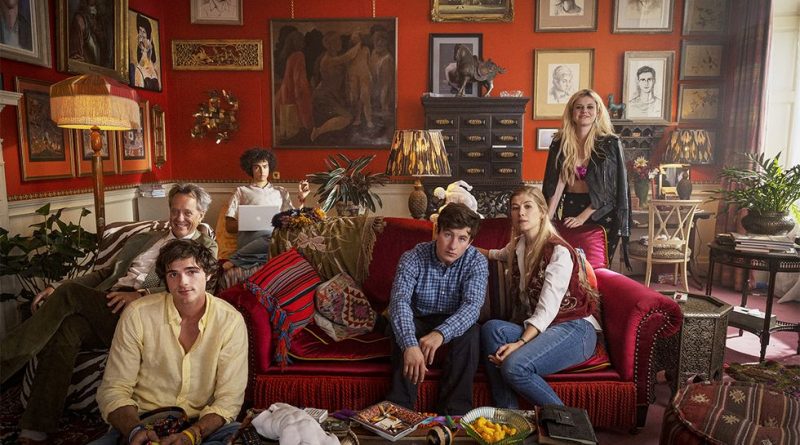
Movie Review: A “Talented” interloper tries to mix with the posh at “Saltburn”

Describing “Saltburn” in cinema shorthand terms is so easy it almost gives away the game. Not that the plot is any big inscrutable secret.

It’s “The Talented Mr. Ripley” meets “Call Me By Your Name” — insidious, class conscious, with a bit of violence and a serious taste of the sexually kinky if not downright icky.

The latest feature from actress turned “Promising Young Woman” writer-director-to-watch Emerald Fennell is a slap-in-the-face assault on British classism and an uninhibited tour de force for star Barry Keoghan.

Taken at its dark-intended-as-darkly-funny face value, it’s a satire that crosses lines simply because they’re there and easily overstays its welcome. But it’s still a bracing depiction of ancient fault lines breached by an interloper which the inbred and posh are ill-equipped to reckon with.

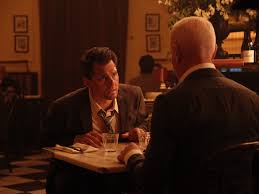
The Irish actor Keoghan, last seen in “The Banshees of Inisherin,” is a hapless “scholarship boy” at Oxford, “Class of 2006.” He’s as out of place as his trying-too-hard, dated “Oxford” fashions, as helpless as the look on his face every time he asks “This seat taken?” at his college’s wood-paneled, chandeliered, ancient and venerated dining hall.

That may relegate him to sitting with the highly-strung, self-described “genius” Jake (Will Gibson) as a fellow outcast in this world. But we know from Oliver Quick’s voice-over narration that he aspires to greater things, chief among them the rakish, handsome and ever-so-rich Felix Catton, given a louche ease and comfort about the “station” he was born into by Jacob Elordi (Elvis in “Priscilla,” TV’s “Euphoria”.

A chance encounter leads to a Oliver doing a boon for his rich, entitled classmate. And it doesn’t matter than Felix is related to Oliver’s trying-too-hard-at-snobbery tutoring partner and nemesis Farleigh (Archie Madekwe of “Midsommer” and “Gran Turismo”). “Ollie” soon finds himself sharing pints at the pub, palling around with the effortlessly popular girl magnet Felix and ingratiating himself into his life.

Little details about Ollie’s hard luck life story seem to touch Felix, who is rich enough to be gallant about picking up a tab without sweating it, and touchy enough to not like being reminded of it.

“Get yourself a title and a massive ‘f–k-off castle,” and you don’t have to hear how “only rich people can afford to be filthy” and never clean their college dorm room.

“Saltburn” is the family’s “castle,” a massive, Tudor manor house “pile.” Oliver finds himself invited there over summer break, instantly out of place as he takes an earlier train, goes through multiple gates and crosses vast grounds to get to the towering front door, where butler Duncan (Pauls Rhys) is quietly disapproving of his arrival.

He’s not the only one. The venmous Farleigh is here for a long stay.

Felix’s nonchalant attitutude about this wealth and status is summed up on a long walking “tour” through ornately-decorated halls and rooms covered with portraits — “Dead relly (relative), dead relly, Shakepeare’s Folio…Henry VIII…” But we sense a kindness in him as well.

He may make “Ollie” a subject of gossip with his parents (Rosamund Pike, terrific, Richard E. Grant, spot-on), his strikingly beautiful sister (Alison Oliver) and ever-over-dresssed ne’er do well houseguest (Carey Mulligan). But that’s only to urge them to mimic his consideration to his classmate.

Farleigh won’t buy in. Duncan keeps an eyebrow raised. But that’s not an issue, and it becomes obvious that Ollie is an “innocent” among a wading pool-deep cadre of upper class twits and their seldom-challenged progeny and hangers’ on.

“I have a complete and utter horror of ugliness, ever since I was young,” trophy wife matriarch Elspeth (Pike) declares.

Titled patriarch Sir James (Grant) gushes over every film they watch on movie nights — “Superbad” among them.

And daughter Venetia (Oliver) is a rareified creature of rebellious tastes and eating disorders, who might just have something in mind to do with the peasant boy now in their midst.

But Ollie’s early warning system should be triggered when she refers to him as not quite the same as “last year’s ‘one,” And maybe the Cattons and their hangers-on should have their guard up to this unpolished, seemingly-roughcut lad who can’t quite fit in, but who seems like too quick a study to be underestimated.
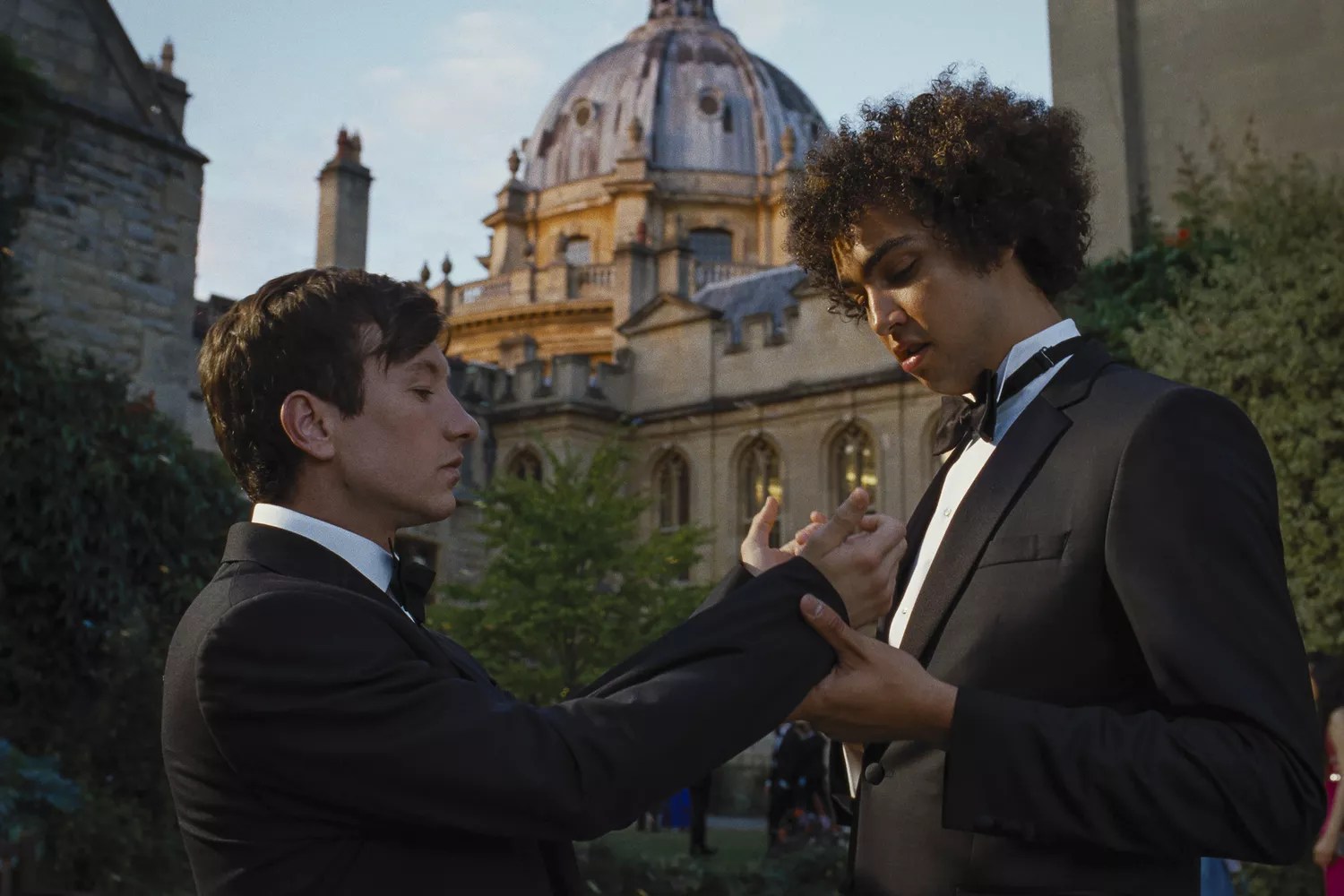
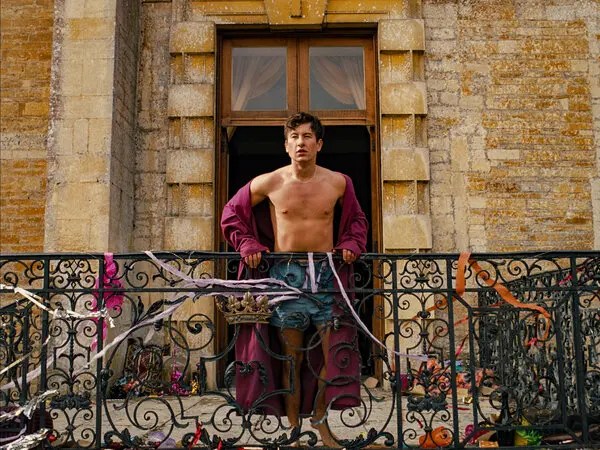
Mulligan, Grant and Pike are the reliable laughs in this cast, hitting just the right “clueless” touch here, a spectacularly tone-deaf touch there.

Fennell’s wit includes from lightly mocking the champagne swigging swells who play tennis in evening wear, bottle in hand, who nude sunbathe on the grounds — the younger generation snorting coke and the older one “planning” parties for their huge staff to actually pull-off, many of them just too polite to cope with modern mores or anyone who overstays their welcome.

Keoghan, one of the most accomplished actors of his generation (“Dunkirk,””’71,” “The Killing of a Sacred Deer,” “American Animals,” TV’s “Chernobyl”), impresses early on and turns downright dazzling in the later acts, accepting every challenge from a director prone to “Let’s just GO there” whims in this follow-up to the more focused and furious “Promising Young Woman.”

There hasn’t been much more to be said about upper class twits, filthy rich fussbudgets and entitled folk too polite and sheltered to perceive a threat in years, and Fennell doesn’t really change that.

And that “overstays its welcome” jab suits this picture to a T, as our clever filmmaker decides to linger past drop-the-mike moment and then over-explain it all in a draggy finale.

It’s the film’s sexual “daring” and its calculated shocks that stick with you more than the guessable narrative populated by assorted predators and prey.

But Keoghan — as innocent or cunning, oaf or graceful dancer-in-the-near-dark, will leave you amazed at this performance and startled at just what he was willing to do to fit in in “Saltburn” — the great house or the not-quite-great movie.

Rating: R, violence, drug abuse, “graphic nudity,” profanity and “strong sexual content

Cast: Barry Keoghan, Jacob Elordi, Alison Oliver, Archie Madekwe, Carey Mulligan, Paul Rhys, Richard E. Grant and Rosamund Pike.

Credits: Scripted and directed by Emerald Fennell. An MGM/Amazon Studios release.

Running time: 2:11

Posted in Reviews, previews, profiles and movie news | Comments Off on Movie Review: A “Talented” interloper tries to mix with the posh at “Saltburn”

Movie Review: A Scientist Wife, a brain-damaged husband and “The Portrait” that looks hauntingly familiar

There was an accident involving her husband, one that involved brain damage that has left him speechless and borderline catatonic. When we see it recreated in a flashback, we understand her loyalty, why she’s sticking with him, monitoring his symptoms, trying to trigger his memory to shock him back into speaking.

It’s not just taking those wedding vows seriously or scientific curiosity. She feels somewhat to blame.

He came from money, so that’s why they’ve come to the estate house in a small town where he grew up as the scion of the rich DuBose family.

But there’s a portrait in the attic of the great house, one so realistic it takes Sofia aback. It’s a perfect likeness of husband Alex (Ryan Kwanten). What really has Sofia (Natalia Cordova-Buckley) rattled by it is that it was a self-portrait by an infamous forebear of Alex’s, painted back in the 1930s.

And pulling the sheet covering it off the lifesize painting seems to set events in motion, as “things” start “happening” around the house — vases falling, furtive figures glimpsed in the shadows, odder-than-usual behavior from Alex.

“The Portrait” is a quiet and subtle debut feature from British director Simon Ross and British born screenwriter David Griffiths. It’s so understated and cryptic as to not quite come off,  a faintly chilling Gothic mystery with a modicum of suspense but a dearth of jolts and thrills.

A violent 1937 prologue sets up this place, this family and the subject of this portrait with a crime.

But that’s not information that Sofia has when she shows up, greeted by the caretaker (Mark-Paul Gosselaar), moving her routine with Alex — shaving, cleaning, talking to and questioning him, looking for that “one memory that could trigger” something in him — to surroundings familiar to him.

The creepy painting and things that start happening — nightmares, noises, etc,  — after she sees it don’t fit any science that Sofia understands. Hearing about the subject of that portrait, his sadism and abuse of the “wound birds” (women) he is drawn to, is more unsettling than explanatory.

Maybe the faintly sinister relative (Virginia Madsen, in fine form) who sneaks in on them has a clue.

The DuBoses, she riddles, “always come back. Even when you they don’t want us to.”

It’s all handsomely-mounted, even if the setting is rendered generic North American (female sheriff, US or Canadian style police uniforms, etc). There’s one pretty good twist involving a peripheral character, but little in the way of laying out just what’s going on here.

Cordova-Buckley (TV’s “Agents of “S.H.I.E.L.D.” and “The Mosquito Coast”) underplays Sofia’s response to the extraordinary things she thinks are happening and the rising threat level the character faces, undercutting the peril and urgency this short, slow simmer of a thriller might have produced.

“The Portrait” is a puzzle picture loses itself in that puzzle and portrait, and never quite delivers the punch that the easily-anticipated payoff should produce.

Rating:  R for violence, some sexual content, language and brief drug use.

Cast: Natalia Cordova-Buckley, Ryan Kwanten, Mark-Paul Gosselaar and Virginia Madsen.

Credits: Directed by Simon Ross, scripted by David Griffiths. A Saban release.

Running time: 1:26

Posted in Reviews, previews, profiles and movie news | Comments Off on Movie Review: A Scientist Wife, a brain-damaged husband and “The Portrait” that looks hauntingly familiar

Your Alice Walker Movie Musical Homework

Seeing the film adaptation of the stage musical based on an Alice Walker novel that Steven Spielberg filmed nearly 40 years ago, I found it helpful to remember that Taraji P, Henson can sing, and that David Alan Grier is an acting, joke-landing, singing and playing talent a par with Oscar winner Jamie Foxx.

Posted in Reviews, previews, profiles and movie news | Comments Off on Your Alice Walker Movie Musical Homework

Movie Review: A Gay Couple Lives through “Kramer vs. Kramer” with “Our Son”

“Our Son” is a child care/child custody soap opera about married gay couple who divorce and then fight over who gets primary custody of their son.

It’s a sensitively-mounted drama that bears more than a passing resemblence to “Kramer vs. Kramer.” And if “soap opera” seems a harsh way to describe “Our Son,” remember what Dustin Hoffman said when he finally got that first Oscar — “Well, the soap opera won!”

Billy Porter plays Gabriel, doting and spoiling “Poppa” to eight year-old Owen (Christopher Woodley), the one who takes him to school, picks him up, takes him to the park and reads him a bedtime story every night.

Luke Evans is husband Nicky, a small-imprint publisher who supports them in style and comfort. But as “Daddy,” he treats parenting as an afterthought. He kind of resents the kid being allowed into their bed at night, and is a little tougher about the indulged child’s upbringing.

We can see the imbalance, right from the start in this Bill Oliver (“Jonathan”) film. It’s not a subtle. But even if we can sense what’s coming, it’s a bit of a jolt.

“I’ve met somebody.”

It’s the stay-at-home father who says this, the long-unemployed actor who has devoted eight years to this boy — born via surrogacy — and kept a home in this 13 year relationship.

Although they’d talked of making theirs an “open” marriage, this is a shock to the system and abruptly ends things. Not in Nicky’s mind. He keeps hoping this can be fixed. Gabriel?

“When you live with somebody for a long time, sometimes they get on your nerves,” he explains to Owen.

“Our Son” is about these two and their escalating fight for primary custody. It’s plain that the boy prefers his Poppa. It’s just as obvious that the jilted Nicky — the film is mostly from his point of view — isn’t giving up the child without lawyers and a fight.

The best moment here might be when Nicky’s talking to his gay attorney (Robin Weigert), saying “Isn’t there anything I can do?” She wakes him up with a cold, dry slap of reality.

“No. He filed for divorce.” That’s it. Even if Gabriel’s fling turned out to be commitment-phobic, even if he’s wholly reliant on Nicky’s support, he is out of here and he wants their kid to live with him. After he gets a place. After he finds a job to pay for that place.

The film pushes each character’s grievances into the foreground, briefly, and finds each allies who support his victimhood in all this.

The story has a gentleness that plays well, and the leads click. I like the way Oliver & Co. create this gay world of (New York) dinner parties, gay lawyers and gay friends who try not to take sides.

Each character has parents (Phylicia Rashad and Kate Burton) who shake their heads and ask versions of “I hope you two know what you’re doing.”

But “soap opera” is a label that implied shallowness, and that’s another hallmark of this narrative. Gabriel’s lack of acting success and supposed lack of marketable skills can be magically solved with a connection. They’re not just a gay couple with “roles” mimicking the stoic, emotionally-stunted “father” figure and femine, nurturing “mother” with a touch of the dramatic and emotional about him.

“I, I, I ATTENDED to him,” Porter’s Gabriel huffs in tones that would make Joan Crawford proud.

They have pregnant lesbian friends and a demographically-correct pool of acquaintances in their world, which contributes to the feeling that is merely a gay variation on a tried and true divorce/custody formula.

“Sweet” and “sensitive” may win the day. But this fight over “Our Son” is a little bland and predigested, and even if that underscores the point that marriage and family and the dynamics that create dysfunction are all the same (“Open marriage” included.), that doesn’t give this affecting film much room for surprise.

Rating: R for some sexual content/nudity and (profanity).

Cast: Luke Evans, Billy Porter, Christopher Woodley, Phylicia Rashad and Kate Burton

Credits: Directed by Bill Oliver, scripted by Peter Nickowitz and Bill Oliver. A Vertical release.

Running time: 1:44

Posted in Reviews, previews, profiles and movie news | Comments Off on Movie Review: A Gay Couple Lives through “Kramer vs. Kramer” with “Our Son”

Movie Review: Hungary’s animated Oscar contender — “Four Souls of Coyote”

Hungary’s bid for Best International Feature Oscar is a lovely and poignant animated environmental parable built on Native American mythology.

Director and co-writer Áron Gauder’s “Four Souls of Coyote” would also seem like a natural contender in a very weak Best Animated Feature field, so maybe it has shots at two different Oscar nominations.

Callous capitalists in suits show up to get their pipeline built over and through a sacred mountain, “environmental assessments” be damned. A tribal elder is summoned down from that mountain to join environmentalists and Natives/First Nation people protesting to stop it.

Grandfather (Lorne Cardinal voices the English translation) proceeds to tell his family and the protestors the Story of Creation, as His People understand it.

The Old Creator (Cardinal’s voice as well), directed by the unseen Great Spirit, visits the Earth and ponders its watery state. He is delighted to meet the “first creature,” the duck (Bill Farmer), chat about the place’s possibilities, and send the duck diving for mud, which Old Creator molds into The Land, shaped like a turtle.

He molds creatures, “brothers,” to populate it, as he’s sure he and the duck will run out of things to talk about. The mighty buffalo and others will live on it. And then he makes a mountain for himself to rest on.

But four coyotes, colored red, white, blue and yellow, torment that rest with greedy gripes about having something to eat, maybe someone to mate with.

That’s when the trouble begins. “Coyote” is banished, bashed to bits and burnt in the best Wile E. Coyote fashion over the course of the story. But the clever critter keeps coming back, stealing some of the magic clay to make company for himself — humans.

“Poorly designed and weak,” they may be. But we see human babies experience the Wonders of Creation, and fed meat by the coyote as they grow up, try to ignore the sin that killing is and rationalize their hunger. And we recognize how they gain dominion over the other species, largely through the teaching and intervention of the sneaky trickster Coyote (Diontae Black).

The Old Creator envisions the “progress” that the loin-clothed humans will build, a montage from pyramids to Greek temples onward. And he’s not pleased.

The Satanic “mongrel” Coyote is even blamed for the coming of the White Man, crossing the Big Water by canoe to invite the Spaniards, and by implication, the British, to our shores.

All this is laid out to reinforce the quote that opens the picture, “Only when the last trees have died and the last fish has been caught will we realize that we cannot eat money.”

This “Coyote” tail is both connected to myth and visually reminiscent of a “Simpson’s” episode about a hallucinogenic Homer — he’s eaten the hottest chili pepper of them all — meeting his coyote spirit animal who gives him ideas about his “purpose.”

The animation here has its own color palette, which gives this the look of an Eastern European “Secret of the Kells.” Gauder (He did “Nyócker!”) & Co. have produced a festival award winner that compares favorably to some of the best animation coming out of Europe, including Cartoon Saloon, the people who made “Kells” and “Wolfwalker.”

Watching it in Hungarian (you will have other options when it goes into North American release) underscores the story’s universality and the way Native peoples in general and Native Americans in particular are seen as global guides to protecting the environment and bringing planetary ecology back into “harmony.”

Sure that’s stereotyping. But in this case, when a Hungarian film tells a universal story about how “greed” is dooming us, that stereotype becomes the iconography of change — oppressed, nature-connected people leading the short-sighted back into the light.

An Oscar nomination would earn this lovely and engrossing allegory a chance to reach a wide audience. Because most animation fans realize that another “Trolls” or “Chicken Run,” that “Super Mario Brothers” and the latest Pixar (“Elemental”) or Disney (“Wish”) misfires are not the best thing this medium has to offer in 2023.

Rating: TV-14, violence, nudity, childbirth

Cast: The voices of (English language version) Lorne Cardinal, Dionte Black, Karin Anglin, Bill farmer, Clé Bennett and Jonn Eric Bentley.

Credits: Directed by Áron Gauder. scripted by Géza Bereményi and Áron Gauder. A Juno release.

Running time: 1:46

Posted in Reviews, previews, profiles and movie news | Comments Off on Movie Review: Hungary’s animated Oscar contender — “Four Souls of Coyote”

Movie Preview: “Godzilla x Kong: The New Empire

Next year, the current state of the art of Godzilla CGI design teams up with the latest update of King Kong.

A few actors are on board, too — Rebecca Hall, Dan Stevens, Brian Tyree Henry.

Posted in Reviews, previews, profiles and movie news | Comments Off on Movie Preview: “Godzilla x Kong: The New Empire

Movie Review: Faith-based sci-fi? “The Shift”

My favorite Neil Simon play is probably “God’s Favorite,” a broad comic riff on a man tested by God…and an obnoxious family. It’s based on the Biblical “Book of Job.”

“The Shift” is a big screen sci-fi spin on that same source material, even more “loosely based” on The Book of Job. Here the faithful man (Krisoffer Polaha of lots of Christmas TV movies) isn’t all that faithful and is tested by Satan, not God, and not Satan bickering with the Almighty over punishing this most faithful servant to see how much he’d take before renouncing or at least rethinking his devout faith.

That’s the theology of writer-director Brock Heasley’s debut feature. The science fiction is a “Looper,” “Jumper” variation, with “the multiverse” referenced and multiverse style “shifting” of our hero from one “life’s choices” timeline to another, struggling to find the version of the wife (Eliabeth Tabish) he left behind or who left him who might take him back. Or even remember him.

It’s tricky and ambitious for a debut feature, and while there’s no shame is your grasp exceeding your reach, this “multiverse” faith-based film comes off as ponderous, glum and muddled. Much more accomplished directors have trouble keeping all the “timeline” nonsense straight and keeping the story compelling, and Heasley just doesn’t.

There’s all this exposition, trying to “explain” how this all happened and happens, weighing down the narrative. The “shifting” and “Deviators” and Vica Vision cinemas where characters glimpse at multiverses that might have alternate versions of themselves are practically sleep-inducing.

But Heasley scored the minute he got veteran heavy Neal McDonaugh to sign on the dotted line. The “Minority Report,” “Proud Mary” and “Yellowstone” alumnus brings the evil as “The Benefactor,” a Luciferish figure who torments our hero, Kevin, and wants recognition for being God’s equal in every way, and at every point.

The story opens with a downbeat “meet cute” in a bar. Kevin’s been sober for years, and losing his job in the Bear Stearns Bush Era economic collapse has him about to ditch his AA coin and sip a beer. Molly (Tabish) comes up, “on a dare” and flirts.

The scene has a montage or two of them thinking ahead, through the life they’ll have together, her pregnancy, etc. But it’s not sweet, well-written or romantically-played.

Next thing we know, they’re married, Kevin’s about to lose another job and then he’s in a car wreck. The last guy you want to see as you awaken out of the fog in a city that’s seemingly been emptied of people is the Face of Satan — aka, our “Benefactor,” McDonaugh.

The people? “They didn’t go anywhere. You did.”

“I’m here to help you, offer you a job.”

The Benefactor needs a “shifter,” for reasons that aren’t terribly clear. The Benefactor manipulates lives and folks in various timelines, sewing “chaos” with all this jumping people about, disrupting their happiness and overwhelming their faith via the multiverse.

Yes. As we all suspected. Satan is ALL about the multiverses.

It’s a somewhat cumbersome, comic book way of explaining in “The Devil Did It” terms how “I don’t know who you are anymore” happens in a relationship.

Kevin fends Old “Benefactor” Scratch off with a prayer, and next thing we know, he’s in a hellscape of a future city, going under another name, “infamous” for the “illegal” prayer he used to save his skin, typing away his memories of banned “scriptures” and befriending an ally named Gabriel (Sean Astin).

Posters of The Benefactor bill him as the Guy in Charge, “Unseen. Ever Present.”

And when that Benefactor comes back, he expects to find and finally corrupt Kevin, who only wants to get back to his wife, his life and maybe even bring back the little boy they lost through, they figure, Satanic intervention.

Continue reading
Posted in Reviews, previews, profiles and movie news | Comments Off on Movie Review: Faith-based sci-fi? “The Shift”

Movie Review: In this Puzzle Picture, Everybody Has a Different Idea of Who the “Monster” Is

The puzzle has many solutions, most or even all of them “wrong.”

We’re asked to weigh abuse and bullying, gossip, guilt, grief and pathology, all told via five different points of view.

And whatever the viewer decides, on the screen all anyone cares about is the answer to a question posed by a childhood game — “Who’s the ‘Monster?'”

The latest film from Japanese filmmaker Kore-eda Hirokazu is a return to his “Shoplifters” form. It’s a densely-detailed character study that could pass for a cultural dissertation, a story of a school, a “problem” child, a concerned parent, an accused teacher and an “inhuman,” grief and guilt-stricken principal.

Sakura Ando of “Shoplifters” plays a widowed dry-cleaner raising fifth grader Minato (Soya Kurkawa) by herself. She dotes and indulges her sometimes dangerously impulsive boy, dealing with his questions about his dead father (they celebrate his birthday with a cake and a prayer) and wondering what happened to one of his shoes, where this or that bruise came from and where he got the idea that kids could have “pig’s brains.”

Jumping out of her moving car is the last straw.

“Are you being bullied?” she wants to know (in Japanese with English subtitles)? Is it this or that classmate whose name she’s heard? Or is it the teacher, Mr. Hori?

When she settles on Hori as prime suspect, Saori finds herself “handled” by a school, a system and a culture that practices conflict avoidance, not conflict resolution. The principal flees. A “guardian” council of male teachers meet, gang up on her and do a lot of bowing as they hear her out and dodge her questions.

Did he hit my son?

“We have confirmed that there was…contact between the teacher’s hand and Minato’s nose.”

A non-apology apology from this oddball teacher (Eita Nagayama) and rank lying and unemotional deflecting are all she gets from the principal (Yûko Tanaka). But behind the scenes, they scramble to cover this up and get rid of the teacher, who seems increasingly-unhinged in his dealings with the kid.

Then the story shifts to Mr. Hori’s point of view, and things take on a different tone. We soon see another viewpoint from Minato’s smaller pal from school (Hinata Hiiragi), whom mother Saori met and interrogated and whose hard-drinking, bullying single-dad (Akihiro Kakuta) Mr. Hiro unpleasantly encountered during his efforts to clear his name.

And we drift into the gutted despair of the grieving principal’s life, catching behind-the-scenes manouvering at the school as the faculty attempt to CYA and spare the institution punishment from above and spare the boy, who if he is labeled a “bully” will never be able to transfer into another school.

“Parents,” they all gripe. “They’re more trouble than the kids these days.”

But Mr. Hori’s problems, which escalate into media coverage and a fiance who ditches him over it, are the furthest from everyone’s mind save for his.

Continue reading
Posted in Reviews, previews, profiles and movie news | Comments Off on Movie Review: In this Puzzle Picture, Everybody Has a Different Idea of Who the “Monster” Is

Movie Review: “Lady Ballers” got no game

A groaning 110 minutes of agenda in search of a laugh, “Lady Ballers” is an “anti-woke” transphobic comedy from the conservative media site Daily Wire. An impotent exercise in attempted “punching down” at the groups hate groups love to hate, it’s a litmus test laugher for fellow travelers.

If you’re laughing, it’s just that they’re hating on the same people you hate on. Because it’s not funny. It’s just ugly.

Even easy eye-rollers — jabs at the overload of “woke” signage in the yards of people who hug, the endlessly-expanding acronyms of “gender fluidity” — pass by as one swing-and-a-miss after another as a cast of little-known-for-a-reasons are put through their paces by a star/director who’s a sort of Charlie Day without the charm working with a script that wouldn’t pass make it past Monday as an “SNL” sketch in the writer’s room.

Remember that movie Johnny Knoxville made about crashing the Special Olympics? It’s a LOT like “The Ringer,” only not as subtle, tolerant and um, high-minded.

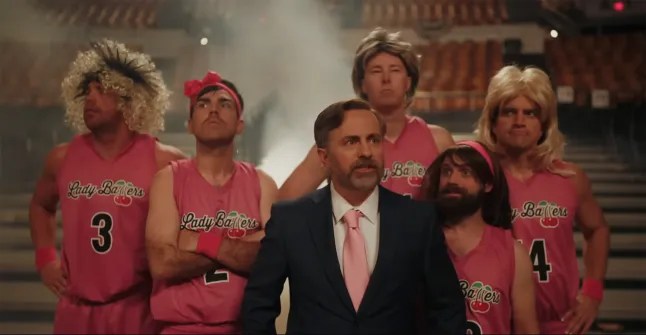
Daily Wire impressario Jeremy Boreing directed this first-ever Daily Wire film and stars as Coach Rob, a Greater Nashville high school hoops coach who won a string of state titles in the early 2000s. But today, he’s reduced to rec center coaching, making “Don’t steal my catalytic converter” jokes to the Black kids (all the “teens” in this look like 30somethings) who won’t turn off their cell phones to hear him out.

“I stayed the same and the world changed,” he complains. Yes, even that’s stunningly unoriginal.

He’s split from his wife (Lexie Contursi) and losing control of his daughter.

“How do you even KNOW the word ‘transphobic?'”

“I’m EIGHT YEARS OLD.”

Teachers are a target here, including the one mocked for wearing a mask when Neanderthal Rob picks up Winnie from elementary school. Other slated for contempt?

“I hear Disney’s going to make the new Snow White a neurodivergent lesbian...”

“Neurodivergent BLACK lesbian,” his former player Alex (Daniel Considine) counters.

Getting canned from the rec center for racially insensitive remarks (In Bill Lee’s Tennessee? Perish the thought.) means that no-other-skills-Rob is reduced to taking a waitress job at the drag diner The Doll House. That’s where Alex wound up.

And seeing how good a shape Alex is in, and hearing of some oddball non-Olympic gender-rules-fluid “games” paying out cash prizes has Rob train Alex and take him to a heptathlon competition in his wig and balloon breasts. The joke is that the organizers, and the martinet accepting his/her entry, are so “woke” that no one dares question this giant man entering a women’s sporting event.

“Get out there. Beat those chicks!”

Getting away with that, the prize money and a Bud Light sponsorship — “They’ll give that s–t to any dude in a dress!” — gives Rob the idea of “getting the team back together.” So they round up the siblings who went on to sell used cars (Jake Crain, Blain Crain), the nut who became a survivalist (David Cone) and the towel boy they all bullied, who’s perfectly comfortable changing his “slave name” Felix to “SHE-lix”(Tyler Fisher) as they bowl over the best women’s basketball teams in an America that will “tolerate” no blowback for the idea of tall, lumbering men playing a women’s game.

A venal, unethical and stupid TV reporter (Billie Rae Brandt) conspires with Rob to make them a cause celebre. She’ll win a “Pulitzer” for that. They don’t hand those out for TV airheads, dear.

“I’m a JOURNALIST. I literally cannot be shamed!”

And on and on it goes, saying conservatism’s war-on-women/hatred for gay-transgender quiet parts out loud ad nauseum.

Want to be a woman? “Just shave your legs. Tell each other how ‘brave’ you are for things that require no physical courage. And don’t be afraid to cry at work. Easy peasy.”

No patronizing father/little girl talk in the third act about how women “civilize men” can unring that bell of utter bile.

Continue reading
Posted in Reviews, previews, profiles and movie news | Comments Off on Movie Review: “Lady Ballers” got no game

Netflixable? “Chicken Run: Dawn of the Nugget” loses the pluck

Well, God and Gromit bless Netflix for signing checks and putting Aardman Animations on the task of serving up fresh stop-motion animated whimsy for us all.

But “fresh” doesn’t really figure in their laugh-starved, half-hearted sequel to 2000’s “Chicken Run.” That movie’s twee delights are sorely missed in “Chicken Run: Dawn of the Nugget,” another chickens-take-on-Big-Poultry action comedy.

They’ve recast the voice leads of the first film, with Mel Gibson and Julie Sawahla replaced by Thandiwie Newton and Zachary Levi. And instead of the first film’s plucky riff on British WWII POW escape pictures like “The Colditz Story” and “The Great Escape” we get a gadgety spoof of “Mission: Impossible.”

While those changes aren’t deal breakers, they do portend a picture that lacks the verbal and visual wit, the spark and the edge that made the original film a classic.

Directed by Sam Fell (“Flushed Away,” “ParaNorman”) and scripted by “Chicken Run” alumni Karey Kirtkpatrick and John O’Ferrell, with “Adult Life Skills” writer-director Rachel Tunnard brought in to jolt the jokes, it never quite finds its footing or manages to string together sight gags that made the original film cluck along.

Leader-of-chickens Ginger (Newton) and blowhard/big-talker Rocky (Levi) hatch their daughter Molly on the idyllic, uninhabited and KFC-free lake island paradise they settled on when they and their entire chicken farm flew the coop all those years ago.

But idyllic chicken village aside, Molly (Bella Ramsey) longs to see the big wide world. When a massive new operation, Fun-Land Farms, sets up shop across the lake, brave Ginger advises they all hide. Tweenage Molly makes a break for it to see for herself.

She hooks up with a ditz named Frizzle (Josie Sedgwick-Davies) who is determined to get into “the happy chicken truck” to Funland, and next thing they know, they are in the truck and processed into the candy-colored theme park of a poultry farm.

This “farm” seems idyllic, until they notice the way everything looks like a stage set, all the chickens are wearing control collars and they spend their day frolicking on slides and gorging themselves on the feed.

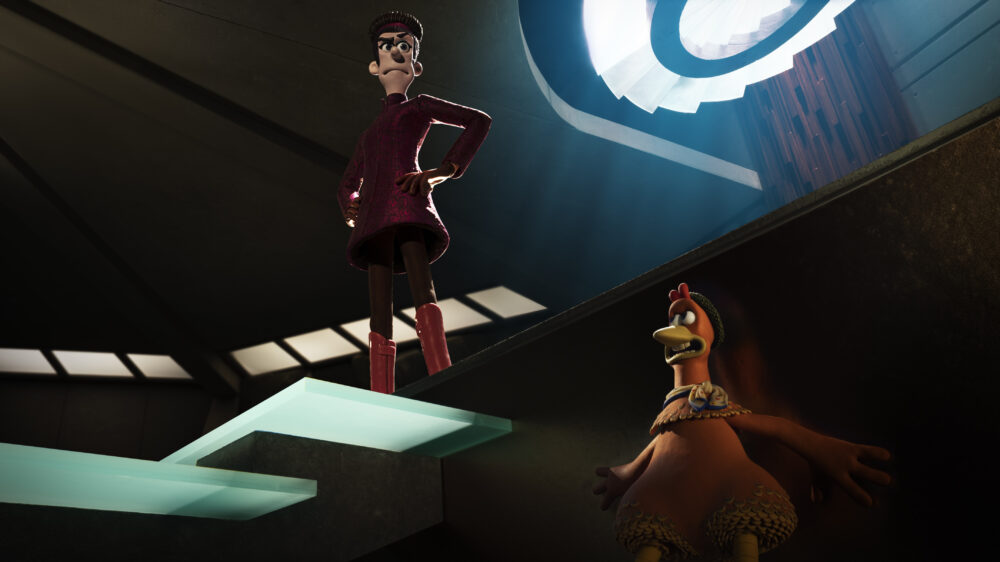
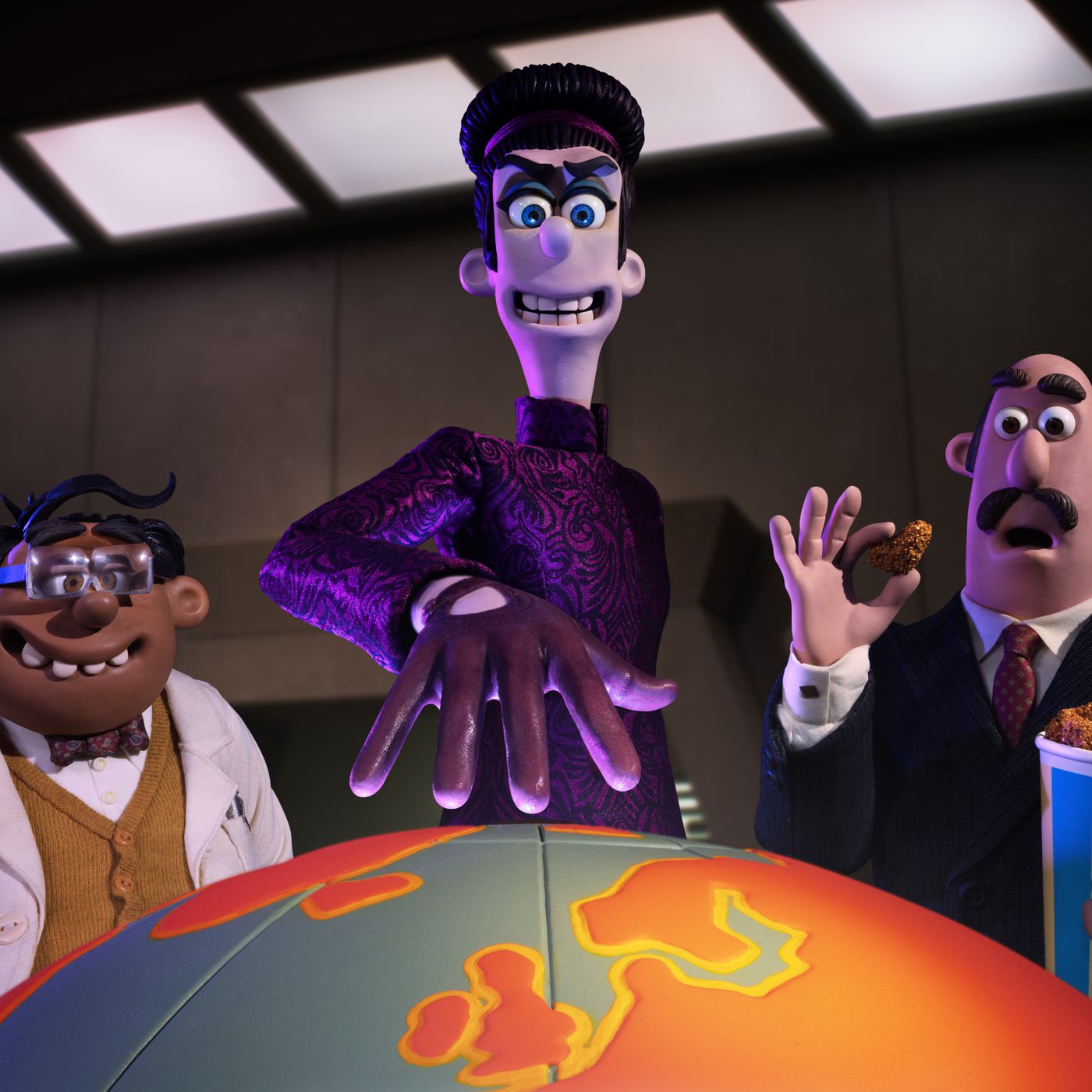
And the two can’t help but notice the Bond villain lair where the humans in charge, Dr. Fry (Nick Mohammed) and his wife, our old nemesis Mrs. Tweedy (Miranda Richardson) manipulate one and all in pursuit of the perfect place to raise and produce chicken nuggets.

Ginger, Rocky, Fowler (David Bradley), Babs (Jane Horrocks) and Bunty (Imelda Staunton) and their scavenger rat-pals (Romesh Ranganathan and Daniel Mays) conspire to “This time, we break IN” and free Molly.

Part of the charm of the films from this very British studio (“Shaun the Sheep” and “Wallace and Gromit”) has always been the oddly English world and worldview they capture and the quirky accents — Scots and Scouse and what have you — that the characters speak in. It makes the zingers quirkier.

“It’s GO time!”

“Oh, it’s all right. I went before we left.”

Levi has little funny to say and seems to have been cast because he can sound vaguely like Mel Gibson at 40. Newton’s playing the straight-woman here, and whatever sight gags the character experiences, it’s the “message” of the movie that Ginger must convey.

“Just because where we live is cut off from the world doesn’t mean we are too” is as nice a slap at Brexit as any animated film will ever manage.

But the most colorful, twinkly voices here belong to Horrocks, Staunton, Mays and the versatile Peter Serafinowicz as a poultry restaurateur.

The animation has a stop-motion with CGI-smoothed-out feel which makes this look more like “Flushed Away” than “Chicken Run.”

Which is to say there’s nothing here that’s actually bad. But every element is measurably inferior to the original film — plot, jokes, sight gags (a clever optical eye-scanner joke lands), voices and design.

Love Aardman. Glad Netflix helps keep their lights on. But let’s hope they can rediscover the DIY hand-made whimsy that made them famous next time out.

Rating: PG, the odd rude Britishism

Cast: The voices of Thandiwie Newton, Zachary Levi, Imelda Staunton, Bella Ramsey, Nick Mohammed, Jane Horrocks, Romesh Ranganathan, Daniel Mays, Peter Serafinowicz and Miranda Richardson.

Credits: Directed by Sam Fell, scripted by Karey Kirkpatrick, John O’Farrell and Rachel Tunnard. An Aardman film, a Netflix release.

Running time: 1:41

Posted in Reviews, previews, profiles and movie news | Comments Off on Netflixable? “Chicken Run: Dawn of the Nugget” loses the pluck