
This fantastical immigration farce written, directed by and starring Torres, finally has a March theatrical and streaming release date.
A24 has been sitting on it for a bit, despite rapturous festival reviews.
March 1. Check it out.
This fantastical immigration farce written, directed by and starring Torres, finally has a March theatrical and streaming release date.
A24 has been sitting on it for a bit, despite rapturous festival reviews.
March 1. Check it out.
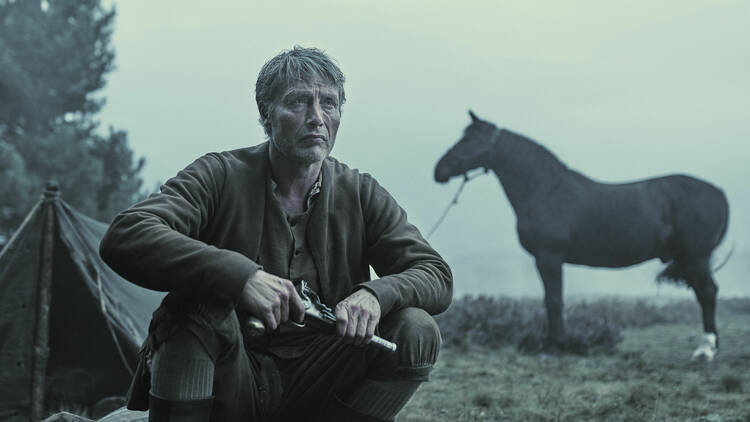
“The Promised Land” is a “troubles on the farm” thriller, with a lone stoic battling the elements, greedy nobles and the sandy, infertile soil itself in an effort to tame the place and make his fortune.
It’s “Places in the Heart,” “The Southerner” and “Shane” in Danish, with iconic Danish star Mads Mikkelsen as the stubborn army captain who will not be uprooted, even if the land literally repels those roots.
Danish novelist Ida Jessen imagined uninhabited 18th century Jutland, a vast, sandy and under-inhabited heath in the western third of her homeland, as Denmark’s Old West for her historical novel “The Captain and Anna Barbara.”
Director Nikolaj Arcel recovers from the debacle of “The Dark Tower” to give us a beautiful but unsentimental genre picture with all the elements of the formula for such films served in their proper doses.
Mikkelsen plays Captain Ludvig von Kahlen, perhaps the bastard son of a nobleman who spent his life fighting for the German army. In the 1750s, he’s returned to Denmark after 25 years of service, seeking an audience with the king because he has some notion of making Frederik V’s fondest wish come true.
An army surveyor raised by a gardener, he will settle the infertile sandscape of Jutland, start a colony there of German farmers, and make it pay off.
“All soil can be cultivated,” he declares (in Danish with English subtitles). And he won’t listen to the huffing of bureaucrats and nobles who insist “better men than you have tried and failed.”
He rides out alone, takes core sample after core sample to try and find some patch that will support a crop. He then builds his “King’s House” on The King’s Land, and hires a couple of runaway serfs (Amanda Collin and Morten Hee Andersen) to make his start.
But there’s a sinister, titled fop who claims that land. And as he’s inherited not just an estate, but a judgeship in the region, Frederik de Schickel (Simon Bennebjerg) is ideally placed to stop the “bastard” son from succeeding.
The way de Schickel freely admits he added the “de” to his name to sound more royal and insults the poverty, uniform and everything else about the captain suggests the depth of his fear and resentment of this man who would be his social equal if he pulls this feat off.
Essentially, Bennebjerg has the Alan Rickman/Richard E. Grant role in this parable. He’s hatefully good in the part, playing a sadist who rapes servants and has been bribed to marry his Norwegian cousin (Kristine Kujath Thorp) to keep all the money in that gene line.
Denmarks’s official submission for Best International Feature in the 96th Academy Awards even gives us a “tater,” a “darkling,” the smart-mouthed Anmai Mus (Melina Hagberg) who runs with the thieving bands who roam the moors as an outlaw class. The captain takes her in, reluctantly, after she leads him to her clan, which he hopes to turn into a workforce.
But being dark skinned, she is “bad luck” to the Germanic Danes he wants to help him colonize this forbidding land.
Mikkelsen is well-cast as the guarded man of few words single-mindedly-pursuing land and the “set for life” noble title that he feels are his due.
“God put man on Earth to make civilization,” he tells the local priest (Gustav Lindh), his only ally. With the king’s backing, he is sure of success. But de Schickel is the law here, and the unreachable, alcoholic (it is suggested) king has no idea he exists.
Still, Kahlen refuses to take Schickel’s bait, won’t be goaded into fighting Schickel’s hired army officer goon (Olaf Højgaard) and resists the temptations of the unhappy cousin who has no interest in marrying the sadistic Schickel, whom the captain refuses to address as “de Schickel.”
But as sabotage is added to the myriad other challenges our intrepid frontiersman/farmer faces, as blood is shed and indignities pile up, we know a reckoning is coming.
The narrative sticks closely enough to historical events to feel believable and realistic. The setting is striking and the period detail ensures that we’re immersed in this hardscrabble world where being sentimnental about a goat, a woman or a child is a luxury our grim hero can ill afford.
It won’t hold many surprises for anyone who’s ever seen a Western or a movie Alan Rickman sneered his way through. But “The Promised Land,” with its themes of futilely fighting a “rigged” system to change one’s status, with dubious rewards even if you win, makes a most worthy saga, even without the sagebrush.

Rating: R, bloody violence, sex, profanity
Cast: Mads Mikkelsen, Amanda Collin, Gustav Lindh, Kristine Kujath Thorp, Melina Hagberg and
Simon Bennebjerg
Credits: Directed by Nikolaj Arcel, scripted by Anders Thomas Jensen and Nikolaj Arcel, based on the novel by Ida Jessen. A Magnolia release.
Running time: 2:07
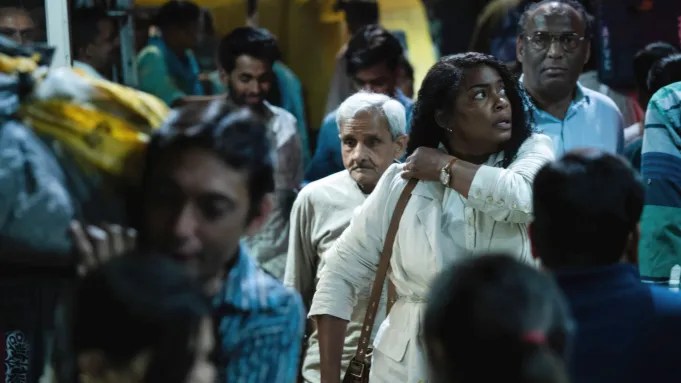
“Origin” is an important film, a movie that attempts to tie — in intellectual terms — the oppression and enslavement of Africans in the Americas with the persecution of Jews in Nazi Germany and the immobility of India’s “untouchable” “caste” system.
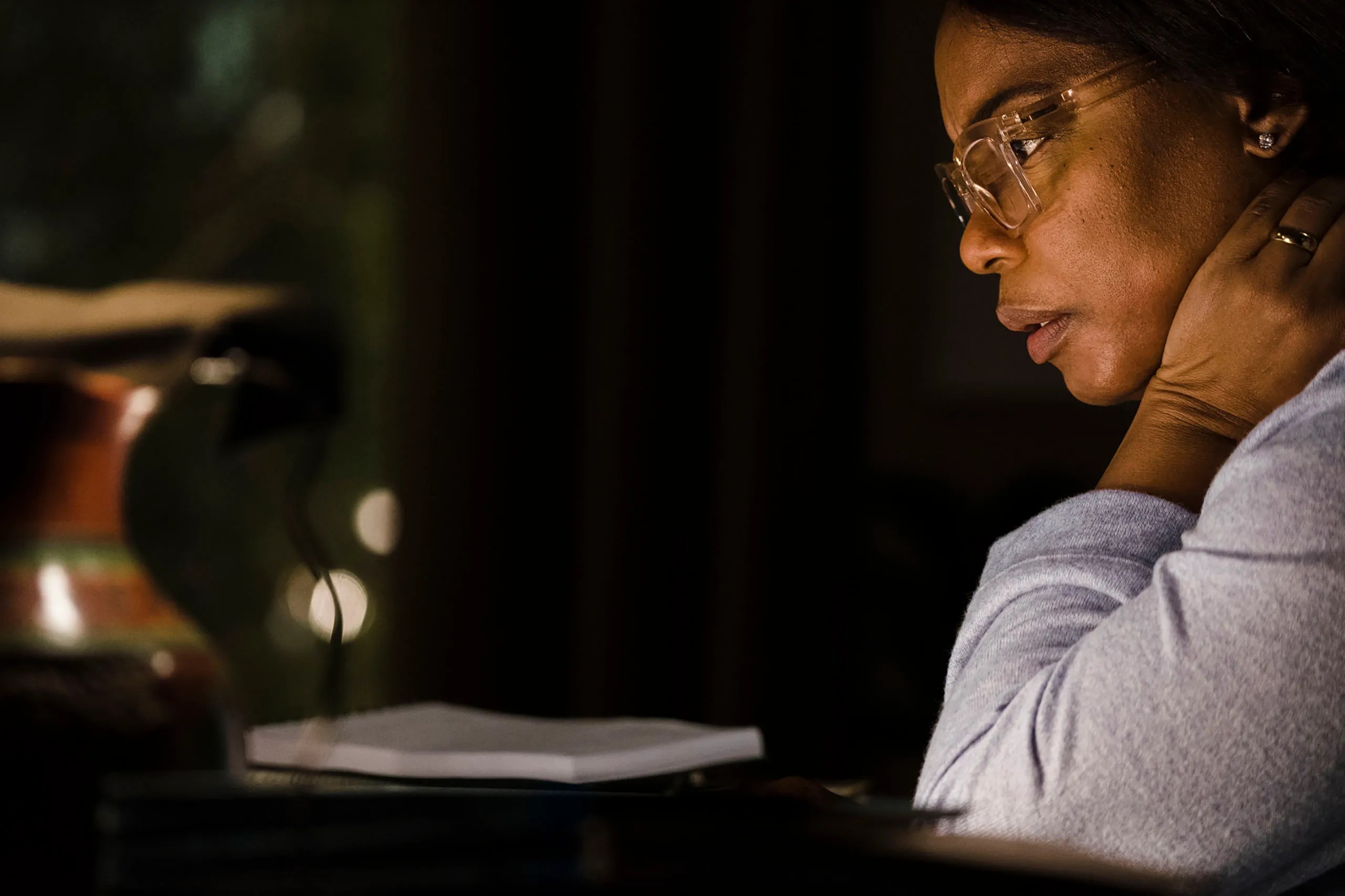
It’s a “writer’s journey” tale about a Pulitzer-prize-winning American journalist and non-fiction writer Isabel Wilkerson’s efforts to understand why “racism” is “the primary language to understand everything” about American racial inequality, and her realization that the term “racism” is “inadequate” in that role.
“Caste” was the key, she came to believe, and she turned that thesis and exploration into a best seller — “Caste: The Origins of our Discontents” — which came out just as the 2020 presidential election was entering its crucial last weeks.
There’s no dishonor in writer-director Ava Duvernay’s reach exceeding her grasp with this big, broad and meaningful subject. Her movie meanders when it’s meant to sprawl and drifts between melodramatic — Wilkerson’s personal tragedies informing the book as she began it — and pedantic even when it’s at its most moving.
Duvernay, who has held most every position and job one can collect a check for on film and TV sets, and who directed “Selma” and “A Wrinkle in Time,” remains a better producer than director, even if what this picture sorely lacks is a producer who tells the director what to trim, tighten, streamline and emphasize.
But she’s made her “Malcolm X,” a quest story about the search for that curse that ties so much human misery together, the need to segregate, isolate, stigmatize and demonize in order to create a hierarchy to one group’s advantage and many others’ disadvantage.
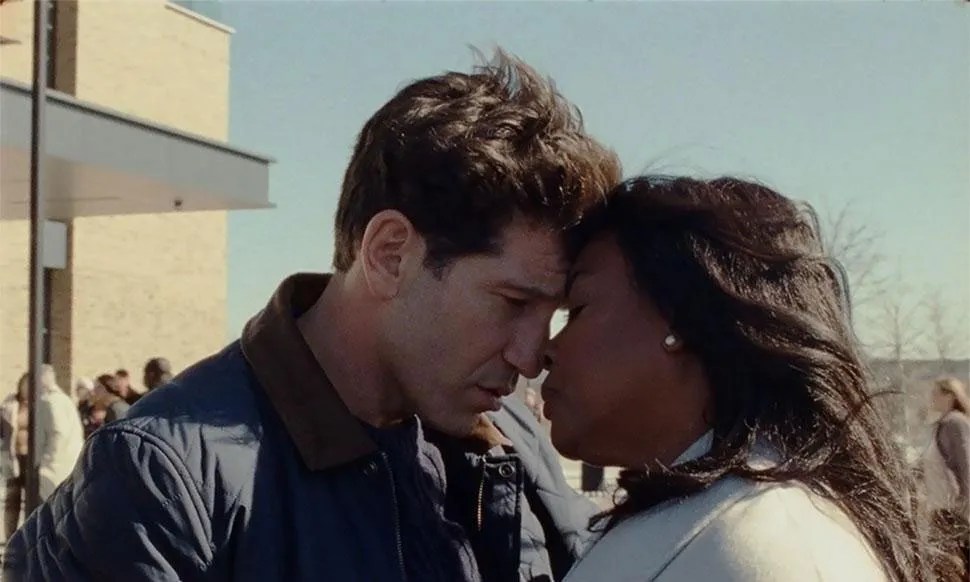
We meet Wilkerson, played by Aunjanue Ellis-Taylor of “King Richard” and “The Color Purple,” as she makes the social scene in Washington with her doting husband Brett (Jon Bernthal), celebrating her latest book on America’s “Great Migration” of African Americans from the Jim Crow South to opportunity and new challenges in the North and West.
But she’s buttonholed by a newspaper editor (Blair Underwood) who insists she needs to write something about the Trayvon Martin case, which has just happened. Even as she recognizes the legacy of lynching, the violence of police towards African Americans and “Nazi symbolism all over the place” in the U.S., Wilkerson resists this story.
“I don’t do assignments any more,” she says. She doesn’t want to merely “report” a story, but the “be inside the story.” That takes a book.
She mulls over the “connective tissue” she starts to see in racism, anti-Semitism and the “caste” system that sentenced one group, the “Dalit” “untouchables” of India, to permanent degradation and servitude.
As Wilkerson does, tragedy strikes her life and makes her ponder the weight of racism and undersclass status on her accomplished mother (Emily Yancy), an educated Black woman “married to a Tuskegee Airman” who can’t stop herself from fretting that young Trayvon Martin didn’t answer “that man right,” blaming an innocent young Black victim for his own death.
Wilkerson also marvels at the white husband who left his “caste” behind to marry her.
With her editor’s (Vera Farmiga) backing, Wilkerson travels to Germany and India, following in the footsteps of Black researchers Allison and Elizabeth Davis (Isha Blaaker, Jasmine Cephas Jones), anthropologists doing research in Germany just as the Nazis took over.
The Nazis, Wilkerson and others note, studied American Jim Crow laws in order to make The Holocaust possible. Thus, the Davis’s book “Deep South” becomes one of the cornerstones of Wilkerson’s own work.
She travels to India to learn from academics following in the footsteps of B.R. Ambedkar, the Dalit caste Indian who studied in Bombay, London and New York, an economist who wrote and agitated about the injustice of India’s caste system and who had a hand in writing India’s constitution.
Wilkerson takes lessons from her own family (Niecy Nash plays her closest cousin) about racial faultlines and “race-mixing” in marriages, and from a MAGA-capped plumber (Nick Offerman) whom she tries to establish a human connection with.
Continue readingWith only her fading cell phone and an emergency operator to save her.
Jan. 26, we’ll see how this turns out.

There are few things a working critic dreads more these days than the prospect of reviewing a two hour long+ movie on the Yugo of movie streaming providers, Indee.TV.
I have two movies to get through today, both falling on that blighted server’s tech, both of them failing to play. I change browers, Internet providers, resolution that the film is screened in, it’ll play a few minutes and then mysteriously quit.
I started the process last night, with dread. Because when you see it’s in Indee.tv, you know it’s going to eat up a whole day just trying to get them to get their end right.
Their many work-arounds — they’re used to all these complaints becauses it is the glitchiest, most unreliable service a film distributor can use to send previews of its movies — mean I have to re-log in on every site I use on a daily basis, trying to reset to this or that “mode” just to get Indee.tv to work.
So my apologies to Neon and Magnolia, but I’m not getting to two very promising, very LONG titles today because today, as always, Indee.TV sucks.



Chinese-Singaporean filmmaker Anthony Chen lets us in on his favorite films from film school with “The Breaking Ice,” a Chinese love triangle redolent in images, themes and situations of The French New Wave.
There are references to Truffaut’s “Jules et Jim” and Goddard’s “Bande à part” in this story of lost souls that find each other in a wintry corner of China with a unique place in Chinese life.
Korean culture, cinema and TV interest enough Chinese that there are tourists who flock to Yanji on the North Korean border, a Chinese-established prefecture for Koreans who have immigrated there. It was meant to be as Korean as China would allow.
Haofeng (Haoran Liu) is a sad introvert who has come there for a Korean wedding.
Nana (Dongyu Zhou) is a tour guide, leading the curious travelers around “traditional” Korean village recreations, into Korean restaurants and shops, all with an idea of introducing them to a (past) Korean culture that existed before Korea was divided, and without the necessity of isolationist North Korea opening its borders to tourism from its fellow authoritarian state.
And Han Xiao (Chuxiao Qu) is a cook at one of those Korean eateries. He’s sweet on the petite pixie Nana, but she’s a brittle soul, seemingly-resigned to this grueling work of standing and walking and grinning to strangers.
“Whether I like it or not, I have to do it” is how she sums that up, in Mandarin with English subtitles. She lightly mocks Xiao for his affection and puts him down to Haofeng by insulting his “mediocre” cooking.
Everybody has a secret or not so secret desire. Everyone is wallowing in quiet desperation. They are, in a way, as trapped as a local fugitive (Ruguang Wei), whose “wanted” poster is everywhere, thanks to a series of snatch-and-run thefts.
Haofeng loses his phone, the one he’s been mumbling “Wrong number” into every time his mental health clinic calls to try and reschedule his missed appointment. Haofeng tells strangers at the wedding and his two new acquaintances that he’s in “finance” and from “Shanghai.” The always-calling clinic is in Pujiang, a long way from Shanghai.
The three are brought together because she takes pity on the tourist with the lost phone (no access to money or the world without that) and introduces “handsome” but “always frowning” Haofeng to her not-quite-suitor Xiao. But they’re really drawn together the way lost souls always find their own in the movies, especially those from the French New Wave.
They chat and drink, sing karaoke and pub-crawl. But there’s something about the forlourn way she looks at skaters on a local lake, something in the way the cook describes never having “been anywhere,” and something in Haofeng’s despairing, clumsy courtship of Nana that suggests a world of hurt in which any one of the three could jump off a roof or cliff, wander off into the snow or drive into oncoming traffic.
Chen (“Wet Season” was his previous film) has made a movie of familiar themes and recognizable antecedents. But he offsets that by dropping us into an alien world so disorienting that little here neatly fits into a narrative box.
The characters can wander up to the Yalu River and shout across it at North Korea. They can pass checkpoints to go see a legendary lake in the bordering Changbai Mountains, a trio emotionally out of their depth soon literally out of their snow depth. And they can dare each other to see who can “steal the biggest book” from a bookstore they impulsively visit, “wanted” posters in a surveillance state be damned.
Chen adapts his characters from their New Wave or wherever origins to this world and lets the viewer peel away their mysteries, but he doesn’t give us pat answers about how they will face their respective fates.
“The Breaking Ice” thus becomes an obscure parable about belonging and connecting in a crowded, impersonal world, connections that are necessary for our well-being and are all the more difficult to make when we’re all uprooted from our past and rendered remote from human interaction right up to that moment we lose our all-important/all-demanding cell phones.

Rating: unrated, sex, some nudity
Cast: Dongyu Zhou, Haoran Liu and Chuxiao Qu
Credits: Scripted and directed by Anthony Chen. A Strand release.
Running time: 1:40
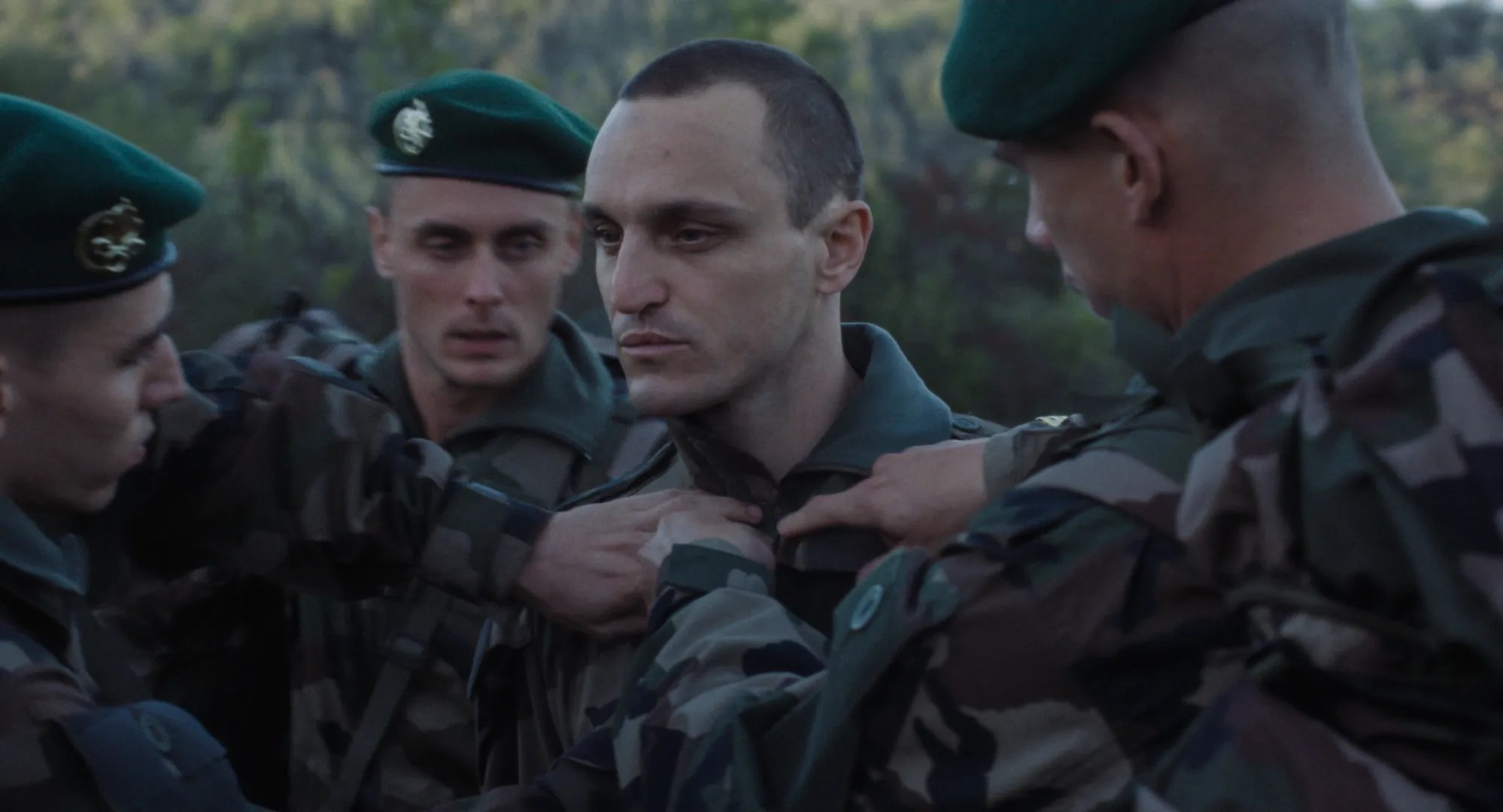
A young Belarusian immigrant finds himself questioning his “deal” with the French Foreign Legion — enlistment and service in exchange for citizenship — after a particularly brutal combat encounter in “Disco Boy,” a dreamy Immigrant’s Experience Odyssey from writer-director Giacomo Abbruzzese.
Abbruzzese, a documentary filmmaker making his fictional feature debut, tells a story of outsider struggle and a sort of shared victimhood between the Belarusian who joins the Legion for citizenship in a better country with the promise of a better life, and a young man from Niger who sees his country and people still exploited by its former colonial masters, who are all European and often French.
Our tale takes two young men, Alex and Mikhail, from their wily escape from Belarus through Poland to France. Only one survives. His journey is a terrible trial and takes days. At the end of it, his easy pass into French life is joining the Foreign Legion, a largely-immigrant force that trades fighting service for citizenship and “a new life.”
Alex will be tested by the usual boot camp ordeals. And he will come to question the entire bargain when he’s sent as part of an elite team that must ignore the other horrors of a conflict zone and only rescue the French hostages who are their mission.
Alex (Franz Rogowksi) is destined to run afoul of Jomo (Morr Ndiaye), a young African revolutionary fighting in the Niger River Delta, whose group kidnaps French oil workers and others to draw the world’s attention to their plight via foreign media coverage. And if Alex and Jomo must tangle, Jomo’s sister Udoka (Laetitia Ky) is sure to be drawn into this conflict.
Abbruzzese serves up revolutionary PR and messaging — “performing” for an American (Vice) TV reporter — and gives us vivid first-person combat experience, commandos with radio coms and night-vision fighting gear who find themselves in a shootout with river rebels in the dark, with Alex fighting to the death with one foe seen only in a heat signature.
And we see the tribal life, ritual dances and African world interrupted by the intrusion of foreigners and their lust for oil.
It’s a somewhat unfocused narrative, relying on music and “disco” dance as a bonding device, one of a few novel touches in a story that’s all-too-familiar, with the Croatian-French drill instructor (Leon Lucev) being the one novelty in the boot-camp-to-combat film formula.
Their sergeant leads the men in “No Je ne regrette rien” as a marching song. That and the cryptic, curative dance-off finale break free of the cliches of the genre just enough to make “Disco Boy” worth taking in.

Rating: unrated, violence, nudity, profanity
Cast: Franz Rogowski, Morr Ndiaye, Leon Lucev, Michal Balicki and Laetitia Ky
Credits: Scripted and directed by Giacomo Abbruzzese. A Charades release.
Running time: 1:38
This looks lovely, affectionate and nostalgic. Speaking as someone who was a celluloid projectionist in college and a cinema critic pretty much ever since, I mean.



There are worse ideas than resetting “Alice” of ”Through the Looking Glass/in Wonderland” fame as a culinary horror comedy about cooking for vampires. Any non-vampire sucked into that world is going to have it “explained” to her the way so much had to be shown, introduced or explained to Lewis Carroll’s heroine, after all.
But “Alice and the Vampire Queen” is a lumbering, stumbling affair, a cute idea in search of the pacing, pulse-pounding suspense and punchlines that might have made it come off.
Writer-director Dan Lantz introduces us to a beaten-down Alice (Shelby Hightower), an abused ex-con chef who can’t even hold a job at a greasy spoon, offered the chance to make steak tartare and its fresh-kill variations for Dinners with the Vampire queen (Brenna Carnuccio) and her “court.”
The picture takes too long to set up, and a bit longer than we’d like to “make the sale,” arm-twisting Alice into this new gig.
“You can either make the meal, or be the meal” is understood, even if Lantz figures it needs to be said in this tiresome telling.
“Cooking for bloodsuckers” will be tricky, she’s warned by her human “head hunter,” Charles (Graham Wolfe). She’ll have to hold back her revulsion, which isn’t that hard to do thanks to a gruesome past she and Charles know about. And she’ll have to train her assistant chef, creepy Gordon (Chris James Bolan), who doesn’t appear to know what a “sous-chef” is.
“Like, an Indian?”
The vampire “court” is colorful…ish. The venue, complete with blood-letting floor-shows, almost passes muster.
But the poor pacing means that even characters that might have clicked, come-uppance scenes that should have paid-off and jokes that should have landed don’t.
This Dinner with Vampires is a few courses short of being a meal.

Rating: unrated, gory violence, profanity
Cast: Shelby Hightower, Graham Wolfe, Brenna Carnuccio, Rachel Aspen, Xavier Michael, Chris James Bolan, Aaron Dalla Villa and Danielle Muehlen.
Credits: Scripted and directed by Dan Lantz. A Breaking Glass release.
Running time: 1:31
Anjana Vasan, Lolly Adefope and Gemma Jones also star in this colorblind casting 1920s farce.
Looks quite the hoot, wot wot? Feb. Release in the UK.


