
Netflixable? New Lebanese parents battle over a suite, class, family and rules in “C-Section”

Director David Oryan and screenwriters Isaac Fahed and Doris Saba reached for sentimental, low-hanging fruit in their Lebanese childbirth dramedy “C-Section.” And every now and then, they got their hands on a sweet fig or a tart tangerine.

But this clash of classes and family cultures chomps at the bit to be a romp, a loud and fractious farce that we feel is about to take over, here and there, but never does.

Apparently the phrase “Maratan ‘ukhraa! ‘Asraeu!” isn’t common currency among Lebanese filmakers. That Hollywood direction common on comedy sets, “Again! Faster!” never crosses anyone’s mind? Not even in French (“Encore! Plus rapide!”)?

This is a gentle, downright sweet at times story of class and cultural divides showing up in a tony private hospital, divides bridged by the shared ordeal of childbirth and the commitment to give one’s children a better life than the one you have.

Awww.

Any edge the story begins with is rubbed off, and the unchallenging plot works out in such predictable ways that film’s dragging pace becomes a terminal failing.

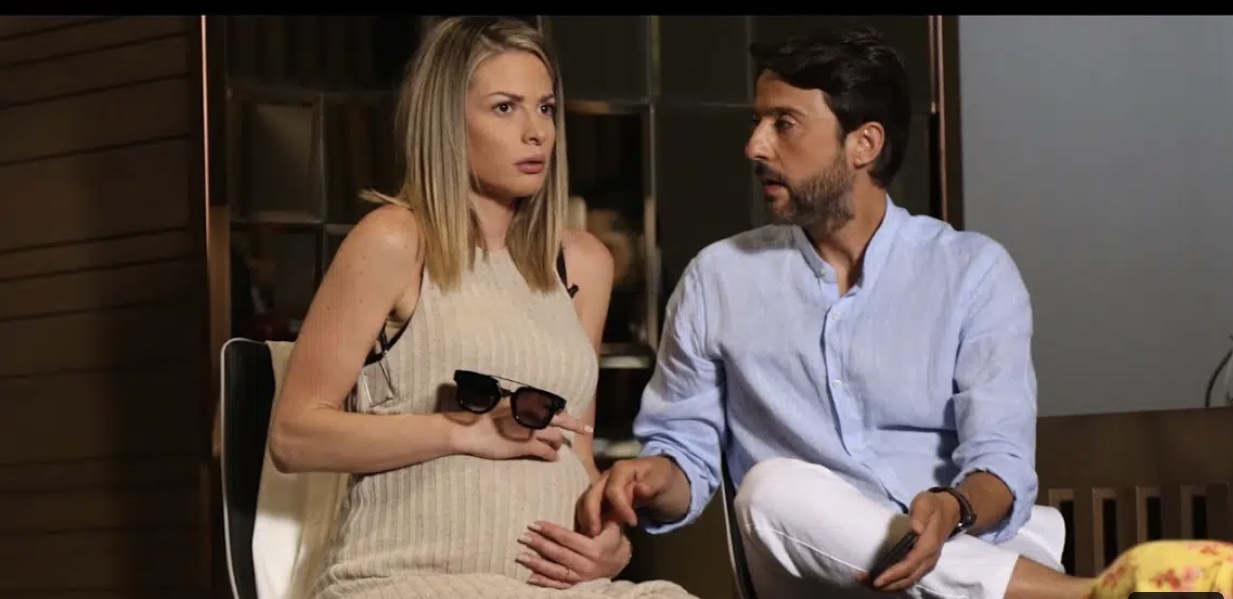
The Dorians, Raya (Pamela El Kik) and Carl (Chadi Haddad) show up at Capital Boutique Hospital by appointment. They leave the car with the valet, tip the doorman and make their way to reservations, where their birth “suite” is ready, they’re told (in French and Arabic).

All is quiet, calm and customer friendly, despite developer Carl’s constant contractor issues, quietly argued-out by by phone.

Sonia (Rola Beksmati) and Sabeh (Ramy Atallah) blow in in a sea of wails, shouts and threats in Arabic. She is in labor, and he’s in a panic.

No, they don’t have a “reservation.” No, their doctor is back in the village. No, they don’t have insurance. Or a deposit. No, you CANNOT transport her to the “hospital on the hill.”

Sabeh creates chaos, shouts at the staff and puts the Dorians on the spot about “letting (Sonia) go first.”

And hell, he’s not even her husband. When burly, brutish carpenter Massad (Ammar Shalak) shows up, the REAL shouting and bullying begins.

What kind of hospital IS this? “A private one,” the older administrator, Mr. Vahe (Gabriel Yammine) tells them all in his calmest indoor voice.

They want to haggle, he wants to avoid a shaming scandal in the media. But with every concession, “hours” to come up with a deposit, “changing hospitals” right after the birth, etc., Massad raises his voice, ups the threat level and entitles his way into special treatment.

When his whole family shows up to celebrate the blessed event as his many impositions and demands wash over on the Dorians, things are sure to escalate. Which they do.

Shalak, Beksmati, Atallah and Yammine are the players here who “get” comedy, in a Western sense, and play their parts big and loud and as fast as they can get away with. While the sentimental scenes play to the rest of the cast’s strengths, they stop the movie cold.

A cute touch — having Vahe, the administrator who can’t remember Massad’s name and whom Massad refers to simply as “The Armenian” is a Siri novice and a big fan of the Franco-Armenian singer Charles Aznavour. Arabic, American or French, who doesn’t love Aznavour?

The narrative’s sympathies lie with Massad, but the film tests that by making him a boorish bully who can’t be reasoned with or forced to face the consequences of his many liberties and threats. He comes off as a working poor, uncouth and entitled jerk, but maybe that’s just me being brainwashed by America’s own two-tiered health care system.

“C-Section” is rarely surprising, but at least its affable in all the too-predictable ways. If only director Oryan had picked up on what was actually working and pressed for that energy level and pace throughout.

But to do that, you’ve got to precede every “ACTION!” with an “Encore! PLUS RAPIDE!”

Rating: TV-14, violence, smoking

Cast: Ammar Shalak, Pamela El Kik, Rola Beksmati, Chadi Haddad, Ramy Atallah and Gabriel Yammine

Credits: Directed by David Oryan, scripted by Isaac Fahed and Doris Saba. A Netflix release.

Running time: 1:37

Posted in Reviews, previews, profiles and movie news | Comments Off on Netflixable? New Lebanese parents battle over a suite, class, family and rules in “C-Section”

Movie Review: A slo-mo Keno hustle, “Double Down South”

The latest film from the Oscar-winning writer of “Dead Poet’s Society” is a sordid, torpid tale of violence and revenge set against the pulse-pounding (cough cough) sport of keno-pool, that oddball boardgame variation of billiards.

“Double Down South” is a languid, drawling bore that’s about as interesting as the games that are its centerpiece. In the 1998 “present” of this picture, keno is explained and explained, and games unfold and we see results, and hear more explanations.

Damned if we don’t know less about this arcane game at the end than we do the first time our lithe, tight-tank-topped heroine (Lili Simmons) shows up at an antebellum mansion gone to seed and turned into a diner and pool hall and asks to be taught the sport.

“Holy s–t! That’s a double AND a Montgomery!”

The hell you say?

Diana (Simmons) rolls up to Nick’s place in a rusty pickup, her own pool cue in hand. She’s come to “the keno capital of the world,” BFE Georgia, to pick up keno from the pot-bellied, Confederate-flag fetishizing locals.

Diana is a born distraction, with her highlights, tattoos and belly button ring.

“You come to shoot pool?” One-eyed “Little Nick” (Igby Rigney) wants to know

“Didn’t come to adopt a puppy,” she purrs. Yeah, she’s a tough-one.

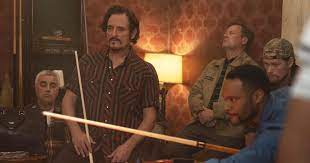
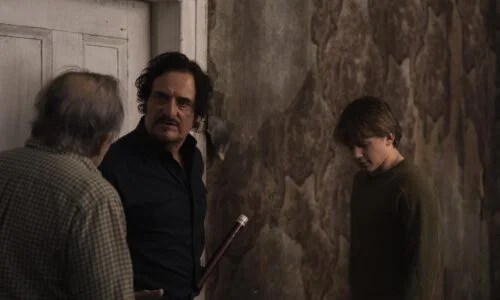
But is she tough enough to hang with the veteran players, and with Nick-the-owner, given a venomous, lecherous edge by horror movie/biker series (“Sons of Anarchy”) icon Kim Coates? He’s on her like racism on a redneck, because he sees dollars in the dish that played her first-ever keno in his joint.

“I just kind of lost my ass out there,” she protests.

“Still quite the ass.”

She will be “schooled” in this pool-hustle variation by Little Nick, Nick and Old Nick (veteran character actor Tom Bower), the owner who passed this set-designed-gone-to-seed mansion/pool parlor on to middle-aged Nick.

That Nick is scary. That Nick carries a bottom half of a pool cue he uses to beat customers, foes and proteges who get out of line. That Nick lost his fingers recently because of some deal with went South (“further” South). And that Nick sees this “distraction” as an “attraction” for his business.

Players in this “man’s game,” a billiards variation that is “all finesse,” will flock to Nick’s when they hear about Diana and decide to match up against this Southern fried sexpot in the flesh. Or so Nick thinks.

Writer-director Tom Schulman, who counts “Honey, I Shrunk the Kids,” “Eight Heads in a Duffel Bag” and the epic Eddie Murphy bomb “Holy Man” among his scripts, hasn’t had many credits in this millenium. He scripted the badly-reviewed “Anatomy of Hope” TV movie for J.J. Abrams, and wrote the flop that drove Gene Hackman into retirement — “Welcome to Mooseport.”

This isn’t anybody’s idea of a comeback. He’s lost whatever he knew about “pace” and seems mostly content to collect cliches to adorn this leaden, formulaic pool hustle movie with, and share the ever-changing “rules” on how one bets on keno.

Racist, sexist Nick has secrets Diana must learn. Little Nick is the one who passes them on. But Little Nick has his own story to tell — how he ended up with one eye.

Simmons, a veteran of series TV (“True Detective,” “Westworld,” “Ray Donovan” and she was Catwoman in “Gotham”) doesn’t embarass herself here, despite playing a character both nakedly obvious and badly underwritten.

Coates always gives fair value, with that trademark dyed mop of curls and goatee signaling the menace he’s often called on to portray.

“DROP the psychoanalysis of the psycho,” he says, as everybody tries to fill Diana in on one S&M foe she faces.

Justin Marcel McManus plays Nick’s kryptonite, Beaumont DuBinion, a Black man who is better at this arcane game than Nick. But is he better than Diana, now that Nick’s lost a lot of fingers?

One big problem here is the simple fact that the game Schulman built this around isn’t interesting or exciting on the screen. Keno, as we hear, isn’t a “power” game with billaird cues and balls. So there’s no dramatic “CLACK” to the break, no way to whiz-bang photogragh and edit the dull-but-difficult shots, the putt-putt/bingo style put-the-ball-in-the-big-right-hole nature of it all.

The games are staged, blocked, scripted and “called” in ways guaranteed to rob the narrative of its “Why should we care?” requirement. Curling has more thrills.

That’s not the only reason “Double Down South” crawls along, 70 minutes of story sloppily packaged in a 124 minute movie. But it’s a big one.

Rating: unrated, violence, profanity

Cast: Lili Simmons, Kim Coates, Igby Rigney, Justin Marcel McManus, Rebecca Lines and Tom Bower.

Credits: Scripted and directed by Tom Schulman. A Level 33 release.

Running time: 2:04

Posted in Reviews, previews, profiles and movie news | Comments Off on Movie Review: A slo-mo Keno hustle, “Double Down South”

Movie Review: Sci-fi that Wrestles with Many an Existential “Foe”

“Foe,” based on a novel by Iain Reid, is a dreamy and forlorn science fiction parable about the evolving nature of personality, the imperamence of relationships and the limits of science and technology.

Set in a very near climate changed future (2063) in the middle of the Next Dust Bowl, it’s basically a three character play about the conflicts that arise as an even more unpleasant future than their unsustainable present is faced.

Those in charge have determined “It’s time to move on” and the contrary voices that we hear now and are still protesting in that future “then” have been apparently shouted down.

“Why would you spend money ‘up there’ instead of fixing things down here?”

A stranger rolls up to a remote, arid and weathered farm homestead in the Breadbasket of the World, America’s Midwest.

The trees have all died, save for one that “Hen” (Henrietta) waters as she wonders “What if the rain never comes?”

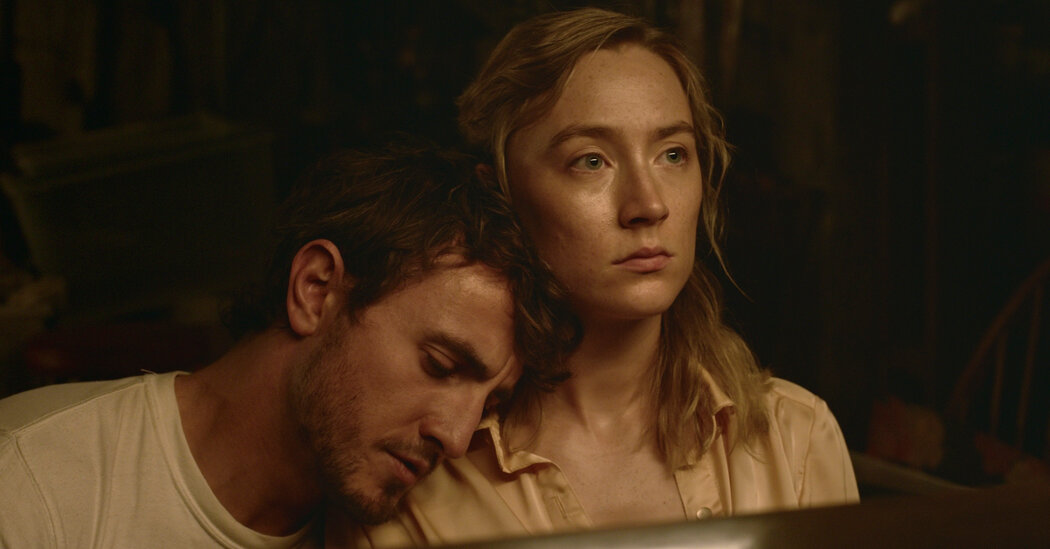
Hen, played by Saoirse Ronan, gets by working as a waitress in one of the vast swaths of America that were already emptying-out before the Earth’s ecology reached its tipping point.

At least she has Junior (Paul Mescal), her husband, the heir to this “fifth generation” farm. But he’s not farming. He works in the gigantic chicken-raising and processing silos down the road.

He’s a bit limited, short-tempered, instinctively mistrusting and ready to greet any unexpected knock at the door with his shotgun. Not that Hen lets him keep it loaded.

“I just don’t want to catch anything” suggests that they’re still cautious after the latest pandemic.

Then Terrance (Aaron Pierre) comes in, an all-knowing bureaucrat who addresses them by name, and once he’s inside, is full of questions, all of them leading to a proposition.

He’s the one that prods them with “It’s time to move on.” His offer, from the higher ups (allegedly) is that they’ve been “selected” for Outermore space station — “a new planet” project. It will be the final destination for humanity, one last move at the end of decades of the “climate migration” that has so roiled Planet Earth.

But it turns out only Junior has been “selected,” owing to some “specific skills” Terrance insists he has. As the thoughtful, intellectually-curious piano-playing Hen is plainly the brains in this house, Hen and the audience may wonder about that.

It’s just that Terrance is gently insistent, claiming their spare bedroom as he moves in to “test” and train and prepare the mercurial Junior, who veers between being flattered and being furious.

“Are you THREATENING us?”

Australian director Garth Davis earned the viewing audience’s benefit of the doubt with his very fine and emotional “Lion,” so we should be willing to mull over the various sets of “Foes” in this allegory — Hen and Junior vs. Terrance, humanity vs. The Earth, science vs science-doubting “Middle America” and Hen vs. Junior, as he is now, as he was then and as he might be forever into the future.

Because the film opens by defining this New Age’s “human substitutes,” “conscious” thinking artificial intelligence. As we suspect, Terrance isn’t who he seems and his mission isn’t what he says, although it still has a lot to do with Junior.

The film’s science fiction trappings — chicken “processing” taken to its logical “efficiency, climate change and migration computer-modeled out, The State’s new tech for control and new strategy for survival — are interesting, just not novel enough to feel fresh and engaging.

“Foe” bears the telltale signs of a “Twilight Zone” episode — complete with jolting “twists” — that got out of hand and went on for two hours, despite having 45 minutes to an hour’s worth of ideas.

Pitched in the same, flat, abandon-hope tone, doling out information necessary to simply understanding what the hell is going on in the most grudging ways, “Foe” bores the viewer to tears on the long march towards getting to its point. Points.

Henrietta can sum it up for us, the nature of the relationship of whatever “Junior” she lives with now vs the one she married and the Junior who may be somehow returned to her.

What’s missing is “affection,” “possibilities” and “curiosity” that come with new love, the hope of a better future, of love-making that leads to children, building their lives and a family.

Novelist Reid, who co-wrote the script with Davis, may be talking directly to a generation that across continents and cultures is abandoning hope and institutions like marriage, life goals like raising children, and embracing nihilism and the short term indulgences of narcissism thanks to systemic income redistribution via tax laws written to benefit the few, almost none of them young.

And the movie they wrap messages like this and rising fury over a rigged, oligarchical system that enables the not-smarter-than-us super rich to spend their billions “up there instead of fixing things down here” is a package so downbeat, dreary and hopeless that this message falls on deaf ears and sleepy eyes.

Rating: R, sex, nudity, profanity

Cast: Saoirse Ronan, Paul Mescal and Aaron Pierre.

Credits: Directed by Garth Davis, scripted by Iain Reed and Garth Davis, based on Reid’s novel. An MGM/Amazon Prime release.

Running time: 1:51

Posted in Reviews, previews, profiles and movie news | Comments Off on Movie Review: Sci-fi that Wrestles with Many an Existential “Foe”

An Oscar winning Icon and an Actor Having Another “Moment” Turns 60 today

It’s taken a lot of intestinal fortitude to remain a Nic Cage Completist over the years.

An Oscar winner for “Leaving Las Vegas,” great in films all over the spectrum — from “Raising Arizona” and “Peggy Sue Got Married” to “Con Air” and “Face/Off” and scores of titles in between, you had to be a bit of a masochist to track down “Bangkok Dangerous” or “Jiu Jitsu” and their ilk.

I almost always do, because even the titles between “National Treasure” movies, even the indies that aren’t “Joe” or “Pig” are made interesting by his presence.

I’ve interviewed Nicolas Cage several times over the years, and something he said during a chat in the middle of a run of not-quite-firing A-pictures (“Lord of War,” “Weatherman,” “Ghost Rider”) that eventually pushed him into B movies stuck with me.

He worked, he said, to “get out of the house and stay out of my head.” Making movies didn’t just settle tax bills and keep him solvent. He’d work through failed marriages. He’d take on other characters to distract himself from a career that seemed to wane more than wax, and whatever demons ate at him.

All the fanboy love over the decades — “Vampire’s Kiss” (in which he famously ate a roach on camera) and “Face/Off” made him a “legend” in convention-goer terms, “Kick Ass” and “The Unbearable Weight of Massive Talent” chiseled that in stone — couldn’t make him forget whatever was eating him in his most troubled times.

You’ve got to respect that. That’s the classic, if not exactly healthy way an American man copes — escape to work.

“Pig” brought him back, and even though he’s still sneaking bad Bs onto his resume, we all sleep a little better at night knowing ol’Nic is out there, getting a dirty job done — beloved and ridiculed, and always in on the joke.

Happy birthday.

Posted in Reviews, previews, profiles and movie news | Comments Off on An Oscar winning Icon and an Actor Having Another “Moment” Turns 60 today

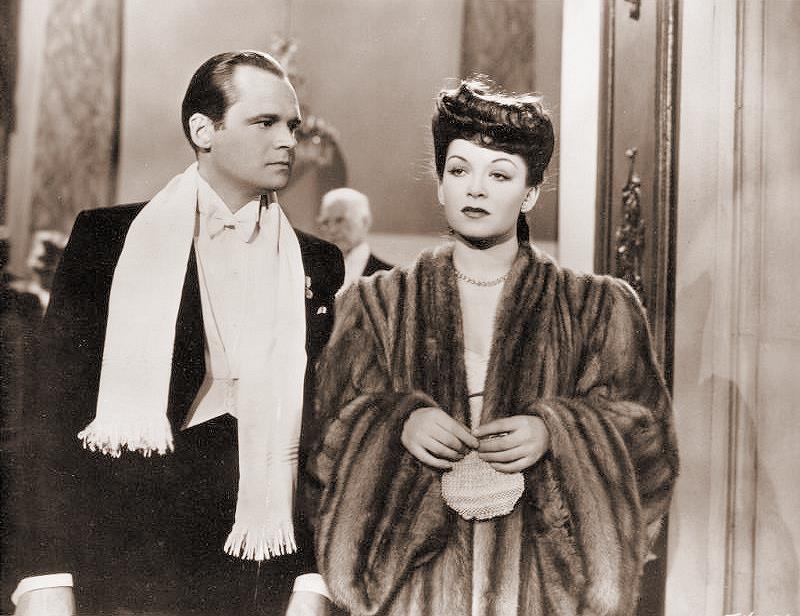
Classic Film Review: Espionage, Murder, Infidelity and a Detective on the “Sleeping Car to Trieste” (1948)

What a delightful little French-flavored English bon bon this is.

“Sleeping Car to Trieste” may be a corny, old-fashioned “Orient Express” rail-bound thriller, peppered with intrigues both deadly and quaintly silly. But by the time this sleeper hits the third act, it’s chortling along, leaving us unprepared for the laughs and a shocking jolt as a punchline.

The formula was already so tried and true by 1948 that viewers then and now don’t need to know it’s a remake of “Rome Express” (1932) to know how this goes. But when it gets up to speed, my how it “goes.”

A cunning, socially-connected “agent” of some sort (Albert Lieven) breaks into an embassy in Paris, steals a book and shoots a man who sees him do it. It’s only when we meet Zurta’s confederate Valya (Jean Kent) that we realize “the information in that book” “means revolution,” should it get out.

But they are double-crossed by a middle man, Karl (Alan Wheatley), who absconds with the book and onto the Orient Express, bound for Zagred and someone who pay a higher price for this book, “revolution” be damned.

There’s nothing for it but for the duo to board the train themselves, hunt him down and retrieve “the book.”

Married lawyer George (Derrick De Marney) is also traveling, with Joan (Rona Anderson), who is not his wife, something they go to extremes to conceal. That problem is made far more difficult when George’s boorish old classmate Tom (oft-employed character actor David Tomlinson) turns up.

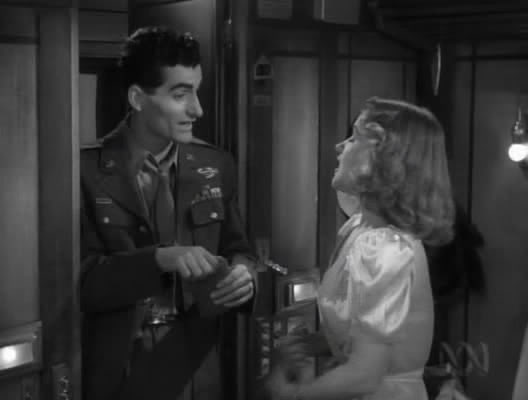
There are sisters trying to avoid “declaring” purchases to customs, availing themselves of a skirt-chasing American GI (Bonar Colleano) to hide their contraband, who finds himself sharing a berth with a bird-watching bore (Michael Elvin).

By coincidence, a famous florid, solicitous French policeman (Paul Dupuis of “Passport to Pimlico”) is taking this trip as well. And then a famous political scientist and writer (the venerable Finlay Currie) checks in, with his secretary (Hugh Burden).

That’s a full complement for chef Poirier (Coco Aslan) to feed. If only this English blowhard (David Hutcheson) wasn’t job-shadowing him for the trip.

The first acts are all about Karl, aka “Poole” trying to get a berth all to himself and avoid being seen, George and Joan trying to share a berth despite Tom’s insensate berth-blocking and our agents Vayla and Zurta trying to get their hands on Karl, “the book,” or both.

Veteran director John Paddy Carstairs, the son of an actor, brother of a producer and director of comedies and thrillers with a comic touch (“Trouble in Store”) all the way into the TV era (“The Saint”) ensures that this train gets out of the station in a timely manner, and that the lighter touches all land.

The pompous Brits are set against the eye-rolling French at every turn, especially in the well-mannered put-downs of Detective Inspector Jolif.

“Tell me, can an Englishman even ‘sin’ with honesty?”

Dupuis is a stand-out in the cast, with Tomlinson at his irritating best and Currie harrumphing his way through his scenes.

The infidelity business isn’t played for laughs, and even the changing mores haven’t added amusement to that part of the story. There’s a laugh or two in American actor Colleano’s embodiment of British notions of every Yank “over there” during the war and after it — over-sexed and gauche.

“Really mee-shurrrr,” a French lass has to tell him. “I don’WAN to be ‘leeberated’ any more!”

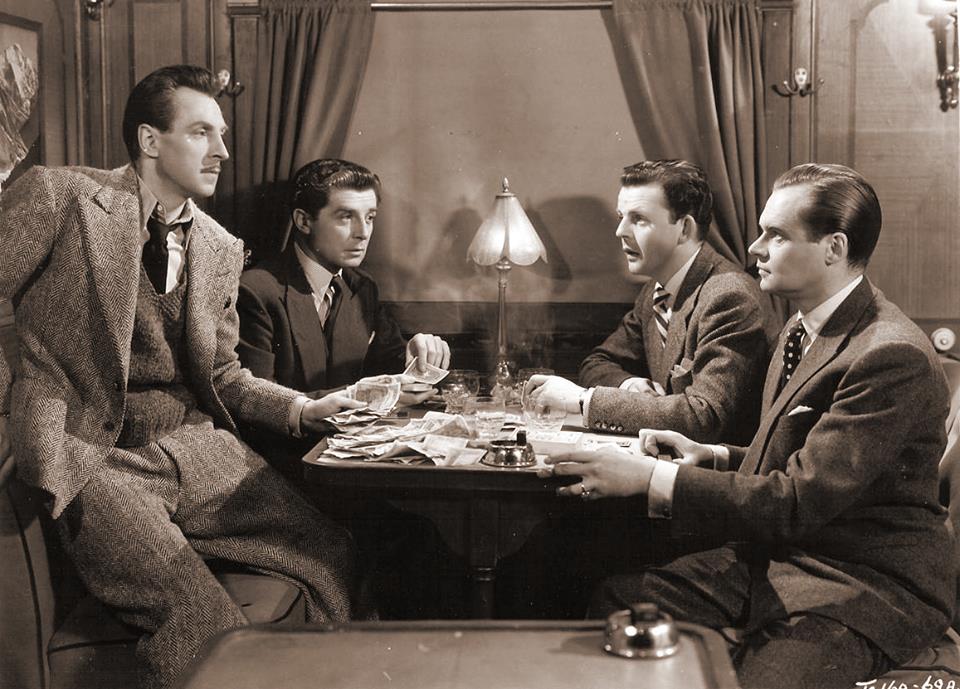
‘Sleeping Car to Trieste” is light entertainment, nothing more. But even if the action scenes (fights) lack a lot, even if it takes a while to get up to speed, the production design, lovely matte painting backdrops, card-game standoffs and the like make this trip back to an era, a place and the sorts of movies that came out of it worth your time.

Rating: approved

Cast: Jean Kent, Albert Lieven, Paul Dupuis, Finlay Currie, David Tomlinson, Rona Anderson, Derrick De Marney, Bonar Colleano and Grégoire Aslan

Credits: Directed by John Paddy Carstairs, scripted by Allan MacKinnon, based the Clifford Grey script to “Rome Express.” A Two Cities/J. Arthur Rank release on Tubi, Amazon, etc.

Running time: 1:35

Posted in Reviews, previews, profiles and movie news | Comments Off on Classic Film Review: Espionage, Murder, Infidelity and a Detective on the “Sleeping Car to Trieste” (1948)

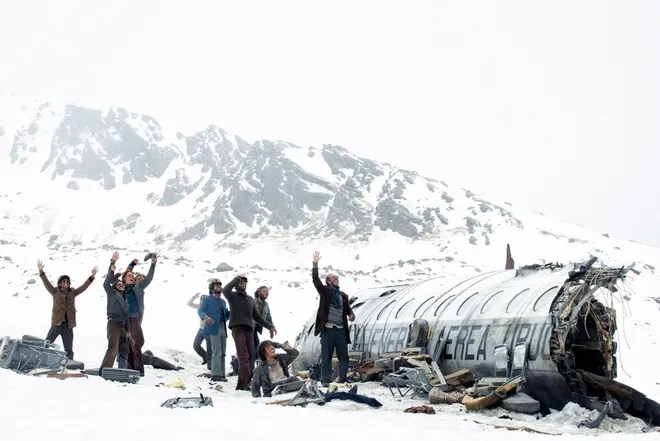
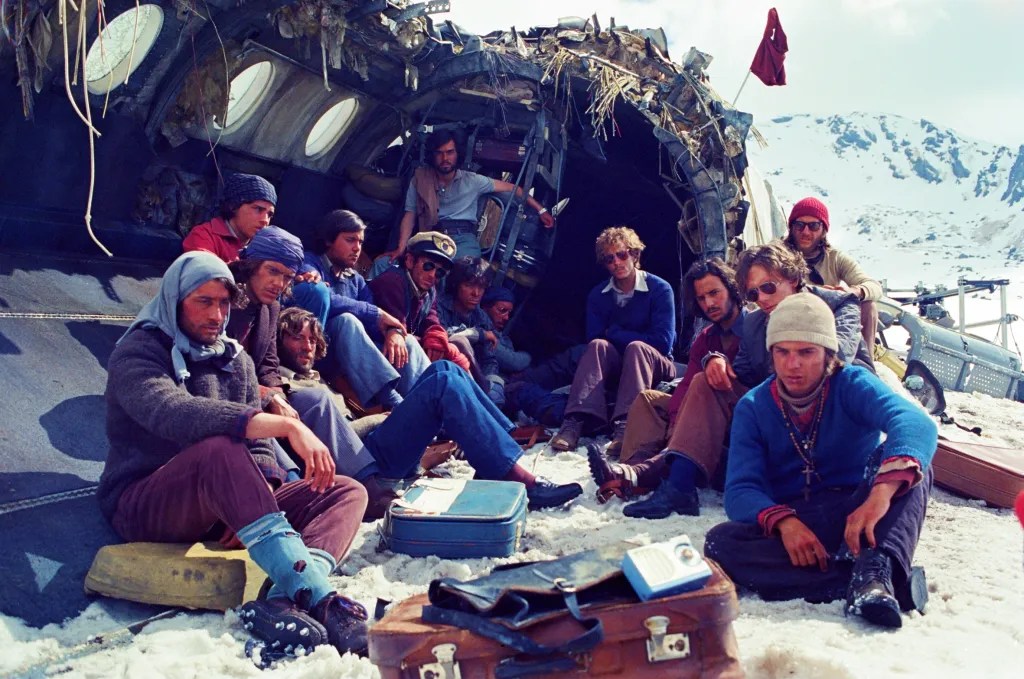
Netflixable? Crash Survivors Fight Hunger, Cold and the Andes as a “Society of the Snow”

Perhaps you run into the same reservation I do when considering Netflix’s latest version of the Andean survival epic “Society of the Snow,” a new retelling of the harrowing survival story immortalized in the non-fiction book “Alive,” the terrific 1993 film of that title, as well as good documentaries including 2007’s “Stranded” and 2010’s “I Am Alive.”

We’ve seen it. We know the story. It’s pretty grim. What could any new version of it accomplish, beyond improvements in “realistic” plane crash effects, more gruesome versions of butchering and consuming human flesh, and re-rationalizing what the young Uruguayan rugby players resorted to in order to survive their ordeal? Cannibalism?

Some of those reservations are warranted. Director and co-writer J.A. (Juan Antonio García) Bayona made his big break with the Spanish horror film “The Orphanage,” and the crash depicted here is so jarring and realistic that it’s a relief one doesn’t have to sit through it in a theater. We see bones and necks snap, hear the screams and share a horrific hint of the terror of that Oct. 1972 moment when a Uruguayan Fairchild turboprop airliner clipped an Andean mountain.

“Alive” did a better job of depicting the grim gravity of eating human flesh.

Facts are changed, lies are ignored and the female victims and non-rugby-players among the 45 passengers have no voice, no backstory.

But Bayona also made one of the most visceral and moving survival epics in film history, the tsunami story “The Impossible.” He tells this tale of battling impossible odds with compassion and an empathy that make it quite moving at times.

Bayona hangs his narrative upon the connection between two 20something players, team “star” Roberto (Matías Recalt), a med student, and his best friend and teammate, Numa (Enzo Vogrincic), in law school, reluctant to skip exam prep and make this team trip from Montevideo, Uruguay to Santiago, Chile.

Roberto talks Numa into making the trip, “our last chance” before college and careers tear them apart, he argues.

Numa is our narrator.

“This a place where life is impossible,” he narrates (in Spanish with subtitles, or dubbed into English), after the shock of the crash has abated, the stunned realiztion of their plight has set in and the trauma of those already dead or grievously-injured hangs over their every action.

Some insist help is “coming, tomorrow.” Others wonder “How many are going to die tonight?” after their frigid first night in subzero cold further thins their ranks.

Graphics memorialize those killed in the crash, others who die in the cold or bleed out from their injuries and those who perish in an avalanche that consumes the wingless, gutted fuselage days later. Every few days, the toll grows.

And as the food and drink (but not the cigarettes) run out, they consider “the rule of three.” One can survive “three minutes without air, three days without water, three weeks without food.”

The last “three” is troubling to some as they recognize the calories they’re burning in extreme cold, the way that impacts the brain, and how that will determine how long they survive if they aren’t rescued. They will never have the strength or mental sharpness to rescue themselves by walking out of this frozen, high altitude hell.

“If I die,” first one and then others say, “I give you my permission to feed on my body.”

Bayona does a great job of demonstrating the helplessness of their situation. The youngest are the most likely to survive, and they’re the least experienced at life or anything remotely like “working the problem” such a dilemma presents.

The duress they’re under even as they try to start saving themselves can’t be overstated. As the great historian David McCullough always said of figures from the past, “They don’t know how this is going to turn out.”

The geography of their plight — a high plateau, boxed-in by towering mountain peaks, any “valley” taking them to safety many days of grueling hiking away — has never been more stark than it is here.

That limits one of the chief appeals of such survival stories, second-guessing those who lived through it. I’ve attended survival courses (in Alaska) as a journalist, and I was as stumped as these 20somethings must have been about what they could or should do. Not knowing if help might come, they don’t act quickly to set out for safety. Not acting quickly weakens one and all. By the time that fateful decision has been made, they’ve already resorted to cannibalism just to keep their strength up.

That titilating taboo is why filmmakers and writers keep coming back to this story, and explains the public’s appetite (sorry) for it. But in previous eras, shipwrecked sailors would rely upon “the custom of the sea” as their rationale for doing whatever it takes to live long enough to tell the tale. It’s long been shocking, but it’s not unheard of.

Aside from, you know, realizing that the lighters that lit their many cigarettes could also burn whatever was burnable in an effort to create warmth and smoke that might alert rescuers where they were, there isn’t much that readily suggests itself as a “Why didn’t they” solution to altering their fate.

As Old Christian Rugby Club characters try to extract “meaning” from their suffering and the deaths of their friends and family, Bayona makes his case that collective decisions, “brotherhood” and accepting what they had to do was what saved those who lived through this 1972 tragedy.

That’s a novel take on the subject, one that might have been better served had some of the pertinent facts from their group response to how they survived been included in this still-quite-good dramatic recreation. No they didn’t want to admit how they didn’t starve to death, and being under mass media assault after their rescue didn’t help.

Bayona reminds us that a half century of remembrances of an event that still draws our attention, and darkly comic punchlines, tells us that as awful as most of what happened was, some deeper bond was in play here as well, one that “You had to be there” to wholly understand.

Rating: R, violence, subject matter, profanity, smoking

Cast: Enzo Vogrincic, Agustín Pardella, Matías Recalt, Esteban Bigliardi, Diego Vegezzi, Esteban Kukuriczka, Andy Pruss, Francisco Romero and Rafael Federman

Credits: Directed by J.A. Bayona, scripted by J.A. Bayona, Bernat Vilaplana, Jaime Marques, Nicolás Casariego, based on the book “Society of the Snow” by Pablo Vierci. A Netflix release.

Running time: 2:24

Posted in Reviews, previews, profiles and movie news | Comments Off on Netflixable? Crash Survivors Fight Hunger, Cold and the Andes as a “Society of the Snow”

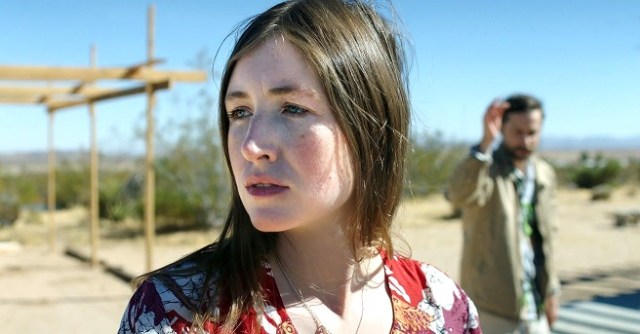
Movie Review: Trapped in the Desert, needed for “The Seeding”

The hiker’s come to the scenic desert around Joshua Tree to photograph a solar eclipse. But on his way back to his car, he spies a boy cowering in the shade.

“I lost my parents,” the kid says. And Mr. Modern Man figures he’ll take him to the parking lot where he got cell reception and call for help. But the boy marches off, leading him away.

Savvy film lovers know that at home alone, or in a crowded movie house, it’s never out of place to shout “It’s a TRAP.”

“The Seeding” is a grim, downbeat and derivative horror thriller about what happens to the guy (Scott Haze) who falls into this trap.

The kid ditches him, of course. Our photographer stumbles across a remote cabin in a desert sink, a deep box canyon walled off on all sides. He spies a solitary woman (Kate Lyn Sheil) there, and failing to get her attention with his calls for help, he uses the long ladders — two of them — that are the only access and egress from this peculiar place.

The woman is more accomodating once he’s down there. She takes him in. But when he wakes up in the morning, the lower ladder that would allow him to leave is missing. He can’t get her to embrace his concern or sense of urgency about this situation.

He hears voices and catches glimpses of “kids” in a wide range of ages just over the canyon rim. Will they help? Or just taunt? Why would one want tknow “your favorite color?”

When he injures himself in his increasingly frantic efforts to get back to his life, she offers him an alternative in the flattest monotone imaginable.

“I could look after you. I could take care of you.”

But he’s pretty damned sure that whatever’s going on, she’s in on it.

“You’ve imprisoned me in this archaic sh-t–le!”

Writer-director Barnaby Clay, a Brit who went by “Barney Clay” when he made an interesting documentary about legendary music photographer Mick Rock, gives away the game with his movie’s title.

Haze, of “Old Henry” and “Jurassic World Dominion” might portray a character out of his depth and reacting in increasingly panicked and very human ways to his plight.

Because this fellow — named “Wyndham” — knows a plight when he sees it. Trapped in the canyon won’t be enough. Let’s put him in a cage, too.

Sheil, a horror veteran (“You’re Next,” “v/h/s 2”) makes the defensible decision to play her character (Alina) with a flat resignation that may make sense, but does nothing to remedy this film’s principal shortcoming.

There’s nothing interesting going on here.

Lacking mystery, teased with a little first act nudity, a snatch of violence and featuring gibberish-spouting tweens as tormentors, “The Seeding” never has much of a point and takes its sweet time getting around to it.

Rating:unrated, graphic violence, nudity

Cast: Scott Haze, Kate Lyn Sheil, Charlie Avink, Alex Montaldo and
Chelsea Jurkiewicz

Credits: Scripted and directed by Barnaby Clay. An XYZ Films/Magnet release.

Running time: 1:40

Posted in Reviews, previews, profiles and movie news | Comments Off on Movie Review: Trapped in the Desert, needed for “The Seeding”

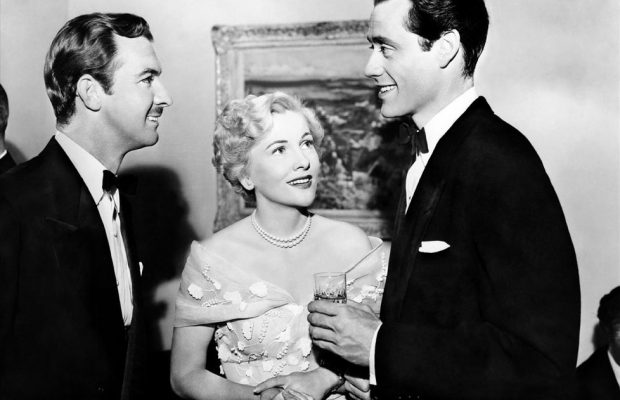
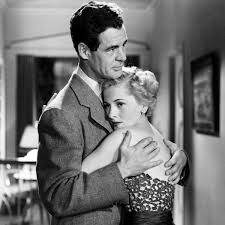
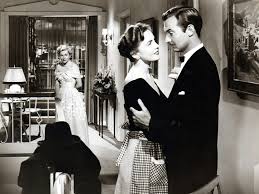
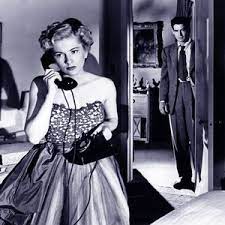
Classic Film Review: Robert Ryan, Mel Ferrer, Joan Leslie and Zachary Scott figure out Joan Fontaine was “Born to be Bad” (1950)

Sometimes the all-star credentials of a vintage film draw you to it more than subject matter or a “classic” reputation. And occasionally, it’s the legend attached to it, the Hollywood lore surrounding it that piques your curiosity.

Any film by Nicholas Ray is worth checking out. The director of “Rebel Without a Cause” and “Johnny Guitar” was a genuine Hollywood maverick, getting his start under the studio system, bristling at that and swaggering through later years on a reputation made by films such as “They Live By Night,” a rep trumpeted by the French “New Wave” cheerleaders behind the camera or writing for Cahiers du Cinema.

Joan Fontaine was an Oscar winner, an English-American actress and early “Hitchcock blonde,” fresh off the masterpiece “Letter from an Unknown Woman” and just entering her 30s.

Maybe the phrase “Born to be Bad” isn’t something you’d attach to this petite starlet, most associated with romantic victimhood in Hitchcock’s “Rebecca” and “Suspicion.” But she was nominated for Best Actress three times. She had some range.

Any movie with Robert Ryan as a brutish suitor, Mel Ferrer as a bitchy artist “friend,” Zachary Scott as Fontaine’s character’s romantic ideal and Joan Leslie (“Sgt. York,” “Rhapsody in Blue”) as the rival she must steal him from has built in appeal.

And the dialogue they’re performing has snap, crackle and pop to it. Ryan, playing an aspiring novelist, gets some of his tastiest lines ever as Nick, the guy who covets a young woman whose eyes are on a pricier prize.

“You seen the view? It looks better with me in it!”

“If you ever draw an honest breath, I wanna be there. I’ve never seen anybody choke to death!”

 “I love you so much I wish I liked you.”

But the story behind “Born to be Bad” is that new RKO Pictures owner Howard Hughes had one of his Hollywood obsessions over Fontaine, insisting on casting her — at 32 — as a young, possibly innocent “business school” ingenue on the hunt for a rich, socially-connected husband. And the rebel Ray wasn’t happy about it.

If Ray had any say, casting the high-born, mustachioed Zachary Scott (“Mildred Pierce,” “The Southerner”) as the prize Fontaine’s Christobal covets, catches, uses and cheats on was telling. Scott was a near dead-ringer for Hughes.

“Bad,” based on a novel by Anne Parrish, came out the same year as iconic back-stabbing-in-acting drama “All About Eve.” Something was in the air in those years, and stories about disadvantaged women with cunning, agency and no scruples about getting what they wanted were all the rage.

The stakes were higher in “The Postman Always Rings Twice” and “Double Indemnity,” but feminine wiles were taking it on the chin in films made by the Hollywood patriarchy.

Publishing assistant Donna (Leslie) is prepping for a posh post-play party for her society swell fiance Curtis (Scott) when this waif that her boss (Harold Vermilyea) talked her into taking in shows up a day early.

Christabel (Fontaine) makes a great show of contrition and excuses. But she’s invited into the big party, and we quickly realize that’s what she wanted all along.

She hadn’t counted on being teased by the sarcastic painter Gobby (Ferrer) or man-handled by Mr. Testosterone Poisoning, the novelist Nick (Ryan). But she won’t let them distract her from the dashing man with money in the tuxed, the one engaged to her hostess, Donna.

Christabel ingratiates herself into their circle, a model-thin clothes horse with bottle blonde beauty and a disarming way of sabotaging Donna and Nick while pulling the wool over her Uncle John’s eyes over that whole “business school” dodge.

Where “All About Eve” had George Sanders and eventually Betty Davis playing characters “wise” to the machinations of the striver, Eve, “Born to be Bad” has Nick and Gobby, whose may not be as gay as his bitchiness suggests.

“My dear girl, apart from painting my major occupation is convincing women’s husbands that I’m harmless.

Nick sees her as “two people,” “one fictional” a “pretty little gal who sees herself getting all the things she never had,” and the “real” Christabel, who infatuates him.

There’s little getting around the fact that Fontaine is simply miscast as this scheming golddigger. Like her sister, Olivia de Havilland, she lacked menace and an ability to suggest bad intent and native cunning.

Without any murderous undertone, there’s no “film noir” to this drama. It’s a lower-stakes version of “All About Eve” without the guts to let the “Bad” girl get her way, by hook or by crook.

But the movie surrounding Fontaine can be bitchy fun, with much of its edge coming from its anachronistic take on macho courtship. If we believe the movie’s lore, Ryan must have been given a blank check by Ray to abuse Fontaine. “Manhandling” doesn’t do the way he grabs and mashes on this willowy Englishwoman justice.

Nick’s sexism has him pulling Donna into his lap so he can give her a “shoulder to cry on.” The dear. Nick is Norman Mailer, affecting a Hemingway machismo but only able to impose his vision of himself on “the weaker sex.”

And Ferrer is just as interesting, a character we can easily imagine might fancy rich blade Curtis for himself. Gobby is a “friend” but never a confidante to our anti-heroine, letting her see that he sees through her just as Nick does, but without the bruises.

This isn’t one of the top drawer pictures in Ray’s portfolio. But his style and cynicism, eye for conflict and ear for cutting dialogue make him every bit the “auteur” that the French proclaimed him to be shortly after this came out.

If he wasn’t having one or two over on Hughes — in casting Howard-look-alike Scott, in having Ryan yank Fontaine around, and in showing off a very good actress’s weak spots — we’d realize soon enough that the rebel was sure as hell was capable of it.

Rating: approved

Cast: Joan Fontaine, Robert Ryan, Joan Leslie, Zachary Scott and Mel Ferrer.

Credits: Directed by Nicholas Ray, scripted by Edith Sommer and Charles Schnee, based on a novel by Anne Parrish. An RKO release on Tubi, Amazon, etc.

Running time: 1:29

Posted in Reviews, previews, profiles and movie news | Comments Off on Classic Film Review: Robert Ryan, Mel Ferrer, Joan Leslie and Zachary Scott figure out Joan Fontaine was “Born to be Bad” (1950)

Movie Review: Transgender in Bhopal, looking for “A Place of Our Own”

There’s no sex or romance in “A Place of Our Own,” no hormone therapy, surgical consulations or discussion of “transitioning.”

This simple slice-of-life/fly on the wall drama is about two transgender friends’ struggle to find a house or apartment they can call “home,” somewhere they can be safe from discrimination, harassment, exploitation and violence.

As this story takes place in Bhopal, India, there’s also no mention of what that city is infamous for. Which is fine, because finding housing under slow-to-evolve Indian attitudes and social conditions is dramatic enough to warrant its own movie.

New-to-acting transgender women Manisha Soni and Muskan play Laila and Rhoni, two roommates and friends who share accommodations by necessity. It’s damned near impossible for even one of them to find a place they can rent. It takes both of them forever and a day to search, meet with realtors or landlords, endure homophobic rejections and hold down steady jobs as they hunt.

Laila is a college-eductated counselor at the New Hope Social & Mental Health Clinic. Rhoni is personal cook for a demanding wealthy family, a job she shows up for as Sandeep, the male she was born with.

The trouble starts when a stranger comes pounding on the door of their latest place, making come-ons, insinuations and threats to Laili, who has the good sense not to open it. She is frightened.

Just getting the landlord to accept that this isn’t their fault, that some creep scoped them moving in, decided they were transgender sex workers, proves impossible. Getting the jerk to refund their money will be another difficult task.

Using a transgender person’s different sex birth name as an excuse to not complete a wire transfer refund is a new one on me.

They meet with one real estate agent after another, most of whom seem to accept — however grudgingly — the country’s anti-discrimination laws. But one is so “curious” about “your condition” that their meeting becomes an interrogation. Others shrug them off, or meekly accept a property-owning woman’s angry “I won’t rent to ‘those’ people” (in Hindi with English subtitles) rebuff.

Things are so bad that there’s only one tuk tuk (three-wheeled taxi) driver that they can trust. We wonder if there’s an attraction thing going on with driver Sharukh (Aakash Jamra) and Laili. His reason for helping them out is more poignant than that.

Even a trip to a public restroom is fraught with peril. If someone complains, each is afraid of just how little officialdom will do to back them up, or if their lives will get harder through more threats and violence.

The acting here is somewhat flat and unemotional. And there’s little that’s truly surprising in “A Place of Our Own,” as this sort of gay and transgender story has been more openly told in the West for a couple of decades, now.

But it’s compelling because it reminds one that transgender discrimination is wrong, in every culture, and just how venal, backward and dumb a person doing the discriminating comes off, no matter what language they speak and cultural tradition they claim to be “defending.”

Rating: unrated

Cast: Manisha Soni, Muskan, Aakash Jamra and Mahima Singh Thakur

Credits: Directed by The Ektara Collective, scripted by Rinchin Rinchin, Maheen Mirza and Manishi Soni. A Dark Star release.

Running time: 1:28

Posted in Reviews, previews, profiles and movie news | Comments Off on Movie Review: Transgender in Bhopal, looking for “A Place of Our Own”

Netflixable? A death, an unhappy revelation, seeking closure in Dan Levy’s “Good Grief”

“Good Grief” is Dan Levy’s delicate and arms-length drift through the psychology of mourning, with that grief complicated by post mortem secrets that emerge about the deceased.

It’s a featherweight attempt at the gutting, deflated feeling of loss, with clever characters in a tony setting — London’s arts and entertainment scene — and sometimes amusing put-downs but few serious insights into the human condition.

Levy’s feature writing/directing/starring debut is more glib than great, but it’s pleasant enough if never quite as poignant as he’s shooting for.

The “Schitt’s Creek” alumnus plays Marc, a North American living in London with his Young Adult Fiction-writing husband, Oliver (Luke Evans).

Marc is reserved, devoted, detail-oriented in planning their lavish Christmas party, complete with a jazz combo. Oliver is gregarious, the life of the party, leading one and all in a lush, choral version of William Bell’s “Every Day With be like a Holiday” that he arranged.

They exhange banter with their besties — Thomas (Himesh Patel of “Yesterday”) and the spirited, tipsy, sings-too-loud costume designer Sophie (Ruth Negga as we’ve never seen her).

“Your voice is like a church organ someone threw out a window” won’t shut her up.

Then Oliver kisses his husband goodbye with a “We have lots to discuss,” gets into a cab and never makes it to his Paris reading and book-signing. Marc will spend the next year trying to recover from “the time I watched my husband get pried out a cab, like escargot.”

There was a Christmas card Oliver left behind, which Marc finally reads and doesn’t share with anyone. It dryly announced “I have met someone outside of us.”

Marc is left to deal with a funeral, financial fallout from a writer in a long-term (novel series) contract, and a secret — which includes a pied-à-terre in Paris that only Oliver’s death revealed.

Marc must gather Sophie and Thomas for a trip to check this place out, with him hunting for answers and closure, and them not having a clue about this new wrinkle in their quiet, painter-who-can’t-paint friend’s grief.

Levy’s chief gifts are as a writer and performer of dry, acidic one-liners, and he gives himself and his co-stars a few of those, if never quite enough to make this sad story comical.

“She wears ‘logic’ like one of those little handbags that can’t actually hold anything.”

The character arcs here aren’t broad or decisive, just a man coming to grips with having “lost a year of my life” to something that wasn’t what he thought it was. “Growth” is ladled onto Sophie and Thomas, but only perfunctorily.

Levy writes himself a melancholy drunken karaoke scene, a mild-mannered (he is Canadian, remember) restaurant blow-up and a couple of muted confrontations that aren’t as satisfying as one might hope. He’s yet to show us much range, and he’s written himself a more introverted version of characters he’s already played.

But “Good Grief” is sober-minded, considered and almost sweet. Compared to other Netflix deals with writer-directors given a big check to film their indulgent “dream” project, it’s also modest and sometimes compelling.

Fair enough, but let’s see what he manages the next time he’s given this opportunity.

Rating: R, aubstance abuse, profanity

Cast: Dan Levy, Ruth Negga, Himesh Patel, Celia Imrie, David Bradley, Arnaud Valois, Mehidi Baki, Kaitlyn Dever and Luke Evans.

Credits: Scripted and directed by Dan Levy. A Netflix release.

Running time: 1:40

Posted in Reviews, previews, profiles and movie news | Comments Off on Netflixable? A death, an unhappy revelation, seeking closure in Dan Levy’s “Good Grief”