
Real life father and daughter in a road trip dramedy about recovery and addiction and parenting when “You got that from me.”
Real life father and daughter in a road trip dramedy about recovery and addiction and parenting when “You got that from me.”


Daniel Kaluuya, the British star of “Get Out,” “Nope” and “Judas & the Black Messiah,” steps behind the camera for “The Kitchen,” a story of underclass unrest in the face of official indifference, and one young man’s conflicted efforts to give a boy a better life than he himself experienced growing up.
Kaluuya co-wrote and co-directed the film, which may have nothing to do with its distracted focus and murky messaging. Or that may explain the movie’s failings entirely. Whatever the cause, it makes for a somewhat immersive mixed-bag of a movie, which puts a damper on any temptation to use “promising first film” in describing it.
In the London of the near future, there is but one traditional “Housing Estate” (project) standing, the either half-finished or half-ruined complex and eco-system called “The Kitchen.”
It’s where the displaced of all races — working poor or permanently-unemployed — can live as squatters. But “they” want the land. And all the daily “radio” preaching from DJ “Lord Kitchener” (Ian Wright) might not be enough to prevent the Lord and his People’s violent mass eviction.
“They can’t stop ‘we’,” he tells his audience every morning. But Isaac, aka “Izi” (Kano, aka Kane Robinson) has him tuned out.
Izi has a steady job at the Funeral Home of the Future — Life After Life. That’s where the dead are turned into planters for trees, a far more productive and environtmentally sound use of corpses than embalming or cremating them. And gainfully-employed Izi has put in for and been accepted for a single-occupancy flat by high-tech housers Buena Vida. Izi has his eye on escaping this “sh–hole.”
But one funeral service breaks his upsell-the-bereaved pitch and fake-empathy for the dearly departed. A woman name Toni is buried. Izi seems a little shaken. And her 12-or-13 year-old son (Jedaiah Bannerman) notices.
The kid, Benji, asks the obvious question, the one any kid who never knew his father might. Izi brushes that off, rebuffs the kid’s enthusiasm for his motorbike and makes his way back to “The Kitchen.” But the boy weighs on his mind and his conscience.
And having nowhere else to go, the kid makes his way to the infamous squatter’s zone on his own, falls in with Staples’ (Hope Ikpoku Jnr) gang, which feeds kids pancakes, identifies talent and recruits them for what we guess is either a crime spree or a war, or perhaps both.
“The Kitchen” thus sets up as a tug of war over the boy’s future and a long, cold night of the soul for loner Izi, who can see his way out, and the contract for a “single occupancy” apartment standing in the way of taking in an orphaned boy.
But rather than wring pathos out of this and score political points with these characters’ plight, Kaluuya & Co content themselves with immersing us in this “Attack the Block/District B-13″ world, with its multi-racial teeming masses, future Afro-Caribbean hip hop and patois and melting pot of the impoverished milieu.
It’s not really enough. Kaluuya and his co-director, Kidwe Tavares, are first-time feature filmmakers, with only co-screenwriter Joe Murtagh (“American Animals”) having credits that suggest he knows the secret of creating a compelling and complete narrative. This isn’t anybody involved’s best credit.
Characters are introduced — Benji’s cute tween gal pal Ruby (Teija Kabs) — and somewhat forgotten. Themes are thrown out there, discarded and picked up again.
The best idea in this might be the town crier DJ, Lord Kitchener, whose name is an historical pun. But that’s borrowed from Samuel L. Jackson’s Mister Señor Love Daddy in Spike Lee’s “Do the Right Thing.”
Even with that welcome “borrowing,” “Kitchen” adds to a meal only half-cooked.

Rating: R, violence, profanity
Cast: Kano, Jedaiah Bannerman, Hope Ikpoku Jnr, Teija Kabs, Demmy Ladipo and Ian Wright
Credits: Directed by Daniel Kaluuya and Kibwe Tavares, scripted by Daniel Kaluuya and Joe Murtagh. A Film 4/Netflix release.
Running time: 1:47
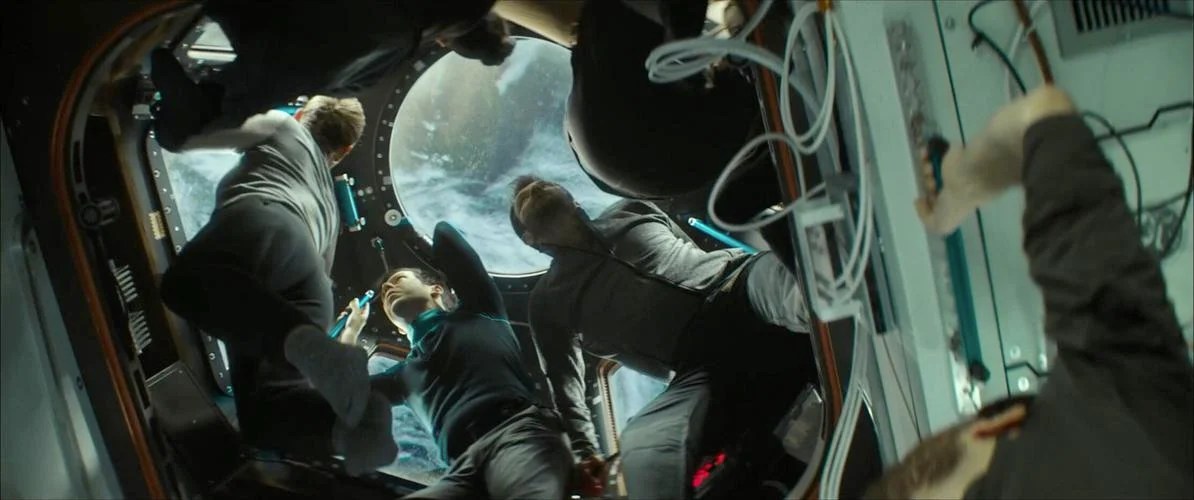


As an apocalyptic “can’t we all get along” parable set in space, “I.S.S.” can be poignant and even pulse-pounding. But a promising lift-off, chilling set-up, dazzling production design and good effects can’t overcome a “more impressive than entertaining” label.
Oscar winner Ariana DeBose (“West Side Story”) is mission specialist Dr. Kira Foster, a newcomer to the International Space Station and the character who is our surrogate in this story. She is the one who has to have space station routines, protocols and rituals explained to her (and us) by her fellow Americans — family man/scientist Christian (John Gallagher Jr. ) and mission commander Gordon (Chris Messina) — and Russians Nika (Masha Mashkova), Alexy (Pilou Asbæk) and Nicolai (Costa Ronin).
Kira’s learned a little Russian. “We’re all in this together” seems an important thing to mention in both languages, as they’re absolutely dependent on each other to survive. Pretty obvious foreshadowing, too.
Nika makes an effort to bond, and there’s always a Scorpions sing-along to help morale.
But the most important thing, her commander tells her, is to “make sure we don’t talk about what’s going on down there,” where a new Cold War has turned hot (it is implied) in Ukraine.
That’s going to be hard to do when communications are interrupted and they see the bright flashes across both hemispheres below — atomic explosions and fires. How will they respond now that the worst has happened?
Nick Shafir’s script takes pains to humanize all six characters, but can’t help but fall into “sneaky, untrustworthy Russians” stereotypes. A hundred-years-and-counting of national ignominy is a hard badge to shake
A bigger issue is how the characters fit into categories so neat that their fate is pre-ordained. As if seeing Kira’s mice-in-Zero-G experiment tearing each other apart isn’t allegory enough.
We can guess who-will-do-what-to-whom and “how” so quickly that the middle acts seem an utter waste. At least this waste has been recycled from many other movies, “2001” among them.
But director Gabriela Cowperthwaite (“Our Friend” and the documentary “Blackfish” are hers) stages excellent chases, escapes and DIY fights to the death in weightlessness. There’s some dread in the middle acts and a bit of suspense in the third act. And we rarely see anything that lets us in on how this is all being faked for a film.
The semi-forgotten ticking clock of orbit degredation, the fact that characters wander into traps as if they’ve NEVER SEEN “2001: A Space Odyssey” and the cultural cliches (hard-drinking, Scorpions-worshipping Bolsheviks) don’t quite crash “I.S.S.” But they cripple it.
That doesn’t mean it isn’t worth ducking into just to see how far the state-of-the-art in faking space travel has advanced, even in a modest-budgeted thriller. And DeBose and the rest of the cast make a decent show of it, in spite of everything they’re up against, floating on camera but toting a dead-weight screenplay as they do.

Rating: R, grisly violence, profanity, alcohol consumption
Cast: Ariana DeBose, Masha Mashkova, John Gallagher Jr., Pilou Asbæk, Costa Ronin and Chris Messina.
Credits: Directed by Gabriela Cowperthwaite, scripted by Nick Shafir. Bleecker Street release.
Running time: 1:35
Which seems the bigger stretch, skinny stoner MF Snoop Dogg as a former NFL “legend,” or the foul-mouthed pothead Snoop as a guy whose “community service” is coaching a peewee league football team?
Watch your mouth.
Kal Penn, Tika Sumpter and Mike Epps are the other “names” in the cast.
There are a couple of laughs in the trailer, which could be good news for Martha Stewart’s bestie.
“The Underdoggs” opens next Friday.
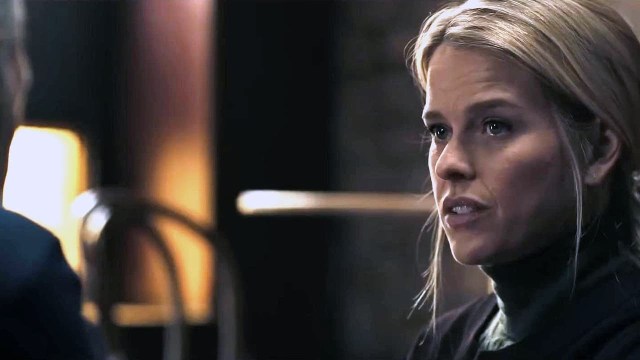

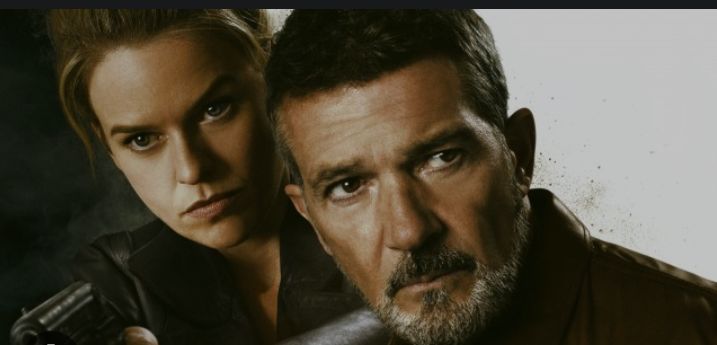
“Cult Killer” is a most peculiar Irish spree-killer thriller about the trauma of abuse, the monstrous sins of the super rich and some bizarre quirks of the Irish criminal justice system that one suspects are just clumsy inventions of the screenwriter.
But it stars the lovely and charismatic Alice Eve and the simmering Spanish screen icon Antonio Banderas and — you know — Ireland. So I’ll bite.
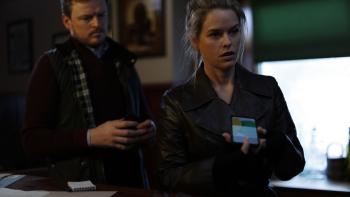
Banderas plays the guy no one in the pub should under-estimate, especially not the couple who think they’re sneaking around, cheating, when he’s been hired to follow them, bribe the barmaid to turn up the lights just long enough for him to snap a few shots and “serve” the offending faithless solicitor.
But Mikael sees something in the leather-pantsed blonde boozing, teasing and taunting three lugs in the corner. When they come after her as she knocks one last drink back and heads for the door, Mikael is a bit late in lending a hand. She’s a two-fisted drunk.
“Are you happy with a life that leads you to situations like that,” he wants to know? She isn’t. Yes, London-born librarian Cassie Holt has just found herself a sponsor, an ex-Interpol agent now working as a private detective, and a “friend of Bill.”
Five years later, she’s passed out on a bed, a lapsed alcoholic, when she gets the news. We’ve already seen Mikael chased into an alley and gutted by a disguised, knife-wielding woman.
Cassie Holt, who had taken on work as his researcher and assistant, is determined to catch his killer. As the Irish cop in charge (Paul Reid) sees this as another in a series of such murders which he’s having little luck solving, he’s happy to get help and signs her in.
Say what now? A North American seeing how abruptly this under-trained aspiring private detective is brought into a police investigation will find this whole turn of events head-scratching. Charles Burnley’s screenplay spends no time explaining how this might happen, so Reid’s Det. Inspector Rory McMahon just sort of makes it happen.
As the earlier victims of the nut-with-a-knife have been the super-secretive Old Money in the county, protected by snarling solicitor Victor Harrison (Matthew Tompkins), it’s quite jarring to see this green gumshoe accepted as “authority” when she starts flashing ID and asking uncomfortable questions.
At least we’re shown a lot of the mentoring Cassie got from Mikael, firearm and fight training in particular, in flashbacks. That’s enough to keep Banderas at the top of the bill if not satisfy the viewer’s puzzlement over the number of basic “rules” of the genre that Burnley and director Jon Keeyes break.
They give away the killer too soon, put her in girlfriend-to-girlfriend chats (split screens, each lying back on her bed) which reveal motive, the shared past trauma of these two and why the killer doesn’t kill “Cassie Holt,” whom she insists on calling by her full name — repeatedly.
Hitchcock said “Good villains make good thrillers,” but our killer isn’t “good” or painted wholly as a villain. Thank heavens the ferocious Olwen Fouéré, of the most recent “Texas Chainsaw Massacre” and Robert Eggers’ Viking saga “The Northman,” and screen veteran Nick Dunning (“The Tudors,” “The Iron Lady”) show up to give us some proper titled, amoral and monstrous bad guys.
Fouéré pretty much steals the picture, which despite its bizarre twists and taste of torture porn-level violence, takes on a tired familiarity common to such tales. From the private eye who breaks the law to help the cops catch a killer to the flashbacks that patiently explain how our gorgeous librarian obtained her “special skills,” “Cult Killer” can’t surprise its way out of a script that is basically tropes and trivialized trauma in a lovely Irish setting.

Rating: R, graphic violence, sexual situations
Cast: Alice Eve, Shelley Hennig, Paul Reid, Olwen Fouéré, Nick Dunning, Matthew Tompkins and Antonio Banderas
Credits: Directed by Jon Keeyes, scripted by Charles Burnley. A Saban Films release.
Running time: 1:45
I nagged and nagged Bleecker St. to hook me up with an “I S.S.” screener, and “the witness protection program of film distribution” didn’t do so much as pass on the courtesy of a reply of “No.”
Lack of faith in their product, professionalism issues with their marketing peeps? Who knows? The movie isn’t half bad and could have used a little more help in getting the word out — more reviews. But whatever.
I do love a night out at the movies at my favorite local Regal Cinema, seeing the various demos to this or that genre, jawing with the manager about what might boost the bottom line in a business that is clinging to life.
Vending machines for drinks and candy would cut wait times for those sales and speed up the popcorn/nachos line. M
Devote more space (projection booths are pretty much obsolete, etc) to vending, Mr. Manager suggests.
And then there’s nothing likek seeing “Cult Killer” with a die hard Banderas and Alice Eve crowd. Love those two, a couple of my favorite interviews ever.
I may stick around for the horror thing almost nobody has seen that’s opening. “Founders Day?” Maybe not. Let’s see how “Cult” plays out.

Tom Shales, the witty and biting longtime TV critic for The Washington Post and puckish NPR film critic for a stretch has died.
He was 79. And he will be missed, as many of us have missed his cutting, Pulitzer Prize-winning TV criticism since his retirement.
In critic as entertainer terms NPR, if one is honest, hasn’t heard the likes of him since he hung up his headphones many years back. His dry, droll sing-songy delivery — reminiscent of CBS TV’s fey and funny Dennis Cunningham — was unforgettable in its time, ascerbic reviews performed like iambic pentameter — repetitive for effect — on “Morning Edition” with Bob Edwards.
I swapped a few emails with him in the years after he put away his fangs, and never ceased to be tickled at how he he’d prioritized entertainment value — sometimes in cudgeling tones — over stuffy authority and the perfectly buttressed argument.
As a film critic, he was a bit out of his depth — in the bag for trash that had TV or TV stars as its origin. But he wanted to do film reviews for NPR because he knew that TV, and TV criticism, has far less of a shelf life.
I’ll never forget sitting on the phone with his “Morning Edition” editor (I worked in public radio during the peak Shales NPR years) explaining that Tom’s nationally broadcast evisceration of rocker/actress Debby Harry’s performance in “Copland” was way out of bounds. Because she wasn’t in the movie. He was criticizing the wonderful Cathy Moriarty, “wrong on both counts,” I laughed.
Shales chuckled at being reminded of that. We all screw up, and few opinions, like few movies or TV shows, truly stand the test of time, in any event.
But rare was the Friday AM when I didn’t laugh out loud at something Shales said, even when he was unfairly abusing his nemesis, Alan Alda, or giving Woody Allen a harder time than most were because in this medium, in his prime, he was as funny as Allen’s most pretentious pontificator.
RIP, Mr. T.
Here’s an NPR rebroadcast of Shales’ “Star Wars” review. Enjoy. Enjoy. Enjoy.
Let’s tick off a few names in this all-star B-Western, due out March 1 from Quiver.
Oscar winner Whoopi G., Edward James Olmos, Neal McDonough, Cedric the Entertainer, M. Emmet Walsh, D.C. Young Fly, Cam Gigandet, Allen Payne, Mario Van P. and a third-gen Van Peebles nepo baby, Tom Cruise’s cousin…
Mario Van Peebles also wrote and directed, and no, this isn’t his first Western (“Posse,” “Los Locos”).
Small town corruption, criminal family ties, firearm fetishizing and violence.
Andie Mac as a VILLAIN? Ooooo.
Feb. 23.


The beautiful young thing takes a moment, sailing a half million dollar sloop past a cliffside villa on coastal Portugal, to turn to the male model next to her, point out that villa and say “That’s my dream.”
We don’t know how Natalie (Mimi Keene) came by that pricey to buy/ruinous to keep yacht in Lisbon, where she apparently makes a living as a wedding dress…saleslady? We haven’t quite figured out why this lovely Brit — who moved to Portugal to “get away from herself” and maybe the sex video the womanizing creep-turned-hit-novelist Hardin (Hero Fiennes Tiffin) spilled onto the Internet — has forgiven hunky, alcoholic narcissist Hardin.
But in “After Everything: The Final Chapter,” the third fourth FIFTH film in this vapid “After” sex and money comes LOVE LOVE LOVE series of moon-eyed Millennial romances, we’ve learned not to ask “Why?” or “How?” or “What’s the attraction, here?”
They’re just young and thin and beautiful and monied, and that’ll have to do.
Somehow, Netflix and assorted directors, screenwriters and a rotating cast of supporting players have managed to get five films out of Anna Todd’s IA (Immature Adult) Fiction novel “Before” and make Andrew Garfield Lite, young Mr. Fiennes Tiffin, a romantic hearthrob for the ages.
Wonders never cease.
This time, our hero (ahem) is fighting writer’s block and the loss of his beloved Tessa (Josephine Langford) to the betrayal of turning their love affair into a hit novel. She’s barely acknowledging his texts, and he’s barely keeping it together — drinking, swinging into a menage a trois with his publishing house’s editor (Rosa Escoda), insulting his mother (Louise Lombard) and stepfather figure…I think (Stephen Moyer).
There’s nothing for it but to jet down to Lisbon to start the process of “making amends” with Natalie. But not before a little “Mile High Club” action with a stewardess. Well, that’s just a fantasy and well… baby steps, right?
The movie is one long mope around Portugal as Hardin dodges calls from his publisher, which may want his advance back if he can’t whip up a new draft, and from his old friend Landon.
Money and affluence and leisure are birthrights to this crew, even if you are slumming it in a tony wedding dress shop. Narcissism is a given. But, you guys, Hardin is suffering.
“Nothing matters in this world is she’s not in it,” Hardin declares between slugs of whisky and trips to the beach, the cliffs, the finest restaurants and bars Portugal has to offer.
The lazy affluence of this script by writer-director Castille Landon, means no real locations are identified, no scenic spot is appreciated and nobody depicted isn’t beach-body ready to peel off this or that article of clothing for some PG-13 grinding that barely merits an R-rating.
Maybe the “R” is for the hilarious fistfight/beat-down between the male models, whose gym visits and tattoos tell us how tough they are. Hardin’s hardcore enought to head-butt? Do tell?
“After Everything,” which follows “After Ever Happy,” “After We Fell,” “After We Collided” and just plain “After,” isn’t particularly hateful. But one does wonder what this piffle is doing to impressionable young minds.
If so many other generations have problems with Millennials’ work ethic, values etc., maybe it’s a steady diet of vacuous, shiny, unearned affluence like this that is messing with their heads.

Rating: R, bloody fistfight, alocohol abuse, sex, near nudity, profanity
Cast: Hero Fiennes Tiffin, Mimi Keene, Josephine Langford, Stephen Moyer, Rosa Escoda and Arielle Kebbell.
Credits: Scripted and directed by Castille Landon, based on a novel by Anna Todd. A Netflix release.
Running time:

 Movie Nation