

Love to get out and see “Song Sung Blue,” “The Secret Agent” and maybe “Marty Supreme.” Events mahy conspire to delay this binge, but you’ve gotta have goals.
Love to get out and see “Song Sung Blue,” “The Secret Agent” and maybe “Marty Supreme.” Events mahy conspire to delay this binge, but you’ve gotta have goals.

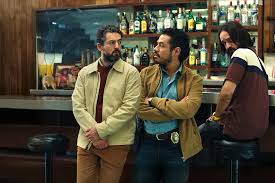
A distraught, unstable, rules-breaking “maverick” cop is assigned a new partner to keep his demons at bay?
” I feel like I’m in ‘Lethal Weapon,’” the new partner cracks.
“I know, right?”
As action comedies go, the Mexican riff on the “Lethal” movies “A Time for Bravery” takes forever to truly land a laugh. An hour goes by with maybe a grin or a smirk at most.
But the last 40 minutes of “La hora de los Valientes” (in Spanish, subtitled, or in English) makes this high-stakes but inconsequential buddy picture tolerable.
Thank “Narcos: Mexico” star Luis Gerardo Méndez for that. As Dr. Silverstein, a psychotherapist forced — via “community service” — to babysit and ride-along with wife-just-left-him loose cannon Detective Diaz (Memo Villegas of the dramas “Sin Numbre” and “Prayers for the Stolen”), Méndez finds a few laughs in the fish-out-of-water absurdity of this situation.
And Damián Szifron’s script eventually makes its way to what might be funny about having a shrink on a ride-along — counseling the cop, facing danger himself, understanding how human nature can save your skin in a world of thieves, lowlifes and highly-placed corruption, all of whom are big on murderous threats.
“One more question and you’ll catch a stray bullet!”
Dr. Silverstein — even in Mexico, the stereotypical movie psychotherapist is Jewish — is forever trying to calm thugs down and make his not-quite-out-of-control partner/”patient” a little less prone to running every red light and pulling out a gun to get the “truth” out of this informant, that suspect or Dr. Silverstein’s might-be-cheating girlfriend (Verónica Bravo).
Detective Diaz is a little touchy about faithless lovers. And he’s got the arrogance of an armed, law-unto-himself and almost immune to prosecution cop.
There’s a ruthless, highly-placed villain (Christian Tappan) who makes people disappear. He has two soldiers he’s bribed killed in the film’s opening scene.
As the grizzled police commissioner (Noé Hernández) has no idea why two soldiers have gone missing how high up their disappearance reaches and how deadly the scheme that involved them is, he gives Diaz — with a shrink/partner — the case as “occupational therapy.”
The stumbling shrink asks a lot of questions as Diaz veers from despairing to reckless (red light runner), poking at the “confronation” the angry cop has avoided and the closure he won’t get until he has that.
But Silverstein is leery of the “Wild West out there,” in a country with criminals on the loose and police and officials at every level corrupted, all of them using the “but my salary” excuse.
Silverstein amusingly makes “in a well run country” cracks and lectures to bad guys. And of course he learns on the job how to fire a gun and talk tough. That business of sneaking into a secure facility with nothing but a street cop’s stolen uniform to get him to “the restricted area?” That’s improvised, and it plays an amusing set-up to start the final showdown.
I’m not seeing many comedies on the Villegas resume, so he’s far from a natural in this role. Even as a straight man he’s humorlessly humorless. Most everybody else plays things so straight that nothing much amusing comes out of their characters or their scenes, as written.
That only pays off in the case of the deadpan villain in charge.
But Méndez kind of makes this silly, coincidence-packed nonsense play. Sort of.

Rating: TV-MA, violence, profanity
Cast: Luis Gerardo Méndez, Memo Villegas,
Verónica Bravo, Noé Hernández and Christian Tappan.
Credits: Directed by Ariel Winograd, scripted by Damián Szifron. A Netflix release.
Running time: 1:47
A hint of the inscrutable can do service to any film in any genre, and it pays off some surprising ways in “We Strangers,” an oddball domestic dramedy about a “domestic” and the dizzy white folks who hire her.
Veteran TV producer (“Dropouts,” “Hardly Working”) and director (“A Man on the Inside”) Anu Valia’s feature film debut is about a Gary, Indiana housecleaner whose “business” takes off when the wealthy white women she works for learn that she “sees things,” that she’s a psychic.
But the more “jobs” she books. the more entangled in the messy lives of her clients she becomes. And her personal life — juggling single motherhood like her single-mom sister and transporting her single mom mother — kind of unravels in the process.

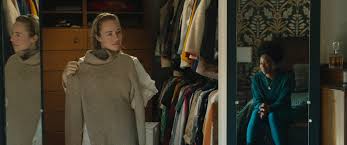


Kirby Howell-Baptiste of TV’s “Barry,””Sugar,” “The Good Place” and “Killing Eve” is Rayelle, “Ray” Martin, a housekeeper who stumbles into several well-paying jobs when her maid agency books her into cleaning a doctor’s office as he moves into new digs.
We meet her after she’s already started cleaning the doctor’s (Hari Dhillon) sububan home, having accepted the gig in a brief flashback. The weirdness begins almost immediately when a confused, almost distraught neighbor (Maria Dizzia) wonders what she’s doing there.
Neighbor Jean’s begging “Don’t SAY anything” to the doctor suggests messiness of the kind that Clorox can’t clean.
Cleaning for the doctor forces Ray into the confidences of the wife (Sarah Goldberg), who can’t believe the pretty 30something Black woman can’t help an upper middle class soccer mom pick out something to wear, and won’t accept the expensive, “cute” but bland and conservative fashions Tracy wants to give to her as Ray has given the thumbs down on that choice of what to wear to Tracy’s next event.
Their teen daughter Sunny (Mischa Reddy) is her own set of “issues,” childishly leaning on Ray for favors that Ray does — until she figures out she needs to be charging the kid for this nonsense.
The way Ray is hired-out to the weird neighbor is sketchy, “a gift,” the good doctor insists. Jean (Dizzia) is an unhappy housewife not getting what she wants out of marriage to dull U.S. Steel manager Ed (Paul Adelstein), whose racial politics are “those people” simplistic, and whose idea of a hobby is photographing U.S. flags flying over all 50 states — each flag indistinguishable from the next.
Yes, their doorbell chimes to the tune of “Dixie.” And yes, Jean’s fixation on a TV “psychic” opens her up to the idea of Ray saying “I see things,” as in dead people, fates, things to come. We get the impression that it’s just a hustle.
As word of this “gift” spreads, Ray’s reliability in her “real” life starts to bend and break as she starts oversleeping and failing in her family obligations.
And her efforts to monetize her work, her “gift” and her “favors” leave her vulnerable to what you’d call “bad karma.” Not that she isn’t owed the money or her share of good fortune.
Howell-Baptiste makes Ray hard to read, even as she’s a sort of Puck in this “Midsummer Night’s Dream” amongst white surbanites, facing proof after proof of “what fools these mortals be.”
The recurring and ever-changing image of a Caribbean volcano and various interpretations, misinterpretations and off-the-cuff BS attached to the jailed “lone survivor” of an eruption of Mount Peléeis the metaphor Valia tries to wrestle into this tale to give it “meaning.”
Characters confuse the “The Prisoner Dilemma” as they suggest the imprisoned man’s fated survival was blind luck, but also a double-edged sword. So it is with Ray’s “gift.” As rich and clueless as her clients are, is this self-interested world one that she should aspire to and mimic?
Howell-Baptiste makes a mesmerizing yet earthy and “real” tour guide through the meandering narrative of “We Strangers.” She’s the best reason to watch this inscrutable film that’s easy to take-in but tricky to decode, based on what’s included and what’s left underdeveloped or simply undeciphered.

Rating: 16+, alcohol abuse profanity
Cast: Kirby Howell-Baptiste, Hari Dhillon, Kara Young, Paul Adelstein, Sarah Goldberg, Maria Dizzia and Tina Lifford.
Credits: Scripted and directed by Anu Valia. A Quiver release on Amazon Prime.
Running time: 1:28
As comedies about Hitler, the Holocaust and Nazis hiding out in South America go, “My Neighbor Adolf” is no “Mr. Kaplan.” One of the last films to star the late Udo Kier, it’s a curious, gentle and downbeat tale about old men, the lost world of pre-war European Jewry and the seemingly futile hope for justice or simple closure after surviving when so many others did not.
Kier, who played Adolf Hitler in the recent “Hunters” TV series, and “Sid & Nancy” veteran David Hayman give soulful, subtle performances that often undercut the comic intent of this Israeli-Polish production.
And after decades of thrillers like “Marathon Man,” “The Boys from Brazil,” “Apt Pupil,” “The Secrets we Keep,” “Remember” and “The German Doctor,” getting a “comedy” out of this subject is always going to be tricky.

A brief prologue set in 1930s “Eastern Europe” (Poland) shows Polish chess champion Marek Polsky (Hayman) grousing through a summer day with his extended family at their summer home. He and his wife fuss over their rosebushes, a daughter readies a camera and parents, grandparents and children pose for a family photo.
In a flash, that world was destroyed.
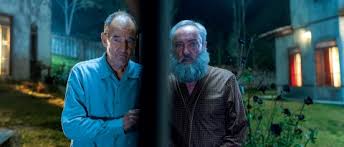
The year 1960 finds Marek a sullen loner living in a weathered house on the outskirts of town in “South America” (Colombia), an old embittered man rarely moved to change out of his pajamas, still obsessing over his black roses but closed-off from the world. Making inquiries about the house for sale next door to him is futile.
But the German lawyer (Olivia Silhavy) is persistent and and pushy. And next thing Marek knows, the house next door is being tidied up and moved into. The mysterious bearded man “who wears his sunglasses at night” arrives, with his Alsatian dog Wolfie, after dark.
Something about “Mr. Herzog” seems familiar. It’s the eyes. With newspapers trumpeting the Israeli kidnapping of Nazi war criminal Adolf Eichmann from Argentina, Marek starts to convince himself that the other infamous “Adolf” of that era is living alone with his dog in the house right next door.
I mean, he’s German. The guy paints. He’s left-handed. He has a short temper and is utterly intolerant of smokers. He’s got those piercing grey-blue eyes. And, you know, he PAINTS. Who else could he be?
Efforts to interest the local Israeli embassy’s security officer (Kinerey Peled) come to naught.
“Your neighbor is not Hitler because Hitler is DEAD!”
“Bloody amateurs” Marek barks (in Yiddish, then English). “Bloody amateur!” is what he mutters at the neighbor who sets up his chess board outdoors.
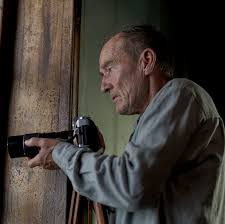
If Marek is going to “prove” and get evidence and convince Mossad agents to take action against “Mr. Herzog,” he’ll need to study up. A bookstore visit to stock up on Nazi and Hitler books earns a smirk from the clerk. Buying a Minolta camera, a tripod and big lens should help — if he can figure out the tripod.
The “bloody amateur” Nazi hunter underlines every trait he reads that Hitler had that Herzog seems to share. He ticks off the boxes and snaps surreptitious photos.
But to get really close to his quarry, he’ll have to dial down the feud that begins over the unruly, roaming dog, his prized black rose bush and which includes property line issues.
A little chess? Borrow some coffee? The two lonely old men play, with “Herzog” knocking over the board when he loses and brushing off compliments about his painting “hobby.”
“I started when I was very young, but I guess I was better at…other things.”
The script that director Leon Prudovsky — he did the Israeli comedy “Five Hours from Paris” — and Dmitry Molinsky serve up is long on charm and almost amusing pregnant pauses. But Kier’s cagey performance doesn’t allow for anything broad and laughable. Hayman’s grousing and fumbling efforts at espionage (breaking and entering) come right up to the edge of funny.
The picture simply isn’t pitched in a light enough tone to work as comedy, and the “mystery” isn’t mysterious enough to come off either. A reach for “shared humanity” rings hollow.
Still, it’s rewarding seeing these two paired-up in “My Neighbor Adolf,” even if most of their scenes together leave us wanting more.

Rating: unrated, nudity, toilet trips and profanity
Cast: David Hayman, Udo Kier, Olivia Silhavy and Kinerey Peled.
Credits: Directed by Leon Prudovsky, scripted by Dmitry Molinsky and Leon Prudovsky. A Cohen Media Group release.
Running time: 1:36
“That’s life,” the anti-hero of “Detour” growls in voice-over. “Whichever way you turn, fate sticks out a foot to trip you.”
Hardboiled, archetype-upending and gorgeous in its bare-bones minimalism, “Detour” is quintessential film noir.
“The Maltese Falcon” preceded it and “The Big Sleep” followed it — big studio productions with Bogie and Lorre and Bacall and John Huston conjuring up a genre that the French would later label “film noir.” But cheap, briskly-shot and briskly-cut “Detour” is the great primer on the genre.
Nobody in it got famous. And the director never shook his “B-movie” bonafides.
Even in this now-acknowledged classic, we see the sloppiness of low budget haste — images flipped to show cars going east instead of west, with the driver and steering wheel on the wrong side — and the crutch of “narration” was never more superfluous in a film that was voice-over narrated to death.
But this lean, blunt and talky thriller grew in stature over the decades. The lore attached to it was added to again and again, and was often wrong — “shot in a week” — and troubling when it wasn’t. Read boxer-turned-star Tom Neal‘s later life biography if you want to know what I mean.
In 1992 “Detour” was added to the National Film Registry by the Library of Congress, denoting it as essential cinema and one of the finest films to come out of that cynical, world-weary/underworld-friendly genre that took Hollywood by storm after World War II made the movies and America grow up.
I hadn’t seen it since its 2018 restoration. That’s as good an excuse as any to dive back into an all-time favorite.
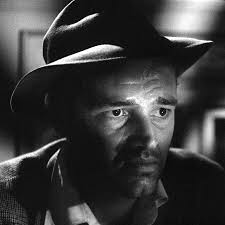
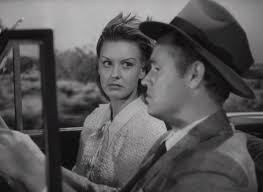
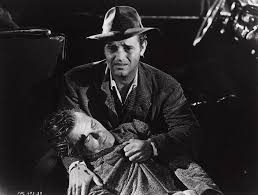
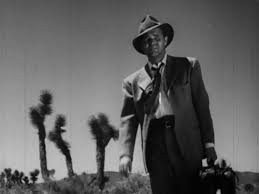
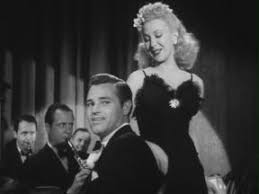
Neal plays a rumpled, grimy hitchhiker when we meet him in a Reno diner late one night. Al Roberts has the haunted look of a man who’s seen things, done things and heard things.
He’s been west. He’s headed east. And that’s about all you’ll get out of him.
So whatever you do, don’t play the wrong song (“I Can’t Believe You’re in Love With Me”) on the jukebox.
“Wait a MINUTE, pal! That’s my nickel, see?”
As the lights in the diner dim around his stubbly face, Al’s interior monologue — the flashback of the life that brought him here — begins.
There was New York, a nightspot called the Break’O Dawn. And there was a dame — Sue (Claudia Drake) — the singer where Al played the piano.
“Let’s split this town,” says she.
“Next week we’re gonna make with the ring and the license,” he counters.
But “split” she did. And when the longing grows too much, Al takes a $10 tip, a “piece of paper covered with germs — it couldn’t buy me nothin’ I want” and sets out by thumb across country as “I’m Always Chasing Rainbows” wafts into the score for the first of many times.
“If only I’d known what I was getting into that day in Arizona,” when he thumbed that last ride to the left coast in the Lincoln V-12 convertible of a big-talking bookie (Edmund MacDonald).
A death will follow, one “nobody’ll believe” was an accident. And a brassy, bullying hitchhiker — Vera (Ann Savage) — runs into our guy Al in that high-end Lincoln and proceeds to guess what’s happened and work the angles, threatening her way into blackmail.
We don’t have time to wonder why this piano player would give an obvious femme fatale his real name. We’re dumped into this jam with him, wondering if she’ll rat him out, help him out or somehow manage to do both.
Continue readingPreppers, survivalists, Rapture fans and doomsday cultists may get a kick out of “The Great Flood,” a downbeat-to-the-point-of-bleak thriller about the End of Human Civilization.
A young Korean mother (Kim Da-Mi) carries her six year-old (Kwon Eun-sung) up several flights of their Seoul high-rise. They swim through rapidly rising waters, duck tidal waves, elbow past and around the shocked and the concerned but not panicked and the faithful re-assuring each other that the disaster around them is “God’s will.” She’s been singing along with undisciplined and on-the-spectrum-needy Ja-in as she tries to hide the terror in her eyes.
But that security guy (Park Hae-soo) from her workplace who called? The one looking for her so that she can be helicoptered off the roof? He doesn’t sentimentalize, soft-sell, sugar-coat or break-it-to-her gently.
“Humanity is doomed.”



Dogged determination in the face of hopelessness is the byword in writer-director Kim Byung-woo’s thriller, which is meant to be an action essay in the core compassion of humanity. “Abandon hope all ye who enter here” may suit the mood this film sets. But keeping calm and carrying on is a hard ethos to shake when the stakes are this high.
In cinematic short hand, “Great Flood” is a riff on Korea’s Oscar contender of a few year’s back, “Concrete Utopia,” mashed-up with the Tom Cruise-dies-again-and-again thriller “Edge of Tomorrow,” set in a present day end times of “2012.”
There are “Titanic” moments in the rising waters in confined spaces, the floating corpses and terror of those swept away, and grace notes of an elderly couple facing the end together.
But our writer-director (“The Terror Live” was his) pushes sentiment aside time and again, often to the film’s detriment. Because this disaster movie with a sci-fi subtext is about racing to make AI work as a means of humanity’s survival.
Our mother figure, Dr. Gu, has been researching, hard-wiring and programming the Emotion Engine. She doesn’t quite have it cracked, but in this “Edge of Tomorrow/Matrix” doomsday, she might break through as she tries thousands of ways to live this doomsday differently.
Will she save herself or not, save this child or others or not, help neighbors or not, fend off murderous looters rather than simply fleeing?
This cynical, unemotional, “just following orders” security guy will hinder, help, criticize and judge her efforts to cycle through every possible scenario, like the computer in “War Games” which has to try every version of tic-tac-toe to figure out if winning a nuclear war is possible. Her T-shirt changes numbers on its logo with every iteration she tries.
For all its stunning visuals — large scale disaster, vivid underwater survival scenes and grim flashbacks to a trauma from Dr. Gu and the child’s past — “The Great Flood” never crosses the threshold from watchable to relatable, a movie with characters we can identify with and an end goal that gives anybody hope.
The plot and performances are dispassionately rational to a fault. Kim might as well have made ‘We have to SAVE bit coin!” the big payoff.
That may just be a Western perspective on Eastern views of civilization, humanity and time. Or maybe I’m just not into “bleak” in humanity’s current timeline. But Kim creates an intentional emotional distance with his characters by dehumanizing them.
Odd moving moment aside, “Great Flood” is “Planet of the Apes” with a digital “Damn you all to hell” finality, “Titanic” without a Jack and Rose to root for, without Celine singing us into enduring the unendurable.
If the human heart can’t “go on,” what the hell’s the point?

Rating: TV-MA, violence, profanity
Cast: Kim Da-mi, Park Hae-soo and Kwon Eun-sung
Credits: Directed by Kim Byung-woo, scripted by Kim Byung-woo with Moises Velasco. A Netflix release.
Running time: 1:48
James Cameron was very much running out of interesting things to say and show in his “Avatar” franchise with the second movie, “Avatar: The Way of Water.”
The third film, “Avatar: Fire and Ash” confirms that fear and adds on a dose of dread for good measure. On no, the 70something sci-fi impressario has two more “Avatars” in the works?
And as often as the latest film pauses to show us this or that mode of travel — riding Pandora’s version of pterodactyls through the skies over this lush lunar ecosystem, clinging to the fins of sentient, hunted Pandora whales under the sea — will Disney be able to make rides simulating the experience that would be a draw?
The three-hour-plus spectacle of “Fire and Ash” trips over itself, start to finish. Our killable villains (Stephen Lang plays their leader) keep surviving in Avatar form, keep catching “Sully” (Sam Worthington, who hasn’t gotten better with the years) and ineplicably letting this “traitor” Marine who’s “gone native” escape.
There’s still more mineral and animal exploitation by the corporate “Sky People” from Earth who mine it, hunt its whales and are building a bubble city as a colony, since no one on Earth can breath the planetoid’s poisonous atmosphere. But the villains (Giovanni Ribisi, Edie Falco and Lang) seem kind of half-hearted about their efforts this time.
The marine biologist (Jemaine Clement, never worse) who warns of the complexity of the eco-system they’re pillaging is no more convincing this time.
Jake Sully and his tall, thin and ferocious Na’vi “woman” (Zoe Saldaña) are still mourning their lost son, half-blaming their surviving son and somewhat appalled that the orphan Sky People lad (Jack Champion) they’ve taken in, the weakest link in their family (he’s short, human and has to wear an oygen mask) is magically enabled to breathe Pandoran air.
If humans can breathe, it won’t be long before they overpopulate and pollute that air and kill off the natives.
And there’s a new Na’vi tribe lead by a warrior/conjure woman (nepo baby and grandbaby Oona Chaplin) who hunts humans and weaker Na’vi alike.
“Show me how to make THUNDER,” she demands of the Earthlings and their automatic weapons.




Yes, there are chases and firefights and battles, captures and escapes. No, there’s no allegory connecting all that to the awful state of the Earth right now save for the fuzzy environmentalism being ignored.
“World building” is the priority here. Think VR marketabilty. Think Disney World. That certainly figured into the screenplay.
The mystical Authurian mumbo jumbo about the people, the plants and the planet being “one” is hinted at time and again, mostly in the filler scenes between brawls. The eco-system fights back theme is more overt, as are calls for pacifism.
But “Avatar” wouldn’t be much of an action movie if pacifism caught on. It’s not much of one as it is.
The novelty of Signourney Weaver playing a teenage-voiced CGI version of herself as a Na’vi/human clone wears off quickly. But the CGI blends so much more smoothly in this film that Champion — as a human only seen in human form — is plainly acting and interacting with the CGI/motion captured players he shares scenes with so naturally that we don’t notice the technology.
It’s just that the performances have run out of human and digital gas. Even the over-acting is wooden, and bits intended as humorous suggest that Cameron’s been on the soundstage and mo-cap green screen stage too long to remember what funny looks and sounds like out in the real world.
The story is boring, and dragging it out for over three hours will only make it tolerable when it hits streaming.
“No dear, don’t pause it while I duck into the kitchen to whip up some Eggs Benedict. I’m sure I won’t miss anything.”
I’d suggest waiting until this streams, or becomes a theme park ride. All this world-building is pretty much coming to naught in movie form.
Cameron’s run out of interesting things to show and tell us, and Goddess Eywa knows I’ve run out of things to say about “Avatar.”
Rating: PG-13, violence, nudity, profanity
Cast: Sam Worthington, Zoe Saldaña, Stephen Lang, Cliff Curtis, Sigourney Weaver, Jemaine Clement, Jack Champion, David Thewlis, Giovanni Ribisi, Kate Winslet and Oona Chaplin.
Credits: Directed by James Cameron, scripted by James Cameron, Rick Jaffa and Amanda Silver. A 20th Century release.
Running time: 3:17


Sydney Sweeney’s fans will come to the “The Housemaid” for the nudity and the explicit sex. Or so the cleavage-crammed advertising for this thriller would suggest the studio believes.
But they’ll stay for the violence, the twists, the climax and anti-climaxes spoiled by redundant voice-over-narration for dummies?
That said, I wouldn’t be shocked if this Paul Feig thriller — he did the scheming women “Simple Favor” pictures — touched a nerve and found an audience, any more than I wasn’t shocked at the sight of co-star Amanda Seyfriend acting circles around last year and this year’s “It” girl.
Sweeney, playing an unemployed young woman living in her car and desperate enough to endure a job that features humiliation and the threat of worse from the rich, privileged pricks who hired her, brings everything but “desperate” to her performance. Her bland wariness gives away the suspense this picture needs almost as much as a better title.
Letting actors/actresses read to the very end of the script isn’t always the best idea.
The job interview with Mrs. Winchester (Seyfried) makes it seem like a done deal. Nina even confesses to job prospect Millie that the one child she’d be expected to care for, along with cooking and cleaning and errands, will soon be joined by another. She hasn’t even told her husband, she confesses with widened eyes.
But hell, she hasn’t finished interviewing job prospects either. And when husband Andrew (Brandon Sklenar of TV’s “1923”) walks in, he’s surprised about the whole “live in” housemaid thing.
Something’s a little “off” in eager-to-confide Nina and “hot mess” doesn’t begin to do it justice.
Millie? She’s got secrets, and that appointment she isn’t allowed to miss tips us off. It’s with her probation officer.
The mystery unravels as a “Who’s playing with whom” tale, with testy Nina flipping out over perceived failings and hurling blame for everything that goes wrong at Millie, who — being “desperate” — just has to take these mind games and manipulations.
He’s awfully nice to her, but Millie should also be wary of the hunky, rich husband of the manor. If he’s seducing her in her dreams, that’s fair warning.
She opens up about her predicament in the voice-over narrated diary her probation officer insists she keep. No, not one line of that narration– which runs the length of the movie — is pithy enough to be quotable.
As the script (based on a Rebecca Sonnenshine novel) gropes around for suspense it stumbles through deliberate blind alleys and assorted “surprise twists.” The whole second half of this long-film-that-plays-longer is so clumsily structured that it generally spoils the vengeful fun.
Seyfried takes up the challenge of pairing-up with Sweeney with a manic bravado that overwhelms Sweeney’s perpetual poker face. Elizabeth Perkins might have taken a few sips of battery acid between takes to dial up the cruel, imperious, judgmental mother-in-law whom nobody in the house, except for her son, can please.
Indiana Elle plays Cece, the snotty little girl of the house who channels her granny as she holds “the help” to her seven year-old standards, even when it comes to morning orange juice.
“Juice is a privilege. Not something you drink out of a dirty glass.“
There’s promise to this or that character and in the twists that almost certainly played better in the novel than Feig manages on screen. Anything promising is squandered in a pokey, obvious movie that stumbles towards stupid in the anti-climactic latter acts.
As star vehicles go, “The Housemaid” doesn’t do Sweeney any more favors than the flops “Eden,” “Christy” or “Echo Valley” did. Two years into top billed stardom, and her best work is still the TV series (“Euphoria,” “White Lotus,” “The Handmaid’s Tale”) that first made her a sex symbol, star and allegedly a name you can market your movie under.
We’ll have to wait and see if this sells tickets. But in the meantime, our workaholic star should take a minute, eyeball her bland performance(s) and hunt up some coaching. Her resume is lengthening — for now — but her range and craft aren’t growing. And sex appeal in the movies has a very short shelf life.
Rating: R, violence, explicit sex, nudity and profanity
Cast: Amanda Seyfried, Sydney Sweeney, Brandon Sklenar and Elizabeth Perkins
Credits: Directed by Paul Feig, scripted by Rebecca Sonnenshine, based on the novel by Freida McFadden. A Lionsgate release.
Running time: 2:11
Let’s see if there’s anything to see or make a fuss about.
Interesting way for James Cameron to spend his filmmaking capital and his last years as a major director, in any event.
As the pre show ads are playing on a blank screen, it’s not looking good.
Oscar winner Zoe Saldana, the hardest working woman in show business, is why we keep coming back.

One has learned to temper one’s expectations when settling in to watch any Palme d’Or winner from the Cannes Film Festival over the years. One has.
A “best picture” honor selected by an ever-changing jury of filmmaking peers from all over the world, the politics and peer review that tends, often as not, to honor obscurity and/or indulgence make one leery of that “Palme d’Or Winner” label.
“Wild at Heart,” “Eternity and a Day,” “The Tree of Life,””The Birds, the Bees and the Italians” and “The Square” anyone?
The best I typically hope for from your average Palme d’Or winner is “I don’t mind the way it passes the time.”
One has to generally set a lot of time aside for any Wim Wenders film, seeing as how he tried to get a five hour cut of “Until the End of the World” into theaters (he didn’t) among other abuses of the clock. So “Paris, Texas” also has that weighing into my years of skipping past it.
But Wenders’ leisurely 1984 meditation on the American landscape, toxic relationships and the profound pull of love has been newly-restored. It’s the movie that “made” veteran bit player Harry Dean Stanton into an indie icon and is also memorable for a great supporting performance by Nastassja Kinski.
So problematic and dated gender politics aside, its famously indulgent twenty minute duel monologues climax and that Palme d’Or caveat emptor be damned. It must be seen, if only for the lonesome Sam Shephard screenplay and the striking way Curaçao native Robby Müller (“Breaking the Waves”) filmed grand Western vistas and the seedy and sandy side of Texas.
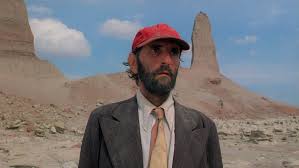
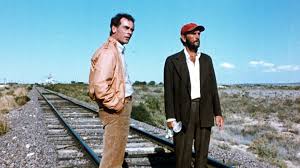
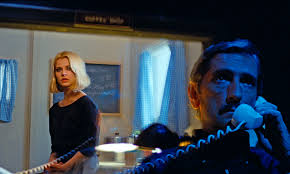
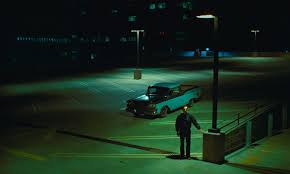
Our silent protagonist (Stanton) emerges from the wilderness in a red cap, sunburned beard, shoes worn down to sandals and a suit that was last fashionable in the ’50s and last cleaned not long after that.
He faints in a roadside/desert edge Terlingua, Texas bar, and the only ID the brusque, stogey-smoking German Mennonite doctor (Bernhard Wicki) can find on him is a business card with a California phone number.
That’s how Walt Henderson (Dean Stockwell) learns his brother Travis isn’t dead. Four years missing, four years in the wilderness when even Jesus limited himself to just 40 days, Walt is shocked. But he flies in and navigates his way to remote Terlingua in that pre-GPS stone age. Even he can’t get Travis to talk, or to stop walking off every chance he gets.
Walt eventually gets the never-flown/never-will Travis home to L.A. where the wandering brother gets requainted with Walt’s wife (Aurore Clément) and with their son. But Hunter (Hunter Carson) is actually Travis’ son.
As Travis starts talking and sounding more rational and the kid adjusts to his presence, Travis resolves to do something that might explain why he took his sojourn in the wilderness. He and Hunter will load up his old Ford Ranchero and track down the lad’s mom.
Continue reading
 Movie Nation