
Movie Review: Disney remakes “The Little Mermaid,” but is it “music to me?”

Some years back, I polled actors, filmmakers and critics for a column I was writing about “a movie that made you cry.”

And a couple of people took me aback when they mentioned “The Little Mermaid.” But they were old enough to have seen the Disney animated classic when it was new, in theaters in 1989. And like me, they were absolutely bowled-over and profoundly moved by the experience.

Disney, the gold standard in film animation, hadn’t made a movie this beautiful, this joyous and this moving in decades. Just the year before, a middling ‘toon titled “Oliver & Company” had tipped us that maybe they might find their mojo again. Then Disney brought in the team that turned “Little Shop of Horrors” into a musical, and composer Alan Menken and lyricist Howard Ashman, with directors Ron Clements and John Musker, and literally changed the world.

We all learned how good that theatrical convention, the “aspirational” first act song of longing, could be.

“I wanna be where the people are
I wanna see, wanna see ’em dancin’
walkin’ around on those
Whaddya call ’em? Oh, feet…”

Disney animation was saved and transformed, new enthusiasm for new attractions based on new films in the theme parks grew, and even moribund “Starlight Express” era Broadway was revived with The Mouse leading the way.

And to think it all started when Ashman rhymed “sardine” with “beguine.” Because “Darlin’ it’s better down where it’s wetter, Take it from me.”

So it’s no surprise that when Disney continued its practice of turning animated classics into live action (with animation) remakes, director Rob Marshall (“Chicago,” “Into the Woods,” “Mary Poppins Returns”) and company were a little daunted, no matter how much experience they brought to the production, no matter how many earlier animated jewels they’d turned into live action features.

They couldn’t take any risks with this, the Mermaid Movie that Changed Cinema, revived Disney’s brand, and set the table for Pixar collaborations, a Marvel buyout and world dominance.

And it’s sadly no surprise that the film they made from this frothy delight is stately, slow and almost operatic in its self-seriousness.

They cast a lovely, emotive singer (Halle Bailey) as the new Ariel, and kind of pinned her down in the part. She’s still capable of moving us with “Part of Your World,” but we have to wait forever to get to it while all this pointless backstory is slow-walked across the screen.

It’s not really covering new material. We’re still meeting Ariel’s “sisters of the seven seas” and her disapproving of all-things human and terrestrial father, King Triton (Oscar winner Javier Bardem). It just takes forever to do it.

As expensive as making all this acting and bickering and singing underwater stuff come off was, you can’t afford to trim for pace and time, I guess. Thus, we end up with a “Little Mermaid” over 50 minutes longer than the original.

We don’t hear a song for over twenty minutes at the movie’s opening, and there are similarly long stretches between numbers, making one wonder if they meant for this to be a “musical” remake at all.

One tune was dropped, others (by Lin Manuel-Miranda) added so that Awkwafina, who plays Scuttle — a white diving boobie — could sing and rap something fresh for the soundtrack. Buddy Hackett voiced the original Scuttle, who didn’t sing.

Did we need to give the handsome prince (Jonah Hauer-King) who falls overboard his own number? Sure. I guess. But I’ve forgotten it already.

You remember the story — Ariel collects human items from shipwrecks, detritus that’s fallen overboard and longs to be “Part of Your World.” Her yearning doesn’t move her compliant but fearful fishy friend Flounder (Jacob Tremblay) or her father’s Crustacean advisor Sebastian (Daveed Diggs from “Hamilton”). But saving the shipwrecked prince from drowning cinches it.

She meets her father’s exiled octopi sorceress, “Aunt” Ursula (Melissa McCarthy, who steals the movie), a bargain is struck and she has feet, but no voice, and mere days to win the prince’s love on land before Ursula owns her mortal soul…and voice, etc.

The prince and his court are a multi-racial but bland lot. Look for original Ariel Jodi Benson as a street vendor in town.

Scuttle/Awkafina cracks wise and makes Scuttle” every wrong description of this or that human artifact funny. Sebastian the crab kvetches — “Oh my, what a softshell I am turning out to be.”

And the show stopper, “Under the Sea?” It stops and starts and gets at a fundamental failing of this adaptation.

The original number was a riot of fish and sea creatures, everything Sebastian names in the song, crammed into the frame, layered on top of each other. Here, “even the sturgeon and the ray” and “oh that blowfish blow” get their own moment in the frame alone. In digitally recreating real fish, and a real crab for Sebastian, they’ve taken away ALL the sight gags the characters had, gags that gave the comedy that extra boost.

The riotous, frenzied fun that Disney animators would repeat with “Be Our Guest” in “Beauty and the Beast” and “Never Had a Friend Like Me” in “Aladdin” is gone.

Anybody worried that Bailey (“A Wrinkle in Time”) wouldn’t measure up as a singer and empathetic actress is proven wrong. And McCarthy not only sings, her Ursula is the stuff of many an eight-and-unders nightmare, a tentacled terror bathed in gloom and menace.

Long before Disney took “Beauty and the Beast” to Broadway, they’ve been a corporation that knew how to find ways to wring more cash out of intellectual property they already owned. Of course they’re going to remake their greatest hits. And even with all the animation and digital trickery it took to make “Mermaid,” isn’t the most pointless of these “live action” remakes. That title still belongs to “The Lion King.”

But this “Mermaid,” weighted down with expectations, responsibility to the corporate bottom line and what feels like fear that “We’re going to screw this ‘sure thing’ up,” sinks and rarely swims, an epic that impresses when it’s under the sea, but never really moves us. And when it’s on dry land, it could not be more bland.

Rating: PG, scary images, scenes of peril

Cast: Halle Bailey, Jonah Hauer-King, Melissa McCarthy and Javier Bardem, with the voices of Daveed Diggs, Jacob Tremblay and Awkwafina.

Credits: Directed by Rob Marshall, scripted by David McGee, based on the 1989 Disney animated film, adaptation by Ron Clements and John Musker, and the book by Hans Christian Andersen. A Walt Disney release.

Running time: 2:15

Posted in Reviews, previews, profiles and movie news | Comments Off on Movie Review: Disney remakes “The Little Mermaid,” but is it “music to me?”

Movie Review: What horrors are hidden beneath the “Cracked” painting?

A lot of thrillers are undone by my least favorite convention of the genre — over-explaining. When this happens in a horror movie, one that traffics in the supernatural, it just seems worse.

Yeah, that thing that the natural world and natural laws say could never happen TOTALLY makes sense now. Thanks!

That plays a role in the undoing of “Cracked,” a generally solid, creepy thriller from Thailand about “haunted” paintings and what happens to those who own them.

The matched set, “Portrait of Beauty,” parts one and two, look like posters from the James Bond movies of the ’60s — a scantily-clad model in an erotic pose.

But Ruja, the daughter of the painter, is told they have great value. As this widowed Thai-American (Chayanit Chansangavej) has flown home from Chicago after getting the news of her father’s death mainly to get the cash to save her little girl’s vision, that’s what matters to her.

The “old friend of your father” (Sahajak Boonthanakit) who fetched her may give her the creeps. The “story” of the paintings inspiring spree killings is unsettling. And dang it, they need restoration to get top dollar at auction.

Let’s move on from the nightmares that return for Ruja and which seem to be visiting her daughter (Nutthatcha Padovan) now that they’re back in her family’s Thai mansion. Let’s pay little heed to how creeped-out the old housekeeper seems about the sinister, supernatural goings-on associated with the place and the paintings in the studio out back.

Snakes — including cobras — abound in the gloom. A red sash that must have belonged to a victiim — perhaps used to strangle her — plays a part.

Ruja is at her wits end when the kindly “cute” restorer Tim (Nichkhun) shows up, pooh-poohing any idea that the paintings are “haunted.” But something has been painted over which the cracks start to reveal.

Chansangavej makes a properly stricken heroine, desperate to save first her daughter’s sight, then her daughter’s life. And Nichkhun manages the “cute” and “skeptical” paint restorer who has to be “convinced” that something sinister is up.

Director and co-writer Surapong Ploensang does well enough by most of the genre conventions, building suspense in the early acts. But “Cracked” hits a wall in its repeated moments of “Little Rachel is in PERIL” and seems to have maxxed out its possibilities before all the “explaining” starts.

Which is why the “explaining” starts, I suppose.

It’s always interesting to see how another filmic culture approaches a genre much of the rest of the world has already beaten to death. Here, Ploensang, making his feature filmmaking debut, trips over the same thing that a thousand others have stumbled over before him.

Leave a little mystery. Leave the “explaining” to the viewer.

Rating: unrated, graphic violence, profanity

Cast: Chayanit Chansangavej, Sahajak Boonthanakit, Nutthatcha Padovan and Nichkhun

Credits: Directed by Surapong Ploensang, scripted by Ornusa Donsawai, Pun Homchuen, Eakasit Thairaat and Surapong Ploensang. A Film Movement release.

Running time: 1:32

Posted in Reviews, previews, profiles and movie news | Comments Off on Movie Review: What horrors are hidden beneath the “Cracked” painting?

Movie Review: A “Gringa” teen finds her dad, and her soccer game South of the Border

“Gringa” is an intensely likeable coming-of-age dramedy trapped in an over-reaching screenplay, an entirely-too-tidy tale that works best when it’s unkempt, scruffy and a bit crumpled.

It’s built on a winning performance by Jess Gabor of TV’s “Shameless,” and features engaging turns by the reliably adorable character actors Judy Greer and Steve Zahn, with a warm supporting performance by Roselyn Sanchez to recommend it.

What goes wrong? Read on.

It’s a simple sports drama about a struggling, unpopular teen who has nicknamed herself “Large Marge.” She’s not noticed in high school, eats alone in the cafeteria and compounds that by blunders on the soccer pitch.

It’s not like her only friend is her dog, “Puker.” But when mom (Greer) is an attractive, single real estate agent in the habit of bedding her clients in the condos she and Marge are “squatting” in “to save money,” it’s not like anybody’s going out of their way to get close to her.

Mom? She’s a walking, talking motivational poster.

“Today’s your day! Go TAKE it!”

The kid (Tomas Ruiz) who wears eye shadow to his job at her favorite fast food joint might be the one classmate she considers a close friend, but the script barely has him in the movie before A) her Mom is killed in an accident, B) her bitter grandparents from Scottsdale show up to take her home and C) she finds out that the father she never knew is wasting away is Mexican Margueritaville.

On an impulse, she loots her mother’s wrecked car at the impound lot, gives away her dog to Fast Food Brad and makes her way to the border. She’s going to Lo de Marcos.

That’s where Jackson (Zahn), a former professional soccer player who quickly fell into the bottle, is a local character, local handyman/trash collector, local “surfer dude” and village drunk.

But he’s the gringo half of the coaching staff of the local girl’s soccer team. The good padre head coach (Jorge A. Jimenez) puts up with his boozing and profanity as a sort of project.

And now the drunk has a teenager to take care of.

“When did you get a daughter?” “I ordered her a long time ago and she just got here.”

Sanchez plays the cantina manager who puts up with the drunk, maybe even lets him call her his “novia,” and doesn’t let him shirk the otherwise-orphaned hija who shows up at his door.

Marge will try to surf, and learn “Nobody surfs the first day.” She will get the attention of the local 20ish hunk (Nico Bracewell). She will try to fit in with as the disdained “gringa” on dad’s soccer club.

And as Dad binge-drinks, she will binge-eat. “Large Marge” is how she sees herself, after all.

This Patrick Hasburgh script bites off a few serious subjects — alcoholism, grief, an eating disorder and the “undocumented” folks trying to cross the border — and burdens a pleasant if too lightweight formula sports movie with them.

It’s OK to want to add a little weight to your sweet nothing of a movie. But the shifts in tone are jarring, especially in a movie as predictable as this one.

Surfing and soccer, grief and body image issues, addiction and immigration, all of these are plausible plot elements to saddle on a movie at this time and at this locale.

But there are so many that they clash and make the picture grind its gears every time it convinces you how charming it might be. It’s got one of the sweetest quinceneara scenes I’ve seen and a few father-daughter bonding moments, even nice mother-daughter interactions are always erased by something abrupt, under-scripted or just off.

Eliminate a “complication” or two and there was a cute character dramedy in her that this cast could have made work.

Rating: unrated, violence, sexual situations, alcohol abuse, profanity

Cast: Jess Gabor, Steve Zahn, Nico Bracewell, Valentina Buzzurro, Roselyn Sanchez and Judy Greer.

Credits: Marny Eng and E.J. Foerster, scripted by Patrick Hasburgh. A Gravitas Ventures release.

Running time: 1:42

Posted in Reviews, previews, profiles and movie news | Comments Off on Movie Review: A “Gringa” teen finds her dad, and her soccer game South of the Border

Classic Film Review: Scott, Coppola and Schaffner bring “Patton” (1970) to vigorous, profane life

One way you judge classic movies is by the parts that stick with you. By that measure, I’ve long regarded “Patton” as something of a mirage, a war movie about a personality and a larger than life actor who won the Oscar for bringing that personality to the screen, a picture of bravura moments and yet many duller command conference intrigues.

Ask most people what they remember about this epic and they’ll talk about the cussing, that opening “pep talk” in front of a gigantic American flag, a speech that apparently is based on what Third Army soldiers remembered of Patton’s patented off-the-cuff get-acquainted with the troops speech.

“Now I want you to remember that no bastard ever won a war by dying for his country. He won it by making the other poor dumb bastard die for his country.”

It’s a blustering, sentimental and patriotic rhapsody in profanity. And when the movie was new, in 1970, that speech set a tone that was jarringly out of step with a country souring on the Vietnam War, cynical and more in the mood for “M.A.S.H.” and “Kelly’s Heroes” than a John Wayne flag-waver that went out of its way not to cast John Wayne in the lead.

For a war movie, there are a maybe half a dozen combat scenes, most quite brief. But director Franklin Schaffner (“Planet of the Apes,” “Papillon,” “Islands in the Stream,” “The Boys from Brazil”) limited himself to one big desert set-piece battle, filled with real tanks, real bombers and fighters sweeping in low and a sea of extras dodging faked explosions under a sky littered with pyrotechnics department air bursts.

That’s still impressive, over 50 years later.

You remember the music, that jaunty, glorious march by Jerry Goldsmith. They titled the film “Patton: Lust for Glory” in Britain to sort of soften the harsh portrait the film paints of the brilliant British popinjay, Gen. Bernard Law Montgomery. The moment we hear that march in its full glory as Patton leads Third Army in a dash across France, the movie and anybody who sees it forgets all about Monty, the hero of El Alamein.

But towering over all of it in our memory is the eagle-beaked aggression of George C. Scott, one of the greatest screen actors this country has ever produced, a stunning presence so idenfitied with the character that even historians have a hard time remembering what the REAL Patton looked or sounded like, if they’re honest.

Scott won the role after Robert Mitchum, Lee Marvin, Burt Lancaster and Rod Steiger were considered and approached over the years as 20th Century Fox chief Darryl F. Zanuck, a WWI veteran who got himself into the thick of WWII action as an Army Signal Corps Colonel, was eager to produce a combat epic to rival his big budget, all-star D-Day account, “The Longest Day.”

What seems timeliest about this 1970 release at this moment, in the middle of the latest attempt by Hollywood’s screenwriters to get decent pay, compensation commiserate with the many platforms their “content” now covers, is the writing.

Francis Ford Coppola reworked material from many sources into a script that’s mainly an eyewitness-to-Patton view of the famous general. The structure brilliantly uses the familiar device of letting us see his foe’s view of the man through the German officer (Siegfried Rauch) who “researches” and “explains” Patton, in German (with subtitles) to Generals Rommel and Jodl (Karl Michael Vogler, Richard Münch) and the viewer.

Coppola peppers the dialogue with Pattonisms, profanity, sprinkling in quotations from famous generals and historians in French and Latin. He plays up Patton’s erudite, courtly side, his belief that he is reincarnated, a soldier who has fought in many wars over the millennia, making it his “destiny” to lead a great army in the greatest war of all.

“The soldiers lay naked in the sun. Two thousand years ago. I was here.”

The screenplay leans into the blood rivalry with Rommel and finds fun in the equally bitter but somenhow playful one with Montgomery, who has been depicted in a few films, but whose memory has been replaced by the (appropriately) clipped, high-voiced barking of Michael Bates in this film.

Coppola tapped into American Cold War/Vietnam War politics by reminding 1970 viewers of Patton’s mistrust and disdain for the Russians.

“My compliments to the General. Please inform him that I do not care to drink with him or any other Russian son of a bitch.”

Patton’s bellicose fetishizing of war as a human endeavor is meant to bathe some of the hero worship in blood, and it does. But America embraced Archie Bunker’s intolerant form of patriotism as we laughed at it.

Coppola has talked of being fired from this film. But when the finished product hit theaters, almost all of what was on the screen came from his pages, structure, research and invention.

And through it all Scott bellows, swaggers, rages and teases, all but devouring the screen, if never quite insecure enough to steal scenes from the likes of Oscar winner Karl Malden as “The GI General,” Omar Bradley. You can’t watch “Patton” and not be utterly consumed with the title character, which almost works against the film.

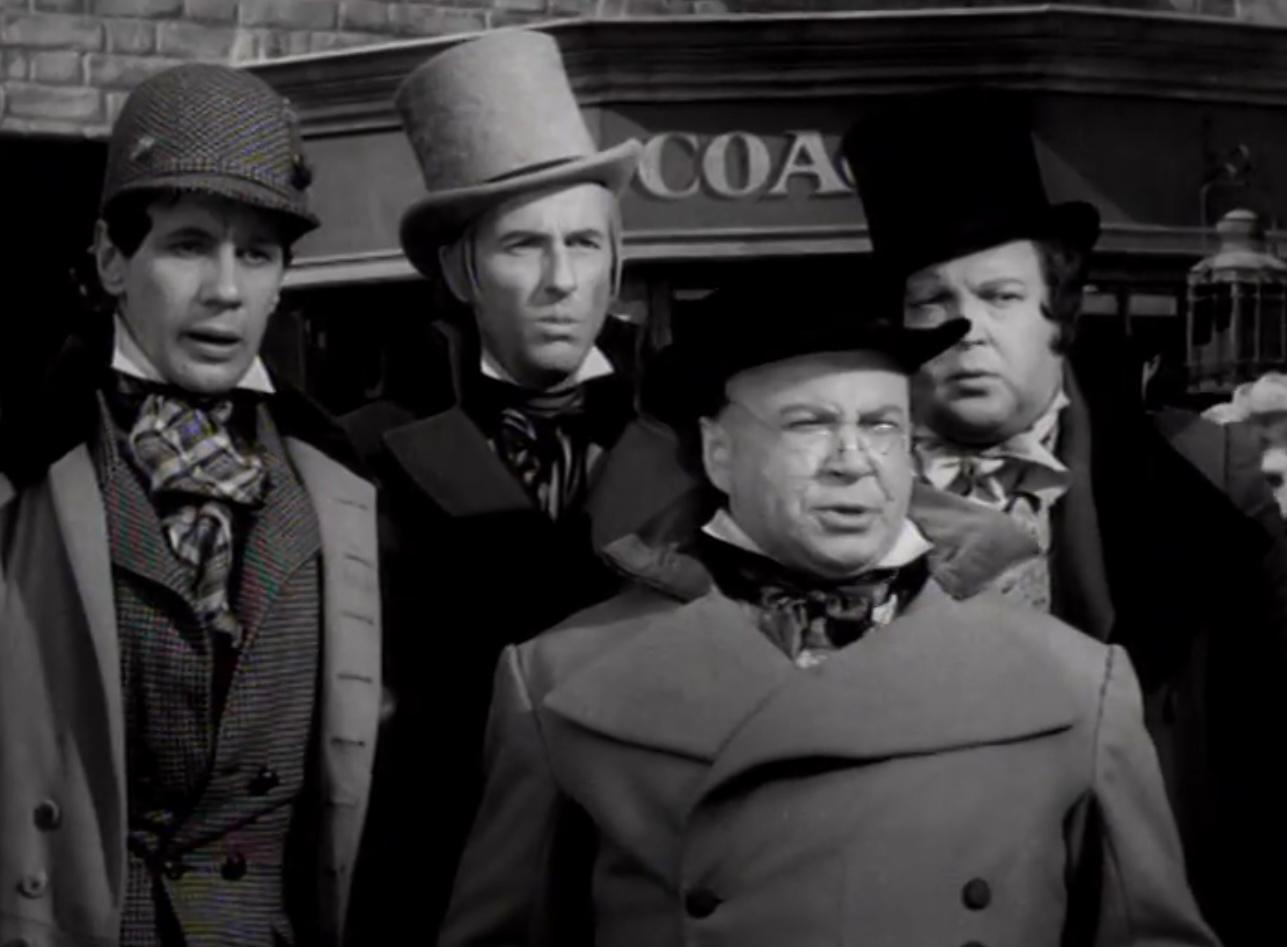
Scott went on to other larger than life characters — a version of Hemingway in “Islands in the Stream” for Schaffner, the Best American Born Scrooge in Clive Donner’s version of “A Christmas Carol” for TV. But “Patton” would overshadow them all. He’d even bring the character back for a less energetic “Last Days of Patton” TV movie years later.

When TBS ran its Saturday AM series “Movies for Guys Who Like Movies” in the ’80s and early ’90s, “Patton” was on a regular rotation, with “Die Hard,” “Kelly’s Heroes” and the Clint Eastwood Westerns. Winner of seven Academy Awards, it was one of the the most honored films ever to make it into that butch, action-oriented program.

And the reason isn’t just Scott, and it isn’t just the catchy Goldsmith score, Schaffner’s skilled direction of the footage shot by Fred J. Koenekamp, and the brisk (for a three hour film) editing by Hugh Fowler.

It’s the script, started by many hands, crafted into something an actor at his best seething, or in full bellow, could sink his teeth into, that makes this series of cinematic compromises a “lust for glory” that lasts.

Rating: PG, some gore, violence, lots of profanity

Cast: George C. Scott, Karl Malden, Siegfried Rauch, Karl Michael Vogler, Richard Münch, Paul Stevens, James Edwards and Michael Bates.

Credits: Directed by Franklin Schaffner, scripted by Francis Ford Coppola, Edward H. North, with contributions by Calder Willingham and Col. Robert S. Allen, based on books by Gen. Omar N. Bradley and Ladislas Farago. A 20th Century Fox release on Amazon, Movies! etc.

Running time: 2:52

Posted in Reviews, previews, profiles and movie news | Comments Off on Classic Film Review: Scott, Coppola and Schaffner bring “Patton” (1970) to vigorous, profane life

Netflixable? “Asterix & Obelix” visit “The Middle Kingdom”

Imagine The Three Stooges cast in a Monty Python movie with a Marvel budget.

That’s “Asterix & Obelix: The Middle Kingdom,” a pricey, large-scale, seriously-silly slapstick farce from our wine-swilling/snail-eating friends across the pond. It’s utterly ahistorical and pretty danged dumb, start to finish. But you don’t have to wait long between laughs or at least grins and chuckles.

Based on the Franco-Belgian comic series that’s been around since the ’50s, this 15th film featuring the brawling goofball Gauls was directed by and stars Guillaume Canet — recently seen in “Sink or Swim” in this hemisphere — as skinny Asterix, with his frequent co-star Gilles Lellouche (“Tell No One,” “Sink or Swim,” etc) wearing the fat pants as the dim, good-natured brute Obelix.

The premise of these tales is that even during the first Occupation of France (by the ancient Romans), there were plucky Gauls clinging to their French-ness, quipping and punning and slapping around the hapless Centurians for kicks and giggles.

This adventure sees our intrepid heroes summoned from their not-to-be-trifled-with fortified village to save the mother of fleeing Chinese Princess Sa-See (Julie Chen).

She and her bodyguard, Ka-Ra-Tay (Leanna Chea) have been delivered to the Gauls by a fake Gallic trader (Jonathan Cohen) named Bankruptix.

Some rival Chinese king named Deng Tsin Qin (Bun-hay Mean) is trying to take over and is holding the empress hostage. So Chief Vitalstatistix (Jerome Commandeur) is convinced that there’s nothing for it but to send Asterix & Obelix “as usual” to sort this mess out.

There’s always been this magic potion that the wizard GetaFix (Pierre Richard) whipped-up which Obelix fell into (seen in a flashback) that makes Gauls strong and brave. As long as Asterix takes along a flask, they’ll be fine.

Pirates? No problem. Julius Caesar (Vincent Cassel) and his legions? Pass the bottle.

Because Cleopatra (Oscar winner Marion Cotillard) has dumped “Hail me” Caesar and made him restless to prove he’s famous and unbeatable throughout the world. He’s sucked into “Middle Kingdom” intrigues, and once again facing off with Asterix & You-Know-Who.

The movies and the comics they’re based on have a self-mocking Franco-centric humor, much of it based on the haughty French looking down on everybody, with every other culture depicted according to French stereotypes. It’s not quite offensive enough to offend, or be funny.

With every name a pun, you’ve still got to say “Ka-Ra-TAY” or “Deng Tsin Qin” aloud to get the jokes. Not that you need to mouthe “Get a Fix” aloud to pick up on what’s going on there. Caesar is accompanied by his biographer, named “Biopix.” Tee hee.

Running gags throughout the series are the tone-deaf herald/bard who “sings” the news (one of many Python touches) and the ever-more-sophisticated nature of the lightning-quick slapstick effects that allow Obelix and even Asterix to punch foes “to the Moon,” almost literally.

Any comedy built on the imperious and serious Cotillard huffing “I should have LISTENED to MUMMY!” as Cleopatra (in French, subtitled, or dubbed into English) is going to pretty childish.

And a nice scattering of laughs, decent wirework martial arts brawls (with pirates, among others), a grand scale battle scene, voice-over narration explaining “this is a flashback” doesn’t change that.

Most of the props look plastic, especially the Halloween costume helmets worn by our heroes, the scenic vistas are digital and nothing here will impress anyone who’s seen a real Chinese epic.

Still, if your kids are into slapstick and you haven’t outgrown the Stooges, this nonsense could be just the ticket.

Cast: Guillaume Canet, Gilles Lellouche, Leanna Chea, Julie Chen, Bun-hay Mean,
José Garcia, Marion Cotillard and Vincent Cassel.

Credits: Directed by Guillaume Canet, scripted by A Pathe release on Netflix.

Running time: 1:52

l

Posted in Reviews, previews, profiles and movie news | Comments Off on Netflixable? “Asterix & Obelix” visit “The Middle Kingdom”

Movie Review: A Parable about the Ecosystem — “The Cow Who Sang a Song into the Future”

Years ago, a troubled Chilean woman strapped her legs onto her motorbike and drove it into the Rio Cruces. Now, as the river suffers through another man-made fish kill, as the bees are dying off and environmental protests spread, she bursts through the surface, covered in mud, and sets out to make silent contact with the family she left behind.

“The Cow Who Sang a Song into the Future” is a poignant, poetic parable about the environment, sad yet hopeful story set mostly on the family dairy farm, with the once suicidal Magdalena (Mía Maestro) making her way back to the place where everyone knew her and knows that she’s dead.

Alfredo Castro plays the widowed husband who is hospitalized in shock at spying her through the window of an electronics shop. His shock might be physical as well as mental. Magdalena’s presence turns electronic devices on and makes them go a bit haywire.

Leonor Varela is her brain surgeon daughter, the one puzzling out what happened to her father, and when she meets her, what her dead mother wants.

A single mother of two, Cecilia’s got enough on her plate, taking an “I can’t even…” approach to her transgender teen Tomas (Enzo Ferrada Rosati), impatiently asking “How long is this stage going to last?”

Not a “stage,” Mom. Not a stage.

Everything is set up to come to a head at the old family dairy farm, where the viewer picks up on just how unnatural it is to impregnate animals, remove their calves and take all the mothers’ milk to sell.

Director and co-writer Francisca Alegría dabbles in that Latin literary device “magical realism” for “La vaca que Canto’ una Cancion Hacia del Futuro.” It’s a cautionary tale in which the cattle don’t literally sing, but to those who can hear, they’re the source of a mournful hymn (in Spanish with English subtitles), “Is the end nigh?”

Maestro and Varela are the soul and heart — respectively — of this film, one giving it a speechless urgency, the other bringing a woman of science’s common sense pathos and rising alarm.

The film flirts with being lyrical, here and there, beautiful even. But those sequences are but interludes in a quiet, almost plodding narrative designed to bring Magdalena back to her family, and for that family, surgeon, children and dairy farmers, to figure out why she’s come back.

And the cryptic inclusion of a narcissistic gay teen can be interpreted a lot of ways.

It’s still a lovely film with a timely message. Now, if only all those eco-protesters didn’t show up at rallies on smoky motorbikes…

Rating: unrated, nudity, sexuality, animal deaths

Cast: Mía Maestro, Leonor Varela, Enzo Ferrada Rosati, Marcial Tagle and Alfredo Castro.

Credits: Directed by Francisca Alegría, scripted by  Francisca Alegría, Fernanda Urrejola and Manuela Infante A Kino Lorber release.

Running time: 1:33

Posted in Reviews, previews, profiles and movie news | Comments Off on Movie Review: A Parable about the Ecosystem — “The Cow Who Sang a Song into the Future”

Netflixable? “Hellhole,” an old fashioned Polish Joke about Demonic Possession

What’s the difference between a Polish exorcism movie, and every other exorcism movie you’ve ever seen?

In Poland, the priests and monks summon Satan so’s he can take over and begin his cloven-hoofed reign.

“Hellhole” is a Polish exorcism thriller that tries its hand at just that.

It’s undone by a lot of things, I thought. The victims are unnamed women and barely make it into the credits. That lowers the stakes to zero. There’s no pace to it, little urgency and even less rising suspense.

So don’t blame that “Polish joke” plot alone for the ways co-writer/director Bartosz Kowalski screws the Polish pooch on this one.

A priest has been summoned to a Church-operated “sanitarium” in 1987, just before the communist dictatorship unraveled and Eastern Europe tore free from Russian dominance.

A young priest, Father Marek (Piotr Zurawski) has been summoned by the Prior (Olaf Lubaszenko), who needs help with an exorcism.

“It’s so hard to find an exorcist these days,” the Prior complains, in Polish with English subtitles, or dubbed into English. None of the young priests in the Polish People’s Republic want to learn the ritual and suffer through the ordeal.

But there’s a suspicion between the two men. The Prior has Marek’s bags searched. He “tests” the priest’s Latin.

And Marek? He’s got a hidden compartment in his suitcase. There are newspaper clippings about “missing young women.” And there’s a pistol.

Something weird is happening in this place. A prologue showed us police (called Citizen’s Militia) shooting a priest about to sacrifice a baby some 30 years before.

Now Marek has found a way inside this…cult. He’s a cop. He’s going to uncover these “scam” exorcisms, maybe free victims and find out how many “failed exorcisms” are buried behind this monastery.

Nothing goes according to plan. Everything goes according to the (entirely too obvious) script.

As Marek digs up clues to how a possessed woman’s bed shakes, how a crucifix catches fire and the like, we and he are sure it’s all some perverse fakery. But is it?

Some of the effects are pretty good — a bit of business in which a monk disintegrates into a cloud of flies, body, habit and shoes.

But for a 90 minute movie, this beast is one leaden lump.

I couldn’t get over how little heed was paid to the female victims, but that fell by the wayside as an abrupt change in point of view kicks in. For a moment, it almost lapses into farce. That’s a serious stumble in tone.

There’s a great gloom to it all, especially the exorcism scene with all the monks present, watching the ritual by (hand held mostly) candelight. Fights? Jolts? Suspense? Nah.

This stinker smells like 10-days-left-in-the-sun borscht.

Rating: TV-MA, gore, violence, some nudity, profanity

Cast: Piotr Zurawski, Olaf Lubaszenko, Sebastian Stankiewicz and Rafal Iwaniuk

Credits: Directed by Bartosz Kowalski, scripted by Bartosz M. Kowalski and Mirella Zaradkiewicz. A Netflix release.

Running time: 1:31

Posted in Reviews, previews, profiles and movie news | Comments Off on Netflixable? “Hellhole,” an old fashioned Polish Joke about Demonic Possession

Movie Review: Mon dieu, who among us is truly “The Innocent (L’Innocent?)”

Actor (“Little Women,” “Rifkin’s Festival”) and sometime director (“A Faithful Man”) Louis Garrel manages some seriously deft misdirections in his droll, dark comedy “L’Innocent” (“The Innocent”).

It’s a tale of love and grief, guilt and prison and ACTING, all folded into what could morph into a heist picture but is almost certainly destined to be a less serious “caper comedy.”

And before all is said and done and the last twist has registered, “L’Innocent” is guilty of unleashing a few serious LOLs.

The misdirections begin with the opening shot. A tough guy (Roschdy Zem) is hissing some hard truths at another goon.

“If you kill only one man, you will break even with death,” he says (in French with English subtitles). “Kill two men, you beat the odds!”

Damn. This dude’s serious. And it turns out he’s in prison, so sure, we buy it.

But the setting? It’s a prison acting class, which older actress Sylvie (Anouk Grinberg) fusses over. That “actor,” Michel? Him she gushes over.

Her son Abel (Garrel) simply MUST meet him. Because she’s marrying Michel!

Abel’s cynical crack “It’s not a prison, it’s a DATING service!” tells us that this isn’t her first prison romance. Actresses, amIright?

Michel gets out of the joint mere days later, and now sullen Abel, a tour guide for kiddies at the Lyon aquarium, must contend with another of his flighty mom’s impulses. He’s already wearing resting “depressed” face. Now, he’s got her latest problem project to mistrust and not try at all to get along with.

Abel’s depression is anchored in grief. He lost his wife some time earlier. Her best friend Cleménce (Noémie Merlant) works with him as a diver at the aquarium. That’s our second bit of misdirection. The way she teases him, she could be his sister or girlfriend. No, she’s his confidante.

She’s the one who has to hear his suspicions about Michel. Because Abel starts shadowing the ex-con. And he’s bad at it. Michel seems amused by the clutzy Clouseau on his heels.

But just as we get used to the idea that Michel’s disarming charm might win the stepson over, Abel finds a pistol in Michel’s French hoodlum’s leather sportcoat. A-HAH! So he IS up to no good!

Or is he? Remember that “performance” in the opening scene? I mean, this “caper” business could go either way.

Garrel, co-writing the script with Tanguy Viel and Naïla Guiguet, conjures up a comically over-detailed heist that is destined to ensnare the mistrusting Abel, and even Cleménce.

Every scene seems to offer a fresh version of a “rehearsal,” an “improvisation” lesson, a cunning plan conceived by criminals who are, we know, never the masterminds the movies make them out to be.

We’re encouraged to be wary, maybe raise an eyebrow over what we see or think we’re seeing.

Garrel is a poker-faced stoic in all of the roles I’ve seen him in, so he’s the straight man to giddy Grinberg as his unsuspecting, mercurial mom and Merlant’s wild-child down for ANYthing friend and confessor.

As a director Garrel is so good at wrong-footing the viewer that the “L’Innocent” almost trips over itself. How do we categorize such a film? What are we to make of this?

Fair warning. Expect to be surprised and expect the surprises to tickle and delight. The dry, uncertain first two acts are but a set up for a fun, goofy and wholly plausible finale.

Because in the end, who is wholly “innocent” in this life? All we can say for sure is who is guilty of delivering giddy giggles in this tasty Gallic delight. And that would be “this entire cast.

Rating: unrated, violence, sexual situations, profanity

Cast: Louis Garrel, Noémie Merlant, Anouk Grinberg and Roschdy Zem

Credits: Directed by Louis Garrel, scripted by Louis Garrel, Tanguy Viel and Naïla Guiguet. A Janus release on Criterian Streaming.

Running time: 1:38

Posted in Reviews, previews, profiles and movie news | Comments Off on Movie Review: Mon dieu, who among us is truly “The Innocent (L’Innocent?)”

Netflixable? Polish teens work out the “boring” gender thing — “Fanfic”

Well damn, I did not see this coming.

The best film in ages about coming to grips with “fluid” gender issues so dominating film, TV and other media these days is smart, reassuringly sweet and Polish.

I dare say you know someone in your life who is dealing with this culture-roiling issue — an uncertain kid, a confused parent wondering if “just a phase/cry for attention” is wishful thinking, an intolerant relative or politician figuring he/she can wish or legislate it away — who’d get something out of “Fanfic,” the story of an angry, pill-popping motherless teen who stops being angry the minute she tries on a boyfriend’s clothes.

Model/actress Alin Szewczyk stars as Toska, the unhappiest kid at her high school. Eating-disorder-thin, she’s got razor marks on her wrists and a tendency to steal her contruction foreman father’s pain pills.

Toska’s only escape is writing “fanfic,” a Polish fan fiction that isn’t exactly like the fan-written further adventures of popular intellectual property characters from “Star Trek” and comic books and the like that blew up in the West. She imagines herself as a rock star or whoever, writes a story about that and posts it online, where others give her affirmation for this introverted creative outlet.

But one day, throwing up in the toilet during a “welcome back to school” assembly, Toska has a “meet cute.” The new boy, Leon (Jan Cieciara) is throwing up in the next stall.

He makes the effort at friendship, maybe even flirting. But we’ve established that tough-girl Toska is above all that. She is asexual and friendless, the class “weirdo” (in Polish with subtitles, or dubbed into English).

Leon persists, and something about him gets her fancy. She starts writing fanfic of herself as a rock star and Leon as a cross-dressing guitarist in her band.

And one party invitation later, she gets soaked on the walk over, he lends her some clothes, and Toska’s makeover becomes her transformation. The stress is gone with the hair and Leon helps her trim.

Her widowed dad (Dobromir Dymecki) may wish she’d “act like a normal girl,” and “stop playing ‘dressup’ already.” But Toska has changed her look, consulted Youtube videos on taping down her breasts and changed her pronoun and name to the more masculine “Tosiek.”

That complicated enough? No? Did I mention Leon’s gay, and crushed-on by a gay classmate? And yet he and Tosiek are still drawn to each other.

Tosiek is too young to know how to process or at least articulate what’s happening.

“I just know when something feels right and when it doesn’t.”

And no matter what school bullies, online trolls or a particularly intolerant teacher — “Did you watch too many American movies?” is her best put-down. — say, that settles it with Tosiek and with Leon.

Adapted from a novel by Natalia Osińska, “Fanfic” loses track of the fan fiction subtext (Tosiek’s imagined black and white movies of rock stardom with Leon in drag) after that dominates the early acts.

But what director and co-writer Marta Karwowska gets out of this is a lived-in school life, kids who flirt and fight and flee and bully like real teens, a realistic depiction of confusion-based anger and “dysphoria” and a hopeful note that if Poland, ground zero and eager participant in the Holocaust, may just catch on, with or without “too many American movies.”

Tosiek speaks for cultures and generations in a single, simple line explaining a botched co-written class assignment about a topic that is eating up a lot of headspace in cultures around the world.

“Gender is BORING.” And if today’s teens and 20somethings do their part in erasing it as “an issue,” that might be a public service no one saw coming.

Rating: TV-MA, violence, teen drinking, sexuality

Cast: Alin Szewczyk, Jan Cieciara, Maja Szopa, Krzysztof Oleksyn, Ignacy Liss, Agnieszka Rajda and Dobromir Dymecki

Credits: Directed by Marta Karwowska, scripted by Marta Karwowska and Grzegorz Jaroszuk, based on a novel by Natalia Osińska. A Netflix release.

Running time: 1:36

Posted in Reviews, previews, profiles and movie news | Comments Off on Netflixable? Polish teens work out the “boring” gender thing — “Fanfic”

Movie Review: Julia Louis-Dreyfus, back in New York, still insecure — “You Hurt My Feelings”

The mere presence of Julia Louis-Dreyfus in a Manhattan movie creates expectations even though we’re decades-removed from her “Seinfeld” stardom.

But this time she’s working for that indie icon Nicole Holofcener, a writer and director known for intimate and sometimes lighthearted portraits of characters in a particular world and a distinct, instantly-recognizable stage and status in life.

Remember those poor souls coping with “Friends with Money,” featuring “Friend” Jennifer Aniston, or the New Yorkers wrestling with neighbors and living space and the appearance of charity in “Please Give,” or the odd couple at an odd time to be dating again (Louis-Dreyfus paired with James Gandolfini) of “Enough Said?”

This time Louis-Dreyfus is playing someone much older and no wiser, still craving status, still insecure enough to let a little white lie, tactlessly revealed, move her to admit “You Hurt My Feelings.”

Beth teaches fiction writing for one of the colleges in town, an intimate workshop of five slightly off-center “over-sharers.” She’s published a well-received memoir that reached a tiny audience, an audience she is deflated to learn doesn’t include her students. Maybe if the fatherly “abuse wasn’t just verbal” it’d have sold better, she tells herself, her agent, her mother (Jeannie Berlin) and others. And she has been wrestling with draft after draft of her first novel.

Her agent is cool on it. Her adoring husband of several decades, Don (Tobias Menzies, Prince Philip in “The Crowne”) gushes with encouragement. But she might want to consider what Don does for a living — he’s a psychotherapist — when she hears that from him. Because when she overhears Don candidly complaining that he doesn’t “like” the book, or being subjected to reading draft after draft of it, Beth is shattered.

In an instant, she tells her sister (Michaela Watkins, terrific), she goes from affection and a tendency to share food and ice cream cones with her soul mate to “I am NOT going to be able to look him in the face again!”

Even among the fragile family circle/bubble Beth has ensconced herself in, that seems extreme.

But consider her sister, an interior decorator who has to keep a smile on her face as she shows one wall-mounted light fixture after another to a shallow, demanding client and hold her tongue when her semi-successful husband (Arian Moayed) struggles to get acting roles and not lose them because he’s not very interesting in the spotlight.

Consider Don’s practice. If Beth could spy on him with patients, she’d hear the inane, ineffectual advice he passes on, see how forgetful he’s getting with age and hear clients muttering “Idiot” when they leave or sign off a Zoom session.

One feuding couple (Amber Tamblyn and David Cross, hilarious) set aside a little time from tearing into each other in every session to chew on Don’s competence or seeming unwillingness to help.

And then there’s Beth and Don’s pot-store manager son (Owen Teague), a 23 year-old playwright wannabe who lashes out at his privileged, only child upbringing and those who supervised it and their little white lies of encouragement.

“You always expect the BEST from me!”

What can a mother say to that but “You’re WELCOME!”

“You Hurt My Feelings” and its characters are caught up in a low stakes game built on petty complaints, and that impacts our appreciation of it. It’s lightly funny, but only occasionally. It’s sharply-observed, but like “Seinfeld,” its populace is caught up in New York minutia.

The broad nature of sitcom structure and laughs allowed that earlier TV show to explain Manhattanites (with a dose of Queens) to America, and mock them to great success. Holofcener is shooting fish in a much smaller barrel here.

“You’re Hurting My Feelings” feels confined by geography, claustrophobic in its concentration on a few city blocks and a tiny number of annoying people within them. It’s a twee comedy, well-played and mostly close-to-the-vest, but lacking much in the way of novelty and the sharper observations Holofcener is famous for.

Her surehandedness with comedy — it’s not wholly her thing — can also be questioned in the tightassed academia farce “Lucky Hank,” which she directed and which never quite delivers in a way you’d hope.

But Louis-Dreyfus is an always-engaging screen presence, most entertaining when she’s most exasperated. And Holofcener has parked her in a cute if slight sociological study that takes navel-gazing New Yorkers into their AARP years, still comfortably discomfitted by the littlest things, still making mountains out of lives littered with molehills.

Rating: R, (profanity)

Cast: Julia Louis-Dreyfus, Tobias Menzies, Michaela Watkins, Arian Moayed, Owen Teague, Amber Tamblyn, Jeannie Berlin and David Cross

Credits: Scripted and directed by Nicole Holofcener. An A24 release.

Running time: 1:33

Posted in Reviews, previews, profiles and movie news | Comments Off on Movie Review: Julia Louis-Dreyfus, back in New York, still insecure — “You Hurt My Feelings”