
Go for weird, sometimes you get there.
Freestyle has this limited release (NYC) Sept, streaming release.
Go for weird, sometimes you get there.
Freestyle has this limited release (NYC) Sept, streaming release.
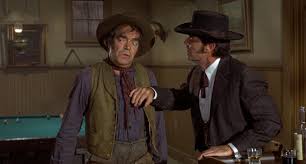


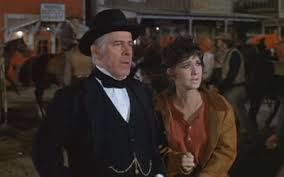
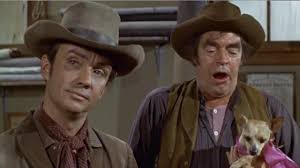
Screen legend James Garner has been dead ten years, but by Leon he was trending on the Twitter this weekend.
It started with fans celebrating the anniversary of the premiere of “The Rockford Files” on Friday, and quickly shifted to his other roles, his civil rights activism and what the icon of cool had to say about Ronald Reagan, subject of a recent film hagiography, an actor-turned-politician who was president of the Screen Actor’s Guild while Garner served as vice president.
“Ronnie never had an original thought and we had to tell him what to say.”
As kismet would have it, “Support Your Local Gunfighter” was popping up on assorted streamers and HDNET cable. It’s Western comedy comfort food to some of us who grew up in the ’70s.
So in appreciation of Garner, who talked me into buying my first Mini Cooper — “Looooove my Mini,” he drawled, confirming that yes, a tall Oklahoman like himself could fit in one — the one time I interviewed him (for “The Notebook”), I watched it again.
This 1971 comedy is the slightly inferior but still funny follow-up to 1969’s “Support Your Local Sheriff!” Garner and his director pal Burt Kennedy, best known for these films and a couple of lesser Duke Wayne Westerns (“The War Wagon,” “The Train Robbers”) rounded-up much of the same repertory company for a not-really-a-sequel — “Support Your Local Gunfighter.”
Garner was once again joined by Jack Elam, Harry Morgan, Walter Burke, Gene Evans, Willis Bouchey and the comical shrew Kathleen Freeman (“The Blues Brothers”) for an upending of movie and TV Western archetypes and tropes.
Joan Hackett, Walter Brennan and Bruce Dern, as the spitfire love interest, the patriarchal villain and the villain’s problem relative in “Sheriff!” are replaced by Suzanne Pleshette, a year before her “Bob Newhart Show” gig, the owlish harrumpher John Dehner and Ellen Corby a year before she became Grandma on “The Waltons.”
There was a hint of the TV comedy that launched Garner, “Maverick,” in “Support Your Local Sheriff!” Garner, Kennedy and Oscar-nominated Western screenwriter James Edward Grant (“The Sheepman,” “The Alamo” and “The Comancheros”) go all-in on Bret Maverick in all but name this time.
Latigo Smith (Garner) is an unlucky gambler and a gigolo, an overdressed dude in the Western sense of of the word. He travels from town to town, seduces wealthy madams from the local brothels, lets them bury him in gifts and cash, and skedaddles when wedding bells start to chime.
He does this by train. “I don’t ride...A man’s gotta’ be numb on both ends to earn his livin’ sittin’ on a horse. I just don’t like horses.“
We meet him as he’s evading impending nuptials by getting off a train in scenic Purgatory, a mining town where rival mines are racing for “The Mother Lode,” and the mine operators (Harry Morgan and John Dehner) are willing to do most anything in ensure that the other mine doesn’t beat them to the gold.
A telegraph to the notorious gunslinger Swifty Morgan has one and all assuming that this sharp looking fellow with Elvis sideburns and a hefty sidearm is him.
One mine owner’s daughter (Pleshette) takes it on herself to solve this “Swifty” problem (he’s allegedly been hired to shoot or intimidate everybody who works for her Pa’s mine).
“I’m a ROTTEN shot and I’m gettin’ awful tired of missin’ you!”
Then the unlucky gambler loses it all, as he always does, betting on #23 at roulette.
“Care to place a bet, sir?”
“You lookin’ for TROUBLE, mister? Do I LOOK DIMwitted enough to play that game?”
Throwing in with a down-on-his-luck cowpoke, Jug (Elam), Latigo fast-talks the town into believing that slap-happy Jug is the “real” Swifty. And that he can be bribed into switching sides in the mine wars.
That might just work, unless or until the REAL Swifty Morgan (Chuck Connors) shows up.
Continue readingThis comical riff on “Beauty and the Beast” as the MFF (monster friend forever) who shows up to remind you that no WAY was he ever good enough for you. Get that self-esteem back, girl!
Melissa Barrera, launched by the “Scream” franchise reboot, featured in “In the Heights,” takes a stab at comedy, playing a woman wronged who doesn’t realize it until a Beast shows up to buck up her confidence.
This looks like so much fun, and comes out Oct. 25. I hope this gets a wider release than Vertical Releasing can usually manage.
This drama about mourning that never ends is a two-hander, based on a play by Lot Vekemans.
They stumble into each other years after they parted, a couple that never got over the loss of a child.
Liuxembourg-born German actress turned director Désirée Nosbusch’s drama, scripted by the playwright, comes out Sept. 26.

The Brazilian thriller “Bandida,” dully-retitled “Outlaw” for North American consumption, is a generic “How I became a criminal” bio-pic with lots of violence but few genuine surprises.
If it’s watchable — and it is — attribute that to a gritty, home-movies-of-the-notorious filming strategy and an earthy, immersive performance by Maria Bomani in the title role.
She plays Rebeca, a child of the hillside favela Rocinha sold into gang life before she’s of school age, raised in the drug trade. She grows up to become a ruthless, violent, cop-shooter “created” by the corruption that renders that country’s social inequities a permanent condition.
Adapted from the memoirs of Raquel de Oliveira, this story is framed within a half-stoned 1992 confession/”remember me” cassette recording of a young woman raised in violence. “Outlaw” sees Rebeca master that violence and learn her business as she comes to play a dominant part in the struggle for “territory” between rival gangs and gang leaders surfing the changing tastes of Brazil’s drug abusers.
“You made me,” she growls on the cassette (in Brazilian Portugeuse, or dubbed), lashing-out at the culture that discriminates based on race, class and neighborhood (favela) and condemns its “losers” to this life.
We see the child “sold” for grooming, only to have a lady witch doctor prophesy pieces of background that save her and force the purchaser, “Sweet Bookie” or Amaroso (Milhem Cortaz) to treat her as forever “hands off” to him sexually.
Instead, she’s made a runner, schoolground-dealer, street spy and collector for his mob, learning the drug trade inside and out.
“Being an outlaw was now my chance,” she narrates.
Over the course of her life, she will ally with the five friends of her favela childhood, sometimes to her advantage, sometimes to her detriment.
She will fall for the handsome future leader Para (Jean Amorim) and teach him how to use a gun. Revolvers were the weapon of choice of her childhood, Uzis and M4s are what the gang wars of the ’80s are fought with.
“Outlaw” is a strikingly-lurid piece of cinema, with many of the flashbacks scratched-up to look like “survivor” home movies, many interactions shot in extreme close-up and the jumpy action staged with almost amateurish gusto.
Director and co-writer João Wainer never deviates from formula or a story the movies have been showing us since “Little Caesar.” But the self-consciously arty filming and post-production effects give the story a lowdown and dirty feel, if never quite reaching the no-budget mythos of “El Mariachi” or big budget “saga” flavor of “American Gangster” or “Blow.”
A quartet of screenwriters contribute to the story’s sluggish forward momentum. It’s 84 minutes long and plays much longer, in between the firefights, anyway.
But Bomani is a fierce presence at the center. And those shootouts — street warfare in which the cops often lose — are epic. And if this isn’t close to being the best favela gang movie (“City of God”), it’s still an intentionally rough and tumble trip into Rio’s underbelly with a tour guide nobody would dare question.

Rating: TV-MA, graphic violence, drug abuse, sex, nudity, profanity
Cast: Maria Bomani, Jean Amorim, Paulo Guidelly, Jéssica Barbosa and Milhem Cortaz
Credits: Directed by João Wainer, scripted by Patrícia Andrade, Cesar Gananian, Thaís Nunes and João Wainer, based on the book by Raquel de Oliveira. A Netflix release.
Running time: 1:24
See if you can pick up why this MGM/Amazon production is going straight to “Prime Video.”
JGL plays a detective — you can tell by the hat — summoned to a vacation isle where somebody rich has died and his fiance (Shailene Woodley) wants “the truth.” “Answers.” Etc.
It’s good to see JGL working more, and Woodley in a sex appeal/possible femme fatale role outside her usual comfort zone.
Let’s remember this title and remind each other to try and remember to watch it. Deal?
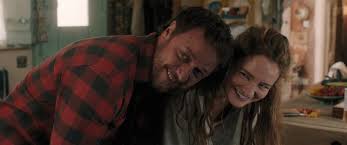
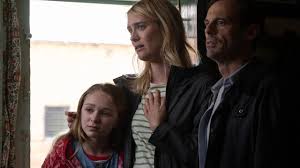
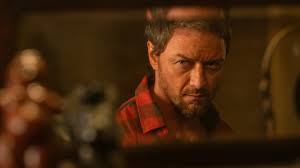

The remake of “Speak No Evil” becomes a furious tour de force for James McAvoy at his most villainous, a bristling thriller that presents an unspeakable dilemma that a fragile and trapped family cannot reason or trick their way through.
At some point, facing a pitiless, sadistic/narcissistic bully, you’ve got to fight.
Still, a simply-plotted lean Danish thriller about the futility struggling to maintain civility and good manners in the face of boorishness that masks seriously murderous intent becomes a more laborious Hollywood/Blumhouse remake in the hands of writer-director James Watkins (“The Woman in Black,” “The Take”).
Watkins makes this a star vehicle thriller, and given the performances of Mackenzie Davis, Scoot McNairy and McAvoy, it’s hard to quibble with that choice.
Two families meet on vacation — one American, with a troubled almost-twelve-year-old (Alix West Lefler) who still clings to her “worry bunny” and needs a therapeutic app to calm her and let her drift off to sleep. Louise (Davis) focuses on her and comforting tools from doctors and self-help books to guide her parenting. Bookish Ben (McNairy) figures the kid “needs to grow out of that,” but defers to a smart and beautiful wife he probably still worries is out of his league.
Gregarous Paddy (McAvoy) makes everything about his family’s Italian idyll bigger, noisier, more reckless and by extension, all about him. Wife Ciara (“Game of Thrones” alumna Aisling Franciosi) seems to get in the spirit of things, but their little boy (Dan Hough) is mute,
“He has a condition,” life-of-the-party-Paddy bellows, and as he’s a rich doctor who’s “retired” and only doing charity medicine for non-governmental organizations, the Americans accept his word on his authority.
Paddy is the sort of over-sharing, overly-friendly and handsy life-of-the-party who bowls over one and all by violating decorum and personal space, by never yielding the floor or surrendering the mike. Maybe he’s a bit cruel in the pranks he plays on other, less colorful tourists (Danes) at their resort.
But his overbearing “fun” quickly has Louise letting little Agnes play with the troubled mute child of strangers and ride a Vespa without a helmet with the cocksure and heedless Paddy.
The Americans have transplanted to London, where his job fell through and her career has little chance of restarting, thus the extra attention to mothering. If they’ve got the time, they simply must “come visit us in (England’s remote) the West Country!“
Louise’s “maybe this will be good for us, all of us” implies trouble in the marriage and the manners of someone conditioned to not say “no” for risk of offense. Remembering the Danish film, I was surprised how well this cultural plot point translates from polite Danes to “let’s not be rude” Americans.
But once on this remote, old farm, Paddy’s Man of the Land macho, confidence in every assertion and overbearing ways come to full flower.
Louise is a vegetarian and a doting mother. He picks at the “morality” of her positions and lifetstyle and parenting, making her question herself.
Ben’s fretting over his sense of worth as a breadwinner, and about his masculinity. Paddy picks at that too, which could widen a rift in the Americas’ marriage.
This is classic bullying or “narcissistic personality disorder” behavior. Poke and poke until you find the weakness, then taunt your way into a dominant position in the relationship. And yes, we’ve learned a lot about that and psychological “projection” and the like the last four years.
McAvoy has turned out to be a natural at this sort of villain, bulking up for the roles, fixing his face with a wicked gleam that can easily be read as on the “deranged” spectrum.
Adaptor/director Watkins gives him poses and shots, as the situation darkens and the “Big Reveal” turns things deadly, that summon up memories of Jack Nicholson in “The Shining.” Over-the-top? Sure. Subtle? Not in the least.
The “Big Reveal” was given away not just in the first film, but in the trailers to this one. With that surprise tossed aside, Watkins wisely concentrates on the adults, and the two children “working the problem.”
How might a mute child warn a fearful little girl? How can adults be alerted to the danger?
And once alerted, how far can one maintain “appearances” and “good manners” and hope for the best when just a look and a brief listen to the villain should make fleeing priority one?
I enjoy a good McAvoy scenery-chewing, be it “Split” or “The Book of Clarence.” And Davis and McNairy are quite good within the confines of the “types” they’re playing.
But there’s no denying that suspense and “thrills” in a thriller are heavily reliant on surprises and jolting twists. And it’s not just memories of the tighter, more tense Danish film that reinforce what’s lacking here. Giving away too much in the trailer hobbles “Speak No Evil.”
McAvoy’s performance leans more on the superficial than on the psychological just as his character is more “he’s just like that” than anyone we truly understand.
And slowing things down so that we savor the helplessness and work-the-problem dynamics of one family’s plight, trapped on the farm of a madman, only engages and entertains up to a point.
But slower and more superficial than the original or not, the riveting performances and the vague political parable of the way the story is spun this time out put this one thriller over.
The biggest monsters any of us will ever confront aren’t supernatural. They’re the ones who find our weaknesses and pick at them until we bleed to death, or abandon our manners and fight back.

Rating: R, graphic violence, sexual situation, profanity
Cast: James McAvoy, Mackenzie Davis, Scoot McNairy, Alix West Lefler and Aisling Franciosi
Credits: Scripted and directed by James Watkins, based on the screenplay for the Danish film “Speak No Evil” scripted by Christian Tafdrup and Mads Tafdrup. A Universal/Blumhouse release.
Running time: 1:50
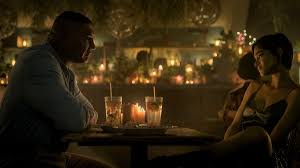
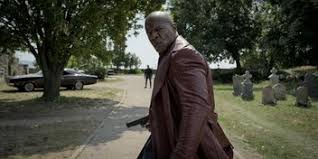
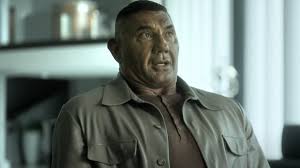

Say this for the action comedy “The Killer’s Game.” This eye-popping, gory cartoon of a movie should give stuntman/stun-coordinator turned-director J.J. Perry a helluva sizzle reel.
The production values on this Dave Bautista star vehicle pop, with cities all over Europe providing (second unit) settings, all of them matching Budapest in Matt Gant’s polished production design.
Cinematographer Flavio Martínez Labiano’s camera swirls through 360 degree pans, through interior drone shots of a Budapest opera house and into a modern dance piece, an assassin’s lair and epic brawls played for bloody laughs.
Balázs Lengyel and Felix Betancort should be in-demand fight coordinators after this film.
I’d plug the editor, too, but I didn’t catch a name on the screen and IMDb left it out of its credits. Well done, Mr. or Ms. slo-mo, split screens and whatnot.
But man, that story, this plot, that “twist” that isn’t.
The entire film is given away in the trailers, but for those who missed them, a brief summary.
Tattoo’d man-mountain Bautista plays Joe Flood, the best professional assassin in Europe, even though the tats don’t make him the most debonair Double-O wannabe in a tux.
His dizzy spells have a doctor telling him he’s got a rare disease and has months to live.
That puts a hold on the budding romance with a dancer (Sofia Boutella of “The Mummy”), whom he gallantly rescued after murdering his way to a human trafficker attending her opening night.
That challenges Joe’s contract-go-between, nickamed “The Rabbi” (Ben Kingsley) because, I guess, he’s Jewish.
“Leave judgment to God. Our job is simply arranging the meeting.” With God. By killing people. Get it?
Joe’s prognosis means he wants to die before the worst symptoms of the disease manifest themselves. Rather than killing himself, he breaks up with French dancer Maize and puts out a contract on himself
“I’ve lived by the sword. I want to go out the same way” is the most compact way of forshadowing that in addition to the punch-outs, neck-snaps, shoot-outs and grenadings he faces, Joe will find himself in a swordfight at some point.
Then, just as the hunt and the assorted colorful hunters (Terry Crews) and teams of hunters close in, the doc calls back and says “My bad” (not exactly) and that there’s “been a mistake.”
Uh oh. How many times have we seen that plot twist before?
The movie never overcomes that trot into “trite.” But the script tries to compensate by throwing a Korean gang, Hungarian and then Scottish brothers, a pair of stripper-assassins named “Ginni” and “Tonya” (Gin n’ Tonic?) and a spurs-wearing Spanish flamenco dancer killer at our Mr. Flood.
Cartoonish, to a one. Everybody’s overdressed and over-the-top, but none of them over-the-top enough to make much of an impression and shake off the script’s “This could not be dumber” feeling.
Bautista’s “Guardians of the Galaxy” castmate Pom Klementieff could have made her killer, daughter of a killer now a contractor herself, somebody special. But the writing gives her little to play with. Crews is saddled with a comical sidekick who isn’t that funny, nor are Crews’ reactions to the dope.
Scott Adkins plays the leader of a mercenary team, the most colorless of the many contract killers who descend on Flood in search of that $2 million price that he’s put on his own head.
At least Boutella got a chic haircut and a chance to dance and even sing (“Happy Birthday”) in this outing. Everybody else got a nice paid vacation in Budapest and environs.
And a select few of the production crew showed off their skills, making a bad movie perfectly tolerable every time a dance or chase or fight begins.

Rating: R, violence, profanity, sexual situations
Cast: Dave Bautista, Sofia Boutella, Terry Crews, Pom Klementieff, Scott Adkins and Ben Kingsley.
Credits: Directed by J.J. Perry, scripted by James Coyne and Simon Kinberg, based on a novel by Jay Bonansinga. A Lionsgate release.
Running time: 1:44
Uplifting. Inspiring. Oscar bait.
From Barry Jenkins and MHM/Amazon

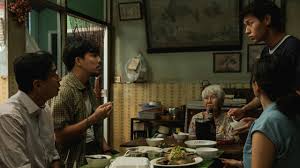

“How to Make Millions Before Grandma Dies” is a sweet, sad and sentimental Thai end-of-life melodrama titled and set-up like a greedy-family farce.
A lazy, online gamer grandson (Putthipong Assaratanakul) sees an enterprising, mercenary cousin (Tontawan Tantivejakul) care for an elderly uncle, and “move to the top” of that uncle’s most-beloved-relative list and the top of his will. She inherits his house.
With his grandmother (Usha Seamkhum) freshly-diagnosed with cancer, “M” as the kid is called ingratiates himself with her, imposes his “help” on her life and even moves in to take care of Amah, who hasn’t been told her diagnosis.
“You took care of me when I was little,” he tells her (in Thai with English subtitles). “Now it’s my turn to take care of you.”
As the old woman favors her neglectful day-trader oldest son (Sanya Kunakorn) and indulges or at least tolerates her mooching, deadbeat younger son (Ponsatorn Jonwilas), while dismissing her devoted daughter, M’s mother (Sarinat Thomas), this seems like a canny way to corner the market on her affections and her estate.
But cousin Mui has let something profound slip into her tutelage of M’s scheme. As the kid poor-mouths this uncle or that one, Mui wonders if he thinks of “Amah as an asset.” He does. But that’s missing the point.
“What old people really want is ‘time,’” something her children, save for her struggling single-mom daughter (Thomas), don’t seem to have for her.
M eventually takes that to heart, even if we and granny fret over his motives and his honesty all along the way.
“Your grandson is not some kind of grandTHIEF! A scammer!”
Director and co-writer Pat Boonnitipat’s debut feature — he’s filmed some episodic Thai TV — borrows plot points and tone from “The Farewell.” But he then gently upends expectations in a film that immerses us in Thai life, Thai burial traditions and Thai superstitions as we meet people and see a slice of the country that’s wholly removed from “tourist” Thailand.
We get a taste of Amah’s routine — she’s cooked and run a congee shop most of her life — and rituals, the “goddess” she prays to, the shrine she turns a family burial place into.
And we see M evolve from predatory to understanding — well to “less predatory” and “more understanding” at least. Cash is cash, after all.
Boonnitipat gently sets-up scenes that might play for laughs — Uncle Kiang (Kunakorn) suspects M’s motives and tries to take Amah in, using his wife and wee daughter Rainbow to charm her and seal the deal — but plays them mostly straight and sober. M may scheme and counter-scheme here, but the idea is that he “grows” as a person and comes to really “see” his grandmother.
As things don’t go according to anybody’s plan, and even the “surprise” at the end turns in on itself, the universal message of “How to Make Millions Before Grandma Dies” wistfully lines up with John Prine’s classic tune, “Hello in There” and Mui’s one useful lesson to M.
“What old people want is really (YOUR) time.”

Rating: unrated, PGish
Cast: Putthipong Assaratanakul, Usha Seamkhum, Sanya Kunakorn, Sarinat Thomas, Pongsatorn Jongwilas and Tontawan Tantivejakul
Credits: Directed by Pat Boonnitipat, scripted by Pat Boonnitipat and Thodsapon Thiptinnakorn. A Well Go USA release.
Running time: 2:05


