Movie Preview: “Army of One” makes Cage comic, and relevant again?

For reasons I can’t even fathom, I have made it a point to review every Nicolas Cage movie — even the hardest to locate, grade Z junk that nobody gets to. Maybe it has something to do with what he once told me in an interview, that he works “just to settle my mind” and not think about life and life’s problems.

It was sad, but honest. And as long as he stumbles across the occasional “Joe” or “Kick-Ass,” I’m in. I’ve got one to see tomorrow (“Dog Eat Dog”), as a matter of fact.

But there are a couple of laugh-out-loud moments in this trailer to the Larry Charles (“Borat”) film based on the true story of a nut who decided he was the one person (chosen by God) to find Osama bin Laden. “Army of One” takes its title from a past (I think) recruiting campaign by the US Army. I don’t see that “Army of One” has a release date.

Posted in Reviews, previews, profiles and movie news | Comments Off on Movie Preview: “Army of One” makes Cage comic, and relevant again?

Movie Review: “The Accountant” can’t quite balance his books

acount1

Hollywood’s ongoing fascination with Asperger’s and other points on the autism spectrum gets filmdom into trouble with “The Accountant.”

Spinning the outward awkwardness, difficulty connecting on a human level symptoms of the condition to create a bookkeeper with computer-worthy numbers skills and utterly amoral about whose books he keeps, and how many people he kills, seems to invite protest.

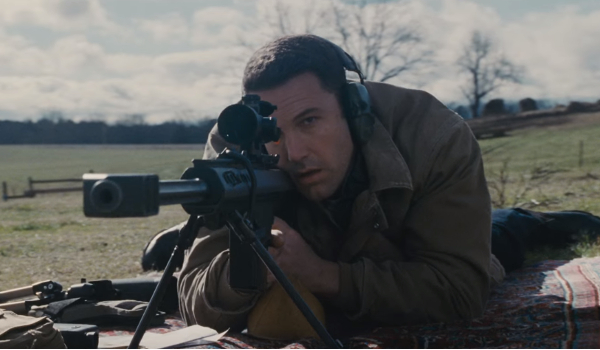
Make your own joke about Ben Affleck being perfectly cast as an impassive, unemotional and somewhat stiff bookkeeper/killer, because I like the guy and have no problem with Warner Brothers grooming him as their replacement for star actor/star director Clint Eastwood. He’s not bad in the part, but the whole “avoiding eye contact” thing comes and goes, as you can see in the photo above.

Affleck plays a man who turns up in one photo after another of famous mobsters and international money launderers. He uses aliases, all of them stolen from famous dead mathematicians.

But an outgoing Treasury Dept. investigator (J.K. Simmons) wants to find this guy, figure out how he connects to all these underworld figures. He wants his quarry so badly he’s willing to blackmail a junior agent (Cynthia Addai-Robinson) into taking up the pursuit.

And a now-motivated Agent Medina starts putting together the pieces.

As Christian Wolff (German philosopher/mathematician, 1679-1754), “The Accountant” has a legitimate suburban Chicago business. He does people’s taxes, people he is utterly incapable of responding to with any warmth. His every tactless attempt at levity has to be explained.

“I’m joking,” he deadpans.

He also takes seemingly legitimate “impossible” jobs, tidying up the books of a computerized prosthetics pioneer (John Lithgow), for instance. That’s where he meets the perky/friendly in-house accountant, Dana (Anna Kendrick). She makes him forget (sometimes) that he can’t make eye contact.

But she’s the one who found money problems at the company, problems that some folks don’t want revealed. That puts her and her new accountant buddy in jeopardy. And that’s where the guy’s fondness for guns and ruthless willingness to use them enters into the picture.

acc.jpg

He whispers nursery rhymes to calm himself and focus as he’s gunning down legions of bad guys who “violate his code.” He’s easily distracted, so he lives an aesthetic life, “training” away his symptoms by exercising, working and sleeping with deafening heavy metal playing on his stereo.

Affleck and the script do their best to play his illness down the middle, but as flashbacks show his father’s “tough love” approach to autism, and the film makes the case that this works, after a fashion, everybody involved starts treading on thin ice.

In any event, Wolff is an impossible character to warm up to, at least as played here.

Affleck’s need to be icy should have opened the door for the warm and witty Kendrick to steal the picture. No. Jeffrey Tambor has only a couple of scenes as our “Dark Money” accountant’s underworld mentor. Even the abrasive and biting Simmons is relegated to the background for most of the story, and Addai-Robinson is never more than a pretty plot device.

Jon-Bernthal-e1433882050605.jpg

It’s Jon Bernthal who walks away with “The Accountant,” vivid, ruthless and yet somehow “reasonable” as a mercenary hit-man brought in to clean up personnel issues at places where the books are filled with “Dark Money.”

He cannot clean up this misshapen script, though, with its need to over-explain Wolff’s demeanor, motivate every illogical plot twist and create a finale that’s more irritating than satisfying. Director Gavin O’Connor (“Warrior”) is at a loss in trying to shape this into a lean, chilly action picture. The fights and shootouts work, some of the accounting stuff is funny, but the rest is a muddle.

Their template should have been “The Transporter”  — action, minimal motivation, odd glimpses of the illness and limit the back story. The screenwriter wrote himself into a trap, and spends way too much screen time trying to medically/psychologically justify his “hero.” Less of all that exposition might have made “The Accountant” add up to more than this mess.

2stars1

MPAA Rating: R for strong violence and language throughout

Cast:Ben Affleck, Anna Kendrick, J.K. Simmons,

Credits:Directed by Gavin O’Conner, script by Bill Dubuque. A Warner Brothers release.

Running time: 2:08

Posted in Reviews, previews, profiles and movie news | Comments Off on Movie Review: “The Accountant” can’t quite balance his books

Movie Review — “Kevin Hart: What Now?”

kevin1

Kevin Hart can sell-out football stadiums, at least in his home town of Philadelphia.

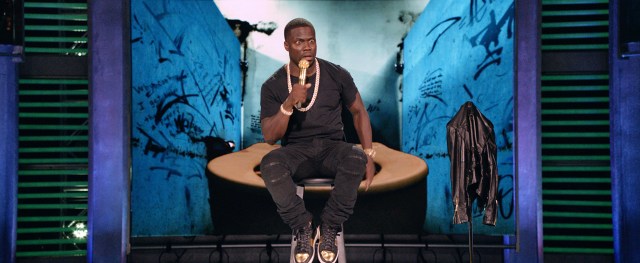
He can wear huge diamond-encrusted gold chains, a gold watch and bracelet, gold-topped sneakers, golden-zippered leather jacket and wield a gold-colored microphone when he does his stand-up.

He can cast himself as a short, comically inept James Bond in a 20 minute pre-concert gambling-and-action film co-starring Halle Berry and Don Cheadle.

And he can insult them, and take their threats and insults as he does.

kevin2He lives in a suburban mansion, and his problems include how private school is ruining his kids.

But even as Hart grows richer, more remote and seemingly less relate-able, there’s still manic hilarity in the little man. He’s still fearlessly fearful, defiantly shallow and amusingly self-effacing on stage.

“Kevin Hart: Now What?” is a self-satisfied, over-the-top concert film that finds the funny in “affluence,” embraces the narcissism of its star and the heartlessness in Hart.

He’s about to remarry, but only if “my lady,” who is trapped in a mental world ofo, isn’t attacked by a bobcat on their suburban property, or mangled by a shark after falling off the boat.

“She didn’t come like that. I’m not taking her home like that.”

Yeah, if she loses an arm and a leg to a shark, there’s no point in crawling back on the boat. He’s throwing her back in.

“Clean that plate, Mr. Shark!”

She’d better not have her shoulder bitten off.

“You can kiss halter-tops good-bye!”

Sexist and shallow and mercenary, sure. And thankfully, improbable.  Most improbable of all, he hunts for laughs in a 36 year-old man’s first trip to Starbucks, ridiculing  “the test” that placing an order in the well-established, jargon-filled franchise entails.

Hart plays “don’t go there” with his audience, which must have experienced this video-assisted “intimate” stadium show mostly through video screens.

Lies meant to cool the tempers of “Suspicious-minded women” and a seven year-old son fond of flip flops and gestures he’s learned from the long-haired white kids who are his school peers allow Hart to show off his acting chops.

He mugs, he does the rich white kids’ hair-toss that his son emulates, he does voices.

Hart doesn’t break new ground with any of this, but his antic energy and the polish of these routines (he works with two old-friends to write them) make him a formidable stand-up, one whose career could take on a Seinfeld arc — still hungry, still loving the work, still delivering — after he’s peaked, gotten rich and scared off another wife.

stars2

MPAA Rating: R for some sexual material, and language throughout |

Cast: Kevin Hart, Halle Berry, Don Cheadle

Credits:Directed by Leslie Small, Tim Story, script by Kevin Hart, Harry Ratchford, Joey Wells. A Universal release.

Running time: 1:36

Posted in Reviews, previews, profiles and movie news | Comments Off on Movie Review — “Kevin Hart: What Now?”

Movie Review –“Middle School: The Worst Years of My Life”

middle1

Well, thank heavens for Rob Riggle.

The least funny of the rotating crew of Col. Sanders in those TV commercials turns out to be the one comic saving grace of “Middle School: The Worst Years of My Life.” One of TV and the cinema’s typecast jerks makes a laugh-out-loud “Mom’s hateful new boyfriend” in this colorless kids’ comedy with an anarchic edge, a film with neither the performers nor the wit to cut through the cliches.

Griffin Gluck is the blandly cute leading man, improbably named “Rafe” by his sous chef mom (Lauren Graham). He’s a mopey lad who loses himself in his fantastical comic book drawings, so much so that he’s been kicked out of several schools when we meet him.

#hollywoodschoolsrstrict.

His latest middle school, Hills Valley, is a comically draconian institution with a lengthy list of rules nobody is allowed to break. Don’t touch the trophy case, “No crazy hair colors” and “always do what the principal (Andrew Daly) says.

Rafe gets bullied, moons over the cute girl (Isabelle Moner) and when his notebook of drawings is confiscated and destroyed in a bucket of acid by Principal Dwight, decides to rebel. He and pal Leo (Thomas Barbusca) will go through the Code of Conduct, and break every single rule in school.

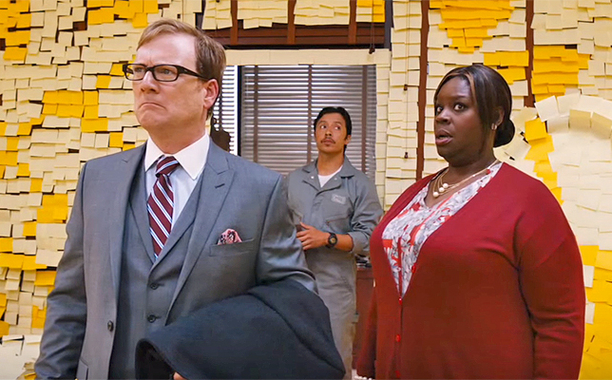
There are pranks involving paint in the principals’ hat, fart-noises on the PA system, balls in the teacher’s lounge and post-it notes.

middle-school-02.jpg

All of it financed (stolen credit card numbers) by the jerk (Riggle) that Mom is dating and planning to marry, a BMW-driving loser who has a different track suit for every occasion. Hapless “Bear,” as Rafe and mouthy sister Georgia (Alexa Nisenson) call the prospective dad-to-be, is their one worthy foil, the kind of guy who will try to turn around your “butt-wipe” insult into a compliment.

Aside from Riggle, there isn’t a laugh in this. Adam Pally makes a pleasantly amusing version of the “hip” teacher — using music mixtapes to illustrate international trade. Efren Ramirez, “Pedro” of “Napoleon Dynamite,” is stereotypically cast as the janitor, the tween girls dress like Kardashians and the boys obsess on mastering one aspect of anatomy, marveling at Rafe’s “Expertly drawn boobs.”

“Hey, those were ACCURATE! I think.”

You can appreciate the effort to be edgy that this film, based on James Patterson/Will Tebbetts novel.

But the wimpy kid here isn’t interesting, the “worst years” a dull exaggeration and the movie not worth the 92 minutes it takes to sit through.

1half-star


MPAA Rating:PG for rude humor throughout, language and thematic elements

Cast: Griffin Gluck, Lauren Graham, Andrew Daly, Retta, Rob Riggle, Isabelle Moner

Credits:Directed by Steve Carr, script by Chris Bowman, Hubbel Palmer and Kara Holden, based on the book by James Patterson and Will Tebbetts. A Lionsgate/CBS Films release.

Running time: 1:32

Posted in Reviews, previews, profiles and movie news | Comments Off on Movie Review –“Middle School: The Worst Years of My Life”

Movie Review: A parent relives his punk past in”Ordinary World”

ordinary1

In “Ordinary World,” Green Day’s Billie Joe Armstrong plays an aging punk —  husband and dad years past his punk-rock peak — who decides the most punk thing he can still manage is to blow a wad of his hardware store-job cash on a party for himself in a high-end New York hotel room.

The movie reminds you of a perhaps unfair knock at those “American Idiots,” Green Day. It strains at cuteness.

Twenty years before, Perry pounded through sets at assorted punk-friendly clubs in greater New York. Now, the only music he makes is to mock-explain the expletives he and mom (Selma Blair) still let fly in front of their tweenage daughter and toddler.

He’s still got the wild mop of dyed hair. But now Perry’s the guy who yells, “How many times I gotta tell you, USE an ashtray?” when friends come over.

The other dads at school want him in their “Dad’s Group.” His brother (Chris Messina) is angling to buy his perpetually tardy butt out of the family hardware store.

And the wife has forgotten his birthday, a big one — his 40th.

Perry needs a break from “Dad mode.” He needs to remember “the old days.” He’d love to “get the band back together.”

So he takes his settlement cash from the store, marches over to The Drake Hotel and gets the biggest suite in the joint. He calls his drummer (Fred Armisen of “Saturday Night Live” and “Portlandia”) and announces a party.

No, they don’t allow them in the suites at the Drake. No, there’s to be no punk music on that floor, even if that means his pals complain “You’re just no fun any more.”

And yes, that’s his old punk flame, now Joan Jett’s manager (Judy Greer) he runs into in the lobby.

“It’s AWESOME that you still say ‘Awesome!'”

Writer-director Lee Kirk’s script manages a few laugh-out-loud lines and moments, and Armstrong has an offhanded charm that plays well in a role tailor-made for him.

But “Ordinary World” is a little too enamored of the phrase “Truth in advertising.” It’s run of the mill, humdrum, “ordinary” in its set up, the “ticking clock” (Can Perry polish off the party in time to get her new guitar to his daughter before the big elementary school talent show?), and temptations (pricey booze, punking out, Judy Greer).

It plays like a reality TV pilot that’s a little too real (boring) for its own good.

1half-star

MPAA Rating: unrated, with alcohol abuse, smoking, adult situations

Cast: Billie Joe Armstrong, Selma Blair, Fred Armisen, Judy Greer, Dallas Roberts

Credits: Written and directed by Lee Kirk. A Universal release.

Running time:

Posted in Reviews, previews, profiles and movie news | Comments Off on Movie Review: A parent relives his punk past in”Ordinary World”

Movie: “Denial” reminds us that America isn’t the only place loaded with “deplorables”


FILM-DENIAL-REVIEW-ADV07

Fateful timing brings the Holocaust drama “Denial” into American theaters in the stretch run of the strangest presidential election in modern American history.

Here’s a British film about a British lawsuit in which an unconscionable liar sued a widely-celebrated American Holocaust researcher in which the judge has to wonder if the liar is indeed a liar if he believes the nonsense, deliberate distortions and bigoted remarks that come out of his mouth and onto the page.

“Deplorable?” That’s exactly how many Brits might describe David Irving, a self-taught historian and Hitler apologist, a “Holocaust denier,” as Emory University historian Deborah Lipstadt (Rachel Weisz) describes him.

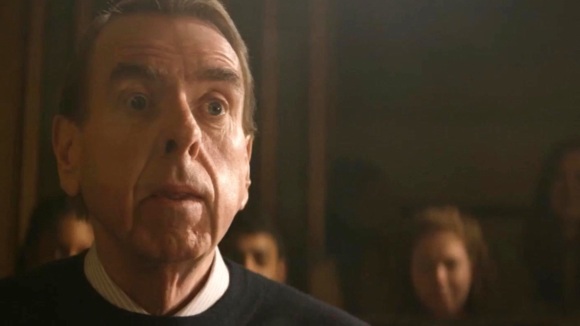
And that inflammatory phrase is why Irving (veteran character actor Timothy Spall, Churchill in “The King’s Speech,” “Wormtail” in the “Harry Potter” movies) and some supporters ambushed Lipstadt at an Atlanta speaking engagement, where her refusal to debate such people was put to the test.

Irving sued Lipstadt and her publisher, and Penguin threw together a dream team, partly paid for by famous Jews from both sides of the Atlantic (Steven Spielberg’s name came up) for what promised to be a sensation — “The Holocaust put on trial.”

But it’s a fair knock on “Denial” that “sensation” never comes into it. The British courts put the burden of proof in such cases on the person being sued. With one lawyer preparing the case and another arguing it, with outbursts in court unheard of and her attorneys refusal to allow her, or Holocaust survivors, to testify, the trial devolves into a generally dry game of cat and mouse between the smooth and polished Irving and Lipstadt’s advocate, played with cunning and warmth by the great Tom Wilkinson.

Screenwriter David Hare (“The Reader,” “The Hours”) and under-employed British director Mick Jackson (“L.A. Story”) make the film’s title into a pun. Irving denies the Holocaust, the systemic round-up, enslavement and slaughter of Jews, Gypsies, homosexuals and other “undesirables” during World War II, ever happened. Lipstadt, given an outspoken Queens-raised turn by Weisz, must keep her mouth shut, practice “self-denial” and trust her attorneys, led by the canny legal mind, Anthony Julius (Andrew Scott) who won Princess Diana’s divorce.

The mouthy Lipstadt is stunned by the request to keep her silence, furious at the PR war she sees being lost from the start. British jurisprudence can be a jolting experience to those used to America’s adversarial but seemingly fairer “innocent until proven guilty” system.

“I don’t mind Dickensian,” she cracks. It’s ‘Kafka-esque’ that scares me.”

History buffs will delight in her insults to the condescending Brits. She, and they, know what “appeasement” means and what she’s saying when she accuses them of it. Sure, the British screenwriter and British Oscar winner playing Lipstadt flirt with making Lipstadt a stereotype, an argumentative self-described “defender of my people” among the “Chosen People.” But Weisz gives her brass and allows her moments of amusement amid her outrage.

denial2

Spall is magnificent playing a self-polished spokesman for skinheads and Britain’s anti-Semites. But Wilkinson, despite being loaded down cliches meant to make Lipstadt, and us, underestimate him — he drinks and drinks and smokes and smokes and eats blood putdding — still manages to embody the heart of the movie — a voice of reason, logic and memory.

No, Richard Rampton won’t let Lipstadt onto the stand. No, he won’t call the pleading and shrinking crowds of Holocaust survivors who have made it their life’s mission to bear witness. He’s brusque as he stalks through a moving wintry Auschwitz visit, rude even.

It is “proof” his character is after, and he and the movie suggest it’s high time that forensic science and simple, hard evidence be brought to bear on this most emotional subject, the world’s most heinous crime and one of the great human-made tragedies ever. Evidence that will put shut deniers up for good.

The film’s courtroom concentration — the suit, prep and trial took years — makes it one of the driest treatments of The Holocaust ever. But Weisz and Wilkinson find emotions around the edges of all that be-wigged legal wrangling.

Jackson and Hare make this something of a celebration of “The British Way,” an attempt to remove justice from the court of public opinion.

But watch “Denial” hot on the heels of Netflix’s “Amanda Knox,” about an American trapped by the arcane backwardness of Italy’s courts, and it’s enough to make you want to turn in your passport.

3stars2

MPAA Rating: PG-13 for thematic material and brief strong language

Cast: Rachel Weisz, Tom Wilkinson, Timothy Spall, Andrew Scott

Credits:Directed by Mick Jackson, script by David Hare, based on the Deborah Lipstadt book. A Bleecker Street release.

Running time: 1:50

Posted in Reviews, previews, profiles and movie news | Comments Off on Movie: “Denial” reminds us that America isn’t the only place loaded with “deplorables”

Movie Review: “Coming Through the Rye”

rye3

You’ll want to see the coming-of-age drama “Coming Through the Rye” to see Oscar winner Chris Cooper’s winning interpretation of reclusive novelist J.D. Salinger.

It’s a blunt, measured and sympathetic take on a writer often depicted as angry, embittered, twisted and warped by the fame “The Catcher in the Rye” brought him. His is a Salinger who didn’t want the world’s attention, didn’t want Hollywood’s money, didn’t want anybody “interpreting” his children — the kids of one of the most beloved American novels of all time.

Emmy winning writer/director James Steven Sadwith’s autobiographical coming-of-age film doesn’t have a lot of originality to it, in spite of the nearly-unique nature of his youthful encounter with the Great Writer. But Cooper’s turn gives it weight and life.

Jamie Schwartz, played by Alex Wolff of “The Sitter” and TV’s “The Naked Brothers Band,” is a disaffected teen in a 1960s Pennsylvania boarding school. He has a passion for theater, but isn’t exactly star material. The jocks in school, “mean guys and phonies,” the lot of them, bully him.

But he’s read and re-read “The Catcher in the Rye.” He’s got the corduroy coat and red ear-flaps hat. He IS Holden Caulfield! All he really wants out of life is to save little kids, to spare them the agonies of life’s mistakes, to keep them from tumbling over that metaphoric cliff in Salinger’s novel.

His idea for a senior year independent study project? He’ll adapt “Catcher” for the Crampton School stage. His favorite teacher/advisor (Adrian Pasdar) has just one question.

“You have Mr. Salinger’s permission?”

Thus begins Jamie’s pre-Internet quest, to find the author nobody can find and get permission from a writer who never gives it.

Sadwith’s odyssey is strewn with cliches, starting with the state of Jamie’s romantic life. He can pine for the theatrical blonde leading lady (Kabby Borders), but she’ll never give him the time of day. It’s the perky, freckled brunette (Stefania Lavie Owen) who flirts with him, “gets” him and never gets more than the time of day from him.

rye4But DeeDee (Owen) has a car. And as Jamie’s search hits one dead-end after another (chasing down Salinger’s agent, etc), he talks her into driving him to Cornish, New Hampshire. They’ll meet the real-life Holden, hiding out in the woods. And Jame will make his case to the Great Writer’s face.

The telling of the tale is littered with flashbacks of Jamie’s adored older brother (Zephyr Benson), a rebel ahead of his time and an inspiration to Jamie. We see the assorted manifestations of Jamie’s bullying, the betrayals, the stolen diary that becomes fodder for ridicule all over school.

Jamie is written in that self-pitying Caulfield voice, something that grates about the novel if you read it as an adult. It’s hard to make children of boarding school privilege sympathetic, and Wolff has a hard time getting past insufferably self-involved.

Even his big moment — with Salinger — has a certain skin-crawling “I am the hero of my own privileged story” whining about it. he had the chutzpah to track down He who didn’t want to be tracked, and this is his best shot? A plea for pity?

But Owen has a winsome and winning “cute girl whom everyone ignores” quality.

And Cooper makes the picture work. His presence puts us in the then-young Sadwith’s 1969 shoes, and lets us leave “Coming Through the Rye” with the same awe, respect and longing for more that Sadwith himself must have felt.

stars2


MPAA Rating:PG-13 for some drug material, sexuality and language

Cast:Alex Wolff, Chris Cooper, Stefania Lavie Owen, Adrian Pasdar

Credits:Written and directed by  James Steven Sadwith. A Samuel Goldwyn release.

Running time:1:37

Posted in Reviews, previews, profiles and movie news | Comments Off on Movie Review: “Coming Through the Rye”

Box Office: “Girl on Train” rolls, “Birth of a Nation” stillborn

boxoffice

Emily Blunt and the best selling novel it is based on delivered a healthy opening weekend for “The Girl on the Train.” A fall murder mystery, better than average, it will have hit right around $25, maybe $26 million by midnight tonight.

Opening wide, but not quite as wide, Nate Parker’s scandal-tainted “The Birth of a  Nation” didn’t set the world on fire. $7 million on over 2,000 screens isn’t terrible. It isn’t a movie that will gain screens, so Fox Searchlight probably won’t break even ($17.5 million for the rights) until the film hits video.

$6 million for “Middle School,” a kids’ film CBS films didn’t show to critics in advance.

Disney’s “Queen of Katwe” cracked the top ten.

“Denial,” the Holocaust bio-drama with Rachel Weisz did great per screen and rolls out wider Friday. Middling per screens for “American Honey,” a terrific but very long drama, which also rolls out wider this coming Friday.


“

Posted in Reviews, previews, profiles and movie news | Comments Off on Box Office: “Girl on Train” rolls, “Birth of a Nation” stillborn

Movie Review: “The Dressmaker”

dress2

Bullying, blood-spilling and a rising body count are the hallmarks of the Aussie “revenge comedy” “The Dressmaker.”

It’s a darker-than-dark farce where the talent on hand is impressive, but the laughs are sparse and grimly won. Maybe you have to be Australian to wholly appreciate it, but I found it hard going, with just a few flashes of wit to justify employing an Oscar winning star, Oscar nominated co-star and putting Hugo “The Matrix” Weaving into a dress.

Tilly Dunnage may be beautiful and talented, but the bitterness bubbles through the moment she steps off that bus in Dungatar, the berg in the Aussie boondocks she used to call home.

“I’m back, you bastards!” she hisses.

Kate Winslet brings her va va voom to Tilly, dressing to impress even in this dusty village. It’s 1951, she left under a cloud years before. Now, she’s back to tidy up “Mad Molly,” her mom, get some answers and maybe clear her name.

Tilly was once accused of killing an elementary school classmate, and the town hasn’t forgotten. But what haven’t they forgotten? Does anybody really know what happened, all those years before?

Mom, Mad Molly, doesn’t even remember her own daughter, much less the details of “the murder.” Judy Davis throws the last ounce of vanity out the window for this sickly, unbathed hermit. Before Tilly does anything else, she’s got to clean up Mom — dress her — get her to recognize her.

Tilly is convinced she’s “cursed,” and has been since that long-ago day when fate brought her into conflict with a school bully.

To get some answers, she vamps it up and stirs the pot — distracting the local football team, tempting the neighbor (Liam Hemsworth) who grew up next door to her, irritating every other woman and man in town.

“Trollop” is the nicest insult hurled her way. But considering those judging her, you wonder why Tilly bothered to come back.

There’s the hunchbacked chemist/pharmacist (Barry Otto) who regards the entire village as “sinners,” and resists prescribing any drugs to any0ne — “Addictive. All she needs is God’s forgiveness.”

The president./mayor (Shane Bourne) feeds tonic to his obsessive/compulsive wife, doping her every night before taking sexual advantage of her.

The local constable (Weaving) is a bit too fond of women’s fabrics. Weaving plays this Sgt. as sweet and reluctant to judge, a John Waters in drag.

Tilly finds herself interjecting in local romances, interfering in gossip and hunting for answers as she does — offering dazzling dresses of her own making as payment.

dress1

I have no idea how this novel read, but the film plays as nearly tone-deaf drudgery. The husband-wife team of Jocelyn Moorhouse (“How to Make an American Quilt”) and P.J. Hogan (“My Best Friend’s Wedding”) spare no unpleasantness, and fail to find laughs in much of it.

Winslet can still deliver the glamour, and gives fair value in scenes both bitter and biting. Davis is flinty and the character could have been a hoot, but the writing lets her down.  Weaving lands most of the laughs, swanning about, not really helping Tilly solve her personal riddle until a little haute couture is offered in trade.

Hemsworth is just non-judgmental eye-candy.

It’s no novel observation that venality endures through the generations in small towns, that people escape such villages to escape that the stigma their hometown hangs on them.

“The Dressmaker” doesn’t so much change the pattern of this “Peyton Place” style story as render it ugly and humorless.

1half-star

MPAA Rating: R for brief language and a scene of violence

Cast: Kate Winslet, Judy Davis, Liam Hemsworth, Hugo Weaving

Credits: Directed by Jocelyn Moorhouse, script by P.J. Hogan and Jocelyn Moorhouse, based on the Rosalie Ham novel. A Broadgreen release.

Running time:1:58

Posted in Reviews, previews, profiles and movie news | Comments Off on Movie Review: “The Dressmaker”

Movie Review: “The Girl on the Train”

train2

An unreliable narrator proves an unreliable eyewitness to a crime in “The Girl on the Train,” a tricky thriller whose tricks are less important than its riveting leading lady.

Emily Blunt has the title role in this film, based on the best selling Paula Hawkins novel, playing a wounded, perhaps wronged/perhaps guilt-ridden suburban divorcee who finds herself mixed up in a missing persons case.

Rachel sits by herself on the commuter train, watching, pondering, wondering and narrating, turning her “over-active imagination” onto the houses whose back porches she glimpses each day as she rides into the city. She builds imagined lives and passionate love affairs into one particular home — a blonde stranger with an exhibitionist streak — or at least a need for curtains that can be drawn lest strangers see in from passing trains.

Rachel admits “I’m not the girl I used to be,” but in this blonde (Haley Bennett) who has passionate, uninhibited sex with her lover/husband (Luke Evans), she sees herself — her former self.

“She’s what I lost.”

train3

The film, a myriad of flashbacks within flashbacks, lays out that loss. Rachel was married. Her husband (Justin Theroux) has remarried. He and that new wife, another beautiful blonde (Rebecca Ferguson) are living in Rachel’s old house, just down the street from the mystery blonde. And Rachel won’t let it go — calling at all hours, stalking the new wife, alarming her and her new baby.

Director Tate Taylor (“The Help”) skillfully hides that literary “unreliable narrator” quality, that of the storyteller we realize isn’t telling the truth or doesn’t really know it — for just a few minutes. Then, the narration stops and Rachel speaks to a stranger on the train.

Her words are slurred. Her eyes blurry. That water bottle she keeps with her at all times? She’s emptying glass bottles of vodka into it. She has blackouts. Rachel is a wreck, unstable. Nothing she says or believes can be taken at face value.

And when the pretty blonde, who looks a lot like the woman who replaced Rachel in her own house, turns out to be the nanny of Rachel’s ex-husband’s new wife, and that nanny goes missing, we wonder — as should the cop (Allison Janney) on the case — what Rachel had to do with it.

Hawkins’ novel, like the film, flips back and forth between points of view. No wonder our narrator is unreliable. She doesn’t know Megan (Bennett) was a nanny. She doesn’t know she has been seeing a psychotherapist (Edgar Ramirez), that the marriage Rachel sees as her ideal was nothing of the sort.

“We were the saddest people we knew,” Megan tells the doctor, whose sessions she fills with frank sex talk and thinly-veiled come-ons. Did the doctor ever take the bait?

Rachel doesn’t see the suspicious nature of Megan’s husband, Scott — doesn’t know he breaks into Megan’s various devices, looking for evidence of infidelity. As Evans plays Scott with a volatile scowl and a menacing stubble, there might be more that Rachel doesn’t know.

And despite her stalking, Rachel has no real idea what’s going on in her former home, the state of that marriage, what either of those people are capable of. And it’s their nanny who is missing.

Blunt staggers through this picture, a ruined life captured in near-tears close-ups and the occasional scene where the camera lurches, slips in and out of focus and lets us see the world as she experiences it. It’s a marvelous performance augmented by sympathetic direction, camera work and narrative tricks.

The supporting players’ main job is play variations on a cagey theme, and Ramirez is best at this. Bennett (“The Magnificent Seven,””The Equalizer”) goes a bit broad in vamping up the oversexed nanny cliche she must play. But Hawkins and the script give Megan a backstory, and that covers some of the movie’s tracks.

As mysteries go, this must have worked better on the page than it does on the screen, because many if not most viewers will figure this mystery out long before Rachel sobers up enough to connect the dots herself.

Dissecting what we see leaves questions — Why isn’t Rachel’s number blocked on her ex-husband’s phone? Why isn’t she blocked from his Facebook page? Where are the restraining orders? Why hasn’t the cop brought her in for a thorough grilling?

But despite that, in spite of the three unhappy, possibly ill-used women/Oprah Book Club feel of it all, “The Girl on the Train” works. Blunt, in her best screen performance to date, gives it a heartbroken center and the alcohol-scented breath  of life.

3stars2

MPAA Rating: R for violence, sexual content, language and nudity

Cast: Emily Blunt, Haley Bennett, Edgar Ramirez, Rebecca Ferguson, Luke Evans, Justin Theroux

Credits:Directed by Tate Taylor, script by Erin Cressida Wilson, based on the Paula Hawkins novel.  A Universal/Dreamworks release.

Running time: 1:52

Posted in Reviews, previews, profiles and movie news | Comments Off on Movie Review: “The Girl on the Train”