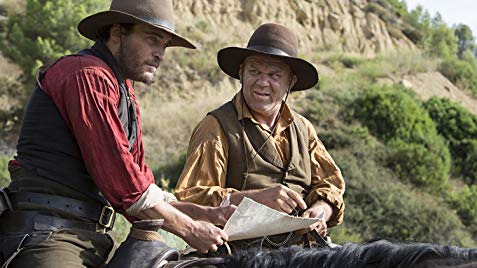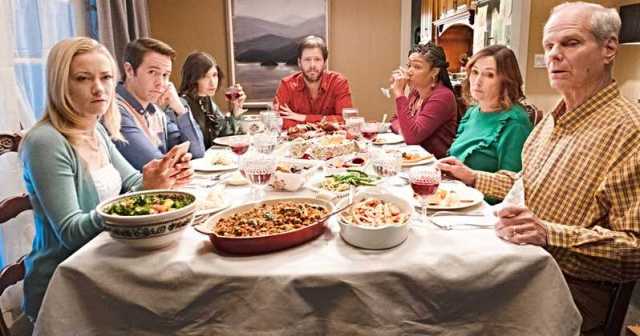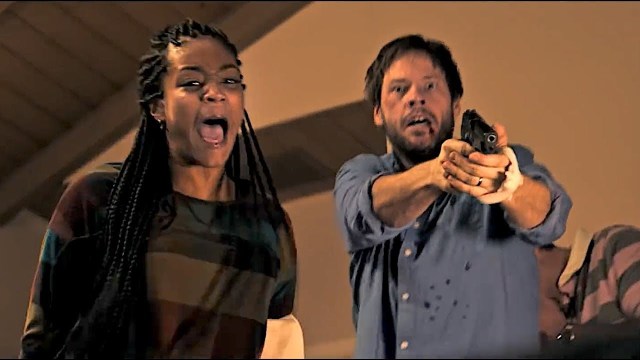
A little “Purge,” a hunk of “Lord of the Flies,” that’s “The Society.”
This series streams May 10.
A little “Purge,” a hunk of “Lord of the Flies,” that’s “The Society.”
This series streams May 10.

You’re going to learn a new word today, because I learned that new word last night at a screening of “The Best of Enemies.”
It is “charrette,” a French word applied to crunch-time, deadline-conscious group problem solving. And that’s what was tried in 1971 in Durham, N.C., an exercise in tough, sometimes unpleasant grass roots democracy that brought two polar opposites to the negotiating table in search of ways to bridge a vast cultural divide — back then, it was the fight over school integration.
You think this engaging, inspiring and important movie about a little known piece of Civil Rights history has something to say to Divided America in 2019? Me, too.
They called her “Roughhouse Annie.” Ann Atwater was a divorced mother of two who didn’t just gripe about the plight of black folks in general and single mothers like herself in segregated, bullhead Durham. She got involved, and nagged the dickens out of others to join her haranguing the racist city council. The lady was not one to mince words.
“Get your ass down to City Hall tonight! I’d BETTER see your face lookin’ Black and ANGRY!”
Casting the formidable Taraji P. Henson as Atwater takes no stretch of the imagination.
In a city where the Klan and the White Citizen’s Council were used by politicians to protect slumlords, unequal schools and white supremacy, Atwater was their tireless foe, a fury given to shouting down dismissive council members, and spinning the most racist member around in his chair when he made it a point of not looking at her when she spoke.
“We’re humans,” she bellows, exhausted from stating the obvious. “Humans shouldn’t have to LIVE like this.”
C.P. Ellis wasn’t just a good ol’boy who ran a local Pure filling station and garage. He was the Exalted Cyclops, an activist leader in charge of the local Ku Klux Klan chapter, recruiting Young Klan and leading them in “the good fight,” as and his co-believers saw it, fighting “the communists, N—-rs and Jews” as “part of something bigger than yourself.”
Sam Rockwell has done well with drawling racists in the past (an Oscar for “Three Billboards Outside Ebbing, Missouri”) and he’s spot-on as Ellis, a swaggering diehard/blowhard who keeps a shotgun in his Ford trunk and a big folding knife on the belt of the pants he hitches up high, for extra security.
Speaking from childhood experience, one couldn’t drive through Jesse Helms’ North Carolina in that era without passing scores of tobacco barns with “KKKK” (“Knights of the Ku Klux Klan”) painted on the side facing the road, advertising for a terrorist group that was a big part of Southern life and Southern politics.
A local woman is dating a black man? Grab your guns, Floyd (Wes Bentley), let’s go shoot up her house — with her IN IT — and train a couple of Klan Youth we bring along for the ride.
But the tide of history was turning, even if the large and active Durham Klan couldn’t see it. That’s when an electrical fire at the battered local “black school” brought Durham’s racial divide to the fore and the mendacious, mediocre status quo protected by the council president (Bruce McGill, also on-the-nose) into the spotlight.
The choices are to integrate the already under-funded, underwhelming schools, or let black kids fall further behind. The city was never going to make the right choice, and the judge the NAACP files suit with is desperate for a buck-passing solution.
That’s how they bring in the skeptical Shaw University professor Bill Riddick, given a patient-when-he-should-be-exasperated turn by Babou Ceesay of TV’s “Into the Badlands.” He will do this “charrette” thing he’s been demonstrating in cities, mostly in the North. He will sign up two co-chairs, leaders of their respective communities.
He will listen to the spit-spattering outrage, and find one “good” thing to focus on, as positive reinforcement in turning the most dogmatic. He will get the Civil Rights agitator and the KKK kingpin on board to legitimize this deadline-driven form of problem solving, bridging a racial divide that goes back centuries in just 10 days.
Mr. won’t-serve-black-customers, refuses-to-shake-hands “Not gonna have’em kids’n OUR school” and Miss “I am NOT gon’work with that CRACKER!” get the same sales pitch.
“If you truly represent your people, represent them!”
Producer (“Seabiscuit,” “Free State of Jones”) turned writer-director Robin Bissell packs in a lot of detail in this narrative; chilling scenes of Klan intimidation, Klan target practice and backdoor communications between the militant racists and politicians depressing examples of the state of Black life in the South in the 1970s — unsafe schools, lack of opportunity hemming people in on all sides.
The overarching message, voiced by Riddick, echoed by others and hammered home in the film is “Once you listen to the other side,” make an effort to get to know your “enemy,” you’re changed. As are they.
That’s what makes “The Best of Enemies” timely. But the history, of the last open era when white supremacy was a viable political stance, of the informal “rules” that kept “them in their place,” is just as valuable.
Bissell has made a film where the casting isn’t the only thing that’s “on-the-nose.” The message, where the film’s sympathies lie and its emphasis on the character with the bigger journey to make could earn it some “Green Book” styled blowback.
But if you don’t think we need to hear this sermon, you’re not paying attention. If you don’t think “reasonable” voices (Anne Heche, sporting a comically anachronistic haircut, is Mrs. Ellis, who supports her husband’s Klan activities but has the common sense to see they’ll go broke if he doesn’t “start sellin’ to the OTHER half of Durham”) are too easily drowned-out in divided, trying times, you’ve abandoned hope.
Bissell makes hope the currency of “The Best of Enemies.” It’s a clarion call to action, to getting involved, to “represent,” to listen and to talk. And for a lecture on the utility of a charrette, a civics lesson in grassroots everybody-engaged democracy, it’s damned entertaining.

MPAA Rating: PG-13 for thematic material, racial epithets, some violence and a suggestive reference
Cast: Taraji P. Hensen, Sam Rockwell, Babou Ceesay, Wes Bentley, Bruce McGill and Anne Heche
Credits: Written and directed by Robin Bissell, based on an Osha Gray Davidson book. An STX release.
Running time: 2:15
Taraji P. Hansen and Sam Rockwell. A true story from the golden age of de-segregation, finding common cause against an unfeeling government that wants to starve the schools and crush the future.
You know, like today. Only less racist.
It opens Friday, and I can’t remember what the studio, STX, has suggested as an embargo (it opens Thursday night, so any “embargo” at all is a laughable request).
Overheated, overwrought, over-furnished and over-dressed, “The Aftermath” is a WWII period piece that squanders another perfectly good Keira Knightley performance in a good looking movie that doesn’t measure up to the costume changes required of its leading lady.
Yes, nobody wears period clothes as well as the runway-ready Keira K. And romances, ill-advised and/or ill-fated, are kind of her thing. The camera adores her in closeup. But in this film, even she can’t act her way past the implausible leaps in plot, the dissonant lapses in character motivation.
She stars as Rachael Morgan, a woman we meet on her way to a winter rendezvous with her Army captain husband (Jason Clarke).
It’s mere months after Germany’s surrender, and Capt. Morgan (Hah!) is stationed in Hamburg, one of the earliest and most telling tests of the Allied strategy of creating air raid firestorms, flattening cities, killing tens of thousands and creating hundreds of thousands of refugees.
Some historians point to Hamburg’s destruction (“Operation Gomorrah”) as very nearly breaking Germany’s back, with the strain it placed on a failing state. But never mind that.
In the movie version of “The Aftermath,” luxury train travel has already returned to Europe, the train station is none the worse for wear and Rachael’s husband, Lewis, has requisitioned a beautifully appointed mansion on the outskirts of the city.
It belongs to Stefan Lubert (Alexander Skarsgård), an architect who married well, somehow managed to avoid serving in the military or losing even his expensive furniture to the firestorm, looters or Allied spoils-of-war collectors. He has a teen daughter (Flora Thiemann) who is still fond of her Hitler Youth uniform and is tempted by the wrong sorts of German boys who survived with her — the ones with “88” branded on their arms.
What is the eighth letter in the alphabet, WWII buffs?
Captain Morgan is trying to keep these terrorists in check. He’s out to win over “hearts and minds,” by showing courtesy and kindness to the starving, sullen, vanquished foe.
That includes Herr Lubert.
Rachael doesn’t share his magnanimity. She is terse, rude and chilly to Lubert, because she has resisted her husband’s entreaties to let the Luberts remain. She practically hisses at him, refuses to shake his hand and rebuffs him at every turn.
And she wonders why the household staff makes snotty cracks about her in German right to her face.
The one Army wife (Kate Phillips) she can confide in puts her mind at ease. Susan is married to a brutish, mistrusting intelligence officer (Martin Compston), who shows no mercy to the Huns and has taught Susan not to trust them a bit.
Beware the “hate just beneath the surface” she warns Rachael.
Well, that’s catnip to the lonely wife of a properly repressed British officer, years of war under his belt with untold horrors that have passed before his eyes.
Rachael’s bitterness has an explanation. Stefan’s does as well, but he’s not allowed to show it, until that big come-to-terms-with-each-other hissing match between the two.

You can’t say this isn’t well-cast, with Clarke perfectly-suited for this sort of stiff upper lip but broken and hiding it Brit of the “Keep Calm and Carry On” generation.
Skarsgård gives us less to grab hold of, a quiet, humbled man who says that he’s a metal presser, now that his chosen field has been put in limbo until Germany recovers. But all we see him do is chop wood, skulk around the huge, lavishly-furnished estate house and — at the drop of a hat — tumble for the English woman who plainly despises him.
Knightley makes the best of a character whose mood shifts in spurts and starts, from hate to lust to love.
James Kent made “Testament of Youth” earlier in his career, another wartime romance that doesn’t quick stick to your ribs. But he shows us the violence of a handshake-refused and takes a shot at making the occupiers look exactly like American and British films have always made the Occupying Germans come off–boorish, oppressive, capable of callous violence.
There’s even a riff on that “Casablanca/Inglorious Basterds” moment of the arrogant winners singing and drunkenly playing the last Steinway in Hamburg — not Nazis, this time, but Brits belting out Gilbert & Sullivan.
A nice detail — that big blank space with discolored paint over every mantle. It’s where the Fuhrer’s portrait used to hang in the homes of Party members.
But one should never punctuate a hot and heavy animal attraction scene with a comically embarrassing moment of coitus interruptus. There’s no “right” way for these two to play this, as there’s no humor in the movie and no real room for it in all the melodrama.
The screenplay finds no mysteries here, no questions about Lubert’s “cowardice” or his means of avoiding combat, no doubts about his loyalties and humanity, or lack thereof.
The shifts in attitude Knightley and Skarsgård have to act out are abrupt and jarring enough to feel like perfunctory requirements of a melodramatic script.
I mean, they’re both beautiful and all, and she’s got her full wardrobe with her and his wine cellar survived, along with the showpiece house and designer furniture. But come on.

MPAA Rating: R for sexual content/nudity, and violence including some disturbing images
Cast: Keira Knightley, Alexander Skarsgård, Jason Clarke
Credits:Directed by James Kent, script by Joe Shrapnel, Anna Waterhouse and Rhidian Brook, based on a novel by Rhidian Brook. A Fox Searchlight release.
Running time: 1:48

Our short-attention-span culture can be forgiven for forgetting — with any new round of celeb photos, red carpet shots with wife Jennifer Lopez, what a shady scumbag ex-ballplayer Alex Rodriguez was and probably remains.
So lest we forget, here’s “Screwball,” a pretty good recollection, dissection and postmortem of A-Rod and baseball’s epic Biogenesis scandal of less than ten years ago.
Birector Billy Corben, most famous for the “Cocaine Cowboys” movies, and the pot-smuggling documentary “Square Grouper,” has also done films for ESPN on the University of Miami and on pro-athletes who went broke after playing, and another doc called “The Tanning of America.”
So he’s the perfect guy to tie together the corrupt, anything-goes culture of South Florida, the unregulated “anti-aging” clinics that sprang up there and thrived under then-governor and well-known medical fraud tycoon Rick Scott and the (mostly Latin) baseball players who cheated to get ahead.
Corben’s film shows how they found their hook-up with Tony Bosch, a Cuban American compadre who speaks their language and got his entre into their world by making Manny Ramirez into the feared late-career home-run hitter nicknamed “Man-Ram” by some.
Corben interviewed investigators, Bosch and most of the other principles involved in this 2013 scandal — not A-Rod, and not Major League Baseball — and concocted a comic riff on this scandal that devolved into a comedy of errors, in which virtually none of the guilty were truly punished.
He uses Tim Elfrink, the reporter for Miami New Times who broke this story via a disgruntled business associate of Bosch, as tour guide through a stink that implicated Rodriguez in all manner of wrongdoing, right down to hiring “protesters” after he was sanctioned by baseball — people paid to show up at ball parks holding up pro-A-Rod/anti-Bosch signs to sway public opinion.
It didn’t work, although truthfully, most of us have forgotten and moved on.
It’s a solidly–reported documentary, with plenty of context and lots of Tony Bosch at the heart of it, a fast-talking hustler who parlayed a medical degree from Belize into an anti-aging and then athlete-juicing practice that gained him riches, reflected glory and finally infamy.
Most of his credentials, the film points out, are “self-proclaimed.” And one of the funnier bits in it is Bosch griping about the difference between a “fake doctor” and “an unlicensed physician” — as if that matters.
Corben IDs the cast of characters with baseball card shaped freeze frames, and on occasion (not consistently at all) he stages reenactments of events the various figures took part in. These reenactments star children, little boys mouthing the words of testimony from those implicated and those allegedly doing the investigating.
For instance, disgruntled marketing man and fitness, tanning and “anti-aging” fan Porter Fischer, who took the books that gave away the high school, college and professional athletes “Dr. T” (Bosch) “helped,” is portrayed by a kid wearing a fake-muscle suit.
Cute. Unnecessary, but cute.
But as the story unfolds, you kind of get why Corben saw the whole thing as childish and comical.
The State of Florida, “where fraud is the state industry” Elfrink says, hired a onetime Baltimore police officer to be their South Florida investigator of medical fraud. Jerome Hill had been fired in Baltimore for causes that should have ensured he’d never work in law enforcement again.
Florida is where guys like this get their second chance. Hill notes that Fischer, mixed up with some tough guys who ran tanning salons and were involved in the whole affair to an extent that they knew who they could blackmail and how they could cover it up, “is lucky he’s not in a canal somewhere.”
Major League Baseball, following up on the widening scandal Miami New Times had broken (a black eye for ALL of TV and print sports journalism, by the way), sent “investigators” to Florida to pay for information, offer bribes and sleep with employees of people they were supposed to be investigating.
“Every sleazy thing” MLB did to get to the facts, “A-Rod and his crew were doing the same thing” to ensure those facts never saw the light of day.

It was a mess, and the ineptitude of the state and the sport to police these practices and those wrongdoers can only be laughed at, now.
Which is why Corben gives the subject its comical treatment. It’s just that he loses his nerve, only recreating a few anecdotes instead of the bulk of the story with kid-reenactors.
I can’t say the scenes where he did that worked for me — kids looking like a young A-Rod, Bosch (complete with wig and “Dr. Tony Bosch” lab coat), Fischer and others, mouthing the words of whoever is telling this part of the story. Probably why Corben didn’t stick with this gimmick, start to finish.
He’s a terrific documentary storyteller, as his drug trade documentaries made clear. He just got too cute for his own good and got in his own way a bit, here.

MPAA Rating: unrated
Cast:Bryan Blanco, Frankie Diaz, Jonathan Blanco
Credits:Directed by Billy Corben. A Greenwich Entertainment release.
Running time: 1:43
“Is it just me, or is it getting crazier out there?”
“Joker” hits theaters Oct. 4.
A lot of critics older than “the kids these days” soured on Jim Jarmusch, maybe after the quite-credible plagiarism accusations re: “Broken Flowers.”
But he’s paid little price for that in the years since. And he’s still got Bill Murray taking his calls.
Murray is in “The Dead Don’t Die,” as are Tilda Swinton and the constantly-cast Adam Driver.
This is something of a departure for Jarmusch — deadpan is usually his thing, not the living dead/walking dead.
This isn’t Murray’s first zombie comedy. But then, he was playing himself in “Zombieland,” so maybe that doesn’t count. Bill Murray playing himself is, however, his greatest role.

It almost boggles the mind that the world’s first nuclear war didn’t happen in the weeks after the terror attacks on Mumbai, India in November of 2008.
The moment the coordinated assault on 12 locations in the coastal city, indiscriminate mass slaughter with machine guns and bombs, began, Indian TV and world cable networks were describing it as “military grade” carried out with military precision.
Nobody was surprised when Pakistan’s military intelligence services were implicated in the planning, training and equipping of the young, indoctrinated fanatics who carried them out. If ever there was an act of terrorism as act of war, this was it.
“Hotel Mumbai” is a harrowing, straight-no-chaser account of the assault, which climaxed with a murderous takeover–with hostages — at the city’s venerated Taj Palace luxury hotel.
First time feature-director Anthony Maras (he was an editor on the picture as well) builds a suspenseful multi-character/multiple locations narrative with a military precision similar to that of the attackers. He uses his few “name” stars well, takes care to paint a telling portrait of the gullible, naive Pakistani Incels who carried out the “mission” and neither flinches from nor magnifies India’s inept and slow-footed handling of the crisis or of cable TV’s clumsy culpability in live-shooter situations of this magnitude.
The result is a powerful, edge-of-your-seat thriller, with “Who will live/Who will not?” suspense, a “Die Hard” without laughable Hollywood swagger, tasty one-liners or heroics that defy logic, common sense and physics.
We meet the attackers as they boat in on a Zodiac, ear-pieces plugged in, exhorted (in Punjabi, with English subtitles) by the unseen “Brother Bull” that “God is with you” and “Paradise awaits you.”
They come ashore, laden with heavy duffel bags and backpacks, scattering into taxis.”Look at all they’ve stolen,” they gripe — the ultimate backward hicks resenting a neighbor experiencing an economic boom, with full shops, Western pizza and the decadence of indoor plumbing to flaunt over their violent, unstable Muslims next door.
But we also see Arjun (Dev Patel of “Slumdog Millionaire”) prepare for work, a poor man still trapped with his wife and little girl in the city’s slums, but a Sikh with hope for the future — thanks to his job at the swankiest hotel in town.
“Here at the Taj, guest is GOD!” Chef Oberoi (the wonderful character actor Anupam Kher) lectures his wait staff as he checks their uniforms and their hands for cleanliness. The early scenes in the hotel underscore this — VIPs such as Zahra (Nazanin Boniadi of “The Big Bang Theory” and “How I Met Your Mother”) and her architect husband David (Armie Hammer) catered to, even their Australian nanny (Tilda Cobham-Hervey) coddled.
Others are seen making their way to restaurants, including a secretive Russian oligarch (Jason Isaacs, always good) arranging the night’s visit by hookers via cell phone.
Meanwhile, at a train station, in restrooms, in the streets in front of a restaurant, the teams of two unfold their Kalashnakovs, storm out and open fire.
Their phones stay on, because Brother Bull crows that “I want to hear their cries with my own ears!”
If there’s an unrealistic touch to Maras’ treatment of “India’s 9/11,” it is the chilling silence after the bursts of gunfire. No one is wounded? Involuntary cries, screams and groans of the injured and terrified? Strangely absent.
The staff at the Taj is taken as utterly off-their-guard as everyone else. Tourists and locals flee down the street from the gunfire and grenade explosions, looking for sanctuary in this edifice of excess, gloved waiters and uniformed maids.
With monstrous thoroughness, the hit squads execute strangers, shoot up the first police car on the scene and converge on the Taj.
They massacre virtually everyone in the lobby, gun down the fleeing and start the process of going room to room — with helpless patrons and staff trapped in a restaurant, a kitchen, in their rooms awaiting death or not realizing until too late that death is coming.
John Collee (“Master and Commander”) co-wrote the script with Maras, and they break up the action into suspenseful episodes — an unaware nanny trapped with a baby in a suite, diners and staff cowering beneath the tables in a restaurant, and a take-charge chef (Kher) organizing his kitchen staff to save people until the police arrive.
Which they do. Except, they don’t. One of the most notorious cases of “waiting for orders” (and SWAT teams from New Dehli) of recent history plays out as only a couple of cops have the temerity to go in, realizing that every shot they hear and every second they wait, another person dies.
The Europeans, Americans and Australians in the hotel find panicked ways to mistrust the Indians on staff — the turban-wearing Sikh Arjun, the multi-lingual married-an-American Zahra (Boniadi). The crusty Russian takes a dim view of waiting for help and the offer of prayers when he decides to get out.
“You can SAVE your prayers,” he spits. “THAT’s what STARTED this s–t!”
The script finds amusement in the immature young brutes who do the killing, marveling at flush toilets, enjoying their first-ever leftover pizza, eaten off a maid service cart mid-carnage.
God forbid it have pork on it.
I was surprised at how much the motivation seems ascribed to class resentment and poverty and not just dogma and the easy leap to radicalization that Islam seems to provide. That’s smart and seems to jibe with the demographics of terrorism today — young, poor, desperate and easily manipulated.
But what Collee and Maras and their cast get across most clearly is the utter helplessness and hopelessness of the victims. Again, this isn’t “Die Hard.” In the real world, in a terrorist situation like this, the cops are outgunned and the other victims have little chance of collective action and no chance without that as the heavily-armed murderers are working in teams.
“Hotel Mumbai” makes it easy to recognize heroism, and to hope that some of the “lessons learned” can prevent this from ever happening again. But the region’s politics, religion, class and the age of the perpetrators (humanized, a bit, but cold-eyed killers to a one) ensures that it will.
And next time, the response, especially on the Subcontinent, could be radioactive.

MPAA Rating: R for disturbing violence throughout, bloody images, and language
Cast: Dev Patel, Nazanin Boniadi, Armie Hammer, Anupam Kher and Jason Isaacs
Credits:Directed by Anthony Maras, script by John Collee, Anthony Maras. A Bleecker Street release.
Running time: 2:03
“Amazing Grace” goes into limited release Friday. Trying to score a last minute screening of it, as it looks and sounds glorious — Aretha at her peak, a post-riots performance at a church in Watts, in front of the congregation and a smattering of musically discriminating celebrities (Mick Jagger had to be there).
Brie directed this “learn to love your yourself” dramedy, with Samuel L. Jackson and Joan Cusack and Bradley Whitford and, oh, Annaleigh Ashford surrounding her in the cast.
Good to see Netflix picked up 2017’s “Unicorn Store,” as its daft and odd enough to probably not have found an audience in theatrical release. See it April 5 on Netflix.