
An ancient parable is remembered and acted-out in modern day Macedonia in “The Tale of Silyan,” the latest documentary from the director of the Oscar-nominated “Honeyland.”
Writer-director Tamara Kotesvka documents the collapse of her country’s small farm economy and sees its parallels to the folk tale of a son, Silyan, who wants to leave his father’s farm and see the world only to be “cursed” by the father and turned into a stork.
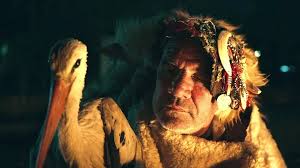
Silyan doesn’t really fit in with the migrating storks. And his father no longer recognizes him. So they face their future separated, lonely and mourning what they once had.
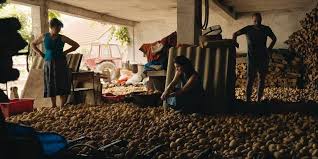
Farmer Nikola Conev has been on the family land all of his 60 years. He and wife Jana plant and cultivate melons, potatoes, corn and grapes, and their daughter, her husband and children pitch in to help with the harvest.
But prices collapse and the younger generation migrates to Germany where they can only find low-paying jobs that barely cover the cost of their childcare. So Jana moves there to help.
Nikola and many of his peers meet and console each other, as many are in exactly the same boat. Their entire families have left. All that remains for them is protesting their plight with tractor parades and public crop dumping. “Giving up” could mean selling their land and moving abroad, staying on it until the money runs out, or suicide.
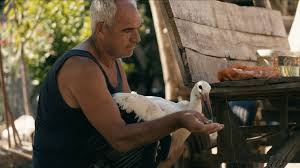
Nikola video calls his wife and tries to maintain ties. He takes a job running bulldozers and tractors at the local dump. He takes in an injured stork there and tries to nurse it to health.
And he broods over a son we never see, one like the son in the parable, a child he hasn’t talked to in years. He could be that injured stork, for all he knows.

As she demonstrated with her quiet, contemplative and mournful story of an old lady beekeeper in the mountains, Kotesvska is the very embodiment of the “patient” documentary filmmaker.
You can use words like “acted-out” and “story” in describing her films as she follows and films and waits and blends into this world, figuring out the narrative as it reveals itself to her.
We stop wondering if this reality we’re seeing is “performed” as we follow the still-playful-together couple into the fields, flirting and teasing, and we join Nikola with an even older and lonelier friend who’s just bought a metal detector which they take to all the empty houses in their village.
Did somebody bury gold in the walls? They’re that desperate and that delusional.
But this family left their house long ago, that farmer hung himself right here, etc.
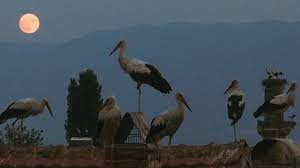
Kotevska weaves the human story into the extensive footage of Europe’s omnipresent storks. They swoop down on newly-plowed fields for worms and grubs. And when field after field goes fallow, they follow “the sound of the tractors” of Nikola and fellow farmers to the dump where they now work.
Many storks die in the plastic-littered garbage. But one Nikola makes it his business to save.
It’s a beautiful film, equal parts sentimental and bluntly realistic. If there’s hope to it, it might very well be futile. But if the parable of the stork son and his father farmer can work out, why can’t modern day Macedonians find a resolution that brings balance, purpose and a future for the farmers and the storks who watch, follow and depend on them?

Rating: TV-PG
Cast: Nikola and Jana Conev
Credits: Scripted and directed by Tamara Kotevska. A National Geographic release premiering on Disney+ and Hulu.
Running time: 1:19


 Movie Nation