



“Trains,” the new dialogue-free “found footage” documentary by the Polish filmmaker Maciej Drygas, is one of the most original pieces of movie-making you’re likely to run across.
Drygas tells a history of Europe through the first half of the 20th century using nothing but archival footage of trains, train travel, train construction, train repair, how trains were used in the two World Wars and the changing lives and fates of those who rode them.
The director of “Abu Haraz,” a years-in-the-making doc about the building of a Sudanese dam and a village scheduled to be buried under the reservoir it creates uses no intertitles, no narration or words at all to tell his “story.”
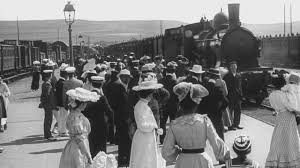
We’re greeted with the jaunty novelty of traveling by train in the early years of the century, a generation finally mobile enough to see something of their corner of the world. Trains had been around for over half a century, so if you traveled, you’d do it by rail.
Fashion shows could be staged on long trips, and silent movies could be shown in a car set up as a cinema. The classes might not mingle, but a broad segment of humanity could travel for the first time, so they did.
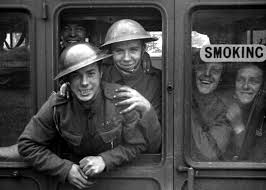
World War I was the apotheosis of a huge conflict dictated by “mobilization” dependent on rail schedules, the ability to move the militarized masses to the Western Front and the Eastern one, seen through British, French and German scenes of boarding at stations, soldiers and civilians alike.
As you might guess, the world wars become an organizing framework for “Trains” as we see recruits departing, and then returning mangled and broken (field surgery scenes included) during WWI, and the film’s final act captures the most infamous moment in Polish rail history — cars crowded with smiling Nazis and victims of the Holocaust, living and dead.
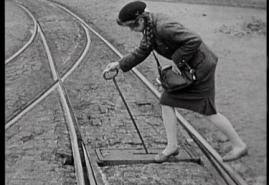
Giant rail-mounted artillery is transported and set up in WWI France, with much of the crew African, another reminder of the “erased” history of the past hundred years. And women dive into changing gender roles as they take over rail jobs during the conflicts.
For hardcore rail buffs, there are fascinating how-they-built-steam-locomotives and rail car construction works scenes. We see a prefabricated switch intersection lowered, spiked and welded into place.
“Mesmirizing” is the only word for it all, the dashing shot of an engineer peering through the smoke out of the side window of the locomotive, the how-to of rail mail pickup and delivery, the chefs and meals and amenities, the Tommies and Doughboys and Poilus and Huns heading off to battle, limping home — haunted — afterwards.
There’s nostalgia built in to these images from the distant past. Most everyone’s heard war stories and rail travel stories handed down through generations. I had a WWI veteran grandfather who came home to a career as a station agent for rail lines along the Va./NC border.
I don’t think the “story” here is as coherent, universal and all-encompassing as Drygas would have us believe. It’s a European epoch, not really a universal one. But it’s still fascinating history fast becoming ancient history for generations who’ve grown up in the coal-free bullet train Eurail era.

Rating: Unrated, war imagery
Credits: Scripted and directed by Maciej Drygas. An EPF Media release.
Running time: 1:21


 Movie Nation