

Falling into “Billy Liar” is no easy feat, even for a film buff, over sixty years after it was released.
It’s been included in more than one list of “the 100 Best British Films Ever Made,” albeit in the bottom quarter of that ranking, not far removed from a “Carry On” comedy. But its a story recognizable and “universal,” and stubbornly populated by unpleasant people behaving unpleasantly. There’s no easy “in” or character to connect with, even the ones meant to embody a generation.
Tom Courtenay of “The Loneliness of the Long Distance Runner” stars in it, John Schlesinger directed it and it is based on the Keith Waterhouse novel and play (with Willis Hall) of the very late ’50s. All of that parks it firmly in the “angry young (postwar) man” “kitchen sink realism” dramas of that era. And the surrealism gives it a French New Wave twist, not something the director of “Midnight Cowboy,” “Darling,” “Marathon Man” and “Cold Comfort Farm” was ever accused of again.
But it’s a comedy, with more than touch of Thurber’s “The Secret Life of Walter Mitty” about it. And the first act, despite a boffo, fantasy sequence opening, is hard-pressed to find whimsy or charm in its anti hero or the grim, grey construction zone that was the northwest of England (Bradford, near Leeds, was the filming location) in 1963.
Billy Fisher is 19, a slacker at home and at work, a feckless lover juggling two fiances with one engagement ring between them and a dreamer who escapes his life by dreaming of Ambrosia. Not the drink, but the fantasyland of his own creation, where he is soldier, field marshal, dictator and king in a war torn land which pauses to celebrate his achievements, laud his speeches and give him parades which he both marches in and soaks up from the ruler’s viewing stand.
Billy stops daydreaming to squeeze in the day’s first lie — “Today’s a day of big decisions – going to start writing me novel – two thousand words every day, going to start getting up in the morning…”
In a Britain bubbling back to life after World War II and 1950s austerity, Billy is the slacker’s slacker, an only child as unpleasant as his disapproving Dad (Wilfred Pickles) and racist Granny (Ethel Griffies).
He dodges work at the office, and keeps a stash of the calendars from the funeral home where he works in a locked dresser at home, lest the owners (Leonard Rossiter and Finlay Currie) find out he’s pocketed the money he was supposed to use to mail them. His co-workers are louts, even Arthur, whom he claims to co-write songs with.
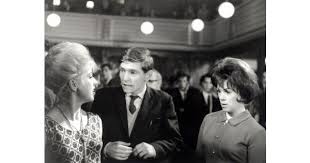
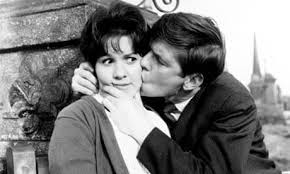
The thing about Thoroughly Unpleasant Billy is that he lies like he breathes — to his annoying fiances, the virginal and naive Barbara (Helen Fraser) and angry and brassy barmaid Rita (Gwedolyn Watts). His dad “lost a leg” in the war. He has a sister. He HAD a sister (“She died.”).
And he’s “going to London. Got an offer to write scripts for (the comic) Danny Boon (Leslie Randall).” Boon is in town for a market opening, but there’s no offer, no matter what Billy’s oft-started letter of resignation says.
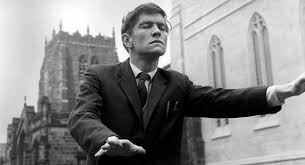
A walk to work becomes an exercise in sleep-walking with his eyes closed, as Billy lies to avoid facing up to the obvious. He’s never made a real decision, never taken a stab at fleeing the conventional life which seems set up for him. He’s never actually “done” any of the achievements he claims for himself. And when he does, no one in his or her right mind should believe him.
All that lying and all that daydreaming is sure to be for naught, as we know a reckoning is coming for this pathological procrastinator, big talker and two-timer.
His mother (Mona Washburne) doesn’t “get” him, but at least she tolerates him as she dispenses advice he’ll never take.
“If you’re in any more trouble, Billy, it’s not something you can leave behind you, you know. You put it in your suitcase, and you take it with you.”
Things finally come to a head when Billy reconnects with his muse, his role model and his one true “love,” Liz.
Liz is played by Julie Christie in the role that would make her a star and one of the defining faces of the ’60s. She is both perfect in the part — from her fashion-forward mop of hair to her free-spirited “just GO” and figure out how to make a living “there” (London, etc.) later ethos, the embodiment of a restless youth-culture age — and the character who kind of derails the film.
If Billy “dreams” of anything, it should be her. If she says “Let’s GO to London,” he must. The dowdy virgin and dowdier trollop he’s passing an engagement ring to have no prayer in a conversation with Liz in it. She may be working class, a bit of a drifter, but she oozes glamour, worldliness and sex appeal. She even makes it seem plausible that she’d see through Billy Liar and yet “see something” in him.
Liz is the ultimate choice shoved in Billy’s face. He can dream rather than struggle to fulfill his “script writer” dream, without doing much to make it come true. Or he can chase a free spirit to the place that dream requires him to be.
“Billy Liar,” which later became a British TV series, is a fascinating moment-in-time tale that would be comical if Billy was more cocksure of himself or tragic if Billy was less unpleasant. There’s nothing charming about this dreamer and nothing plucky about this striver, even if we recognize the “type” — who gets trotted out with every generation that seems lost in dreams, lazy and irresponsible.
Somebody should take a shot at a Gen Z version of Billy. We’re already “judging” that generation. Why not give them and everybody who judges them a focal point for that angst, a personification of that daydreamy, rebellious impatience?
Because Billy and Courtenay keeps us watching even as we can guess which wheel will come off first and which choices Billy makes or simply cannot make. And Christie embodies that siren just beyond one’s reach, an end goal plainly in sight even if we, like our hero, can’t stop dreaming and “visualizing” what we want long enough to figure out how to get it.

Rating: TV-PG (approved), sexual situations, smoking
Cast: Tom Courtenay, Wilfred Pickles, Mona Washburne, Gwendolyn Watts, Helen Fraser, Finlay Currie and Julie Christie.
Credits: Directed by John Schlesinger, scripted by Keith Waterhouse and Willis Hall, based on the play by Waterhouse and Hall and the novel by Waterhouse. .
Running time: 1:39


 Movie Nation