

Johan Grimonprez’s “Soundtrack to a Coup d’Etat” swirls by — a sea of famous and infamous faces, a parade of voices and a catalog of unpleasant history served up on a bed of bebop, cool jazz and free jazz.
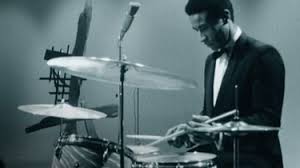
The Belgian filmmaker’s Best Documentary Feature nominee is a human rights jazz oratorio, with contributions by everybody from Abbey Lincoln and Max Roach to Dizzy, Louis, Malcolm X and Nina Simone.
Activists, survivors among the major and minor players of this epic tragedy, a treasure trove of archival news footage and over half a century of interviews sweep the viewer back onto the high water mark of the end days of African colonialism.
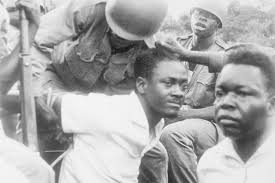
The central subject is the murder of the elected, revolutionary President Patrice Lumumba, who led the Belgian Congo to independence, and who was assassinated by or with the complicity of many state and non-state actors — from Belgium and a powerful uranium mining corporation to the U.S. Eisenhower administration, which “twisted arms” and shelled out the cash that staged a civil war and doomed Lumumba.
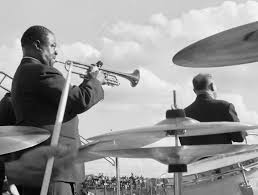
All this unfolded against the backdrop of the Cold War, where America’s stated weapon of choice was The Voice of America, jazz and jazz “goodwill ambassadors” such as Louis Armstrong.
Filling the screen with news footage, graphics and quotes from Congolese activists, Developing World diplomats, Congolese scholars such as In Koli Jean Bofane (“Congo, Inc.”) and American artists such as Maya Angelou and layering the soundtrack with archived interviews, voice-over narration, Nikita Khrushev reading from his memoirs and jazz by everyone from Duke to Nina Simone, Grimonprez takes us back to a heady, troubled time that coincided with his own country’s shameful exit from a genocidal dalliance in colonialism.
Joseph Conrad wrote his “Heart of Darkness,” about the “civilized man” torn asunder by a depravity born of greed, racism and inhumanity based on his mythic “white man’s burden” encounters with the horrors of The Belgian Congo.
Grimonprez takes us back to the 1950s, when the U.N. was just starting to shed its support for colonialism and starting to live up to its promise by encouraging or at least tolerating independence all over the world. From Egypt in the Middle East to Asia and Africa, Developing World countries demanded independence from their colonizers and tried out their new democracies under the tacit approval of activist U.N. chief Dag Hammarskjöld.
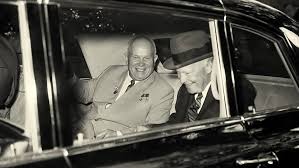
Corporate interests, “domino theory” Cold Warriors, CIA manipulators, “anti colonialist” angler Khruschev, South African (and German) mercenaries and the American civil rights movement would all take an active interest in what happened in the Congo.
But a coup was in the offing, Lumamba was doomed and Hammarskjöld would die in a mysterious plane crash (not touched on here), all because the Congo is one of the most minerally rich nations on Earth.
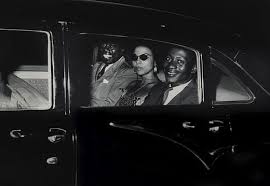
The American activists were led by Malcolm X, with the poet-actress Angelou and singer Abbey Lincoln leading a protest that disrupted the U.N. General Assembly, all because African Americans could see the long term benefits of a free, successfully democratic and thriving state in Africa.
Meanwhile, other even more famous African Americans were part of the jazz diplomacy the State Dept., with CIA backing, was advocating. Parachuting portable record players into countries with officially approved jazz LPs were a part of this.
Armstrong and his band were even sent to the Congo to play during the early days of a civil war.
President Dwight Eisenhower, a retired general with little patience for the long form diplomatic game, suggested killing the outspoken Lumumba, according to more than one underling. How dirty are American hands in all this? Former Sec. of State Allen Dulles wasn’t telling. But underlings were.
It all passes by like a crash course on All the Evils Being Done in Our Name during America’s so-called “good ol’days.” And if you think musical activism started with Kendrick or Live Aid, listen or read what the jazz figures represented here said and thought and did.
It’s all a bit overwhelming. The movie’s big fault might be in attempting too much. The impact of human suffering and the tragedy of a the death of forward thinkers and what their murder cost the world is muffled by the sheer volume of what’s presented and meant to be absorbed.
But make no mistake, “Soundtrack” is a real work of art, an historic film painted with extant footage, a fresh interview or two, sound from many sources and thoughts, facts and opinions from a wide range of people with a stake in not just events back then, but the urgent need to have those facts preserved and honestly served up to those of us trapped in the present.

Rating: unrated, graphic violence
Cast: Patrice Lumumba, Malcolm X, Nikita Khrushchev, In Koli Jean Bofane Louis Armstrong, Duke Ellington, Mobutu Sese Seko, Dag Hammarskjöld, Adlai Stevenson, Dizzy Gillespie, Abbey Lincoln, Larry Devlin, Andrée Blouin, Max Roach, Art Blakey, Ornette Coleman, Gamal Abdul Nasser, Fidel Castro and Nina Simone.
Credits: Directed by Johan Grimonprez, scripted by Johan Grimonprez and Daan Milius. A Kino Lorber release.
Running time: 2:30


 Movie Nation