
F. Javier Gutiérrez’s “The Wait” is a supernatural parable of powerless poverty and callous wealth, the ancient class divide that endured in Spain under the Franco dictatorship.
It’s a grim, well-acted vengeance thriller with moral underpinnings that would have worked, with or without the supernatural “judgement” folded into its unraveling grief, guilt and madness.
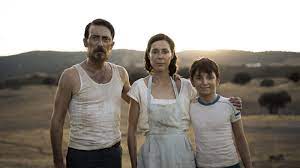
Victor Clavijo is Eladio, a poor, illiterate caretaker of an arid estate high in the mountains in the South of Spain. His arrangement with the absentee hidalgo, Don Francisco, is that he’ll put in a few years here with his wife Marcia (Ruth Díaz) raising their little boy Floren, who will soon be old enough to hunt someday. That’s important in country too dry to grow much or keep livestock
“He’ll be shooting in three years,” Eladio assures Don Francisco (Pedro Casablanc), who seems keenly interested in the lad’s potential and progress.
Those three years pass, and sure enough, Floren (Moisés Ruiz) has learned to shoot at 13. With the help of an uncle (Antonio Estrada), he’s even bagged his first buck.
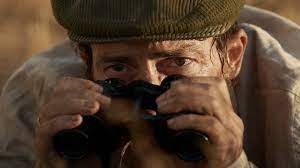
But another wealthy don, Don Carlos (Manuel Morón) has booked an excess of hunting parties onto the estate. He wants “13 stands” for deer hunters laid out on the land instead of the maximum of ten, when Eladio knows that would be “too dangerous,” crowding careless amateur shooters in each other’s line of fire.
A bribe is offered. Then Don Carlos visits Marcia to ensure that she wants that money. Hemmed-in, Eladio has no choice. And everyone’s fate is sealed, starting with the boy of 13.
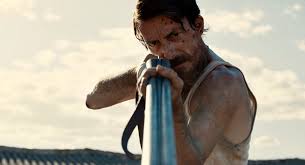
Gutiérrez and his “Before the Fall” collaborator Clavijo paint a portrait of cascading tragedy that overhwelms Eladio, who crawls into the bottle, and which shatters the guilt-ridden Marcia. They grapple with “blame,” with the slow-to-catch-on Eladio finally deciding to do something about the callous Don Carlos, who set all this horror in motion.
But the revenge story turns back in on itself as we and Eladio are left to ponder how merely wanting more money, a better life and future makes this all his and Marcia’s fault in the eyes of the various dons. In a fascist Catholic theocracy stuck in the 19th century — save for Range Rovers and TV for the better off — that assault on conscience is enough to keep the poor in line.
“Testing” them with temptation just underscores the cruelty of the social order.
A stark, rundown setting is captured in arresting screen compositions and images fraught with meaning. Someone goes missing. Closeups of clothespins on the ground where the clothesline used to hold the laundry is the only clue we need to see.
The simple, primal thriller is the beating heart of this story. I found the third act turn towards the supernatural unnecessary in scoring its allegorical points, but if you need to make your movie a horror film in order for it to have a chance to travel, so be it.
The ethereal judgements characters endure in “The Wait” imply the consequences of defiance of a natural order long imposed by everybody’s favorite eat-fish-on-Friday whipping boy dogma, the key to keeping peasants in their place and Spain trapped in time before its aged strongman finally dropped dead.
Gutiérrez’s film suggests there is no escape from the guilt of greed and its repercussions, and that the trap of “the way things are and are always supposed to be” might be mental, moral and even supernatural. Or so we’re forced to believe.

Rating: unrated, graphic violence, alcohol abuse
Cast: Víctor Clavijo, Ruth Díaz, Manuel Morón, Moisés Ruiz and
Pedro Casablanc
Credits: Scripted and directed by F. Javier Gutiérrez. A Film Movement release.
Running time: 1:42


 Movie Nation