

Steve McQueen got his big break in landing the lead in the late ’50s bounty hunter Western “Wanted: Dead or Alive.” And that translated into his first quality, name-recognition movie roles.
He is the ostensible lead in the ensemble thriller “The Great St. Louis Bank Robbery,” a by-the-numbers heist picture co-directed by Oscar-winning documentary filmmaker Charles Guggenheim, father of Oscar-winning documentarian Davis Guggenheim.
That explains the natural light, almost made-for-TV black and white look of this genre picture, a tale told with competent lighting, uncomplicated camera set-ups and a story that was a tad old hat, even for its day.
But McQueen shimmers with real star power, working that contemplative, let-us-see-the-wheels turn style that set him apart from most of his peers (not Newman) and set him up for stardom.
The whole icon of cool thing would come later, after “Magnificent Seven,” “The Great Escape,” “The Thomas Crown Affair” and “Bullitt.”
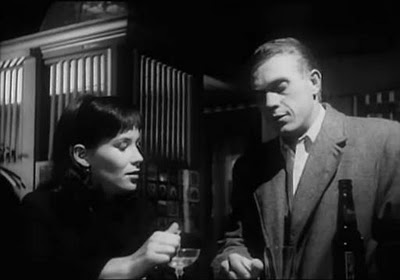
McQueen plays a college kid who shows up for the gang meet-up in his letter jacket. But George isn’t in college any more. Something to do with a woman. And that woman’s brother, Gino (David Clarke) is the one who set him up for this job.
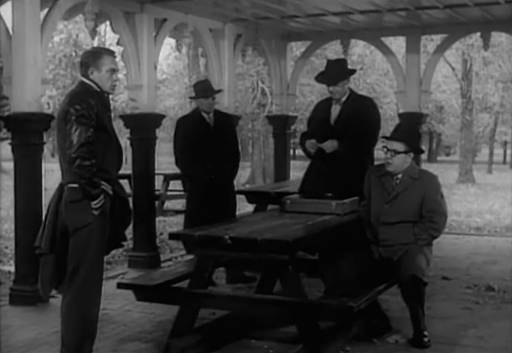
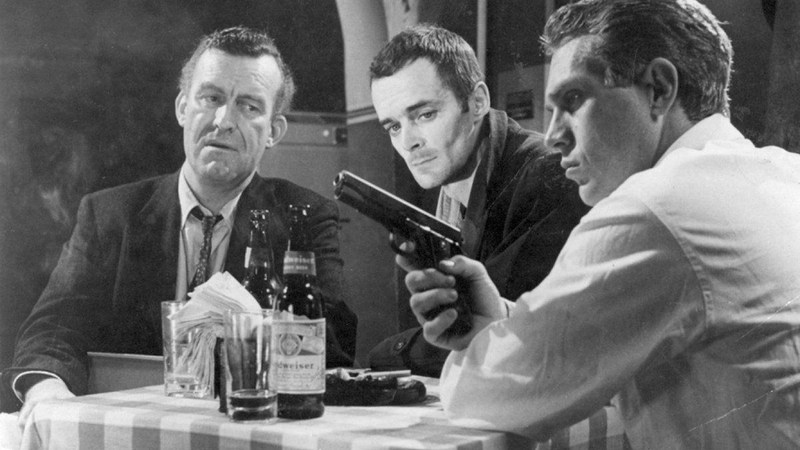
He’s to be the driver in a bank heist, with 60something John (Craham Denton) the brains of the outfit, always pushing around his demoted wheelman Willie (James Dukas), with Gino an antsy gunman anxious to make a score so’s he can pay off his lawyer.
Twenty thousand bucks? Each? Or to split? They’re “not messing with the vault,” just “the cash drawers,” John growls. They’ll spend five days casing the joint. They’ve already got the three cars they’ll need for the robbery and the get away.
George? He’s new, “green,” and insistent that driving is “all I’m gonna do.” As his abrupt hiring, on Gino’s word, creates friction, John tests him by making him steal license plates for a getaway car.
“I ain’t no petty thief” protests be damned, that’s what he ends up doing — haplessly.
When Gino insists George hit up his ex, Gino’s sister (Molly McCarthy), for spending money, the “punk” kid draws the line again, and again to no avail.
“Look George, this ain’t the university. You’ve got to do some things you don’t like.”
But Ann, invited out, sizes George and the situation up pretty quickly. As John barked to the other three “No WOMEN,” right from the start, George has got problems. With the day of the bank rob closing in, those problems put the whole heist in jeopardy.
McQueen’s chief task here is holding his own with much more experienced character players. Yes, most of them were veteran hands at series TV and knew how to be hardboiled in a flash and get through scenes without a lot of bother and retakes.
Denton does a lot of the heavy lifting. But McQueen and co-star Clarke, a charismatic heavy who’d been in “Intruder in the Dust,” “The Set-Up” and “The Narrow Margin,” give “The Great St. Louis Bank Robbery” an energetic edge, lighting up the friction within the gang.
The plot isn’t all that, but McQueen completists will see his surehanded take on the character, the situations and the pre-destined “big moments,” which he manages to give some edge.
This may not be an A-picture or one of the highlights of his career. But McQueen invests in the part and does a lot more than hit his marks as he portrays a young man in over his head, embarrassed by what he did to get himself and Ann expelled, and determined to protect her and keep her out of this, even if he’s not exactly up to that last and most serious job.

Rating: “approved,” violence
Cast: Steve McQueen, David Clarke, Molly McCarthy, Craham Denton and James Dukas.
Credits: Directed by Charles Guggenheim and John Stix, scripted by Richard Heffren. A United Artists release, on Tubi, Amazon, etc.
Runnig time: 1:26


 Movie Nation