


It’s always worth remembering that almost everything that on the screen in a feature film was put there on purpose, especially when reviewing a movie that seems to have competing agendas.
Khalid Fahad’s Saudia drama “From the Ashes” was “inspired” by a notorious true story about a girl’s school fire. There was hand-wringing within “The Kingdom” and outcry from around the world about what caused the fire’s death toll, and the role that country’s Islamic fundamentalist “religious police” had in hampering rescue.
As a Washington Post headline at the time put it, “They Died for Lack of a Head Scarf.”
Fahad’s film — his feature debut was “Valley Road” a couple of years back — opens with a family overhearing chat on the radio about the people and the country being their own worst enemies, at times, and a cleric debating how much of “a woman’s arm” (in Arabic, with subtitles, or dubbed into English) should be exposed in public.
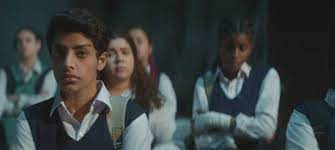
Every time the teen students enter th secondary school, much is made of them shedding the full hijabs that pose a burden, it is suggested, to young women. One is flirted-with by catcalling men, whom she tries to ignore.
And every day, at start of school, they are padlocked-in — not from the inside, protected from the outside world, but from the outside. The message “Women tempt men” is repeated a couple of times in the script.
When the fire happens, the school has to call the “educational authority” for “permission to evacuate.” This is done in a panic. Nothing happens quickly. When the firefighters and police arrive, they must confront dogmatic Islamic men — “religious police” is never uttered — who have to be debated before the gate will open.
Girls die. And when the police investigate the blaze, none of that those problems are questioned. The cops want to know how one student was locked in a storage room, this or that detail of who might have started it.
There’s not a word about the patriarchical, backward and oppressive practices that this tragedy exposed. Here’s the “story” Fahad’s film is allegedly telling.
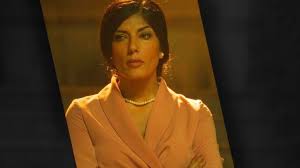
There were bad feelings in the school, girls backbiting at “The Ideal Student,” the shorthaired (“presents” as a lesbian) Heba and her crony Mona, making trouble and ID’d as suspects by the martinet principal (Shaima Al Tayeb), who rides her student daughter Rana extra hard as she tries to take the teen’s dad to court.
The school is presented as strict adherents to sharia law — banning smoking, nail-polish, makeup and chewing gum. The custodian is a paid matchmaker, as these teenagers are all marriage age. Classes include “How to shroud the deceased” and other Islamic homemaker women’s “duties.”
One acting-out teen is ordered to “respect the curriculum AND the religion.”
The rebels are presented as perhaps having a point, or scapegoats for what is to come.
So it’s a bit hard to figure out what side of the fence Fahad is leaning over — women are oppressed, or women who get out of line are punished by fire and its consequences as “God’s will.”
The “villains” aren’t the ex-husband who ignored his daughter, cheaped-out on child support and manipulates the patriarchal courts to abuse the principal, waste her time and ensure that she’s away from the school when she’s most needed, or the “religious police” or the scolding custodian/guard of the gate who locks it or the male authorities whose incompetence delayed action.
That principal (“shrill” is implied), the teacher in charge (Khairyeh Abu Laban) during the fire who only reaches for a fire extinguisher after it’s too late, the “foreign” (Sudanese) student automatically under suspicion, female jealousy and backbiting, “sins” like cigarette smoking covered-up by women? Those are played-up as The Real Criminals here.
I’m not sure how this is playing in the Middle East (English-language reviews of it suggest acceptance of that patriarchy, ignoring the other indicators). And I am a Westerner who doesn’t speak Arabic and can’t even name most of the cast because there’s no English translation of the credits yet.
But my take on this is Fahad gave some thought to making one kind of movie, and lost his nerve or had it lost for him, and made something more comforting to the sexist, repressive, blame-dodging status quo.

Rating: TV-14, terror, smoking
Cast: Shaima Al Tayeb, Khairyeh Abu Laban, Adwa Fahad, Darin Al Bayed, and Aesha Al Refai.
Credits: Directed by Khalid Fahad. A Netflix release.
Running time: 1:32


 Movie Nation