
A lot of living, loving, old grudges and new insights on life are worked out in a day of labor “Under the Fig Trees” of Tunisia, that country’s warm and universally human pick for submission as a Best International Feature Oscar contender.
Erige Sehiri’s compact and sweet story shows us life as it is lived among day laborers — young and old — in a beautiful, Islamic, under-filmed countryside. There’s a winsome tint to its depiction of flirtation and tentative courtship, and a hint of labor and sexual exploitation in its bittersweet undertones.
Fedi Ben Achour is “The Boss,” the gruff young hustler filling two battered Izuzu pickups with women and men — 16-to-60something — to harvest his rented fig orchards. He watches how the big, plump figs are plucked and notes who takes the most care in not breaking the fragile branches as they do.
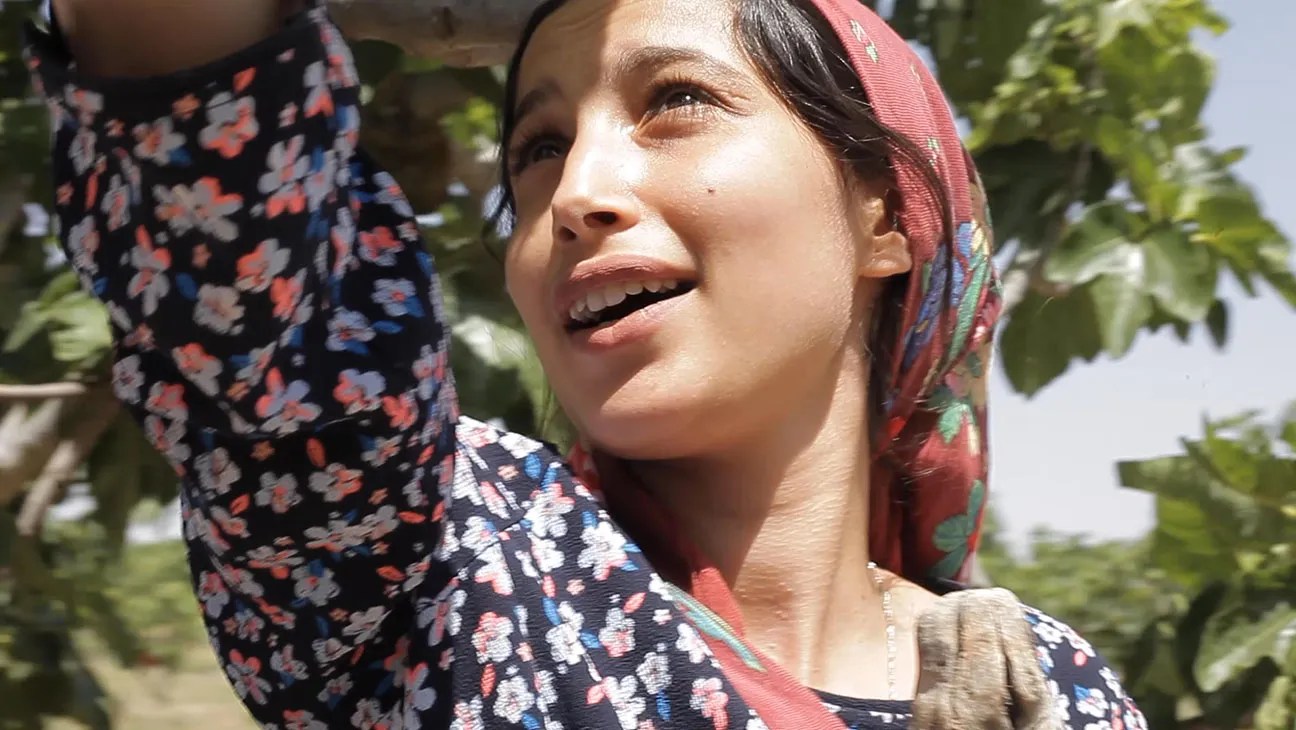
“Breaking a branch is like breaking your arm,” the older women teach the youngest and newest, Melek (Feten Fdhili) in Arabic (with English subtitles) on her first day.
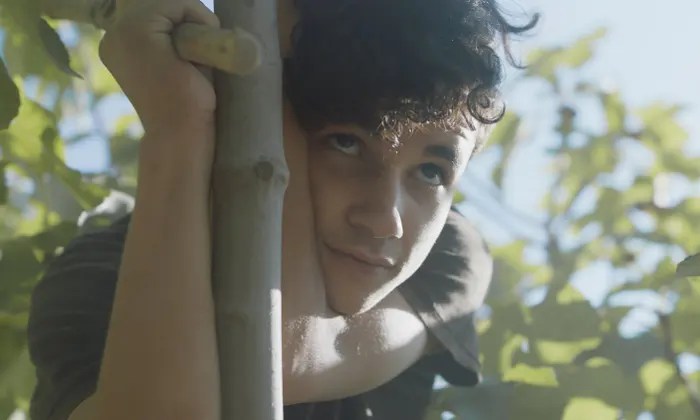
But Melek is distracted. Her first childhood crush, Aboud (Abdelhak Mrabti) is in today’s workforce, stuffed into a pickup with her. He left years ago, and she scolds him behind a coy, wide-eyed smile about not writing, not reaching out. He makes her heart skip a beat, she openly gushes to a friend.
Her sister Fide (Fide Fdhili) misses this, because she’s the privileged beauty, less conservative and open-minded enough to sit in the cab with the boss, her latest beau.
Sana (Ameni Fdhili) is more Muslim modest in her attire, and sees the burly Firas (Firas Amri) as her love connection. She packs him a lunch each day and figures he’s her future, somebody she can “change” the way Fide wouldn’t mind changing the boorish boss, Saber.
“If he loves me, he’ll listen to me,” Fide reasons.
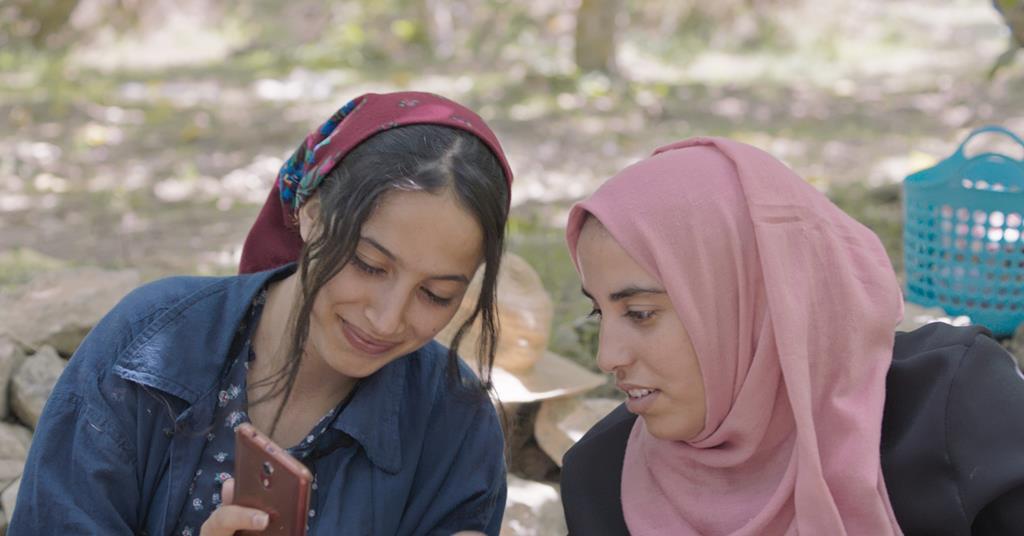
But it’s the 21st century. The younger pickers have cell phones, Facebook and Instagram accounts, and the alleged freedom to play the field, even out in the Islamic boondocks. And even without cell phone distractions, Fide would turn heads.
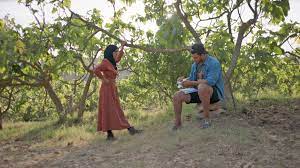
Seheri’s sublime second feature (“Railway Men” was the first) doesn’t waste a moment of screen time, setting the couples and the potential conflicts up, pairing young women up with young men (who carefully climb the trees for the higher figs) for work and circumspect, modest discussions about how fig picking and packing is done, how “close-minded” the most religious among them are and how “bogus” “love” is.
Sehiri’s spare marvel of a drama lets us get a glimpse of each’s hardships and bigger concerns — an inheritance that one is being cheated out of, labor that they’re not being paid for, ways to “steal” some of their fruit from the bullying boss. Over lunch, some pray, some nap, some smoke or vape, some play on their phones and others gossip, eat and flirt their way towards what they hope is a secure coupling and marriage.
Good films often make it a point to remind us how the human race is basically the same, everywhere you find it, every shade you find it in, every language you hear coming out of it. That’s a particularly important message to get out with movies from the Arab world.
Sehiri’s Oscar-nomination-worthy film reminds us that at the end of the day, we all labor and stumble into and out of love “Under the Fig Trees.”

Rating: unrated, light violence
Cast: Fide Fdhili, Ameni Fdhili, Feten Fdhili, Abdelhak Mrabti, Gaith Mendassi, Firas Amri and Fedi Ben Achour
Credits: Directed by Erige Sehiri, scripted by Erige Sehiri, Ghalya Lacroix and Peggy Hamann. A Film Movement release.
Running time: 1:33


 Movie Nation