
It stands to reason that a nation of “tinkerers,” motoring enthusiasts and hobbyists would be the birthplace of classic, vintage or “veteran” car restoration and collecting.
A culture celebrated for its fix-it-yourself ingenuity and preserve-the-past mania would of course find value in combining all that in an “It’s the journey, and journeying in style, not the destination” hobby.
Whatever supremacy America might claim in this global avocation is trumped by Great Britain’s pride of place as the first to recognize and organize those who didn’t want the legendary motorcars of the past recycled out of existence or allowed to rust to dust.
The founding document — the Magna Carta in all this — is preserved in celluloid form, a winning 1953 British comedy whose title character is a 1904 Darracq Type O named “Genevieve.”
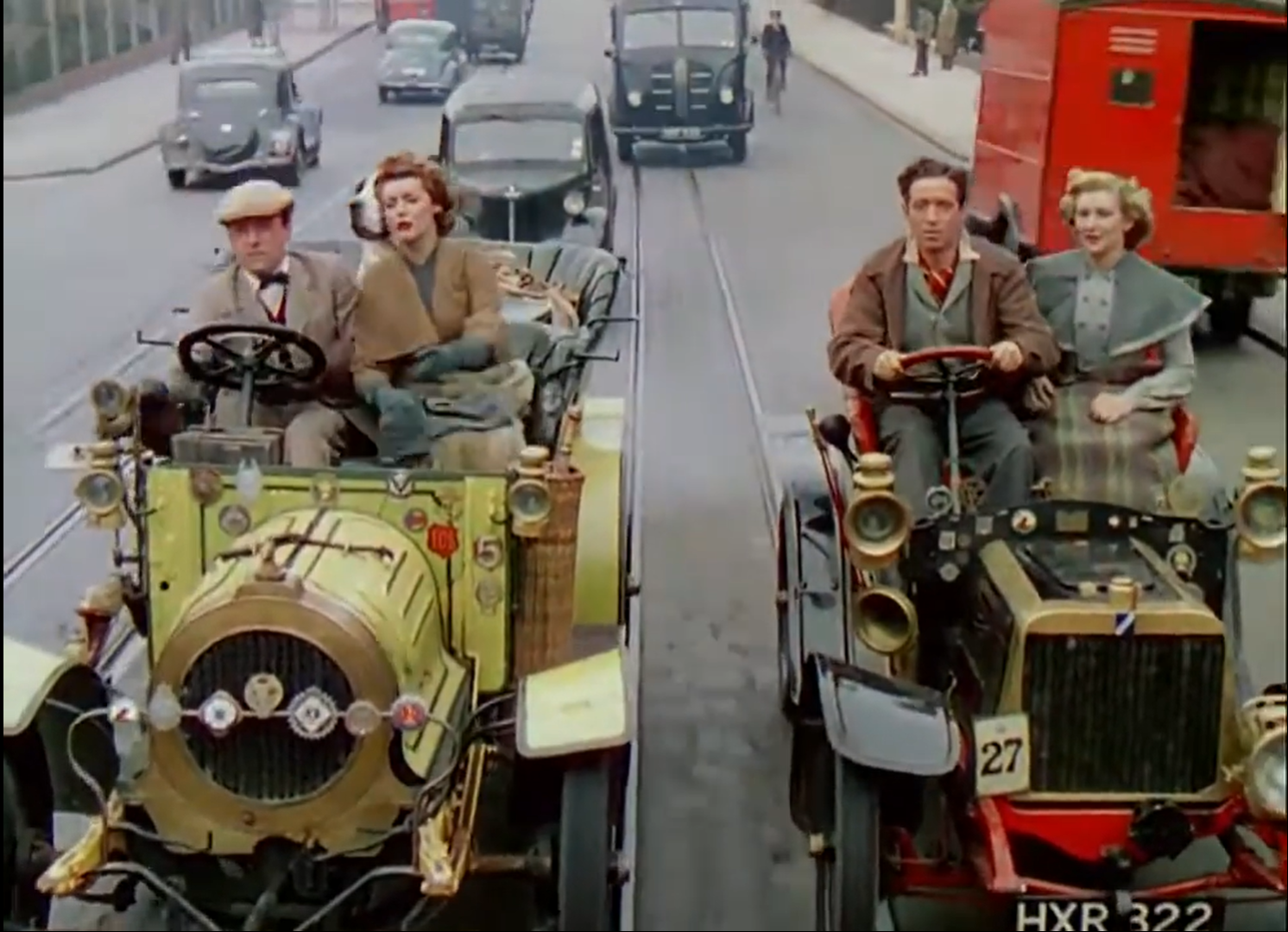
It’s a classic “road comedy” that’s almost more interested in the road and the cars on it than the men who insist on puttering ancient or “Veteran” cars, as the Brits call them, to life, and their long-suffering better halves.
Director Henry Cornelius (“Passport to Pimlico”) battled cantakerous and ancient automobiles and British weather in this almost-romp set against the famed London-to-Brighton Veteran Car Run. That’s an annual road rally for enthusiasts that mimics “The Emancipation Run,” a celebratory rally in 1896 designed to commemorate Britain’s acceptance of cars as conveyances allowed on roads without earlier encumbrances on their use.
The recreation rally has been held every year — barring World War II — since 1927, and brings “vintage” cars — labeled “Brass Era Cars” in America — from all over the world as participants. The catch? The car has to have been built before 1905.
It’s so colorfully famous that it used to be covered by ABC’s “Wide World of Sports,” and many a classic car restoration program (“Wheeler Dealers,”“Chasing Classic Cars,” etc.) has had its hosts participate in this “bucket list” event for collectible car enthusiasts.
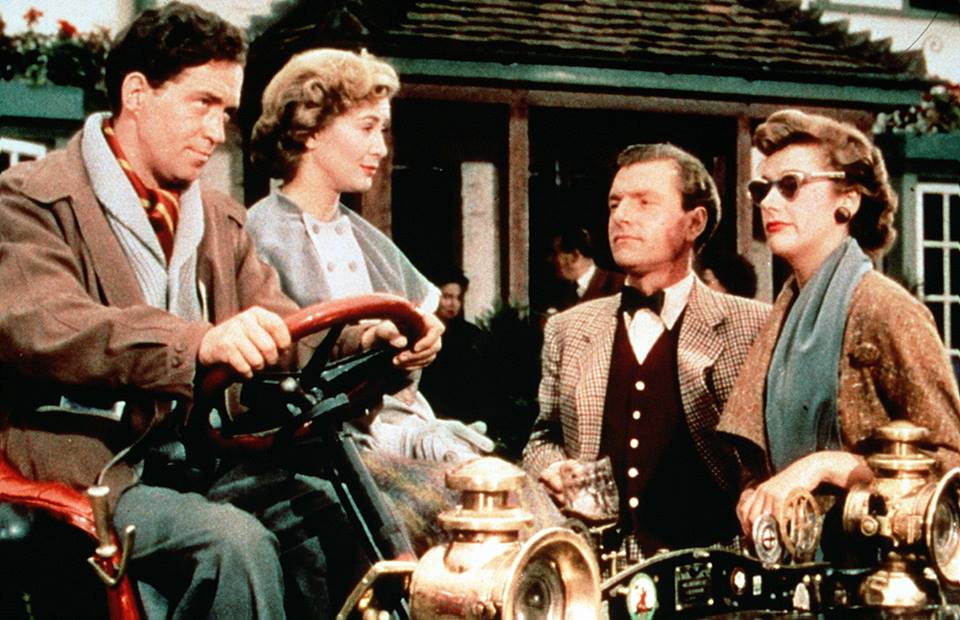
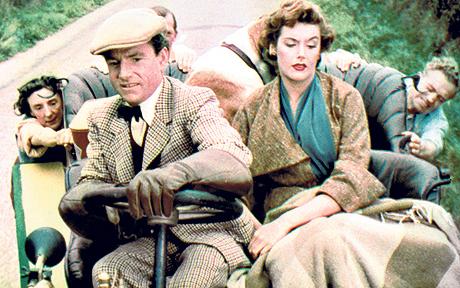
In the movie, “Genevieve,” with brass fittings and headlamps and primitive technology evident throughout, is a car that’s been in the McKim family for three generations. That’s what made her the pride and joy of barrister Alan McKim (John Gregson). Even his wife Wendy (Dinah Sheridan) suspects she takes a back seat to keeping this car and this “tradition” of driving it to Brighton alive.
She figures all this ancient auto stuff is “childish and a bore,” but the real trouble starts when Alan offers to let her out of the next rally so that she can attend a party she’s just been invited to.
“I simply don’t see what’s ‘wonderful’ about getting into a 50 year-old (then) car and taking two days to drive to Brighton and back.”
There’s back and forth about who won’t disappoint whom. But of course she’s on board, seeing as how he bought her a fancy new bonnet for the ride.
Alan’s richer ad-man pal, given the on-the-nose name “Ambrose Cleverhouse,” is played by Kenneth More. Kay Kendall plays Rosalind, “this year’s model,” the beauty he’s talked into riding in his 1904 Stryker in this year’s rally. The men are rivals, and on this particular rally, that turns into bad blood as this “not a race” soon becomes one — a two day (round trip) dash full of breakdowns, flats, pranks, detours, bitter disagreements and offers to “buy you a jolly good lunch” which lapse into “buy you a jolly good dinner” thanks to the endless mechanical problems.
Cleverhouse isn’t ever-so-clever in his Genevieve insults, so he always punctuates them with a prep school laugh — “Ha ha HA ha!”
The cars smoke, and the engine noise is such that we can tell when the drive and conversation are taking place on a towed trailer next to the camera operator.
Shots mix sunny days with the odd insert of a rain-drenched road, underscoring how tricky it was getting this Technicolor shoot in the can in British weather.
We drive by a lovely collection of houses and historic pubs on the old A23 and get a further taste of the past via the “modern” cars folded into this caravan of (mostly) early internal combustion.
The jokes are somewhat droll, and a bit sparse, if we’re honest. Having to spend the night in a “limited bath” and even-more-limited-bath-time hotel parked next to a thunderous clock tower is bound to enrage Wendy.
“No one’s ever complained before,” the upbeat proprietor bubbles.
“Are they Americans,” another guest asks?
The story’s a tad myopic, focusing on these two “petrolheads” and their increasingly testy rivalry. Sportsmanship may fall by the wayside. Might manners follow? Not necessarily, old boy.
The veteran character lead More (“The Admirable Crichton,” “The Longest Day”), playing something of a bounder here, is fun and in fine form. Kendall. best known for marrying Rex Harrison (and dying young), vamps up posh Rosalind, a woman with a musical past, little tolerance for hardship and unable to hold her liquor. Keen-eyed viewers will notice James Bond’s future Minister of Defence,” Geoffrey Keen, here playing a too-tolerant motorcycle cop.
Seventy years after its release, “Genevieve” can be appreciated for the Technicolor snapshot-in-time that it was and remains, even if the comedy is more jovial than genuinely funny at this point in film history. And we can still marvel over how “new” those “fifty year old” antiques — all of them well over 100 years old now — look and the fact that there are fanatics who can keep them running to this very day.

Rating: “approved,” with an “ass” here or there
Cast: John Gregson, Dinah Sheridan, Kay Kendall, Geoffrey Keen and Kenneth More
Credits: Directed by Henry Cornelius, scripted by William Rose. A J. Arthur Rank production originally released bu General Film Distributors, Gaumont and Universal, now on Youtube.
Running time: 1:26


 Movie Nation
Titfield Thunderbolt and The Iron Maiden are also good films in a similar vein.