



Prolific provocateur and cinema revolutionary Jean-Luc Godard cut a long, narrow swath through film history in his 91 years.
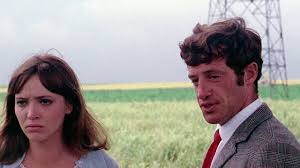
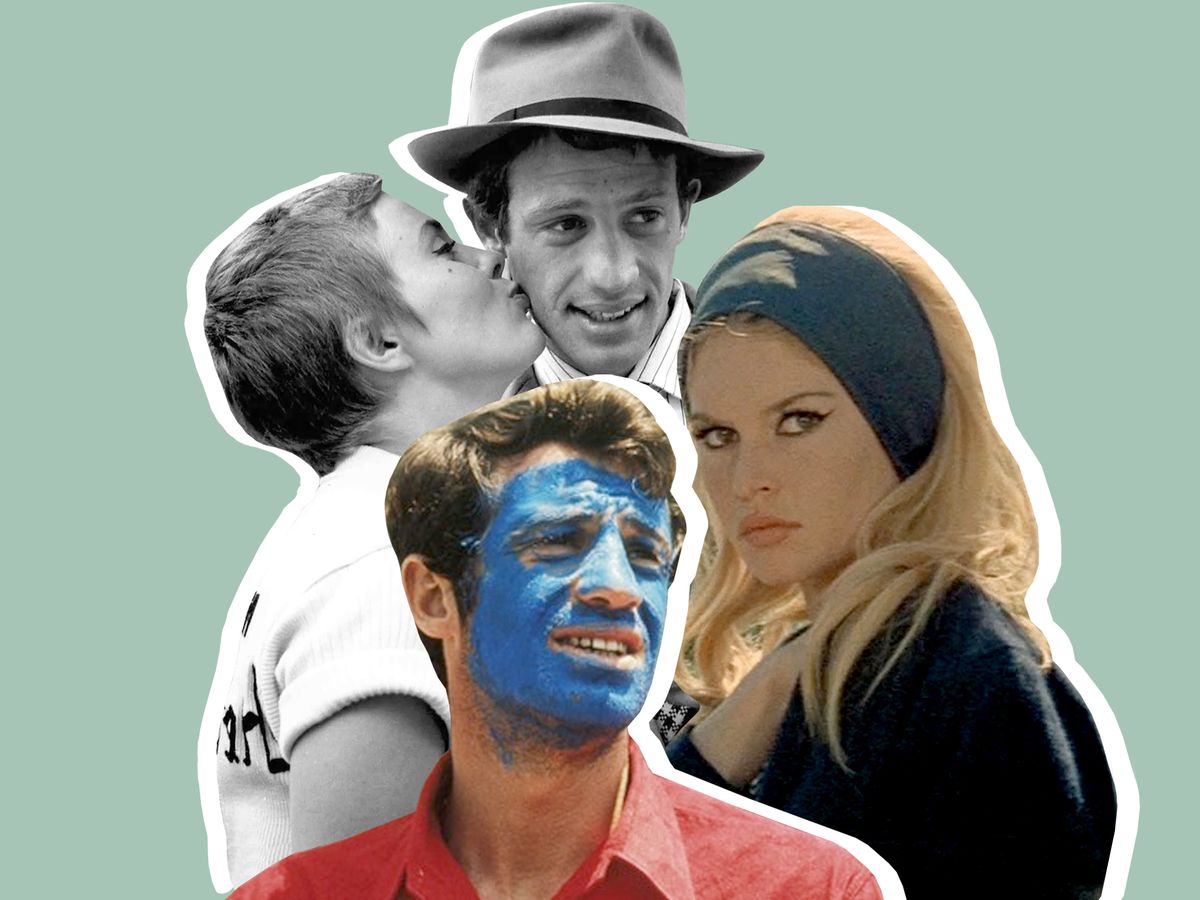
He changed cinema into something messier and more realistic in launching the French New Wave in the 1950s. Movies were never the same after 1959’s “Breathless,” and other early works such as ” Bande à part (Band Apart)” and “Contempt (Le mépris).” And like his onetime idol, Chairman Mao, spent the rest of his career attempting and advocating for a perpetual revolution.
He stirred up passions, pro and con, pretty much for the rest of his life — boo’d at Cannes, pied in the face after his “blasphemous” “Hail Mary,” dismissed, chastised, running off to self-imposed exile and even attempting suicide a couple of times.When he finally died, it was via assisted suicide in Switzerland.
But his towering reputation and legend live on. Quentin Tarantino named his production company “A Band Apart” after the Franco-Swiss enfant terrible. Others still celebrate him, and he remains a bucket-list filmmaker that any self-described cinemaphile must sample.
And now there’s a documentary that attempts to take in the totality of Godard. “Godard Cinema” is an ambitious compilation of clips, snippets of films and other projects, interviews with him and those who knew, married and worked for Jean-Luc Godard — some loving, some hating — as well as academics, biographers and experts (all French) who remind us that while his reputation waxes and wanes, his relevance outlives him, as do his greatest films.
Godard might have been the smartest filmmaker ever to step behind the camera, the very model of the cerebral cineaste, a deep thinker even at his most wrongheaded. Alternately brooding and playful and almost always arrogant, he broke into cinema as a film critic.
Naturally.
As a critic, he was of a generation of French “Cahiers du Cinema” (Notebook of Film) writers who pushed the idea of cinema as art, as if no one had ever thought of it before them, as if they slept through Latin class at their posh prep schools and didn’t recognize that MGM’s logo since the 1920s has been “Ars Gratia Artis,” “art for art’s sake.”
Champions of the “auteur theory,” they lionized filmmakers with consistent themes, styles and obsessions, not just the John Fords and Orson Welles, but Hitchcock, Sam Fuller and genre specialists who made statements as they demonstrated the old maxim “an artist is someone who hammers the same nail over and over again” with every movie.
Ever used the term “film noir?” These are the folks who identified that famous criminal underbelly genre, and named it.
Cyril Leuthy’s film remembers Godard’s avowed practice of asking “What would (filmmaker Jean) Renoir do?” in a given scene or given cinematic situation. “Or Hitchcock?” He’d then try to do “the opposite.”
“I am a painter who does literature,” he said in one archival interview. “Cinema is the truth at 24 frames per second” was a film student T-shirt just waiting for mass production.
Leuthy’s film notes how Godard massaged his “legend,” smoking and wearing his pricey sunglasses indoors, telling anyone who asked — biographers included — that there are “no pictures of my childhood.” One historian asked “Was Godard ever a child?”
Yes he was. Yes, there are photos, or at least one photo. “Godard Cinema” gets at his reasons for covering-up his privileged (raised in Paris and Switzerland), politically-connected upbringing.
He prepared meticulously, some who worked with him declare, but always hid that to ensure he’d be labeled a “genius” for just tossing off his 140 features, shorts and even movie trailers that pass for art.
Godard didn’t like sharing screenplays with the cast, and was an innovator in the “earpiece in the actor’s ear” directing style, passing on dialogue and acting directions mid-take. He was given to quoting philosophers famous and obscure off-set, and having his characters do so in his films. As neither actor nor viewer had a firm grasp of why this quotable line worked here or there, that could be exasperating to all concerned.
The documentary does justice to the man, and does well enough at summing up how his contrary personality serves his art, although it might be better served having an English-language narration for US distribution. By the time we drift past his most famous U.S. TV interview, with Dick Cavett as “Every Man for Himself” (1980) came out, revelations in “Godard Cinema” are in shorter supply, as indeed his relevence seemed to fall-off after that watershed event — save for the rank provocation of “Hail Mary” (1985).
But if “Godard Cinema” prompts streaming services to renew our acquaintance with the work, films from “Breathless” to “Hail Mary” that often retain their power to jolt, shock, inspire and provoke, all the better.

Rating: unrated, nudity, smoking, some profanity
Cast: Jean-Luc Godard, Julie Delpy, Hanna Schygulla, Anna Karina, Macha Méril, with Johnny Hallyday, Jean-Paul Belmondo, Dick Cavett, many others, narrated by Guillaume Gouix.
Credits: Scripted, directed by Cyril Leuthy. A Kino Lorber release.
Running time: 1:41


 Movie Nation