
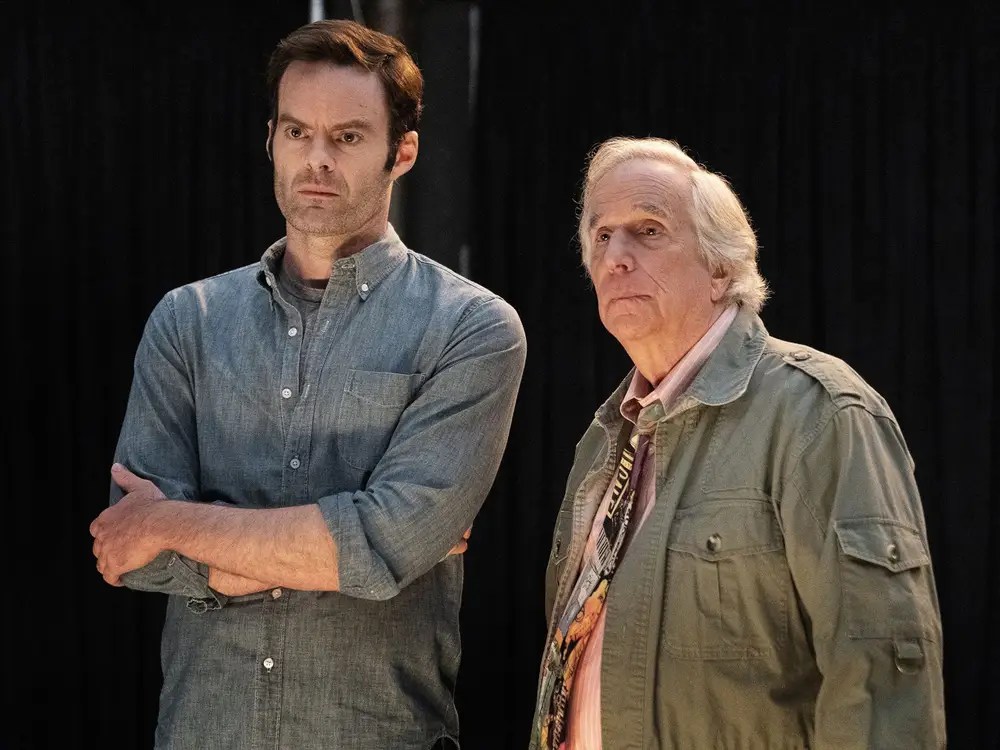



Multiple generations celebrated Henry Winkler’s late life Emmy Award for his performance as a bad actor turned bad acting teacher in Bill Hader’s hitman dramedy “Barry” on HBO.
The guy had been a short, strutting TV icon in the ’70s, “trapped” in the “Happy Days” role that made him a Smithsonian-recognized global phenomenon, a faux tough guy with a nurturing heart of gold beneath that leather jacket.
The fallow years that followed The Fonz included some acting (“Night Shift”), a bit of directing (“Memories of Me”) and some successful producing (“MacGuyver,” “Sightings”). But he never got the respect that an Emmy conferred. As he always came off as a good guy, very human and empathetic and sensitive, a “mensch,” we smiled and maybe shed a tear with him at his moment of affirmation.
Winkler talks with some candor about the long arc of his life and career pointing towards that moment in a new memoir. “Being Henry: The Fonz…and Beyond” lets him relate an unhappy (but fortunate and privileged) childhood, his early call to performance, and his lifelong struggles with dyslexia, something a surprising number of actors confess to having to overcome.
He was, he admits, a “terrible reader” because he “couldn’t read.” Memorizing lines was a career-long ordeal, forcing him to perform the gist, the “essence” of this or that piece of dialogue. Improvising around the lines became his crutch. It was only when he landed “Barry” that he’d put in the work to get those Hader and Alec Berg-written lines exactly right.
Winkler also talks about the decades it took him to abandon being too “self-conscious” to be much of an actor, all but lamenting some of his performances and admitting he only “broke through that concrete” that kept him from being “in the moment” and truly transformed into this or that character.
But all that was what made that his big bgreak such lightning-strikes moment. Mere days after arriving in Hollywood, he summoned up “that voice” that he’d never heard before when auditioning for the beloved TV producer Garry Marshall for the role of cool, tough, working class “big brother” figure to Richie Cunningham and the “Happy Days” gang.
“Ayyyyyy?” It just came out.
There’s a lot here about the impact of that fame, bumping into Beatles and Rolling Stones and DeNiro, meeting and marrying his wife (Stacey’s voice is here in those chapters), his efforts to keep Ron Howard from being too hurt at the character ABC and Paramount decided the show was all about even though “Happy Days” was set up as a Ron Howard star vehicle.
That bond never broke, as Howard directed Winkler’s comedy hit “Night Shift,” which introduced the world to the wonder that was Michael Keaton, and summoned Winkler for a great role on TV’s “Arrested Development.”
That connection might be the most apt to focus on here, as both Winkler and Howard are widely recognized as two of the nicest, most down to Earth people in show business.
But the memoirist, often writing in choppy sentence fragments, pulls a lot of punches in his book, naming only the dead unpleasant people he’s dealt with in his career, and even leaving some of them out. We can guess the origins of his “feud” with Tom Hanks. We have to guess who this actor who stole lines and “bits of business” from him might have been, which co-stars, teachers, directors, etc. he didn’t get on with.
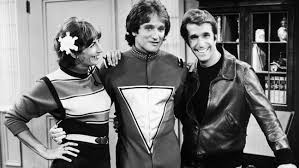
He claims to have recognized “genius” in Meryl Streep, brought in to read for a TV movie Winkler did during his “Happy Days” fame, and in Robin Williams, a comic hired off the street (so the legend goes) for a “Happy Days” guest spot that landed him a series and made the future Oscar winner famous.
It takes a while for the book to get around to what made Winkler’s wealthy Holocaust-fleeing parents — dad owned a successful lumber business, even though there were hints of money problems (not enough to keep Henry out of private schools in the US and Switzerland) — such a negative force in his life.
But Winkler did all right despite that belated parental approval, despite the weight those imposing, unlikable grumps were on his psyche, his marriage and general well-being. And whatever his claims about “breaking through,” the things that held him back and made him a justifiably self-critical middling actor, one can see “Night Shift” Henry in everything he does, especially “Barry.”
He may embrace his wife’s “mensch” label, and who wouldn’t? But “nebbish” seems to be the real sweet spot in his acting wheelhouse.
He’s also become a best-selling “celebrity” children’s author, brainstorming books about a kid hiding and fighting through his dyslexia with a career celebrity kids’ book editor who’d transform his memories and ideas into print. That might be the most illuminating chapter in “Being Henry,” that whole “celebrity kids’ lit” sausage factory laid bare, in case you wonder why so many famous folks are pursued by publishers and how they actually (whether they actually) do the hard work of writing.
“Being Henry” is an easy read, a “breezy” memoir in the parlance of the genre. But it’s not deep, the memories summoned up aren’t detailed and its insights aren’t novel. It reads the way one can infer from the kid lit publishing revelations, that it was “processed” more than written.
The chapters are a near uniform 27 or so pages each. A little tidbit of the past is visited in each, some interesting and illuminating, some less so. His talk-show chatted-up passion for fly fishing is glimpsed. His wife’s cancer scare is an occasion to break down his narcissism and struggle to be the husband he knows he’s supposed to be.
And in the end we remember why he earned that lingering affection Winkler we have for him, why we celebrated that late-in-coming Emmy, but also why we might have discounted the “lucky” self-important actor and the roles he’s most famous for.
“Being Henry: The Fonz…and Beyond. By Henry Winkler. 244 pages, including acknowledgements. Cleadon Books. $30.


 Movie Nation