
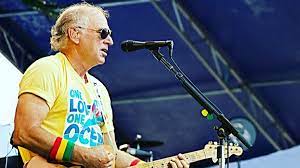

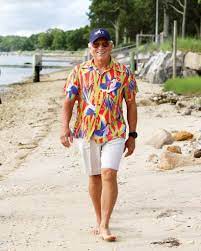
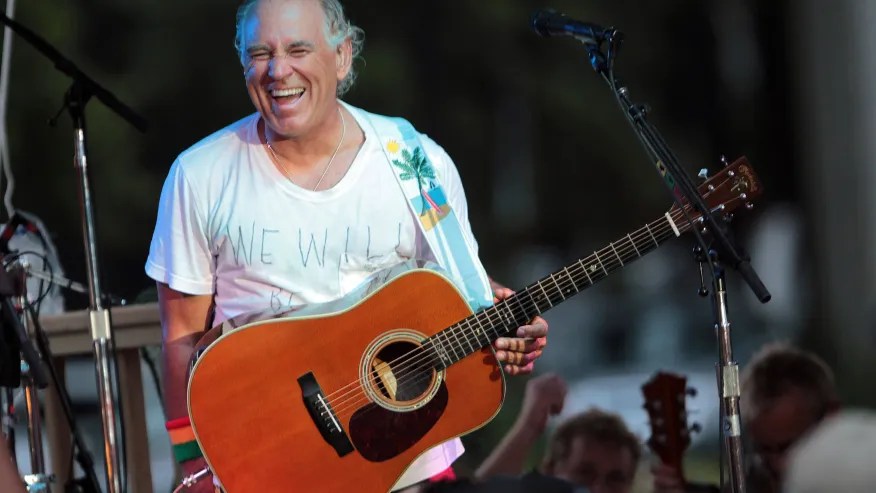
The Alabama troubadour who discovered “Margaritaville” has died.
Jimmy Buffett, a singer-songwriter who popularized “Floridays,” a tipsy laid back beachside Florida lifestyle, who put Key West back on the map and who parlayed a musical fanbase into a “Latitudes” and “Margaritaville” brand empire was 76. The family confirmed his death was from complications from skin cancer.
Emerging from the singer-songwriter generation that followed Paul Simon and included James Taylor, Laura Nyro, Bill Withers, Bonnie Raitt and others in the ’70s, Buffett chronicled a boozy, surf and sunshine Gulf coast scene that his music so popularized it lured millions South, to Florabama — the seaside from Key West spreading west to Mobile, Alabama, where he grew up.
He came up in the music business with his guitar-picking songwriter pals Jim Croce, Steve Goodman and Jerry Jeff Walker, and like them, was a storyteller in song. A train ride Goodman, Walker and Buffett took as struggling young artists on a struggling rail service became iconic songs like “City of New Orleans,” for Goodman, and “Railroad Lady,” co-written by Walker and Buffett.
Buffett’s first hit was a 1974 real-life detail-littered story song about missing someone while on tour, “Come Monday,” whose first big royalty check, Buffett liked to tell fans, “bought me my first sailboat.”
But with “Margitaville,” a tale of resigned heartbreak and alcohol-soaked recovery set in surfside Florida, he became world famous and was set for life. He went from opening for The Eagles and Linda Ronstadt to a headliner, and toured to packed venues until the very end of his life.
He turned generations of fans into “Parrotheads” and eventually a lifetyle brand, with Margaritaville restaurants and gift shops and more recently, Latitudes housing developments for that aging fanbase.
More than anybody else, the “Son of a Son of a Sailor” singer — he was named for his ship captain grandfather — inspired the label, “yacht rock.” “Gulf & Western,” was his quip label for his sound and genre.
I first encountered him on a snowy mid-winter phone call in college in the late ’70s. He was playing at a university nearby, and having found his music as a weekend country music DJ, and just between breakups with The College Hot Mess Girlfriend, I needed a break so I called for a ticket, or just to see if the show was still on, snowfall be damned. I called the wrong number, and got backstage rather than the ticket office. It was soundcheck time.
A distinct Alabama drawl picked up, with the sounds of laughter and tuning-up in the background.
“Sold out? Naaaaaw. COME on over!”
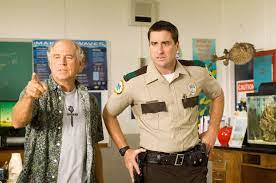
Had to be him. Years later, interviewing Buffett when he produced and took a small role in the film of his Florida journalist/novelist pal Carl Hiaasen’s kids’ novel “Hoot” into a charming, enviromentalist adventure comedy, I tried to confirm that, and he laughed but would only say “Sounds like something I did back then.”
His live record from that era, 1978’s “You Had to Be There,” was celebrated at the time as “uproarious” in its inebriated, good-humored bravado and definitive live-versions of songs, with Buffett introducing each by recalling how he’d written it or come by it.
His first brush with the movie business came when he wrote songs for and appeared in the 1974 Jeff Bridges/Sam Waterston Montana comedy “Rancho Deluxe.” It was based on a novel by Buffett’s brother-in-law, Tom McGuane.
“Hoot” had a similar trip to the screen. Buffett told me in 2006 that he was chatting with his friend Hiaasen, the topic of why “Hoot” — about Florida Keys kids protecting burrowing owls from the state’s rapacious developers — hadn’t been made into a movie yet.
Buffett told Hiaasen, “I believe I know a few folks who can make that happen,” became a producer, provided songs for the soundtrack and played a laid-back teacher in the film.
Fame made him rich, had “60 Minutes” and magazines profiling him and let him dabble in Broadway shows as he repackaged his seminal ’70s hits into boxed sets accompanied by essays on “Why I love my seaplane” and the like.
But he often returned to Key West even after he’d transformed the place into the tourist mecca (“trap”) it is today, performing free solo shows and benefit concerts, which were a big feature of his post-fame career.
He wasn’t to everybody’s taste, but the dream idyll he sang of was intoxicating. I should know. I live on a sailboat. In Florida. And I still like my margaritas and flip flops, even if I’m watching my salt intake.
Buffett was one of a kind, a singular success as a singer-songwriter whose tunes made that lifetstyle so alluring that you can’t visit a marina in North America without seeing sailboats named after his tunes, so omnipresent that you can’t hit a pub in the waterfront South without hearing a picker singing one of his songs as the sun sets, the flounder sizzles on the griddle and the blender churns up “Boat Drinks,” margaritas included, in the background.


 Movie Nation