

Michihito Fujii’s “Village,” inexplicably retitled “The Village” by some typist at Netflix, is a murky melodrama with Noh Theatre and other distinctly Japanese cultural traditions and attitudes folded into what plays as a slow-simmer thriller.
The untranslated Noh scenes and a story that points to inescapable fate and troubles passed generation to generation mean it can be frustrating for a western cinema fans, where we believe we determine our own fate, we like our heroes proactive and even vengeful and the pace of cinema is ususally the pace of life — a bit more brisk than this.
The village of Kamon sits at the base of a mountain, with a local shrine partway up the slope. At the top, a big ugly recycling plant sits, something the locals were sure would “save” the village years ago.
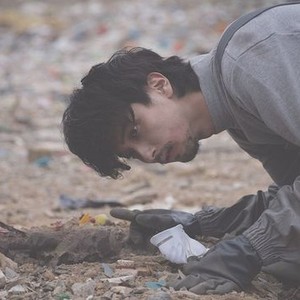
Now, the young people who haven’t fled — and plenty of lifers — work at the vast garbage dump outside of the village, sorting out recyclables under the smiles of the mayor (Arata Furata), the usually-absent owner and the mayor’s beefy, loutish son Toru (Wataru Ichinose) who manages the dump.
Toru runs a dictatorship of bullying, staging wagered-brawls between the workers and pitilessly bullying shy, downcast Yuu (Ryûsei Yokohama).
Yuu is burdened with an alcoholic mother (Naomi Nishida) who burns through his cash so that he will never be able to save money and escape this place. And he’s haunted by what probably drove his mother to drink, a long ago act of violence committed by his father, an act that climaxed with a deadly fire.
He is shunned by the villagers, who figure he won’t be around (in Japanese with English subtitles) “for long.” Toru is more cutting. Yuu is “unnecessary” for this job and this town.
Yet Yuu is at Toru’s disposal at all hours. Who else would they rely on to bury toxic waste, after hours in the dump?
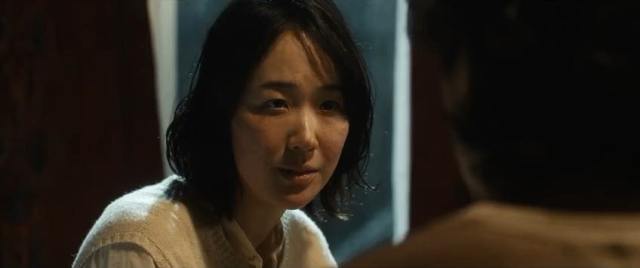
Yuu’s life changes when an old crush returns. Misaki (Haru Kuroki) will do PR for the plant, which was controversial when it opened and remains so now, what with the after-hours mob waste, water quality impacts and plans to devour more of the village mountain with that ever-growing dump.
But bullies don’t give up easily, and Toru wants Misaki for his own. The company hasn’t covers its mob-waste dumping tracks. And the mayor’s younger brother (Shidô Nakamura), one guy who “got out,” is now a policeman in the adjacent city. He may be interested in what they’re burying in once-scenic Kamon.
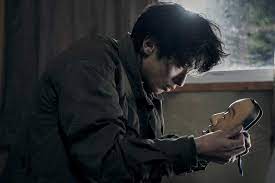
Fujii — he directed “The Journalist” — had a lean enough thriller on his hands here. But he’s hellbent on getting his “Noh” allegory into it. Misaki is depicted as an enthusiast trying to explain its appeal to Yuu and the viewer. “Noh is mostly about your inner self,” she expllains. What you bring to the allegorical, myth-and-folktale-based plays are what you get out of them.
But Yuu’s recent past and his family history are what he takes to the masked, torchlight procession annual Noh shows. Whatever shell he came out of, Toru and the other locals aren’t keen on allowing him to escape.
Yokohama, barely aged out of boyish roles, makes Yuu a stoic and a martyr who lets himself get pushed around a lot more than your average Hollywood lead. Kuroki gives Misaki a “You don’t know how good I am for you” pluck and maturity, something helped along by the fact that she is older.
Ichinose, jacked up and tattooed here, probably has a steady diet of Yakuza movies in his future, if not his past.
The violence, when it comes, is brutal and expected. The complications surrounding it have all been contrived along obvious plot lines.
For me, that traps this “Village” firmly in the grasp of melodrama, where the story and situations are predictably manipulated to wring expected jolts and tears, if we’ve bothered to invest in it.
The cultural differences the film touches on are outweighed by the universalities of the story. Most every small town facing a new garbage dump, cut-rate distrubition center, casino, prison or Cop City is going to be riven by people screaming “JOBS” and those looking at the mountain about to be defaced and the ugly or low paying nature of those jobs.
I found “Village” easy enough to follow, if frustrating in how slowly its events unfold and indeed how they unfold. The Noh Theatre parallel either needed expanding or shrinking, as its allegorical “dream” doesn’t fit with what’s going on here at all.
Play up Yuu’s “fate,” show how hard it is to escape the trap your provincial village puts you in (alluded to, but under-developed). And above all else get ON with it. There’s not enough here — milieu, characters and situations — to justify 120 minutes of screen time.

Rating: TV-MA, violence, sex
Cast: Ryûsei Yokohama, Haru Kuroki, Wataru Ichinose, Shidô Nakamura and Arata Furata
Credits:Scripted and directed by Michihito Fujii. A Netflix release.
Running time: 2:00


 Movie Nation